
Drip Coffee vs Pour Over | The Real Difference in Your Cup
Drip coffee vs pour over comes down to one thing: who controls the water. A drip machine automates the entire brew cycle, while pour over puts every variable in your hands. The machine wins on consistency and convenience for multiple cups; the manual method wins on flavor clarity and customization for a single serving.
Most comparisons stop at “convenience vs. control.” That misses the real point. Your choice changes the physical interaction between water and grounds, which directly shapes the taste in your mug.
Here is how each method works, where they fail, and which one will actually improve your morning.
Key Takeaways
- Drip coffee makers rely on a showerhead to disperse water. Cheap models often fail at even saturation, leading to a muddy, uneven cup.
- Pour over flavor is dictated by your pour technique. An inconsistent spiral causes channeling, which makes coffee taste simultaneously weak and bitter.
- The filter matters. Thick pour-over papers (like Hario’s) trap oils for a cleaner cup. Thin basket filters in drip machines allow more oils through for a heavier body.
- Machine maintenance is non-negotiable. Limescale and old coffee oils in the internal tubes of a drip machine will sour every pot within six weeks.
- Your coffee roast decides the winner. Dark roasts sing in a good drip machine. Light roasts need the precision of a pour over to avoid tasting flat.
The Core Mechanical Difference
Forget “manual vs. automatic.” The functional difference is the path of the water. A drip coffee maker uses a pump and a fixed showerhead. A pour over relies on gravity and your hand.
Technical Spec: SCA-certified drip brewers like the Technivorm Moccamaster KBGV Select use a 1475-watt copper heating element to maintain water between 200°F–205°F (93°C–96°C) throughout the brew cycle, as per Specialty Coffee Association standards. The water is pumped to a dispersion showerhead designed to wet the entire coffee bed evenly.
This automated system is the promise. The reality depends on the showerhead design. A single, centered spout on a budget machine will pour water directly onto the middle of the grounds. The water carves a channel, over-extracting the center and under-extracting the edges. You get a cup that is both harsh and weak.
A proper showerhead, like the spiral one on a Bonavita Connoisseur, mimics rain. It aims for full, even saturation. That is the target. When it works, it is remarkably consistent.
Pour over removes the machine from the equation. You are the showerhead. A gooseneck kettle gives you control over where the water lands, the flow rate, and the timing. The goal is the same even saturation, but you provide the precision. Your pour pattern directly dictates extraction. A steady, spiraling pour from the outside in keeps all grounds engaged. A wobbly, frantic pour creates channels.
TL;DR: Drip coffee automation can be consistent if the showerhead is good. Pour over control can be precise if your technique is good. One relies on engineering, the other on skill.
Flavor Profile: Why They Taste Different
The coffee from each method has a distinct character. Drip coffee tends to be fuller, rounder, and sometimes muddier. Pour over is typically cleaner, brighter, and more articulated.
The primary reason is the filter. Most automatic drip machines use thin, basket-style paper filters. These allow more coffee oils and fine sediments to pass into the carafe. Those oils carry flavor compounds that create a heavier body and a richer mouthfeel. They can also carry bitter elements, which is why a bad drip brew tastes flat and harsh.
Pour over devices like the Hario V60 or Kalita Wave use thicker, denser paper filters. The Hario VDC-02 ceramic dripper filter is a notable example. These filters trap nearly all the oils and fines. What passes through is primarily the water-soluble compounds, resulting in a tea-like clarity that highlights a coffee’s acidity and floral notes. You taste the water’s journey through the coffee, not the coffee’s residue.
The second reason is agitation. In a drip machine, water falls from a fixed height, providing minimal agitation. In a pour over, your pour physically stirs the slurry of grounds and water. This increased agitation can boost extraction, pulling out more of the delicate, complex sugars in light roasts. It is also a risk. Too much agitation extracts bitter compounds.
This is why the debate about coffee grind consistency is critical for pour over. An uneven grind from a blade grinder will extract at wildly different rates under manual agitation, guaranteeing a messy flavor profile. A burr grinder is non-negotiable.
| Aspect | Drip Coffee | Pour Over |
|---|---|---|
| Typical Body | Medium to Full | Light to Medium |
| Flavor Clarity | Blended, rounded | High, articulated |
| Key Influencer | Filter thickness & showerhead design | Pour technique & filter density |
| Best for Roast Type | Dark to Medium | Light to Medium |
| Common Flaw | Muddy, uneven extraction from poor dispersion | Channeling from poor pouring, leading to sour/bitter mix |
The Convenience and Consistency Trade-Off
Drip coffee exists to be easy. You add water, add coffee, and press a button. A machine like the Bonavita Connoisseur 8-Cup can brew 1.2 liters of coffee without you watching it. This is its supreme advantage for busy mornings or serving a group.
That convenience has a hidden cost: maintenance. Water and coffee oils leave residue in the internal tubes, water tank, and showerhead. This residue goes rancid. If you do not run a cleaning cycle with a descaling solution every month, your coffee will develop a stale, sour tang. It is not subtle. The machine’s consistency depends on its cleanliness.
There is also a safety check. In November 2019, the CPSC recalled certain Bonavita models (including the BV1901TS) due to internal wiring that could overheat and pose a fire hazard. This is a rare but serious footnote in the drip coffee brewing method history. Always register your appliance and check for recalls.
Pour over has a different kind of ritual. It is not convenient, but it is simple. The cleanup is immediate: you discard the filter and grounds, and rinse the dripper and server. There are no hidden tubes to sanitize. The trade-off is that you must be present. The entire five-minute process demands your attention. Your consistency is now a function of your focus, not a machine’s programming.
For those seeking the middle path, understanding standard brewed coffee principles is key. Both methods are forms of infusion brewing, but their approach to repeatability is opposites.
Which Coffee Roast Works Best?
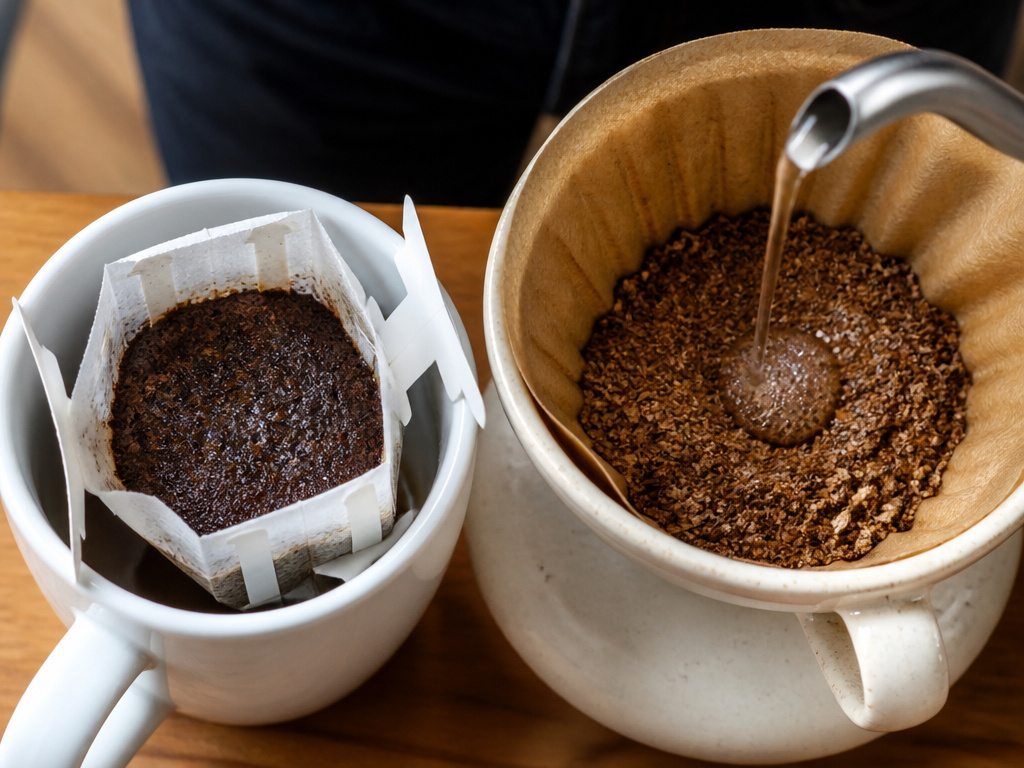
Your bag of beans is the final arbitrator. The method should serve the coffee, not the other way around.
Dark roast coffee beans are forgiving and benefit from the fuller body a drip machine provides. The roasting process develops oils that migrate to the bean’s surface. A drip machine’s thinner filter allows these oils to pass through, enhancing the chocolatey, smoky notes dark roasts are known for. The consistent, high heat of a good machine fully extracts these developed sugars without much risk of highlighting unpleasant bitterness.
Light roast coffee beans, including specific blonde roast characteristics, are fragile. Their delicate acidity and floral notes are easily masked. They need precision. A pour over’s controlled water temperature and targeted agitation can extract the bright, fruity sugars without pulling out the grassy, vegetal compounds. The thick filter ensures a clean finish, letting those nuanced flavors shine. A drip machine often mutes these subtleties, turning a complex Ethiopian into a generic “light coffee.”
For medium roasts or blended coffee flavors, the choice depends on your goal. Want a balanced, easy-drinking cup? Use the drip machine. Want to explore the layers within the blend? Use a pour over to isolate different flavor notes.
Cost, Gear, and the Learning Curve
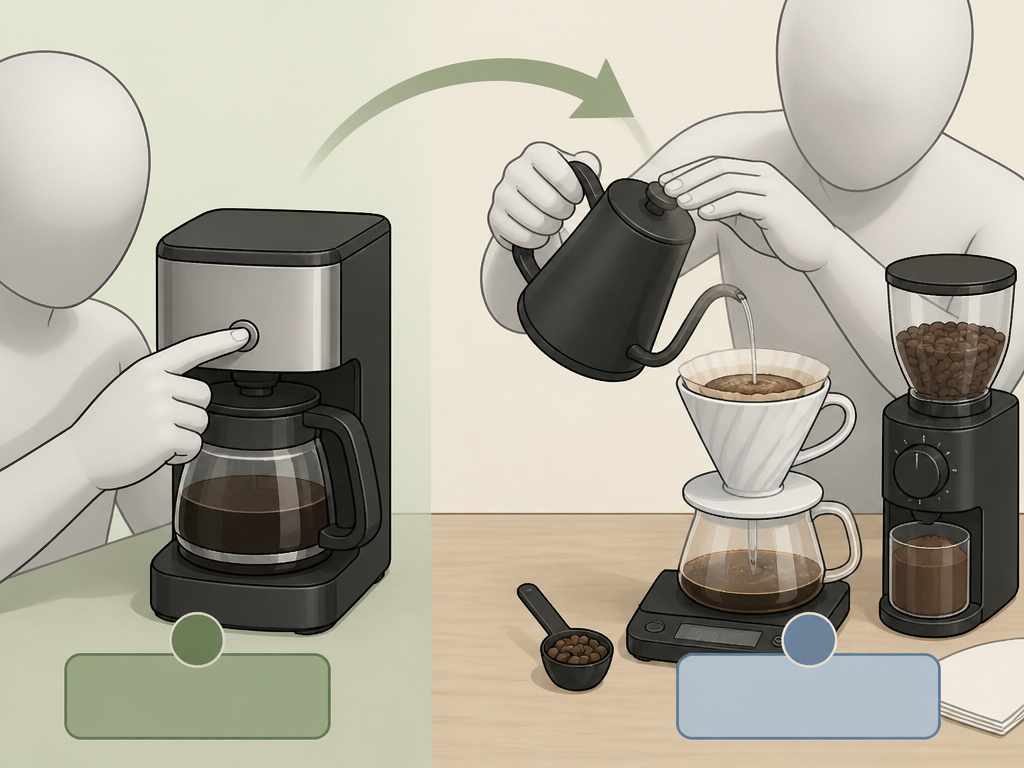
Breaking down the startup cost and skill requirement shows two different investments.
Drip Coffee Setup:
- The Machine: An SCA-certified brewer like a Technivorm Moccamaster or Bonavita Connoisseur. This is the majority of the cost.
- The Consumables: Paper coffee filters specific to your machine’s basket size. A descaling solution.
- The Skill: Low. The skill is in maintenance—knowing how and when to clean.
Pour Over Setup:
- The Hardware: A dripper (Hario V60 ceramic, ~$25), a gooseneck kettle (~$50), a digital scale (~$25), and a burr grinder.
- The Consumables: Specific paper filters (e.g., Hario V60 tabbed filters). Consider biodegradable filter options if sustainability is a priority.
- The Skill: High. You must learn grind size, water temperature, bloom time, and pour technique. The first dozen brews will be inconsistent.
Common mistake: Using boiling water straight from a regular kettle for pour over — the aggressive heat shocks the grounds, causing over-extraction and a bitter, scalded flavor in under three minutes.
The learning curve is real. The Hario V60 is notoriously “unforgiving,” as many in coffee communities admit. Its large single hole demands a precise grind and a steady hand. The Kalita Wave 185, with its flat bottom and three small holes, is more forgiving for beginners. It restricts flow naturally, promoting even extraction even with less-than-perfect technique.
Making the Final Choice
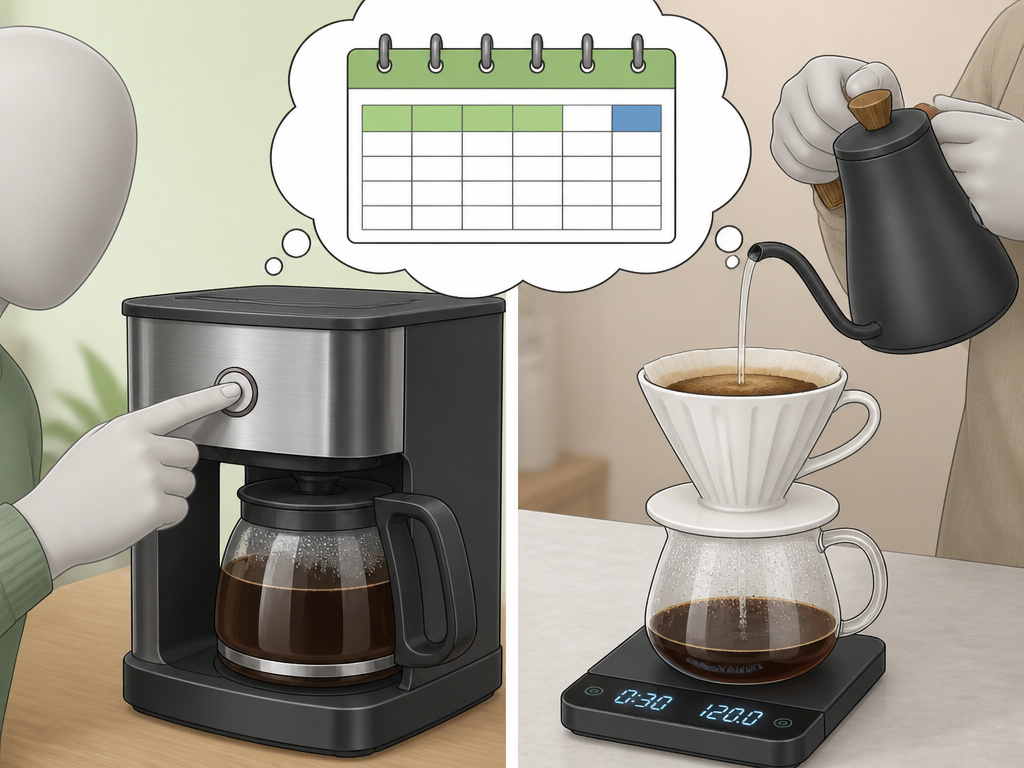
So, which method is for you? Answer these three questions.
- What is your morning like? If you are brewing for multiple people or need coffee ready before your brain is fully on, choose a high-quality drip machine. Its convenience is genuine. If you enjoy a daily, mindful ritual and usually drink alone, choose pour over.
- What coffee do you buy? If your cupboard holds mostly dark or medium-dark roasts, a drip machine will serve them well. If you geek out on light-roasted single-origin profiles from Ethiopia or Colombia, the precision of pour over is worth the effort.
- How do you feel about upkeep? Are you willing to descale a machine quarterly? If not, the simple cleanup of a pour over is a feature. If the thought of weighing beans and timing pours exhausts you, embrace the automation.
You do not have to marry one method. Many enthusiasts own both. The drip machine handles the weekday grind. The pour over kit comes out on Saturday morning. This hybrid approach acknowledges that context matters more than purity.
Frequently Asked Questions
Can a drip machine make coffee as good as pour over?
top-tier SCA-certified drip machine can make exceptionally consistent, delicious coffee. It will have a different profile—fuller-bodied and less tea-like—than a pour over from the same beans. “As good” depends on your taste preference. For clarity and nuance, pour over retains an edge.
Is pour over coffee stronger than drip coffee?
“Stronger” is ambiguous. If you mean higher caffeine concentration, the difference is negligible if you use a similar coffee-to-water ratio. If you mean more intense flavor, pour over can taste more concentrated because the thicker filter removes oils that dilute flavor perception, making the remaining acids and sugars more prominent.
Why is my pour over coffee sour?
Sourness means under-extraction. The water did not pull enough sugars from the grounds. The fix is usually a finer grind size, hotter water (right off boil for light roasts), or a slower pour to increase contact time. Ensure your coffee grind consistency is even; a blade grinder creates too many boulders that under-extract.
How often should I clean my drip coffee maker?
Clean the carafe, basket, and showerhead with soap after every use. Descale the internal heating element and tubes with a citric acid or commercial descaling solution every four to six weeks, depending on your water hardness. Old minerals and oils are the top reason for bad-tasting machine coffee.
Before You Go
Your best cup comes from matching the method to the moment. Value your time and crave reliability? Invest in a certified drip machine and maintain it religiously. Crave engagement and flavor exploration? Invest in a pour over kit and embrace the learning process.
Remember that the coffee itself is the star. A great Arabica coffee bean will shine through a decent brew method, while a stale bean will disappoint through any apparatus. Start with fresh, well-roasted beans, grind them just before brewing, and use good water. Whether the water comes from a showerhead or your own hand becomes a matter of personal ritual, not a verdict on quality.
