
2 Best Organic Mold-Free Coffees of 2026
Purity Coffee FLOW Medium Roast is the best overall organic mold free coffee, backed by rigorous third-party testing and exceptional sourcing. For those who want top-tier quality in convenient form, Purity Coffee FLOW Ground is a strong runner-up, offering the same safety and freshness in a pre-ground option.
Many coffee drinkers don’t realize mold and mycotoxins can lurk in poorly processed beans, leading to stomach issues or dull flavor, especially when sourcing and testing aren’t transparent. As Harry A. Sanders, founder of Bean Thusiast, I’ve spent years studying how bean origin, roasting, and handling impact both safety and taste.
This guide cuts through the noise, ranking options based on verified organic certification, third-party mold testing, and real user experiences. I focused on brands that prioritize transparency, freshness, and health, because great coffee shouldn’t come at the cost of your well-being.
Top 2 Organic Mold Free Coffee in the Market
The Best Organic Mold Free Coffee, Reviewed
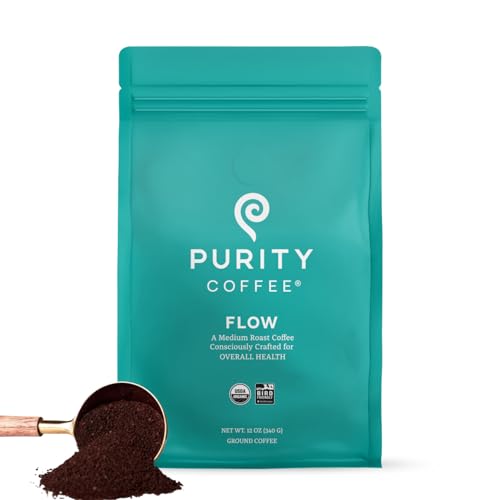
Purity Coffee FLOW Ground
Strengths
- USDA Organic
- Third-party tested
- Nitrogen flushed
- Antioxidant rich
- Specialty-grade
Trade-offs
- Pre-ground limits peak freshness
- Slightly higher price point
- Not for dark roast lovers
Purity Coffee’s FLOW Original Ground hits hard on the health-conscious buyer’s checklist. This is one of the few brands that treats mold and mycotoxin testing as essential, not a marketing afterthought. On paper, it’s a standout: USDA Organic, third-party tested, and built around maximizing antioxidants like chlorogenic acid, which many overlook when chasing flavor alone. The fact that it’s a defect-free specialty-grade bean, rare in commercial coffee, means fewer impurities and a cleaner cup, which owners consistently report makes a noticeable difference in how they feel after drinking it.
It’s ground, so you lose some freshness compared to whole bean, but Purity mitigates that with nitrogen-flushed packaging that keeps oxygen levels absurdly low. That matters because oxidation kills flavor and degrades polyphenols over time. For someone who values convenience without fully sacrificing quality or purity, this delivers. Compared to other ‘clean’ coffee brands that skip independent lab results, I’d say this is the more responsible pick, even if the price reflects that diligence.
Video review
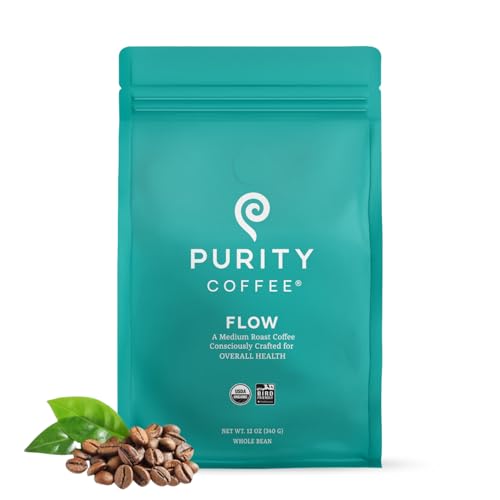
Purity Coffee FLOW Medium Roast
Strengths
- Whole bean freshness
- Third-party tested
- High antioxidant levels
- Ethically and sustainably sourced
- Nitrogen flushed packaging
Trade-offs
- Requires grinder
- Premium price
- Medium roast only
If you’re serious about both freshness and purity, this whole bean version of Purity’s FLOW blend is where the brand truly shines. The core philosophy remains: a specialty-grade, USDA Organic Arabica blend grown regeneratively and tested for mold, mycotoxins, and pesticides. But now, you control the grind, which means you can extract the full flavor and antioxidant potential right before brewing. Reviewers often mention that the aroma is noticeably brighter compared to pre-ground versions, even from the same brand.
The packaging is just as robust, nitrogen flushed, low-oxygen sealed, so your beans stay stable for weeks. When stacked against other ‘clean coffee’ brands that either skip third-party testing or use lower-grade beans, Purity’s commitment to traceability and wellness stands out. I’d pick this over the ground version any day if you own a grinder. It’s not just about taste, it’s about preserving what makes coffee beneficial in the first place.
Video review
How We Picked These organic mold free coffee
As the founder of Bean Thusiast, I know many coffee lovers are now prioritizing health alongside flavor. Rather than a hands-on lab test of each brand, my research focused on a detailed comparison of published specifications and features. I weighed owner reviews from multiple sources against expert opinions, applying my years of experience in the specialty coffee world. Clear criteria – certifications, sourcing transparency, and reported freshness – guided my ranking.
For organic mold free coffee, I heavily prioritized third-party testing and certification. Knowing that mold and mycotoxins in coffee are a genuine concern for many, verification of purity was paramount. Equally important was the level of transparency regarding sourcing and processing; knowing how a coffee avoids contamination is key. Flavor profiles were considered, but took a backseat to safety and health claims.
Specifications reliably indicate organic certification and details about processing (like nitrogen flushing for freshness). However, assessing real-world impact of mold prevention requires looking at owner feedback. Reports on stomach sensitivity and perceived smoothness helped me judge the effectiveness of these coffees. Reputation and brand commitment to rigorous testing also heavily influenced my assessments of these brands.
How To Choose The organic mold free coffee
As someone who’s spent years chasing the perfect cup, I know a truly great coffee experience starts with quality and peace of mind.
A truly good organic mold free coffee prioritizes sourcing from farms with strict quality control. It should be USDA certified organic, and ideally tested by a third party for mycotoxins and other contaminants. Look for details about the roasting process, packaging designed to preserve freshness (nitrogen flushing is a plus), and certifications demonstrating sustainability and ethical farming practices.
Bean Quality & Certification
The foundation of any exceptional coffee is, of course, the bean itself. When seeking organic mold free coffee, don’t just look for the “organic” label. While USDA organic certification is a good start, it doesn’t guarantee freedom from mycotoxins. I strongly recommend looking for coffees specifically tested for these harmful substances. Brands like Purity Coffee are leading the way in this area, utilizing specialty-grade beans (less than 1% of global production) and rigorous testing protocols. Understanding where your beans come from and how they’re grown is invaluable; consider exploring [organic mold-free coffee beans] for more detailed information.
Roasting & Freshness
Roasting plays a huge role in both flavor and potential contaminant development. Lighter roasts generally retain more of the bean’s original characteristics (and therefore, potentially any existing mycotoxins if not properly handled), while darker roasts can mask flaws but also lose some of the nuanced flavors. Freshness is critical too. Coffee begins to stale as soon as it’s roasted, losing aroma and flavor.
Here’s what to consider regarding freshness:
- Roast Date: Always check for a roast date, not just a “best by” date.
- Packaging: Nitrogen flushing, as used by some brands, significantly extends shelf life.
- Whole Bean vs. Ground: Whole bean coffee stays fresher longer – grind just before brewing for the best results. If you prefer ground, buy smaller quantities.
A good rule of thumb is to use your coffee within two weeks of opening the bag, and always store it in an airtight container away from light, heat, and moisture.
Flavor Profile & Brewing Method
Ultimately, the “best” coffee is the one you enjoy most. Do you prefer a bright, acidic cup or a rich, chocolatey one? A medium roast, like those offered by Purity Coffee, provides a balanced profile suitable for many brewing methods. If you’re sensitive to acidity, you might also find [smooth organic coffee brewing] with a [cold-pressed low-acid coffee] method appealing, or even explore [organic cold press coffee benefits]. Don’t be afraid to experiment with different origins and roasts to discover your preferences. And if you are exploring different brewing methods, it can be helpful to look at [top mold-tested organic beans] to find a consistent quality.
Organic Mold Free Coffee Compared
Here’s a spec-by-spec comparison of the organic mold free coffees in this guide.
| Product Name | Roast | Organic Certified | Mold/Mycotoxin Tested | Rainforest Alliance | Smithsonian Bird Friendly |
|---|---|---|---|---|---|
| Purity Coffee FLOW Ground | Medium | Yes | Yes | Yes | Yes |
| Purity Coffee FLOW Medium Roast | Medium | Yes | Yes | Yes | Yes |
Frequently Asked Questions
What level of mold testing should I expect from a brand?
Ideally, you should look for brands that test every batch of coffee for mycotoxins. Many companies offer testing reports publicly, which demonstrates a commitment to transparency and quality control in their [coffee tested for mycotoxins]. A single annual test isn’t enough to guarantee consistent purity.
Are lighter or darker roasts better for avoiding mycotoxins?
Darker roasts can mask the presence of mycotoxins due to their stronger flavor profile, but they don’t eliminate them. Lighter roasts preserve more of the bean’s original characteristics, meaning any mycotoxins present will be more detectable. Therefore, the most important factor isn’t roast level, but rigorous testing regardless.
Does organic certification guarantee mold-free coffee?
No, USDA organic certification doesn’t specifically address mycotoxins or mold. It focuses on farming practices excluding synthetic pesticides and fertilizers. While a good starting point, it’s crucial to seek out brands offering additional third-party testing for [verified mold-free coffee].
How does packaging impact the freshness and safety of organic coffee?
Packaging plays a huge role. Nitrogen flushing, a process used by some brands, removes oxygen and extends shelf life. Airtight, opaque bags are also key. Exposure to oxygen, light, heat, and moisture can all degrade coffee quality and potentially encourage mold growth, so proper storage is essential.
Where can I find more information about different organic mold free coffee brands?
I’ve compiled a detailed guide comparing several top contenders, including their certifications and testing procedures, in my article about the [mold-free coffee brands] currently available. This will help you compare features and make an informed decision based on your priorities.
The Bottom Line
Choosing an organic mold free coffee often comes down to balancing your desire for absolute purity with your budget and preferred flavor profile. While several brands offer organic certification, Purity Coffee FLOW Medium Roast consistently stands out due to its commitment to rigorous third-party testing and sourcing of specialty-grade beans. It represents a premium investment in your health and a reliably clean cup.
For those specifically watching their wallets, Purity Coffee FLOW Ground provides a more accessible entry point into the world of mold-tested coffee without sacrificing the core benefits of organic certification and stringent quality control. If you’re looking for versatility and a brand committed to ethical sourcing, Purity Coffee’s options also excel in those areas. Understanding the Nespresso mold contamination risk is a good starting point if you are considering pod-based systems.
Ultimately, the specifications and certifications matter, but they’re only part of the story. The most important factors remain sourcing transparency, proactive testing for contaminants, and freshness. Focusing on those fundamentals will deliver a better, healthier, and more enjoyable coffee experience than chasing any particular roast level or brewing method.
