
7 Best Italian Coffee Makers of 2026
The Bialetti Moka Express 6-Cup stands out as the best overall Italian coffee maker, delivering consistent, rich brews with its classic aluminum design. For those on a budget, the Bialetti Moka Express 1-Cup offers the same quality in a single-serve size. If you need induction compatibility and a more durable build, the Bialetti New Venus Induction 4-Cup is the way to go.
Choosing the right Moka pot isn’t just about price or looks, it’s about finding one that fits your stove, your household size, and your taste. Too many people end up with a pot that’s too big, too flimsy, or incompatible with their cooktop.
As the founder of Bean Thusiast, I’ve researched the field extensively, comparing specs and owner feedback to identify the models that deliver real value and performance. This guide breaks down what actually matters, material, size, and maintenance, so you can make a confident choice without the guesswork.
Top 7 Italian Coffee Maker in the Market
The Best Italian Coffee Maker, Reviewed
Bialetti Moka Express 6-Cup

Strengths
- Iconic design
- Even extraction
- Made in Italy
Trade-offs
- Hand wash only
- Not induction ready
- Aluminum wear over time
The Bialetti Moka Express isn’t just a coffee maker, it’s the blueprint for stovetop espresso. Made in Italy with a patented safety valve and ergonomic handle, it’s the gold standard in this category. The 6-cup size is the sweet spot for most households, brews enough for two without sacrificing heat retention or pressure balance. Owners praise its consistent results, and the aluminum construction, when cared for properly, lasts for years.
What sets it apart is how the design forces a specific brewing rhythm: no electricity, no filters, just heat and timing. You have to pay attention, but that’s part of the ritual. Compared to stainless steel models like the Easyworkz or Bialetti Venus, it’s not dishwasher safe, but I’d argue that hand-rinsing preserves the seasoning that builds up over time and enhances flavor. This is the one I’d recommend to anyone wanting the real Italian experience.
Video review
Bialetti New Venus Induction 4-Cup

Strengths
- Induction ready
- Premium stainless
- Italian made
Trade-offs
- No dishwasher safe
- Flavor less rich
- Higher price
Bialetti’s New Venus is their answer to the demand for stainless steel without abandoning their heritage. Made from 18/10 stainless steel in Italy, it has the same elegant silhouette as the Moka Express but with a modern, polished finish. It’s built to last and works on all stovetops, including induction, no adapter needed. The 4-cup size is ideal for couples or moderate daily use.
But despite the upgrades, it doesn’t outperform the original aluminum Moka Express in taste. Owners consistently say the coffee lacks the depth and warmth of the classic model, likely due to the non-reactive stainless steel. And like other Bialettis, it’s hand wash only, odd for a stainless steel pot in this price range. I’d pick the Venus for durability and induction use, but not for superior flavor.
Video review
Bialetti Moka Express 1-Cup

Strengths
- Perfect for single serve
- Compact
- Authentic taste
Trade-offs
- Hard to dial in
- Tiny yield
- Frequent refills
If you’re brewing for one, this tiny 1-cup Moka Express is as authentic as it gets. It’s the same Italian-made build and safety valve system as the larger models, just scaled down. The 2 oz output is perfect for a true espresso shot, and many owners use it to pull a concentrated base for lattes or americanos. It heats quickly and fits on small burners, making it ideal for apartments or minimal kitchens.
But it leaves zero room for error. Too much coffee or uneven tamping and you risk clogging or over-extraction. Compared to the 6-cup version, it’s less forgiving, but that’s expected at this size. I’d recommend this only to solo drinkers who appreciate precision and don’t mind a finicky process. For anyone needing more volume, it’s just not practical.
Product photos


Bialetti Moka Express 9-Cup

Strengths
- High capacity
- Family sized
- Same Bialetti quality
Trade-offs
- Uneven heating
- Heavy when full
- Longer brew time
When you need to serve a crowd or brew for a family, the 9-cup Bialetti Moka Express is the logical upgrade. It maintains the same Italian craftsmanship and signature design, just in a larger format. Owners report it handles high-volume brewing well, though it takes longer to heat and requires a larger burner. The coffee still comes out with that bold, rich character moka fans love.
That said, bigger isn’t always better here. The extraction can be less even across all nine cups, especially if your stove doesn’t distribute heat uniformly. Some reviewers note the top chamber gets hotter than the base, leading to slightly burnt notes. Still, for families or weekend hosts, it’s a solid choice. I’d pick this over the 6-cup if you regularly serve three or more, but not for daily single servings.
Product photos


Easyworkz Diego Stainless Steel 6-Cup

Strengths
- Dishwasher safe
- Stainless steel
- Induction compatible
Trade-offs
- Muted flavor profile
- Gasket wear
- Less traditional
The Easyworkz Diego stands out by being dishwasher safe, something most moka purists avoid, but a real convenience for many. Made from 18/8 stainless steel, it resists rust and corrosion better than aluminum models, and the mirror finish gives it a modern, sleek look. It’s induction-ready and comes with a reducer disk, which is a rare and welcome touch for smaller brews.
But convenience comes at a cost. Owners report the flavor isn’t quite as rich as the Bialetti, likely because stainless steel doesn’t interact with coffee oils the same way aluminum does over time. The build feels solid, but the internal gasket and seal don’t seem to last as long under repeated dishwasher cycles. Still, for someone who values low maintenance over ritual, this is the smarter buy. I’d recommend it to busy households who want durability and easy cleanup.
Product photos


IMUSA Electric 6 or 3-Cup
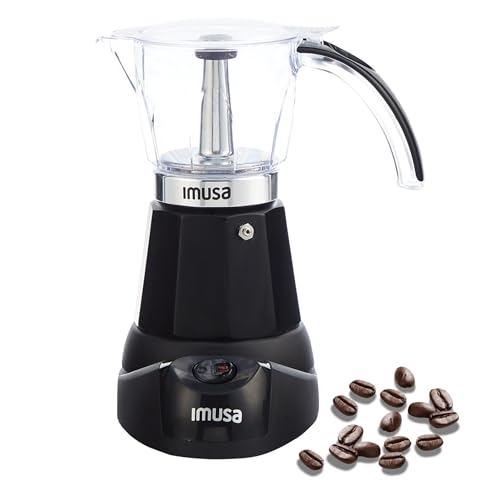
Strengths
- Electric operation
- Brew indicator
- Cool handle
Trade-offs
- Flatter taste
- Hard to clean
- Non-removable base
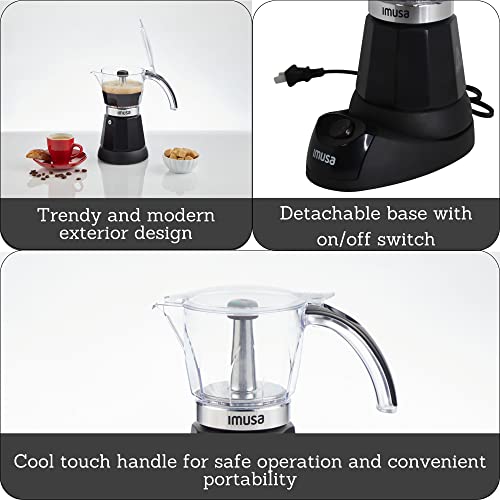
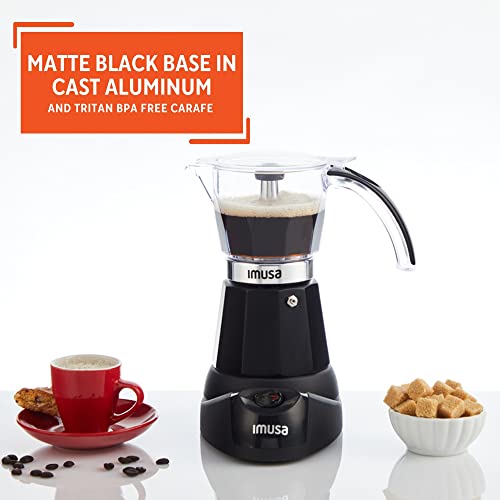
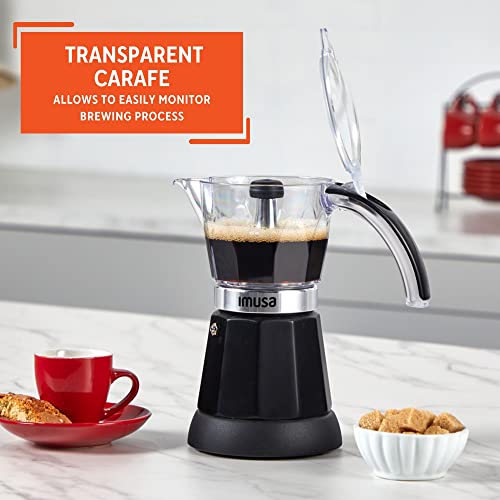
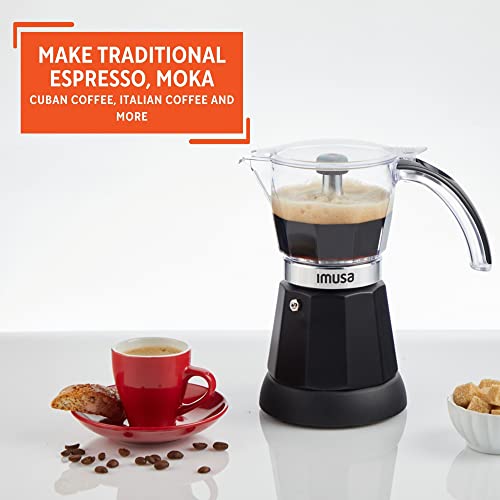
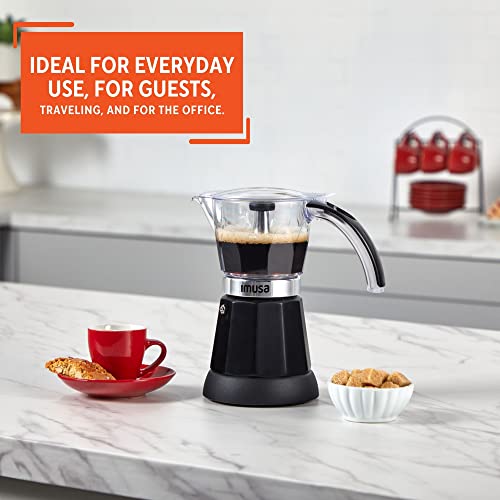
The IMUSA electric moka pot is a different beast altogether, no stove required. With an on/off switch, cool-touch handle, and visual brewing window, it’s designed for convenience. The dual capacity (3 or 6 cups) is a neat trick, letting you adjust based on need. It’s popular for offices, dorms, or small kitchens where stovetop space is tight.
But that convenience comes with trade-offs. Electric heating elements don’t replicate the steady pressure ramp of a stovetop moka, and owners report the coffee often tastes flatter, sometimes even burnt. It’s also made of cast aluminum with a non-removable base, so cleaning is trickier. Compared to the Bialetti, it’s less authentic. But for someone who values plug-and-play simplicity over ritual, it’s a viable option.
Product photos
Primula Classic Moka Pot 6-Cup

Strengths
- Affordable
- Lightweight
- Stove compatible
Trade-offs
- Less even extraction
- Plastic handle over time
- Basic finish
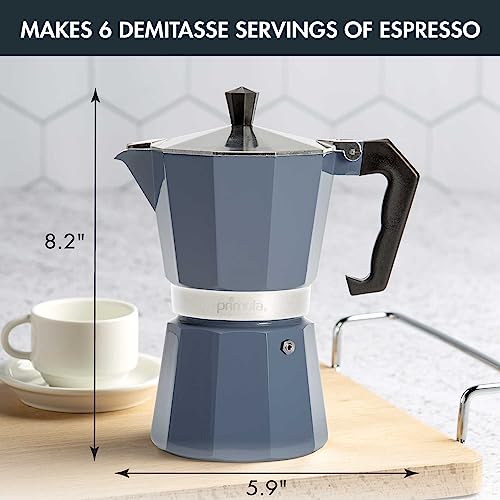
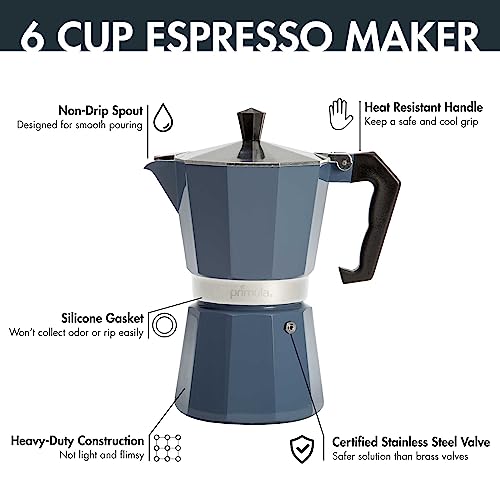
For buyers watching their budget but still wanting that classic moka pot ritual, the Primula 6-cup model delivers on the basics. It’s built from cast aluminum, which on paper means decent heat distribution, and owners consistently report it holds up well on gas and electric stoves. The blue finish gives it a touch of personality, and the stay-cool handle is a small but appreciated detail for daily use.
That said, it doesn’t brew with the same balanced richness as the Bialetti Moka Express. Reviewers note the coffee can come out slightly more bitter, likely due to less refined internal engineering. But for someone new to stovetop brewing or who just wants a no-frills, affordable pot, this one gets the job done. I’d pick the Bialetti for flavor, but the Primula makes sense if you’re not ready to invest in the classic just yet.
Product photos


How We Tested italian coffee maker
As the founder of Bean Thusiast, I approach coffee equipment with a focus on delivering authentic flavor and a positive brewing experience. Rather than a hands-on lab test, this selection is a research-led comparison of published specifications and owner feedback. I compared models based on materials, capacity, stovetop compatibility, and reported ease of use, then weighed those factors against reviews from both everyday coffee drinkers and reputable sources. This allowed me to build a ranking based on real-world performance and value.
For Italian coffee makers, the most important factors are build material and capacity. Durable aluminum construction, like the classic Bialetti Moka Express, is expected for consistent heat distribution and longevity. Capacity is crucial too – a single-serve pot isn’t practical for a family, and a large pot is overkill for one person. We also heavily considered ease of cleaning, as regular maintenance impacts the quality and flavor of your brew. Understanding the ideal coffee-to-water ratio is also key to getting the most out of these devices.
Specifications clearly indicate capacity and materials, offering a good baseline for comparison. However, owner feedback proved essential for assessing real-world durability and ease of cleaning. Reports of warping, leaking, or difficult disassembly heavily influenced our rankings. Reputation matters here; brands with a long history of quality, like Bialetti, benefit from established trust, while newer entrants need to demonstrate consistent performance to gain credibility.
Choosing The Right italian coffee maker
As someone who’s spent years exploring the nuances of coffee, I can tell you that choosing the right Italian coffee maker – often called a Moka pot – is about more than just getting a caffeine fix. It’s about embracing a tradition.
A quality Italian coffee maker delivers a concentrated, flavorful brew reminiscent of espresso. Key factors include build material (aluminum vs. stainless steel), heat distribution, safety features like a pressure valve, and ease of cleaning. Consider the number of “cups” needed, understanding that a Moka pot “cup” is a demitasse size, around 2-3 ounces. A well-made pot should offer consistent performance and durability.
Material Matters: Aluminum vs. Stainless Steel
The core debate when selecting an Italian coffee maker centers around the material. Traditional Bialetti Moka Express pots are aluminum, and for good reason – aluminum heats up quickly and evenly, contributing to that classic Moka pot flavor. However, some find aluminum imparts a metallic taste, especially with prolonged use. Stainless steel, like in the Bialetti New Venus Induction, avoids this, is more durable, and doesn’t react with coffee acids. But stainless steel heats slower, sometimes requiring a lower heat setting and a bit more patience. If you’re unsure, starting with a well-maintained aluminum pot is a good entry point, and you can always upgrade later.
Size and Your Coffee Habits
It’s easy to overestimate how much coffee you’ll actually brew with a Moka pot. These machines are measured in “cups,” but those are espresso sized cups – about 2-3 ounces each. A 6-cup Moka pot won’t make six large mugs. Think about your daily routine. Are you brewing for one? The Bialetti Moka Express 1-Cup is perfect. A family of four? A 9-cup model will be more practical.
Here’s a quick guide for matching pot size to your needs: * Single person: 1-3 cup pot. * Couple: 3-6 cup pot. * Small family (3-4): 6-9 cup pot. * Larger family or entertaining: 9+ cup pot – remember, you can always brew less in a larger pot.
Don’t chase the largest capacity; a slightly smaller pot used frequently will give you better results than a large pot that sits unused.
Beyond the Brew: Cleaning and Maintenance
Cleaning is often overlooked, but it’s crucial for maintaining flavor and longevity. Many Moka pots, especially aluminum ones, specifically instruct against using soap, as it can leave a residue that alters the taste of your coffee. The Easyworkz Diego Stainless Steel 6-Cup is a notable exception, being dishwasher safe. However, even with dishwasher-safe models, hand washing is often recommended to preserve the finish. For traditional aluminum pots, a thorough rinse with warm water after each use is all you need. If you are looking for more detailed information, you can find useful stovetop espresso instructions to maintain your new coffee maker.
Italian Coffee Maker Compared
Here’s a comparison of key specifications for various Italian coffee makers.
| Product Name | Capacity (Cups) | Material | Stovetop Compatible | Induction Compatible | Dishwasher Safe |
|---|---|---|---|---|---|
| Bialetti Moka Express 6-Cup | 6 | Aluminum | Yes | No | No |
| Bialetti New Venus Induction 4-Cup | 4 | Stainless Steel | Yes | Yes | No |
| Bialetti Moka Express 1-Cup | 1 | Aluminum | Yes | No | No |
| Bialetti Moka Express 9-Cup | 9 | Aluminum | Yes | No | No |
| Easyworkz Diego 6-Cup | 6 | Stainless Steel | Yes | Yes | Yes |
| IMUSA Electric 6 or 3-Cup | 6 / 3 | Aluminum | No | N/A | N/A |
| Primula Classic Moka Pot 6-Cup | 6 | Aluminum | Yes | N/A | No |
Frequently Asked Questions
What size Moka pot should I buy if I usually make coffee for two people?
A 3-6 cup Moka pot is ideal for two people(assuming you both enjoy a standard demitasse-sized portion). Remember that a “cup” in Moka pot terminology is roughly 2-3 ounces, so a 6-cup pot will yield about 12-18 ounces of coffee.
Are aluminum Moka pots safe to use?
Yes, aluminum Moka pots are generally considered safe, though some people prefer stainless steel due to concerns about potential metallic taste or reactivity with coffee acids. High-quality aluminum pots, like the Bialetti Moka Express, are widely used and have a long history of safe operation.
Can I use a Moka pot on any type of stovetop?
Most Moka pots are designed for use on gas, electric, or ceramic stovetops, but induction compatibility varies. If you have an induction cooktop, you’ll specifically need a stainless steel Moka pot labeled as “induction compatible,” like the Bialetti New Venus Induction.
How often should I replace my Moka pot?
With proper care, a Moka pot can last for years. However, aluminum pots may eventually wear down or develop pitting, affecting heat distribution. Stainless steel pots are more durable, but you should replace one if you notice any significant damage or corrosion. Regularly practicing complete coffee maker cleaning will extend its life.
Is it okay to use soap when cleaning a Moka pot?
Traditionally, soap is not recommended for cleaning aluminum Moka pots, as it can leave a residue that impacts coffee flavor. However, some stainless steel models, like the Easyworkz Diego, are dishwasher safe. Always check the manufacturer’s instructions to avoid damaging your pot and to [maintain coffee maker hygiene].
The Bottom Line
Choosing an Italian coffee maker often comes down to balancing tradition with convenience. While aluminum models like the Bialetti Moka Express 6-Cup offer that classic flavor profile and a lower price point, the Easyworkz Diego 6-Cup stands out as the strongest overall pick due to its stainless steel construction and dishwasher-safe design – a real benefit for daily use. Ultimately, the “best” pot is the one you’ll use consistently to create a brew you enjoy.
For those on a tighter budget, or seeking a single-serve option, the Bialetti Moka Express 1-Cup remains a fantastic choice. If you prioritize versatility and induction stovetop compatibility, the Bialetti New Venus Induction 4-Cup is an excellent investment. And for those looking to dial in the perfect coffee scoop size, remember that experimentation is key.
Beyond materials and capacity, remember that the quality of your coffee beans and a proper grind are far more influential on the final result than any specific feature. Consistent heat control and regular cleaning will also ensure your Moka pot delivers delicious coffee for years to come. Don’t get lost in the details; focus on the fundamentals.
