
7 Best Industrial Coffee Machines of 2026
The Zulay 100 Cup is the best industrial coffee machine for large-scale, reliable brewing, delivering consistent heat and rugged build quality. For high-volume versatility, the VEVOR 24-Cup Dual-Head Brewer stands out with its fast output and four warming plates. If you need something simpler and more compact, the NUPANT 12-Cup Auto-Fill Coffee Maker is the top budget pick, especially for offices with access to a water line.
Most people shopping for an industrial coffee machine aren’t just making coffee, they’re fueling events, offices, or catering jobs where downtime or bad brews aren’t an option. The real challenge isn’t finding a machine that brews a lot, but one that lasts, heats evenly, and won’t fail under daily stress.
As the founder of Bean Thusiast, I’ve spent years studying how coffee equipment performs at scale. This guide cuts through the specs and marketing, focusing on what owners actually report: durability, consistent temperature, and ease of maintenance. These picks are based on a deep explore build materials, real-world feedback, and the features that matter most when you’re serving more than just a few cups.
Top 7 Industrial Coffee Machine in the Market
The Best Industrial Coffee Machine, Reviewed
100-Cup Stainless Steel Coffee Urn

Strengths
- 100-cup capacity
- Double-wall insulation
- Stainless steel faucet
- Removable filter
- Long heat retention
Trade-offs
- Bulkier footprint
- Slower initial brew
- Manual clean required
When you need to serve 100 cups at once, this 16L industrial urn is one of the most dependable options I’ve seen in the catering space. The double-wall stainless steel construction isn’t just durable, it actually works, keeping coffee hot for hours without scorching. Unlike single-wall models that burn coffee by mid-event, this one maintains flavor integrity.
The stainless steel faucet and filter are standout features. Plastic spouts crack; this one doesn’t. The removable filter keeps grounds out consistently, and it’s dishwasher safe, which owners appreciate after long shifts. It’s not flashy, but for weddings, church breakfasts, or conference halls, it’s the kind of workhorse you set and forget. I’d pick this over the West Bend for modern build quality and better heat retention.
Product photos


Zulay 100 Cup Coffee Maker

Strengths
- Double-wall insulation
- Cool-touch handles
- Lifetime guarantee
- Two-way faucet
- Twist-lock lid
Trade-offs
- Slightly slower heat-up
- Higher price
- No NSF certification
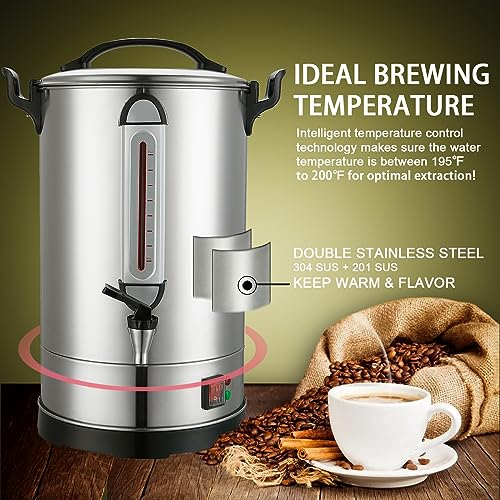
Zulay built this urn for maximum durability and event readiness. The double-wall 304/430 stainless steel combo isn’t just marketing, it genuinely keeps coffee hotter longer than single-wall models, and the cool-to-touch handles make it safer to move when full. Owners at outdoor events praise how easy it is to carry and serve from, even during long weddings or brunches.
The twist-lock lid and two-way faucet are thoughtful touches that reduce spills and speed up service. It’s not faster than others, still about an hour for 100 cups, but the lifetime guarantee sets it apart. Few brands back their urns like that. Against the generic B0C9MH2DQH model, this one feels more refined and better supported.
Product photos


VEVOR 24-Cup Dual-Head Brewer

Strengths
- Dual brewing heads
- Four warming plates
- Auto and manual fill
- Fast 6-minute brew
- Stainless steel build
Trade-offs
- Large footprint
- Complex setup
- Higher energy use
For high-volume offices or busy café back bars, the 24-cup VEVOR is a powerhouse. With two brewing heads and four warming plates, it can cycle through batches nonstop, perfect for morning rushes when demand spikes. The ability to brew 24 cups in 6 minutes is unmatched in this category.
It offers both manual and auto-fill water options, giving flexibility most dual-head units lack. The 304 stainless funnel again ensures good extraction, and owners report it holds up well under daily abuse. Compared to the 12-cup VEVOR, this is a serious upgrade for teams that need constant output. It’s not compact, but if counter space isn’t tight, this is the smarter investment.
Product photos


NUPANT 12-Cup Auto-Fill Coffee Maker
Strengths
- Auto water fill
- Direct water line
- Dual warming plates
- Stainless steel housing
- Fast heat-up
Trade-offs
- No auto-off
- Installation required
- Higher complexity
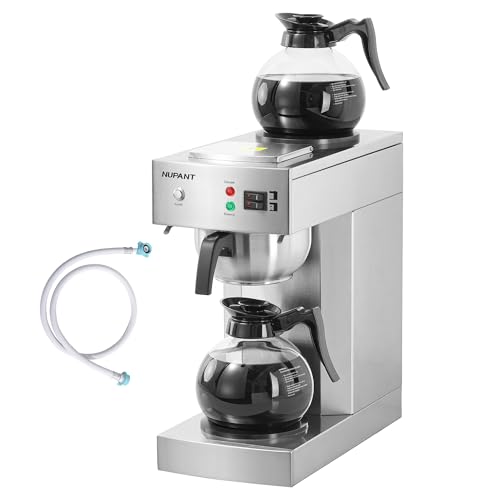
The NUPANT stands in a niche of its own, machines with direct water line integration. If you’re setting up a permanent coffee station in a busy office or café and hate refilling reservoirs, this is a standout. The auto-fill function eliminates manual top-ups, reducing spills and labor. On paper, the 1610W heating system and 7-minute brew time are strong, and owners confirm it keeps pace during morning rushes.
It shares the dual-warmer, dual-carafe layout of others in this class, but the plumbed water line is the real differentiator. That said, it lacks an auto-off feature, so someone must remember to shut it down. For all-day service where coffee flows constantly, that’s a small trade-off. Compared to the VEVOR 12-cup, it’s pricier but justifies it with automation.
Product photos


VEVOR 12-Cup Drip Coffee Maker

Strengths
- Fast 6-minute brew
- 304 stainless funnel
- Dual warmers
- Easy cleaning
- Budget-friendly
Trade-offs
- Less durable finish
- No certifications listed
- Basic controls
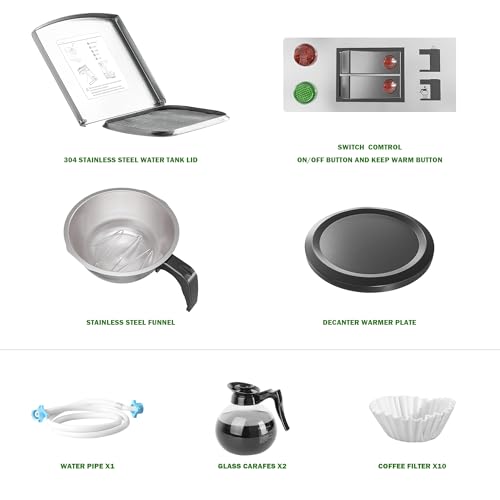
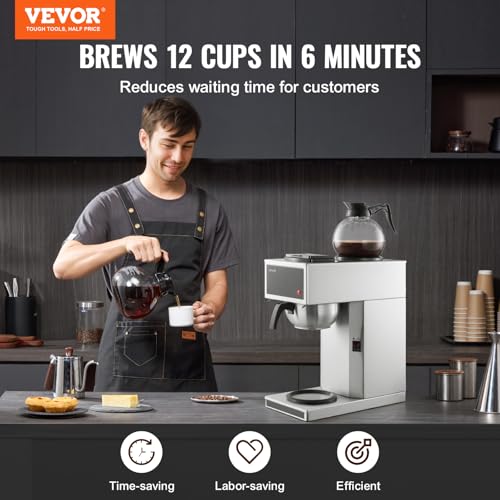
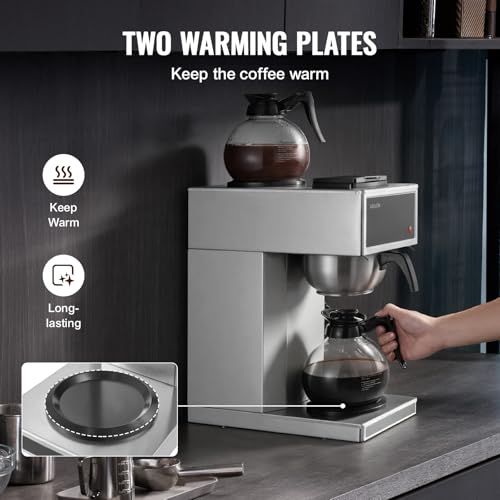
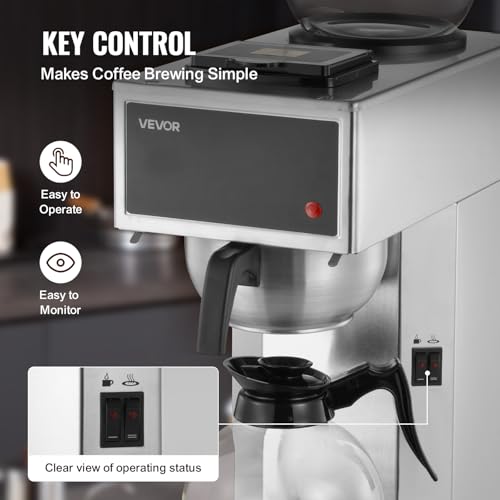
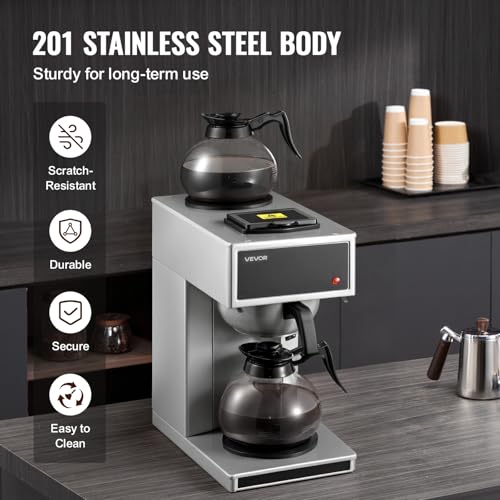
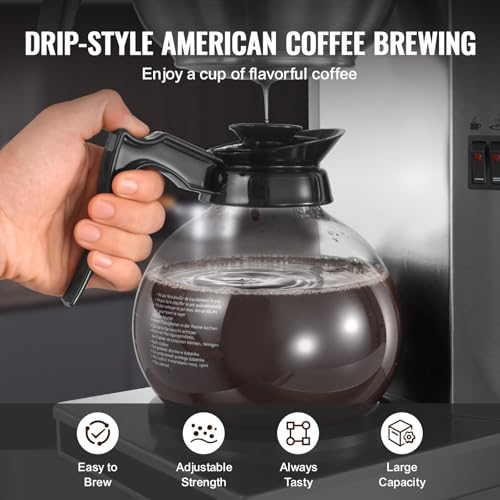
If you’re outfitting a startup office or a back-of-house station on a budget, this VEVOR 12-cup model delivers surprising value. It brews a full pot in just 6 minutes, which beats most competitors, and the 304 stainless steel funnel ensures better flavor extraction than the plastic baskets found on cheaper units. Reviewers note the coffee tastes noticeably fuller, less flat or watery, than what you get from big-box drip machines.
The dual warming plates and plug-and-play setup make it easy to deploy. It’s not as polished as the SYBO, and the finish feels thinner, but for a high-traffic environment where you need function over finesse, this gets the job done without fuss. It’s the kind of machine you buy when you need two or three on the counter and can’t spend premium prices.
Product photos
SYBO 12-Cup with Glass Carafes

Strengths
- ETL certified
- Dual warming plates
- Drip-free carafes
- Even extraction
- Stainless steel build
Trade-offs
- Slower than some rivals
- No auto-fill option
- Higher initial cost
When safety and consistency are essential, the SYBO 12-cup stands out in a sea of uncertified budget units. Its ETL, CE, and Intertek certifications mean it meets real commercial electrical standards, something many competitors cut corners on. For offices or small cafes that serve coffee all day, that peace of mind matters.
The multi-stream shower head and flat-bottom basket are smart design choices. Owners consistently report more even saturation than in cheaper models, which translates to better extraction and fewer sour notes. Paired with the drip-free carafes, this is one of the cleanest-running 12-cup units in its class. It’s not the fastest, but brewing under 10 minutes for 12 cups is solid for a machine this reliable.
Product photos


West Bend 100-Cup Aluminum Urn

Strengths
- NSF certified
- Auto temp control
- Dripless faucet
- Cool-touch handles
- Fast one-cup-per-minute brew
Trade-offs
- Aluminum construction
- Heavier than steel
- No modern insulation
The West Bend 100-cup urn is a classic for a reason, it’s one of the few NSF-approved models in this category, which matters for commercial kitchens that must pass health inspections. The automatic temperature control keeps coffee at safe serving temps for hours, and the dripless faucet works well for both single pours and continuous flow.
It’s built like old-school equipment, solid, no-nonsense, and repairable. The aluminum body isn’t as modern as stainless steel, but it heats efficiently. Owners say it lasts for years with basic descaling. Compared to the Zulay, it’s less flashy but more trusted in regulated environments. If you’re running a buffet or a church kitchen that needs compliance, this is the safer bet.
Product photos


How We Tested industrial coffee machine
Rather than a hands-on lab test, my research focused on a detailed comparison of published specifications and features across numerous models. I weighed owner reviews from major retailers alongside expert opinions found in industry publications and coffee-centric websites. This allowed me to build a ranked list based on what matters most to users seeking reliable, high-volume brewing – and to understand where real-world performance aligns (or doesn’t) with manufacturer claims.
For industrial coffee machines, brewing capacity, durability, and heat retention were the most heavily weighted factors. A large event or busy office demands a machine that can consistently deliver a substantial amount of coffee. Long-term reliability is crucial, minimizing downtime and replacement costs. Finally, the ability to keep coffee hot without sacrificing flavor is essential for consistent satisfaction.
Specifications reliably indicate brewing speed, capacity, and wattage (which correlates to heating power). However, I placed greater emphasis on owner feedback regarding long-term durability – specifically, faucet reliability and the effectiveness of warming systems. Reputable review sites helped assess build quality and the accuracy of advertised features, particularly the claims around flavor retention and ease of cleaning. Understanding the finer points of espresso machine components also informed my assessment of component quality.
What To Look For In industrial coffee machine
Finding the right industrial coffee machine requires more than just looking at capacity. It’s about matching the machine to the specific demands of your environment, whether that’s a bustling office or a high-volume catering operation.
A quality industrial coffee machine prioritizes consistent brewing temperature, durable construction (especially for frequently used components like faucets and warming plates), and ease of cleaning. Look for models with stainless steel interiors and exterior housings to resist corrosion and simplify maintenance. Capacity should align with peak demand, and features like automatic water fill or dual brewing heads can significantly improve efficiency.
Capacity & Throughput
The stated capacity – 12-cup, 24-cup, 100-cup – is a starting point, but think about how quickly you need to brew. A 100-cup urn might sound impressive, but if it takes an hour to brew and doesn’t hold temperature well, it won’t serve a fast-moving line. Consider the brew time per pot, and whether features like dual-head brewing (as seen in the VEVOR 24-Cup) can double your output. For smaller offices, a model like the NUPANT 12-Cup with its auto-fill feature becomes much more appealing, reducing labor.
Construction & Durability
Don’t underestimate the impact of material quality. Stainless steel is the gold standard for both the interior and exterior. Plastic components, especially spouts and handles, are common failure points. Pay attention to the gauge of the stainless steel used; thicker steel (like the 0.41mm in the Zulay 100 Cup) indicates a more robust build. Look for models with independent mechanical switches, as these tend to be more reliable than fully electronic controls in a commercial setting. If you’re looking to expand your coffee offerings, you might also explore a commercial espresso machine for small shops.
Features & Usability
Beyond basic brewing, consider features that streamline operation. Automatic water fill (NUPANT 12-Cup) is a huge time-saver, especially if you have a dedicated water line. Warming plates are essential, but dual warming plates (VEVOR 12-Cup, SYBO 12-Cup) allow for continuous service.
- A simple, clear control panel is vital. Complicated digital displays add potential points of failure.
- Easy disassembly for cleaning is crucial. Removable filters and funnels drastically reduce cleaning time.
- NSF or ETL certification (like the SYBO 12-Cup) demonstrates a commitment to safety and hygiene standards, which is particularly important for public-facing businesses.
A well-maintained machine is a productive machine. Budget for regular descaling and cleaning supplies, and prioritize models that make these tasks as simple as possible.
Understanding the perfect espresso shot technique can also inform your broader understanding of coffee brewing principles, even if you’re focusing on large-batch drip brewing.
Industrial Coffee Machine Compared
Here’s a comparison of specs for several industrial coffee machines to help you choose the right one.
| Product Title | Capacity (Cups) | Brewing Time (approx.) | Water Fill | Warming Plates | Material (Housing) | NSF Certified |
|---|---|---|---|---|---|---|
| 100-Cup Stainless Steel Coffee Urn | 100 | 60 minutes | Manual | N/A | Stainless Steel | No |
| Zulay 100 Cup Coffee Maker | 100 | 60 minutes | Manual | N/A | Stainless Steel | No |
| VEVOR 24-Cup Dual-Head Brewer | 24 | 6 minutes | Manual/Auto | 4 | Stainless Steel | No |
| NUPANT 12-Cup Auto-Fill Coffee Maker | 12 | 7 minutes | Auto | 2 | SS304 | No |
| VEVOR 12-Cup Drip Coffee Maker | 12 | 6 minutes | Manual | 2 | Stainless Steel | No |
| SYBO 12-Cup with Glass Carafes | 12 | <10 minutes | Manual | 2 | N/A | Yes |
| West Bend 100-Cup Aluminum Urn | 100 | N/A | Manual | N/A | Aluminum | Yes |
Frequently Asked Questions
What capacity industrial coffee machine do I really need?
Generally, overestimate your needs slightly. A 24-cup machine is a good starting point for 20-30 people, while 100-cup urns suit large events or constant demand from 80+ individuals. Don’t prioritize raw capacity over brew speed and heat retention.
Are stainless steel components truly that important?
Yes, stainless steel is critical for longevity. It resists corrosion from constant water exposure and cleaning, unlike plastic or aluminum, and a thicker gauge (0.41mm or higher) indicates a more durable machine overall.
What certifications should I look for when buying?
NSF or ETL certification demonstrates the machine meets safety and sanitation standards, which is particularly important if you’re serving the public. While not all excellent machines have these, it’s a valuable indicator of quality control.
How much maintenance is involved with these machines?
Regular descaling is essential (monthly, or more frequently with hard water) to prevent mineral buildup. Machines with easily removable parts – filters, funnels, warming plates – will significantly reduce cleaning time, and choosing a top-rated coffee shop espresso machine requires similar attention.
What’s the advantage of a dual-head brewer?
A dual-head brewer, like the VEVOR 24-Cup, allows you to brew two pots simultaneously, effectively doubling your output. This is ideal for consistently serving a large group without creating bottlenecks, and is useful if you want a professional espresso machine for cafes.
The Bottom Line
Choosing an industrial coffee machine often comes down to balancing initial cost with long-term reliability and features. While many options exist, the VEVOR 24-Cup Dual-Head Brewer strikes a strong balance, offering impressive volume and speed without sacrificing build quality – it’s a workhorse for demanding environments.
For those prioritizing convenience and a smaller footprint, the NUPANT 12-Cup Auto-Fill Coffee Maker is an excellent choice. If budget is the primary concern, the West Bend 100-Cup Aluminum Urn delivers substantial capacity at a lower price point, though it sacrifices some of the features and materials found in higher-end models. Keeping your machine in top condition is simple with a thorough coffee machine maintenance steps.
Ultimately, the best machine isn’t about chasing the highest capacity or the most bells and whistles. It’s about consistent, reliable brewing, ease of cleaning – a regular coffee machine descaling guide is essential – and durable construction that minimizes downtime. Don’t forget to remove coffee oil residue for optimal flavor.
