
7 Best Hand Crank Coffee Grinders of 2026
This post contains affiliate links. As an Amazon Associate, we earn from qualifying purchases.
The CEVING 60g Ceramic Burr Grinder stands out as the best overall hand crank option, delivering excellent grind consistency and a wide range of settings. For a more budget-friendly pick, the CEVING Mini 30g Ceramic Grinder offers solid performance in a compact form. If you prioritize durability and faster grinding, the CEVING 60g Stainless Steel Burr Grinder is a strong alternative.
Most people shopping for a hand crank grinder want better coffee without relying on electricity, but they quickly run into issues like inconsistent grinds, flimsy builds, or confusing adjustments. As someone who’s spent years studying coffee tools and techniques, I know how much the right grinder affects flavor.
This guide cuts through the noise by focusing on what actually matters: burr quality, grind consistency, and real-world usability. I compared specs and owner feedback across top models to find the ones that deliver the most reliable results for different needs and budgets.
Top 7 Hand Crank Coffee Grinder in the Market
The Best Hand Crank Coffee Grinder, Reviewed
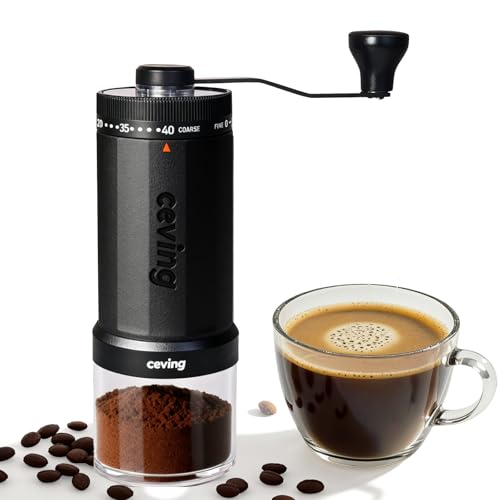
CEVING 60g Ceramic Burr Grinder
Strengths
- 60g capacity
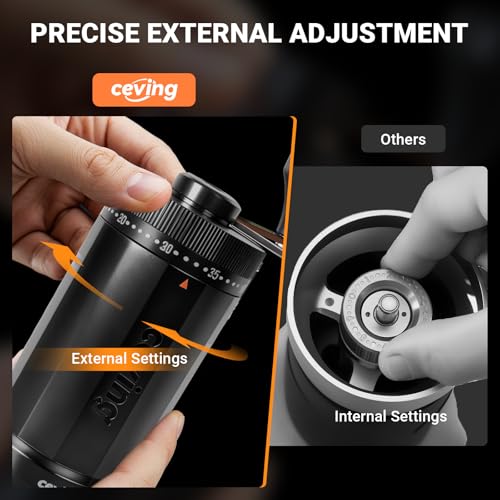
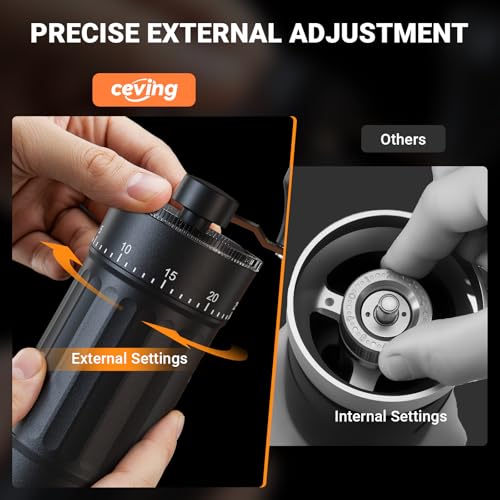
- 40 external settings
- Ceramic burr for flavor
Trade-offs
- Ceramic less durable than steel
- Slight static with dry beans
- No bean hopper included
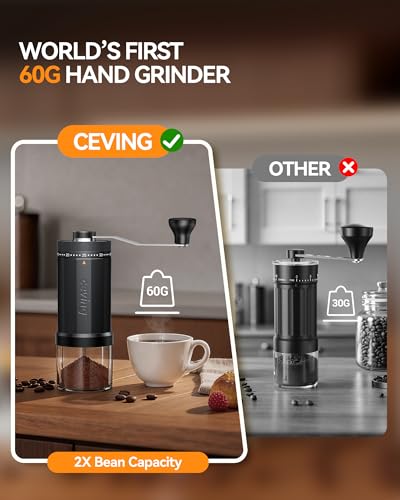
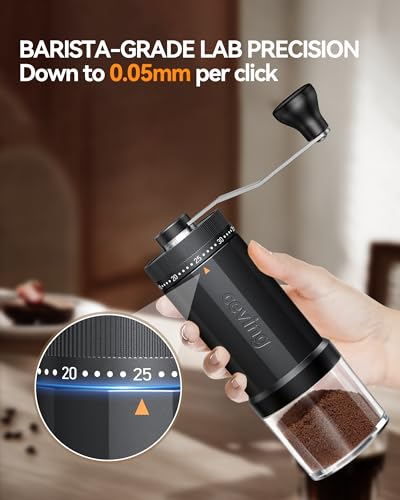
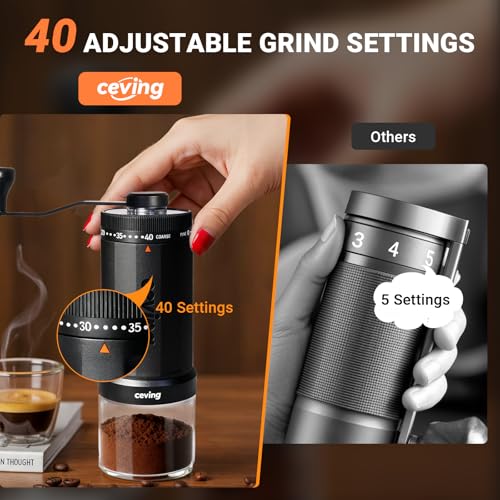
This is the one I’d pick as the best overall. It merges the rare 60g capacity with 40 external click settings and a ceramic conical burr, giving you volume, precision, and flavor preservation in one package. The 0.05mm per click adjustment is lab-grade, and owners confirm it produces remarkably even grinds across all brew methods.
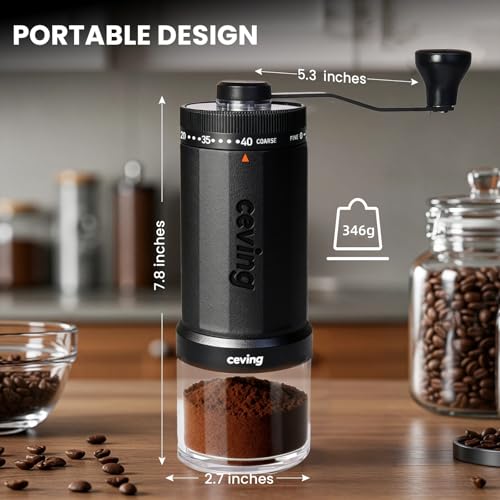
Weighing only 346g, it’s lighter than the stainless version, and the ceramic burr runs cooler, ideal for bright, acidic single origins. It’s portable enough for travel but robust enough for daily home use. The included warranty and customer support from CEVING add peace of mind. If you want one manual grinder to do it all, this is the closest thing to a perfect balance.
Product photos
CEVING 60g Stainless Steel Burr Grinder

Strengths
- 60g capacity
- 40 precise external settings
- Stainless steel burr
Trade-offs
- Heavier than most
- Slight heat buildup
- Higher price point
This is the tank of manual grinders, 60g capacity, stainless steel burrs, and 40 external click settings. It’s built for people who hate stopping mid-grind. The CNC-machined burr delivers speed and uniformity, and reviewers say it handles everything from Turkish to French press with ease. The 0.05mm per click adjustment is legit, this is one of the most precise manual grinders on the market.
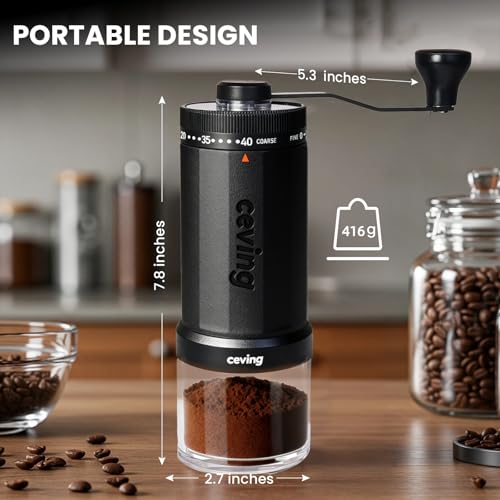
It’s also surprisingly portable at 416g, though bulkier than mini models. The stainless steel burr means it’ll last longer under heavy use, but it generates slightly more heat than ceramic, something purists might notice in delicate single origins. Still, for durability and performance, it’s hard to beat.
Product photos
CEVING Mini 30g Ceramic Grinder

Strengths
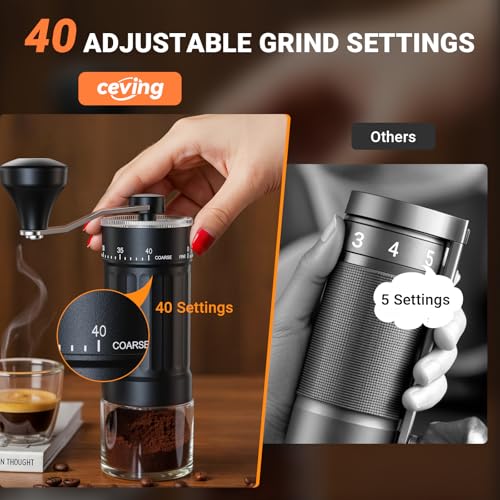
- 40 precise settings
- Lightweight and compact
- Ceramic burr for flavor
Trade-offs
- Small capacity
- Plastic body lacks heft
- Adjustment ring can feel loose
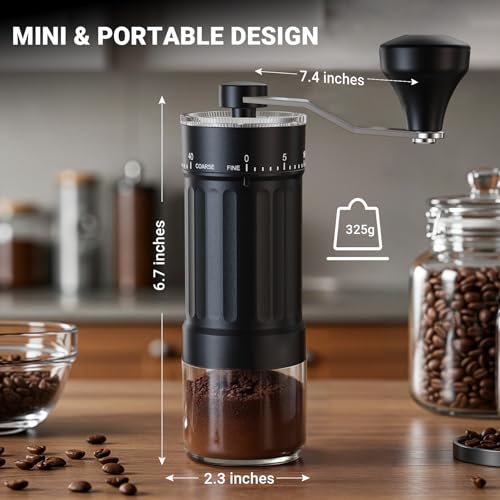
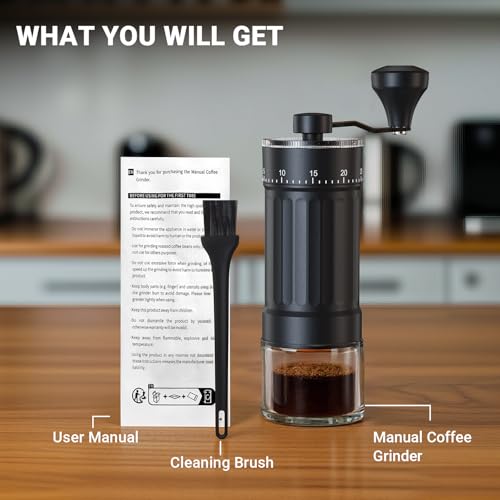
This little grinder packs a punch for travelers and minimalists. At just 325g and with 40 external grind settings, it gives you serious control in a tiny package. The ceramic conical burr is a smart choice, it keeps heat low and flavor clean, which reviewers consistently praise for pour over and espresso on the go. I appreciate that the settings are external, so you’re not spilling grounds every time you tweak the grind.
It only holds 30g, so you’re limited to one or two cups per grind, but that’s expected at this size. Owners say it’s durable for its class, though not as robust as larger metal models. For backpackers or office users who want fresh grind without noise or cords, this hits the sweet spot.
Product photos
JavaPresse Stainless Steel Grinder
Strengths
- Quiet operation
- Ergonomic handle
- Ceramic burr longevity
Trade-offs
- Only 18 settings
- Smaller capacity
- No external adjustment ring
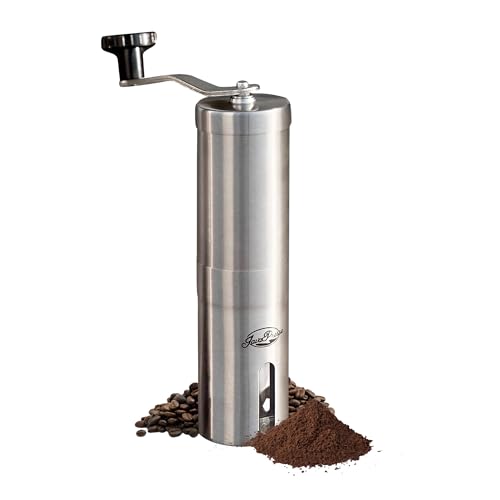
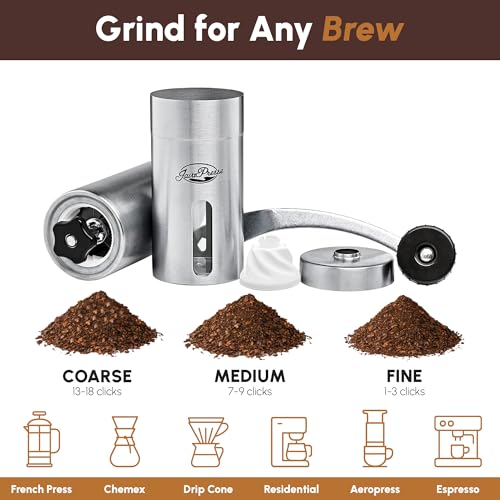
JavaPresse markets this as a travel grinder, and it holds up, compact, quiet, and built with a ceramic burr that’s been tested for longevity. The 18 grind settings aren’t as numerous as others, but they cover the essentials from espresso to French press. Owners love the smooth crank action and the fact that it’s nearly silent, perfect for early mornings without waking the house.
The ceramic burr is said to outlast metal ones, but real-world feedback is mixed. Some report chipping after months of heavy use. Still, the ergonomics are excellent, and the build quality feels premium. It’s not the most adjustable, but for travelers who want reliability and quiet operation, it’s a strong contender.
Product photos




Agilive Stainless Steel Burr Grinder
Strengths
- Stainless steel burr
- Precise grind control
- Durable aluminum body
Trade-offs
- Requires frequent cleaning
- Reset process is awkward
- No bean container included
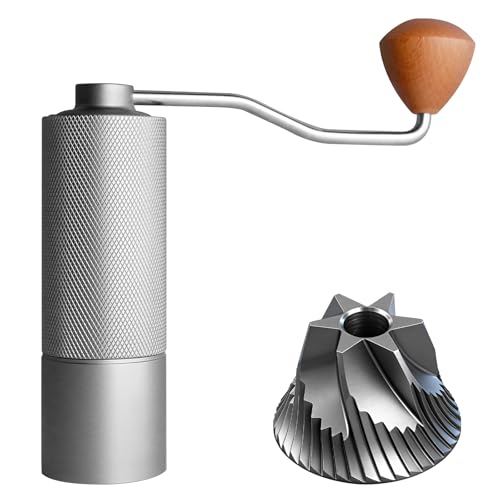
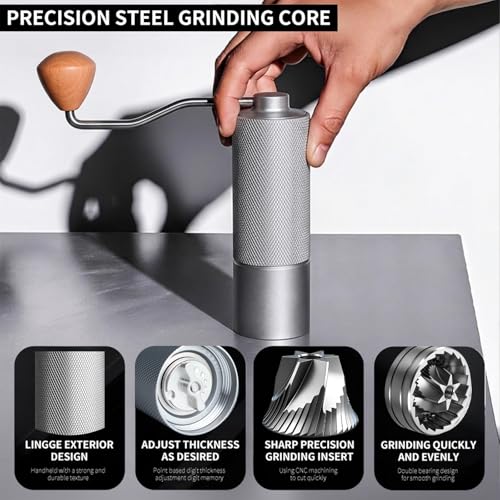
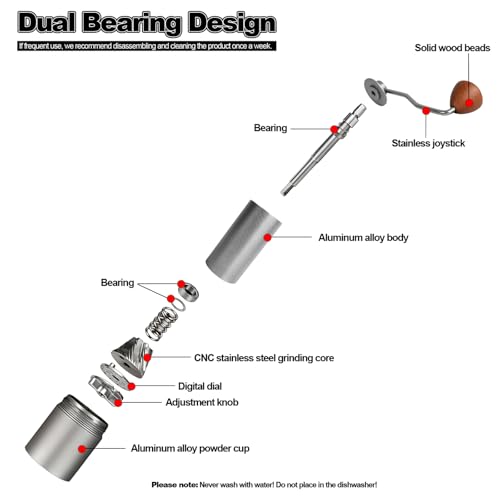
If you want metal burr performance in a manual grinder, this is where I’d lean. The 38mm stainless steel burr is CNC-machined, which means durability and consistent particle size, critical for espresso and pour over. Owners consistently report a cleaner, more balanced cup compared to ceramic, especially with darker roasts. The aluminum body feels solid, and the external adjustment dial makes switching brew methods quick.
But there’s a learning curve. The reset process before changing settings is fiddly, and you must clean it thoroughly each time to avoid clogging. Also, the ‘click’ settings are just guides, you’ll need to dial it in by taste. Still, for someone who wants barista-level control and doesn’t mind a bit of maintenance, this delivers.
Product photos

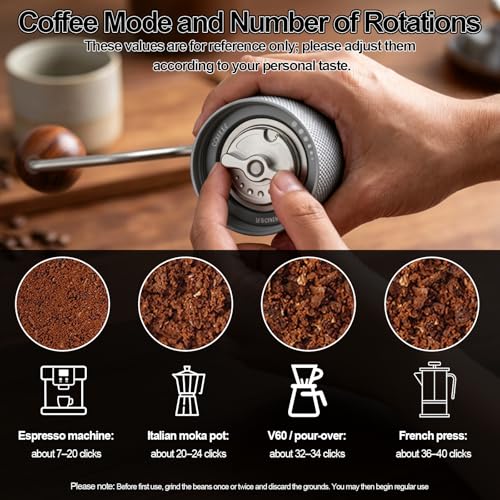

PARACITY Hand Grinder with Glass Jars

Strengths
- Includes two glass jars
- Stainless steel handle
- Ceramic burr for consistency
Trade-offs
- Glass jars易 break
- Base can slip on smooth surfaces
- No external setting markers
With two glass jars included and a ceramic burr, this grinder aims to be a practical home option. The stainless steel handle gives better use, which owners say reduces hand fatigue during longer grinds. The ceramic burr delivers a uniform grind across methods, French press, drip, even Turkish, and the adjustable settings are responsive enough for most home setups.
But the glass jars are a liability. Multiple reviewers report breakage during shipping, and glass just isn’t ideal for long-term durability in a busy kitchen. The grinder itself disassembles easily for cleaning, which is a plus, but you have to be cautious with moisture. For a home user who values clarity and ease of use, it’s solid, but not bulletproof.
Product photos
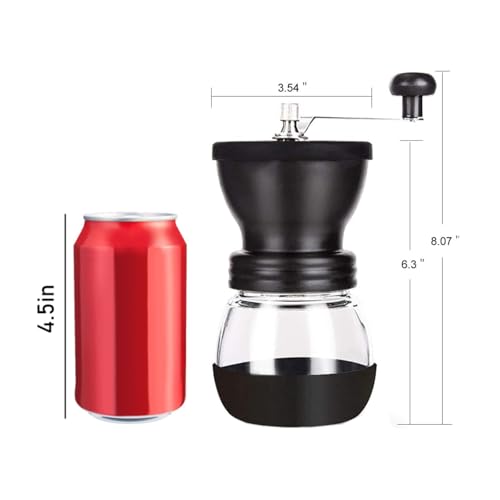
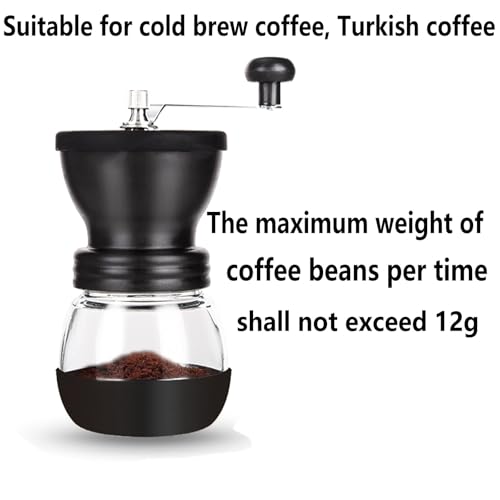
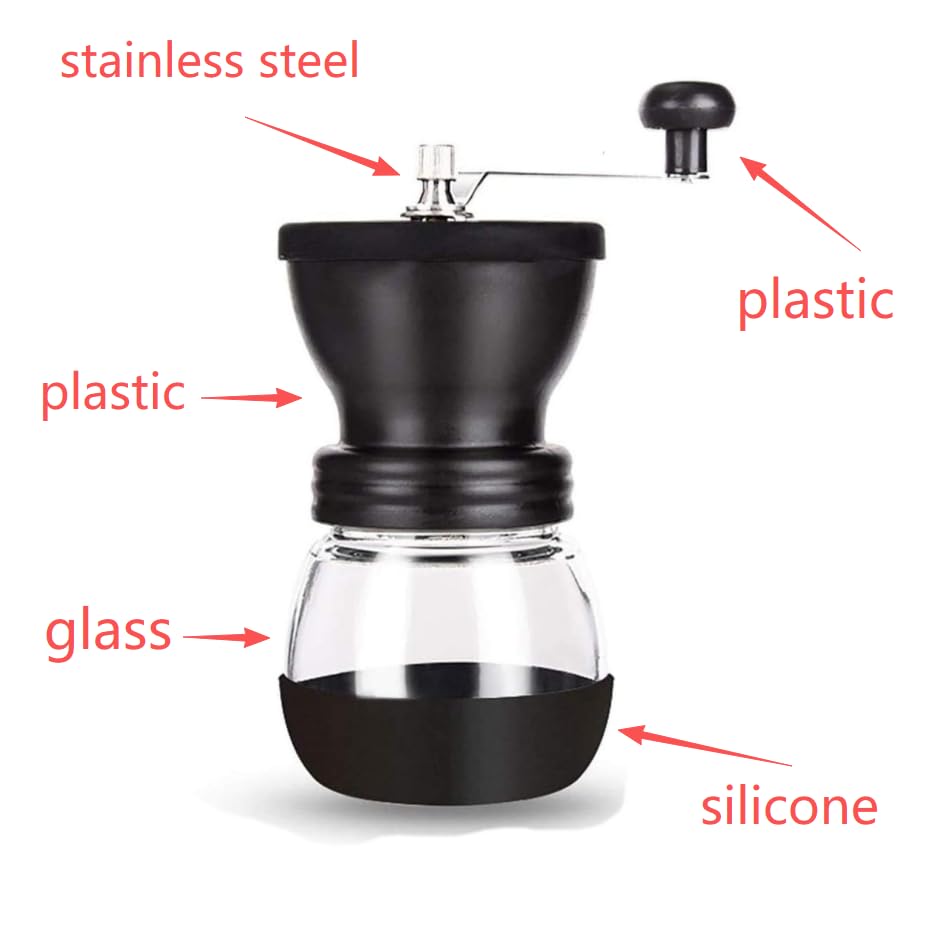
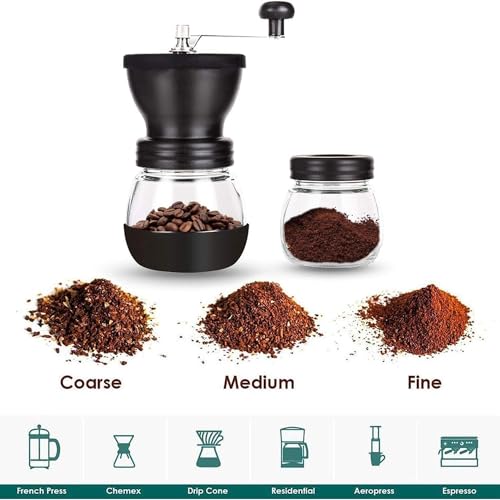

Wooden Antique Cast Iron Grinder

Strengths
- Vintage aesthetic
- Durable wood and iron
- No electricity needed
Trade-offs
- Inconsistent grind
- No precise settings
- Hard to clean thoroughly
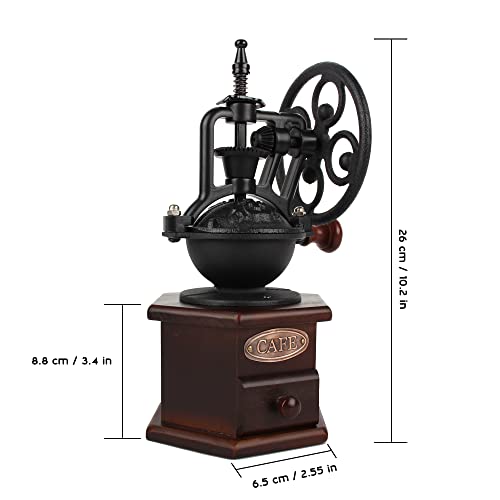
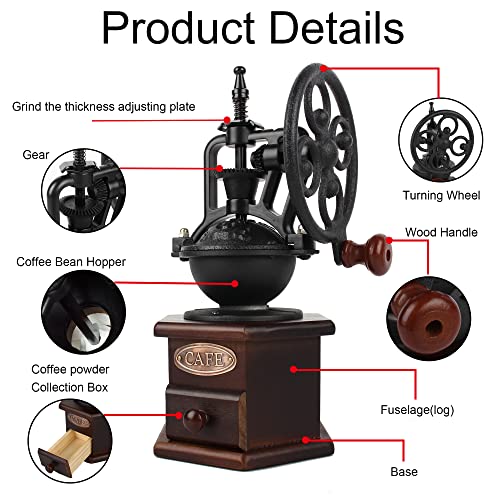
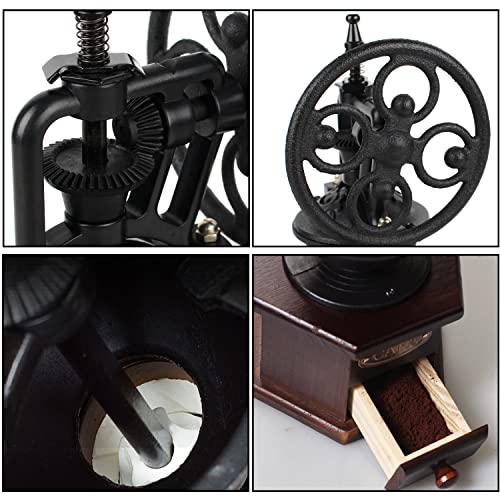
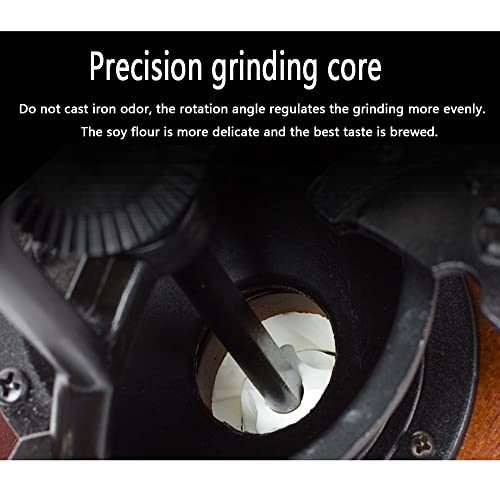
This hand crank grinder is clearly designed for looks first. The pine wood body and cast iron crank give it a rustic, vintage charm that stands out on a shelf or countertop. On paper, the ceramic core should preserve bean flavor by avoiding heat transfer, and owners confirm it produces a decent grind for French press or pour over when adjusted carefully.
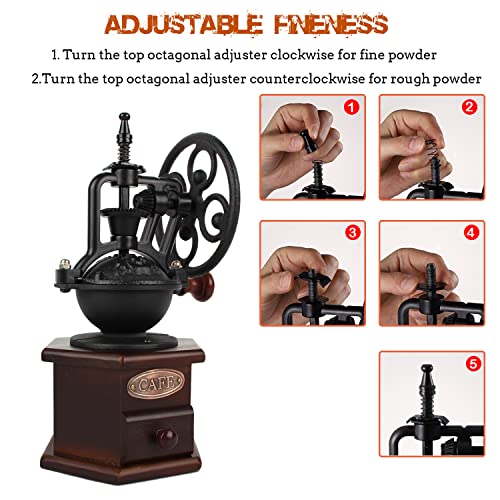
But let’s be real, this isn’t a precision tool. The fineness adjustment works, but it’s not as repeatable or fine-tuned as burr grinders with numbered settings. It feels more like a conversation piece than a daily driver, and some users report inconsistency in grind size over time. Still, if you want a grinder that doubles as decor and enjoy the ritual of hand grinding in a relaxed way, it has appeal.
Product photos
How We Picked These hand crank coffee grinder
As a founder deeply immersed in the world of coffee, I approached researching hand crank grinders by focusing on the factors that truly impact the final cup. Rather than a hands-on lab test with every model, this is a research-led comparison of published specifications and owner feedback. I weighed features, materials, and grind consistency claims against what users are actually experiencing, aiming to pinpoint the best options across different needs.
For hand crank grinders, consistency and durability are paramount. I heavily weighted burr material – ceramic versus stainless steel – and the precision of the grind settings. A wider range of settings is valuable, but useless if the grinder can’t deliver consistent results at each point. Capacity also played a role, as grinding larger batches is a common desire. Understanding the differences between a burr vs blade grinder is crucial to appreciating the importance of burr grinders in achieving quality results.
Specifications reliably tell you about build materials, burr size, and the range of grind settings. However, owner feedback is where the real-world performance comes into play. I paid close attention to reports on ease of use, static cling, and long-term durability. Reputation, particularly for brands known for quality, also factored in. A grind consistency comparison is critical, as even small inconsistencies can ruin a brew. Ultimately, the goal was to identify grinders that consistently deliver a quality grind, based on both stated features and user experiences, avoiding the common blade grinder limitations and capitalizing on the burr grinder advantages.
What To Look For In hand crank coffee grinder
Finding the right hand crank grinder really comes down to understanding what matters most for your daily brew.
A quality hand crank grinder prioritizes burr material (ceramic or steel) for consistent particle size, a robust build for longevity, and an easily adjustable grind setting. Look for models offering a wide range of settings to accommodate various brewing methods, from coarse French press to fine espresso. Consistent grind size is paramount for even extraction and flavorful coffee, while durability ensures years of reliable use.
Burr Material: Ceramic vs. Steel
The burr material is arguably the most important factor. While both ceramic and stainless steel burrs can deliver excellent results, they perform differently. Ceramic burrs, as seen in grinders like the CEVING 60g Ceramic Burr Grinder, generally run cooler, preserving more of the coffee’s delicate aromatics. However, they can be more brittle. Stainless steel burrs, like those in the CEVING 60g Stainless Steel Burr Grinder, are more durable and often grind faster, but can generate slightly more heat. I’ve found steel burrs tend to need replacement less often, especially with frequent use, but the flavor preservation of ceramic is appealing for lighter-roast single origins.
Grind Consistency and Adjustment
Don’t underestimate the importance of a precise grind adjustment. Many cheaper grinders offer limited settings or lack clear indicators, making it difficult to dial in the perfect grind for your preferred brewing method. Look for grinders with a good number of clearly defined settings – 40 settings, like those offered in both CEVING models, is a great benchmark. Even better is an external adjustment mechanism; fiddling with internal adjustments is messy and cumbersome. If you’re exploring top manual coffee grinders, pay close attention to how easily the grind size can be changed.
Portability and Capacity
If you plan on taking your grinder on the go – camping, traveling, or simply moving between rooms – size and weight become critical. The CEVING Mini 30g Ceramic Grinder and the JavaPresse Stainless Steel Grinder both prioritize portability, but come with the trade-off of a smaller bean capacity.
Here’s a quick rundown of what to consider regarding capacity: * Single Cup: 20-30g capacity is sufficient for a single serving. * Small Batch: 30-40g allows for a couple of servings or experimentation. * Family/Large Batch: 50g+ is ideal if you regularly brew for multiple people, eliminating the need to refill mid-grind.
A good rule of thumb is to choose a grinder capacity that aligns with your typical brewing volume to avoid unnecessary refilling and maintain efficiency.
I often recommend exploring manual coffee grinding methods as a backup, but a dedicated hand crank grinder delivers far superior consistency.
Hand Crank Coffee Grinders Compared
Here’s a comparison of key specifications for popular hand crank coffee grinders to help you make an informed decision.
| Product Name | Burr Material | Capacity (g) | Grind Settings | Portability | Body Material |
|---|---|---|---|---|---|
| CEVING 60g Ceramic Burr Grinder | Ceramic | 60 | 40 | Yes | N/A |
| CEVING 60g Stainless Steel Grinder | Stainless | 60 | 40 | Yes | N/A |
| CEVING Mini 30g Ceramic Grinder | Ceramic | 30 | 40 | Yes | N/A |
| JavaPresse Stainless Steel Grinder | Ceramic | N/A | 18+ | Yes | Stainless |
| Agilive Stainless Steel Burr Grinder | Stainless | N/A | N/A | N/A | Aluminum Alloy |
| PARACITY Hand Grinder with Glass Jars | Ceramic | N/A | Adjustable | N/A | N/A |
| Wooden Antique Cast Iron Grinder | Ceramic | N/A | Adjustable | N/A | Wood/Cast Iron |
Frequently Asked Questions
What’s the typical lifespan of a ceramic burr in a hand crank grinder?
A ceramic burr, with careful use, can last for many years – often exceeding five – because they don’t produce much heat during grinding. However, they are susceptible to chipping if stones or other hard objects accidentally enter the grinding chamber.
Is a hand crank grinder slower than an electric burr grinder?
Yes, hand grinding naturally takes longer. Expect around 2-3 minutes to grind enough beans for a single cup, versus the 30-60 seconds an electric grinder typically takes, but many people value the control and quiet operation of a hand grinder.
Can I use a hand crank grinder for espresso?
Yes, though it requires a grinder with very fine and precise adjustment capabilities. The CEVING 60g models offer 40 grind settings, making them suitable for dialing in espresso, but it demands more effort than with an electric espresso grinder.
What causes static cling in a hand crank grinder, and how can I reduce it?
Static cling happens when dry coffee grounds build up inside the grinder. Humidity is the main factor; increasing humidity in the room or adding a few coffee beans to the chamber before grinding can help. Look for grinders, like some JavaPresse models, designed with features to minimize static.
Where can I find more detailed comparisons of different hand crank grinders?
You can explore a more detailed look at various options, including a best hand-grind burr grinder guide on my site, which breaks down the pros and cons of different models for various coffee lovers.
The Bottom Line
Choosing a hand crank grinder often feels like balancing control with convenience. You’re opting for a deliberate, hands-on process, and the reward is a fantastic cup of coffee tailored to your exact preferences. For the best overall experience, combining consistent results with a generous capacity, I recommend the CEVING 60g Stainless Steel Grinder.
If you’re on a tighter budget, the JavaPresse Stainless Steel Grinder delivers excellent value. For those prioritizing portability – perhaps you’re a frequent traveler or camper – the CEVING Mini 30g Ceramic Grinder is a superb choice. And if you want a bit of everything, the CEVING 60g Ceramic Burr Grinder balances capacity, grind settings, and the flavorful benefits of ceramic burrs.
Ultimately, the specs matter less than developing a consistent routine and understanding your coffee. Regular cleaning is vital, and learning coffee grinder maintenance will extend the life of your grinder and ensure consistently delicious brews. Focus on fresh, quality beans and a methodical grind – those are the true foundations of a great cup.
