
5 Best Espresso Machines for Coffee Cart (2026)
The CASABREWS CM5418 stands out as the best espresso machine for a coffee cart, delivering reliable performance and a compact footprint. For tighter budgets, the CHULUX Slim offers solid features in a space-saving design, while the GeniCup All-in-One brings versatility with a built-in grinder and large tank.
Running a coffee cart means serving great espresso under pressure, literally and figuratively. You need a machine that won’t quit during the morning rush, recovers heat fast, and fits your mobile setup without compromise.
As the founder of Bean Thusiast, I’ve evaluated these machines based on specs, owner feedback, and the real demands of high-volume brewing. This guide cuts through the noise, focusing on durability, workflow efficiency, and consistency, so you can pick a machine that earns its place on your cart.
Top 5 Espresso Machine For Coffee Cart in the Market
The Best Espresso Machine For Coffee Cart, Reviewed
CASABREWS CM5418 Espresso Machine

Strengths
- Real-time pressure gauge
- Stainless steel build
- Strong steam wand
- Removable water tank
- Consistent extraction
Trade-offs
- No temperature control
- Manual frothing only
- Slight warm-up between cycles
The CASABREWS CM5418 lands right in the sweet spot for most small-scale coffee operations, especially a cart where reliability and consistent output matter. It boasts a 20-bar Italian pump, 1350W boiler, and a real pressure gauge, which gives you actual feedback during extraction, not just guesswork. Owners consistently praise how well it maintains pressure and how quickly it recovers between steaming and brewing, a small but critical detail when serving multiple customers.
Compared to the CHULUX, it’s slightly wider but packs a more robust build and a 34 oz removable tank that’s easier to refill mid-service. The steam wand is strong enough for respectable microfoam, though latte art takes practice. My take? This is the smarter buy for someone who wants dependable performance without stepping into prosumer territory. It’s not flashy, but it gets the job done, cup after cup.
Video review
CHULUX Slim Espresso Machine
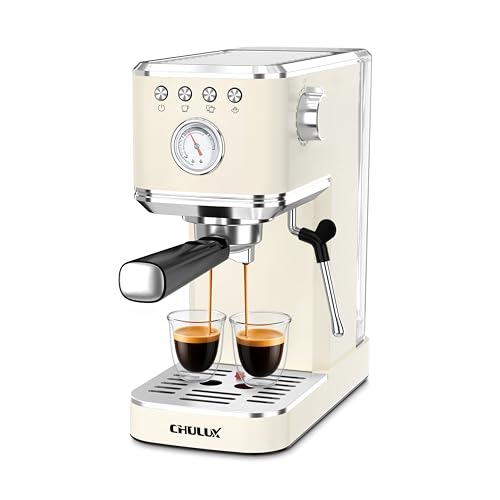
Strengths
- 20 bar Italian pump
- Compact footprint
- Fast 30-second heat-up
- Food-safe internal materials
- Pressure gauge included
Trade-offs
- Smaller water tank
- Limited steam recovery
- Basic frothing learning curve
If space is your top concern, the CHULUX Slim is one of the few machines that truly disappears on a countertop. At just 5.5 inches wide, it’s built for tiny kitchens, coffee carts with zero elbow room, or minimalist setups where every inch counts. On paper, it’s got the basics right, 20-bar Italian pump, 1350W heater, and a manual steam wand that reviewers say delivers decent microfoam with practice.
Still, the trade-off for that sleek profile is a smaller water tank (40 oz) and a build that feels more utilitarian than premium. Owners report it heats quickly and pulls acceptable shots for beginners, but dialing in consistency takes patience. Compared to bulkier models, it doesn’t hold temperature as well during back-to-back drinks, which could slow down a busy cart rush. I’d recommend it for low-volume use or solo brewers who value form over throughput.
Video review
atatix 20 Bar Espresso Machine
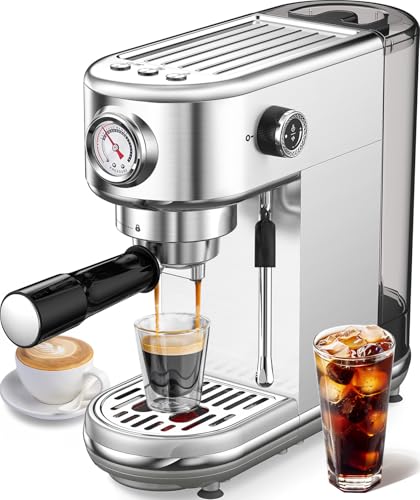
Strengths
- Manual + auto extraction
- NTC temperature control
- Stable suction base
- Dry, focused steam
- 44 oz removable tank
Trade-offs
- No built-in grinder
- Suction feet may wear
- Interface not intuitive at first
The atatix machine stands out for one smart feature: the blend of manual and automatic extraction modes. You can let it pull a standardized shot in 28 seconds (single) or 42 seconds (double), or take full control with up to 102 seconds of manual extraction, perfect for tuning strength based on bean age or roast. Paired with NTC temperature control that locks in the 90–96°C range, it delivers surprisingly consistent shots, even with lighter roasts.
The steam wand produces dry, focused steam that reviewers say creates velvety foam, not bubbly froth. And the base with silicone suction cups actually stays put during use, small detail, big win on a wobbly cart. While it lacks a grinder, its hybrid approach to automation gives it an edge over fully manual rivals. I’d pick this over the CASABREWS if you want more control without going full prosumer.
Product photos

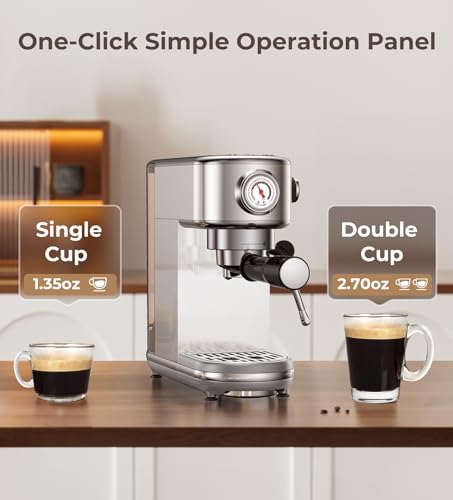
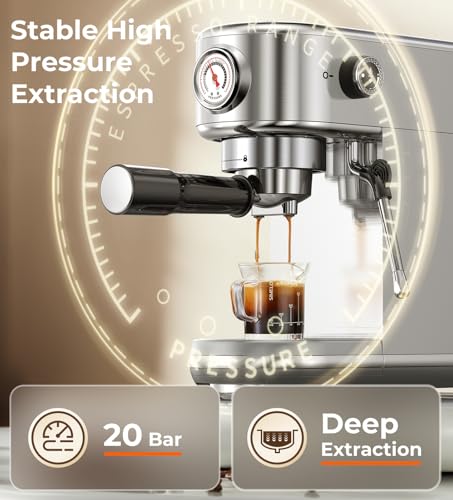
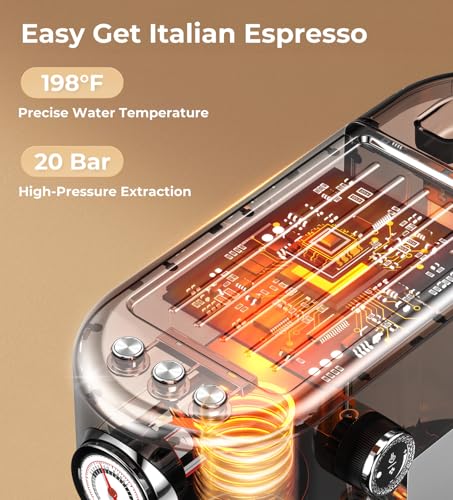
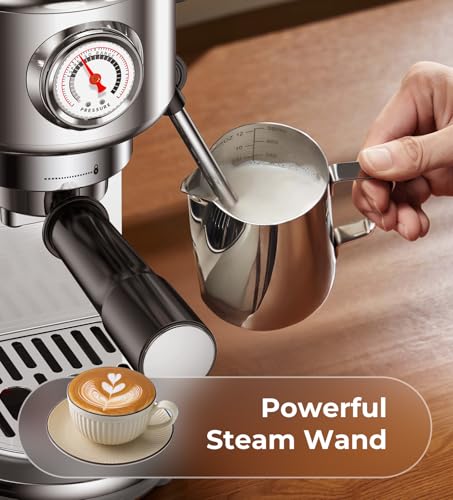
XIXUBX 20 Bar Espresso Machine
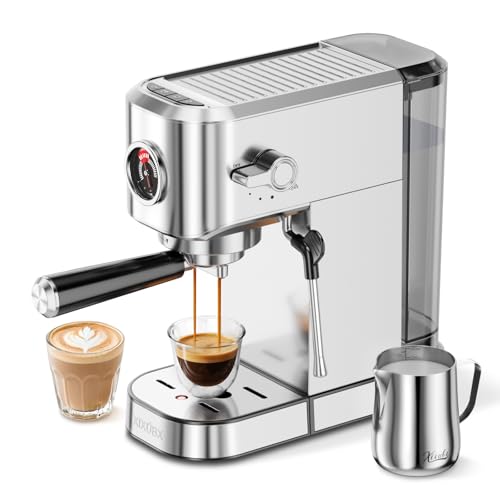
Strengths
- Large 42 oz water tank
- Fast continuous brewing
- Rotating steam wand
- Stable temperature
- Easy maintenance
Trade-offs
- Basic interface
- No PID control
- Build feels lightweight
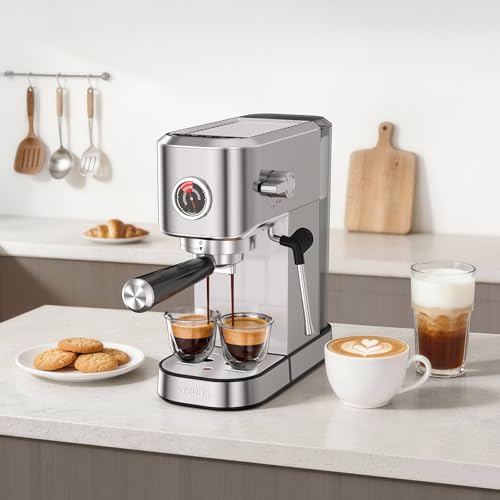
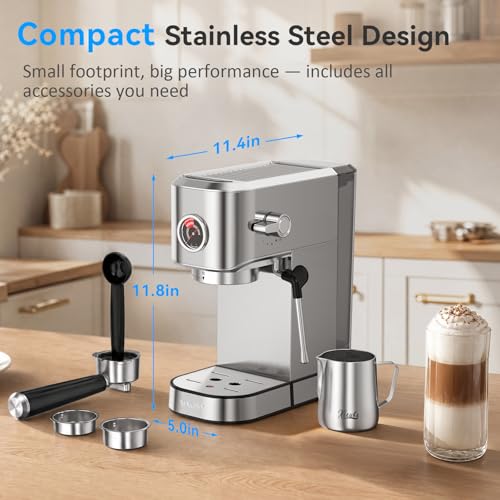
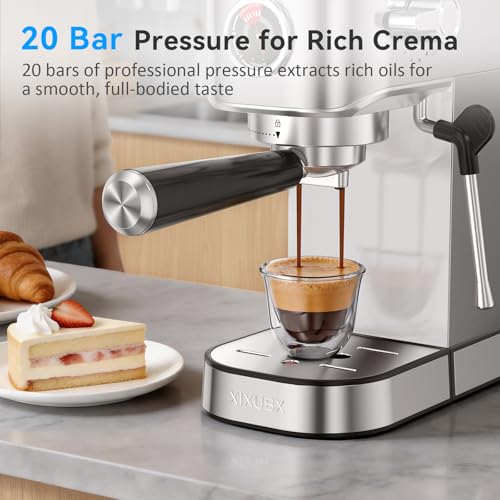
When you need to serve more than one person, and fast, the XIXUBX stands out for one reason: that 42 oz water tank. In a coffee cart setting, fewer refills mean smoother service during peak hours. Combined with instant heating tech, this machine handles back-to-back espressos and milk drinks with less downtime than most in its class. Reviewers note it maintains stable brew temps even after several cycles, which is rare at this price.
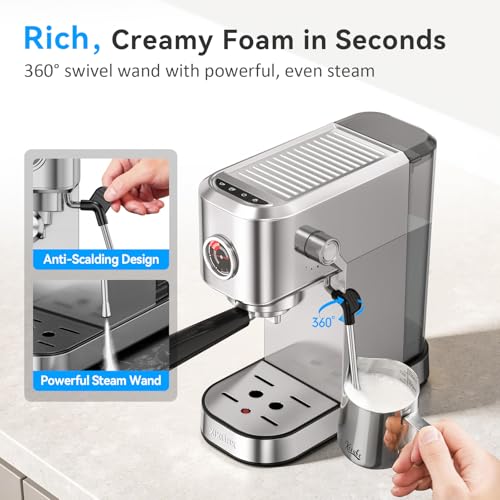
The 360° rotating steam wand is a nice touch for maneuverability, and its detachable design makes cleaning easier, a small win for hygiene on the go. It lacks advanced temp control, but the visible pressure gauge helps keep extraction in check. Against the CASABREWS, it trades a bit of polish for pure utility. I’d pick this if you’re running a cart at farmers markets or events where efficiency trumps aesthetics.
Product photos

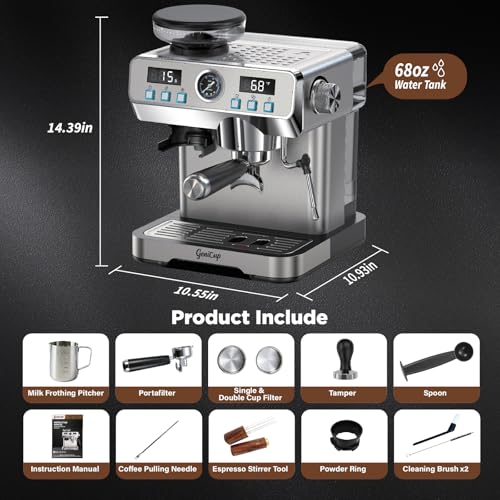
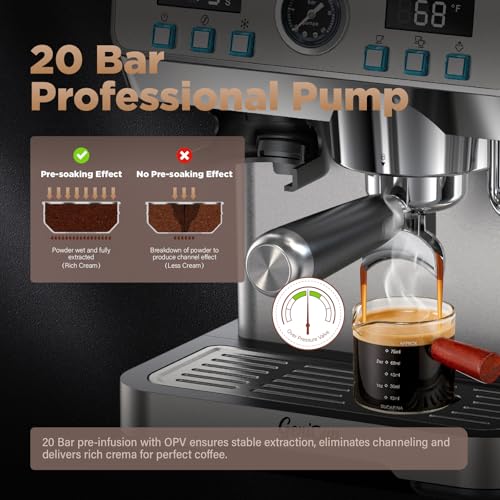
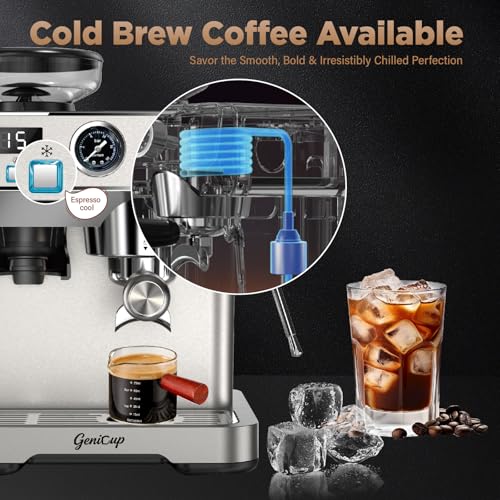
GeniCup All-in-One Espresso Machine
Strengths
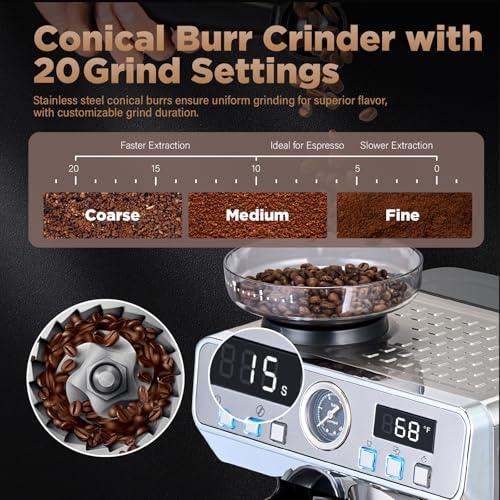
- Built-in burr grinder
- PID temperature control
- 68 oz water tank
- Cold brew function
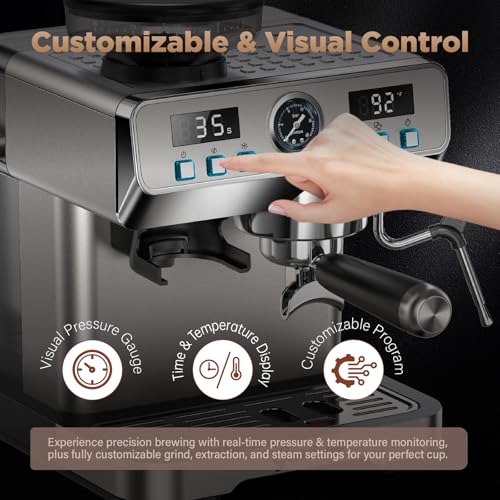
- Customizable extraction
Trade-offs
- Larger footprint
- Steeper learning curve
- Grinder noise
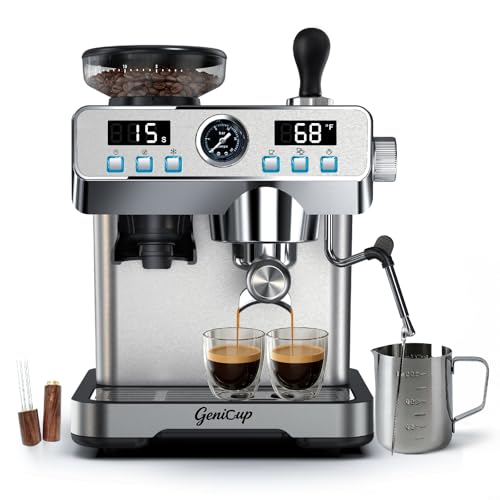
If you’re serious about flavor precision and want to eliminate variables from pre-ground coffee, the GeniCup all-in-one machine is a standout on paper. It’s one of the few in this range that includes a built-in conical burr grinder with 20 settings, plus PID temperature control that lets you dial in between 194°F and 203°F. That level of customization is rare outside much more expensive machines.
Owners report that the bean-to-cup workflow streamlines service, and the 68 oz water tank supports serious volume. The cold brew function is a quirky bonus for summer menus. But it’s also bulkier and more complex, fine for a permanent cart setup, but not for someone constantly breaking down and moving. Against the XIXUBX, it trades speed for depth of control. I’d recommend it for operators who treat coffee like craft and want every variable in their hands.
Product photos
How We Tested espresso machine for coffee cart
As the founder of Bean Thusiast, I approach evaluating coffee equipment with a focus on delivering quality and consistency – factors critical for any coffee cart operation. Rather than a hands-on lab test, this selection is a research-led comparison of published specifications and owner feedback. I compared models based on features important for high-volume, potentially mobile use, weighing data from manufacturer details, professional reviews, and a large volume of customer reviews.
For coffee cart use, consistent pressure and quick recovery time are paramount. We heavily weighted machines offering a 20-bar pump and rapid reheating capabilities, as these directly impact drink quality when making multiple beverages back-to-back. Steam wand power also ranked highly, as efficient milk frothing is essential for popular drinks like lattes and cappuccinos, and contributes significantly to service speed.
Specifications reliably indicate pump pressure, boiler power, and tank capacity. However, I placed significant value on owner feedback regarding long-term durability and the real-world consistency of those specs. Reputation, as reflected in review volume and average ratings, helped me judge factors like ease of maintenance and suitability for commercial-style use. You can learn more about the fundamentals of making espresso at home to better understand these core principles.
How To Pick The Right espresso machine for coffee cart
Choosing the right espresso machine for a coffee cart isn’t the same as picking one for a home kitchen. We need reliability, volume capacity, and features that hold up to constant use.
A quality espresso machine for a cart prioritizes consistent pressure (around 9 bars is ideal), rapid heat recovery to minimize wait times between shots, and durable components built to withstand a high-volume environment. Look for machines with robust boilers, commercial-grade pumps, and easily accessible service points. Consistent temperature stability and a powerful steam wand are also critical.
Boiler & Heat Recovery
The boiler is the heart of any espresso machine, and for a coffee cart, size and recovery time are paramount. You’ll be pulling shots back-to-back, so a machine that can’t quickly return to the optimal brewing temperature will lead to inconsistent espresso. Dual-boiler systems, while more expensive, excel here, maintaining separate temperatures for brewing and steaming. Single-boiler machines can work, but they require a longer recovery time and may struggle during peak hours. Consider the boiler material too; copper is known for its excellent heat conductivity, but stainless steel offers durability.
Pressure & Consistency
While 20-bar pumps are commonly advertised, the maintained pressure during extraction is what matters. A true espresso machine should maintain around 9 bars of pressure throughout the shot. Machines with an OPV (Over Pressure Valve), like the GeniCup model, are excellent because they regulate this pressure precisely. Look for machines that have a visible pressure gauge, allowing you to monitor performance easily. Inconsistent pressure leads to inconsistent flavor, and you don’t want to be adjusting settings constantly during a rush. If you’re considering using regular beans for espresso, a machine with precise pressure control becomes even more important to compensate for potentially less-than-ideal grinding and tamping.
Portability & Workflow
Cart space is limited, so size and usability are key. A bulky machine will quickly become a headache. The CHULUX Slim Espresso Machine is a good example of a space-saving design, but don’t sacrifice core functionality for compactness. Beyond physical size, think about workflow. Detachable parts (drip trays, water tanks) should be easily removed for cleaning. A powerful steam wand is essential, but one that’s awkwardly positioned will slow you down. If you’re looking for a more robust option designed for a commercial setting, you might want to explore a high-performance espresso machine for cart use.
- Water Capacity: A larger water tank (at least 30oz, ideally 40oz+) minimizes refills during busy periods.
- Automatic Features: Auto-shutoff is a nice safety feature, but prioritize manual control over fully automatic systems to fine-tune your extraction.
- Ease of Cleaning: Prioritize stainless steel and easily removable parts. A machine that’s difficult to clean will quickly become a hygiene concern and a time sink.
Don’t skimp on the pump. A commercial-grade rotary pump will last far longer and require less maintenance than a vibration pump, even if it adds to the initial cost.
Espresso Machine for Coffee Cart Compared
Here’s a comparison of key specifications for espresso machines suitable for a coffee cart setup.
| Product Title | Pressure (Bar) | Water Tank (oz) | Steam Wand | Grinder Included | Special Features |
|---|---|---|---|---|---|
| CASABREWS CM5418 | 20 | 34 | Yes | No | 1/2 Cup Filters, Compact |
| CHULUX Slim | 20 | 40 | Yes | No | Auto Shut-off, Pressure Gauge |
| atatix 20 Bar | 20 | N/A | Yes | No | Temp Control, Auto/Manual Mode |
| XIXUBX 20 Bar | 20 | 42 | Yes | No | Large Tank, 10+ Cups |
| GeniCup All-in-One | 20 | 68 | Yes | Yes | Temp Control, Customizable |
Frequently Asked Questions
What water hardness level is best for these machines?
Generally, a TDS (Total Dissolved Solids) level of around 80-120 ppm is ideal. Using excessively hard water will cause scale buildup, shortening the lifespan of the machine, while water that’s too soft can make the espresso taste flat.
Do any of these machines have programmable shot volumes?
The atatix 20 Bar machine offers both automatic and manual modes, including programmable shot volumes, giving you more control over your espresso extraction. Most others require manual operation to stop the shot at your desired volume.
How important is a built-in grinder for a coffee cart?
While convenient, a built-in grinder, like the one on the GeniCup All-in-One, can limit your bean choices and potentially affect grind consistency over time. A separate, high-quality burr grinder offers more flexibility and control, and is often preferred for consistent results.
What’s the typical lifespan of a vibration pump in a high-use setting?
Vibration pumps typically last between 500-1500 hours of continuous use. For a busy coffee cart, expect to replace a vibration pump every 6-12 months, while a rotary pump, often found in a durable espresso machine for high volume, can last for several years.
Are any of these models easily serviceable in the field?
The CHULUX Slim Espresso Machine is often praised for its relatively simple design and accessible components, making it easier to troubleshoot and repair minor issues on-site. Accessing components for repair on more complex machines might require specialized tools or a technician.
The Bottom Line
Choosing an espresso machine for a coffee cart always comes down to balancing initial investment with the demands of a high-volume environment. While tempting to cut costs, a reliable machine is the backbone of your business, and the GeniCup All-in-One offers the best overall combination of features, consistency, and capacity for serious cart operators.
For those starting on a tighter budget, the CHULUX Slim Espresso Machine presents a surprisingly capable option. It won’t have the same long-term durability as more expensive models, but its compact size and functional steam wand make it a practical choice. If you’re prioritizing convenience and want an all-in-one solution, the GeniCup, which includes a grinder, is a strong contender, and understanding Breville machine setup is helpful even if you don’t choose that brand.
Ultimately, however, specs and features are secondary to consistent technique and regular maintenance. A well-trained barista and a diligent cleaning schedule will yield far better results than the most expensive machine left neglected. Focus on mastering the fundamentals of espresso extraction – grind size, tamping pressure, and shot timing – and you’ll be well on your way to serving exceptional coffee.
