
6 Best Espresso Grinders for Coffee Shops 2026
The best espresso grinder for a coffee shop is the Breville Smart Grinder Pro, thanks to its 60 grind settings, conical burrs, and precise dosing. For a more budget-friendly option, the SHARDOR Conical Burr Espresso Grinder delivers solid performance with 51 settings and reliable consistency.
Running a coffee shop means every second counts, and inconsistent grinds can ruin extraction, waste beans, and slow down service. I’ve seen how the wrong grinder becomes a bottleneck behind the bar.
This guide cuts through the noise. Based on specs, owner feedback, and what matters in a real shop setting, grind consistency, durability, and workflow efficiency, I’ve identified the grinders that actually deliver. We focused on burr quality, adjustability, and real-world reliability, not just features on a spec sheet.
Top 6 Espresso Grinder For Coffee Shop in the Market
The Best Espresso Grinder For Coffee Shop, Reviewed
SHARDOR Conical Burr Espresso Grinder
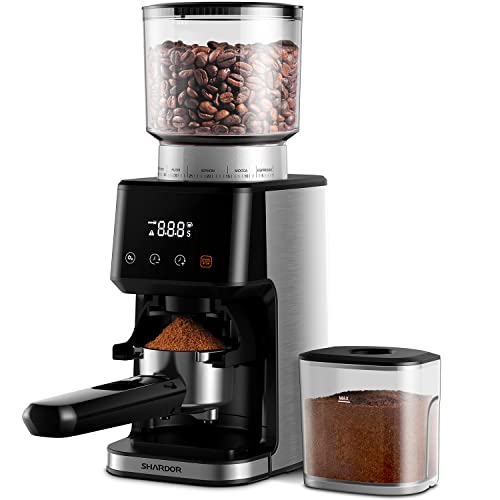
Strengths
- 51 grind settings
- Precision 0.1s timer
- Anti-static technology
- Portafilter-ready
Trade-offs
- Touchscreen can be sensitive
- Slight retention in chute
- Build quality not pro-tier
This is the most complete SHARDOR model yet, and it justifies its ‘Best Overall’ label with real upgrades. The 40mm stainless steel conical burr, 51 grind settings, and 0.1-second timer increments deliver near-Breville-level precision at a lower price. Anti-static tech reduces mess, and the portafilter cradle is height-adjustable, practical for most setups.
Reviewers highlight its consistency for espresso, with fewer fines and clumps than cheaper models. It doesn’t quite match the Breville in retention or durability, but for most home users, the difference is negligible. When you factor in the touchscreen and fine-tuned timer, it outshines the basic SHARDOR electric grinder by a wide margin. This is the one to get if you want café-level results without stepping into prosumer pricing.
Video review
SHARDOR Electric Burr Coffee Grinder
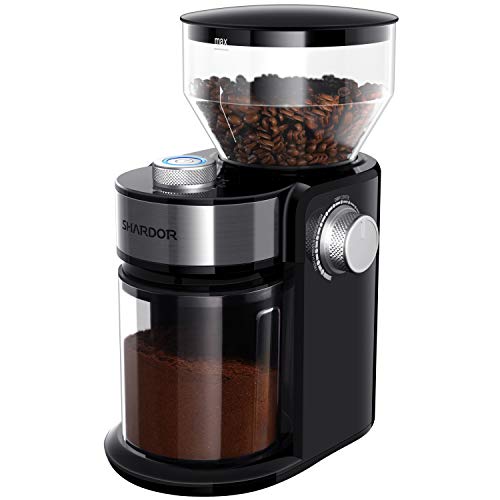
Strengths
- Flat burr grinding
- 16 grind settings
- Easy to clean
Trade-offs
- Limited precision
- No timer or dose control
- Heat buildup on repeat use
This grinder hits a sweet spot for budget-focused buyers who still want burr consistency. The flat burrs deliver a more uniform grind than blade models, and 16 settings give you room to dial in for espresso or go coarse for French press. It’s not going to rival high-end machines, but for home use where precision isn’t mission-critical, it gets the job done without fuss.
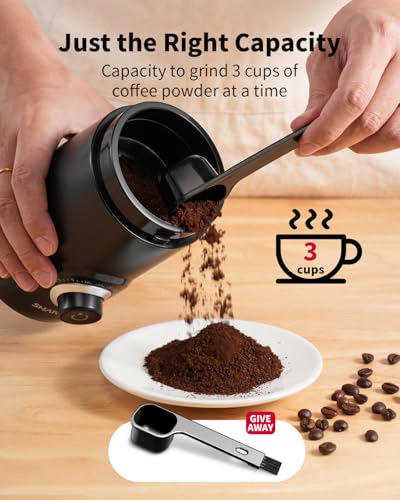
Owners consistently report it’s reliable for occasional use, though heat buildup can be an issue during back-to-back grinds. The 14-cup capacity is practical for small households, and the removable parts make cleaning manageable. Compared to pricier options, it lacks dose control or portafilter clearance, so it’s best for those just stepping into specialty coffee.
Video review
SHARDOR 70g Electric Coffee Grinder
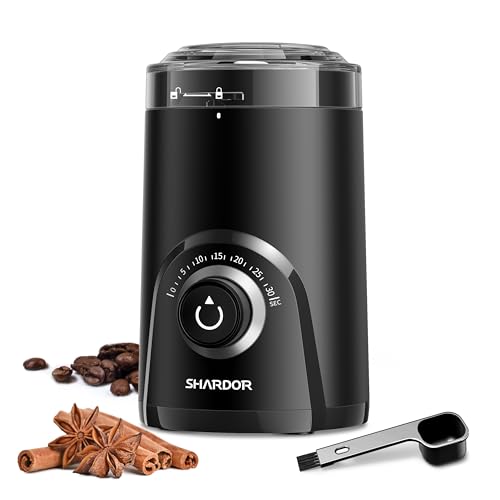
Strengths
- Ultra-quiet at 63 dB
- 70g capacity
- Multi-purpose use
- Visual timing knob
Trade-offs
- Blade grinding (not burr)
- Inconsistent particle size
- Not ideal for espresso
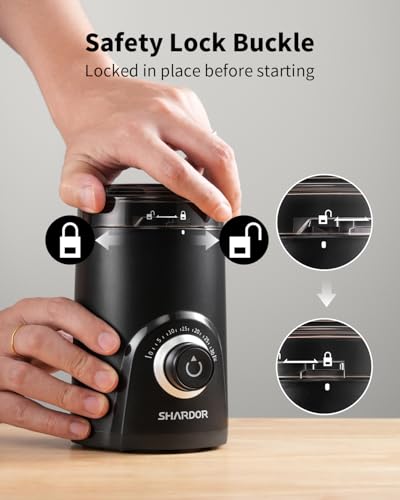
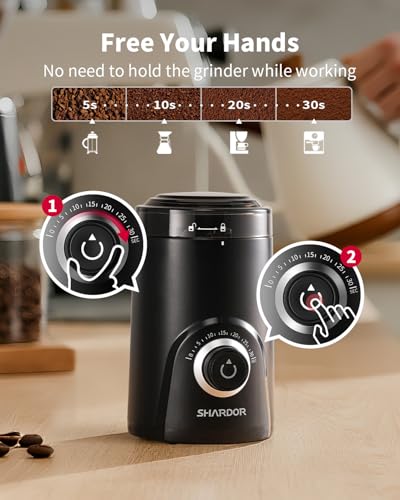
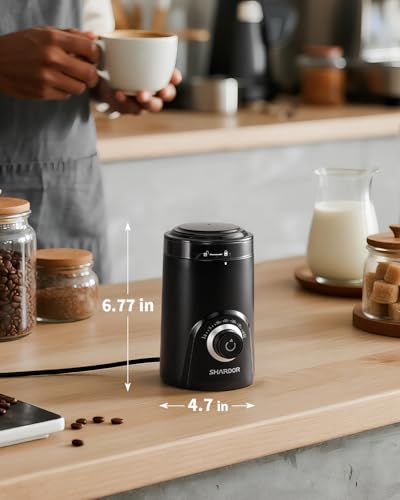
What stands out here is the 63 dB noise level, unusually quiet for an electric grinder. That makes it a strong pick for shared spaces, offices, or early risers who don’t want to wake the household. The visual timing knob is a clever touch, letting you manually control grind duration with clear second markings, which helps replicate results without digital programming.
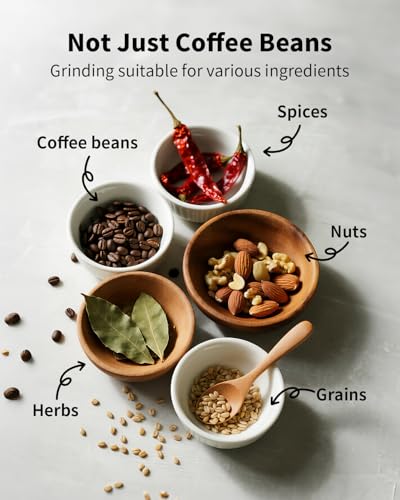
It uses stainless steel blades, not burrs, so grind consistency is a step down from conical models. That’s a trade-off: you gain quiet operation and multi-use flexibility (it handles spices and grains), but lose the uniform particle size essential for great espresso. Compared to burr grinders like the Breville or upgraded SHARDOR models, this one is more kitchen tool than coffee specialist.
Product photos
Breville Smart Grinder Pro
Strengths
- 60 grind settings
- Precision dose control
- LCD display
- Grinds into portafilter
Trade-offs
- Noticeable grind retention
- Larger footprint
- Audible motor noise
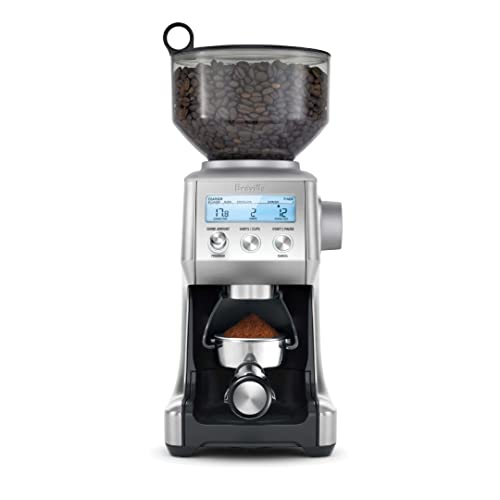
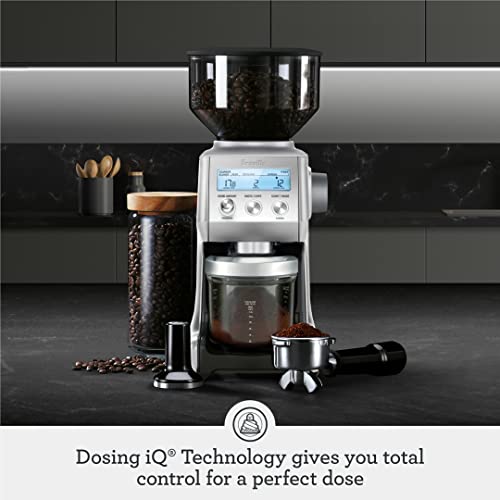
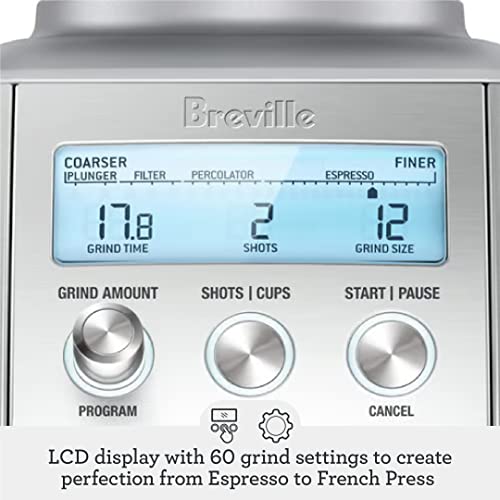
If you’re serious about dose repeatability and grind precision, the Smart Grinder Pro stands out in the mid-tier market. With 60 grind settings and DosetIQ technology, it lets you tweak grind time in 0.2-second increments, this is the kind of control that matters when pulling tight espresso shots. The LCD screen adds clarity, showing exactly what you’ve programmed, and the dual portafilter cradles fit most popular sizes.
On paper, it’s built for home baristas who want café-like consistency. Reviewers note it handles daily use well, though some mention minor retention issues. Compared to the SHARDOR models, this one offers far better dose accuracy and build quality, though it’s bulkier and noisier. For someone scaling up from entry-level gear, this is where real refinement begins.
Product photos


Aromaster Conical Coffee Bean Grinder
Strengths
- 48 grind settings
- Anti-static design
- Large bean capacity
- Stainless steel burr
Trade-offs
- Analog timer (less precise)
- Basic portafilter clearance
- 1-year warranty (shorter)
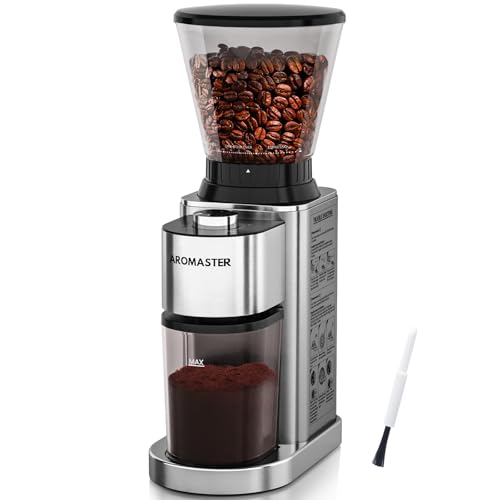
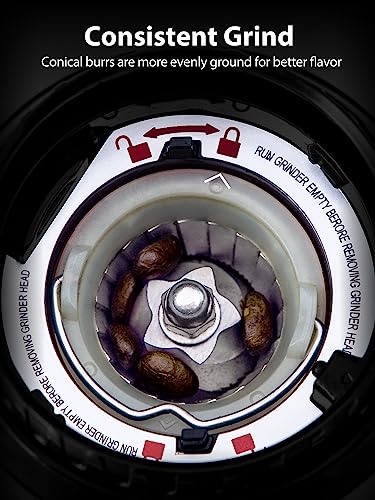
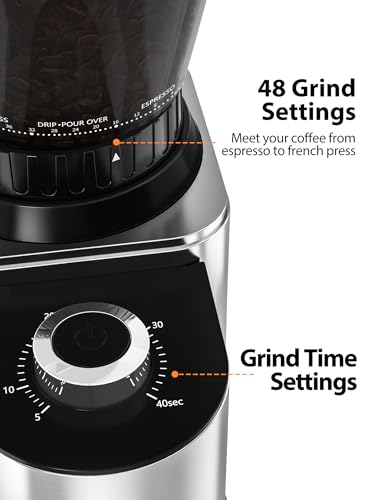
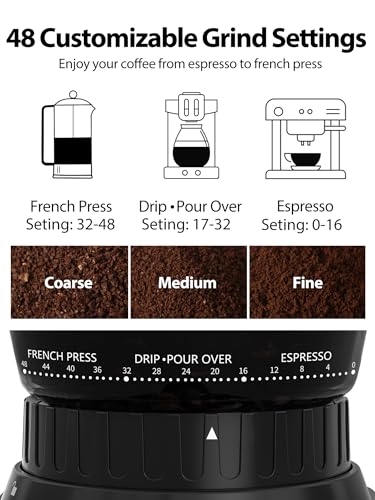
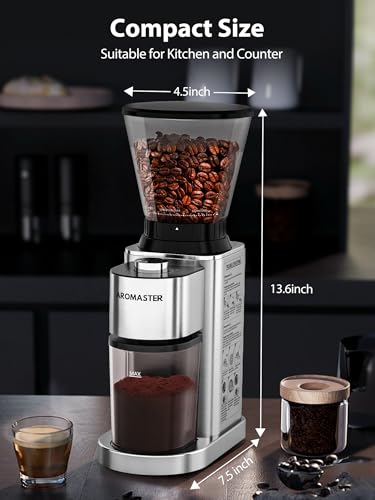
With 48 grind settings and a 40-second timer, the Aromaster delivers solid value for home and light commercial use. The stainless steel conical burr grinds evenly and stays cool, preserving bean flavor, owners report it handles back-to-back grinds better than some competitors in this range. Anti-static tech keeps the bin clean, and the large 3.9-ounce hopper suits small offices or families.
It doesn’t have the brand recognition of Breville, but on specs and owner feedback, it holds up well against the mid-tier field. It lacks the digital finesse of the SHARDOR touchscreen model or Breville’s dose precision, but for a café starter or serious home user, it’s a smart middle ground. I’d pick this over the basic SHARDOR electric grinder any day for its build and adjustability.
Product photos

Rsoilch Manual Coffee Grinder

Strengths
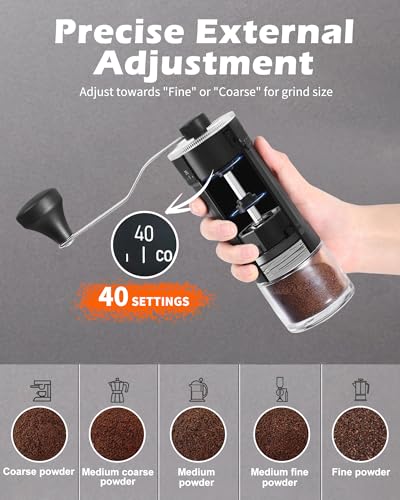
- 40 grind settings
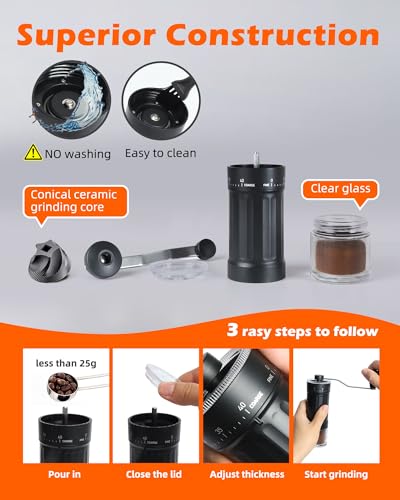
- Ceramic conical burr
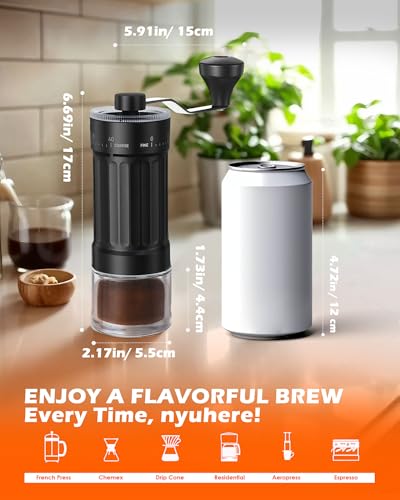
- Compact and portable
Trade-offs
- Slow for espresso volumes
- Hand fatigue on fine grinds
- No dose consistency automation
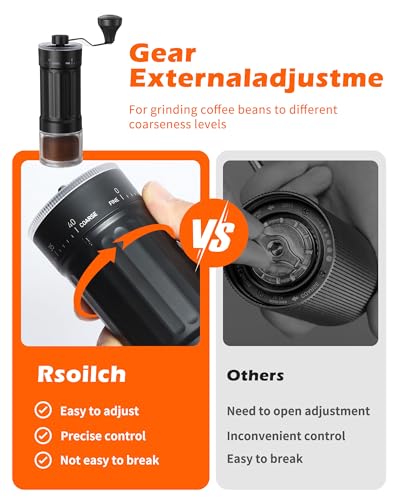
Manual grinders live in a niche, but this one carves out space with 40 grind settings and a ceramic conical burr, rare at this price. The adjustability means you can actually hit a true espresso grind, not just a pseudo-fine setting. Ceramic burrs resist heat and corrosion, which helps preserve flavor, especially when grinding slowly.
It’s not for everyone. Hand grinding 18 grams for a double shot takes effort and time, and the learning curve is steeper than electric models. But for travelers, campers, or minimalists, the portability and lack of cords are a win. Compared to electric options, it’s nowhere near as fast, but it offers surprising control for a manual unit. I’d recommend it only if you value silence and mobility over convenience.
Product photos

How We Evaluated espresso grinder for coffee shop
As the founder of Bean Thusiast, I approach evaluating coffee equipment with a focus on how well it delivers a quality, consistent result. Rather than a hands-on lab test of each grinder, this selection is a research-led comparison of published specifications, features, and – crucially – owner and expert feedback. We assessed each model against criteria relevant to a coffee shop environment: grind quality, consistency, capacity, speed, and durability.
For coffee shops, grind consistency and the ability to dial in precise settings are paramount. We heavily weighted grinders offering a wide range of adjustments (at least 40 settings) and those incorporating conical burrs, as these generally provide more uniform particle sizes. Capacity was also key; a shop needs to grind enough beans to keep up with demand without constant refilling. Understanding the burr vs blade grinders is also vital for shops seeking to ensure quality.
Specifications reliably indicate grind adjustment ranges and hopper capacity. However, real-world performance – particularly noise levels, static, and long-term durability – are better understood through owner reviews. We carefully weighed feedback regarding ease of cleaning, frequency of jams, and the grinder’s ability to maintain its calibration over time. Expert reviews helped us assess the quality of construction and pinpoint potential weak points, especially regarding grind consistency for espresso.
Choosing The Right espresso grinder for coffee shop
As someone who’s spent years chasing the perfect shot, I know a good espresso grinder is arguably more important than the espresso machine itself.
A quality espresso grinder prioritizes consistent particle size, minimal heat generation during grinding (to preserve aromatics), and adjustability to fine-tune for different beans and brew methods. Look for conical burrs, a wide range of grind settings, and features that promote dosing consistency. Build quality and ease of cleaning are also key considerations.
Burr Type and Grind Consistency
The heart of any espresso grinder is its burr. While you’ll find both flat and conical burrs, for a coffee shop environment, conical burrs generally offer more forgiveness with oily beans and produce less static. More importantly, focus on the quality of the burr material. Stainless steel is the standard, and you’ll want to avoid anything ceramic if you anticipate high volume – they’re more prone to chipping. Consistent grind size is paramount; even small variations impact extraction. If you’re considering upgrading from a home setup, explore top commercial espresso grinders designed for demanding environments.
Dosing and Workflow
Speed and efficiency are critical in a coffee shop. Consider whether you need single-dosing capability (grinding only what you need for each shot) or a hopper-fed grinder. Hopper-fed grinders are faster, but single-dosing gives you more control and minimizes stale grounds. Look for grinders with features like portafilter cradles or precise dosing mechanisms. The Breville Smart Grinder Pro, for example, includes both, but remember to check owner reviews regarding durability at high volumes. Remember, mastering adjusting burr grinder settings is essential for consistently great espresso.
Budget and Features
Espresso grinder prices vary wildly. You can find serviceable entry-level electric burr grinders for around $150, but a robust, reliable grinder for a commercial setting will likely cost $500 or more. Don’t skimp here. Features like programmable timers, grind-time adjustments in small increments (like the 0.2-second increments on the Breville), and quiet operation are all valuable, but prioritize burr quality and grind consistency first.
- A basic grinder might offer 10-20 grind settings.
- Mid-range grinders, like the SHARDOR options, often provide 30-50 settings, giving you more granular control.
- High-end grinders (Breville Smart Grinder Pro and beyond) boast 60+ settings and advanced features like grind-weight-based dosing, allowing for extremely precise and repeatable results – absolutely essential if you’re looking at professional espresso grinding equipment.
A consistent grind is the foundation of a good espresso. Don’t chase features at the expense of particle size uniformity.
Espresso Grinder for Coffee Shop Compared
Here’s a comparison of key specifications for espresso grinders suitable for a coffee shop environment.
| Product Title | Burr Type | Grind Settings | Capacity (oz) | Hopper Capacity (oz) | Automation |
|---|---|---|---|---|---|
| SHARDOR Conical Burr Espresso Grinder | Conical | 51 | N/A | N/A | Electric |
| SHARDOR Electric Burr Coffee Grinder | Flat | 16 | 14 | N/A | Electric |
| SHARDOR 70g Electric Coffee Grinder | N/A | N/A | 2.5 | N/A | Electric |
| Breville Smart Grinder Pro | Conical | 60 | N/A | 18 | Electric |
| Aromaster Conical Coffee Bean Grinder | Conical | 48 | 3.9 | N/A | Electric |
| Rsoilch Manual Coffee Grinder | Ceramic | 40 | N/A | N/A | Manual |
Frequently Asked Questions
What grinder maintenance is most crucial for a coffee shop?
Regular cleaning is vital; coffee oils build up and affect grind quality. Daily removal of grounds and weekly deep cleaning of the burrs (following the manufacturer’s instructions) prevents clumping and ensures consistent performance. Neglecting this will quickly impact your espresso quality.
How important is a grinder’s noise level in a busy shop?
Noise is a significant factor. While all grinders produce some sound, quieter models (typically those with insulated housings or slower motor speeds) create a more pleasant environment for both baristas and customers. Look for decibel ratings if available, or prioritize owner feedback mentioning noise levels.
What hopper capacity do I really need for a coffee shop?
A hopper capacity of at least 1 lb is generally recommended, but it depends on your volume. Higher-volume shops will benefit from larger hoppers (2 lbs or more) to minimize refills during peak hours. Consider how frequently you rotate beans to maintain freshness.
Can a manual grinder work for a coffee shop, even a small one?
While possible, a manual grinder isn’t practical for most coffee shop settings. They are too slow and physically demanding for consistent, high-volume service. You’ll find more appropriate commercial coffee grinder recommendations designed for efficiency.
What should I do if my grinder starts producing inconsistent grinds?
First, check for obstructions or buildup around the burrs and clean them thoroughly. If the issue persists, it might indicate worn burrs or a calibration problem. You may need to adjust the grind settings carefully or consider professional servicing, especially if you’re seeking [professional coffee shop grinders] for reliable results.
The Bottom Line
Choosing an espresso grinder for a coffee shop always involves balancing control with the demands of a fast-paced environment. While many options exist, the Breville Smart Grinder Pro strikes an excellent balance of features, consistency, and price, making it a solid all-around choice for shops prioritizing quality and repeatability. It isn’t the cheapest option, but consistently good espresso is the goal, and this grinder delivers.
For those operating on a tighter budget, the SHARDOR Conical Burr Espresso Grinder offers a surprising number of grind settings for the price, and feedback suggests it’s reasonably durable for lower-volume applications. If workflow is your primary concern and you need a simple, fast grinder, the SHARDOR Electric Burr Coffee Grinder, despite its limited settings, could be a pragmatic choice. Remember, regular espresso grinder maintenance steps are crucial for any model you select.
Ultimately, specs and features matter less than the fundamentals: a quality burr set, consistent grind size, and a commitment to regular cleaning. Don’t get lost in the pursuit of the most settings or the quietest operation if it comes at the expense of those core principles. Prioritizing those will ensure you’re pulling consistently excellent shots, day in and day out, and that’s what truly matters for a thriving coffee shop.
