
7 Best Entry Level Coffee Grinders of 2026
The Baratza Encore stands out as the best overall entry-level coffee grinder, delivering reliable grind consistency and build quality that owners consistently praise. For a budget-friendly alternative, the OXO Brew Conical Burr Grinder offers strong performance with helpful features like reduced static. If you’re looking for maximum control, the Aromaster Conical Coffee Grinder provides an impressive 48 settings at a competitive price.
Most beginners don’t realize how much a poor grinder can ruin even the best beans. Uneven grinds lead to sour or bitter coffee, no matter how carefully you brew. After years of tracking this category and analyzing specs, reviews, and feedback, I focused on consistency, durability, and real-world usability.
This guide cuts through the noise by comparing burr types, grind range, and long-term reliability, based on what actual owners report and what matters in practice. These picks reflect the best balance of performance and value for starting out right.
Top 7 Entry Level Coffee Grinder in the Market
The Best Entry Level Coffee Grinder, Reviewed
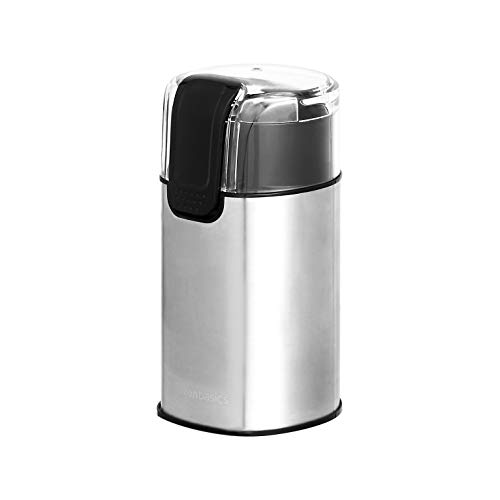
Amazon Basics Fast Electric Grinder
Strengths
- Fast grinding
- Low cost
- Simple operation
Trade-offs
- Uneven grind
- High noise level
- Static mess
This is a blade grinder, plain and simple, and it performs exactly as you’d expect for the price. It can churn through 30 grams of beans in about 10 seconds, which is fast, but speed isn’t the whole story here. Blade grinders like this one tend to produce an uneven grind, some powder, some chunks, which means your coffee will extract inconsistently. That hurts flavor, especially in methods like pour-over or espresso where precision matters.
Owners consistently report it’s noisy and generates static, sending fine grounds flying. It’s not built for serious coffee lovers, but if you’re brewing drip or cold brew and want something cheap and disposable, it gets the job done. Just don’t expect nuance in your cup.
Video review
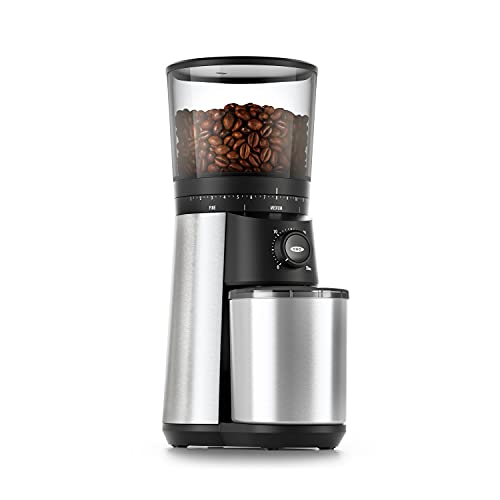
OXO Brew Conical Burr Grinder
Strengths
- Uniform grind
- One-touch operation
- Anti-static bin
Trade-offs
- Pricier than budget burrs
- Hopper not airtight
- Micro-adjustments limited
This is the gold standard for entry-level precision. The stainless steel conical burrs deliver a uniform grind across 15 settings, with micro-adjustments that let you fine-tune for pour-over or espresso. It remembers your last setting, has a UV-blocking hopper, and the anti-static grounds container actually works, no more grounds stuck to the bin.
Wirecutter’s endorsement isn’t hype. Compared to the Baratza Encore, it’s slightly more user-friendly and better at reducing mess, though the Encore has more grind settings. For most home brewers, the OXO strikes the ideal balance of consistency, ease, and clean design.
Video review
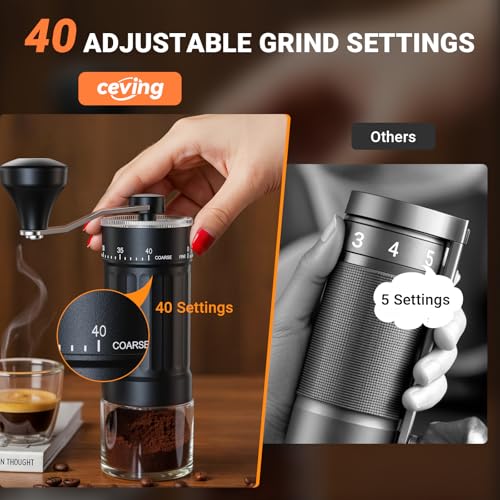
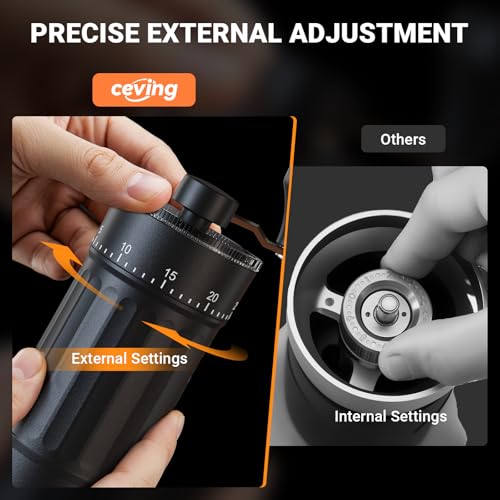
Mini Manual Coffee Grinder

Strengths
- Ultra-portable
- 40 grind settings
- Ceramic burr
Trade-offs
- Small 30g capacity
- Manual effort required
- Not for daily heavy use
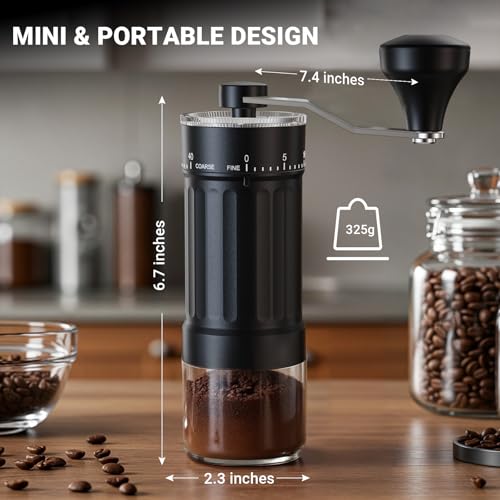
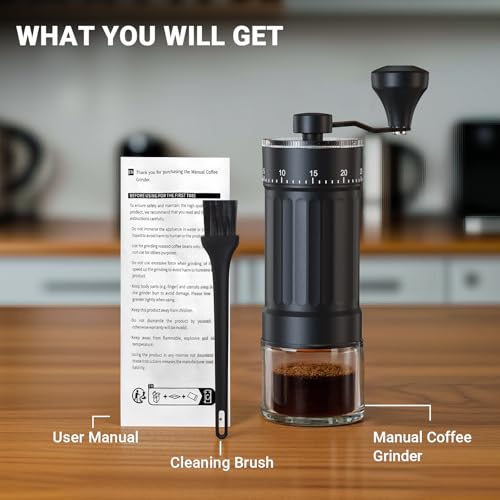
This little manual grinder is a gem for travelers and minimalists. The 40 external grind settings are rare at this size, and the ceramic conical burr preserves flavor better than steel in warm climates. It’s not going to replace your home grinder, but for camping, hotel rooms, or a quiet office grind, it’s ideal.
Owners love the portability and the fact that it doesn’t need power, but it’s slow, grinding for two cups takes effort. Compared to the Baratza or OXO, it’s not competing on speed or volume, but on freedom. If you value fresh coffee on the go, this earns its spot.
Product photos
SHARDOR Electric Burr Coffee Grinder 2.0
Strengths
- Affordable burr grinder
- 16 grind settings
- Easy to clean
Trade-offs
- Flat burrs less consistent
- Plastic housing feels cheap
- Limited for espresso
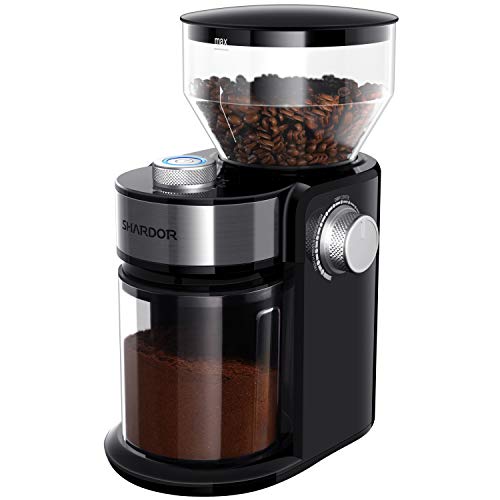
For the price, this flat burr grinder punches above its weight. It offers 16 grind settings and a decent 14-cup capacity, which is solid for an entry-level unit. On paper, it looks like a strong budget burr grinder, owners say it handles French press and drip well, though espresso is hit or miss. The consistency isn’t on par with more expensive models, but it’s a big step up from blade grinders.
Compared to the Baratza Encore, it lacks refinement in grind uniformity and build quality, but it’s much cheaper. If you’re transitioning from pre-ground and want a taste of what burr grinding offers, this one makes sense. Just don’t expect long-term durability or micro-adjustments.
Product photos


SHARDOR Electric Coffee Grinder
Strengths
- Quiet operation
- Visible timing knob
- Large 70g capacity
Trade-offs
- Blade grinder inconsistency
- No grind size settings
- Static issues reported
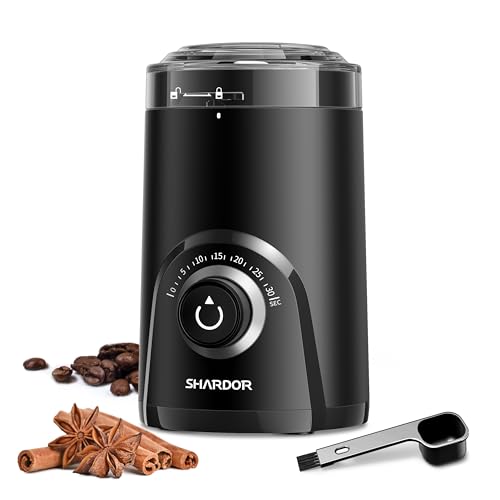
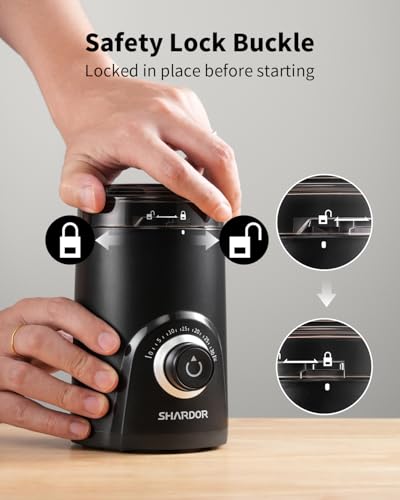
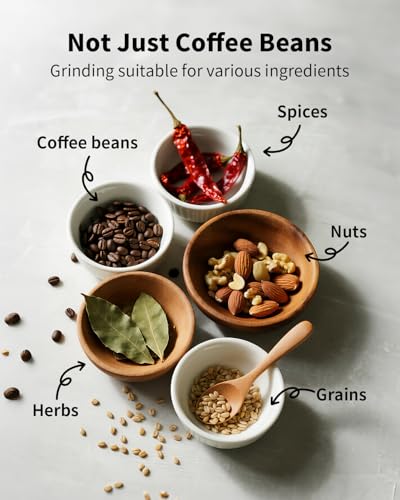
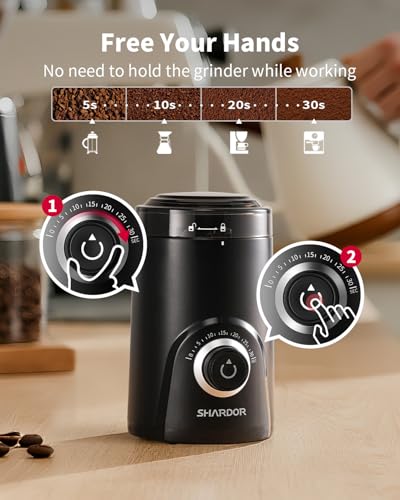
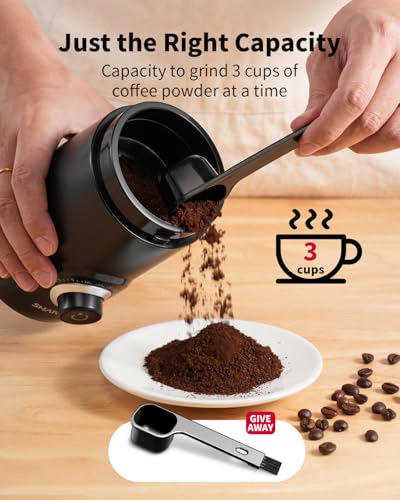
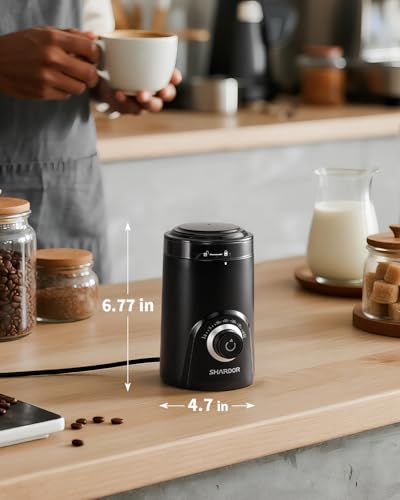
This is a blade grinder with a clever twist: a visual timing knob that lets you control grind duration in seconds. That’s helpful because blade grinders live or die by timing. With practice, you can dial in a decent coarse grind for French press or a medium for drip. At 63 dB, it’s also one of the quieter blade options, which matters if you’re grinding before sunrise.
But it’s still a blade grinder. No amount of timing precision fixes the fundamental flaw, uneven particle size. Reviewers note improvement over basic models, especially for casual brewing, but it won’t match any burr grinder. It’s best seen as a quiet, smart-looking blade upgrade, not a serious coffee tool.
Product photos
Baratza Encore Coffee Grinder
Strengths
- 40 grind settings
- Durable build
- Excellent consistency
Trade-offs
- Noticeable grind retention
- No timer memory
- Basic design
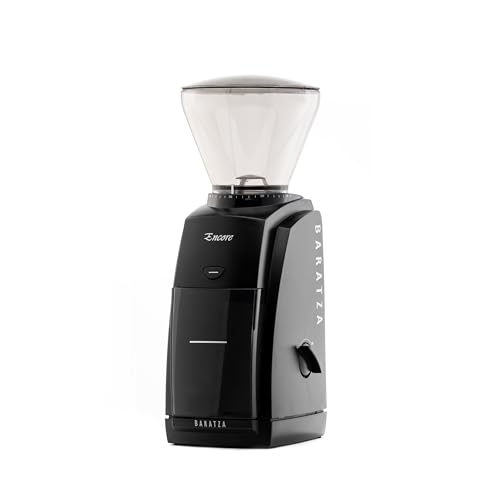
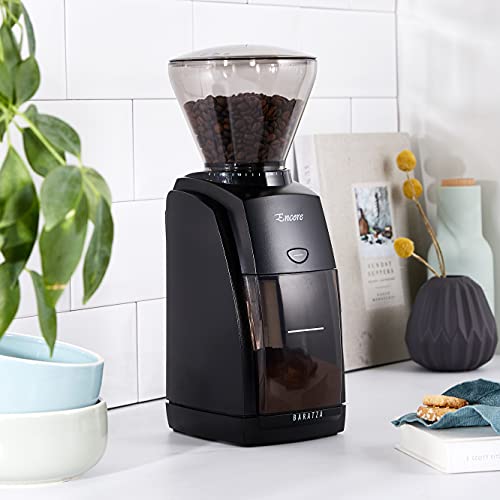
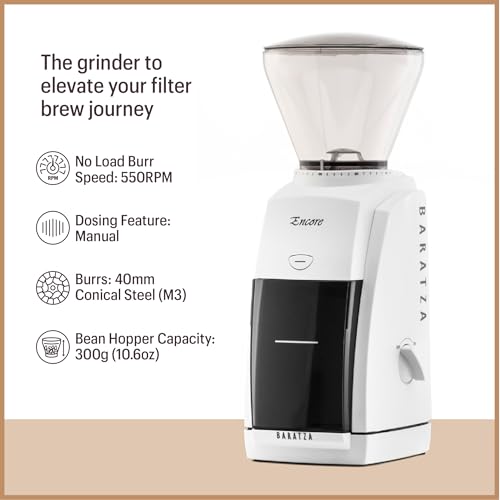
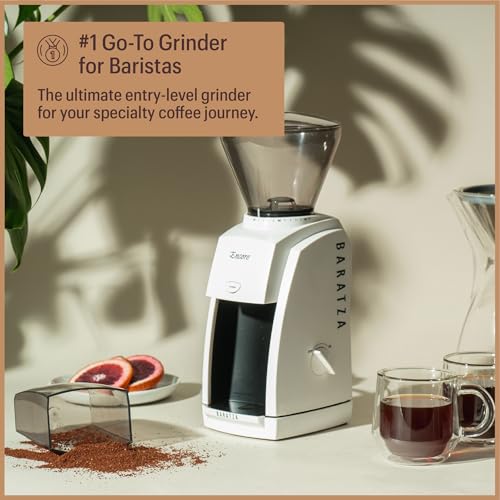
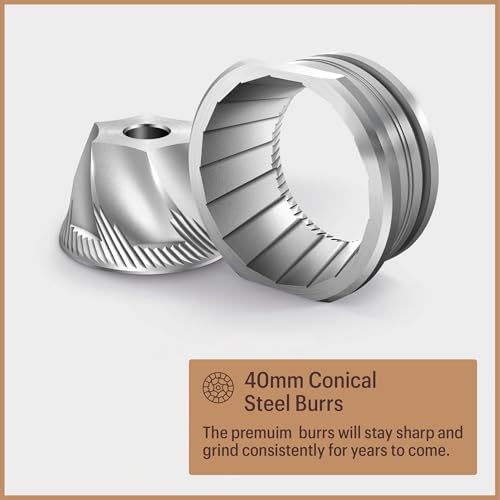
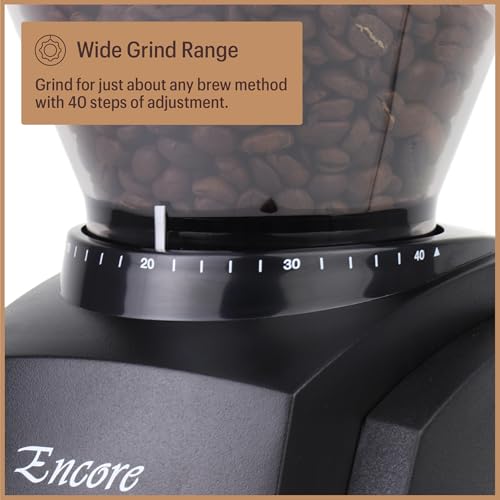
If there’s one grinder I’d recommend to a new coffee enthusiast, it’s this one. The 40mm conical burrs are SCA-approved for a reason, they deliver a consistent grind across every method, from Aeropress to French press. The 40 grind settings give real flexibility, and the front pulse button makes dose control intuitive.
It’s not the quietest or the flashiest, but it’s built to last. Owners report years of daily use without issues, and Baratza’s support is unmatched. Compared to the OXO, it offers more grind range and better long-term value, even if the design is less sleek. This is the grinder that turns casual drinkers into true bean enthusiasts.
Product photos
Aromaster Conical Coffee Bean Grinder
Strengths
- 48 grind settings
- Large capacity
- Anti-static design
Trade-offs
- Timer not weight-based
- Motor can overheat
- Build quality inconsistent
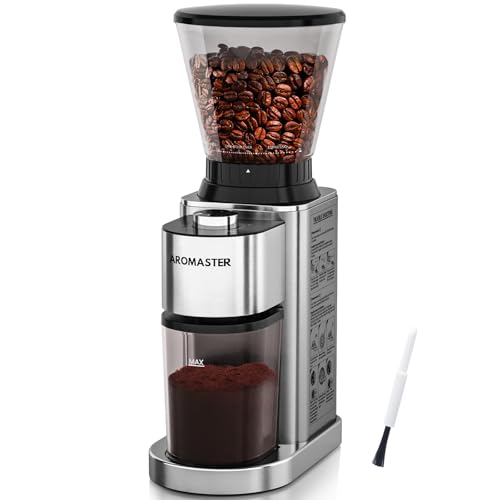
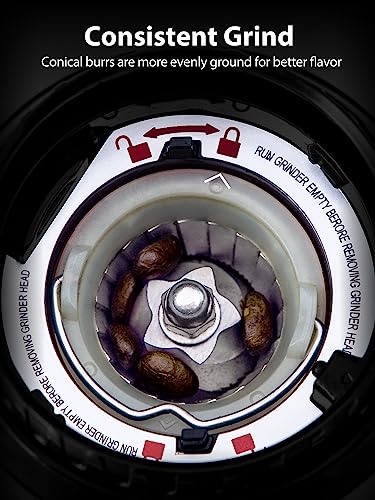
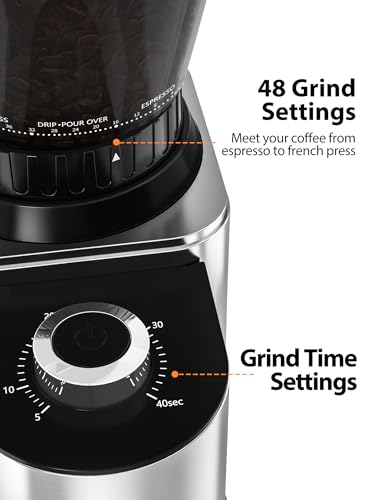
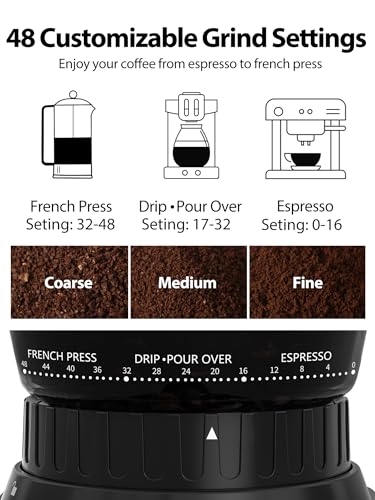
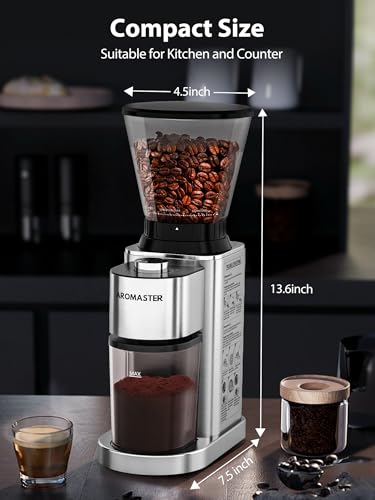
With 48 grind settings and a 3.9-ounce bean capacity, this grinder is built for people who brew for more than one person or want fine control without spending Baratza money. The conical stainless steel burrs deliver a more consistent grind than flat burr budget models, and the anti-static design helps keep your counter clean, something many entry grinders ignore.
Owners praise the range of settings, especially for cold brew and French press, but some note the timer-based dosing isn’t as precise as weight-based grinding. Compared to the OXO, it offers more settings but less polish in motor control and build. Still, for families or office use, it’s a strong contender.
Product photos

How We Evaluated entry level coffee grinder
I approached this guide by first compiling specifications and features from numerous models available online. Then, I weighed owner reviews from major retailers alongside expert opinions found in publications like Wirecutter and coffee-focused blogs. As the founder of Bean Thusiast, I’ve followed the entry-level grinder market for years, and applied that category knowledge to rank options based on what truly matters for consistent, flavorful coffee at home – rather than a hands-on lab test, this is a research-led comparison of specs and owner feedback.
For entry-level grinders, consistent grind size and ease of use are paramount. A uniform grind is essential for even extraction, directly impacting the final taste of your coffee. Durability also factored heavily, as these grinders should reliably deliver for at least a year or two of regular use. Understanding the burr vs blade grinder differences is key when considering these options.
Specifications reliably reveal grind settings, capacity, and motor power. However, I placed greater emphasis on owner feedback regarding noise levels, static cling (which impacts mess and dose accuracy), and long-term reliability. Expert reviews helped validate claims around grind consistency, and highlighted potential issues. Knowing the blade grinder limitations helped me accurately assess value.
How To Choose The entry level coffee grinder
Finding the right coffee grinder can dramatically improve your daily cup. It’s easy to get lost in the options, so let’s break down what truly matters.
A quality coffee grinder prioritizes consistency in particle size. Uniform grounds lead to even extraction, unlocking the full flavor potential of your beans. Look for grinders with burrs (conical or flat) rather than blades, offering adjustable grind settings, and durable build quality for long-term performance. Consider capacity, ease of cleaning, and whether portability is a factor.
Grind Consistency: Burr vs. Blade
The biggest decision you’ll face is between burr and blade grinders. While blade grinders are cheaper, they essentially chop the beans unevenly, creating a mix of fines and boulders. This leads to muddy, unbalanced brews. Burr grinders, whether conical or flat, crush the beans between two revolving abrasive surfaces, producing a much more consistent grind. If you’re serious about flavor, a burr grinder is essential. The Baratza Encore, frequently recommended as a great value entry option, is a good place to start considering burr grinders.
Grind Settings & Versatility
Don’t assume all grinders offer the same level of control. Some have a limited number of settings, while others, like the Aromaster Conical Coffee Bean Grinder with its 48 settings, provide incredibly precise adjustments. Think about the brewing methods you use or plan to explore. Espresso demands a very fine grind, while French press requires a coarse one. A wider range of settings lets you dial in your grind for optimal results with any method. Before you buy, check out our entry-level coffee grinder guide for a curated selection.
- A few settings are fine if you only ever make drip coffee.
- 8-15 settings are good for most home brewers experimenting with a couple of methods (pour-over, French press).
- 20+ settings are ideal for those wanting full control over espresso, Aeropress, and other nuanced brewing styles, allowing for the fine-tuning that can unlock subtle flavor differences.
Ease of Use & Maintenance
A grinder that’s a pain to use won’t get used. Look for features like removable hoppers and burrs that simplify cleaning. Static cling can be a real issue, making a mess; grinders with static-reducing designs (like the OXO Brew Conical Burr Grinder with its stainless steel container) are worth considering. Don’t underestimate the importance of a clear, intuitive interface. Also, remember that proper cleaning is key to maintaining grind quality and extending the life of your grinder. You can learn more about adjusting grind size and proper operation in our detailed guide.
A clean grinder is a happy grinder. Disassemble and brush out grounds after each use to prevent stale coffee oils from building up and affecting the flavor of your next brew.
Entry Level Coffee Grinder Compared
Here’s a comparison of key specifications for various entry-level coffee grinders to help you make an informed decision.
| Product Title | Grind Settings | Capacity (oz) | Burr Type | Motor Type | Special Features |
|---|---|---|---|---|---|
| Amazon Basics Fast Electric Grinder | N/A | N/A | Blade | Electric | Multi-purpose |
| OXO Brew Conical Burr Grinder | 15 + Micro | 12 | Conical (Steel) | Electric | UV-blocking, Static-free |
| Mini Manual Coffee Grinder | 40 | N/A | Conical (Ceramic) | Manual | Portable |
| SHARDOR Electric Burr Grinder 2.0 | 16 | N/A | Flat (Metallic) | Electric | 14-Cup Capacity |
| SHARDOR Electric Coffee Grinder | N/A | 2.5 | Blade | Electric | Quiet Operation |
| Baratza Encore Coffee Grinder | 40 | N/A | Conical (Steel) | Electric | SCA Award Winning |
| Aromaster Conical Coffee Grinder | 48 | 3.9 | Conical (Steel) | Electric | Anti-static |
Frequently Asked Questions
What grind setting should I use for French press?
A coarse grind is best for French press; aim for the largest setting on your grinder or around a 20-25 on a numbered scale. This prevents grounds from passing through the filter and creating a muddy brew.
Are manual grinders good enough for everyday use?
Yes, manual grinders can be excellent, especially for single-cup brewing or travel. They offer great control and are typically quieter than electric models, but require more physical effort.
How often should I clean my coffee grinder?
You should clean your grinder after every few uses to remove coffee oils and grounds. A deeper clean, disassembling and brushing all components, should be done monthly for optimal performance.
What’s the difference between conical and flat burrs in entry-level grinders?
Conical burrs are generally quieter and produce less heat, while flat burrs tend to be faster and can offer slightly more consistent particle size, though the difference is less noticeable in entry-level models. For most home users, the burr shape isn’t as critical as having a burr grinder versus a blade grinder.
Where can I find more affordable options if I’m on a tight budget?
You can find several reliable options if you’re looking for the best grinder under $100, though you may have to compromise on features like grind settings or build quality.
The Bottom Line
Choosing an entry-level coffee grinder often comes down to balancing control with convenience. While you can spend more for a wider range of settings and features, the Baratza Encore strikes an excellent balance of performance and price, making it our overall recommendation for most home brewers. It consistently delivers a uniform grind that unlocks better flavor without breaking the bank.
For those on a tighter budget, or prioritizing portability, the Mini Manual Coffee Grinder is a fantastic option. If you need to grind for a larger group or want maximum versatility, the SHARDOR Electric Burr Grinder 2.0, with its generous capacity and multiple settings, is a strong contender. Understanding how burr grinders work is key to appreciating the difference even these entry-level models can make.
Ultimately, remember that the best grinder isn’t about the fanciest features or highest price tag. Consistent grind size, built on a solid precision grinding mechanism, is the foundation for a great cup of coffee. Focus on that, and you’ll be well on your way to brewing a truly exceptional brew at home.
