
6 Best Electric Pour Over Coffee Makers of 2026
The Kismile SCA-Certified 8 Cup Coffee Maker stands out as the best overall electric pour over, delivering precise temperature control and SCA certification for true flavor accuracy. For a budget-friendly option, the Cosori Pour Over Coffee Maker offers solid performance with a clean design, while the APOXCON Automatic Drip Coffee Maker gives the most versatility with programmable settings and a unique spiral outlet.
If you love the taste of manual pour over but don’t always have the time, an electric model promises that same bright, balanced cup with less effort. But too many machines fail to mimic the key steps, like proper blooming or consistent water temperature, that make the method special.
This guide cuts through the noise, focusing on what actually matters: temperature precision, bloom cycles, and real-world reliability. I looked at specs, owner feedback, and brewing science to find models that truly deliver on the pour over promise.
Top 6 Electric Pour Over Coffee Maker in the Market
The Best Electric Pour Over Coffee Maker, Reviewed
Cosori Pour Over Coffee Maker

Strengths
- Reusable metal filter
- Rich, full-bodied coffee
- Dishwasher safe
Trade-offs
- No programmable timer
- No temperature control
- Wooden sleeve requires care
The Cosori stands out with its double-layer stainless steel filter, and owners love it for that reason alone, no paper needed, and you get a fuller-bodied cup with more oils and texture. The borosilicate carafe is sturdy and even stove-safe on low heat, which is a rare and useful feature. At 34 oz, it’s large enough for a few people but not overwhelming for solo use. Cleanup is a breeze since the carafe and filter are dishwasher safe.
It lacks programmability and temperature tuning, so it won’t win any points for customization. But for a balance of simplicity, durability, and flavor richness, it’s hard to beat. I’d pick this over the Tru or Willow for better build and taste, and it’s a more practical daily driver than the Chemex Ottomatic for many.
Video review
Chemex Ottomatic Pour Over Coffee Maker

Strengths
- Timeless design
- Consistent brew quality
- Large reservoir
Trade-offs
- Limited customization
- No temperature control
- Voltage restrictions
The Chemex Ottomatic brings the iconic Chemex aesthetic into the automatic world, and on paper, it delivers what you’d expect from the brand, clean design, a large 40 oz capacity, and a brewing process tuned for smooth, balanced coffee. Owners consistently report that it nails the clarity and brightness Chemex is known for, especially when using the right grind and water ratio. It’s not the most feature-rich machine here, but if you value simplicity and elegance over programmability, this one stands out.
Where it stumbles a bit is in flexibility. The Ottomatic doesn’t allow much tweaking, no adjustable temperature, no flow control, so you’re locked into Chemex’s signature method. That’s great if you love that clean, tea-like cup, but less so if you want to experiment. Compared to the Kismile or APOXCON, it feels more like a beautifully designed appliance than a tool for craft brewing.
Video review
Tru Automatic Pour Over Coffee Maker

Strengths
- Low cost
- Fast brew time
- Compact size
Trade-offs
- Plastic dripper
- Shallow flavor
- Small carafe
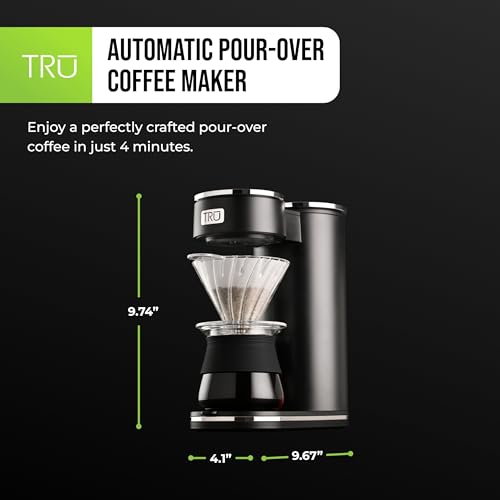
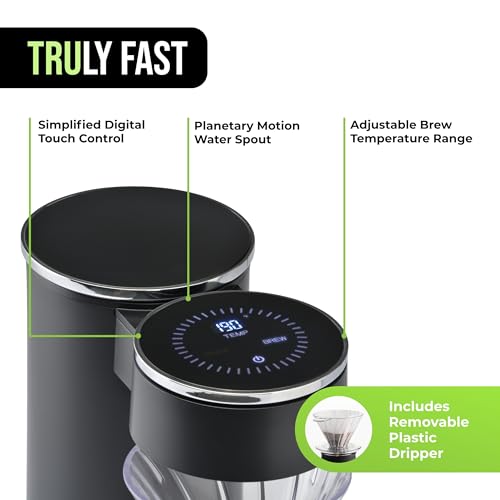
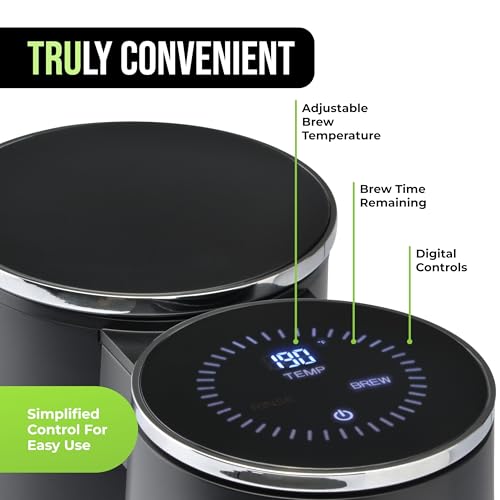
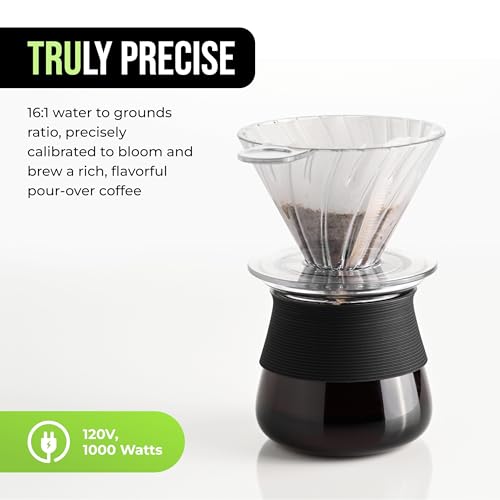
The Tru is the budget pick here, and it shows. It brews fast, under four minutes, and lets you set the temperature between 190–205°F, which is solid for a machine at this price. The compact size makes it a good fit for small kitchens or offices, and the digital controls are straightforward. But owners note that while it gets the basics right, the flavor profile lacks depth compared to others in this list. The plastic cone dripper doesn’t distribute water as evenly as a metal showerhead, which affects extraction.
It’s a functional entry-level option, but you’re sacrificing build quality and brewing nuance. Compared to the Cosori or Kismile, it feels more like a basic drip machine with a pour-over label. That said, for someone who just wants hot coffee quickly and cheaply, it gets the job done.
Product photos

WILLOW 10 Cup Drip Coffee Maker
Strengths
- Eco-friendly materials
- Drip-stop feature
- Large capacity
Trade-offs
- No strength adjustment
- Basic temperature range
- No advanced brewing modes
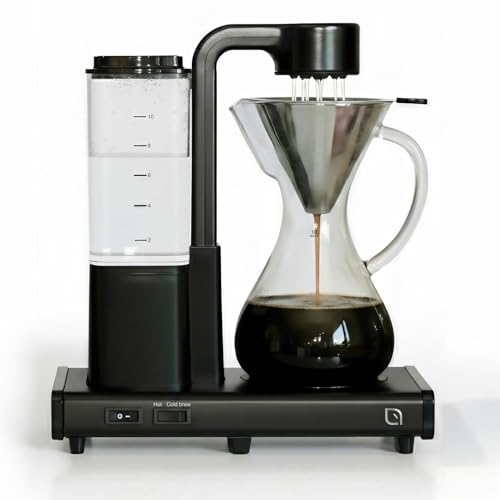
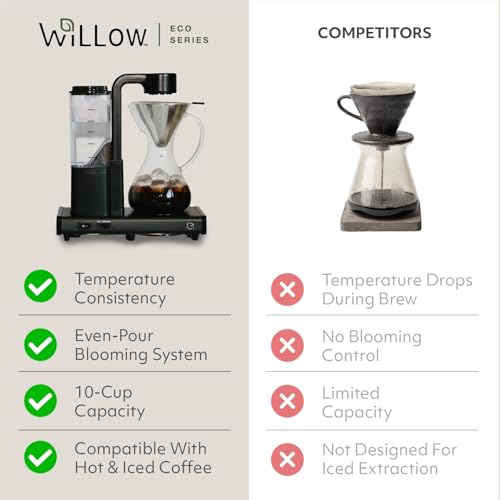
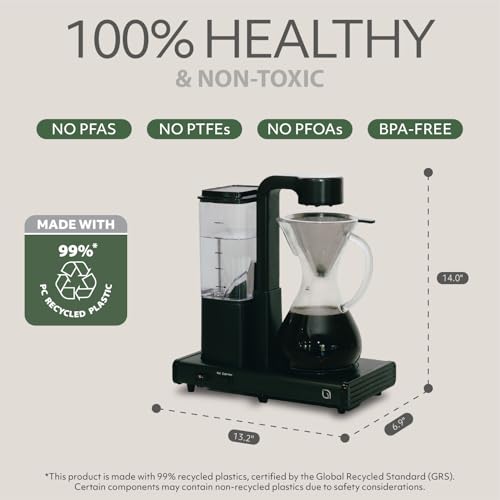
Willow is clearly aiming at the eco-conscious buyer who still wants solid performance, and it delivers on that front. With 99% post-consumer recycled plastic and a clean build free of PTFE and PFAs, it’s one of the more sustainable electric pour-over style machines on the market. The heating system hits 180–185°F in about six minutes, which is in the sweet spot for extraction, and owners say it produces a reliably smooth cup, better than most basic drip machines, though not quite at the level of SCA-certified gear.
Its 10-cup capacity and drip-stop feature make it practical for families or offices, and the compact footprint helps it fit in smaller kitchens. But while it’s eco-friendly and functional, it lacks advanced features like programmable strength or flow control. Compared to the Kismile or APOXCON, it’s more about everyday usability than coffee craft.
Product photos
Kismile SCA-Certified 8 Cup Coffee Maker

Strengths
- SCA-certified temperature
- Adjustable flow control
- Deep cold brew mode
Trade-offs
- Keep-warm can overheat
- Slight learning curve
- Larger footprint
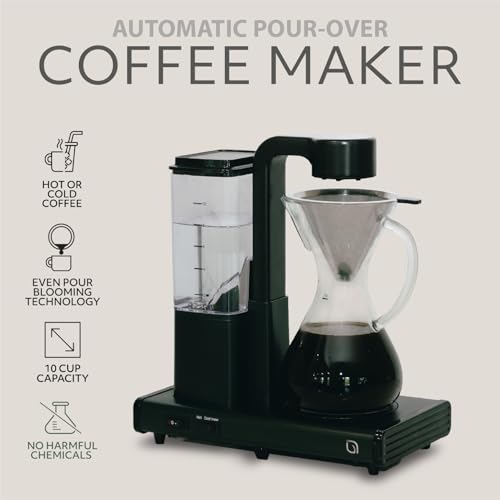
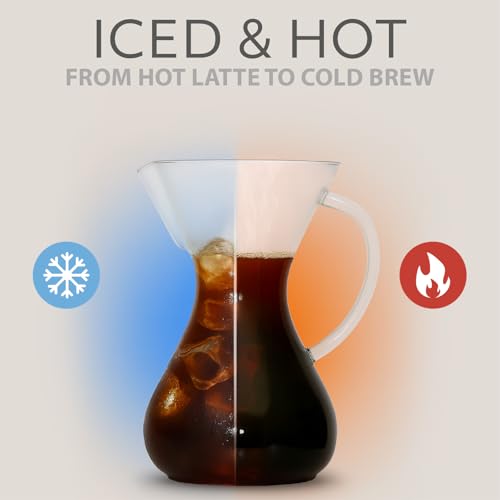
This is the one I’d recommend to anyone who takes their coffee seriously but doesn’t want to go fully manual. Being SCA-certified means it brews within the ideal 197–205°F range, and owners consistently praise the balanced, nuanced cups it produces. The adjustable flow control lever is a standout, it lets you slow down the pour for better bloom and extraction, mimicking a barista’s hand pour. And the 20-minute cold brew function isn’t a gimmick; it delivers a smoother, less acidic drink compared to just pouring hot coffee over ice.
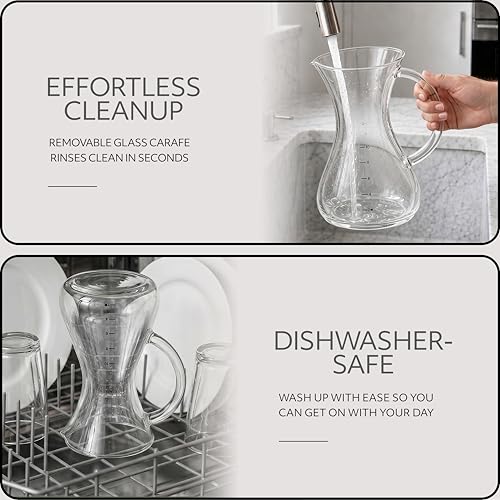
It also wins on cleanability, the removable water tank and magnetic anti-drip design make maintenance easy. Compared to the APOXCON, it feels more refined, and against the Chemex Ottomatic, it offers far more control. This is the full package for enthusiasts.
Product photos


APOXCON Automatic Drip Coffee Maker

Strengths
- Built-in precision scale
- Bloom phase included
- Manual mode flexibility
Trade-offs
- Plastic build quality
- Cluttered interface
- Filter not included
If you’re the type who likes to geek out over brewing parameters, the APOXCON is built for you. The built-in scale is a standout, owners say it takes the guesswork out of coffee-to-water ratios, making repeatable brews much easier. The spiral water outlet and 30-second bloom phase mimic hand pouring well, and the dual modes (Auto and Manual) give you room to experiment. I’d pick this over the Chemex Ottomatic for versatility, especially since you can adjust temperature and strength.
It’s not perfect, the display can feel a bit clunky, and some users report the plastic housing doesn’t feel as premium as the features suggest. But for the price, it packs in a lot of tech that you’d expect only on higher-end models. Compared to the Tru or Willow, it’s clearly aimed at the more engaged home brewer.
Product photos


How We Chose These electric pour over coffee maker
As the founder of Bean Thusiast, I approach coffee equipment with a focus on how well a machine helps you achieve a truly satisfying cup. Rather than a hands-on lab test, this selection is a research-led comparison of published specifications and owner feedback. I weighed features, read through countless owner reviews, and considered expert opinions to rank these models against what I believe makes for a great automatic pour over experience.
For electric pour over machines, consistency and control are paramount. I prioritized models offering precise temperature control and a brewing cycle that mimics the careful bloom and saturation of a manual pour over, features that directly impact flavor. Capacity also played a role, considering both single-cup convenience and the ability to brew for a small group. You can learn more about the nuances of this brewing style in our pour over brewing method.
Specifications reliably indicate a machine’s potential – water temperature range, carafe capacity, and programmable features. However, owner feedback reveals how those specs translate into real-world performance. I heavily weighted comments regarding brew quality (bitterness, clarity), ease of cleaning, and long-term reliability. Understanding the differences between drip and pour over is also key to appreciating the advantages these machines offer.
How To Choose The electric pour over coffee maker
As someone who’s spent years chasing the perfect cup, I know the appeal of an electric pour over – it promises that artisanal quality with push-button convenience. But not all machines deliver.
Electric pour over coffee makers aim to replicate the manual process with automated control. Key features to assess include water temperature consistency, bloom phase control, brewing speed, and ease of cleaning. A good machine will heat water to the SCA’s recommended 195-205°F, evenly saturate the grounds, and allow for some degree of user customization. Consider carafe material and filter options for optimal flavor and maintenance.
Water Temperature & Consistency
Getting the water temperature right is absolutely critical. I’ve seen too many machines that claim “hot” coffee but fall short of the 195-205°F range the Specialty Coffee Association (SCA) recommends. Fluctuations during the brew cycle are equally problematic; you want consistent heat extraction. Models with built-in PID controllers (like the Kismile SCA-Certified 8 Cup Coffee Maker) are a good sign, as they actively maintain the set temperature. Don’t rely on vague terms like “hot”, look for specific temperature settings and mentions of SCA certification.
Bloom Phase & Flow Rate Control
The bloom phase, that initial wetting of the grounds, is where much of the flavor development happens. A quality electric pour over will mimic this process, pausing the water flow briefly to allow the coffee to degas. Some machines, like the APOXCON Automatic Drip Coffee Maker, even simulate this with a spiral water outlet. More advanced models provide manual flow rate control, which lets you fine-tune extraction. This is something you’ll appreciate if you’re already familiar with the nuances of manual pour over, and it’s a good way to experiment with the ideal pour over coffee ratio to find your sweet spot.
Here’s what to consider when looking at flow control: * None: Simplest, most automated. Good for beginners. * Pre-infusion Setting: Allows for a bloom phase, a significant step up in quality. * Adjustable Flow Rate: Offers the most control, letting you mimic a manual pour over exactly. This is ideal for brewing different coffee types.
A consistent bloom phase releases CO2, reducing bitterness and enhancing the coffee’s natural sweetness. Don’t underestimate this step.
Capacity & Ease of Maintenance
Think about how much coffee you typically brew. A smaller capacity machine (like the Tru Automatic Pour Over Coffee Maker) is fine for one or two people, but if you frequently host guests, you’ll want something larger, like the WILLOW 10 Cup Drip Coffee Maker. Equally important is cleaning. Look for removable parts that are dishwasher safe. Stainless steel filters are convenient, but some prefer the clarity of flavor from paper filters. If you’re looking at a variety of automatic pour-over coffee machines, consider how easy each one is to disassemble and clean – you’ll be doing it frequently! You might also check out our reviews of top electric pour-over brewers for more detailed opinions.
Electric Pour Over Coffee Maker Compared
Here’s a comparison of the specifications for several electric pour over coffee makers to help you choose the right one.
| Product Title | Capacity (cups) | Temperature Control | Programmable | SCA Certified | Cold Brew |
|---|---|---|---|---|---|
| Cosori Pour Over Coffee Maker | 8 | No | No | No | No |
| Chemex Ottomatic Pour Over Coffee Maker | 8 | No | No | No | No |
| Tru Automatic Pour Over Coffee Maker | 11 oz (approx. 1) | Yes (190-205°F) | Yes | No | No |
| WILLOW 10 Cup Drip Coffee Maker | 10 | Yes (180-185°F) | No | No | No |
| Kismile SCA-Certified 8 Cup Coffee Maker | 8 | Yes (197-205°F) | No | Yes | Yes |
| APOXCON Automatic Drip Coffee Maker | N/A | Yes | Yes | No | No |
Frequently Asked Questions
What temperature should an electric pour over coffee maker reach?
Ideally, your electric pour over should consistently reach between 195-205°F (90-96°C). This temperature range is recommended by the Specialty Coffee Association for optimal extraction and flavor, and models with PID controllers are best at maintaining this heat.
Do I still need to use a specific grind size with an electric pour over?
Yes, a medium-coarse grind size is still best for electric pour over machines. While they automate the pouring process, they still function on the same principles as manual pour over, and the grind size impacts extraction just as much.
Can an electric pour over maker replace a good quality manual pour over?
It depends on your priorities. While they won’t replicate the full control of a manual method, a quality electric pour over offers significant convenience. For those seeking consistent results with minimal effort, they can be a great substitute; explore our best manual and electric models to compare.
Are paper filters always necessary with these machines?
Not always. Many electric pour over machines come with reusable stainless steel filters, which are convenient and environmentally friendly. However, some coffee lovers prefer the cleaner flavor profile achieved with paper filters, as they trap more oils.
How often do I need to descale my electric pour over coffee maker?
I recommend descaling every 1-3 months, depending on your water hardness. Mineral buildup can affect the machine’s performance and the taste of your coffee. Consult your machine’s manual for specific descaling instructions and recommended solutions; you can find our picks for the top pour-over coffee makers and their maintenance needs on the site.
The Bottom Line
Choosing an electric pour over maker often comes down to balancing convenience with control. If you want a consistently good cup with minimal fuss, the Kismile SCA-Certified 8 Cup Coffee Maker stands out – its SCA certification and precise temperature control deliver reliably excellent results, and it even offers cold brew functionality. It represents a strong intersection of quality and automation.
For those seeking a more specific solution, we have several recommendations. The Tru Automatic Pour Over Coffee Maker is ideal for single-cup brewing, while the WILLOW 10 Cup Drip Coffee Maker is best suited for larger households. And if you’re interested in exploring other brewing styles, understanding the differences between a pour over and a french press can broaden your coffee horizons.
Ultimately, remember that specifications are guides, but consistency in grind size, water quality, and bean freshness matter more than any single feature. Focus on those fundamentals and you’ll be well on your way to enjoying exceptional coffee, regardless of the machine you choose.
