
7 Best Easy Coffee Machines for Home 2026
The Ninja Pod and Grounds Coffee Maker is the best overall easy coffee machine for home use, combining versatility and solid brew quality. For a budget-friendly option, the Mueller 12-Cup Drip Coffee Maker delivers reliable performance, while the Keurig K-Elite is a top pick if you want speed and pod convenience.
Most people just want a straightforward way to make decent coffee without a steep learning curve or daily hassle. But too many machines are either too limited, too complicated, or break down after a few months.
As the founder of Bean Thusiast, I focused on models that balance simplicity, durability, and real-world usability, based on specs, owner feedback, and brewing fundamentals. This guide cuts through the noise to highlight the ones that actually make your routine easier.
Top 7 Easy Coffee Machine For Home in the Market
The Best Easy Coffee Machine For Home, Reviewed
Ninja Pod and Grounds Coffee Maker

Strengths
- Brews pods or grounds
- Built-in frother
- Large size range
Trade-offs
- Complex interface
- Loud during brewing
- Frother requires regular cleaning
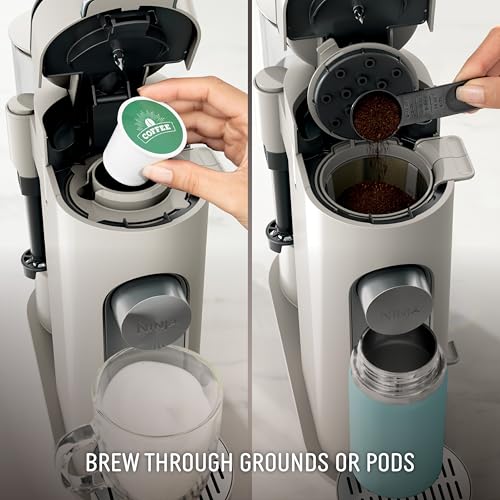
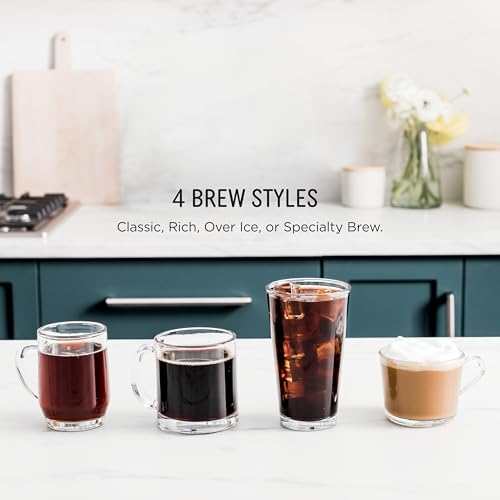
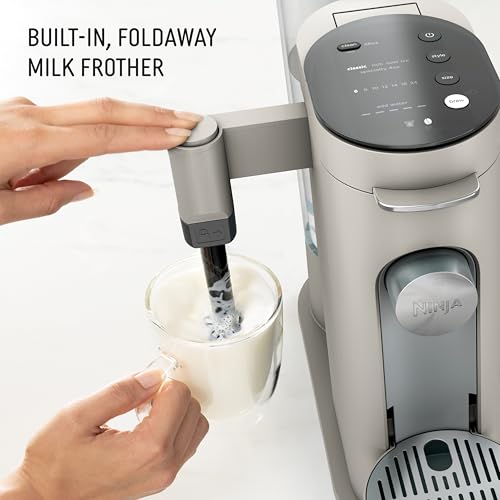
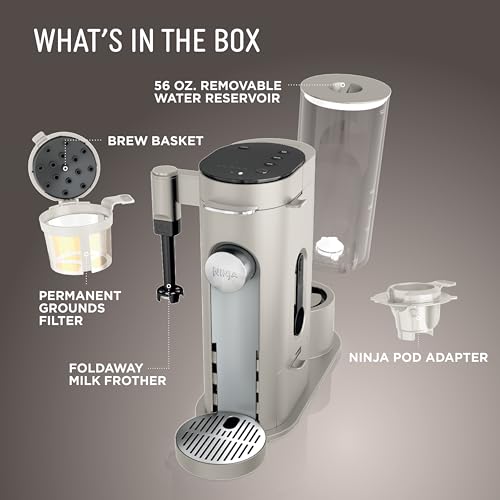
This is the machine I’d recommend to anyone who wants both convenience and control without doubling up on appliances. The Ninja PB051ST bridges the gap between pod simplicity and grounds-based flavor, letting you brew with K-Cups or your favorite beans, no adapter needed. The 6 brew sizes, including a 24-oz travel mug setting, make it unusually flexible. And the built-in frother? It actually works well, producing microfoam decent enough for home lattes.
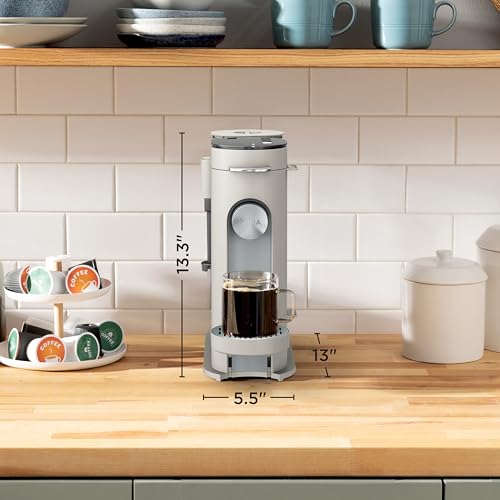
Owners praise the Thermal Flavor Extraction Duo for delivering balanced, rich coffee whether using pods or grounds. Compared to the Keurig K-Elite, it’s a clear step up in versatility and output range. The compact footprint is a bonus, and the fold-away frother keeps things tidy. It’s not flawless, the interface can feel cluttered, but for one machine to handle drip, specialty, and milk drinks? That’s rare.
Product photos
atatix 20 Bar Espresso Machine
Strengths
- 20-bar pressure
- Good crema
- Effective steam wand
Trade-offs
- Manual operation
- Small water tank
- Learning curve
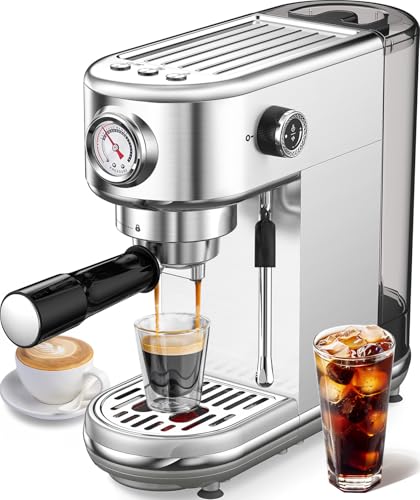
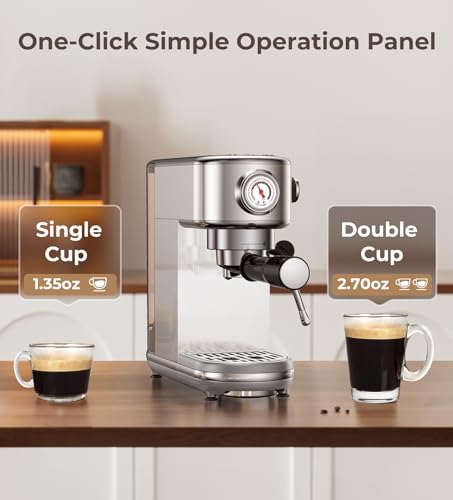
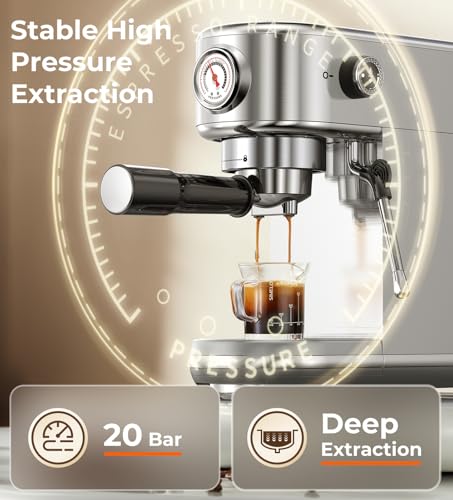
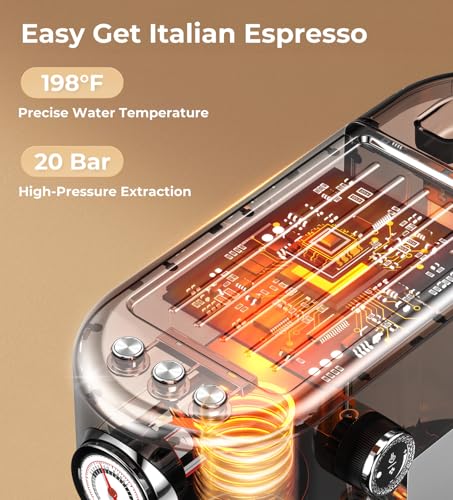
For under $200, the atatix delivers a surprising amount of espresso machine capability. The 20-bar pump consistently hits the 9–10 bar sweet spot for proper extraction, and owners confirm it pulls rich shots with golden crema, especially with fresh, finely ground beans. The NTC temperature control helps avoid scalding, which is a common flaw in budget machines, and the manual extraction mode gives you control over shot length, a feature usually seen on pricier models.
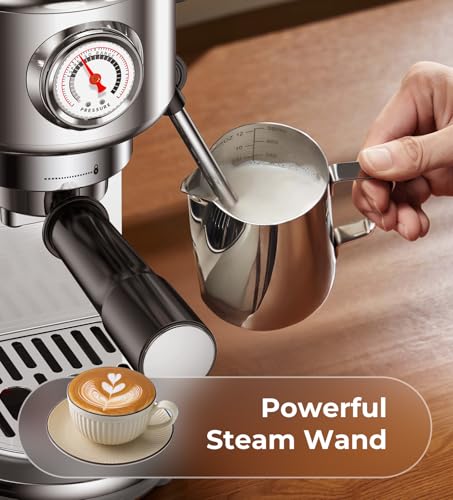
The steam wand is where it really shines. Unlike many budget frothers that sputter weak steam, this one produces dense, velvety microfoam, good enough for basic latte art. It’s compact, easy to clean, and the stainless steel build feels solid. Compared to the Ninja, it’s better for true espresso lovers, though it lacks pod compatibility.
Product photos

Keurig K-Elite Single Serve Brewer

Strengths
- Fast brewing
- Strength control
- Iced coffee mode
Trade-offs
- K-Cup dependency
- Plastic taste reports
- Frequent descaling
The Keurig K-Elite is the go-to for those who prioritize speed and convenience over craft brewing. It’s not going to win points for sustainability, K-Cup waste is real, but if your main goal is a hot cup in under a minute with zero cleanup, this delivers. The Strength Control feature actually makes a difference, letting you intensify the brew for darker roasts or bold profiles. The Iced Coffee setting is a standout, adjusting brew temperature and concentration so your iced coffee doesn’t turn out watery.
Reviewers note the 75oz reservoir cuts down on constant refills, a real perk for multi-cup households. But compared to the Ninja PB051ST, it lacks versatility, you can’t brew with grounds unless you use a third-party pod. It’s also noisier than advertised, despite the ‘Quiet Brew’ claim.
Product photos


Mueller 12-Cup Drip Coffee Maker

Strengths
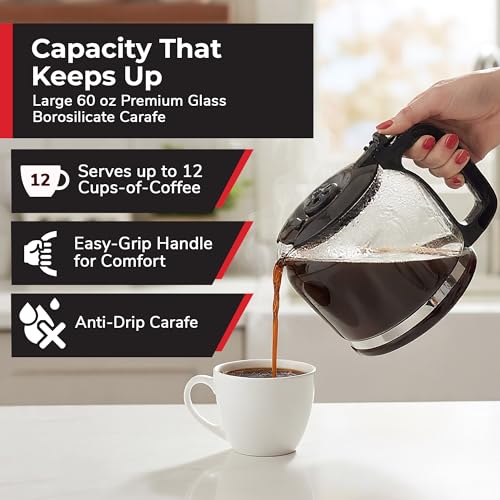
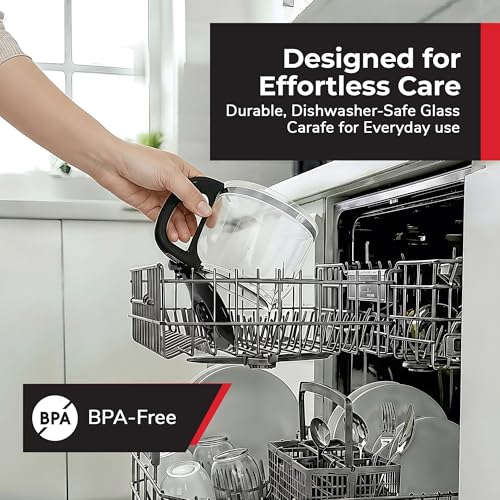
- Borosilicate carafe
- Auto-shutoff
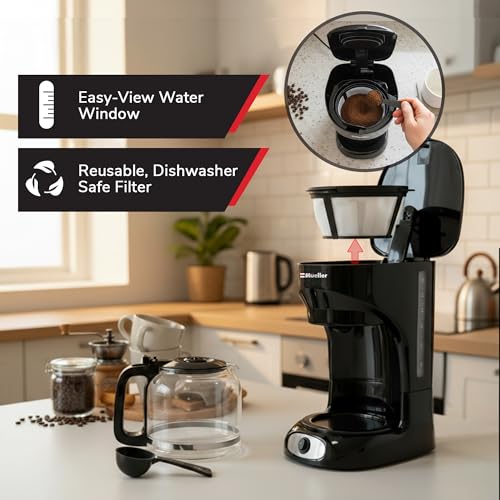
- Reusable filter
Trade-offs
- No 24-hour timer
- Basic interface
- Warming plate discoloration over time
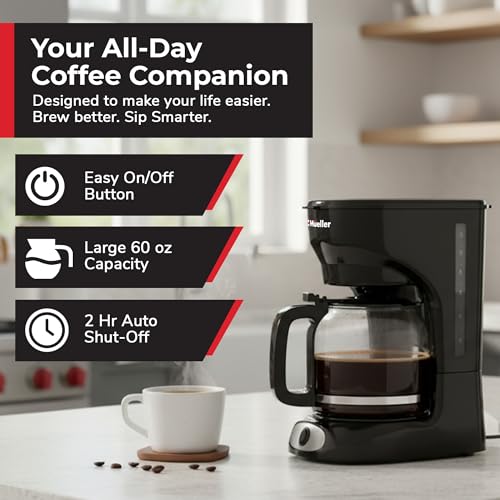
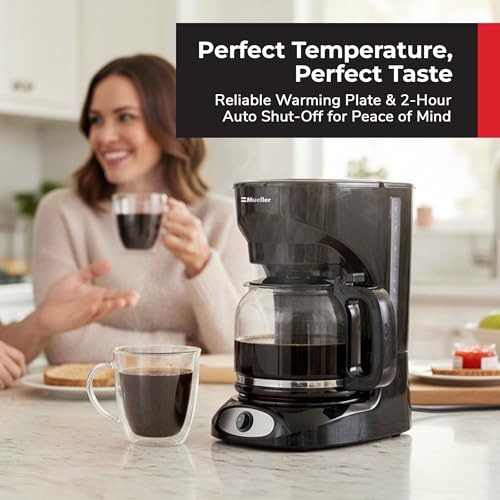
The Mueller 12-cup brewer is the definition of a workhorse, affordable, reliable, and packed with features you’d expect in pricier models. The borosilicate glass carafe is a standout at this price, offering better heat retention and durability than standard glass. The auto-shutoff after 2 hours is a small but meaningful safety touch, and the reusable filter saves money and waste over time.
Reviewers consistently highlight the clear water window and anti-drip spout as quietly excellent details that improve daily use. It lacks the iced coffee mode of the Taylor Swoden or the programmability of higher-end models, but for a no-nonsense, hot drip brew, it’s hard to beat. Compared to the OVENTE, it’s nearly identical in function but often priced lower, making it the smarter budget pick.
Product photos
Taylor Swoden 12-Cup Programmable Brewer

Strengths
- Iced coffee mode
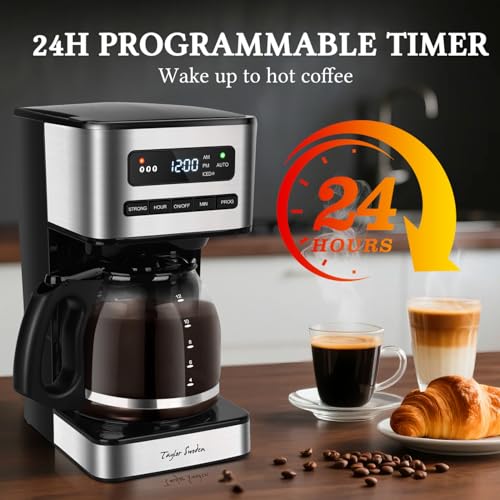
- Programmable timer
- 4 brew strengths
Trade-offs
- Frother not included
- Plastic housing feel
- Occasional software glitches
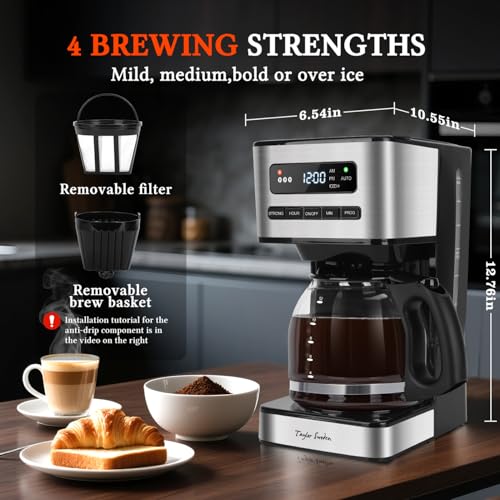
This Taylor Swoden model is built for people who love iced coffee but don’t want to sacrifice hot brew quality. The dedicated Iced Coffee mode is its standout feature, unlike machines that just brew hot over ice, this one adjusts extraction specifically for cold serving, so you get full-bodied flavor without dilution. The 4 brew strengths (including bold and iced) let you fine-tune output based on roast or mood, which is rare at this level.
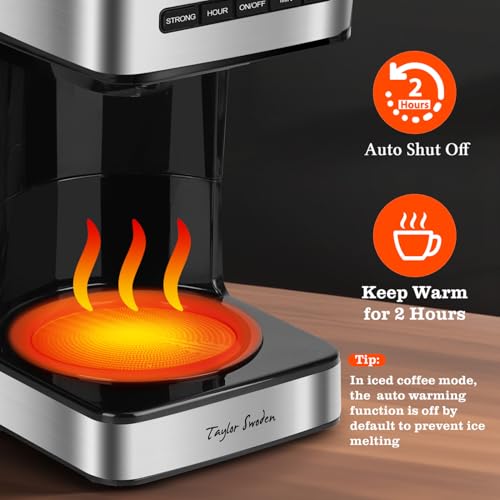
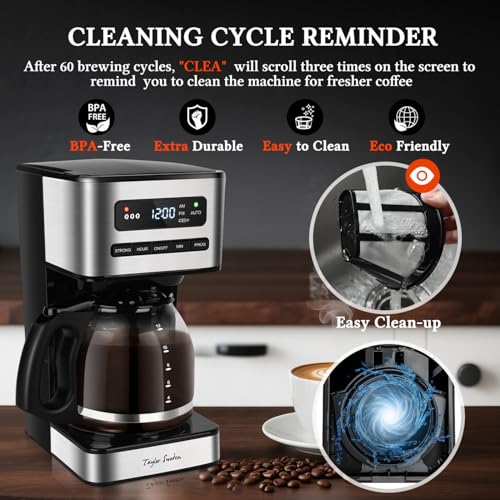
It’s also one of the few budget-friendly drip machines with 24-hour programmability, a large LED display, and auto-shutoff, a solid combo for safety and convenience. Owners report the self-clean reminder is helpful, though not a substitute for manual descaling. Compared to the Mueller, it offers more features for only a slight bump in price, making it the smarter pick if iced coffee is a priority.
Product photos

OVENTE 12-Cup Drip Coffee Maker
Strengths
- Borosilicate carafe
- One-touch start
- Reusable filter
Trade-offs
- No programmable timer
- No auto-shutoff
- Basic warming plate
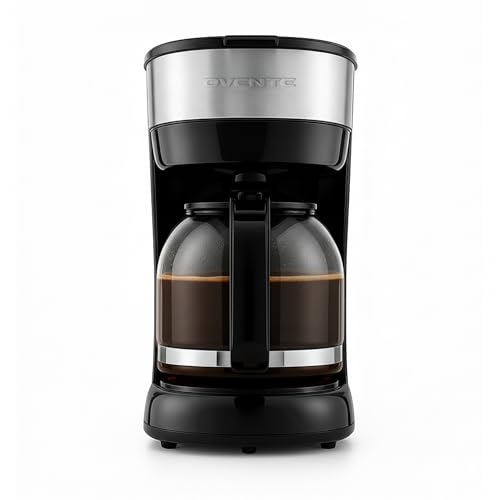
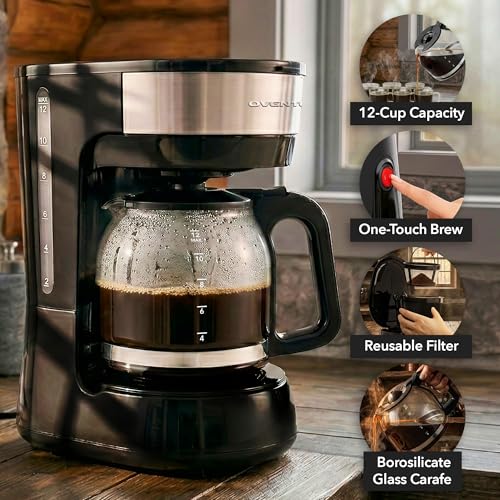
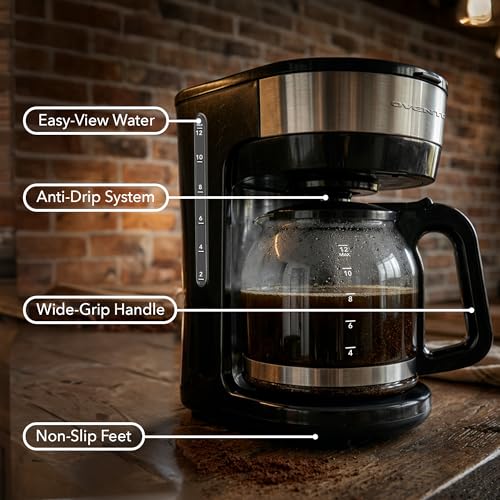
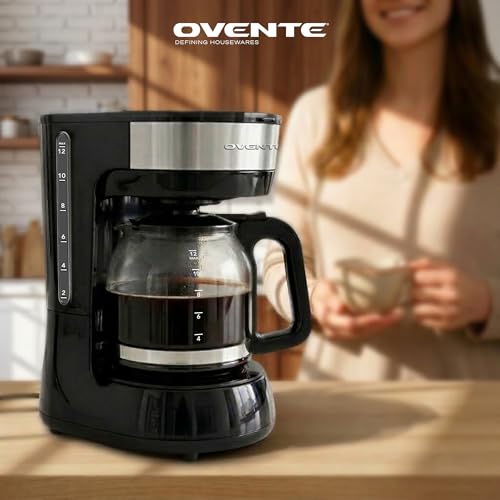
If you’re after a straightforward, reliable drip machine that just works, the OVENTE 12-cup model stands out for its simplicity and thoughtful build. The borosilicate glass carafe is a real upgrade over standard glass, more durable, better heat retention, and it doesn’t hold onto stale coffee smells. Owners appreciate the one-touch operation and the anti-drip spout, which actually performs as advertised, a rarity in this price tier.
The reusable filter is a nice eco-conscious touch, and the clear water level window takes the guesswork out of measuring. It doesn’t offer programmability like some rivals, but for those who prefer brewing on demand without timers or presets, that’s a non-issue. Compared to the Mueller, it feels slightly more refined in fit and finish, though both serve a similar role.
Product photos

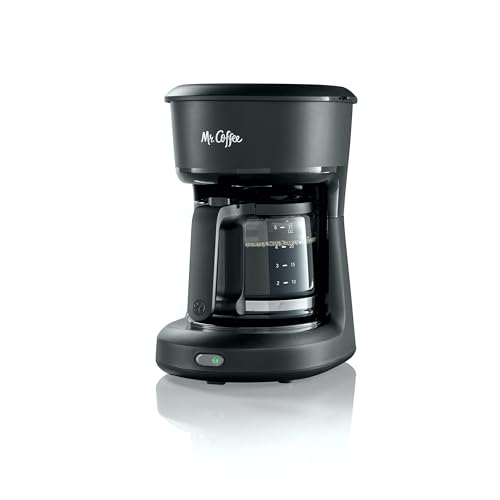
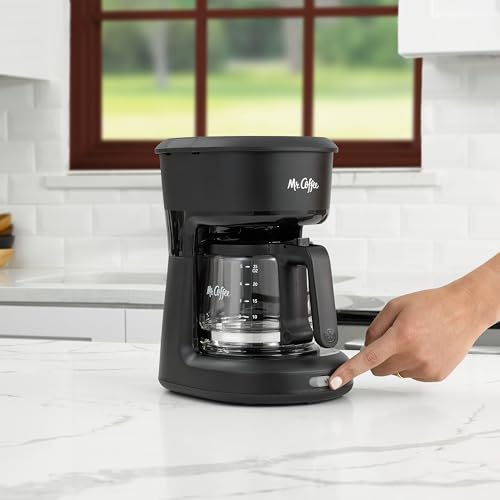
Mr. Coffee 5-Cup Mini Brewer
Strengths
- Compact design
- Auto pause brew
- Easy cleanup
Trade-offs
- Small capacity
- Basic materials
- No programmability
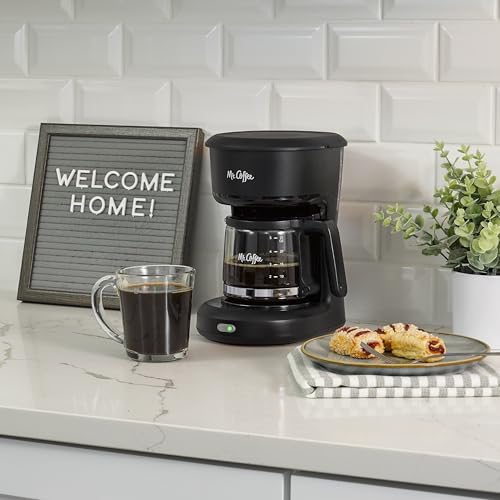
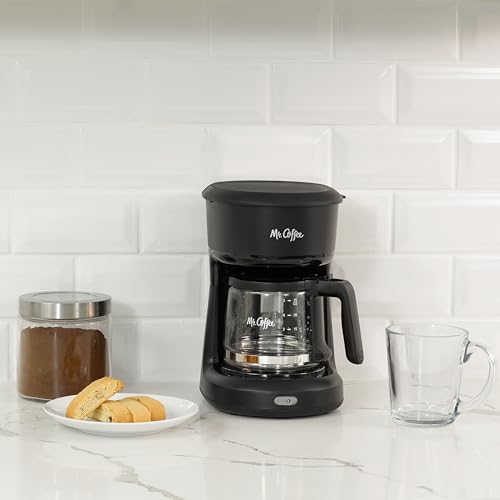
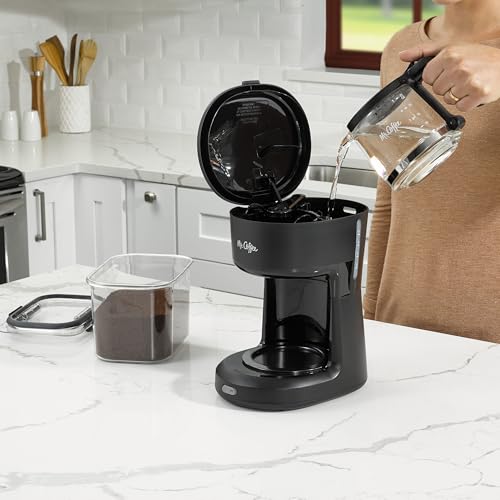
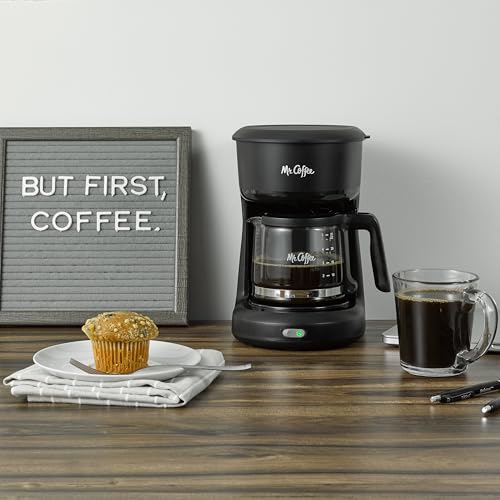
For those tight on counter space or brewing just for one or two, this Mr. Coffee model makes a solid case for itself. The 5-cup capacity is modest, but that’s the point, it avoids waste and fits neatly in small kitchens, dorms, or office nooks. Owners consistently report the Grab-a-Cup Auto Pause feature is actually useful, letting you sneak a cup mid-brew without making a mess. The glass carafe feels basic but gets the job done, and the lift-and-clean filter basket simplifies maintenance.
On paper, it’s no frills, but that’s fine for what it is. It won’t compete with larger drip machines in output or features, but it’s one of the few compact brewers that doesn’t feel like a downgrade in usability. Compared to bulkier models, this one earns points for practicality without sacrificing core functionality.
Product photos
How We Evaluated easy coffee machine for home
As the founder of Bean Thusiast, I approach coffee makers with a focus on delivering a quality brew with minimal fuss. Rather than a hands-on lab test, this selection is a research-led comparison of published specifications, feature sets, and – crucially – owner and expert reviews. I weighed these factors to identify machines standing out for ease of use and reliability, considering a range of budgets and brewing preferences. My goal was to pinpoint machines that genuinely simplify the morning routine.
For this category, brew versatility and ease of cleaning were the biggest differentiators. A machine that can handle both pods and grounds, like the Ninja, offers maximum flexibility. Similarly, features like removable reservoirs and dishwasher-safe parts significantly impact daily usability. These factors outweighed minor differences in wattage or material finishes. Ultimately, a simple, reliable machine that makes good coffee with minimal effort is what matters most.
Specifications reliably indicate capacity, brewing speed, and basic functionality. However, I placed more weight on owner feedback regarding long-term durability, the machine’s actual ease of use (beyond marketing claims), and the quality of the brewed coffee. Reputable expert reviews helped validate these owner experiences and identify potential red flags. For example, if you’re looking for guidance on making the most of a simpler model, you’ll find helpful resources like Mr. Coffee drip brewer guide.
Choosing The Right easy coffee machine for home
I understand wanting a simple, great cup of coffee at home. It seems easy, but the sheer number of options can be overwhelming. Let’s cut through the noise and find the right machine for your needs.
A good coffee machine delivers consistent temperature, appropriate pressure (for espresso-style machines), and a brewing method suited to the user’s skill and preferred coffee type. Look for durable materials, easy cleaning features, and a design that fits your kitchen space and lifestyle. Don’t overlook user reviews regarding long-term reliability.
Brew Style: Drip, Pod, or Espresso?
The first and biggest decision is the brewing method. Drip coffee makers, like the Mueller 12-Cup Drip Coffee Maker, are the workhorses of the coffee world. They’re simple, relatively inexpensive, and produce a decent pot of coffee. However, they offer the least control over the brewing process. Pod-based machines, such as the Keurig K-Elite Single Serve Brewer, prioritize convenience. While quick and easy, the cost per cup is higher, and you’re limited to the available pod selection. If you’re serious about coffee and enjoy experimentation, explore semi-automatic coffee machines for home. These require a bit of a learning curve, but reward you with the ability to fine-tune every aspect of the brew.
Water Reservoir & Capacity
Don’t underestimate the importance of the water reservoir. A larger reservoir (like the 75oz one in the Keurig K-Elite) means fewer refills, which is a huge convenience, especially for households with multiple coffee drinkers. However, a larger reservoir also means a larger machine footprint. Consider your counter space and how often you typically brew. I also recommend looking for a removable reservoir; it makes refilling and cleaning much easier. Beyond capacity, check if the reservoir is clearly marked with water levels – a minor detail that can save a lot of guesswork.
Features & Automation: Beyond the Basics
Many machines offer extra features, but not all are created equal. A built-in grinder is fantastic for freshness, but adds to the cost and complexity. Programmable timers, found in the Taylor Swoden 12-Cup Programmable Brewer, are incredibly useful for waking up to a fresh pot. If you enjoy milk-based drinks, a built-in frother (like on the Ninja Pod and Grounds Coffee Maker) can be a lifesaver.
Here’s how to think about those “nice to have” features:
- Keep-Warm Function: Useful, but be aware that prolonged warming can degrade coffee flavor.
- Auto-Shutoff: A safety essential; don’t skip this feature.
- Self-Cleaning Cycle: A huge time saver, and helps maintain the machine’s performance. It’s vital to regularly descale your machine, and a self-cleaning cycle makes that process considerably simpler. If you’re considering a Mr. Coffee espresso machine, you’ll want to understand Mr. Coffee espresso machine setup to get the most out of it.
A coffee machine should simplify your morning, not complicate it. Prioritize features you’ll actually use, and don’t be swayed by bells and whistles you won’t appreciate.
Easy Coffee Machine for Home Compared
Here’s a comparison of features for several easy-to-use coffee machines designed for home use.
| Product Name | Brew Style | Capacity (Cups) | Special Features | Water Reservoir (oz) | Programmable |
|---|---|---|---|---|---|
| Ninja Pod and Grounds Coffee Maker | Pod/Grounds | 6-24 | Built-in Frother, Brew Styles | 56 | No |
| atatix 20 Bar Espresso Machine | Espresso/Pod | 1-2 | 20 Bar Pressure, Milk Frother | N/A | No |
| Keurig K-Elite Single Serve Brewer | Pod | 4-12 | Strong Brew, Iced Setting | 75 | No |
| Mueller 12-Cup Drip Coffee Maker | Ground | 12 | Reusable Filter, Keep Warm | N/A | No |
| Taylor Swoden 12-Cup Brewer | Ground | 4-12 | Iced Coffee Mode, 4 Strengths | N/A | Yes |
| OVENTE 12-Cup Drip Coffee Maker | Ground | 12 | One-Touch Brew, Reusable Filter | N/A | No |
| Mr. Coffee 5-Cup Mini Brewer | Ground | 5 | Auto Pause, Compact Design | N/A | No |
Frequently Asked Questions
What’s the difference between a pod machine and a drip coffee maker?
Pod machines offer ultimate convenience and speed, using pre-portioned coffee pods, while drip coffee makers brew a larger batch from ground coffee. Drip machines generally offer a lower cost per cup, but require more effort in terms of measuring and cleaning.
How often should I descale my coffee machine?
You should descale your coffee machine every 3-6 months, depending on water hardness. Mineral buildup impacts brewing temperature and coffee flavor, so regular descaling maintains performance and extends the machine’s lifespan.
Can I use any type of filter in a drip coffee maker?
Most drip coffee makers accept standard cone or basket filters, but it’s best to check your machine’s manual. Some models require specific filter sizes or materials, and using the wrong type can lead to grounds in your coffee or even damage the machine.
Are more expensive coffee machines always better?
Not necessarily. While higher price points often mean more features, the “best” machine depends on your priorities. If you value simplicity, a basic, well-reviewed drip coffee maker might be ideal, while someone wanting milk-based drinks may benefit from a machine with a built-in frother. You can find great home coffee machine reviews to help guide your choice.
What’s the easiest way to clean a coffee machine?
Regularly wiping down the exterior and washing removable parts (like the carafe and filter basket) with warm, soapy water is essential. Many machines also have a self-cleaning cycle for internal components, and as I mentioned before, consistent descaling is vital for maintaining optimal performance.
The Bottom Line
Choosing a coffee machine often comes down to balancing convenience with control. If you want a consistently good cup with minimal effort, the Ninja Pod and Grounds Coffee Maker truly stands out – its versatility and features offer something for everyone. It’s a bit of an investment, but it avoids the compromise of being locked into pods or being stuck with a basic drip machine.
For those on a tighter budget, or who prioritize simplicity, the Mueller 12-Cup Drip Coffee Maker is an excellent choice. If you primarily want single-serve convenience, the Keurig K-Elite Single Serve Brewer delivers on that front, though you’ll be paying a premium per cup. Understanding standard coffee machine operation will help you get the most from whichever model you choose.
Ultimately, the best coffee machine isn’t about the fanciest features or the highest price tag. It’s about finding a machine that fits your lifestyle, consistently brews coffee you enjoy, and is easy enough to use that you’ll actually reach for it every morning. Don’t get bogged down in specifications; focus on reliability, ease of cleaning, and the fundamental quality of the brew.
