
7 Best Cold Drip Coffee Makers of 2026
The Bincoo Dual-Outlet Coffee Brewer stands out as the best overall cold drip coffee maker, delivering precise control and clean flavor, while the Nispira Cold Brew Drip Tower offers strong versatility with its elegant wood-and-glass design; for those on a budget, the OXO Brew Compact Cold Brew is a solid, no-frills pick.
Cold drip isn’t just another way to make coffee, it’s a ritual that rewards patience with a smooth, rich concentrate. But a poorly designed brewer can ruin the process with inconsistent drips, messy cleanup, or off-flavors.
As the founder of Bean Thusiast, I researched these models based on years of studying brewing methods, analyzing specifications, and reviewing real user feedback. This guide cuts through the noise to highlight what actually matters: flow control, material quality, and long-term usability.
Top 7 Cold Drip Coffee Maker in the Market
The Best Cold Drip Coffee Maker, Reviewed
Hemli Cold Drip Coffee Tower

Strengths
- Aerating coil for smoothness
- Hand-blown glass quality
- Bold, nuanced flavor
Trade-offs
- Requires hand assembly
- Higher maintenance
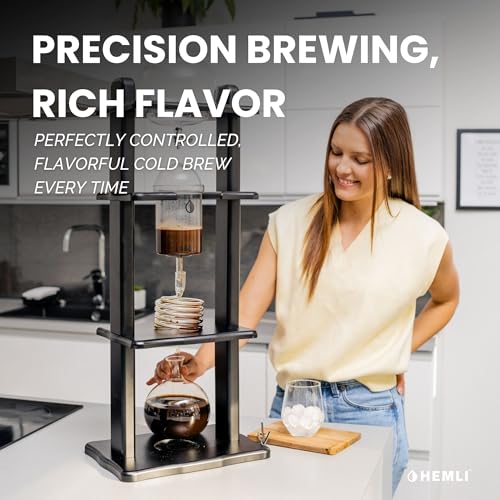
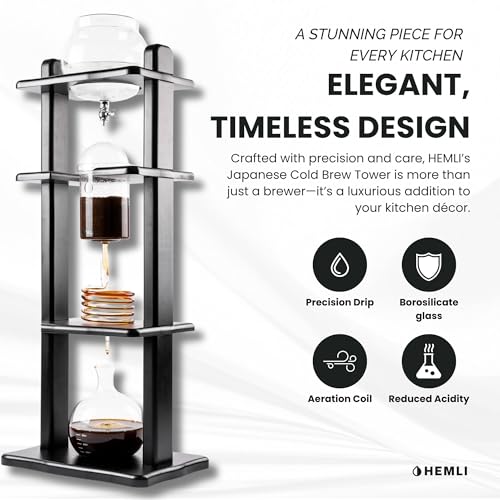
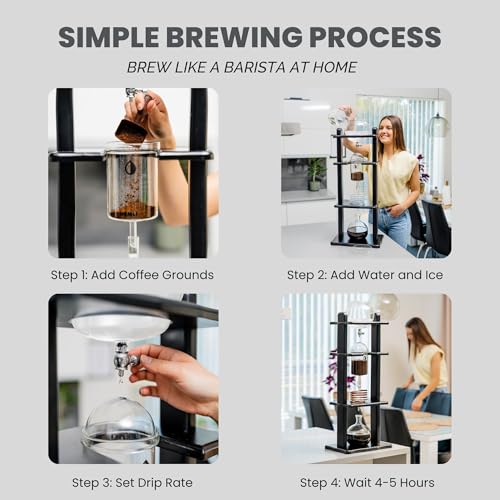
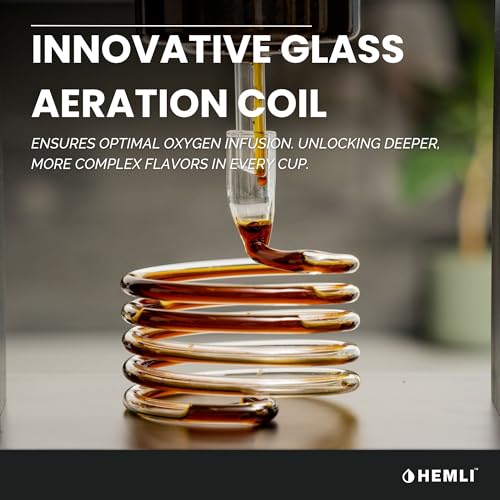
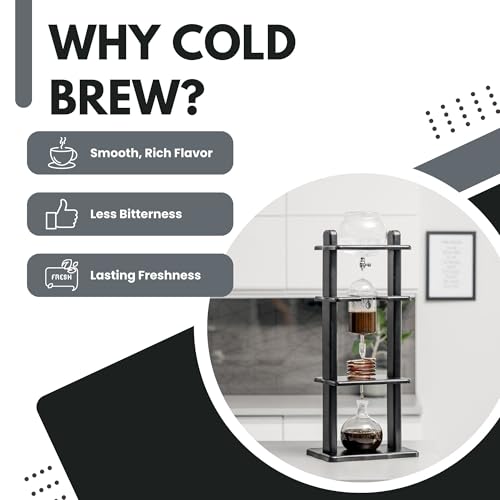
The Hemli ICT2 is the one I’d choose if I wanted both performance and presence. It’s built from hand-blown borosilicate glass and a sleek black wood frame, and it doesn’t hide its purpose, it’s a coffee tower meant to be seen. But beyond looks, the specs back it up: a 5-hour brew time, low-temperature extraction, and that aerating coil that reviewers say adds body and smoothness you don’t get from immersion brewers. The result? A bold, clean concentrate with layered notes, especially with light to medium roasts.
It’s not the easiest to clean, hand-blown glass demands care, and assembly is required. But for cafes or serious home baristas, it’s a conversation starter that delivers. Compared to the Nispira or LIAPDG, it feels more premium, and the build quality shows. This is the model I’d recommend if you want the full cold drip experience, not just the output.
Product photos
HANWUDI Cold Drip Coffee Maker
Strengths
- Low price point
- Simple to use
- Visual brewing experience
Trade-offs
- Very small capacity
- No drip adjustment
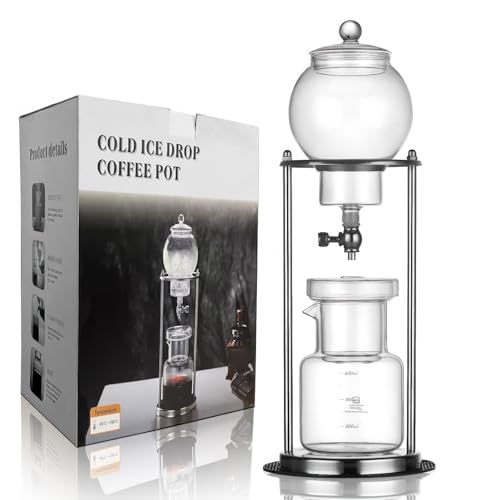
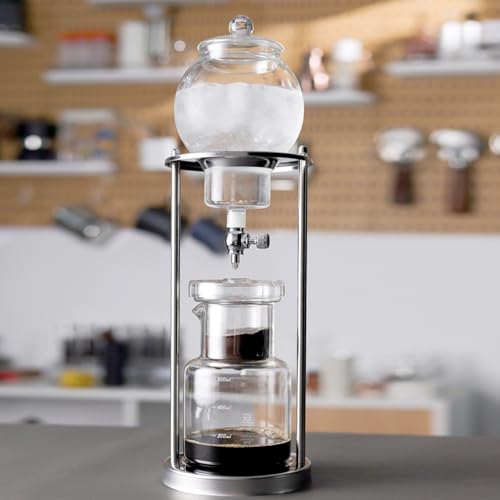
At 20 ounces, the HANWUDI is the smallest here, but it’s also the most affordable. It hits the basics well: slow drip extraction, heat-resistant glass, and a seal that keeps aroma locked in. The transparent tower lets you watch the drops fall, which adds a little ritual to the process, nice for beginners or gift recipients. It’s simple to operate, and owners say it produces a clean, aromatic brew, especially with medium roasts.
But “value” comes with trade-offs. No fine drip control, no wooden base, and the capacity is best for one person. Compared to the OXO, it’s less refined; compared to the Takeya, it’s less practical for daily batches. Still, for someone dipping into cold drip for the first time, it’s a low-risk way to test the waters.
Product photos


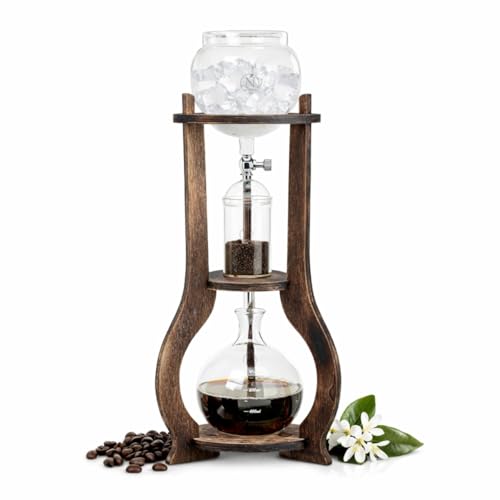
Nispira Cold Brew Drip Tower
Strengths
- Sturdy wooden frame
- Good batch capacity
- No electricity needed
Trade-offs
- Slower average brew time
- Valve less precise
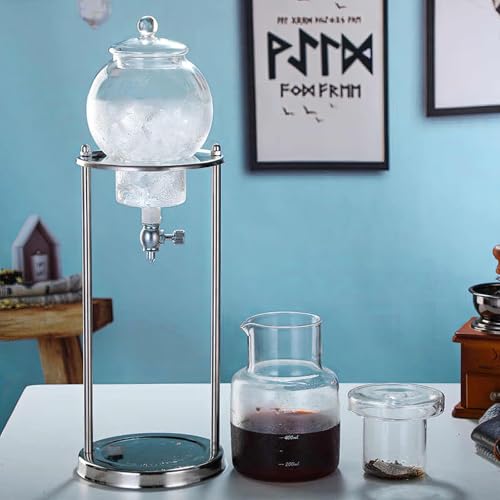
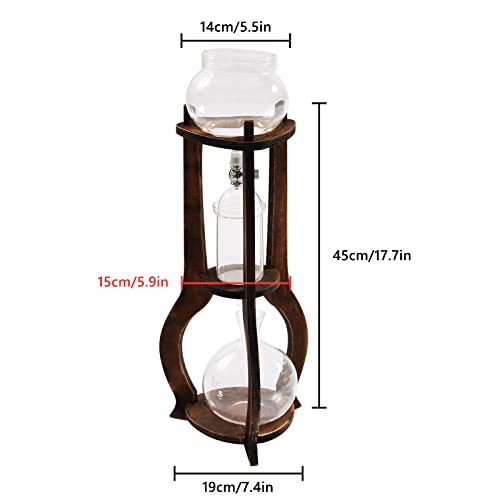
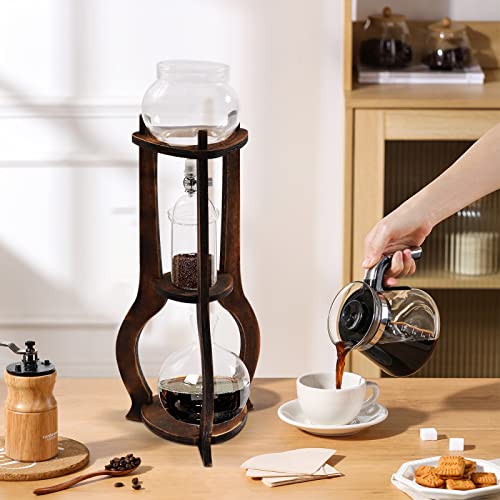
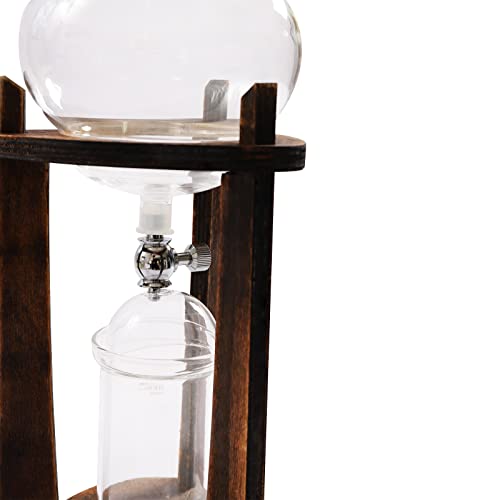
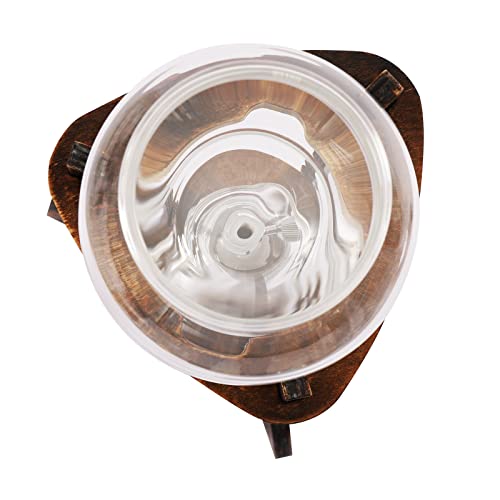
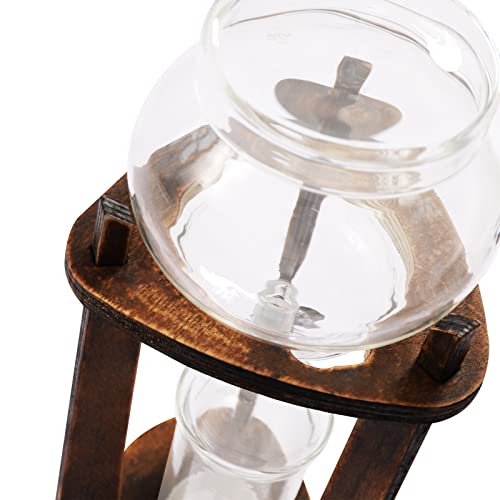
The Nispira stands out for its craftsmanship and warmth, literally. The wooden frame isn’t just for show; it adds stability and a natural elegance that glass-only models lack. At 6–8 cups, it’s a practical size for families or weekend hosts, and the adjustable stainless steel valve gives solid control over drip speed. Owners say it’s easy to set up and doesn’t need electricity, which keeps things simple and safe.
It’s not the fastest, brews take 8+ hours, but that’s typical for gravity drip. Where it falls short is in precision compared to the Bincoo; the valve works, but it’s not as fine-tuned. Still, for its blend of beauty and function, it’s a strong pick. Compared to the LIAPDG, it feels more substantial and less plasticky, even if both have wood frames.
Video review
LIAPDG Cold Brew Drip Tower

Strengths
- Brews in 3–5 hours
- Easy to clean
- Adjustable copper valve
Trade-offs
- Flavor less complex
- Build feels functional, not premium
If speed is your top priority, the LIAPDG wins. Most immersion cold brewers take 12–24 hours, but this one finishes in 3 to 5 thanks to its optimized drip technology. That’s a standout if you forgot to start it the night before and still want fresh cold brew by afternoon. The copper adjustable valve is responsive, and the 600ml capacity is enough for 6–8 cups, great for sharing. Owners praise how easy it is to wipe down, especially with the removable shelf.
But fast doesn’t always mean better. Some reviewers note the flavor can lack the depth of longer 8+ hour brews, especially with denser beans. It’s also more utilitarian in look compared to the Hemli or Nispira. Still, for the balance of speed, capacity, and clean-up, it’s a standout. I’d pick this over the HANWUDI for daily use if time is tight.
Product photos
Bincoo Dual-Outlet Coffee Brewer
Strengths
- Adjustable drip speed
- Stable pressure valve
- Fine 500-mesh filter
Trade-offs
- Small 450ml capacity
- No aesthetic upgrade
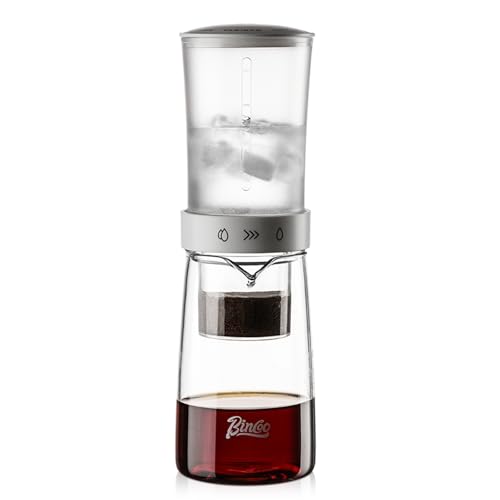
This 450ml Bincoo model is where precision meets practicality. The dual-outlet drip system and rotary flow control give you real use over extraction, turn the knob and you can speed up or slow down the drip to match your grind or bean profile. Reviewers note the constant pressure valve actually works, keeping the flow stable from start to finish, which is rare at this price. That kind of consistency is what separates decent cold brew from great cold brew: clean, balanced, with none of the muddiness you get from uneven saturation.
The 500-mesh stainless steel filter is another win. It keeps fines out without clogging, and the gooseneck carafe pours cleanly. It’s smaller than others here, only enough for two servings, but that’s ideal if you’re brewing for one or two and don’t want waste. Compared to the LIAPDG or Nispira, it lacks the wooden frame flair, but it’s more focused on function than form.
Video review
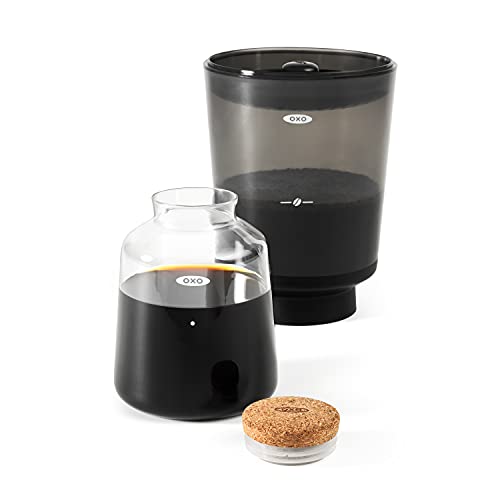
OXO Brew Compact Cold Brew
Strengths
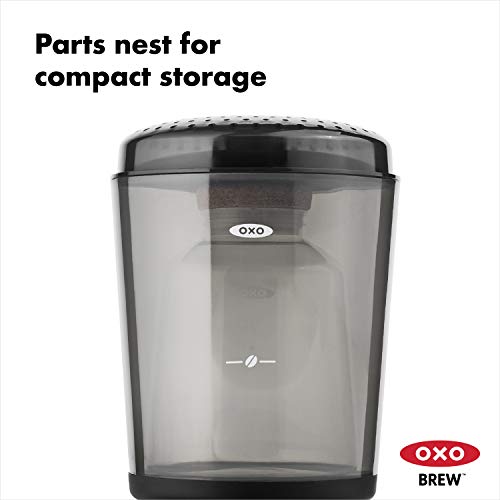
- Space-saving design
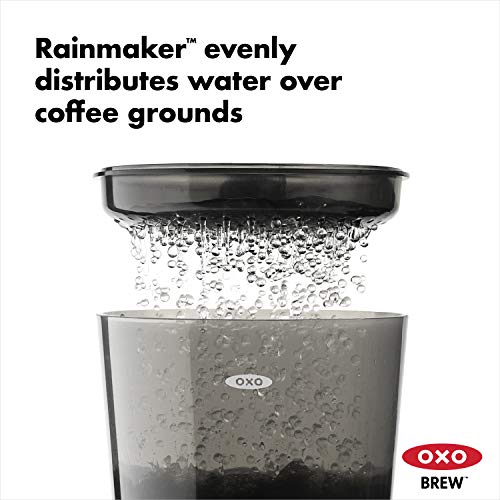
- Rainmaker for even drip
- Nests for storage
Trade-offs
- Smaller batch size
- No flow adjustment
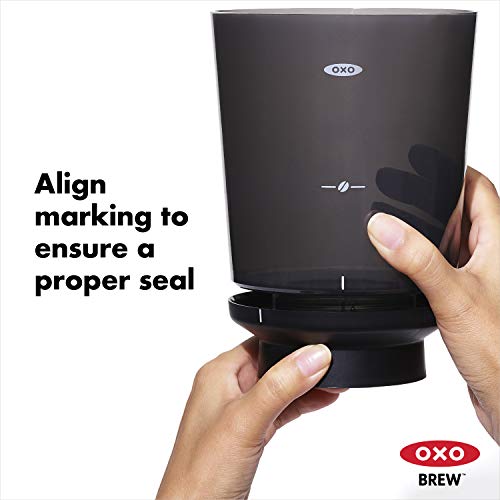
OXO nailed the balance of size and function with this compact brewer. At 24 ounces, it’s not huge, but it’s smartly designed, nesting components, a rainmaker shower head for even saturation, and a borosilicate glass carafe that feels solid in hand. The automatic drain feature works as intended: set the brewer on the carafe, twist, and the concentrate flows cleanly. Owners appreciate how it fits in tight fridge spaces, which is rare for glass models.
Still, it’s a simpler system. No drip rate tuning, no dual chambers, just a solid, reliable process. It’s less involved than the Hemli or Nispira towers, which makes it better for beginners. But compared to the Takeya, it holds less and costs more for the convenience. I’d pick it if counter or fridge space is tight and you still want glass quality without clutter.
Product photos


Takeya Deluxe Cold Brew Pitcher

Strengths
- Large 2-quart capacity
- Dishwasher safe
- Durable Tritan material
Trade-offs
- No drip rate control
- Not for slow-drip enthusiasts
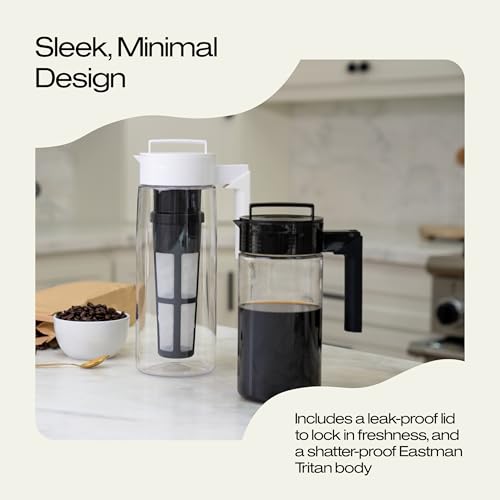
I’ve seen a lot of pitchers pass through home kitchens, and the Takeya Deluxe stands out for one reason: it’s built like a workhorse. On paper, it’s not fancy, just a 2-quart BPA-free Tritan pitcher with a fine-mesh filter and a secure lid. But owners consistently report that it delivers smooth, low-acid cold brew without the fuss, and that lid really does keep things fresh for days. It’s not a drip tower, so you won’t get the theatrical slow extraction of Japanese-style brewers, but for daily, no-nonsense cold brew, it’s hard to beat.
Where it shines is convenience. It fits in most fridge doors, cleans up easily, and handles both cold and hot brewing. If you’re someone who wants a solid batch ready every few days without babysitting a multi-piece glass tower, this is your go-to. Compared to the OXO, it holds more, and unlike glass models, it won’t chip or crack if it slips from your hand.
Product photos


How We Chose These cold drip coffee maker
As the founder of Bean Thusiast, I approach coffee equipment with a focus on how it impacts the final flavor and the overall brewing experience. Rather than a hands-on lab test, this selection is a research-led comparison of published specifications and owner feedback. I examined each cold drip coffee maker’s materials, capacity, and features, then weighed those against what real users are saying about ease of use, brew quality, and durability. My goal was to identify models that consistently deliver a smooth, low-acid cold brew.
For cold drip towers, consistent extraction and ease of control are paramount. I prioritized models with adjustable drip valves – like the Bincoo Dual-Outlet Coffee Brewer – as these allow for fine-tuning the brew strength and time. Material quality also played a large role; borosilicate glass and stable wooden frames (like the Nispira Cold Brew Drip Tower) suggest better longevity and a cleaner flavor profile. Ultimately, a good cold drip maker should offer a balance between precision and simplicity.
Specifications reliably indicate capacity and materials, which are important starting points. However, owner feedback proved crucial in assessing real-world performance. Reports on drip consistency, ease of cleaning, and the presence of sediment heavily influenced my rankings. You can find more in-depth guidance on cold drip coffee maker instructions to maximize your brewing process. I also considered reputation; brands consistently praised for quality and customer service received a boost.
Choosing The Right cold drip coffee maker
As someone who’s spent years exploring the nuances of coffee brewing, I can tell you that cold drip offers a uniquely smooth and flavorful experience. But finding the right system to deliver that consistently takes a little know-how.
A quality cold drip coffee maker prioritizes slow, even extraction. Look for models with adjustable drip rates, durable materials (especially borosilicate glass), and a filter designed to minimize sediment. Consistent brew times, typically 5-12 hours, and a capacity suited to your needs are also key considerations.
Flow Rate & Control
The entire point of cold drip is the slow extraction, but “slow” isn’t a single speed. A good cold drip coffee maker gives you some control over the drip rate. Many use adjustable valves, but the quality of those valves varies. Cheaper plastic valves can be imprecise or even break, leading to inconsistent brews. I’ve seen many owners praise the Bincoo Dual-Outlet Coffee Brewer for its precise flow control, allowing for fine-tuning of the strength and brew time. Don’t settle for just “on” or “off”; you want granularity.
Material Quality & Design
Borosilicate glass is the gold standard for the brewing tower itself. It’s heat-resistant, won’t impart flavors, and is relatively easy to clean. Wood accents look beautiful, as seen in the Nispira Cold Brew Drip Tower, but ensure the wood is sealed properly to prevent water damage and mold. Avoid plastic components where the coffee comes into contact with the brewer, especially for prolonged periods. For daily use, consider how easy it is to disassemble and clean – some systems can be quite fiddly.
Capacity & Convenience
Think about how much cold brew you typically consume. A smaller system like the OXO Brew Compact Cold Brew is ideal for a single person or occasional use, while larger options are better suited for families or entertaining. Beyond sheer volume, consider the practicality of the design. Is it easy to fill the water reservoir? Is the carafe easy to pour from? Some models, like the Takeya Deluxe Cold Brew Pitcher, offer features like airtight lids for extended freshness. If you’re new to cold brew, understanding the coarse grind for cold drip is crucial for successful brewing. Here’s a quick rundown of what to keep in mind when deciding on capacity: * Single User: 20-30oz capacity is generally sufficient. * Couple: 30-40oz is a good starting point. * Family/Entertaining: 60oz or larger will be appreciated, especially if you enjoy iced coffee variations.
Don’t rush the brew. A slow, steady drip is your friend. If the water is flowing too quickly, the extraction will be incomplete, resulting in a weak and sour cup.
If you’re still unsure which model is right for you, exploring best cold brew drip coffee maker reviews and comparing specs can be a great way to narrow down your options. I also recommend reading cold brew drip system reviews to get a sense of real-world user experiences.
Cold Drip Coffee Maker Compared
Here’s a comparison of specifications for various cold drip coffee makers to help you choose the right one.
| Product Name | Capacity (oz) | Brew Time (hrs) | Material (Body) | Adjustable Valve | Filter Type |
|---|---|---|---|---|---|
| Hemli Cold Drip Coffee Tower | N/A | 5 | Borosilicate Glass | Yes | Reusable |
| HANWUDI Cold Drip Coffee Maker | 20 | N/A | Glass | Yes | N/A |
| Nispira Cold Drip Tower | 6-8 cups | N/A | Wood & Glass | Yes | Reusable |
| LIAPDG Cold Brew Drip Tower | 20.29 | 3-5 | Wood & Glass | Yes | N/A |
| Bincoo Dual-Outlet Coffee Brewer | 450ml (15oz) | N/A | PCTG & Glass | Yes | 500-Mesh Stainless |
| OXO Brew Compact Cold Brew | 24 | N/A | Borosilicate Glass | No | Stainless Steel |
| Takeya Deluxe Cold Brew Pitcher | N/A | N/A | Tritan | No | Fine-Mesh |
Frequently Asked Questions
What’s the typical lifespan of a cold drip coffee maker?
Generally, a well-maintained cold drip coffee maker should last 3-5 years. This depends heavily on material quality; borosilicate glass towers paired with stable wooden or metal frames tend to be the most durable, while those with more plastic components may have a shorter lifespan.
Can I use a cold drip coffee maker for hot brew methods?
No, cold drip coffee makers are specifically designed for slow, cold extraction. Using hot water can damage the glass components and alter the intended brewing process, leading to a different – and likely undesirable – flavor profile.
How does the filter type affect the final brew?
The filter is crucial. Stainless steel mesh filters allow more of the coffee’s oils to pass through, resulting in a fuller-bodied brew, while paper filters produce a cleaner, brighter cup. Reusable filters need regular cleaning to prevent buildup that can affect taste.
Are cold drip coffee makers difficult to clean?
Cleaning varies by model, but most disassemble into a few parts. Borosilicate glass components are dishwasher safe, but wooden frames need hand washing and occasional oiling to prevent damage. Some users find models with many small parts, like the Bincoo Dual-Outlet Coffee Brewer, slightly more fiddly to clean.
Where can I find more information on different cold brew options?
If you’re exploring beyond drip towers, you can find reviews of various types of cold brew systems, including immersion brewers and electric brewers, in our guide to the best cold brew coffee makers. This will help you compare all the available options.
The Bottom Line
Choosing a cold drip coffee maker often comes down to balancing control with convenience. If you’re after the most refined, adjustable experience and don’t mind a slightly more involved setup, the Bincoo Dual-Outlet Coffee Brewer stands out as the most capable overall. It consistently receives praise for its precise flow control, allowing you to really dial in your preferred brew strength.
For those on a tighter budget, or seeking a simple entry point, the OXO Brew Compact Cold Brew is a fantastic choice. And if you prioritize a larger batch size and a classic aesthetic, the Nispira Cold Brew Drip Tower provides a beautiful and functional solution. You can also find a great homemade cold drip recipe to help you get the most out of your new equipment.
Ultimately, the specs are less crucial than getting the fundamentals right. Consistent grind size, high-quality coffee beans, and clean equipment will have a far greater impact on your final cup than any single feature of the brewer itself. Focus on those basics, and you’ll be well on your way to enjoying delicious, smooth cold brew at home.
