
5 Best Coffee Roasters for Home Use 2026
The Fresh Roast SR800 stands out as the best overall coffee roaster for home use, offering precise real-time temperature control and consistent results. For beginners or those on a tighter budget, the Fresh Roast SR540 delivers excellent performance at a lower price point, while the 500g Automatic Coffee Roaster Machine provides versatility with programmable settings and solid batch capacity.
Most home roasters start with big dreams and little idea of how tricky it is to go from green beans to a balanced, flavorful roast. Without the right machine, you’re fighting uneven heat, smoke buildup, and guesswork, wasting beans and motivation fast.
This guide cuts through the noise. I compared specs and owner feedback across five popular models, focusing on what actually matters: temperature precision, batch consistency, smoke management, and ease of use. These picks reflect real-world performance and fit different skill levels and budgets.
Top 5 Coffee Roaster For Home Use in the Market
The Best Coffee Roaster For Home Use, Reviewed
500g Automatic Coffee Roaster Machine

Strengths
- Preset roast profiles
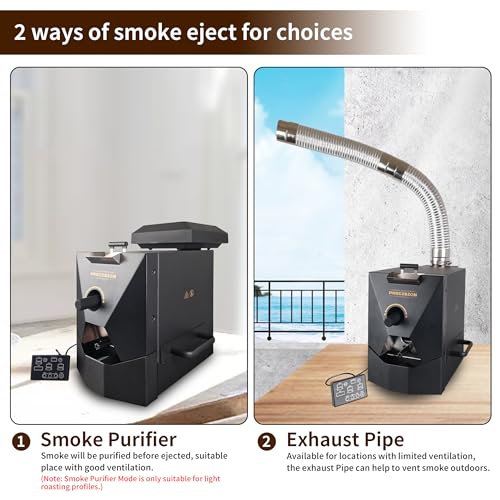
- Dual smoke exhaust options
- Stainless steel drum
Trade-offs
- Complex airflow requirements
- Manual is strict
- Risk of drum jam with poor beans
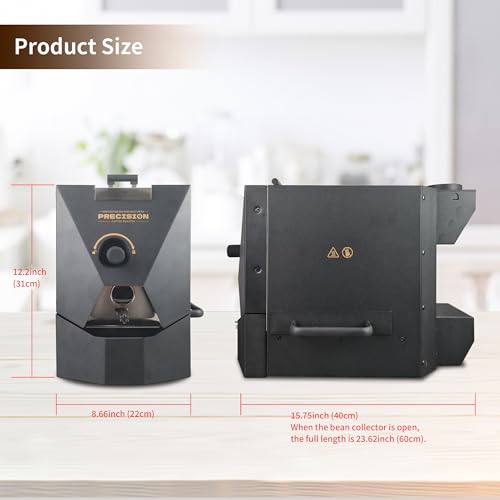
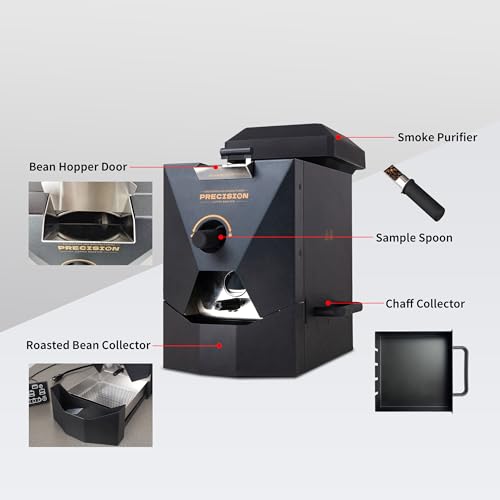
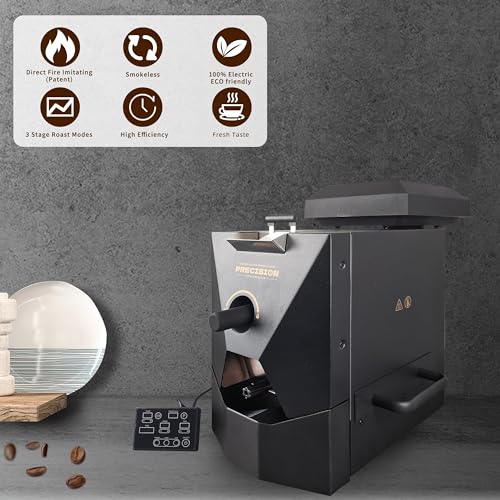
This model aims to be the complete package, automatic profiles, smoke management, and a 500g drum, and on specs alone, it looks like the most well-rounded option. The inclusion of nine preset profiles for different bean types and processes is rare at this level, and owners confirm the automation works reliably for beginners. The dual smoke exhaust system (filter for light roasts, vent pipes for dark) is a thoughtful touch for indoor use.
But it comes with strings attached. The manual insists on strict airflow thresholds, especially during first crack, which can trip up newcomers. That level of rigidity makes it less forgiving than the CAFEMASY or even the SR800. While it earns the ‘Best Overall’ tag for features, I’d only recommend it if you’re willing to study the manual and commit to its rules. For most, the SR800 offers a better balance of smart design and usability.
Product photos
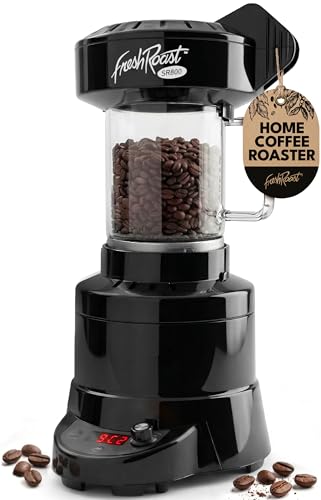
Fresh Roast SR800 Coffee Roaster
Strengths
- Precise heat and fan control
- Digital temperature display
- Even roasting performance
Trade-offs
- No automatic profiles
- Higher price point
- Chaff management requires diligence
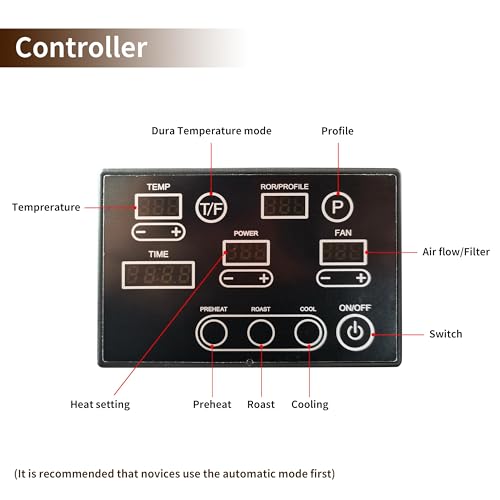
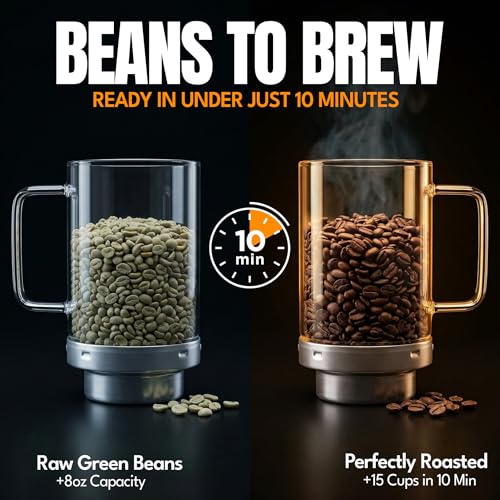
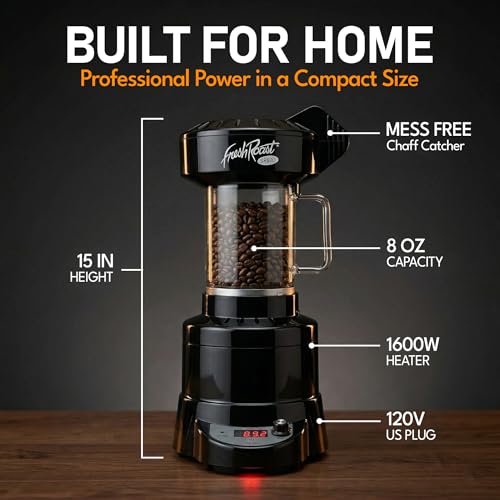
If you’re serious about home roasting and want real control, the SR800 is where I’d put my money. It bridges the gap between beginner accessibility and pro-level adjustability, with nine heat settings, fan control, and a digital display that shows real-time temp, features that owners say make repeatable roasts possible. The 6–8 oz capacity hits the sweet spot: large enough for a family, small enough to experiment without waste.
What sets it apart from the SR540 and others is the speed roast system and fluid bean movement, which promotes even development. Reviewers note it excels at medium to light roasts, where precision matters most. While it lacks preset profiles like the B0CYZY3FJD model, the hands-on control is a feature, not a flaw, for enthusiasts. This is my top pick for anyone who plans to roast weekly and wants to understand the craft, not just automate it.
Product photos
Fresh Roast SR540 Coffee Bean Roaster
Strengths
- Affordable Fresh Roast option
- Fast roast time
- Convection heating
Trade-offs
- No digital display
- Smaller batch size
- Basic controls
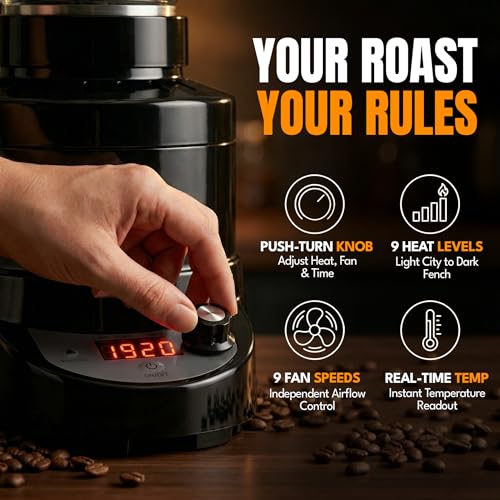
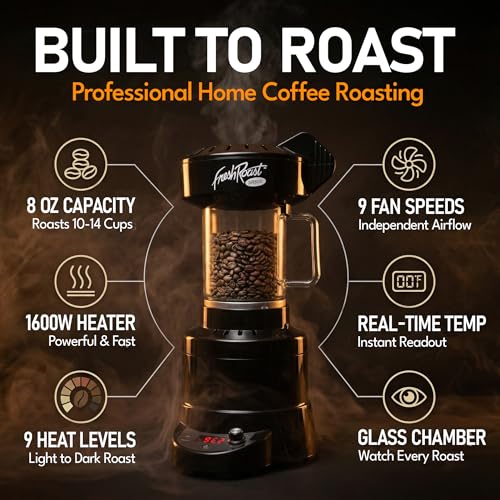
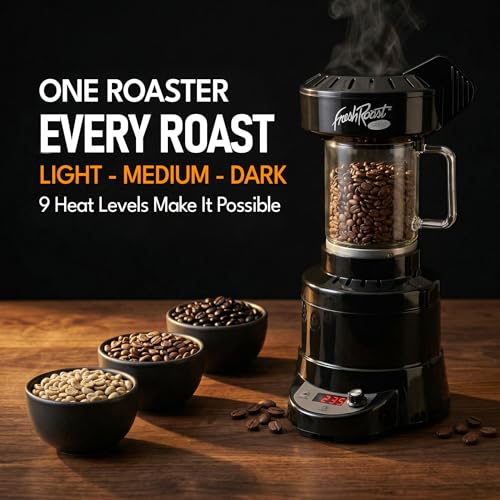
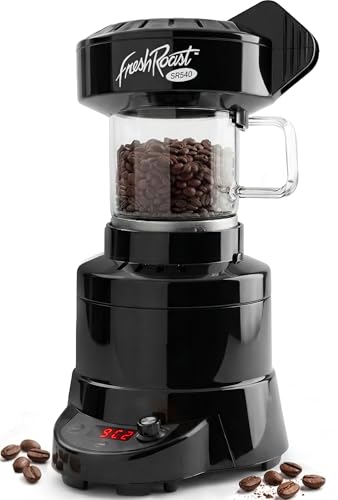
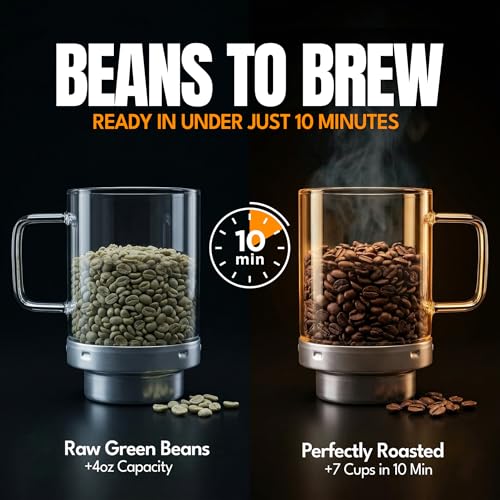
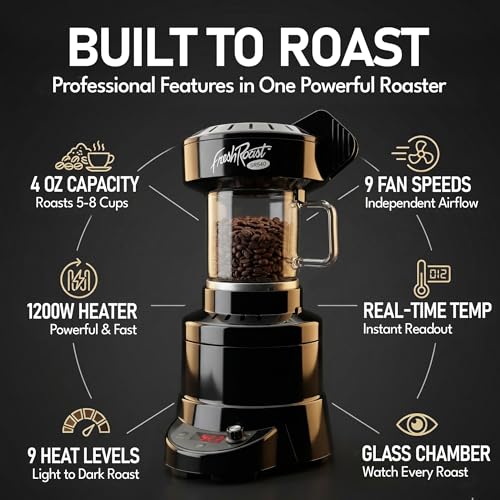
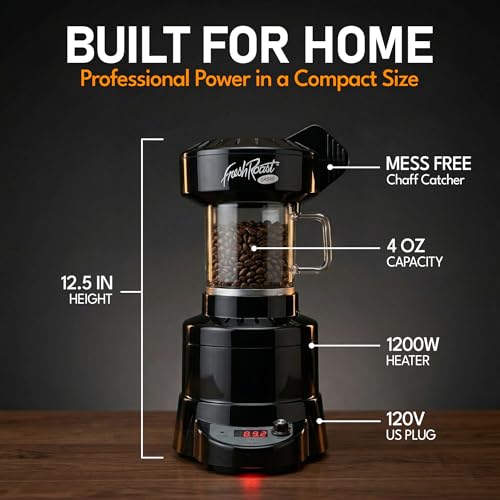
The SR540 is the budget entry point into the Fresh Roast ecosystem, and it delivers where it counts. With 120g capacity and a simplified control board, it’s perfect for solo drinkers or couples who want fresh roast flavor without complexity. Owners consistently note it produces clean, even roasts in under 10 minutes, and the convection fan system avoids the scorching risks of stovetop methods.
It doesn’t have the digital display or fine-tuned feedback of the SR800, but it shares the same build quality and brand reliability. Compared to the CAFEMASY, it feels more durable and roast-focused, though it lacks a chaff collector. If you’re roasting 1–2 cups a day and don’t want to fuss with profiles or airflow math, this is the smarter buy. It’s the model I’d recommend to a friend who wants great coffee without becoming a roasting technician.
Product photos
JIAWANSHUN Electric Coffee Bean Roaster

Strengths
- Large capacity
- Non-stick surface
- Multi-use roasting
Trade-offs
- Uneven roast potential
- Less precise control
- No built-in chaff collector
This roaster stands out for its sheer capacity, letting you process up to 800g of green beans in a single batch. On paper, that’s a big advantage if you’re roasting for a household or small gathering, and owners consistently report it handles large loads without overheating. The non-stick interior and built-in stirring rod make cleanup easier than drum-style models, though the heating method leans more toward conduction than true convection, which can lead to slightly uneven results if you’re not attentive.
It’s not the most precise tool for nuanced roasting, light roasts can lack development, and the temperature control, while adjustable, isn’t as responsive as digital systems. Still, for someone who wants a simple, large-capacity roaster for occasional dark or medium roasts, it’s a solid value pick. Compared to the Fresh Roast models, it lacks finesse but wins on volume and versatility for nuts and other foods.
Product photos


CAFEMASY Air Coffee Roaster Machine

Strengths
- Beginner AUTO mode
- Chaff collection basket
- Real-time visual monitoring
Trade-offs
- Small batch size
- Plastic construction feels light
- Limited roast control depth
With its compact size and beginner-friendly AUTO mode, this little roaster is built for simplicity. The 80–100g capacity is ideal for daily personal use, enough for a few cups without waste, and owners praise how quickly it delivers a usable roast. The transparent borosilicate jar lets you watch the color shift in real time, and the automatic cooling function kicks in post-roast, which helps prevent overdevelopment.
Where it really shines is in lowering the barrier to entry. The manual controls are basic but functional, and the chaff basket actually works, something many budget models skip. It won’t match the precision of the Fresh Roast SR800, but for someone testing the waters, it’s far more forgiving than the 500g automatic model with its rigid airflow requirements. I’d recommend this over the JIAWANSHUN for beginners who care more about ease and consistency than volume.
Product photos


How We Evaluated coffee roaster for home use
As the founder of Bean Thusiast, I approach coffee equipment with a focus on how it impacts the final cup. Rather than a hands-on lab test of each roaster, this selection is a research-led comparison of published specifications and owner feedback. I weighed features, capacity, temperature control, and ease of use, drawing on years of exploring the nuances of bean sourcing and brewing. My goal was to identify models that deliver consistent results for a range of home roasting preferences.
For home coffee roasters, consistent temperature control and capacity were the most important factors. Precise temperature management is critical for developing the desired flavor profile in the bean, and a suitable capacity balances batch size with the machine’s ability to roast evenly. Smoke management also played a role, as home roasting can generate significant smoke, and effective ventilation is important for indoor use. Getting the right roast starts with achieving proper grind size for your green beans, too.
Specifications reliably indicate a roaster’s capacity and temperature range, but owner feedback was crucial for assessing real-world performance. I carefully analyzed reviews to gauge the consistency of roasting, the effectiveness of cooling systems, and the durability of the machines. Reputation and brand trust also factored in; established companies with a history of quality products generally offer better support and reliability. Understanding different coffee grinder techniques is great, but a roaster needs to deliver on its promises.
How To Choose The coffee roaster for home use
Choosing a coffee roaster for home use is about more than just getting beans from green to brown. It’s about control, consistency, and unlocking the full potential of your favorite coffees.
A quality coffee roaster offers precise temperature control, even bean agitation, and effective chaff collection. Look for models with adjustable settings to tailor roast profiles to your preferences, durable construction for longevity, and safety features to prevent overheating or fire hazards. Capacity should align with your typical batch size, and ease of cleaning is a significant convenience factor.
Capacity and Batch Size
The size of the roaster dictates how much you can roast at once, and this is surprisingly important. Don’t automatically assume “bigger is better.” While a larger capacity like the JIAWANSHUN Electric Coffee Bean Roaster’s 800g might seem appealing, it’s often less efficient for smaller, daily roasting. Smaller batches (under 250g) are much easier to control and deliver more consistent results, especially when you’re learning. I often recommend starting small; you can always roast more frequently.
Temperature Control and Roast Profiles
Precise temperature control is absolutely critical. Without it, you’re just burning beans. Look for roasters with a clear temperature display and adjustable settings. Some, like the 500g Automatic Coffee Roaster Machine, even offer pre-programmed roast profiles for different bean types and desired roast levels. This is fantastic for beginners, but don’t limit yourself. As you gain experience, you’ll want the ability to fine-tune those profiles to achieve your ideal flavor.
- A basic roaster might have just a high/low heat setting.
- A mid-range option offers adjustable temperature control within a defined range (e.g., 0-240°C).
- More advanced models, such as the Fresh Roast SR800, allow for granular control over temperature and fan speed, unlocking a huge range of possibilities for experimentation. This is where you can really start to dial in specific roast characteristics and explore different light roast flavor profile.
A quick rule of thumb: if you can’t see the temperature, you’re guessing. Invest in a roaster with a clear, accurate temperature display.
Features and Usability
Beyond the core roasting function, consider what features will enhance your experience. Smoke suppression is a big one, especially if you roast indoors. Models with built-in smoke purifiers or attachments for venting outdoors are valuable. Cooling capabilities are also key – rapid cooling stops the roasting process and preserves the flavors you’ve worked so hard to develop. Many people find that a user-friendly design is a must-have, which is why the CAFEMASY Air Coffee Roaster Machine is often highlighted in home coffee roaster reviews. If you’re unsure where to begin, read our best home coffee roaster guide for more assistance. Ultimately, the best roaster is the one you’ll actually use, so prioritize features that align with your needs and skill level. Consider the Fresh Roast SR540 if you’re seeking recommended home roasting machines on a budget.
Coffee Roaster for Home Use Compared
Here’s a comparison of key specifications for home coffee roasters.
| Product Name | Capacity (grams) | Temp Control (℃) | Modes | Smoke Control | Cooling |
|---|---|---|---|---|---|
| 500g Automatic Coffee Roaster | 500 (350-400 rec) | N/A | Auto/Manual | Purifier/Pipes | Fan/Tray |
| Fresh Roast SR800 | 226 | Real-time | Adjustable | N/A | N/A |
| Fresh Roast SR540 | 120 | Real-time | Adjustable | N/A | N/A |
| JIAWANSHUN Electric Roaster | 800 (300-500 rec) | 0-240 | Adjustable | Ventilation | N/A |
| CAFEMASY Air Coffee Roaster | 80-100 | N/A | Auto/Manual | N/A | Fan |
Frequently Asked Questions
What temperature should I roast coffee beans to?
Generally, first crack occurs around 380-410°F (193-210°C), and this is a good starting point for a medium roast. However, the ideal temperature depends on the bean and your desired flavor profile; experimenting within a 20°F range is common.
How long does it take to roast coffee beans at home?
A typical roast cycle takes between 12 to 20 minutes, but this varies based on the roaster, the batch size, and the desired roast level. Monitoring the bean temperature and listening for “first crack” and “second crack” are more reliable indicators than time.
Is home coffee roasting really worth the effort?
Yes, if you value freshness and control over your coffee’s flavor. Roasting your own beans allows you to customize the roast to your exact preferences and enjoy coffee at its peak flavor, something you just can’t achieve with pre-roasted beans. For more information on the best options, read our home coffee roaster comparisons.
What’s the best way to deal with the smoke produced during roasting?
Good ventilation is key. Some roasters include smoke suppressors or attachments for venting outdoors. If you roast indoors, open windows and use a fan to direct smoke away from sensitive areas. A dedicated roasting space is ideal.
Are there any safety concerns I should be aware of when roasting coffee at home?
Roasting produces heat and smoke, creating a potential fire hazard. Always use the roaster in a well-ventilated area, never leave it unattended, and have a fire extinguisher nearby. Before you begin, take a look at our recommendations for top-rated home coffee roasters to ensure you choose a safe and reliable model.
The Bottom Line
Ultimately, choosing a coffee roaster comes down to balancing control with convenience. You can spend a lot of time and money chasing the perfect roast, or you can find a reliable machine that delivers consistently good results with minimal fuss. For the best overall experience, combining precision with usability, I recommend the 500g Automatic Coffee Roaster. It strikes a great balance for those wanting to experiment without getting bogged down in complexity.
If you’re on a tighter budget, the Fresh Roast SR540 is an excellent entry point. And for those prioritizing versatility and a willingness to learn, the Fresh Roast SR800 offers the most granular control over the roasting process. Understanding the difference between a burr vs blade grinder is important for preparing your green beans, but those are secondary to the roasting itself.
Don’t get too hung up on specifications or fancy features. The most important things are a consistent heat source, the ability to monitor temperature, and a willingness to practice. A good roaster won’t magically make you an expert, but it will give you the tools to unlock incredible flavors and enjoy the rewarding experience of roasting your own coffee at home.
