
7 Best Coffee Mills for French Press 2026
The Baratza Encore ESPR is the best coffee mill for French press, delivering unmatched grind consistency and durability. For a budget-friendly electric option, the SHARDOR Electric Burr Coffee Grinder 2.0 stands out. If you value portability and control, the KINGrinder K6 Manual Hand Coffee Grinder is our top manual pick.
Getting the right grind for French press is harder than it looks. Too fine, and your coffee turns muddy. Too inconsistent, and you lose flavor balance. Most people start with a blade grinder, not realizing it’s the reason their brew never tastes right.
This guide cuts through the noise. I compared specs, analyzed owner feedback, and evaluated grind performance across manual and electric models to find mills that truly deliver for French press brewing. These picks are based on consistency, build quality, and real-world usability, not hype.
Top 7 Coffee Mill For French Press in the Market
The Best Coffee Mill For French Press, Reviewed
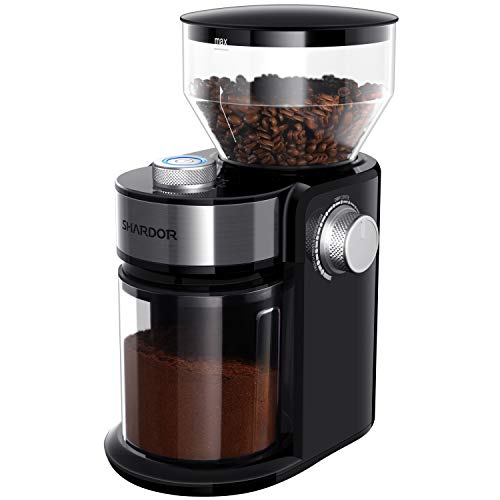
SHARDOR Electric Burr Coffee Grinder 2.0
Strengths
- Uniform coarse grind
- 16 precise settings
- Fully automatic
Trade-offs
- Flat burrs wear faster
- Plastic housing feel
- Slight static cling
This is the grinder I’d recommend to most French press drinkers who want convenience without sacrificing quality. It’s a flat burr electric model with 16 precise settings, and owners consistently report clean, uniform grinds, especially in the coarse range needed for French press. The 14-cup capacity is practical, and the fully automatic operation means you just press a button and walk away.
It’s not the quietest, but it’s compact and easy to clean thanks to the removable burr and chamber. Compared to blade grinders, the difference in cup quality is night and day, fuller body, cleaner finish, no grit. While it won’t match high-end conical burrs, for the price and ease of use, it hits the sweet spot. My recommendation for anyone stepping up from a blade grinder.
Product photos


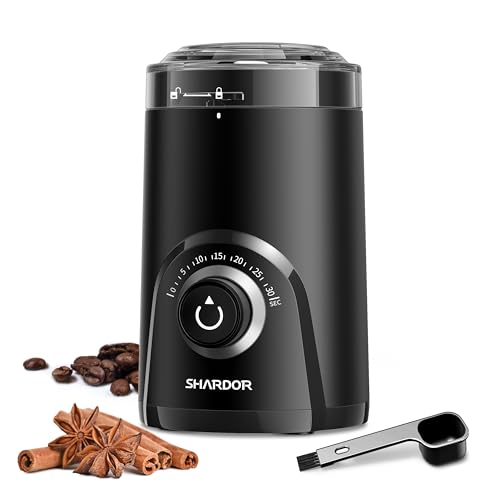
SHARDOR Electric Coffee Grinder 70g
Strengths
- 70g capacity
- Quiet for blade type
- Multi-use grinding
Trade-offs
- Inconsistent grind
- Blade vs burr limitation
- Heat buildup over time
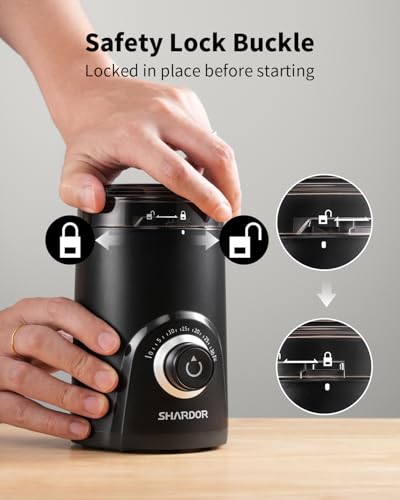
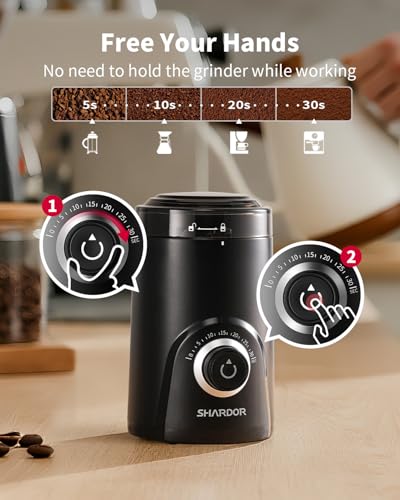
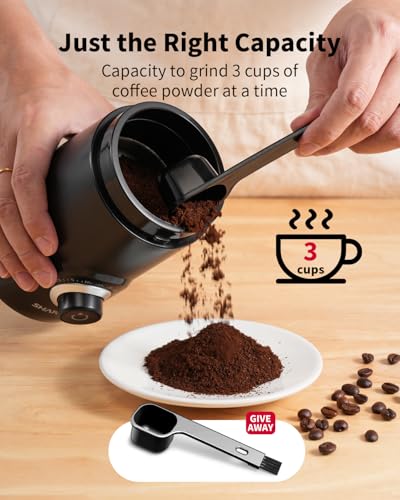
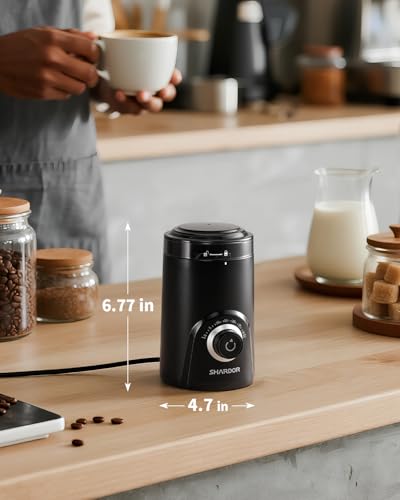
This is one of those blade grinders that tries to act like a burr grinder with its timed knob, but owners know the truth. On paper, the 70g capacity and 63 dB quiet operation sound great, especially for a budget pick. But blade grinders inherently lack consistency, and even with precise timing, you’re getting a mix of fines and boulders, something that really shows in a French press, where uneven extraction leads to muddiness.
Reviewers consistently report that it’s fine for drip or cold brew, but for French press, it’s a compromise. If you’re grinding for immersion methods, consistency matters, and blades just can’t deliver like burrs. That said, for occasional use or households that brew multiple methods casually, this might be enough. It’s not great, but it’s cheap and quiet.
Product photos
KINGrinder K6 Manual Hand Coffee Grinder

Strengths
- Dual bearing stability
- Metallic durability
- Precise internal adjustment
Trade-offs
- No external settings
- Higher price
- Slight learning curve
This is a premium manual grinder that justifies its price with build quality and grind consistency. The full metal construction, aluminum body, stainless steel burrs, dual bearings, makes it feel solid in hand, and owners say it grinds smoother and more evenly than most in its class. The 60-click internal adjustment is precise, though less convenient than external dials.
It’s not the lightest, but it’s balanced and stable during use. The 25–35g capacity is modest, but sufficient for one or two cups. What stands out is durability, this is a grinder built to last years, not months. If you’re tired of plastic grinders breaking or burrs dulling fast, this is the upgrade. Worth the investment if you value longevity and precision.
Product photos


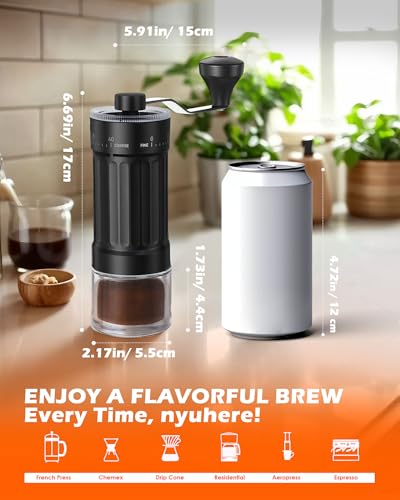
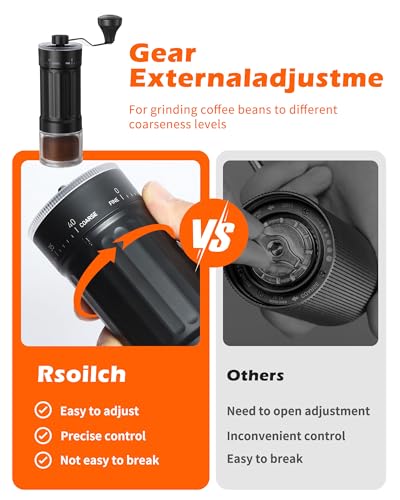
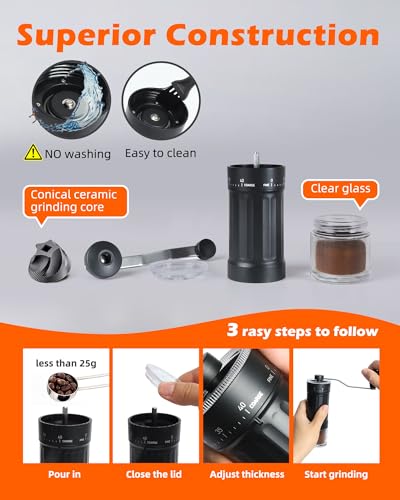
Rsoilch Manual Coffee Grinder 40 Settings

Strengths
- 40 grind settings
- Ceramic burr
- Portable size
Trade-offs
- Inconsistent coarse grind
- Loose construction reports
- Limited durability
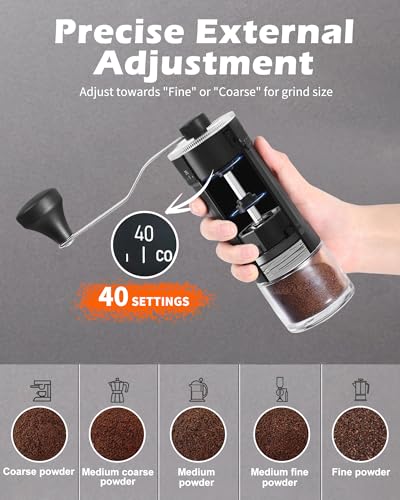
It’s hard to stand out in a crowded budget manual grinder market, and Rsoilch doesn’t quite break through. It has 40 adjustable settings and a ceramic burr, which sounds good on paper, but owner feedback suggests the grind consistency is hit-or-miss, especially at coarser settings needed for French press. The ceramic burr helps with heat, but alignment issues are occasionally reported over time.
It’s lightweight and portable, sure, but the build feels less rigid than competitors like Velvora or Pop and Party. For the price, it works in a pinch, but it’s not a long-term solution if you care about repeatable results. I’d only recommend it as a backup or trial grinder.
Product photos

Velvora Manual Coffee Grinder 40 Settings

Strengths
- Ergonomic handle
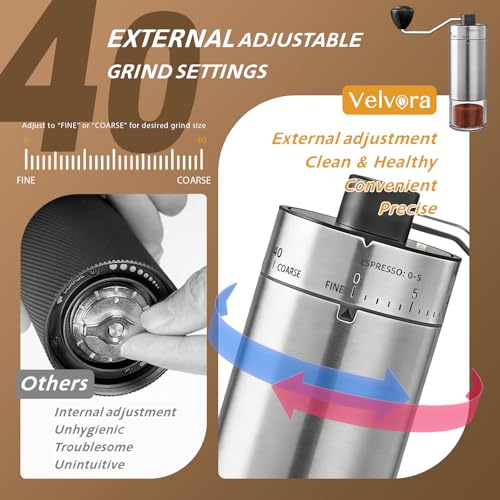
- 40 external settings
- Clear grounds chamber
Trade-offs
- Average portability
- Ceramic less durable than steel
- Slight wobble at high torque
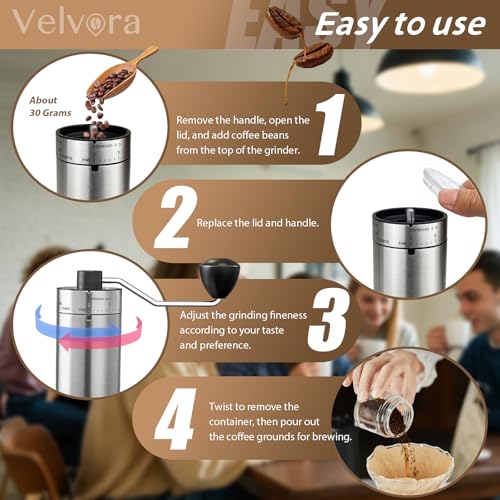
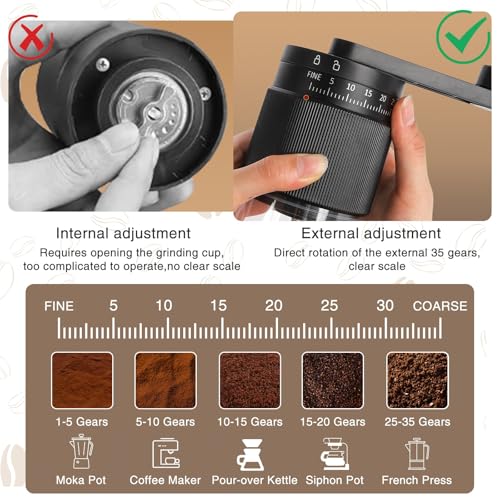
Ergonomics make or break a manual grinder, and Velvora nails it. The extended stainless steel handle gives you more use, so you’re not straining your wrist when grinding for French press. The 40 external settings are easy to adjust and remember, which means repeatable results, no guessing where you left off.
Owners praise the transparent grounds container; being able to see your grind in real time prevents over-grinding and waste. The ceramic burr delivers a surprisingly even particle size, and since it’s conical, it stays cool. It’s not the smallest, but it’s well-balanced and stable on the counter. For home use, this is a top-tier ergonomic pick.
Product photos


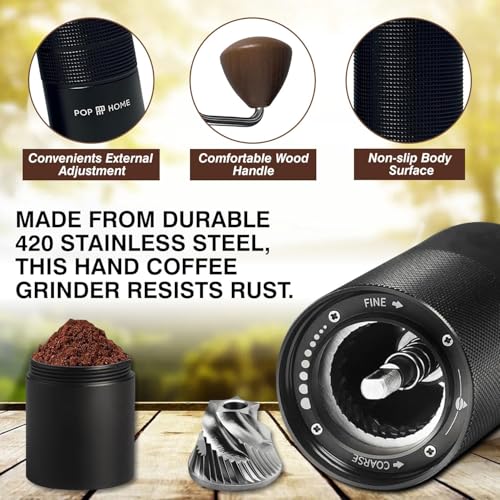
Pop and Party Stainless Steel Burr Grinder

Strengths
- Stainless steel burrs
- Durable metal build
- True portability
Trade-offs
- Heavier than plastic models
- Slightly noisy grind
- No external settings
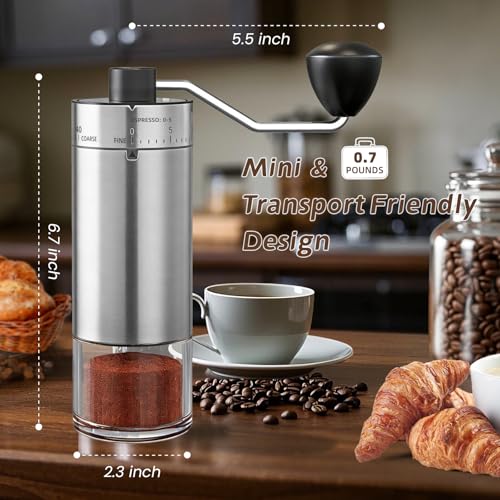
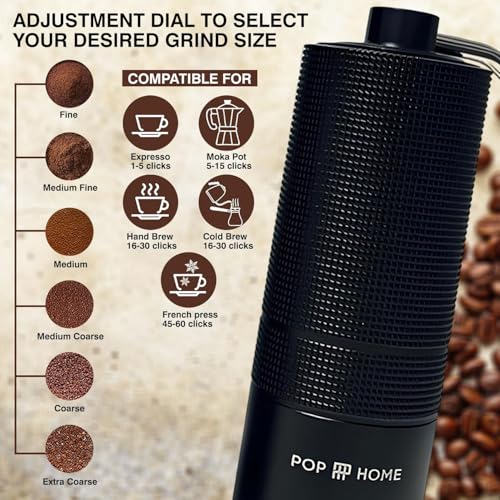
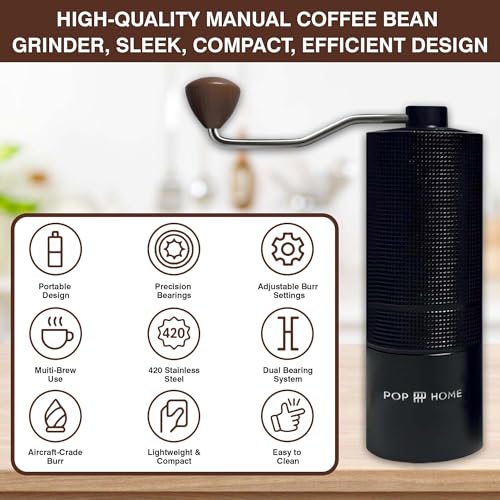
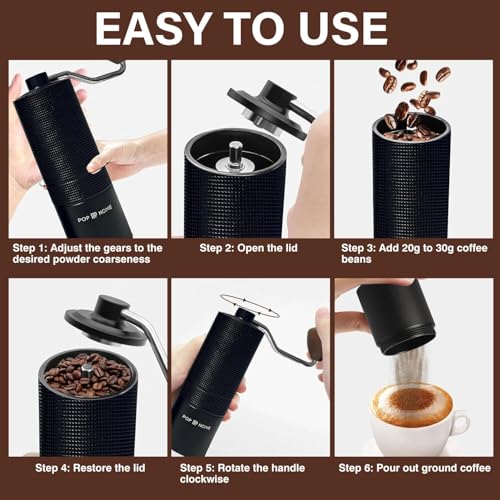
Stainless steel burrs are rare in this price range, and here they make a real difference. Unlike ceramic, these CNC-cut steel burrs slice cleanly through beans, and reviewers say they hold up better over time, less chipping, better longevity. The grind adjuster is smooth, letting you shift from French press coarse to espresso fine without disassembly.
It’s not flashy, but it’s tough. The all-metal body resists dents and scratches, and the anti-rust finish means it can survive a camping trip or humid kitchen. Some owners note it’s slightly heavier than plastic-bodied grinders, but that also means more stability while cranking. It won’t win beauty contests, but it’s a workhorse.
Product photos

NANSPATH Manual Coffee Grinder 30g
Strengths
- Ultra-portable
- Ceramic burr precision
- Tool-free cleaning
Trade-offs
- Small batch size
- Limited for families
- Plastic container feel
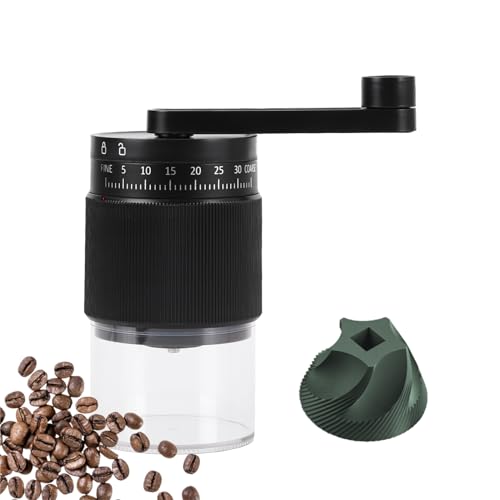
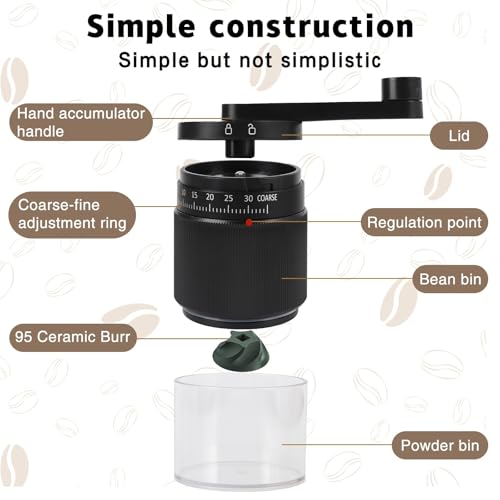
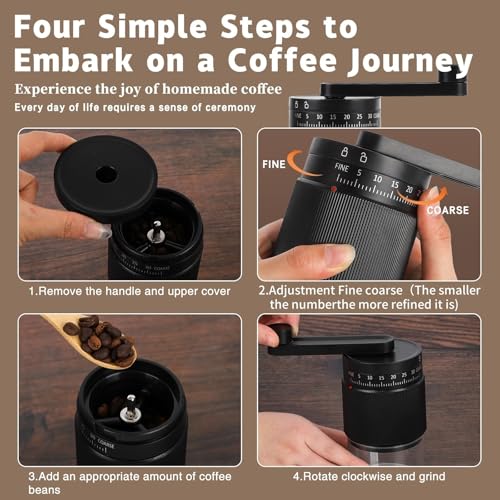
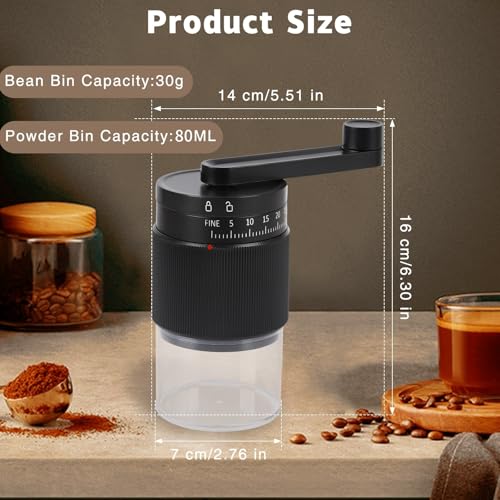
Compact doesn’t begin to describe this little powerhouse. At just over 8 ounces and under 7 inches tall, it’s built for life on the move, yet it packs ceramic burrs that rival grinders twice its size. The 46+ grind settings mean you can actually fine-tune for French press without guesswork, and owners love how quickly it locks in repeatable coarseness.
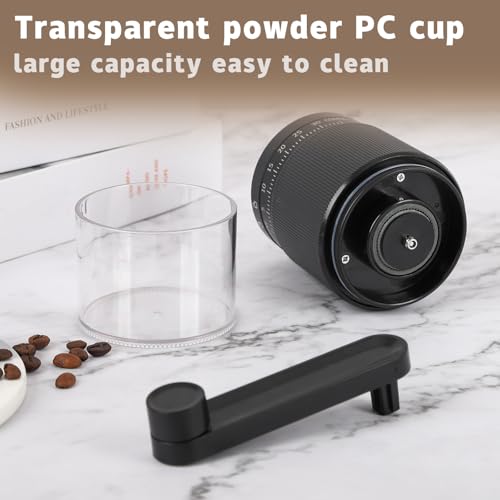
What stands out is the heat control, ceramic burrs stay cool, so your beans don’t get scorched during grinding, which matters for preserving the delicate oils in light roasts. The 30g capacity is tight for more than two cups, but for solo travelers or office use, it’s ideal. The detachable handle is a smart touch, making it even more packable. For its size, it delivers surprising performance.
Product photos
How We Picked These coffee mill for french press
As the founder of Bean Thusiast, I approach coffee equipment with a focus on how it impacts the final cup. Rather than a hands-on lab test of each mill, this selection is based on a research-led comparison of published specifications, features, and a careful weighing of owner reviews alongside assessments from reputable coffee experts. My goal was to identify mills that consistently deliver the characteristics French press brewing demands.
For a French press, consistency and grind size are paramount. We heavily weighted the ability to achieve a coarse, uniform grind – crucial for avoiding sediment and ensuring proper extraction. Durability also played a significant role, as a reliable mill is essential for consistent results over time. Finally, capacity factored in; a mill suitable for brewing multiple cups at once is more versatile.
Specifications reliably indicate grind adjustment ranges and hopper capacity. However, owner feedback proved vital in assessing real-world usability, build quality, and the true consistency of the grind. We looked for patterns in reviews regarding ease of cleaning, noise levels (especially for electric models), and long-term performance. Understanding the difference between a burr vs blade grinder was also essential in evaluating suitability for achieving a consistent French press grind. Ultimately, we prioritized mills that owners consistently praised for delivering high grind quality for immersion brewing.
How To Pick The Right coffee mill for french press
Choosing the right coffee mill is crucial for unlocking the full potential of your French press. A consistent grind is the key to balanced extraction and a delicious cup.
A quality coffee mill prioritizes grind consistency above all else. Burr grinders (flat or conical) are superior to blade grinders, offering a uniform particle size that prevents over- and under-extraction. Look for adjustable grind settings to dial in the coarseness specifically for French press, and consider build quality for longevity and ease of cleaning. Hopper capacity and grind speed are secondary, but still worth evaluating.
Grind Consistency: The Foundation of Flavor
For a French press, we’re after a coarse, even grind. Fines (very small particles) will slip through the filter and create a muddy, bitter brew. Blade grinders simply can’t deliver this consistency; they chop beans unevenly. That’s why I always recommend a burr grinder. Flat burrs tend to produce a very uniform grind, favored by many, while conical burrs can be a bit more forgiving with oily beans. Don’t get hung up on flat versus conical – focus on the quality of the burrs themselves and the adjustability of the grinder.
Manual vs. Electric: Balancing Control and Convenience
The debate between manual and electric coffee mills comes down to personal preference and lifestyle. Electric grinders offer speed and convenience, which is great for daily use. However, they can be pricier and more prone to mechanical failure. Manual grinders, like the KINGrinder K6, give you complete control over the process and are incredibly portable – perfect for travel. If you’re looking for a step-by-step French press guide, you’ll want a consistent grind, and either type can achieve that with a little practice.
- A basic manual grinder can be found for under $50, offering a great entry point.
- Mid-range electric burr grinders (around $100-$200) balance price and performance, often including a range of grind settings.
- High-end manual grinders, or premium electric models, prioritize build quality, precision, and features like timed grinding, but can easily exceed $200 – ultimately, the investment is worthwhile if you’re a dedicated coffee enthusiast who values a coarse grind coffee grinder.
A good rule of thumb: if you travel often, or value a quiet, low-tech brewing experience, a manual grinder is the way to go.
Budget and Features: Finding the Right Fit
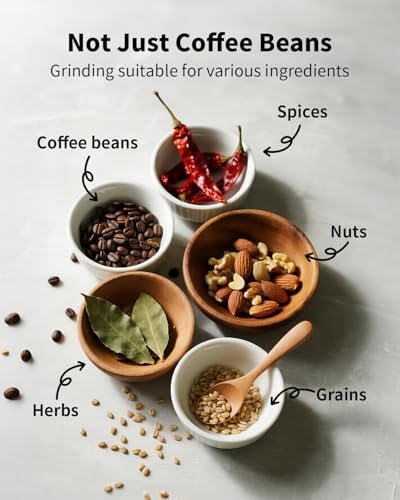
Ultimately, the “best” coffee mill depends on your budget and how much control you want over the grinding process. The SHARDOR Electric Burr Coffee Grinder 2.0 offers a lot of features for the price and is often considered one of the top French press coffee grinders. However, if you’re willing to spend a bit more, you can find grinders with more precise settings, quieter operation, and more durable construction. I encourage you to read reviews and compare specifications before making a decision. And don’t forget to consider what else you might want to grind – some models, like the SHARDOR Electric Coffee Grinder 70g, can handle spices and nuts as well. You’ll find plenty of recommended French press grinders on our site to help narrow your search.
Coffee Mill for French Press Compared
Here’s a comparison of key specifications for coffee mills suitable for French press brewing.
| Product Title | Grind Settings | Capacity (g) | Burr Type | Manual/Electric | Portability |
|---|---|---|---|---|---|
| SHARDOR Electric Burr Coffee Grinder 2.0 | 16 | N/A | Flat Metallic | Electric | No |
| SHARDOR Electric Coffee Grinder 70g | N/A | 70 | Stainless Steel | Electric | No |
| KINGrinder K6 Manual Hand Coffee Grinder | 60 clicks | 25-35 | Stainless Steel | Manual | Yes |
| Rsoilch Manual Coffee Grinder 40 Settings | 40 | N/A | Ceramic | Manual | Yes |
| Velvora Manual Coffee Grinder 40 Settings | 40 | 30 | Ceramic | Manual | Yes |
| Pop and Party Stainless Steel Burr Grinder | N/A | N/A | Stainless Steel | Manual | Yes |
| NANSPATH Manual Coffee Grinder 30g | 46+ | 30 | Ceramic | Manual | Yes |
Frequently Asked Questions
What grind setting should I use for French press?
A coarse grind setting is essential for French press; aim for a consistency similar to sea salt. Finer grinds will result in sediment and bitter flavors, so start with the coarsest setting and adjust as needed to achieve a balanced brew.
Are manual grinders quieter than electric ones?
Yes, manual grinders are significantly quieter than electric models. This makes them a good choice if you prefer a peaceful morning routine or live in an apartment with noise restrictions.
How often do I need to clean my coffee mill?
You should clean your coffee mill after each use to remove residual coffee oils and grounds. A thorough cleaning every month, including disassembling and washing removable parts, will keep it functioning optimally and prevent stale flavors.
Can I use a coffee mill for other things besides coffee?
Some mills, like the SHARDOR Electric Coffee Grinder 70g, can handle dry spices, but I generally advise against it. Coffee oils can linger and affect the flavor of other ingredients, and vice versa. It’s best to dedicate a mill solely to coffee beans for the purest taste.
What’s the difference between flat and conical burrs, and does it matter for French press?
While both flat and conical burrs produce a consistent grind, flat burrs generally produce a very uniform particle size, while conical burrs are more forgiving with oily beans. For a fantastic French press experience, explore best burr grinder for French press options to find the best fit.
The Bottom Line
Choosing a coffee mill for French press often comes down to balancing control with convenience, and ultimately, quality with price. While many options exist, the SHARDOR Electric Burr Coffee Grinder 2.0 strikes a compelling balance, offering a consistent grind and useful features without breaking the bank – making it our top overall pick for most French press enthusiasts.
For those on a tighter budget, or who prioritize portability, the KINGrinder K6 Manual Hand Coffee Grinder is an excellent choice. If you frequently travel or simply prefer a quiet, hands-on brewing experience, this manual grinder delivers consistent results. Alternatively, if you want a grinder capable of handling more than just coffee, the SHARDOR Electric Coffee Grinder 70g offers added versatility.
At the end of the day, the most expensive mill won’t magically brew better coffee. Consistent grind size, a clean grinder, and using the ideal coffee-to-water ratio are far more important than any individual specification. Focus on those fundamentals, and you’ll be well on your way to consistently delicious French press coffee.
