
8 Best Coffee Makers of 2026
The Mueller 12-Cup Drip Coffee Maker stands out as the best overall pick for its consistent brew quality and simple, reliable design. For those on a tight budget, the BLACK+DECKER Thermal Programmable delivers solid performance with a heat-preserving thermal carafe. If you want flexibility between pod and drip, the Keurig K-Duo Coffee Maker is the most practical choice.
Most people just want a dependable coffee maker that brews a great cup without hassle, but the sheer number of options, drip, pod, single-serve, thermal, programmable, makes it easy to end up with one that underperforms or complicates your routine.
As the founder of Bean Thusiast, I’ve spent years studying brewing methods and equipment, and this guide reflects what actually matters based on specs, owner feedback, and real-world usability. We focused on brew consistency, ease of cleaning, carafe quality, and value to identify models that deliver day after day.
Top 8 Coffee Makers in the Market
The Best Coffee Makers, Reviewed
Keurig K-Mini Single Serve

Strengths
- Ultra-compact
- Travel mug friendly
- Energy efficient
Trade-offs
- No large water reservoir
- No strength control
- Limited brew sizes
If you’re tight on counter space but still want the convenience of a pod brewer, the K-Mini makes a compelling case. It’s incredibly compact, under 5 inches wide, which is rare in the K-Cup world, and that matters if you’re in a studio apartment or a packed kitchen. The one-cup reservoir keeps things simple, you just add water each time, and while that means more refills, it also means you’re not stuck with stale water sitting in a tank.
Owners consistently report it delivers hot, fresh coffee quickly, and the removable drip tray is a nice touch for travel mugs. It lacks some of the bells and whistles of pricier models, but for a minimalist pod setup, it holds its own. I’d pick this over bulkier Keurigs if portability and footprint are top priorities.
Video review
Keurig K-Elite Single Serve

Strengths
- Adjustable strength
- Iced coffee mode
- Large water reservoir
Trade-offs
- Larger footprint
- Requires descaling
- No carafe option
The K-Elite stands out in the K-Cup lineup by bringing real control to pod brewing, something most models skip. The strength boost and temperature settings are backed by owner feedback as genuinely useful, especially if you like a bolder cup or regularly make iced coffee. The iced setting adjusts brew temperature to minimize dilution, and reviewers say it makes a noticeable difference compared to just dumping hot coffee over ice.
It’s also one of the few pod brewers with a quiet mode, and the 75oz reservoir means fewer refills. Compared to the K-Mini, it’s clearly aimed at users who want more refinement. While it’s still locked into the K-Cup ecosystem, it gives you more tools to get the cup right. I’d recommend this over the K-Mini for anyone who treats their coffee seriously but isn’t ready to go manual.
Video review
Hamilton Beach 2-Way Brewer

Strengths
- No pods needed
- Dual brewing modes
- Programmable
Trade-offs
- Plastic taste reported
- Brew temp not top tier
- Scoop not dishwasher safe
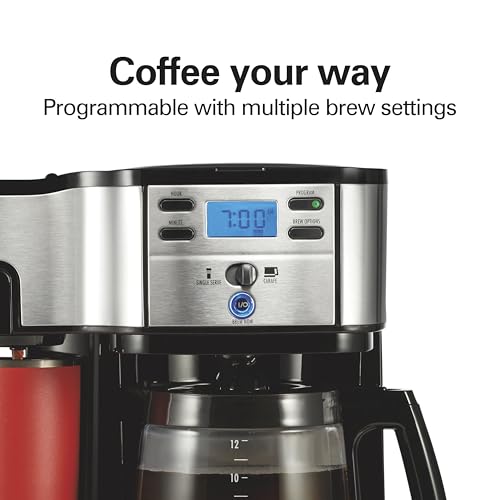
This Hamilton Beach model solves a real pain point: households where some people want a single cup and others want a full pot. The dual brewing system, ground coffee for a single serve or a 12-cup carafe, is rare at this price. It’s not compatible with K-Cups, which is a plus if you’re tired of plastic waste and want to use your own beans. The reusable mesh scoop works well on the single-serve side, and owners say cleanup is straightforward.
The programmability and AutoPause & Pour are practical touches, and having two separate water reservoirs makes switching modes easy. It doesn’t have the flash of a Keurig, but it’s more flexible than most dual brewers. Compared to the K-Duo, it’s less automated but more eco-conscious. My recommendation? This is the smarter buy if you value sustainability and versatility over pod convenience.
Product photos


OVENTE 12-Cup Borosilicate Brewer
Strengths
- Borosilicate glass carafe
- Reusable filter
- Anti-drip spout
Trade-offs
- No auto-off
- No brew strength control
- Basic warming plate
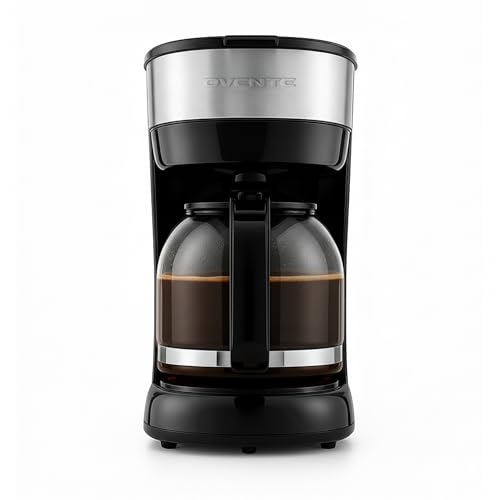
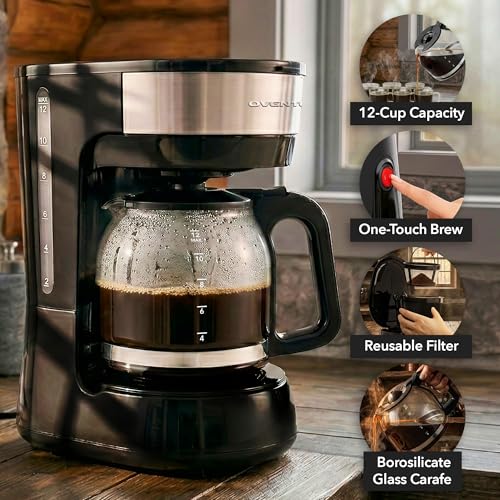
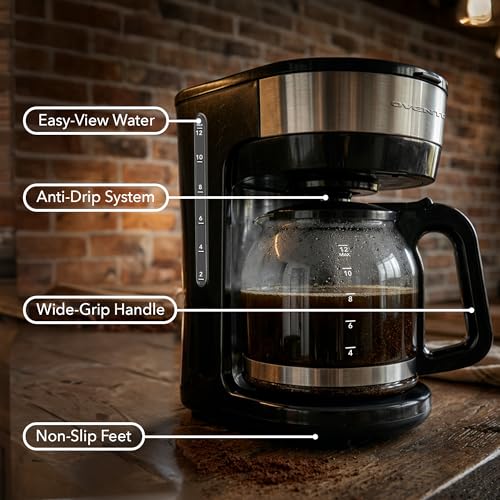
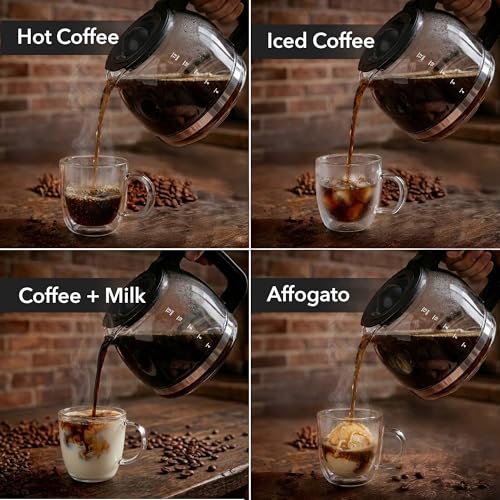
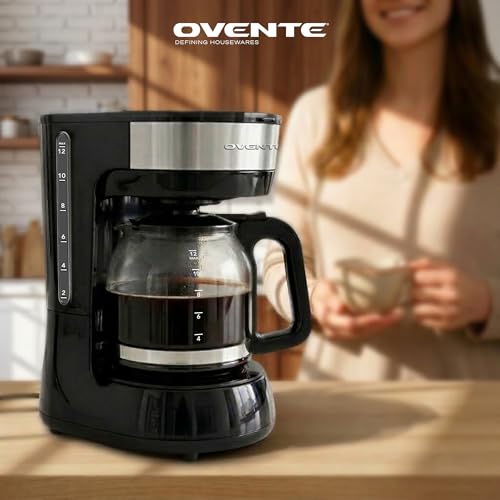
The OVENTE CM412B delivers what most budget drip machines miss: a high-quality borosilicate glass carafe that resists thermal shock and doesn’t retain odors. That’s a big deal, many cheaper models use lower-grade glass that cracks or stains. It brews a solid pot, and the one-touch operation appeals to users who want simplicity. The reusable filter is a nice cost-saver, and owners consistently praise the anti-drip spout for clean pours.
It doesn’t have programmability or strength settings, but for a straightforward drip brewer, it hits the essentials. Compared to the Mueller, it feels slightly more refined in build. I’d pick this over basic models if you want durability without stepping into premium pricing.
Product photos

Ninja 12-Cup Programmable Brewer
Strengths
- Rich brew option
- Small batch function
- Adjustable warming plate
Trade-offs
- Larger footprint
- Filter basket hard to clean
- No thermal carafe
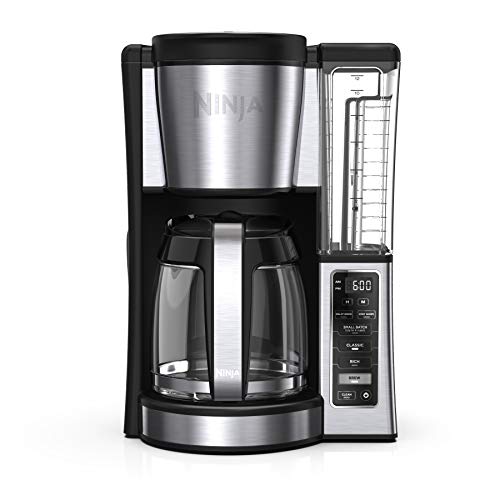
The Ninja stands out with its two brew styles, Classic and Rich, which actually change the extraction process for a noticeably bolder cup. That’s not just marketing; owners confirm the Rich mode delivers a fuller body without bitterness. The small batch function is another win, ensuring 1–4 cups don’t come out weak, a common flaw in drip machines. Combined with the adjustable warming plate (up to 4 hours), it’s built for real-world use.
It shares the 12-cup glass carafe format, but the Hotter Brewing Technology helps it extract better flavor than budget models. Compared to the OVENTE or Mueller, it’s more advanced and offers real customization. If you like tweaking your brew but don’t want a full-on specialty machine, this is where I’d start.
Product photos


Mueller 12-Cup Drip Coffee Maker

Strengths
- Budget-friendly
- Reusable filter
- Auto-off safety
Trade-offs
- Short keep-warm time
- Basic controls
- Carafe handle wobbles
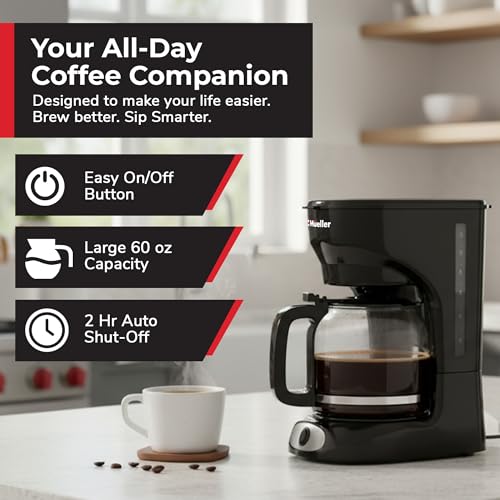
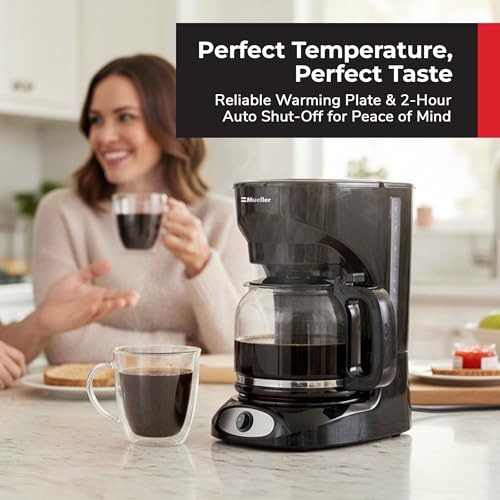
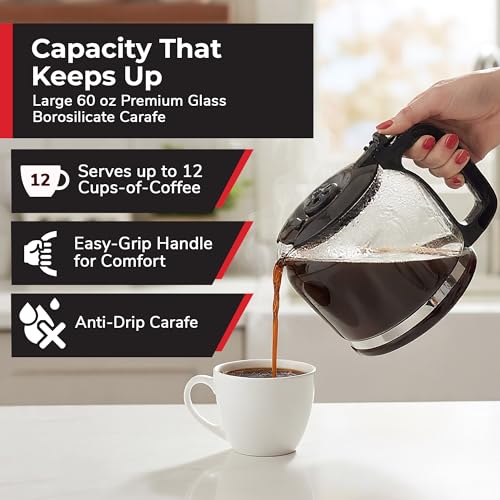
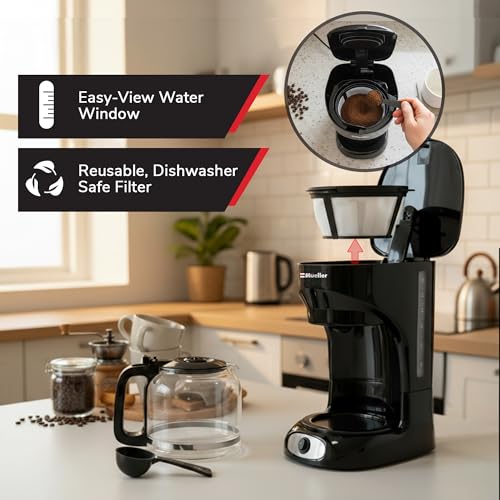
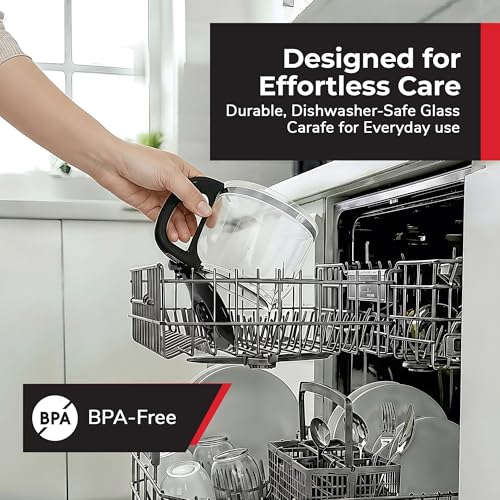
The Mueller hits the sweet spot of affordable reliability. It covers the basics well: a borosilicate carafe, reusable filter, and auto-off safety, features often missing at this price. The keep-warm function shuts off after 2 hours, which is standard but safe. Owners say it’s easy to set up and brews a decent pot quickly.
It doesn’t offer strength settings or programmability, and the build feels a bit lightweight. But for a dorm, office, or secondary kitchen, it’s hard to beat. Compared to the OVENTE, it’s slightly less refined but often more affordable. If you’re budget-conscious and don’t need extras, this gets the job done.
Product photos
Keurig K-Duo Coffee Maker

Strengths
- Dual brewing system
- Large shared reservoir
- Programmable carafe
Trade-offs
- Expensive
- Bulky design
- Pod dependency
The K-Duo Gen 2 is the most complete Keurig offering, a pod brewer and a carafe machine in one. That dual functionality is its real strength. The MultiStream technology ensures even saturation whether you’re using grounds or pods, and owners say it makes a noticeably better pot than older models. The front-facing controls are intuitive, and the 72oz shared reservoir reduces refills across both systems.
It’s also programmable for carafe brewing, and the pause-and-pour feature works smoothly. Compared to the Hamilton Beach 2-Way, it’s more polished and faster, though it locks you into K-Cups for single serve. The iced coffee mode is a bonus. If you want the flexibility of both brewing styles without switching machines, this is the one. I’d call it the best overall pick for versatility and execution.
Product photos


BLACK+DECKER Thermal Programmable
Strengths
- Thermal carafe
- Vortex showerhead
- Brew strength control
Trade-offs
- No small batch option
- Carafe lid tricky
- No reusable filter
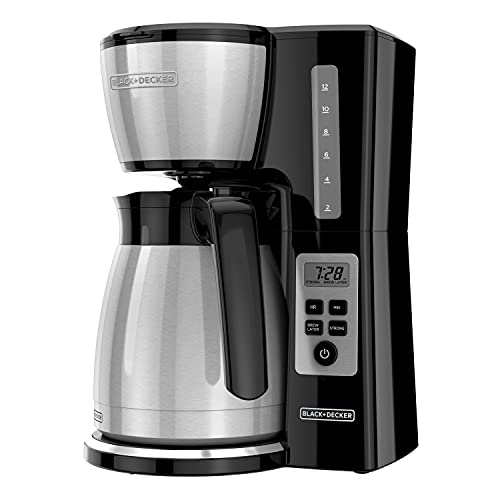
The standout here is the 4-layer vacuum-sealed thermal carafe, it keeps coffee hot for up to two hours without a heating plate, which prevents bitterness from overcooking. That’s a real upgrade over glass carafe models. The VORTEX showerhead also gets good marks for even saturation, and the brew strength selector lets you choose bold or smooth with a button.
It’s programmable up to 24 hours, and the display stays lit, which is helpful. Owners appreciate the no-drip spout and solid build. Compared to the Ninja or OVENTE, it trades a glass carafe for better heat retention. If your biggest complaint is lukewarm coffee by cup three, this one solves it. I’d pick this over glass carafe models if heat retention is your priority.
Product photos


How We Evaluated coffee makers
Rather than a hands-on lab test, my research for these recommendations focused on a detailed comparison of published specifications and features across numerous models. I then weighed owner reviews from major retailers alongside expert opinions from sites dedicated to coffee and kitchen appliances. As the founder of Bean Thusiast, I applied my understanding of brewing principles and consumer needs to rank these coffee makers against a set of criteria focused on performance, usability, and value.
For coffee makers, brew quality, ease of cleaning, and long-term reliability were the most important factors. Consistent temperature control and even saturation of the grounds directly impact the flavor, so I prioritized machines with features like “hotter brewing technology” or “vortex technology.” Beyond the brew itself, a machine’s convenience – programmability, carafe design, and overall simplicity – significantly influences daily use and owner satisfaction. Understanding the differences in coffee grinders is also important, as the quality of your grind impacts the final brew.
Specifications reliably indicate capacity, brewing speed, and available features. However, I placed more weight on owner feedback regarding durability, ease of use, and the accuracy of advertised features. Reputable expert reviews helped validate claims and identify potential drawbacks not always apparent in marketing materials. Ultimately, this research-led approach aimed to identify coffee makers offering the best combination of performance and practicality for a range of users.
How To Choose The coffee makers
Finding the right coffee maker depends heavily on how and how much coffee you typically drink.
A good coffee maker balances brew quality with usability and convenience. Consider factors like brewing method (drip, pod, pour-over), carafe type (glass vs. thermal), programmable features, and ease of cleaning. Prioritize models with consistent temperature control, even saturation of coffee grounds, and a durable build quality for long-term performance.
Brewing Method & Volume
The first thing to nail down is how you want to make coffee. Do you primarily brew for one person, or are you fueling a whole household? Pod machines, like the Keurig K-Mini Single Serve, excel at individual cups but can get expensive long-term. Drip coffee makers, such as the Mueller 12-Cup Drip Coffee Maker, are best for larger volumes and are generally more economical. Dual-brew models, like the Hamilton Beach 2-Way Brewer, offer flexibility but often compromise on the quality of both brew styles. Don’t automatically assume a larger capacity is better; a smaller, well-executed brewer will always outperform a large, poorly designed one.
Carafe Material & Temperature Control
The carafe is more important than many buyers realize. Glass carafes (common in models like the Keurig K-Duo Coffee Maker) are affordable and don’t impart flavors, but they require a warming plate, which can scorch the coffee over time. Thermal carafes (as seen in the BLACK+DECKER Thermal Programmable) keep coffee hot for hours without a warming plate, preserving flavor. However, a thermal carafe’s insulation quality varies significantly.
Here’s what to consider when comparing carafes: * Material quality: Look for double-walled stainless steel, if possible. * Insulation rating: Some manufacturers specify insulation standards but this is rare. * Pre-heating: Many thermal carafes benefit from pre-heating with hot water, which will significantly improve heat retention.
A coffee maker’s job isn’t just to brew coffee; it’s to keep it at a palatable temperature without ruining the flavor.
Features & Ease of Use
Beyond the core brewing process, consider what features will actually improve your routine. Programmable timers (like those found in the Ninja 12-Cup Programmable Brewer) are great for automatic morning brews. “Strong brew” settings can be useful, but often just mean a slower brew cycle, not necessarily a more flavorful cup. If you’re a pod user, explore the range of features available; some, such as the Keurig K-Elite Single Serve, offer iced coffee settings or hot water on demand. And don’t overlook the importance of cleaning. Simple, removable parts and dishwasher-safe components are a huge time-saver. If you’re looking for more information on the specifics of pod machines, check out our guide to the top single-serve coffee makers. Finally, always double-check coffee filter size guide to make sure you’re using the appropriate filter for your machine.
Coffee Makers Compared
Here’s a comparison of key specifications for the coffee makers listed.
| Product Name | Brew Type | Capacity (Cups) | Programmable | Water Reservoir (oz) | Special Features |
|---|---|---|---|---|---|
| Keurig K-Duo Coffee Maker | Pod/Drip | 12 | Yes | 72 | Brew Strength, Brew Over Ice |
| Ninja 12-Cup Programmable Brewer | Drip | 12 | Yes | 60 | Brew Strength, Small Batch |
| BLACK+DECKER Thermal Programmable | Drip | N/A | Yes | N/A | Thermal Carafe |
| Hamilton Beach 2-Way Brewer | Pod/Drip | 12 | Yes | N/A | Dual Brew |
| Keurig K-Mini Single Serve | Pod | 6-12 | No | N/A | Compact Design |
| Keurig K-Elite Single Serve | Pod | 4-12 | Yes | 75 | Strong Brew, Iced Setting |
| Mueller 12-Cup Drip Coffee Maker | Drip | 12 | No | N/A | Reusable Filter |
| OVENTE 12-Cup Borosilicate Brewer | Drip | 12 | No | N/A | Borosilicate Carafe |
Frequently Asked Questions
What’s the lifespan of a typical coffee maker?
Generally, a drip coffee maker will last between 5 and 10 years. However, consistent cleaning and descaling, along with the quality of the internal components, are the biggest factors affecting longevity. Pod machines often have a shorter lifespan, roughly 3-5 years, due to more complex mechanisms.
Are coffee makers with grinders built-in actually better?
While convenient, integrated grinders often compromise on grind quality compared to dedicated burr grinders. They are useful for simplicity, but if peak flavor is your goal, I recommend grinding your beans immediately before brewing with a separate grinder. You can find details on the best automatic drip coffee makers that offer this convenience.
How often should I descale my coffee maker?
You should descale your coffee maker every 1-3 months, depending on water hardness. Mineral buildup restricts water flow and affects brew temperature, ultimately impacting the taste of your coffee. White vinegar is a common and effective descaling agent; always follow the manufacturer’s instructions.
Is a thermal carafe really necessary?
A thermal carafe isn’t necessary, but it significantly improves coffee quality over time. It keeps coffee hot for hours without the scorching effect of a warming plate, preserving the flavor profile. If you don’t drink your entire pot immediately, a thermal carafe is a worthwhile investment.
What’s the difference between “programmable” and “automatic” features?
“Programmable” means you can set a timer for the coffee maker to start brewing at a specific time. “Automatic” features, such as auto-shutoff or brew-pause, operate during the brewing cycle without pre-setting. Many models offer both, giving you greater control and convenience, and you can find several top-rated drip coffee machines with these features.
The Bottom Line
Choosing a coffee maker often comes down to balancing convenience with control. While pod machines offer speed and simplicity, a quality drip coffee maker like the Ninja 12-Cup Programmable Brewer delivers consistently better flavor and long-term value. It offers programmability and brew strength options without sacrificing the core principles of good brewing.
For those seeking a specific solution, we have clear recommendations. If you’re a single-cup drinker prioritizing space, the Keurig K-Mini Single Serve is a practical choice. Buyers needing both pod and drip functionality should consider the Keurig K-Duo Coffee Maker, and for consistent temperature and flavor preservation, the BLACK+DECKER Thermal Programmable is an excellent pick. Understanding the ideal coffee to water ratio will greatly improve the quality of your brew, regardless of the machine you choose.
Ultimately, the “best” coffee maker isn’t about the fanciest features or highest price tag. Consistent temperature, even saturation, and a reliable build are far more critical than any single specification. Focus on those fundamentals, and you’ll be well on your way to enjoying a truly satisfying cup of coffee every morning.
