
7 Best Coffee Makers Without Plastic 2026
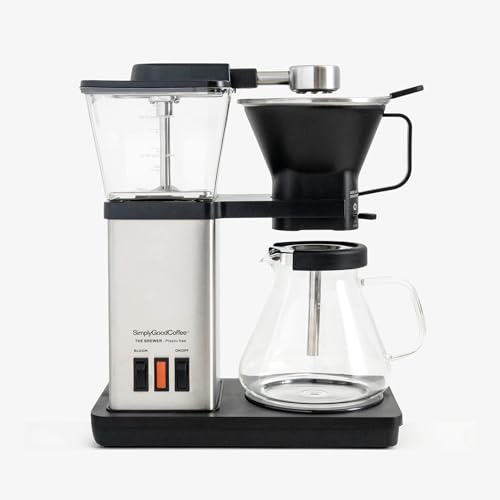
The SimplyGoodCoffee THE BREWER stands out as the best overall coffee maker without plastic, thanks to its all-stainless-steel build and smart brewing features. For budget-conscious buyers, the Presto Stainless Steel Percolator delivers solid performance with minimal plastic. If you prefer immersion brewing, the Ziruma Non-Toxic French Press is a premium, fully stainless option built for durability and clean flavor.
Finding a coffee maker that avoids plastic isn’t just about taste, it’s about health, safety, and long-term use. Too many machines labeled “BPA-free” still contain questionable materials in seals, housings, or internal parts, which can degrade over time and affect your brew.
As the founder of Bean Thusiast, I focused this guide on models with verified stainless steel or borosilicate glass in all water-contact areas, using specs, owner feedback, and brewing performance to identify the most reliable picks. We looked beyond marketing claims to find coffee makers that deliver great flavor without compromising on materials.
Top 7 Coffee Maker Without Plastic in the Market
The Best Coffee Maker Without Plastic, Reviewed
SimplyGoodCoffee THE BREWER
Strengths
- No plastic in water path
- Bloom feature
- Stainless steel internal
- Compact design
- Dishwasher-safe parts
Trade-offs
- No thermal carafe option
- Limited availability
- Fewer programmable options
This machine makes a bold claim, and backs it up. It’s one of the only fully automatic drip brewers that guarantees no plastic or aluminum touches the water, using internal stainless components instead. The brew temperature hits the ideal 195–205°F range, and the optional bloom phase mimics manual pour-over technique, improving extraction. Owners say the coffee tastes richer and cleaner than from standard machines, with no plastic aftertaste.
It’s also compact, easy to clean, and comes with a mixing tube to prevent channeling, small details that add up. While it lacks the SCA certification of the OXO, its material integrity is superior for the plastic-averse. The 2-year warranty and 30-day guarantee reduce risk. For those who want set-it-and-forget-it convenience without sacrificing purity, this is the closest thing to a perfect match.
Video review
Ziruma Non-Toxic French Press
Strengths
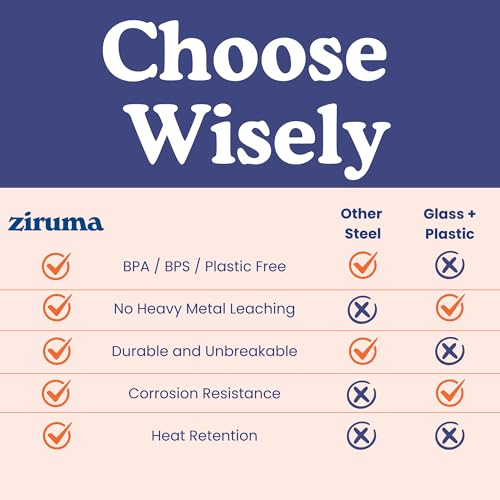
- 316 surgical steel
- Plastic-free throughout
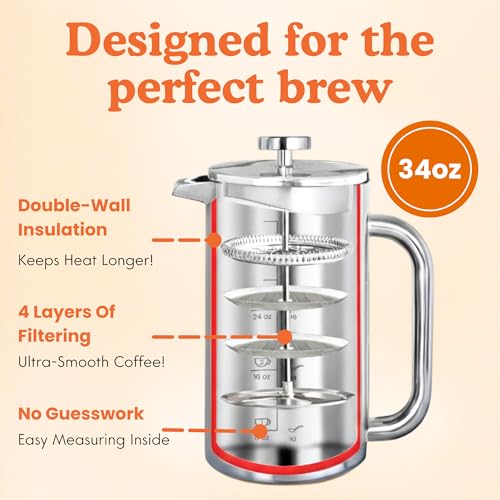
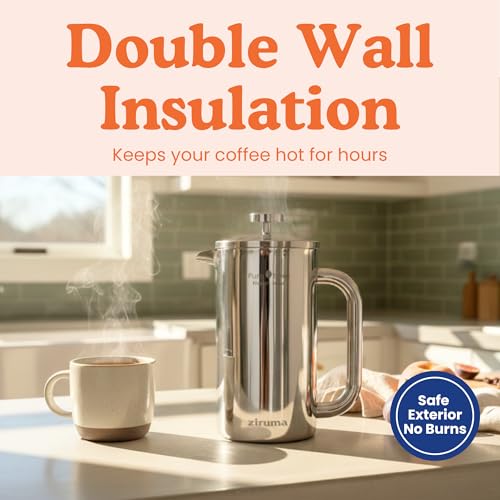
- Double-wall insulation
- 4-layer filter
- Measurement markings
Trade-offs
- Higher price point
- Slightly heavier
- Fewer color options
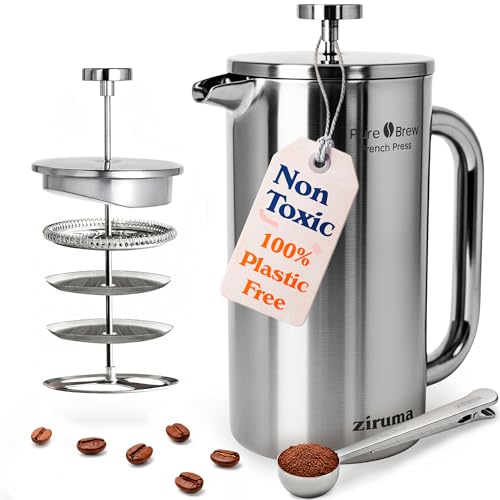
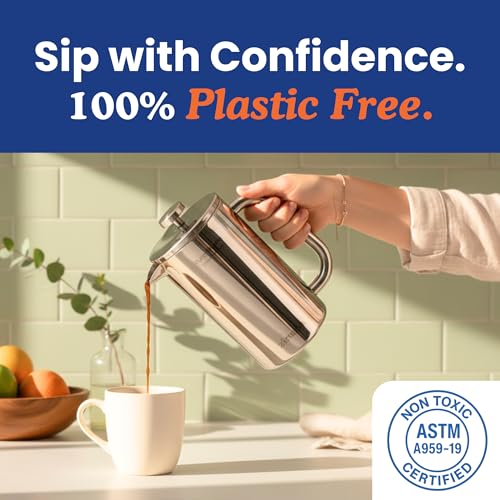
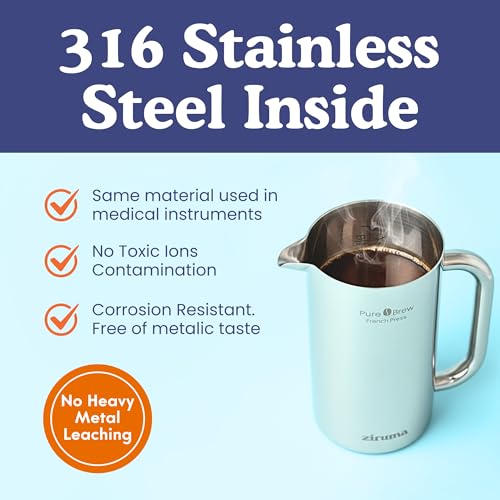
If health safety is your top priority, the Ziruma is the most compelling option here. It uses 316 surgical-grade stainless steel, the kind used in medical implants, which means it’s highly corrosion-resistant and less likely to leach metals than 304 steel. Combined with its 100% plastic-free construction, this press is engineered for those wary of endocrine disruptors or heavy metal exposure. The double-wall design keeps coffee hot and the exterior cool, and owners confirm it feels more premium than the Utopia model.
The 4-layer filter performs well, delivering smooth coffee with minimal grit, and the built-in measurement marks are a small but appreciated touch. It’s also travel-friendly, which is rare for French presses. While it costs more, the attention to material science justifies the price for the right buyer. I’d pick this over others if you’re brewing for pregnant family members, kids, or anyone sensitive to chemical exposure.
Product photos
Bodum Pour Over Coffee Maker

Strengths
- Glass and stainless build
- Reusable filter
- Elegant design
- No plastic
- Dishwasher safe
Trade-offs
- Coffee cools fast
- Some sediment in cup
- Manual only
This is a beautiful pour-over setup, minimalist, elegant, and built around a reusable stainless steel filter that eliminates paper waste. The borosilicate glass carafe feels substantial and handles heat well, and the cork grip adds a touch of warmth to the design. Since only the stainless filter contacts the water, it’s one of the cleanest brewing paths here, no plastic, just glass and metal.
But glass is a compromise. It doesn’t insulate like double-walled steel, so coffee cools quickly. And while the filter is permanent, some owners report it lets through more fines than paper, leading to a slightly gritty cup. This isn’t a machine, it’s a manual brewer, so you’ll need a gooseneck kettle and some practice. I’d recommend it to pour-over enthusiasts who value aesthetics and sustainability but don’t mind the extra effort.
Product photos


OXO Brew 9-Cup Coffee Maker
Strengths
- SCA certified brewing
- Even water dispersion
- Thermal carafe
- Programmable
- Pause and pour
Trade-offs
- Plastic in water path
- Heavy footprint
- Not fully plastic-free
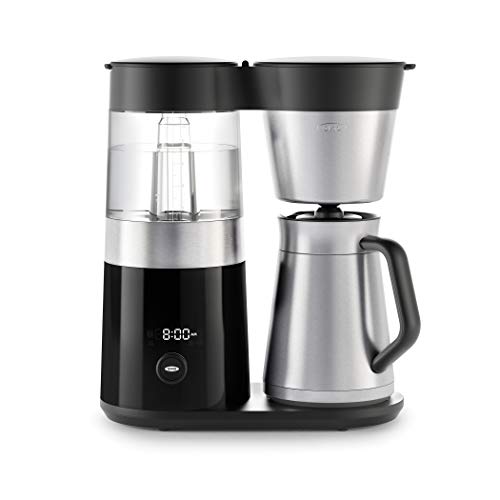
The OXO 9-Cup is one of the few drip machines that earns its SCA certification, and that matters. The water temperature stays locked in the ideal 197–205°F range, and the Rainmaker shower head delivers even saturation, two specs that directly impact flavor extraction. Owners praise the consistency: clean, balanced pots without bitterness or under-extracted sourness. The double-wall stainless thermal carafe is a major upgrade over glass, keeping coffee hot for hours without a hot plate that can scorch the brew.
But here’s the catch: despite its stainless build, this machine still has plastic internal components in the water path. That’s common in drip brewers, but it disqualifies it for anyone strictly avoiding plastic contact with water. So while it’s one of the best-performing machines in its class, it doesn’t fully meet the ‘no plastic’ mandate. I’d recommend it to performance-focused drinkers who prioritize taste over material purity.
Video review
COLETTI Bozeman Percolator
Strengths
- All stainless steel
- Glass viewing lid
- No plastic or aluminum
- Great for camping
- Dishwasher safe
Trade-offs
- Not induction compatible
- Requires careful heat control
- Can over-brew if rushed
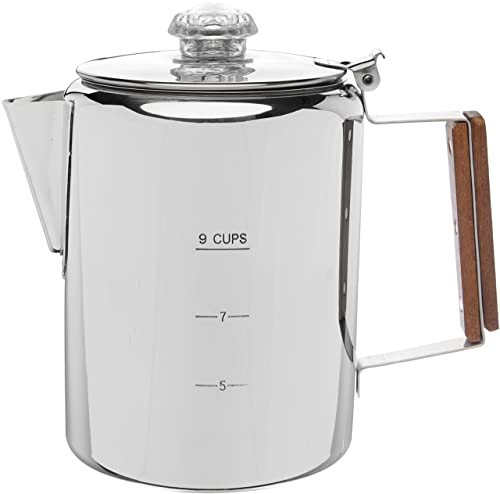
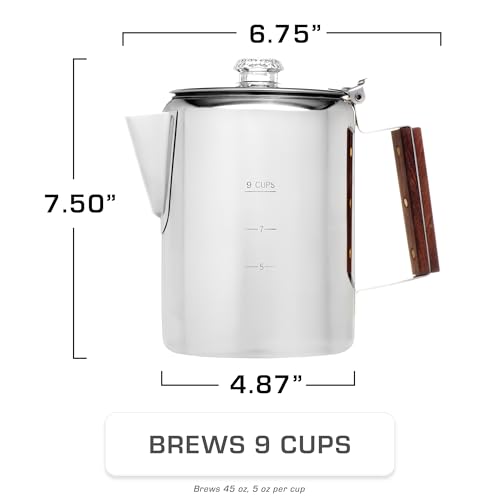
This is a throwback done right, 9 cups of bold, stovetop-brewed coffee with zero plastic or aluminum in the build. The all-stainless construction and glass knob make it a rare find for purists who want flavor without compromise. Percolators get a bad rap for over-extraction, but owners say the Bozeman delivers smooth, rich coffee when used correctly: medium heat, patient timing. The ability to watch the brew cycle through the glass lid helps avoid bitterness, and the included filters improve clarity over standard mesh.
It’s clearly built for campers and outdoor use, and it excels there. But at home, it demands more attention than a drip machine. And the big limitation: no induction compatibility. That’s a dealbreaker for some modern kitchens. Still, for weekend adventurers or those nostalgic for campfire coffee, this is as authentic as it gets.
Product photos




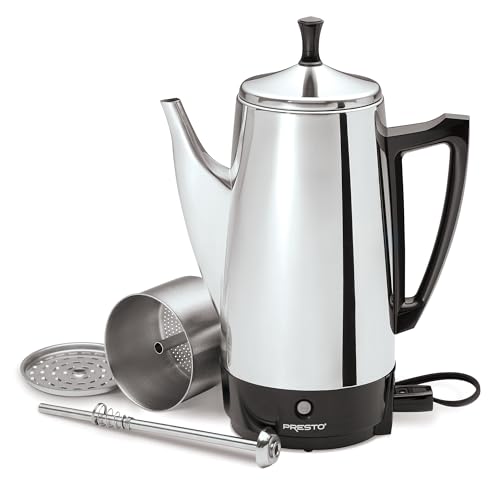
Presto Stainless Steel Percolator
Strengths
- Affordable
- All stainless steel
- Electric convenience
- Keeps coffee hot
- Easy to clean
Trade-offs
- Bitter brew risk
- No temp control
- Basic filtration
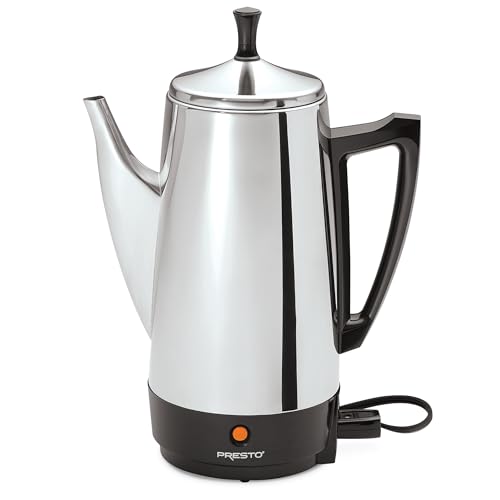
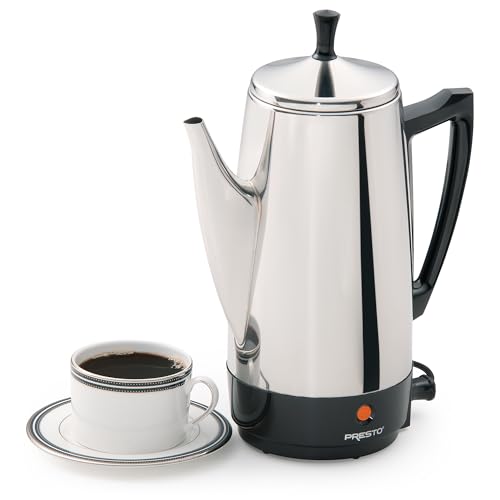
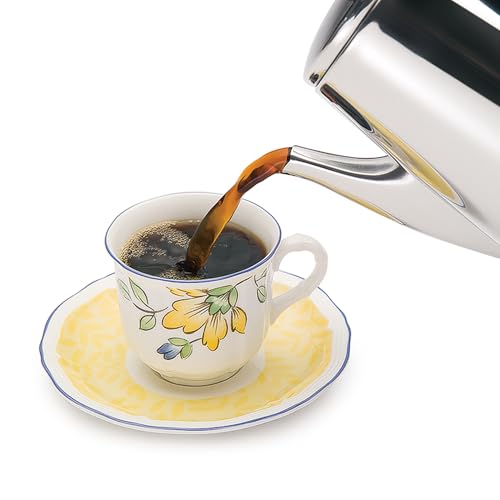
The Presto 12-cup is a no-nonsense electric percolator with a shiny stainless finish and a retro vibe that fits well in a farmhouse kitchen. It brews fast, about a cup per minute, and keeps coffee hot on a warming plate, which is useful for gatherings. The stay-cool handle and easy-pour spout add real convenience, and the all-stainless construction means no plastic touches the water. For under $50, that’s hard to beat.
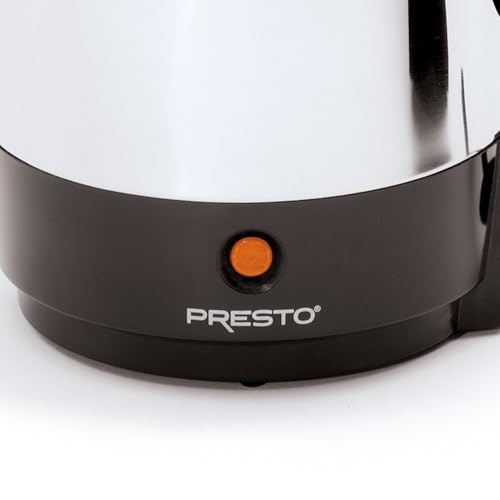
But speed comes at a cost: percolators recirculate boiling water through the grounds, which can extract bitter compounds. Some owners embrace the bold, old-school flavor; others find it harsh. It’s also not for precision lovers, there’s no temperature control, and the signal knob is more novelty than science. Still, as a budget-friendly, plastic-free workhorse for weekend family breakfasts, it holds its own.
Product photos
Utopia Kitchen Stainless French Press
Strengths
- Stainless steel build
- Double-wall insulation
- 4-layer filter
- Dishwasher safe
- Good value
Trade-offs
- Basic design
- Filter action not silky
- No measurement marks
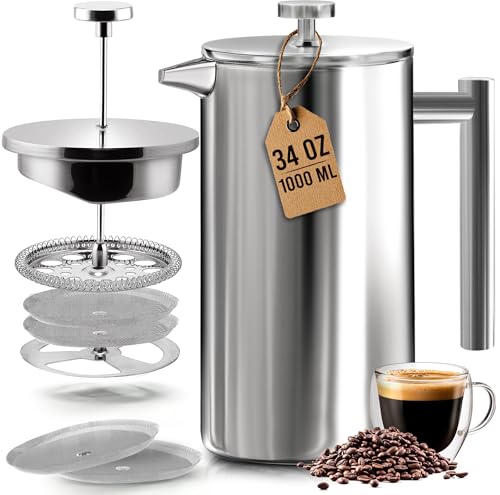
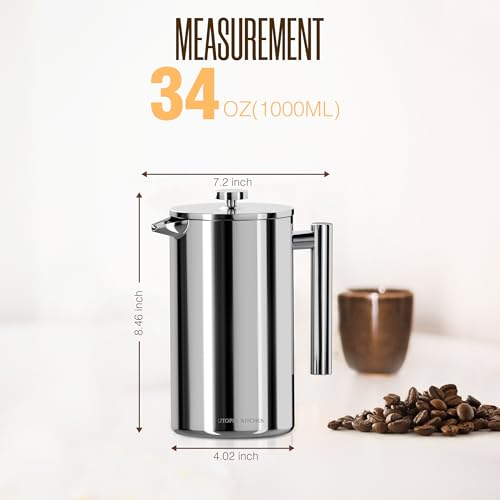
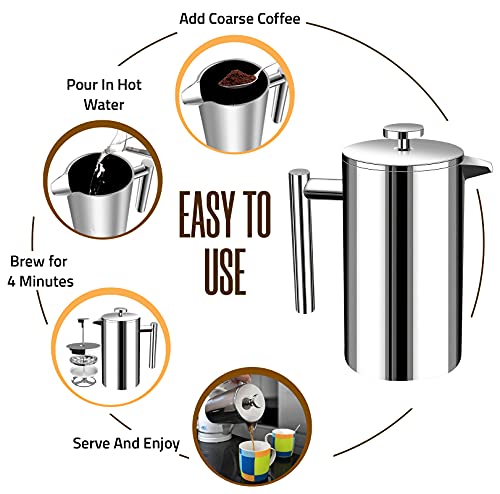
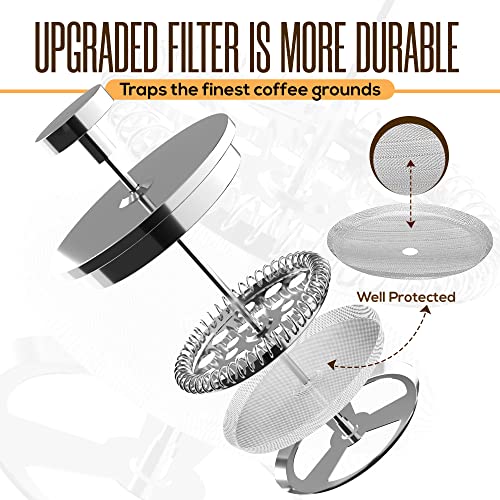
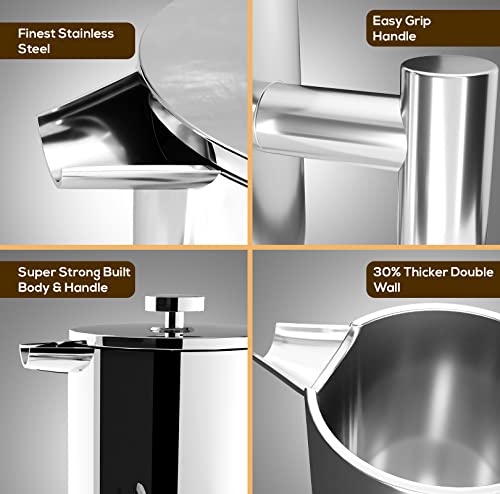
This French press stands out in a sea of plastic-heavy designs by going all-in on 304 grade stainless steel, and that’s a win for both durability and taste purity. The double-wall insulation does its job well on paper, keeping coffee hot without scalding hands, and owners consistently report fewer temperature drops over time compared to glass models. The 4-level filtration system is a strong point, reviewers note noticeably less sludge than cheaper single-filter presses, though it still doesn’t quite match the finesse of a well-poured Chemex or V60.
Where it really shines is value. For those who want a no-plastic brewer without paying a premium, this hits the sweet spot. It’s straightforward, dishwasher-safe, and built to last, though the press mechanism isn’t quite as smooth as higher-end brands like Ziruma or Bodum. If you’re upgrading from a glass press or tired of plastic leaching concerns, this is a solid, no-frills step up.
Product photos

How We Evaluated coffee maker without plastic
As the founder of Bean Thusiast, I’ve spent years exploring the world of coffee, from bean to brew. Rather than a hands-on lab test of each model, this guide is a research-led comparison of published specifications and owner feedback to identify the top coffee makers avoiding plastic components. We analyzed features, materials, and brewing methods, weighing them against what coffee lovers are actually saying about their experiences.
For coffee makers without plastic, the most important factors are material safety and build quality, followed closely by brewing performance. Stainless steel construction is key – you want to avoid any potential leaching of chemicals – and a durable design is essential for longevity. A well-engineered filter system is also crucial, as it directly impacts the clarity and flavor of the final cup.
Specifications reliably indicate material composition and brewing capacity. However, we heavily weighted owner feedback regarding ease of cleaning, durability over time, and actual coffee flavor. Reputation and expert reviews helped us assess the consistency of brewing performance and identify potential drawbacks not always apparent in product descriptions. If you’re curious about alternatives, exploring manual coffee brewing methods can expand your options.
How To Choose The coffee maker without plastic
Finding a coffee maker that avoids plastic is increasingly important for health and environmental reasons. We’ll break down what to look for to make the right choice.
A truly plastic-free coffee maker prioritizes materials like stainless steel and borosilicate glass for all water-contact components. Beyond materials, consider brewing method – pour-over, French press, and percolators are often easier to find without plastic than complex drip machines. Filter type is also key; metal filters eliminate the need for plastic-coated paper options. Finally, evaluate ease of cleaning and overall durability.
Material Composition is Paramount
The core of choosing a plastic-free coffee maker is, unsurprisingly, checking the materials. Stainless steel is the gold standard, but not all stainless steel is created equal. Look for 304 or 316 grade stainless steel; these resist corrosion and leaching. Borosilicate glass is another great option for carafes and certain components, as it’s heat-resistant and doesn’t impart flavors. Be wary of “BPA-free brewing equipment” that still incorporates other potentially harmful plastics. Even small plastic valves or seals can be problematic for those seeking a truly plastic-free experience.
Brewing Method and Filter Type
Different brewing methods lend themselves better to plastic-free construction. Pour-over designs, like the Bodum, frequently use glass and stainless steel. French presses, such as the Ziruma, are often entirely stainless steel, offering a robust and plastic-free brew. Percolators, like the COLETTI Bozeman, are another good option, especially for those wanting a more traditional brewing style. Regarding filters, ditch the paper filters with plastic coatings. Instead, opt for reusable stainless steel mesh filters or cloth filters.
Here’s a quick breakdown of filter considerations:
- Paper filters: Often bleached and may have plastic coatings.
- Metal filters: Durable, reusable, and won’t impart flavors, but can let some fine sediment through.
- Cloth filters: Provide a very clean cup, but require more maintenance and thorough cleaning to prevent buildup.
A coffee maker’s lifespan is directly proportional to the quality of its construction. Prioritize durable materials and a simple design – fewer parts mean fewer potential points of failure.
Balancing Features and Value
While a completely plastic-free coffee maker is the goal, consider what features you genuinely need. Do you require a programmable timer (like the OXO Brew)? Or are you happy with a manual method? More features often mean more potential plastic components. Don’t overspend on bells and whistles you won’t use. Exploring alternative coffee setups can open up even more plastic-free possibilities, like using a simple pour-over cone with a mason jar. If you’re on a budget, the Presto percolator offers a solid, largely plastic-free option without breaking the bank. Ultimately, the best coffee maker is the one that fits your brewing style and values, and there are many excellent plastic-free coffee makers available.
Coffee Maker Without Plastic Compared
Here’s a comparison of coffee makers that avoid plastic components, focusing on materials and key features.
| Product Name | Capacity | Material | Filter Type | Special Features | Price Point |
|---|---|---|---|---|---|
| SimplyGoodCoffee THE BREWER | 8 cups | Stainless Steel | N/A | Auto Timer, Bloom Feature | Mid-Range |
| Ziruma Non-Toxic French Press | 34 oz | 316 Steel | 4-Layer | Double-Wall Insulated | High-End |
| Bodum Pour Over Coffee Maker | 8 cups | Borosilicate Glass | Stainless Steel Mesh | Cork Band, Dishwasher Safe | Mid-Range |
| OXO Brew 9-Cup Coffee Maker | 9 cups | Stainless Steel | N/A | SCA Certified, Temp Control | High-End |
| COLETTI Bozeman Percolator | 45 oz | Stainless Steel | Paper (Included) | Outdoor Use, No Aluminum | Mid-Range |
| Presto Stainless Steel Percolator | 2-6 cups | Stainless Steel | N/A | Rapid Brewing, Compact | Budget |
| Utopia Kitchen Stainless French Press | 34 oz | 304 Stainless Steel | 4-Layer | Double-Walled, Easy to Clean | Budget |
Frequently Asked Questions
What’s the biggest drawback of stainless steel coffee makers?
Stainless steel models can sometimes retain coffee oils, potentially affecting future brews. Regular, thorough cleaning with a dedicated coffee cleaning solution is essential to prevent this buildup and maintain optimal flavor.
Are there completely plastic-free coffee makers available?
While increasingly common, finding truly 100% plastic-free coffee makers is difficult. Most models will have small rubber seals, but focusing on stainless steel and borosilicate glass for all water-contact parts gets you very close, and is what I recommend when evaluating coffee makers with no plastic.
Do metal filters affect the taste of coffee?
Yes, metal filters generally allow more fine sediment into your cup compared to paper filters, which some people perceive as a fuller body, but others might find gritty. This isn’t a flaw, but a difference in brewing style.
How do percolators compare to drip machines in terms of plastic content?
Percolators, like the COLETTI Bozeman, are generally easier to find without plastic because of their simpler design. Most plastic-free drip machines require careful material checks, as they often have more complex internal parts.
Is “BPA-free” a good enough indicator of a safe coffee maker?
No, “BPA-free” doesn’t guarantee a coffee maker is truly plastic-free or even entirely safe. It simply means it doesn’t contain BPA, but other plastics can still leach unwanted chemicals. I always advise seeking out models constructed with stainless steel and borosilicate glass instead of relying on BPA-free coffee equipment labels alone, or exploring non-plastic brewing systems.
The Bottom Line
Choosing a coffee maker without plastic often comes down to balancing convenience with a commitment to material purity. While models like the SimplyGoodCoffee THE BREWER offer automated features alongside stainless steel construction, you’re generally trading some complexity for a more thorough avoidance of plastics. For those prioritizing a truly plastic-free experience and willing to embrace a manual method, the Ziruma Non-Toxic French Press stands out as a top choice, built entirely from high-grade 316 stainless steel.
If you’re looking for a budget-friendly entry point, the Presto Stainless Steel Percolator delivers a reliable, largely plastic-free brew without a hefty price tag. For versatility and a classic pour-over experience, the Bodum Pour Over Coffee Maker provides a stylish and functional option. And if you’re concerned about hidden plastics even in seemingly safe filters, be sure to research plastic in coffee filters to make informed choices.
Ultimately, the most important thing isn’t any single specification, but a focus on durable materials and a brewing method that suits your lifestyle. Don’t get caught up in chasing the latest features; a well-made stainless steel French press or a simple pour-over setup will consistently deliver a great cup of coffee, while minimizing your exposure to potentially harmful materials.
