
How to Brew Coffee Without a Coffee Pot | 5 Proven Methods
To brew coffee without a coffee pot, you match your available kitchen tools to one of five proven methods: cowboy coffee (boil and settle), a makeshift pour-over, a French press substitute, a stovetop Moka pot simulation, or overnight cold brew. The method dictates the required grind size, coarse for immersion, medium-fine for filtration, and your water must be just off the boil, between 195°F and 205°F.
Most people assume they need specialized gear. They reach for a dusty percolator or buy a single-use machine. The real barrier is just knowing which common pot, bowl, or jar in your kitchen can stand in for a brewer.
This guide walks through each workaround, the exact grind to use, and how to avoid a cup full of silt. You will get a drinkable, often excellent, cup of coffee with what you already own.
Key Takeaways
- Cowboy coffee is the zero-equipment fallback. Boil water and grounds together for two minutes, then add a splash of cold water to settle the grounds. Skip the stir until after the cold water, or you’ll re-suspend everything.
- Grind size is non-negotiable. Use a coarse grind for any method where grounds sit in water (cowboy, cold brew). Use a medium-fine grind for any method where water flows through grounds (pour-over hack). A blade coffee grinder makes a muddy, inconsistent mess that over-extracts and clogs filters.
- A fine mesh sieve or clean cloth is your best filter. Layer a paper towel inside a sieve if you have no paper coffee filters. Avoid flavored or bleached towels.
- Your water should not be at a rolling boil. Water that’s too hot scalds the coffee, pulling out harsh, bitter notes. Let it sit for 30 seconds after boiling.
- Cold brew is the most forgiving method for bad gear. Steep coarse grounds in room-temperature water for 12-18 hours, then strain. It’s impossible to over-extract with cold water, so even a bad grind tastes smooth.
The Cowboy Coffee Method (Simplest)
This is the original survival brew. You need a heat source, a pot, water, and ground coffee. Nothing else.
Bring water to a boil, add grounds directly to the pot, boil for two minutes, remove from heat, add a quarter cup of cold water to settle the grounds, then pour carefully.
The YouTube transcript got the sequence right but missed a critical detail. You must add the coffee grounds after the water reaches a full boil. If you add grounds to cold water and then bring it up, you steep them at low temperatures for too long. This pulls out stale, flat flavors before the real extraction even starts.
The cold water trick works because it rapidly cools the bottom layer of liquid. The grounds sink with the falling temperature. Pour slowly and stop before you hit the sludge at the bottom.
Common mistake: Stirring the pot after adding the cold water, this re-suspends the settled grounds and you’ll get a mouthful of grit. Stir only when you first add the coffee to the boiling water.
Here is the step-by-step breakdown.
- Boil your water. Use about 2 cups of water per serving. Let it reach a vigorous, rolling boil.
- Add your coffee. Use 2 tablespoons of coarsely ground coffee per cup of water. Stir it into the boiling water once.
- Boil for two minutes. Reduce the heat to a simmer. Let it bubble gently for two full minutes. Boiling longer won’t make it stronger, just more bitter.
- Remove from heat and add cold water. Take the pot off the stove. Immediately pour in about a quarter cup of cold tap water. Do not stir.
- Wait and pour. Wait one minute for the grounds to settle to the bottom. Slowly pour the clear coffee into your mug, leaving the last half-inch of sludge in the pot.
TL;DR: Boil water first, then add coarse grounds, simmer for two minutes, kill the heat with cold water, don’t stir, and pour slowly to leave the mud behind.
The Pour-Over Hack (Cleanest)
If you have a funnel, a sieve, or even a measuring cup with a pour spout, you can build a pour-over tower. The goal is to mimic the controlled flow of a drip coffee method.
The core principle is filtration. You need something to hold the coffee grounds while hot water passes through. A cloth coffee filter is ideal, but a paper towel-lined sieve works in a pinch.
| Filter Material | Best For | Risk If Skipped |
|---|---|---|
| Paper towel (unbleached) | Emergency use, light-bodied | Bleached towels add a chemical taste; thin towels tear. |
| Fine mesh sieve | Medium-bodied, quick | Fines slip through, leaving sediment in the cup. |
| Clean cotton cloth (like a bandana) | Full-bodied, reusable | Old soap residue or fabric softener will ruin the flavor. |
The grind must be medium-fine, similar to table salt. A coarse grind will let water rush through too fast, producing weak, sour coffee. Too fine, and it will clog your makeshift filter and overflow.
The YouTube user with the sifter and filter bag had the right idea. The key is pre-wetting your filter material with hot water before you add coffee. This washes away any paper or cloth taste and preheats your brewing vessel.
Why-layer: Pre-wetting also “seats” the filter against the sieve or funnel. A dry filter can shift when you first pour water, causing grounds to bypass the filter entirely and end up in your mug.
TL;DR: Place a pre-wetted filter in a funnel over your mug, add medium-fine coffee, pour hot water in slow circles to saturate all grounds, and let it drain completely.
Immersion Brewing Without a French Press
Immersion brewing means steeping coffee grounds in water, then separating them. It’s forgiving because extraction happens evenly. You can use any heatproof jar, a mixing bowl, or a saucepan.
The French press is just a specialized pitcher with a built-in filter. To replicate it, you need the jar and a separate plunger or strainer.
- Combine coffee and water. In your jar, add 1 ounce (about 28 grams) of coarsely ground coffee for every 16 ounces of water. Water should be just off the boil, around 200°F.
- Steep for four minutes. Stir once at the beginning to ensure all grounds are wet. Start a timer.
- Break the crust. After four minutes, you’ll see a crust of grounds on the surface. Gently break it with a spoon and stir once more. This causes the larger grounds to sink.
- Wait and separate. Let the coffee sit for another five minutes. Most grounds will fall to the bottom. Then, slowly pour the coffee through a fine mesh sieve into your mug. For the cleanest cup, pour through a sieve lined with a paper filter.
Common mistake: Using a medium or fine grind for immersion, the small particles stay suspended for ages and slip through most sieves, guaranteeing a gritty cup. Coarse is mandatory.
The settling time after breaking the crust is what most guides skip. Rushing this step means pouring floating grounds directly into your sieve, clogging it instantly.
The Stovetop Moka Pot Simulation
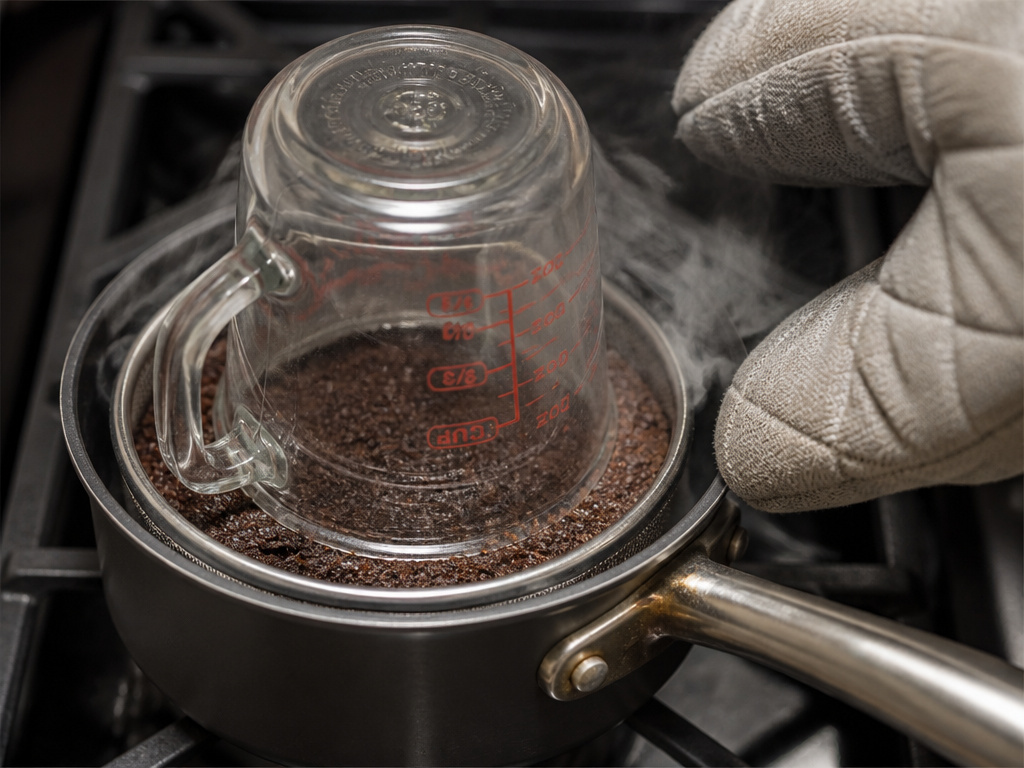
A Moka pot brews by passing boiling water and steam through a basket of grounds. You can approximate this pressure-driven extraction with a small saucepan and a tight-fitting steamer basket or even a small metal colander.
This method produces a strong, concentrated coffee similar to a cafe americano. It is not true espresso, but it has more intensity than drip.
You need a tight seal. The goal is to force steam and water upward through the coffee, not just let it drip.
| Component | Ideal Substitute | Compromise Substitute |
|---|---|---|
| Lower chamber | Small saucepan with lid | Small pot with foil cover |
| Coffee basket | Small fine-mesh steamer insert | Metal colander lined with filter |
| Upper chamber | Heatproof bowl or measuring cup placed above | Second pot to catch coffee |
Procedure: Place your coffee basket (filled with medium-fine grounds) over the lower chamber containing hot water. Assemble your upper chamber on top. Heat the lower chamber on medium. As the water boils, steam pressure will push hot water up through the grounds and into the upper chamber. Remove from heat when you hear a gurgling sound.
The result is a strong, almost syrupy brew. Dilute it with hot water to make an Americano.
The Cold Brew Method (Most Forgiving)

Cold brew is the ultimate no-gear, no-skill method. It ignores water temperature and exact timing. You combine coffee and water and wait.
Use a coarse grind, like breadcrumbs. The ratio is important: 1 part coffee to 4 parts cold, filtered water by weight. If you don’t have a scale, use 1 cup of coarse grounds to 4 cups of water.
Combine them in any large jar, pitcher, or even a mixing bowl covered with plastic wrap. Stir to wet all grounds. Let it sit at room temperature for 12 to 18 hours.
Straining is the only tricky part. Pour the mixture through a fine mesh sieve to catch the big grounds. Then, for a silt-free drink, do a second pass through a cloth coffee filter or a paper towel-lined sieve.
Before you start: Use a container with a lid or cover the top. Uncovered cold brew can pick up off-flavors from your kitchen. Also, the coarse grounds will expand; don’t fill your jar more than two-thirds full.
Why-layer: Cold water extracts coffee solubles much more slowly than hot water and doesn’t pull out the bitter, acidic compounds (chlorogenic acids) that dissolve at high temperatures. That’s why cold brew is naturally smoother and less acidic, even with a lower-quality bean.
TL;DR: Mix coarse grounds and cold water in a jar, wait half a day, then strain twice, once through a sieve, once through a cloth filter.
Choosing Your Coffee and Grind

Your bean choice matters more when you have less control over brewing. A bland, stale bean won’t magically improve.
For clarity and sweetness in methods like the pour-over hack, choose a single-origin coffee from Ethiopia or Colombia. For the bold, chocolatey notes that stand up in cowboy coffee or cold brew, a dark roast coffee blend works better.
The grind is your primary control lever.
- Coarse Grind (Sea Salt): For Cowboy Coffee, Cold Brew, French Press substitute. Lets water flow freely around particles during long steeps.
- Medium-Fine Grind (Table Salt): For Pour-Over Hack, Moka Pot simulation. Creates resistance for water to extract as it passes through.
If you only have pre-ground coffee, it’s likely ground for drip machines, a medium grind. This will work okay in the immersion methods but will likely clog your pour-over hack. Use the sieve.
I tried grinding beans for a makeshift pour-over with a cheap blade coffee grinder. The result was a mix of dust and boulders. The dust over-extracted into bitterness immediately, while the boulders added nothing but sourness. It was the worst cup of the batch. A consistent grind is worth the hassle.
Troubleshooting Your Brew
Coffee is too weak or sour? Your water probably went through the grounds too fast. The fix is a finer grind or a slower pour. For immersion methods, steep for an extra minute.
Coffee is bitter or harsh? Your water was too hot, you used too fine a grind, or you steeped for too long. For cowboy coffee, reduce the boil time to 90 seconds. For immersion, cut the steep time to three minutes.
Coffee is gritty? Your filtration failed. Always do a double strain: first through a coarse sieve to catch big bits, then through a finer cloth or paper filter. Let cowboy coffee settle fully before pouring.
A pinch of salt is a famous barista trick for rescuing a bitter, over-extracted cup. It doesn’t make the coffee salty; it neutralizes bitter compounds on your tongue. Add literally one or two grains, stir, and taste.
Frequently Asked Questions
Can I use instant coffee instead?
You can, but that’s a different process entirely. This guide is for brewing from ground coffee beans. Instant coffee just needs hot water and stirring.
What’s the best substitute for a coffee filter?
clean, thin cotton cloth like a bandana, handkerchief, or nut milk bag is the best reusable option. For disposable, an unbleached paper towel works. Avoid printed or perfumed fabrics.
How fine should I grind for the cowboy method?
Use a coarse grind, similar to raw sugar or sea salt. A fine grind will boil into a bitter, muddy mess that won’t settle properly, even with the cold water trick.
Can I make cold brew in less than 12 hours?
You can, but it will be significantly weaker. The extraction with cold water is very slow. For a concentrate, 12 hours is the minimum. At 8 hours, it will taste like lightly flavored water.
Is it safe to boil coffee grounds?
Yes, it’s perfectly safe. The cowboy method has been used for centuries. Boiling can make the coffee taste more bitter, which is why the two-minute limit and the cold water settle are important steps.
The Bottom Line
You don’t need a machine to make good coffee. You need hot water, ground beans, and one piece of kitchenware that can either hold a filter or hold a steep.
Match the grind to the method, coarse for waiting, medium-fine for filtering. Control your water temperature by letting the boil subside for 30 seconds. Your reward is a self-sufficient cup, and the satisfaction that you didn’t need a gadget to get it.
The pour-over hack with a paper towel produces the cleanest, most familiar cup. The cowboy method is the most rugged and equipment-free. Choose your adventure based on what’s in your drawer right now. Then brew.
