
4 Best Coffee Makers That Grind Beans 2026
The Gevi 10-Cup Drip Coffee Maker is our top pick for its reliable burr grinder, strong brew customization, and consistent performance. If you’re after a more compact option, the Horavie Single Serve Coffee Maker stands out for space-conscious setups, while the Breville Grind Control delivers premium features for serious home brewers.
Most people buying a coffee maker that grinds beans want that fresh, just-ground flavor without the hassle of a separate grinder and brewer. But too many models sacrifice grind quality or flexibility, leaving you with a mediocre cup no matter how good the beans are.
After comparing the field and analyzing specs, owner feedback, and brewing performance, we focused on machines that get the fundamentals right, consistent burr grinding, meaningful customization, and long-term reliability. This guide cuts through the noise to highlight the ones actually worth your counter space.
Top 4 Coffee Maker That Grinds Beans in the Market
The Best Coffee Maker That Grinds Beans, Reviewed
Gevi 10-Cup Drip Coffee Maker

Strengths
- Burr grinder
- Reusable filter
- Pre-brew function
- 3 brew strengths
- 8 grind settings
Trade-offs
- Heated glass carafe
- No thermal insulation
- Taller footprint
The Gevi 10-cup brewer stands out in the grind-and-brew category by delivering a rare balance: it’s fully customizable without overwhelming the user. On paper, the combination of 8 grind settings and 3 brew strengths gives serious control, and owners consistently report that the pre-brew technology makes a noticeable difference in cup depth, especially with medium-roast beans. The automatic water-to-coffee ratio adjustment for smaller batches is a thoughtful touch that many in this class skip, and it shows in reviews where users praise the consistency even when brewing just 2 cups.
I appreciate that it includes a reusable filter as standard, this isn’t an add-on or afterthought. Combined with the 1.5L tank and compact footprint under most cabinets, it’s built for daily use without waste. Compared to pricier models, it doesn’t have a thermal carafe, so you’ll get a heated plate, but the auto shut-off and keep-warm cycle are well-tuned according to long-term feedback. For most home users, this is the sweet spot between performance and practicality.
Video review
Breville Grind Control Coffee Maker

Strengths
- Thermal carafe
- Burr grinder
- Steep and Release tech
- 8 strength settings
- Large bean hopper
Trade-offs
- Expensive build
- Larger footprint
- Higher wattage
The Breville Grind Control is the kind of machine that makes you feel like a home barista, on paper and in practice, based on owner feedback. With 8 brew strength settings, a thermal carafe, and Breville’s proprietary Steep and Release technology, it’s engineered for balance and clarity in every cup. The built-in conical burr grinder is adjustable and consistently praised for preserving bean aroma, especially when paired with single-origin light roasts.
What sets it apart from rivals like the Gevi is the full programmability and the dual-wall stainless carafe, which keeps coffee hot for hours without scorching. Reviewers note the 1100-watt heater brings water to optimal temp quickly, and the pre-infusion cycle enhances body. It’s not the cheapest, but for those who brew full pots and want precision without daily tinkering, it’s the smarter buy over basic drip models. Compared to other programmable units, it holds its ground as a specialty-grade pick.
Video review
AIRMSEN Grind & Brew Coffee Maker
Strengths
- Touchscreen control
- 3-in-1 brewing
- Descaling alert
- Large water tank
- Compact with storage
Trade-offs
- Blade grinder
- No thermal carafe
- Sediment without paper filter
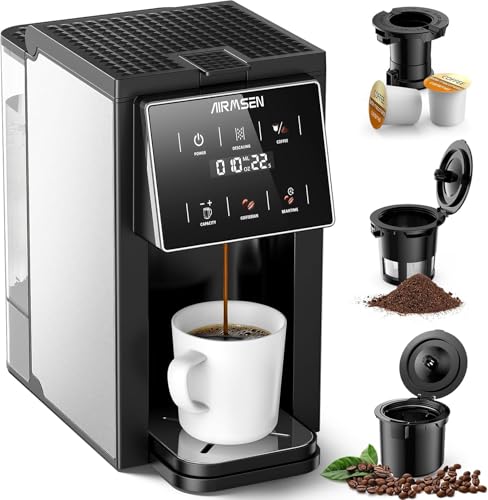
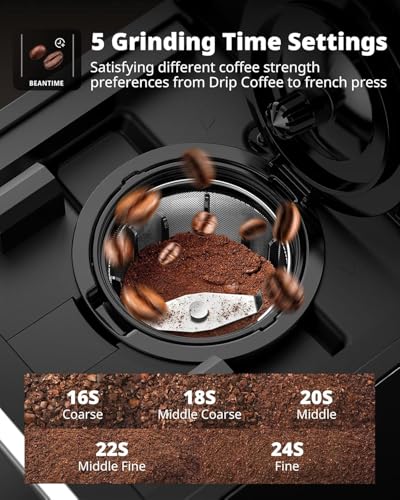
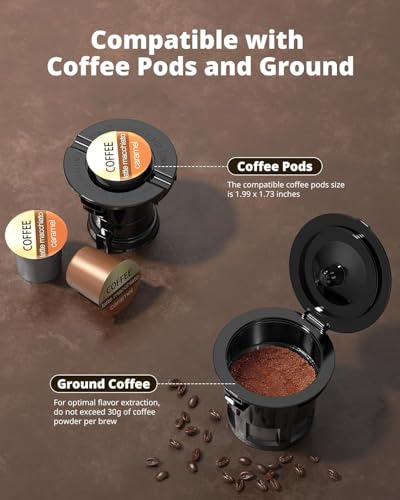
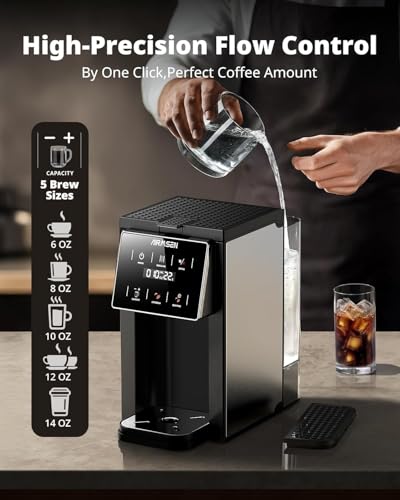
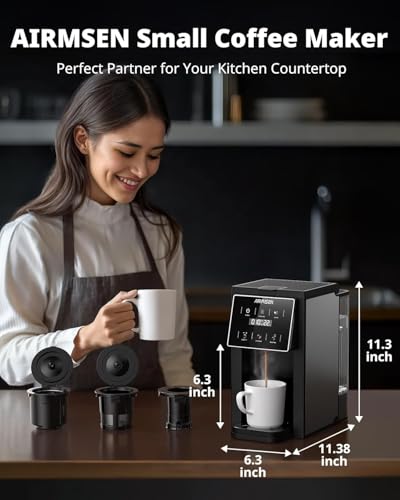
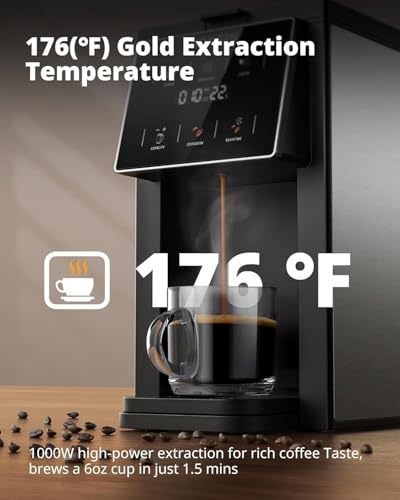
The AIRMSEN 2026 model feels like a hybrid designed for the modern coffee enthusiast who wants both flexibility and control. Its 5-stage grind adjustment and touchscreen interface give it a pro-level edge, and owners report that the precision water flow system actually reduces sediment, something many blade grinder units struggle with. The 3-in-1 brewing (beans, grounds, K-cups) is well-executed, and the 50oz removable tank is a win for families or offices that hate constant refills.
I’m impressed by the inclusion of a descaling alert and auto-shutoff with energy savings, a small detail, but one that long-term users appreciate. The ability to brew Americano-style (1 or 2 cups) adds real utility. When stacked against the Horavie, it offers more customization and better filtration; against pod-only systems, it’s a flavor upgrade. The LED indicators and hidden storage show thoughtful design, but the matte finish may show smudges. Still, for the feature set, it’s hard to beat.
Product photos
Horavie Single Serve Coffee Maker
Strengths
- Ultra-compact
- 6 grind time settings
- Multi-source brewing
- Large water tank
- Fits tall mugs
Trade-offs
- Blade grinder (not burr)
- Sediment in cup
- Drip bags required for clarity
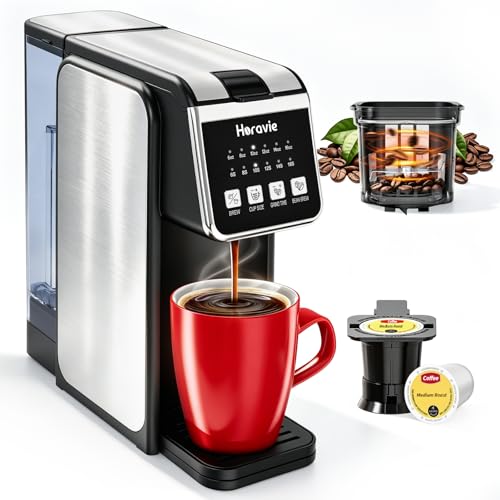
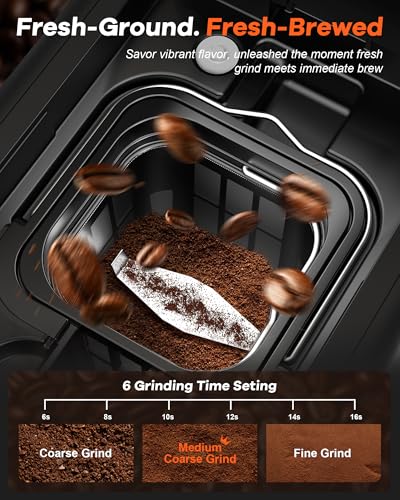
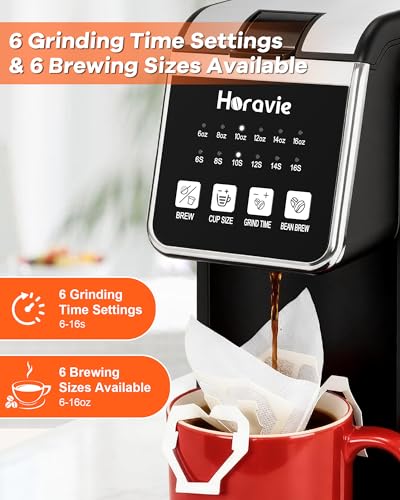
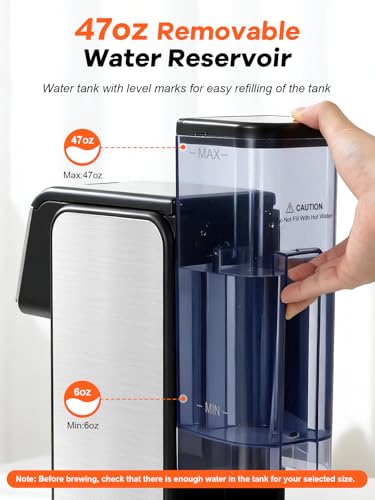
If counter space is tight but you still want the ritual of grinding fresh beans, the Horavie single-serve model makes a strong case. At just 4.69 inches wide, it’s one of the most compact grinders in the category, yet it manages a 47oz water tank, owners note this means fewer refills than expected for a unit this small. The 6-stage grind time control is unusual at this size and price tier, letting you tweak extraction for different beans without needing external gear.
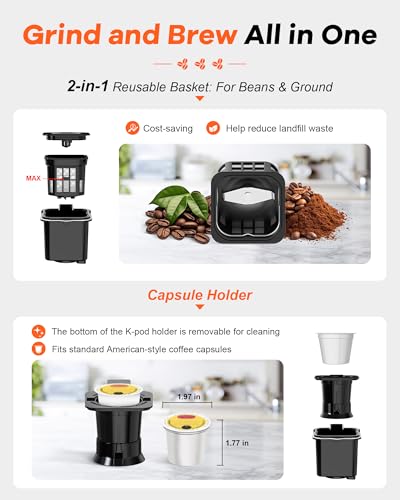
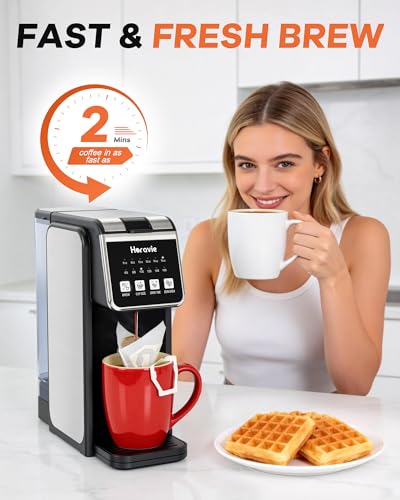
The ability to switch between whole beans, pre-ground, and K-pods adds real versatility, though reviewers mention that using the drip bags (included) significantly reduces sediment, which is otherwise a minor issue. It brews fast, around 2 minutes, and the removable drip tray fits taller mugs, a detail office and dorm users highlight. When compared to pod-only systems, this delivers far better flavor control; against other single-serve grinders, it wins on footprint and ease of cleaning.
Product photos
How We Chose These coffee maker that grinds beans
As the founder of Bean Thusiast, I’ve spent years exploring the world of coffee, from sourcing beans to perfecting brewing methods. When researching coffee makers that grind beans, we didn’t rely on long-term personal use; rather, this is a research-led comparison of published specifications, owner reviews from multiple sources, and expert opinions. We created a ranking based on features most important to achieving a consistently good cup, and considered price within each performance tier.
For this category, grind consistency and brew customization were heavily weighted. A built-in grinder is convenient, but it’s useless without the ability to adjust the grind size to suit different beans and brewing preferences. Equally important was the ability to control brew strength and volume, allowing for a tailored experience. A machine’s long-term reliability, as indicated by owner feedback, also played a significant role in our rankings.
Specifications reliably indicate the types of grinders used (burr versus blade) and capacity of both the bean hopper and water reservoir. However, real-world performance – particularly grind consistency and the nuances of flavor extraction – are best gleaned from owner reviews. We also looked to reputable coffee publications for expert evaluations of brew quality and overall usability, and paid attention to reported issues around durability. Understanding coffee bean grind settings is key to maximizing these machines’ potential.
What To Look For In coffee maker that grinds beans
Finding the right coffee maker that grinds beans can elevate your morning routine from functional to fantastic. But with so many options, knowing what to prioritize is key.
A quality coffee maker with an integrated grinder needs to balance convenience with control. Look for adjustable grind settings to suit different bean types and roast levels. Freshness is paramount – the grinder should operate just before brewing. Ease of cleaning and a durable build are also crucial considerations for long-term satisfaction.
Grind Quality & Consistency
The heart of a good grind-and-brew machine is, unsurprisingly, the grinder itself. Don’t assume all integrated grinders are created equal. Blade grinders, like you might find in a kitchen blender, chop the beans unevenly, leading to inconsistent extraction. Burr grinders, on the other hand, crush the beans between two revolving abrasive surfaces, producing a much more uniform grind. This consistency is vital for a balanced, flavorful cup. If you’re considering a more budget-friendly option and are curious about alternatives, you can explore grinding beans in a blender – but be prepared for a less refined result.
Customization & Control
Beyond the grind, look for a machine that allows you to fine-tune other brewing parameters. Strength settings are common, but the ability to adjust brew temperature (if available) is a significant bonus. A wider range of grind settings is also critical. Some machines, like the AIRMSEN, boast 5-stage grind adjustment, while others offer more granular control. Consider your preferred coffee beans and brewing style. Do you favor a coarse grind for French press, or a fine grind for espresso-style drinks? The more options you have, the better you can dial in your perfect cup. This level of control sets these machines apart from a standard automatic coffee maker with grinder.
- A simple 2-speed grinder is okay for casual coffee drinkers, but it won’t unlock the full potential of specialty beans.
- 8-10 grind settings offer a good balance between precision and usability for most home brewers.
- Machines with pre-programmed settings for different brew styles (bold, mild, etc.) can be helpful, but don’t rely on them entirely – experiment to find what you like best.
A consistent burr grinder is the single most important feature in a coffee maker with a built-in grinder. Don’t settle for a blade grinder if you truly value flavor.
Size, Convenience & Maintenance
Let’s be realistic: a integrated grinder coffee maker is an investment in convenience, but it shouldn’t create new headaches. Consider the machine’s footprint, especially if you have limited counter space. The Horavie, for example, is specifically marketed for its compact design. Look for features like removable parts for easy cleaning, and a clearly marked water reservoir. A reusable filter is a nice touch, reducing waste and saving you money. Finally, check the warranty – a longer warranty period is a good indicator of the manufacturer’s confidence in their product, and is crucial for more expensive grind-and-brew coffee machines.
Coffee Maker That Grinds Beans Compared
Here’s a comparison of key specifications for coffee makers that grind beans, to help you choose the right model.
| Product Name | Capacity (Cups) | Grind Settings | Brew Sizes | Water Tank (oz) | Special Features |
|---|---|---|---|---|---|
| Gevi 10-Cup Drip Coffee Maker | 10 | 8 | 2-10 | N/A | Reusable Filter, Pre-Brew |
| Breville Grind Control Coffee Maker | 12 | 8 | Multiple | 60 | Programmable, Thermal Carafe |
| AIRMSEN Grind & Brew Coffee Maker | Single/2 | 5 | 6-14 | 50 | K-Cup Compatible, Auto-Off |
| Horavie Single Serve Coffee Maker | Single | 6 | 6-16 | 47 | Compact Design |
Frequently Asked Questions
What’s the typical lifespan of a coffee maker that grinds beans?
Generally, these machines last between 3-7 years. Longevity heavily depends on usage frequency, water quality, and how diligently you perform routine cleaning and descaling, as reported by numerous owners.
Are coffee makers with built-in grinders difficult to clean?
Cleaning requires more steps than a standard drip machine. Most models have removable parts like the bean hopper, grinder burrs, and brew basket, but some areas can be tricky to reach, so regular, thorough cleaning is important to avoid build-up.
Can I use pre-ground coffee in a coffee maker that grinds beans?
Yes, you can typically bypass the grinder and use pre-ground coffee. Look for a setting or compartment specifically for this purpose, as not all models offer this option, but it adds versatility to a coffee maker with built-in grinder.
What’s the difference between a burr grinder and a blade grinder in these machines?
Burr grinders crush beans between two surfaces for a consistent grind, while blade grinders chop them unevenly. A consistent grind is crucial for even extraction and better flavor, making burr grinders preferable, and is why we’ve focused on those in our recommendations for the top grinder coffee machines.
Are these all-in-one machines a good substitute for separate grinders and brewers?
For convenience, they are excellent. However, dedicated, high-end grinders and brewers will almost always deliver a superior cup of coffee, though at a higher cost and with more effort. A good all-in-one is a great option if you want a quality brew without the complexity of a separate automatic grinder and brewer.
The Bottom Line
Choosing a coffee maker that grinds beans often comes down to balancing convenience with control over your brew. While many models offer integrated grinding, the Breville Grind Control Coffee Maker stands out as the strongest overall pick, providing a robust set of features, a consistent burr grinder, and enough customization to satisfy serious coffee drinkers. It delivers a noticeable step up in flavor and control without becoming overly complicated.
For those on a tighter budget, the AIRMSEN Grind & Brew Coffee Maker is an excellent choice. It offers a surprising amount of functionality for the price, including K-Cup compatibility, and is a great way to experience the convenience of a grind-and-brew machine without a significant investment. If space is at a premium, the Horavie Single Serve Coffee Maker offers a compact footprint and surprisingly versatile brewing options. Understanding the differences between a burr vs blade grinder is crucial when considering these choices.
Ultimately, the best coffee maker isn’t about the fanciest features or highest price tag. It’s about consistently delivering a cup you enjoy. Prioritize a quality burr grinder, adjustable settings, and a machine that’s easy to clean – these fundamentals will have a far greater impact on your daily coffee experience than any single specification.
