
2 Best Coffee Latte Makers of 2026
The Ninja CFN601 stands out as the best overall coffee latte maker for its dual compatibility and solid espresso base, while the Tastyle 330MF is a strong budget pick that doesn’t sacrifice essential features like a detachable frother and large reservoir.
Most people buying a coffee latte maker want café-quality drinks without the hassle of a commercial machine. The real challenge is finding one that balances ease of use, consistent results, and clean-up that doesn’t eat into your morning.
This guide cuts through the noise by focusing on what actually matters: reliable espresso pressure, milk frothing quality, and real-world usability. I looked at specs, owner feedback, and brewing fundamentals to highlight models that deliver where it counts.
Top 2 Coffee Latte Maker in the Market
The Best Coffee Latte Maker, Reviewed
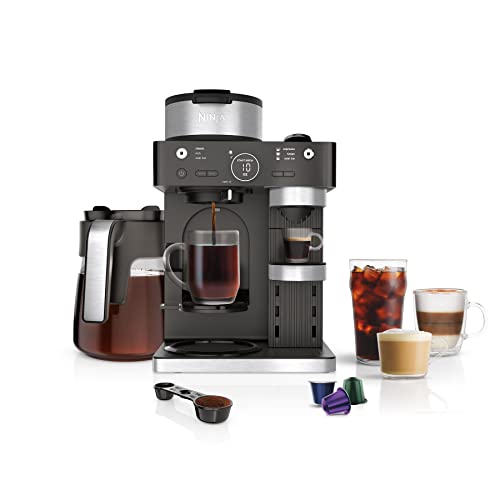
Ninja CFN601 Espresso & Coffee Maker
Strengths
- True 19-bar espresso
- Built-in high-quality frother
- Brews single espresso or full carafe
Trade-offs
- Larger footprint
- Steeper learning curve
- Requires regular descaling
When I think about what a modern all-in-one coffee system should be, the Ninja CFN601 is what comes to mind. It hits a rare balance: it pulls real 19-bar pressure espresso with a noticeable crema, something most single-serve machines can’t claim, and it also brews full carafes, making it one of the few machines that truly serves both solo sippers and crowds. The built-in frother isn’t just an afterthought; reviewers consistently praise its ability to create velvety milk for lattes and cappuccinos without needing a separate pitcher or steamer.
It’s more complex than the Tastyle, sure, but that’s the point. You can run Nespresso-style capsules for quick espresso or switch to ground coffee for drip, and the over-ice settings actually adjust extraction to prevent dilution. The fold-away frother and capsule bin keep things tidy, and the warming plate is a small but appreciated touch. Compared to pod-only systems, this gives far more control and range.
Video review
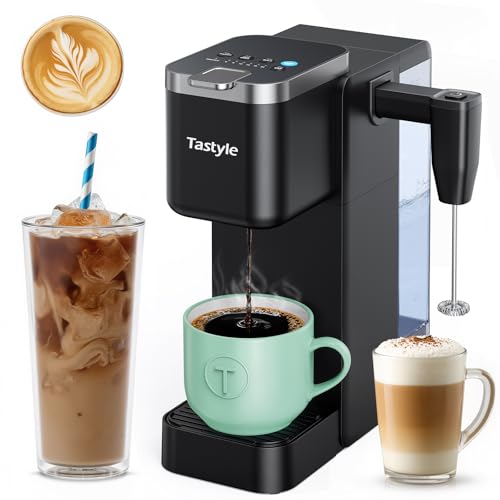
Tastyle 330MF Single Serve Coffee Maker
Strengths
- Dual brew options
- Detachable milk frother
- Compact footprint
Trade-offs
- No real espresso pressure
- Frother less powerful than standalone units
- Limited crema production
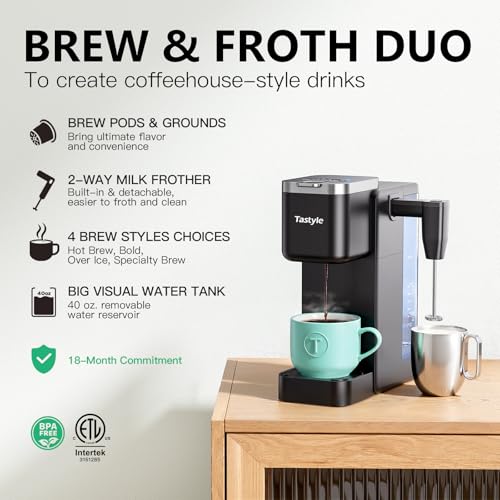
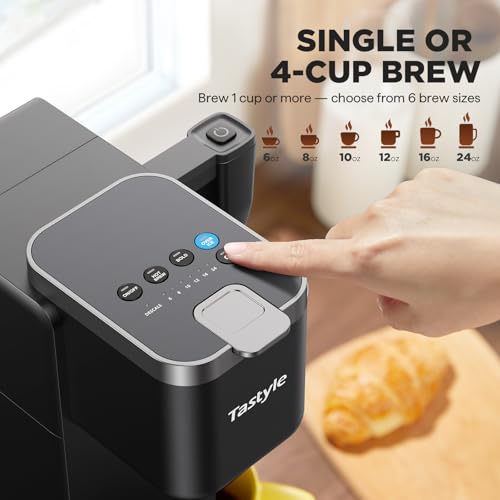
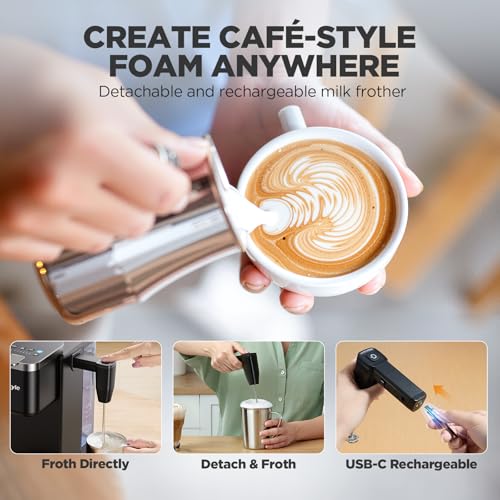
The Tastyle 330MF tries to do a lot in a compact frame, and on paper, it looks like a solid pick for someone who wants pod convenience with the flexibility of grounds and a built-in milk frother. The ability to brew both K-Cups and loose grounds is a real win, and owners consistently report that the reusable filter performs well without leaks or clogs. The detachable frother is a standout, uncommon at this price, and it delivers decent microfoam for lattes, though not quite cafe-level.
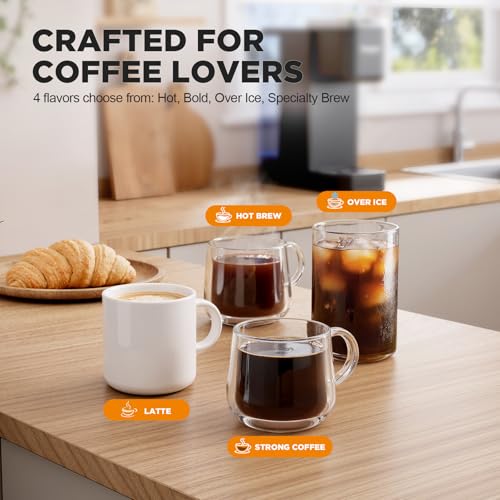
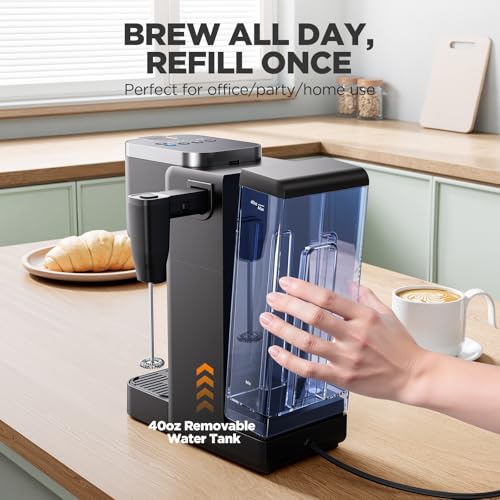
Where it stumbles is in the espresso department: it doesn’t produce true espresso, just a stronger coffee, so if you’re chasing that rich crema, this isn’t the machine. Still, for iced coffee lovers, the Over Ice setting works reliably, and the 40oz reservoir is large enough for multiple brews. Compared to the Ninja CFN601, it lacks pressure and versatility, but it’s also more compact and travel-friendly.
Product photos
How We Picked These coffee latte maker
As the founder of Bean Thusiast, I approach coffee equipment with a focus on delivering quality and replicating the coffeehouse experience at home. Rather than a hands-on lab test, my assessment of coffee latte makers is research-led, comparing published specifications and features across various models. I weigh owner reviews and expert opinions from trusted sources to build a complete picture of performance and reliability. This allows me to rank machines against criteria important to the home barista.
For coffee latte makers, the most crucial factors are consistently achieving proper espresso extraction and the quality of the milk frothing system. These directly impact the final drink’s flavor and texture. A machine’s versatility – the ability to handle both pods and ground coffee – also figures prominently, as does the ease of cleaning and overall long-term usability. These elements determine whether you’ll enjoy consistent, café-quality results.
Specifications reliably indicate brewing pressure (ideally 19 bars for good crema) and water reservoir size. However, I place greater emphasis on owner feedback regarding the consistency of temperature control and the frother’s ability to create microfoam. Real-world experiences better reflect how these machines perform daily. If you’re looking to refine your skills, you can also find a great explanation of espresso and steamed milk technique on our site.
Choosing The Right coffee latte maker
Finding the right coffee latte maker can genuinely elevate your home coffee experience. It’s about more than just brewing coffee; it’s about creating a café-quality beverage with consistency and ease.
A quality coffee latte maker blends precision brewing with effective milk texturing. Key considerations include brewing temperature stability (ideally around 200°F/93°C for optimal extraction), pressure (15-19 bars is standard for espresso), and the frothing method – whether it’s a steam wand, automatic frother, or a combination of both. Look for models with adjustable settings to fine-tune your drinks.
Brewing Method & Pressure
The core of a great latte is, of course, the espresso. Don’t assume all “espresso” makers are created equal. Many budget machines don’t generate the 9 bars of pressure needed for true espresso extraction, resulting in a weak, sour shot. I often see people disappointed with their first machine because they didn’t realize this. Pod-based machines, while convenient, generally offer less control over brewing variables. If you’re serious about latte art and flavor, a machine with a pump delivering at least 15 bars of pressure is a good starting point. Consider if you want the convenience of single-serve options alongside the ability to use coffee grounds; some coffee makers with frothers offer both.
Milk Frothing Capabilities
A latte is roughly a third espresso, two-thirds steamed milk, and a thin layer of microfoam. How a machine handles the milk is huge. Automatic frothers are incredibly convenient, but the quality of the foam can vary. Steam wands offer the most control, but require practice to master. Machines like the Ninja CFN601 offer a fold-away frother, which is a decent compromise. If you’re new to latte making, a machine with a built-in frother is an accessible starting point.
- A simple, automatic frother is great for beginners and daily convenience.
- A steam wand allows for complete control over texture and temperature, ideal for latte art, but has a steeper learning curve.
- Models with both options (like some frother-equipped coffee machines) provide versatility, letting you choose based on your skill level and time constraints.
A good rule of thumb: prioritize consistent milk temperature (around 140-160°F/60-70°C) over sheer frothing power. Overheated milk tastes scalded and loses its sweetness.
Features & Usability
Beyond the core brewing and frothing, think about ease of cleaning and overall convenience. Removable parts that are dishwasher-safe are a huge time-saver. A large water reservoir reduces the frequency of refills, and adjustable cup trays accommodate different mug sizes. Consider the overall footprint of the machine – if counter space is limited, a compact model like the Tastyle 330MF might be a better fit. Don’t forget to think about the ideal latte milk ratio and whether the machine allows for adjustments to achieve your preferred balanced latte composition.
Coffee Latte Maker Compared
Here’s a comparison of specifications for the coffee latte makers described.
| Product | Brew Styles | Max Cup Size | Milk Frother | Water Reservoir | Pod Compatible | Grounds Compatible |
|---|---|---|---|---|---|---|
| Ninja CFN601 | Espresso, Classic, Rich, Over Ice | 12-cup | Built-in, Fold-away | N/A | Yes | Yes |
| Tastyle 330MF | Classic, Bold, Over Ice, Specialty | 24-oz | Built-in, Detachable | 40-oz | Yes | Yes |
Frequently Asked Questions
What pressure is truly needed for espresso extraction?
At least 9 bars of pressure is required for proper espresso extraction, though 15-19 bars is ideal for a rich crema and full flavor. Many inexpensive machines don’t reach this level, leading to weak or sour shots – a common disappointment for new users.
Are pod machines as good as those using ground coffee?
Generally, no. Pod machines offer convenience, but sacrifice control over brewing variables like grind size and tamping pressure. If you want to refine your technique and achieve café-quality results, a machine compatible with ground coffee is the better choice.
How important is milk temperature when frothing?
Milk temperature is critical; aiming for 140-160°F (60-70°C) is best. Overheated milk loses its natural sweetness and develops a scalded flavor, negatively impacting the latte’s overall taste.
What’s the difference between a steam wand and an automatic frother?
A steam wand offers maximum control over milk texture and temperature, which is essential for latte art, but requires practice. Automatic frothers are convenient and consistent, making them a good starting point for beginners looking at coffee machines with milk frothers.
What features should I prioritize for easy cleaning?
Look for a machine with removable parts that are dishwasher-safe. This simplifies the cleaning process significantly and ensures better hygiene, preventing buildup that can affect the coffee’s flavor over time.
The Bottom Line
Choosing a coffee latte maker often comes down to balancing control with convenience. While some machines offer a wealth of customization options, others prioritize simplicity and ease of use. For the best overall experience, combining consistent espresso with reliable milk frothing, I recommend the Ninja CFN601. It really strikes a great balance for the average home barista.
If you’re on a tighter budget or primarily want a machine for single-serve convenience, the Tastyle 330MF is an excellent choice. For those seeking maximum versatility, perhaps you also enjoy a cold brew latte recipe, the Ninja’s ability to handle both pods and grounds is a significant advantage. Ultimately, though, it’s about finding a machine that fits your routine.
More than any specific feature, consistent water temperature and brewing pressure are what separate a good latte from a disappointing one. Don’t get too caught up in bells and whistles; focus on machines known for delivering a stable, quality shot of espresso and consistently textured milk. That foundation is what allows you to truly refine your skills and enjoy café-quality lattes at home.
