
9 Best Coffee Grinders Under 500 of 2026
The Baratza Encore ESP is the best coffee grinder under 500 for its outstanding grind consistency and reliability, making it a top pick for serious home brewers. If you’re watching your budget, the SHARDOR Electric Burr Grinder 2.0 delivers solid performance at a lower price. For those who value portability and don’t mind manual grinding, the HZBSGZR Manual Conical Burr Grinder offers impressive control and build quality.
Most people don’t realize how much a poor grinder can ruin even the best beans. Inconsistent grounds lead to uneven extraction, which means sour or bitter coffee, no matter how good your brew method.
After researching the market and analyzing specs, owner feedback, and expert insights, I focused on grinders that deliver true consistency, durability, and ease of use. This guide cuts through the noise to highlight models that actually perform, based on real-world results and brewing science.
Top 9 Coffee Grinder Under 500 in the Market
The Best Coffee Grinder Under 500, Reviewed
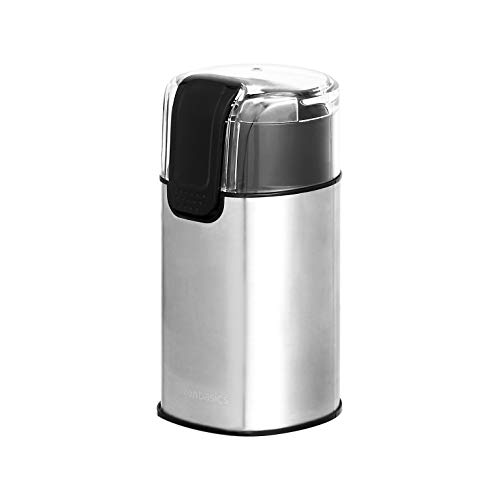
Amazon Basics Electric Coffee Grinder
Strengths
- Fast grinding
- Simple operation
- Affordable
Trade-offs
- Inconsistent grind
- No size settings
- Blade heat affects flavor
This is a no-frills blade grinder that gets the job done if you’re on a tight budget and don’t demand precision. It’s fast, simple to operate, and handles small batches well, enough for a single drip brew in under 10 seconds. But speed comes at the cost of consistency. Blade grinders like this one chop beans unevenly, which leads to uneven extraction and can dull the brightness of good beans.
Owners consistently report it’s fine for pre-ground-style coffee drinkers or occasional use, but anyone serious about flavor will outgrow it quickly. Compared to burr grinders in the same price range, it’s a step down in performance, but it’s widely available and reliable for basic needs.
Video review
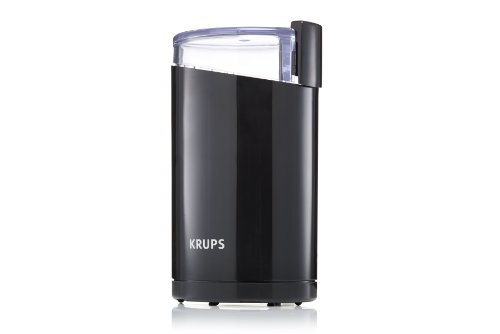
KRUPS Precision Electric Coffee Grinder
Strengths
- Large 85g capacity
- Powerful 200W motor
- One-touch control
Trade-offs
- Blade inconsistency
- No grind settings
- Higher heat generation
The KRUPS grinder wins on capacity, an 85g hopper can handle enough beans for 12 cups, making it a rarity among budget models. The 200W motor powers through large batches with ease, and the one-touch hold function gives manual control over grind time. It’s a solid pick if you’re grinding for a crowd or prepping spices in bulk.
But it’s a blade grinder, so consistency suffers. Owners note it works fine for French press or cold brew, where precision matters less, but it’s not suitable for pour-over or espresso. Compared to burr grinders at similar prices, it’s a downgrade in grind quality. Still, for high-volume, coarse grinding, few others in this range come close.
Video review
Mini Manual Coffee Grinder Portable

Strengths
- Ultra-portable
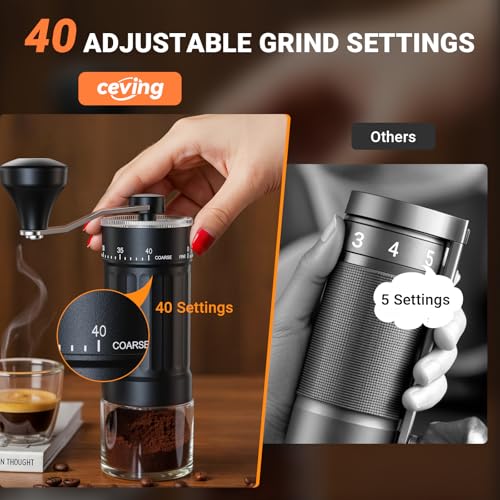
- 40 external settings
- Ceramic conical burr
Trade-offs
- Small capacity
- Cranks can feel stiff
- Not for high volume
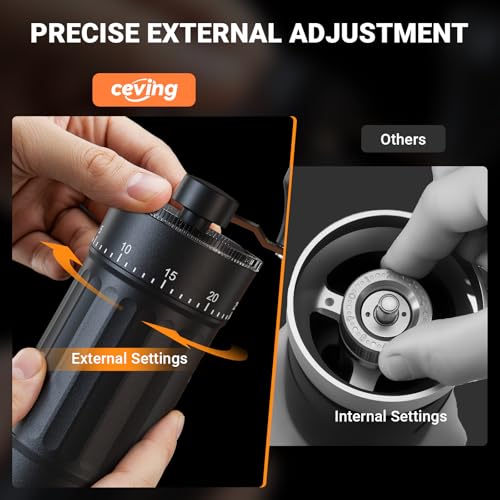
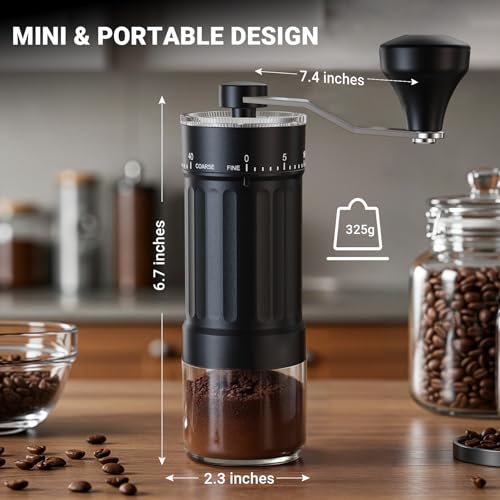
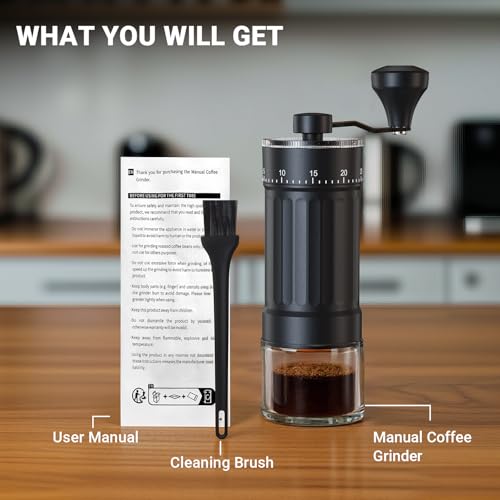
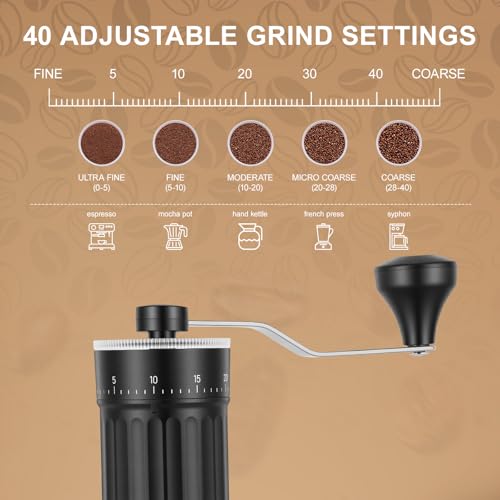
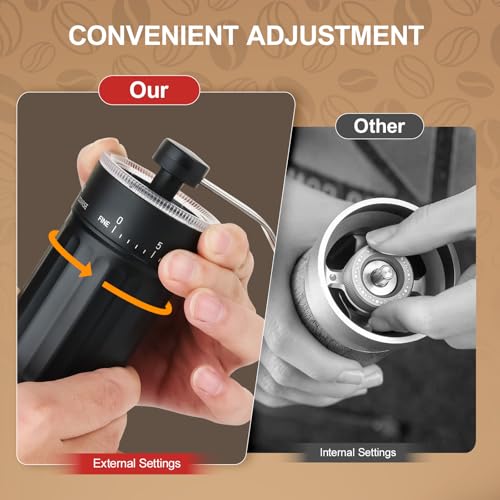
This CEVING mini grinder is built for the road. Weighing under a pound and featuring 40 external grind settings, it lets you adjust on the fly without disassembling, huge for travelers. The ceramic conical burr preserves flavor better than steel, and the compact size fits in a backpack or carry-on. Owners consistently report it’s their go-to for camping, hotels, or office use.
It’s not meant for more than one or two cups at a time, and the crank can feel stiff with very dark or oily beans. But compared to other portable options, the external adjustment ring is a standout. I’d pick this over the HZBSGZR for travel because it’s lighter and more intuitive to tune.
Product photos
SHARDOR Quiet Electric Coffee Grinder
Strengths
- Ultra-quiet at 63 dB
- 70g large capacity
- Visual timing knob
Trade-offs
- Blade grinder inconsistency
- Not for espresso
- Some heat buildup
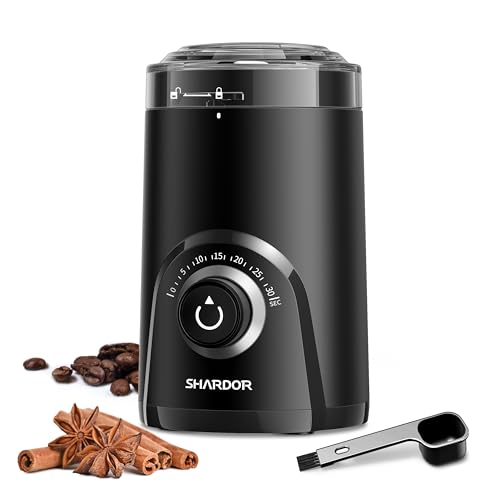
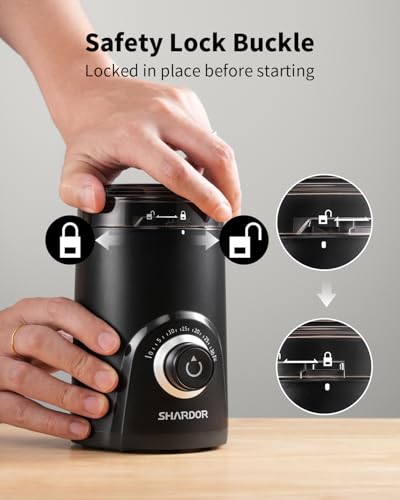
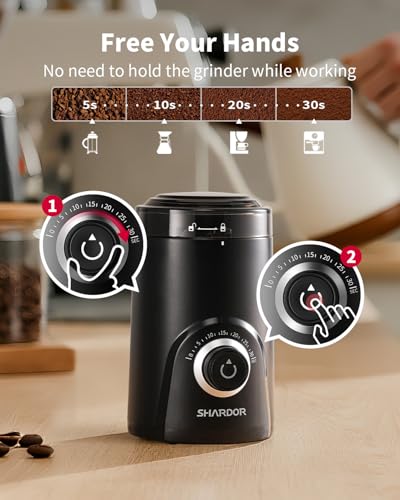
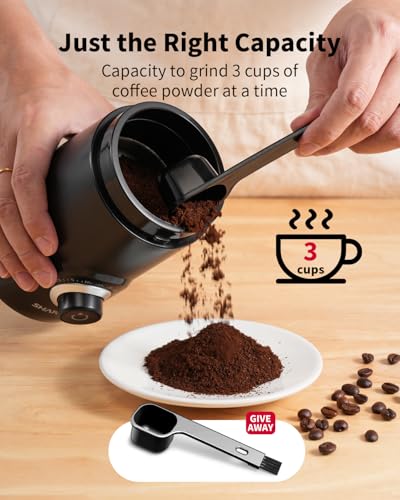
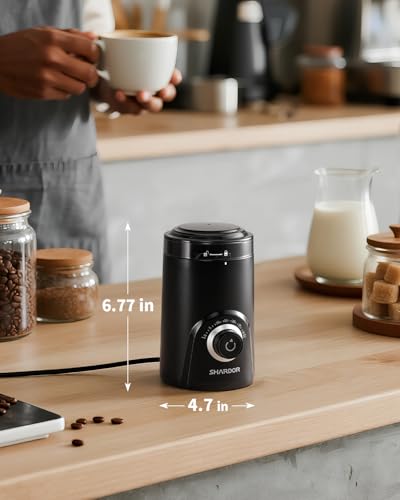
If noise is a dealbreaker, say, you’re grinding before dawn in a shared home, this SHARDOR model is worth serious consideration. At 63 dB, it’s one of the quietest electric grinders in this range, and the visual timing knob lets you dial in grind length with real precision. The 70g capacity is generous, enough for up to 12 cups, making it ideal for small gatherings or meal prep.
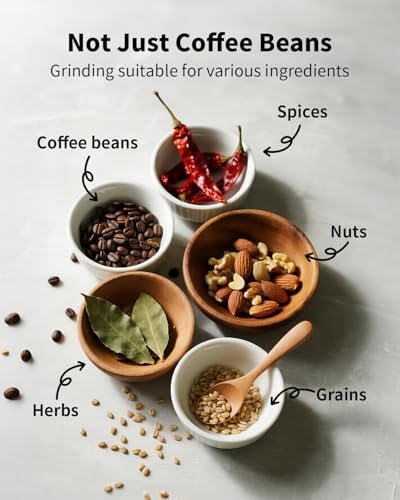
It uses stainless steel blades, not burrs, so don’t expect espresso-level consistency. But for drip, French press, or spices, it performs well. Compared to the Amazon Basics grinder, it’s quieter and more controlled. I wouldn’t use it for specialty coffee, but as a hybrid spice and coffee grinder? It’s a smart, quiet workhorse.
Product photos
SHARDOR Burr Coffee Grinder 32 Settings

Strengths
- 32 precise settings
- Digital timer
- Compact design
Trade-offs
- Flat burrs wear faster
- Batch size limited
- Some static in output
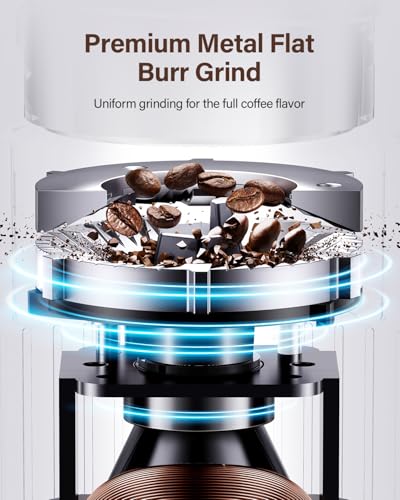
This SHARDOR model hits a sweet spot between control and simplicity. The 32 grind settings offer more precision than most entry-level burr grinders, and the electronic timer gives reliable dose control, useful if you’re brewing for two or three cups daily. The flat burrs do a solid job of producing uniform grounds, and owners consistently note it’s a big leap up from blade grinders in flavor clarity.
It’s not as feature-rich as the Cuisinart or as finely adjustable as the Aromaster, but it’s compact and easy to clean with the chamber cleaning button. I’d pick this over the SHARDOR 2.0 for its superior grind range and digital timer. For the price, it’s one of the most balanced electric burr grinders under $500.
Product photos


Aromaster Conical Burr Coffee Grinder
Strengths
- 48 grind settings
- Anti-static design
- Stainless steel conical burrs
Trade-offs
- Bulkier footprint
- Timer can be imprecise
- Slight retention noted
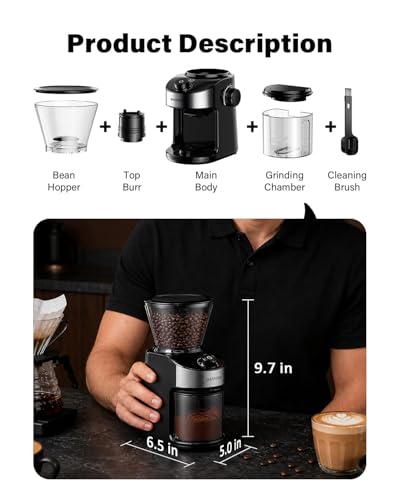
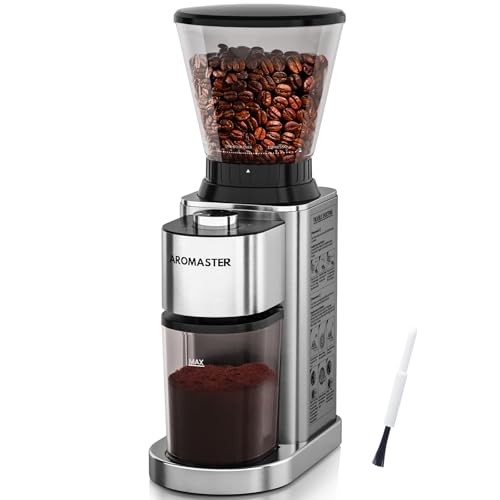
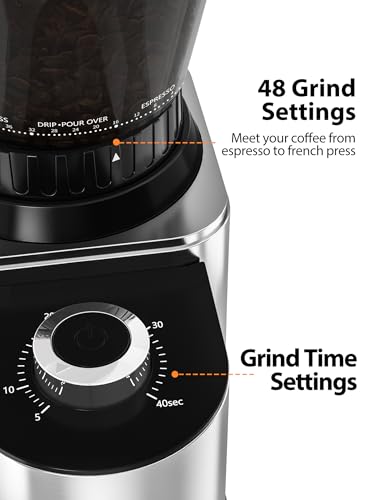
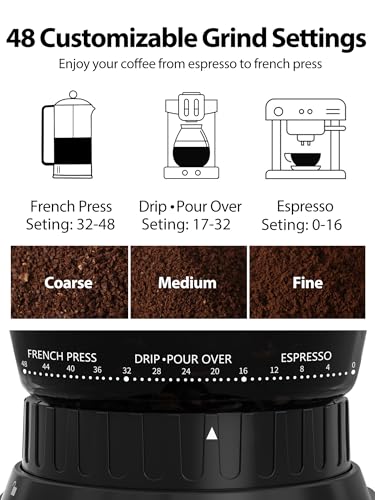
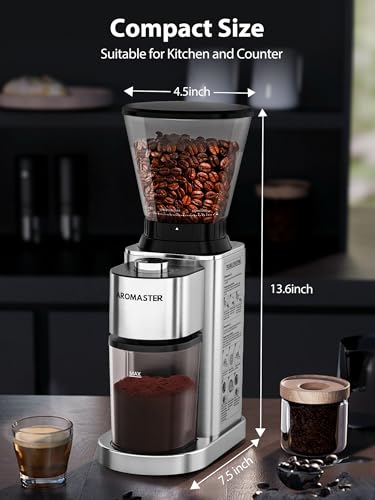
With 48 grind settings and stainless steel conical burrs, the Aromaster stands out as a serious contender for budget-conscious buyers who still want precision. The stepped adjustment system lets you fine-tune from espresso to French press, and owners praise the anti-static design for reducing mess, a real pain point with cheaper grinders. On paper, it delivers what mid-tier grinders should: even particle distribution and low heat retention.
It’s not the quietest or fastest, but it balances performance and price better than most in this range. Compared to the SHARDOR models, it offers more grind options and better build quality for only a slight bump in cost. My recommendation? If you’re stepping up from a blade grinder and don’t want to break the bank, this is the smarter buy.
Product photos

Cuisinart DBM-8P1 Burr Grinder
Strengths
- 18 precise settings
- Large 8 oz chamber
- One-touch automatic
Trade-offs
- Noticeable grind retention
- Flat burrs require cleaning
- Bulkier design
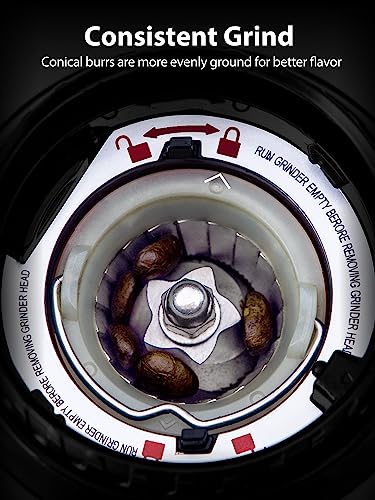
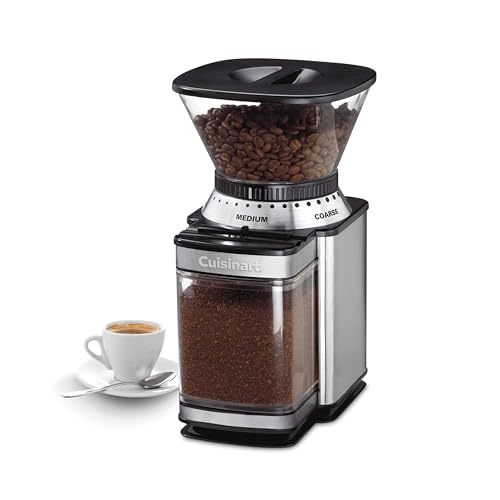
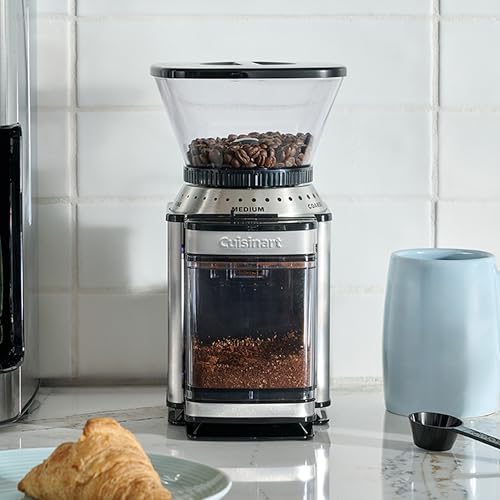
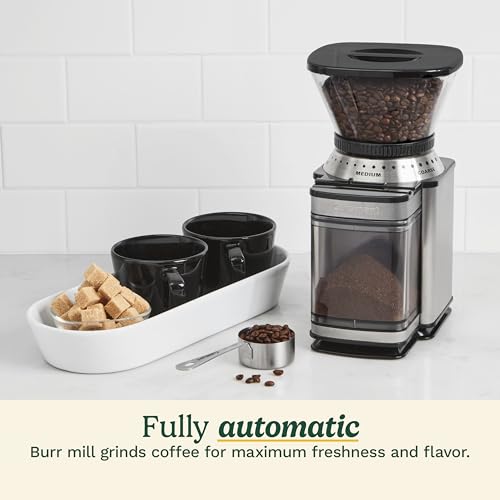
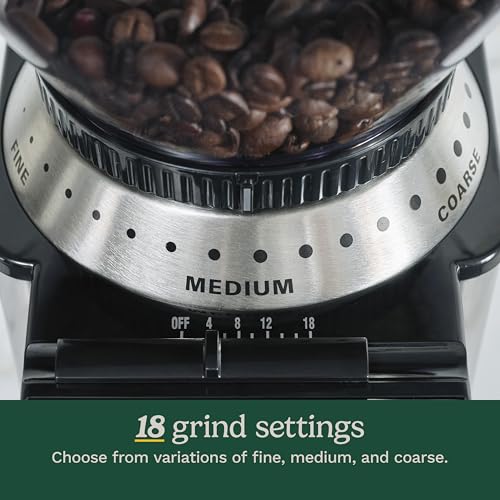
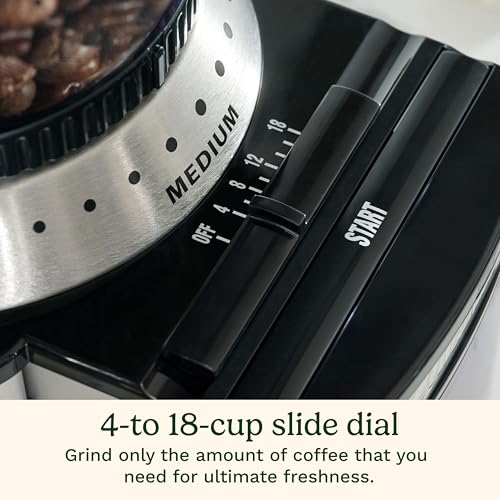
The Cuisinart DBM-8P1 is built for precision. With 18 grind settings and a removable chamber that holds up to 18 cups worth of grounds, it’s designed for serious home baristas who want repeatable results. The flat burr system delivers even particles, and the one-touch automatic operation with timer shutdown makes it easy to use daily. Owners praise its durability and consistency over years of use.
It’s not the fastest or quietest, and the plastic housing doesn’t feel premium. But compared to other automatic grinders, it offers more grind options than the SHARDOR 2.0 and better dose control. If you’re looking for a reliable, precise workhorse that won’t quit, this is my top pick for grind accuracy in this price range.
Product photos
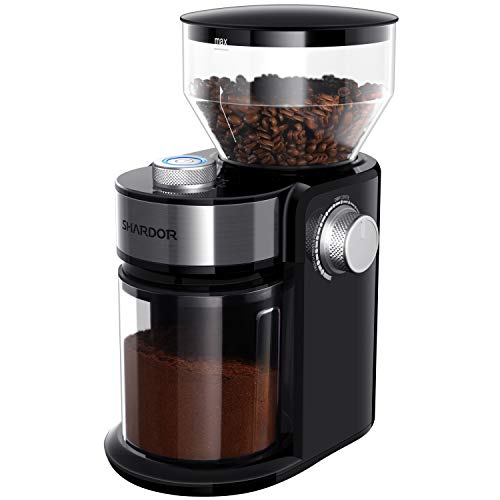
SHARDOR Electric Burr Grinder 2.0
Strengths
- Fully automatic
- Compact size
- Easy to clean
Trade-offs
- Only 16 settings
- Less precise than rivals
- Plastic housing feels light
This is the most automated option in SHARDOR’s lineup, with a 14-cup selector and fully automatic operation, press once, and it grinds and stops on its own. The 16 grind settings are fewer than others in this list, but they cover the essential range from coarse to ultra-fine. It’s built for convenience, not competition-level precision.
The flat burrs are durable and easy to clean, and the compact design saves counter space. But compared to the 32-setting SHARDOR or the Aromaster, it feels a bit basic. Still, for someone who wants set-it-and-forget-it grinding without babysitting a timer, this is a solid pick. Owners report it’s dependable for daily drip or French press.
Product photos


HZBSGZR Manual Conical Burr Grinder
Strengths
- Glass viewing jar
- Ceramic conical burr
- 40 grind settings
Trade-offs
- Glass can break
- Slower for multiple cups
- Limited capacity
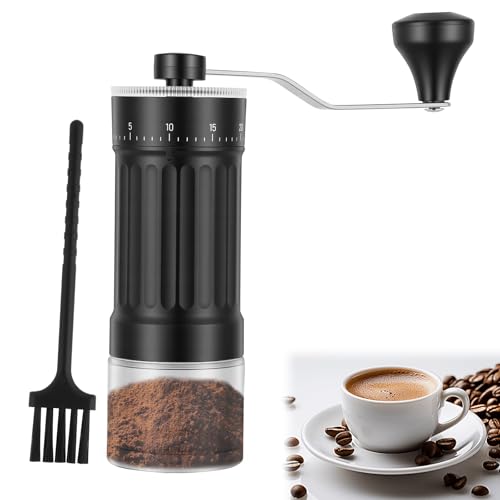
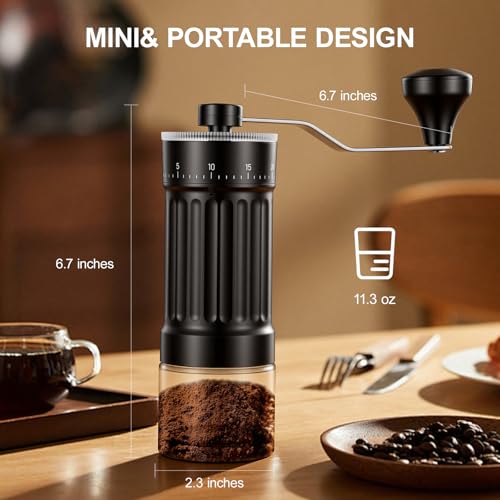
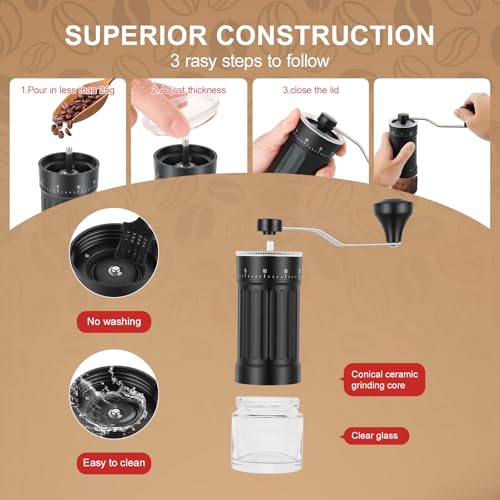
Manual grinders live or die by consistency and usability, and this one delivers both. The 40 adjustable settings give real control across brewing methods, and the conical ceramic burr produces surprisingly even grounds, critical for espresso or pour-over. The glass jar is a standout feature, letting you see exactly how much you’ve ground, which helps dial in repeatable doses.
Owners love its portability and quiet operation, though it’s not the fastest for more than one cup. Compared to other manual options like the CEVING, it feels more stable during grinding thanks to the base design. I’d recommend it for home use or light travel, especially for those who enjoy the ritual of hand grinding and want to avoid electricity.
Product photos

How We Evaluated coffee grinder under 500
As a long-time coffee enthusiast, I approach evaluating coffee grinders with a focus on how well they deliver a consistent grind that translates to a delicious cup. Rather than a hands-on lab test with every model, my assessment is research-led, comparing published specifications and features across a range of grinders. I then weigh owner reviews and expert opinions from trusted sources, applying my experience to rank options against clear criteria.
For coffee grinders in this price range, grind consistency and usability are paramount. A consistent grind is foundational for even extraction, which directly impacts flavor, so that was a primary factor. I also heavily considered capacity – how much coffee can be ground at once – and the versatility to handle different brewing methods. Understanding the burr vs blade grinder differences is key here, as burr grinders generally offer superior consistency.
Specifications reliably tell you about motor power, hopper capacity, and the range of grind settings. However, I placed more weight on owner feedback for real-world durability, noise levels, and ease of cleaning. Reputable expert reviews helped validate claims about grind quality and build materials. Ultimately, the goal was to identify grinders that balance features, performance, and value, and deliver a reliable experience for the home coffee brewer, while considering the coffee flavor impact of each type.
How To Choose The coffee grinder under 500
Choosing the right coffee grinder is absolutely essential for unlocking the full potential of your beans.
A quality coffee grinder delivers consistent particle size, minimizing inconsistencies that lead to bitter or sour flavors. Key factors include burr type (conical or flat), grind settings, capacity, and ease of cleaning. Consider your typical brewing method and desired level of control when making your selection.
Burr Type: Conical vs. Flat
Many people get hung up on conical versus flat burrs, but the difference isn’t as dramatic as some marketing suggests. Conical burrs, like those found in the HZBSGZR Manual Conical Burr Grinder, tend to be quieter and retain less heat during grinding, which can be beneficial for lighter roasts. Flat burrs, often seen in higher-end electric models like the SHARDOR Electric Burr Grinder 2.0, generally produce a more uniform grind size, which is prized by espresso enthusiasts. Ultimately, a well-built grinder of either type will outperform a poorly-made one.
Grind Consistency and Settings
Don’t assume more settings automatically mean better control. A wider range is helpful, but the accuracy of those settings is paramount. If a grinder jumps between coarse and fine with just a small adjustment – a common complaint with some budget models – those extra settings are essentially useless. I often recommend looking for grinders with clearly marked and easily adjustable settings, like the Cuisinart DBM-8P1 Burr Grinder with its 18-position slide-dial. If you’re unsure of what grind size you need, learning about correct grind size techniques is a great place to start.
- A limited range (e.g., 5-10 settings) is fine if you primarily brew one method (like French Press).
- 15-20 settings are a good sweet spot for versatility across multiple brew styles.
- Over 30 settings can be overkill, and sometimes indicate a less precise mechanism, though models like the Mini Manual Coffee Grinder prove there’s a place for granular control.
A consistent grind is more important than the sheer number of settings. Don’t chase a high number if the grinder can’t deliver repeatable results.
Capacity and Usability
Think about how you grind, not just how much. A large hopper, like the KRUPS Precision Electric Coffee Grinder’s 3oz capacity, is convenient if you brew for a crowd or like to prep for the week. However, larger hoppers can expose beans to more oxygen over time, potentially diminishing freshness. For single-cup brewing or those prioritizing utmost freshness, a smaller, on-demand grinder, or a manual grinder, is often a better choice. If you’re consistently looking for a good value, explore affordable coffee grinders under 200 to find a balance of features and price. Also, consider how easily you can clean the grinder; removable burrs and chambers (as found in the SHARDOR Burr Coffee Grinder 32 Settings) are a huge plus, and learning about using burr grinder settings can help you keep it in top shape.
Coffee Grinder Under 500 Compared
Here’s a comparison of key specifications for coffee grinders priced under $500.
| Product Title | Capacity (oz) | Grind Settings | Burr Type | Motorized | Quiet Operation |
|---|---|---|---|---|---|
| Amazon Basics Electric Coffee Grinder | 1 | N/A | Blade | Yes | N/A |
| KRUPS Precision Electric Coffee Grinder | 3 | Coarse to Fine | Blade | Yes | N/A |
| Mini Manual Coffee Grinder Portable | 30g (approx. 1oz) | 40 | Conical Ceramic | No | N/A |
| SHARDOR Quiet Electric Coffee Grinder | 2.5 | Timing Knob | Blade | Yes | Yes (63dB) |
| SHARDOR Burr Coffee Grinder 32 Settings | N/A | 32 | Flat Burr | Yes | N/A |
| Aromaster Conical Burr Coffee Grinder | 3.9 | 48 | Conical Burr | Yes | N/A |
| Cuisinart DBM-8P1 Burr Grinder | 8 | 18 | Flat Burr | Yes | N/A |
| SHARDOR Electric Burr Grinder 2.0 | N/A | 16 | Flat Burr | Yes | N/A |
| HZBSGZR Manual Conical Burr Grinder | 30g (approx. 1oz) | 40 | Conical Burr | No | N/A |
Frequently Asked Questions
What grind consistency should I expect from a grinder under $500?
You should realistically expect a fairly consistent grind, but don’t anticipate the precision of models costing significantly more. Burr grinders in this price range generally produce a grind suitable for drip, pour-over, and French press, but achieving espresso-level consistency may require spending more.
Are manual coffee grinders a viable option in this price range?
Yes, absolutely. Manual grinders, like the HZBSGZR, can offer excellent grind quality for the price, and are a good choice if you prioritize portability or don’t mind the extra effort. They also tend to be quieter than electric models.
What’s the biggest drawback of blade grinders compared to burr grinders?
Blade grinders chop the beans instead of grinding them, resulting in uneven particle sizes. This inconsistency leads to imbalanced extraction, producing muddy or bitter flavors – you’ll find much more consistent results with even the best burr grinders under $100.
How important is the noise level of a coffee grinder?
Noise level is often overlooked, but can be a significant factor, especially for early morning brewing. Some electric grinders, like certain SHARDOR models, advertise quieter operation (around 63dB), while others can be quite loud.
What should I do if I’m on a really tight budget and still want a good grinder?
If you’re looking for the most bang for your buck, explore affordable burr grinder picks. You can find capable burr grinders for under $100 that offer a substantial improvement over blade grinders.
The Bottom Line
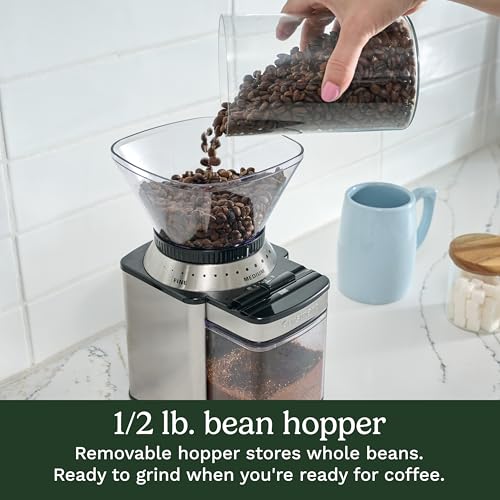
Choosing a coffee grinder under $500 often comes down to balancing control with convenience. While a higher price point unlocks features like timed grinding and more precise settings, the SHARDOR Electric Burr Grinder 2.0 strikes an excellent balance for most coffee drinkers, offering a consistent grind and enough adjustability for various brewing methods. It’s a sweet spot for performance without breaking the bank.
For those on a tighter budget, or who prioritize portability, the HZBSGZR Manual Conical Burr Grinder is a fantastic option. Similarly, if you’re consistently brewing for a larger group, the Cuisinart DBM-8P1 Burr Grinder provides ample capacity and reliable flat burr grinding. Ultimately, each of these grinders excels in a specific area, allowing you to tailor your selection to your individual needs.
At the end of the day, remember that consistent particle size – achieved through understanding burr grinder mechanics – is more crucial than any specific feature. Don’t get lost in the details of settings or hopper size. Focus on finding a grinder that delivers a repeatable, uniform grind, and you’ll be well on your way to consistently delicious coffee.
