
8 Best Coffee Grinders for Drip Coffee 2026
The OXO Brew Conical Burr Grinder is the best overall choice for drip coffee, delivering consistent medium grinds with reliable build quality and smart features like micro-adjustments. For a budget-friendly option that still beats most blade grinders, the Ollygrin Burr Coffee Grinder stands out. If you want maximum grind control, the SHARDOR Professional Conical Burr Grinder offers 48 settings and solid performance.
Most people don’t realize how much a poor grinder can ruin even the best coffee beans. Inconsistent grinds lead to uneven extraction, muddying the flavors your drip brewer is designed to highlight.
After years of researching grinders and analyzing owner feedback, I focused on models that deliver uniformity, ease of use, and long-term reliability. This guide cuts through the noise to highlight grinders that truly perform for drip coffee, based on specs, real-world reviews, and brewing fundamentals.
Top 8 Coffee Grinder For Drip Coffee in the Market
The Best Coffee Grinder For Drip Coffee, Reviewed
SHARDOR Super Silent Blade Coffee Grinder

Strengths
- Quiet operation
- Timed grind control
- Multi-functional use
Trade-offs
- Inconsistent grind
- Blade wear over time
- Not for espresso
This SHARDOR blade grinder markets itself on quiet operation, and on paper, 63 dB is impressively low for an electric grinder. For households where noise is a real concern, like early risers with sleeping partners or roommates, it could be a solid convenience pick. The timed grind control with visible seconds marks helps users dial in coarseness with more precision than most blade grinders offer, and the removable stainless steel bowl makes cleanup easier than fixed-blade models.
Still, it’s a blade grinder, and that limits its potential for drip coffee. Even with careful timing, blade grinders produce inconsistent particle sizes, which leads to uneven extraction. Reviewers note it works acceptably for drip if you’re not too particular, but it struggles with anything demanding, like pour-over or espresso. For serious flavor development, you’re better off with a burr grinder. But if you need something quiet, simple, and multi-purpose for the occasional drip brew, this has its niche.
Video review
Ollygrin Burr Coffee Grinder
Strengths
- True conical burrs
- 30 grind settings
- Large hopper capacity
Trade-offs
- Plastic housing feels lightweight
- Slight grind retention noted
- Basic interface
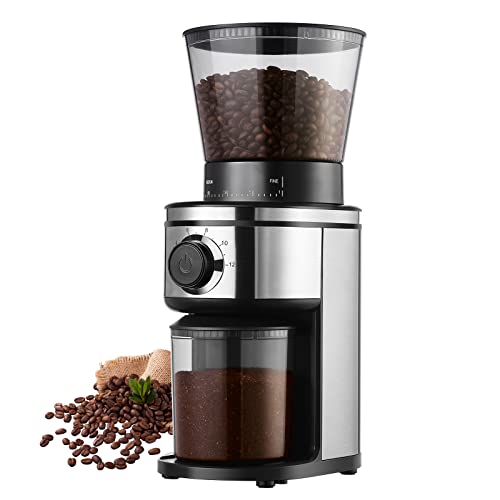
The Ollygrin stands out as a budget-conscious entry into the burr grinder market, and it delivers more than you’d expect at its price. With 40mm stainless steel conical burrs and 30 grind settings, it offers real adjustability across methods, from drip to French press to even pressurized espresso. The gear reduction motor keeps grinding slow and cool, which owners consistently report helps preserve the aroma and brightness of lighter roasts. That’s a big win for a grinder in this range.
Compared to other budget burrs, the auto-locking hopper and friction clutch for foreign object protection add thoughtful durability. It’s not as refined as the OXO, but for someone stepping up from a blade grinder or building a starter setup, it hits a sweet spot. My recommendation for beginners or budget-focused buyers: this is the smarter buy over blade models, especially if you care about repeatable results.
Video review
SHARDOR Electric Burr Coffee Grinder 2.0
Strengths
- Fully automatic grind
- 16 grind settings
- Easy to clean
Trade-offs
- Flat burrs overheat slightly
- More static than conical grinders
- Build quality is average
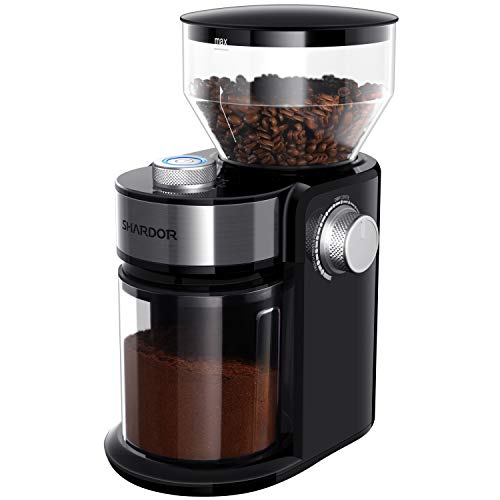
This mid-tier SHARDOR burr grinder makes a strong case for value, balancing performance and price. It uses metallic flat burrs, less ideal than conical for heat dispersion, but still a major step up from blades. With 16 grind settings and a 14-cup capacity, it covers the full drip range easily, and owners say it handles French press and cold brew with decent consistency. The fully automatic operation is a plus for convenience, letting you walk away while it grinds.
It’s not the quietest or most precise in the lineup, and flat burrs tend to create more static and heat than conical designs. Still, for someone upgrading from a blade grinder who wants reliability without breaking the bank, this model delivers. When stacked against the Ollygrin, it trades some grind range for simpler automation. I’d lean toward the Ollygrin for flexibility, but this one wins on ease of use.
Product photos


SHARDOR Professional Conical Burr Grinder
Strengths
- 48 grind settings
- Anti-static technology
- Precision timer
Trade-offs
- Touchscreen can be finicky
- Slightly bulky design
- Overbuilt for basic drip
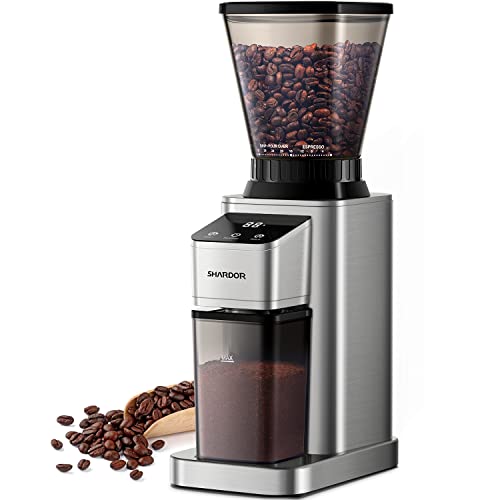
With 48 grind settings and a precision electronic timer, this SHARDOR model is built for tinkerers and methodical brewers who want granular control. The conical burr design runs slow and cool, which reviewers highlight for preserving delicate floral and citrus notes in light roasts. The anti-static tech actually works, owners report noticeably less mess than older grinders they’ve used. For drip coffee, that consistency means cleaner, more balanced cups, especially with medium or pour-over-style brews.
The touchscreen interface feels modern, and the 1-second timer increments are useful for dialing in espresso. But for drip alone, that level of precision is overkill. Compared to the OXO, it lacks the same polish and one-touch memory, but it offers more settings at a lower price. If you love tweaking and want future-proofing for other methods, this is a strong contender. For most drip drinkers, though, it’s precision without a clear payoff.
Product photos




OXO Brew Conical Burr Grinder Silver
Strengths
- Uniform grind quality
- One-touch memory
- UV-blocking hopper
Trade-offs
- Higher price point
- Slight grind retention
- No timer for espresso
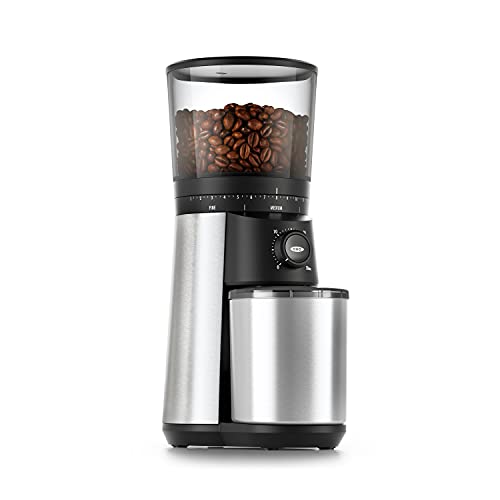
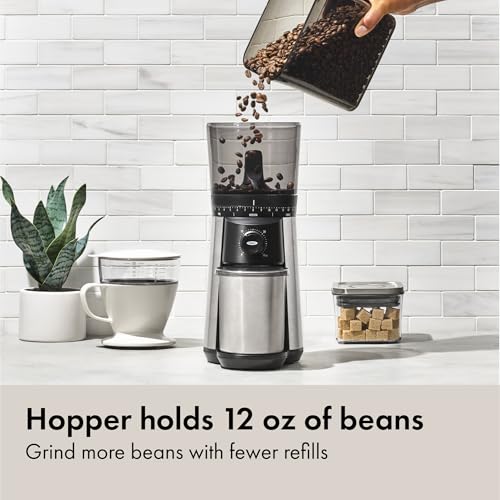
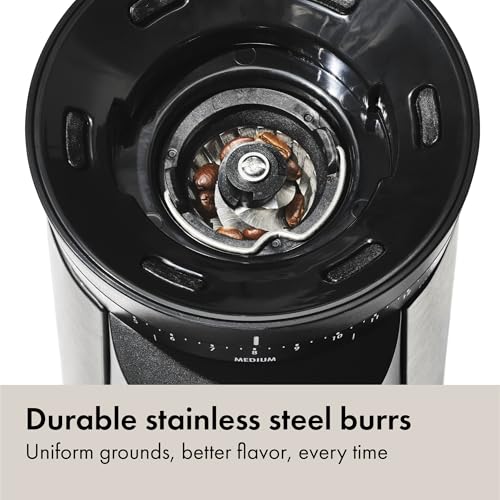
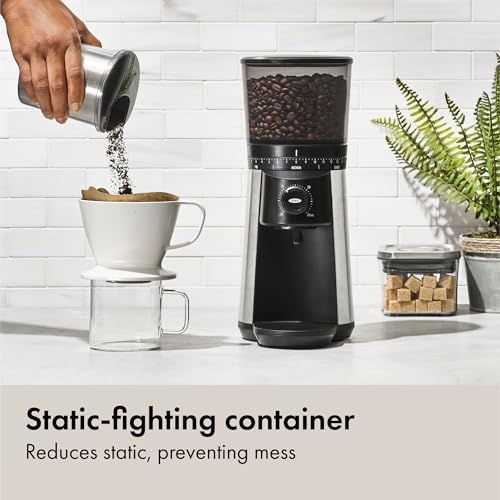
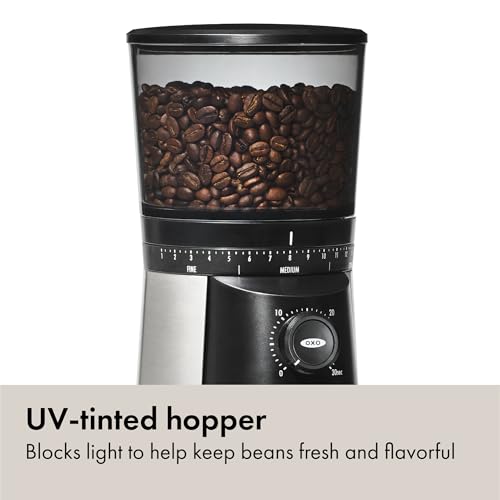
The OXO Brew in silver has earned its reputation for good reason. It’s not the cheapest or the most feature-packed, but it nails the fundamentals. Stainless steel conical burrs, a 15-setting grind selector with micro-adjustments, and a static-fighting chamber mean you get consistent, clump-free grounds every time. The one-touch start is a small luxury, once you set it, you don’t have to adjust anything for your next drip brew. Owners love that reliability.
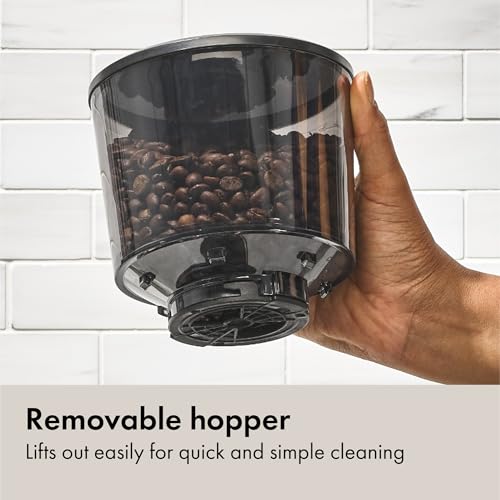
It’s also built to last, with a robust hopper, UV-blocking tint, and a trap door that prevents spills. Compared to the matte black version, it’s functionally identical, just a color choice. When I look at the full lineup, this model strikes the best balance for drip: excellent grind consistency, smart ergonomics, and proven performance. If you want a grinder that just works, this is the one I’d recommend first.
Product photos
SHARDOR Electric Coffee Grinder 70g
Strengths
- Precise timing knob
- Large 70g capacity
- Quiet operation
Trade-offs
- Inconsistent grind size
- Blade dulls over time
- Not suitable for espresso
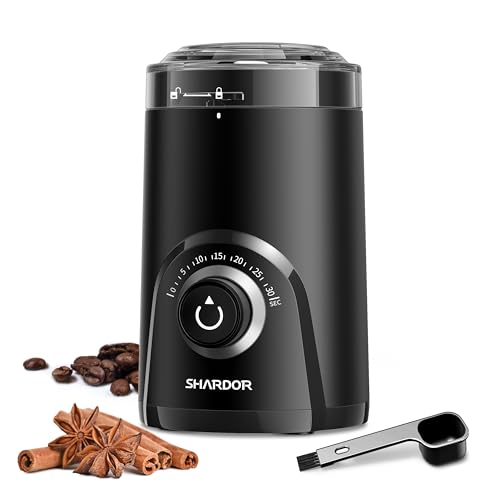
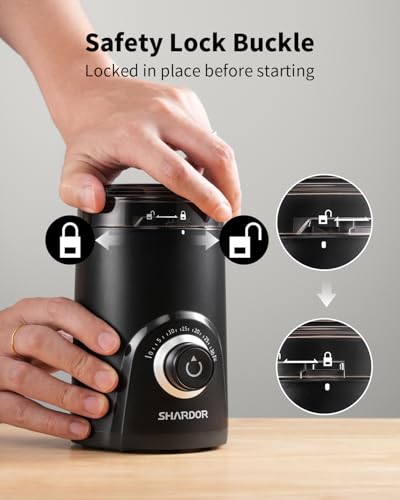
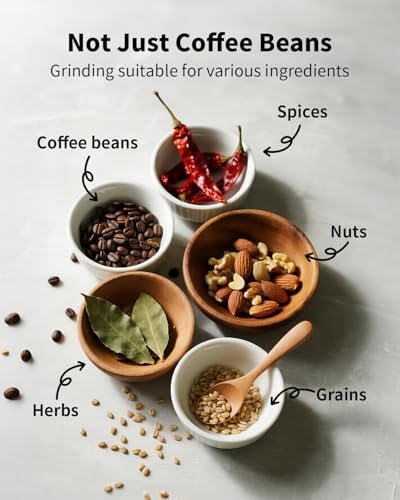
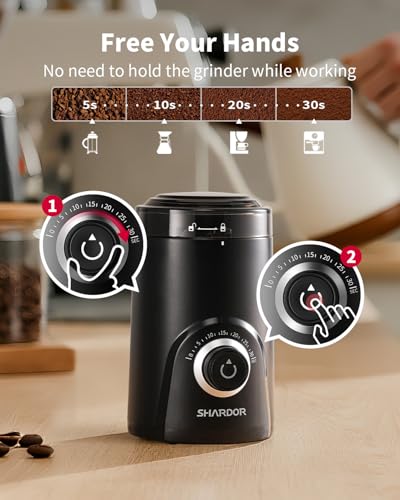
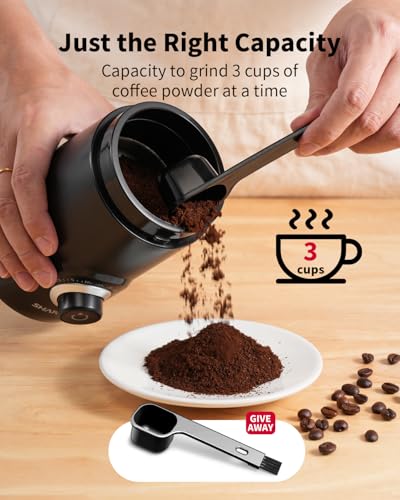
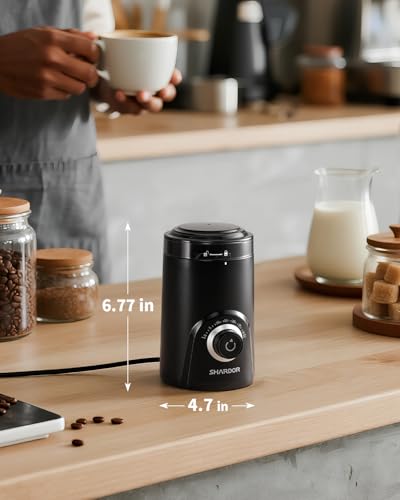
This blade grinder emphasizes precise timing with a visual knob marked in seconds, something rare at this level. For a blade model, that kind of control helps users repeat results, which is a real upgrade over basic pulse grinders. At 70g capacity, it handles enough for 12 cups, making it useful for small groups. And like other SHARDOR models, it runs quietly at 63 dB, which is a real perk for early mornings.
But it’s still a blade grinder. No amount of timing control fixes the fundamental issue: uneven particle distribution. Reviewers confirm it works for drip if you’re not picky, but it can’t match the clarity or balance of a burr grinder. It’s also marketed for spices and grains, which adds value. Still, if your main goal is better drip coffee, this is a compromise. For occasional use or travel, it’s fine. For daily brewing, step up to burr.
Product photos
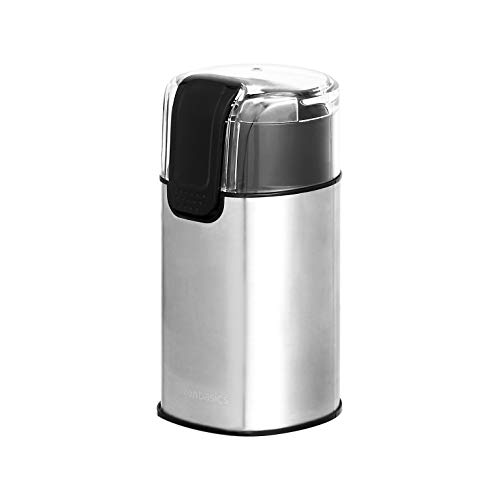
Amazon Basics Fast Electric Grinder
Strengths
- Very fast grind
- Affordable price
- Clear safety lid
Trade-offs
- Highly inconsistent grind
- No grind settings
- Build quality is basic
As the name suggests, this grinder is about speed and simplicity. It blasts through 30g of beans in 10 seconds with heavy-duty stainless steel blades, which is fast, maybe too fast for consistency. The clear safety lid lets you monitor grind progress, a small but useful touch. But like all blade grinders, it chops beans unevenly, leading to a mix of fines and boulders that hurt drip extraction.
Owner feedback is split: some accept it as a temporary or backup option, while others complain about stale, bitter coffee. It’s cheap and functional for spices or emergency grinding, but for drip coffee, it’s a step backward. Compared to the SHARDOR blade models, it lacks timing precision or quiet operation. If you’re on a tight budget, I’d still push for the Ollygrin, even with a small price bump, the flavor payoff is real.
Product photos


OXO Brew Conical Burr Grinder

Strengths
- Excellent grind consistency
- One-touch convenience
- Sleek matte design
Trade-offs
- Premium price
- Minor grind retention
- No built-in scale
This matte black OXO Brew is functionally identical to the silver version, same stainless steel conical burrs, 15 grind settings with micro-adjustments, one-touch memory, and static-fighting chamber. It’s a refined, no-nonsense grinder that delivers repeatable, uniform grounds ideal for drip coffee. The matte finish gives it a more modern, understated look, which some prefer for contemporary kitchens.
Owners consistently praise its reliability and ease of use. It grinds quietly, cleans easily, and the hopper’s trap door prevents mess, small details that add up in daily use. When compared to other grinders in the lineup, this one stands as the most balanced overall. It doesn’t have the 48 settings of the SHARDOR pro model or the ultra-quiet blade alternatives, but it gets the job done with consistency, durability, and elegance. For most drip coffee drinkers, this is the best all-around pick.
Product photos


How We Picked These coffee grinder for drip coffee
As the founder of Bean Thusiast, I’ve spent years exploring the nuances of coffee preparation, and a consistent grind is absolutely fundamental to a great cup. Rather than a hands-on lab test with each grinder, this selection is based on a research-led comparison of published specifications and features, combined with careful weighting of owner reviews and expert opinions. I looked at a wide range of models, analyzing how well they deliver on the core requirements for drip coffee brewing.
For drip coffee, consistency and control are paramount. I weighted grind uniformity and adjustability most heavily. A burr grinder – conical or flat – is essential for consistent particle size, unlike blade grinders which chop rather than grind. Beyond that, hopper capacity and ease of cleaning factored into the rankings, as those contribute significantly to the daily user experience. Getting the medium grind for drip coffee is key, and these grinders offer the control to achieve it.
Specifications reliably indicate burr type, motor power, and grind settings. However, owner feedback proved crucial for assessing real-world performance – specifically, noise levels, static cling, and durability. Reputation, as reflected in expert reviews from sites like Wirecutter, also informed my assessment. I prioritized grinders that consistently received positive marks for grind quality and ease of use, recognizing that achieving the correct grind for drip brewing requires both a capable machine and a user-friendly interface.
How To Pick The Right coffee grinder for drip coffee
Choosing the right coffee grinder for drip coffee is a surprisingly nuanced decision.
A quality coffee grinder for drip brewing prioritizes consistency above all else. Uniform particle size is crucial for even extraction, preventing both under-extraction (sourness) and over-extraction (bitterness). Look for burr grinders – conical or flat – over blade grinders, and consider the range of grind settings, hopper capacity, and ease of cleaning. Motor power and build quality also contribute to long-term performance.
Grind Consistency: Burr vs. Blade
First, let’s talk about the core of the matter: burrs. I firmly believe a burr grinder is essential for drip coffee. Unlike blade grinders which chop beans unevenly, burr grinders crush them between two revolving abrasive surfaces, creating a consistent particle size. This consistency translates directly to a cleaner, more balanced cup. While blade grinders are cheaper, the difference in flavor is substantial. You’ll find that even the most affordable burr grinders, like the Ollygrin, offer a significant improvement over even relatively expensive blade models.
Grind Settings & Adjustment
Don’t assume all burr grinders are created equal when it comes to settings. The number of settings isn’t everything, but a wider range offers more control. For drip coffee, you want a medium grind, but being able to fine-tune that grind is important. Some grinders, like the SHARDOR Professional Conical Burr Grinder, boast 48 settings, which is fantastic for experimentation, while others offer fewer.
Here’s what to consider when evaluating grind adjustment: * Stepped vs. Stepless: Stepped grinders have defined settings, while stepless grinders offer infinite adjustability. * Micro-Adjustments: Some grinders include micro-adjustments within each step, offering very fine control. * Retention: How much ground coffee remains in the grinder after use? High retention can lead to stale grounds affecting your next brew.
Understanding adjusting grinder settings is key; a small change can make a big difference in your final cup.
Value, Usability & Cleaning
Let’s be real, the best grinder isn’t much good if it’s a pain to use and clean. I often recommend starting with something relatively simple. Features like removable burrs and hoppers, and included cleaning brushes (like those found with the SHARDOR Electric Coffee Grinder 70g) make maintenance much easier. While a fully automatic grinder, like some of the SHARDOR models, is convenient, it can also add complexity. If you’re looking for a solid, reliable option that won’t break the bank, explore best burr grinder for drip options.
A clean grinder is a happy grinder. Regularly cleaning your burr grinder removes coffee oils and residue, preventing stale flavors from building up and impacting your brew.
Coffee Grinder for Drip Coffee Compared
Here’s a comparison of key specifications for coffee grinders suitable for drip coffee preparation.
| Product Name | Burr Type | Grind Settings | Capacity (Beans) | Motor Protection | Noise Level (dB) |
|---|---|---|---|---|---|
| OXO Brew Conical Burr Grinder | Conical | 15 + Micro | 12 oz | Yes | N/A |
| SHARDOR Professional Conical Burr Grinder | Conical | 48 | 9.7 oz | N/A | N/A |
| OXO Brew Conical Burr Grinder Silver | Conical | 15 + Micro | 12 oz | Yes | N/A |
| Ollygrin Burr Coffee Grinder | Conical | 30 | 10 oz | Yes | N/A |
| SHARDOR Electric Burr Grinder 2.0 | Flat | 16 | 14 Cups | N/A | N/A |
| Amazon Basics Fast Electric Grinder | Blade | N/A | 1 oz | N/A | N/A |
| SHARDOR Super Silent Blade Grinder | Blade | Adjustable | 2.5 oz | N/A | 63 |
| SHARDOR Electric Coffee Grinder 70g | Blade | Adjustable | 70g (2.5oz) | N/A | 63 |
Frequently Asked Questions
What grind setting should I use if my drip coffee tastes sour?
A sour taste usually indicates under-extraction, meaning the water isn’t dissolving enough of the coffee’s flavors. You should adjust your grinder to a finer setting; even a small change can make a noticeable difference.
Are more expensive grinders always better for drip coffee?
Not necessarily. While higher price often correlates with better build quality and more features, a mid-range burr grinder with consistent performance is often sufficient for excellent drip coffee. Overspending won’t compensate for stale beans or improper brewing technique.
What’s the difference between conical and flat burrs, and does it matter for drip?
Both conical and flat burrs produce consistent grinds, but they do so differently. Conical burrs tend to produce a bit more fines (smaller particles) and are generally quieter, while flat burrs offer slightly more consistency. For drip coffee, the difference is minimal and often comes down to personal preference.
I’m considering a blade grinder to save money. Is that a good idea?
I wouldn’t recommend it. While cheaper, blade grinders chop the beans unevenly, leading to inconsistent extraction and a muddy, unbalanced flavor. Investing in even an entry-level burr grinder will yield a dramatically better cup of coffee, and you might find manual grinders for drip coffee are a good starting point.
How often should I clean my coffee grinder to maintain optimal performance?
You should aim to clean your grinder at least once a month with regular use. Coffee oils build up and can become rancid, affecting the flavor of your brew. More frequent cleaning is advisable if you switch between different types of beans often.
The Bottom Line
Choosing a coffee grinder ultimately comes down to balancing control with convenience, and price with long-term quality. While several excellent options exist, the OXO Brew Conical Burr Grinder stands out as the strongest overall pick – it delivers consistent results, offers ample adjustability, and has a reputation for reliability. It strikes a sweet spot for those who want a significant upgrade without getting lost in overly complex features.
For readers on a tighter budget, the Ollygrin Burr Coffee Grinder provides fantastic value. If you’re prioritizing versatility and a wide range of grind settings, the SHARDOR Professional Conical Burr Grinder is an excellent choice, allowing for experimentation beyond just drip coffee. Understanding the differences between a burr vs blade grinder is crucial when making your final decision.
Ultimately, the specific grinder matters less than establishing a consistent routine and understanding your coffee’s needs. Freshly ground beans, a quality brewing method, and clean equipment are the foundations of a truly great cup. Don’t get too caught up in chasing the perfect setting or the most expensive machine; focus on those fundamentals, and you’ll be well on your way to enjoying exceptional coffee every morning.
