
6 Best Manual Coffee Grinders for Drip Coffee 2026
The HZBSGZR 40-Setting Portable Manual Grinder stands out as the best overall pick for drip coffee, delivering consistent results and solid build quality. For those watching their budget, the Mini 40-Setting Portable Grinder offers strong performance at a lower price, while the 60g Capacity Stainless Steel Grinder is ideal for brewing larger batches.
Most people buying a manual grinder want better-tasting coffee without the noise or cost of an electric model. But not all hand grinders deliver the consistent grind size drip brewing demands, too often, users end up with uneven particles that lead to over- or under-extraction.
After researching the market and analyzing owner feedback, specs, and grind performance, I focused on models that consistently meet the needs of drip coffee drinkers. These picks balance burr quality, adjustability, and usability, because a grinder should make your routine easier, not just look good on the counter.
Top 6 Manual Coffee Grinder For Drip Coffee in the Market
The Best Manual Coffee Grinder For Drip Coffee, Reviewed
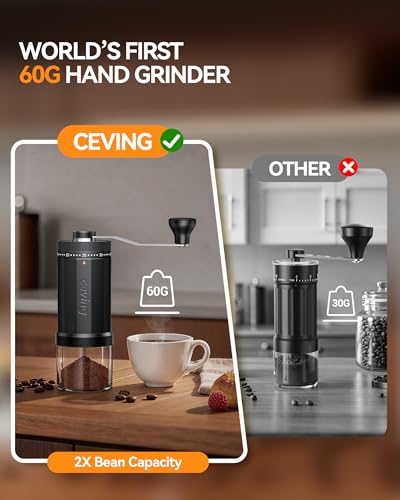
World’s First 60g Capacity Manual Grinder
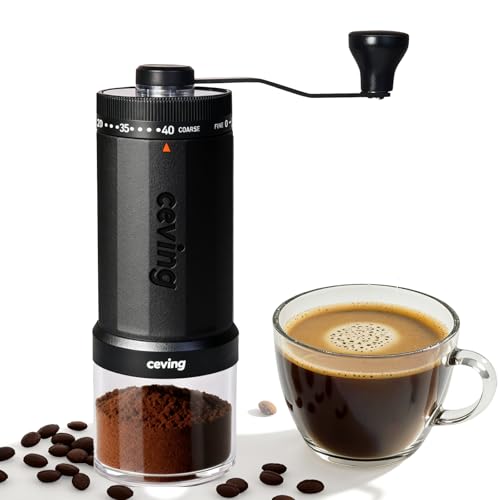
Strengths
- 60g capacity
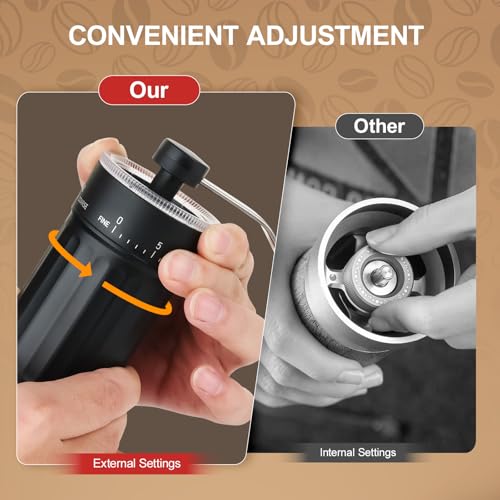
- 40 external settings
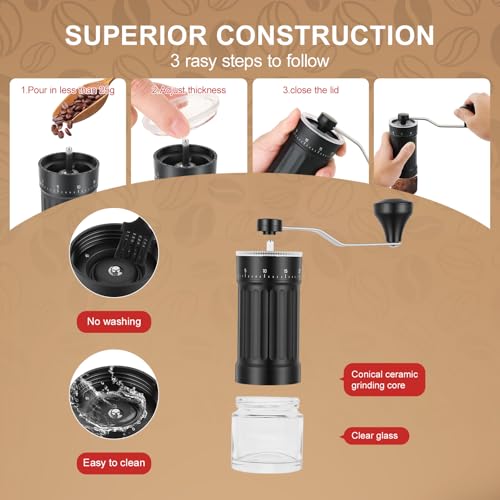
- Ceramic conical burr
- Lightweight and portable
- Lab-grade grind consistency
Trade-offs
- Plastic build may lack premium feel
- Static issues reported with dry beans
- Higher price point
This grinder stands out with a genuinely useful innovation, the 60g capacity is a standout for families or anyone brewing multiple servings. Most manual grinders max out at 30–35g, so being able to grind twice that in one go cuts prep time in half. The external 40-click adjustment is also a win, letting you fine-tune for drip, pour-over, or French press without opening the unit. Owners consistently report clean, consistent grinds, especially when dialing in for medium to coarse settings.
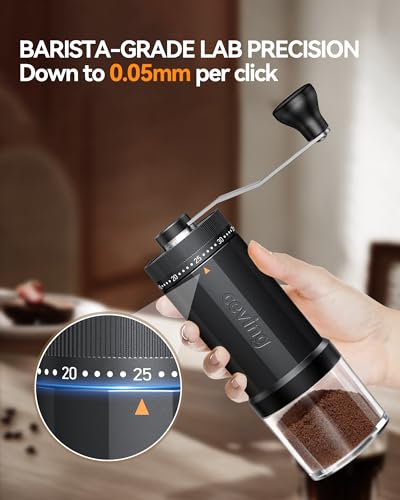
The ceramic conical burr does its job well, generating minimal heat and preserving delicate aromatics. While not quite at the level of high-end electric flat burrs, it’s impressive for hand grinding. The 0.05mm per click spec sounds precise on paper, and reviewers confirm the gradations feel meaningful. If you’re tired of refilling mid-grind or lugging multiple devices, this one solves real pain points.
Video review
HZBSGZR 40-Setting Portable Coffee Grinder
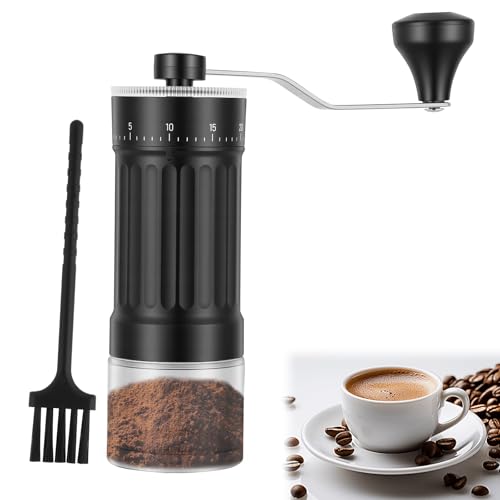
Strengths
- Clear glass hopper
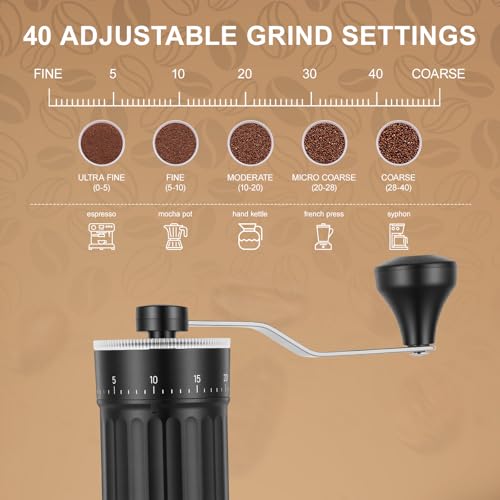
- 40 grind settings
- Lightweight ABS build
- Smooth hand crank
- Ceramic conical burr
Trade-offs
- Glass prone to breakage
- ABS feels less durable
- Adjustment ring lacks click precision
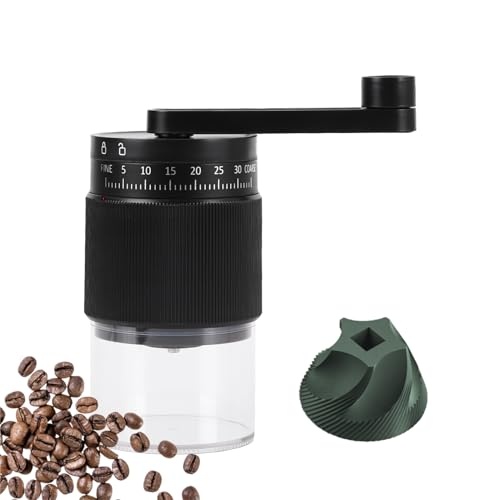
The glass hopper is the highlight here, clean, transparent, and easy to monitor mid-grind. That visibility helps avoid over- or under-grinding, which matters when you’re brewing for guests or dialing in a new roast. The 40 settings offer reliable range, and owners note the grind consistency is solid for drip and pour-over, though slightly uneven at the finest end for espresso.
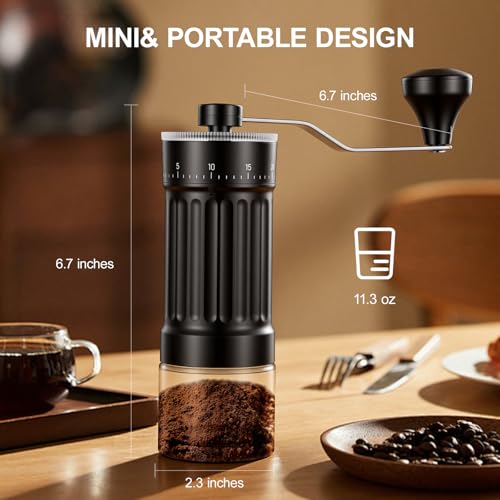
The ABS body keeps it light at 11.3 oz, and the ergonomic crank reduces fatigue during longer sessions. It’s not as rugged as metal-bodied models, but it holds up well for home and travel. One thing I appreciate: the ceramic burr stays cool, preserving oils and brightness in light roasts, a plus for drip coffee lovers who want clarity in their cup.
Product photos

Compact 95 Ceramic Burr Manual Grinder
Strengths
- Ultra lightweight
- Detachable handle
- 95-grade ceramic burr
- Shatterproof container
- Tool-free cleaning
Trade-offs
- Slower grinding speed
- Smaller hopper limits volume
- Adjustment ring can loosen over time
At just 235g, this is one of the lightest full-featured manual grinders on the market, and the detachable handle design makes it a top pick for tight spaces. It slips into a laptop sleeve or daypack without issue, which explains why so many hikers and commuters name it a favorite. The 95-grade ceramic burr is a spec worth noting, owners say it stays sharp longer than standard ceramics and handles fine espresso grinding better than expected.
Despite the small size, it still offers 46+ grind settings and a sealed container that holds two 30g batches. That’s smart engineering for minimalists. The polycarbonate chamber is shatterproof, a clear upgrade over glass in rugged use. On paper, it’s built for real-world portability without sacrificing grind quality. For drip coffee, it delivers consistent particle size, though slower than larger grinders.
Video review
60g Capacity Stainless Steel Burr Grinder

Strengths
- 60g capacity
- Stainless steel burr
- 40 external settings
- Durable CNC burrs
- Faster grinding speed
Trade-offs
- Heavier than ceramic models
- Slight heat buildup
- Higher price
If durability is your top concern, the stainless steel burr here gives this model an edge over ceramic competitors. Steel burrs handle daily use better and resist chipping, which matters if you’re grinding hard beans regularly. The 60g capacity is identical to the ceramic version, making it ideal for families or batch brewing. Owners report faster grind times thanks to the aggressive steel cut, though a slight warmth develops after extended cranking.
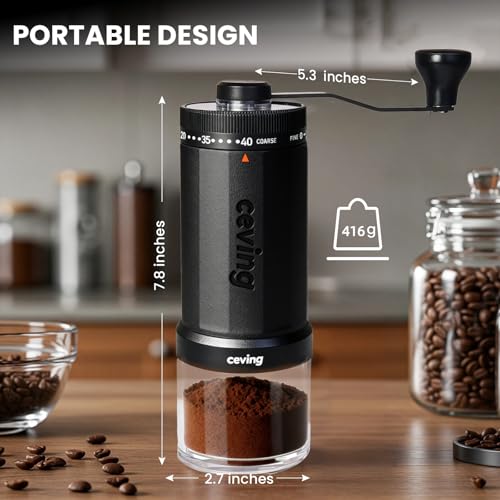
It’s a bit heavier at 416g, but still portable. The 40 external settings work the same, precise and easy to adjust. Where this really wins is longevity: steel burrs won’t degrade as quickly, and the overall build feels more industrial. For someone who plans to use their grinder daily for years, this is the more resilient choice.
Product photos
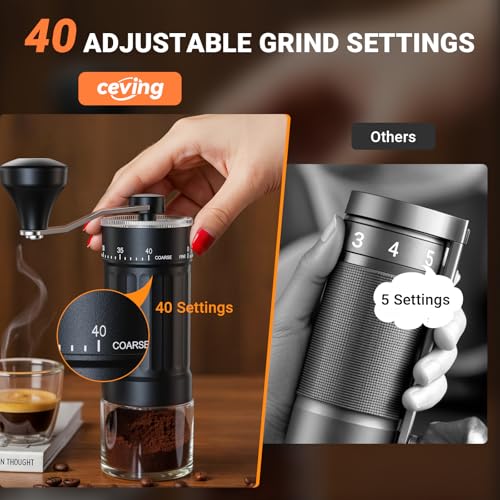
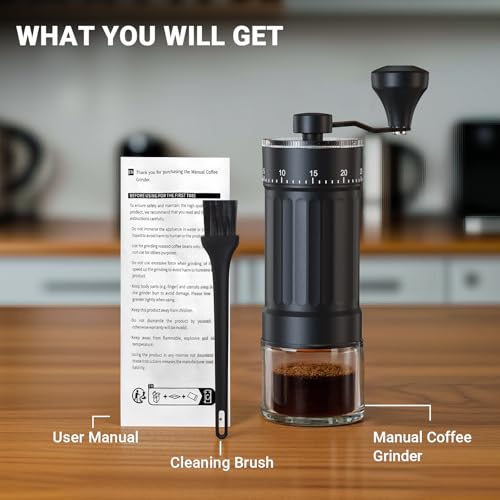
Mini 40-Setting Portable Ceramic Grinder

Strengths
- Affordable price
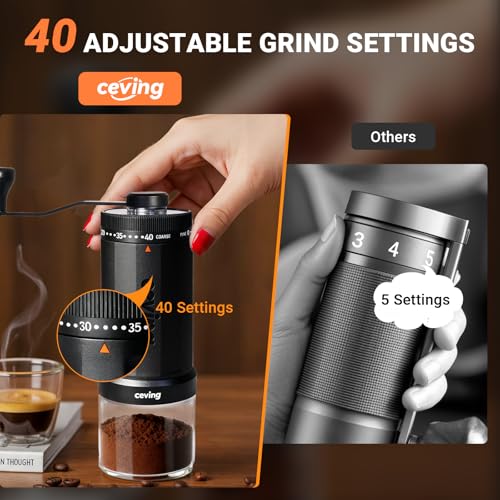
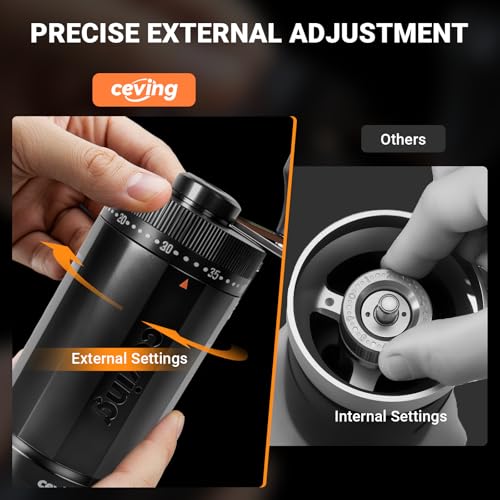
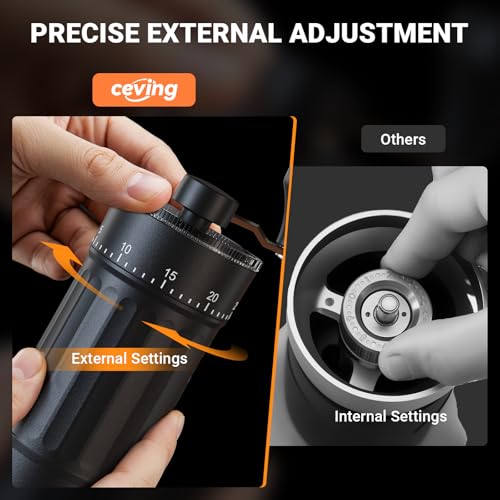
- 40 external settings
- Ceramic conical burr
- Compact and lightweight
- Easy to clean
Trade-offs
- Plastic construction feels less premium
- Crank stability issues reported
- Limited for larger batches
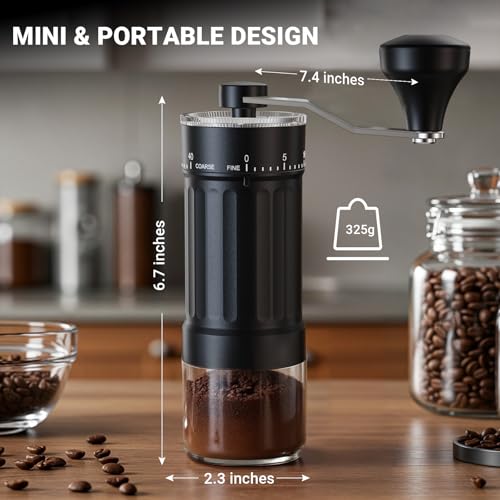
This is the value workhorse of the group, same 40 external settings and ceramic conical burr as pricier models, but at a more accessible price. It doesn’t offer anything flashy, but owners say it delivers where it counts: consistent grinds for drip, pour-over, and even coarse espresso. The 30g capacity fits most single brews, and the compact size makes it a go-to for camping or travel.
It’s not the most refined in hand feel, some report slight wobble in the crank, but it’s durable enough for regular use. The plastic build keeps it light, and the three-part disassembly makes cleaning manageable. If you’re new to manual grinding or just need a no-fuss backup, this checks the boxes without overpromising. Compared to others, it’s the “no regrets” budget pick.
Product photos
CIRCLE JOY 40-Setting Stainless Grinder
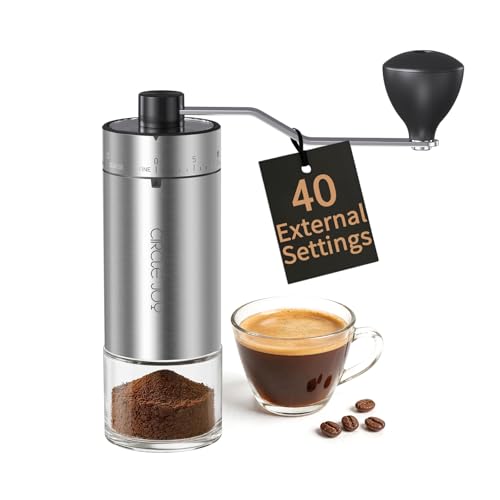
Strengths
- Ergonomic long handle
- Stainless steel build
- 40 external settings
- Clear glass hopper
- Even ceramic grinding
Trade-offs
- 30g max capacity
- Glass jar fragile if dropped
- Slightly bulky for tight bags
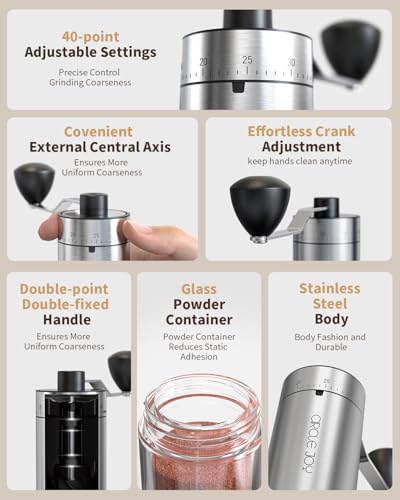
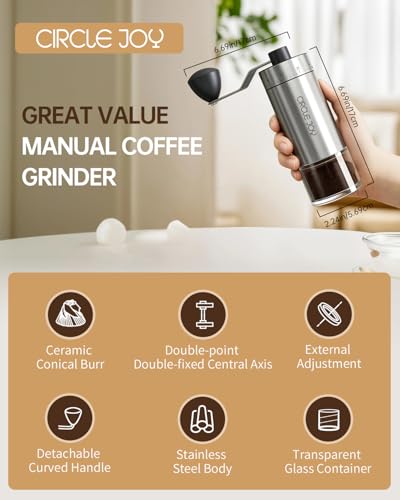
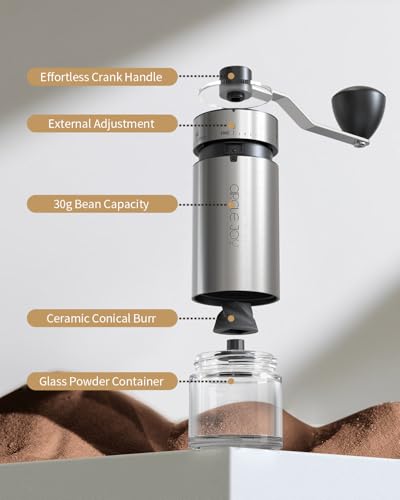
The standout here is the extra-long handle, which reviewers consistently praise for reducing hand strain during grinding. That use makes a noticeable difference, especially when working with denser beans or dialing in finer settings for drip. The 40 external grind settings are easy to adjust and hold their position well, a common complaint with budget models. I’d pick this over shorter-handled rivals for daily home use, where comfort matters over months of grinding.
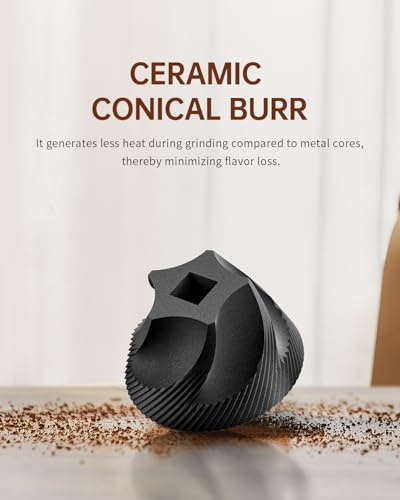
The stainless steel body gives it a clean, durable look, and the clear glass grounds container is both functional and satisfying to use, you can actually see when you’ve hit your mark. Ceramic burrs deliver even particle distribution, though not quite as tight as the top-tier models. Still, for pour-over and drip, it’s more than capable. The only real trade-off is capacity, maxing out at 30g.
Product photos
How We Chose These manual coffee grinder for drip coffee
As the founder of Bean Thusiast, I approach coffee gear with a focus on how it impacts the final cup. Rather than a hands-on lab test with each grinder, this selection is a research-led comparison of published specifications, features, and – crucially – owner and expert reviews. I weighed these factors against my understanding of what contributes to excellent drip coffee, aiming to identify grinders offering the best balance of consistency, usability, and value.
For drip coffee specifically, grind consistency and adjustability are paramount. I prioritized grinders with numerous, clearly defined grind settings (at least 30) because achieving the ideal grind size for drip is essential for proper extraction. Durability also weighed heavily; a grinder that quickly loses its burr sharpness is a poor long-term investment. Capacity was considered, but secondary to grind quality.
Specifications reliably indicate burr material (ceramic versus stainless steel) and the range of grind settings. However, owner feedback proved invaluable in assessing ergonomics, ease of cleaning, and real-world consistency. Reputation, what experienced coffee drinkers are saying, helped me filter out grinders with reported issues like static buildup or flimsy construction, even if their specs appeared promising. Ultimately, I looked for grinders that consistently delivered the correct grind for drip brewing according to user reports.
How To Choose The manual coffee grinder for drip coffee
Choosing a manual coffee grinder can feel overwhelming, but focusing on a few key features will help you find one that elevates your daily brew.
A quality manual grinder prioritizes consistent particle size, durable burrs (ceramic or steel), and a comfortable grinding action. Look for models with clearly marked grind settings, ease of cleaning, and a build quality that suggests longevity. Capacity matters too – consider how much coffee you typically brew at once.
Grind Consistency & Burr Type
The heart of any good grinder – manual or electric – is its ability to produce a consistent grind. Inconsistent particle size leads to uneven extraction, resulting in bitter or sour coffee. While both ceramic and stainless steel burrs can deliver excellent results, they have different strengths. Stainless steel burrs are incredibly durable and can handle a lot of use, but they can sometimes retain heat. Ceramic burrs, on the other hand, stay cooler during grinding, which is especially important for preserving the delicate aromatic compounds in lighter-roasted beans. If you’re serious about exploring single-origin coffees, and really want to experience the nuances of each bean, I recommend prioritizing a grinder with ceramic burrs.
Capacity & Batch Size
Don’t underestimate the importance of capacity. While a tiny, single-shot grinder is fine for backpacking, it quickly becomes frustrating for daily use. Many of the grinders on the market still hold relatively small batches, requiring multiple grinds to make a pot. If you frequently brew for more than one or two people, or enjoy larger brewing methods like French press, you’ll want to explore options with a larger capacity, like the 60g models we’ve seen.
Here’s what to consider when deciding on capacity: * Single Cup: 15-20g is sufficient for a single pour-over. * Small Batch: 30-40g will cover two standard mugs, or a small French press. * Family Brewing: 50g+ is ideal for larger families or frequent entertaining. This eliminates the need to grind multiple times.
Ergonomics & Ease of Use
A manual grinder requires a bit of effort, so ergonomics are crucial. A comfortable handle design and smooth grinding action can make a world of difference. Look for grinders with an extended handle – these provide more use, reducing strain on your hand and wrist. Beyond the handle, consider the grind adjustment mechanism. Some grinders feature hidden internal adjustments, which can be fiddly and messy. I much prefer the more modern external adjustment rings, allowing you to dial in your grind size quickly and easily. As someone who enjoys experimenting with different brewing methods, I find that quick adjustments are a must. For more information on why a burr grinder is superior, check out these burr grinder mechanics.
A good rule of thumb is to spend a little more for a grinder that feels good to use. You’re more likely to enjoy the process, and ultimately, a better cup of coffee.
I often recommend people start by looking at top manual burr coffee grinders to get a sense of the current market and what features are available, before narrowing down their choices.
Manual Coffee Grinders Compared
Here’s a comparison of key specifications for several manual coffee grinders suitable for drip coffee brewing.
| Product Title | Capacity (g) | Grind Settings | Burr Material | Portability | Weight (g) |
|---|---|---|---|---|---|
| World’s First 60g Capacity… | 60 | 40 | Ceramic | Yes | 346 |
| HZBSGZR 40-Setting Portable… | 30 | 40 | Ceramic | Yes | 320 |
| Compact 95 Ceramic Burr… | 30 | 46+ | Ceramic | Yes | 235 |
| 60g Capacity Stainless Steel… | 60 | 40 | Stainless Steel | Yes | 416 |
| Mini 40-Setting Portable… | 30 | 40 | Ceramic | Yes | 325 |
| CIRCLE JOY 40-Setting Stainless… | N/A | 40 | Ceramic | Yes | N/A |
Frequently Asked Questions
What grind setting should I use for drip coffee?
A medium grind is generally best for drip coffee; most grinders will have a setting around the middle of their range. However, the ideal setting depends on your specific brewer and beans, so I recommend starting with a medium setting and adjusting until you achieve a balanced extraction, not too bitter, not too sour.
How often do I need to clean my manual grinder?
You should clean your grinder after each use to remove coffee oils and fines. This prevents stale flavors from building up and affecting your next brew. A more thorough cleaning, disassembling and washing the burrs, should be done monthly, or more frequently with heavy use.
Can I use my manual grinder for other brew methods besides drip?
Absolutely. A quality manual grinder with a wide range of settings, like those in our best burr grinder for drip guide, can handle everything from coarse French press to fine espresso grinds. Just be sure to adjust the grind size accordingly.
What’s the difference between ceramic and steel burrs in a manual grinder?
While both produce good results, ceramic burrs stay cooler during grinding, preserving more of the coffee’s aroma. Steel burrs are more durable and less prone to chipping, making them a good choice for frequent use and darker roasts.
Is a more expensive manual grinder always better?
Not necessarily. While price often correlates with build quality and features, a more expensive grinder isn’t always worth the investment. Focus on finding a grinder with consistent grind settings and a comfortable grinding experience; those are the factors that will most impact your cup, and you can find excellent options across a range of price points within our top burr grinders for drip brewing list.
The Bottom Line
Choosing a manual grinder often comes down to balancing control with convenience. You’re trading the speed of an electric model for a more deliberate, hands-on brewing experience – and the ability to dial in your grind anywhere. For the best overall combination of features, grind consistency, and capacity, I recommend the World’s First 60g Capacity manual grinder. It delivers a fantastic cup without forcing you to compromise.
If you’re on a tighter budget, the HZBSGZR 40-Setting Portable manual grinder is an excellent entry point. For those prioritizing versatility and portability, the Compact 95 Ceramic Burr manual grinder shines, offering a lightweight design and a wide range of grind settings. And if stainless steel burrs are your preference, the 60g Capacity Stainless Steel manual grinder provides a durable and consistent grind.
Ultimately, the specs matter less than understanding your own preferences and brewing habits. Focus on a grinder that feels comfortable to use, consistently produces the burr vs blade grinder you need for drip coffee, and encourages you to enjoy the ritual of grinding your beans fresh each morning. That’s where the real magic happens.
