
8 Best Coffee Espresso Makers with Grinder 2026
The Breville Barista Express BES870XL stands out as the best overall coffee espresso maker with grinder, delivering precise control and consistent results. For a more affordable option, the AMZCHEF 44-Setting Grinder Espresso offers strong performance with fine grind customization. If you want versatility, the Ninja Luxe Café Premier 3-in-1 covers multiple drinks with ease.
Most people shopping for an all-in-one coffee espresso maker with grinder are looking for convenience without sacrificing quality. But too many machines cut corners on the grinder or temperature control, leading to frustrating, inconsistent shots.
As the founder of Bean Thusiast, I’ve spent years studying what makes espresso work, from bean to brew. This guide cuts through the noise, focusing on machines that deliver real results based on specs, verified owner feedback, and core brewing principles. We looked at grind consistency, thermal stability, and long-term reliability to find the ones worth your counter space.
Top 8 Coffee Espresso Maker With Grinder in the Market
The Best Coffee Espresso Maker With Grinder, Reviewed
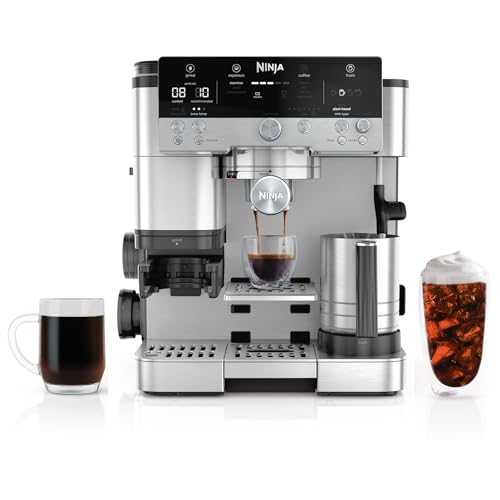
Ninja Luxe Café Premier 3-in-1
Strengths
- Weight-based dosing
- 3-in-1 brewing
- Hands-free frothing
Trade-offs
- Large footprint
- No dual boiler
- Frothing less customizable
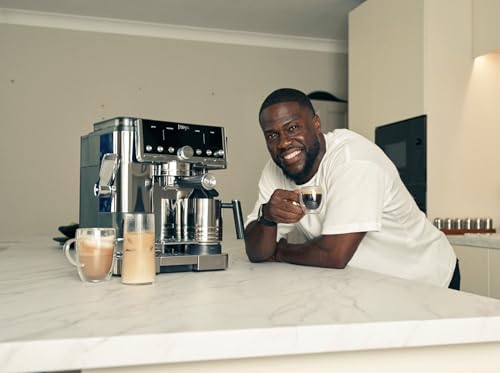
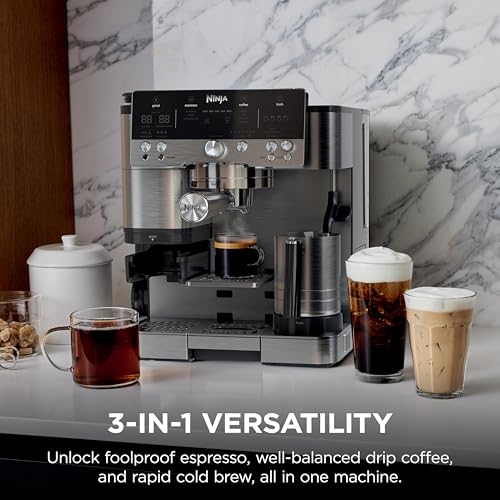
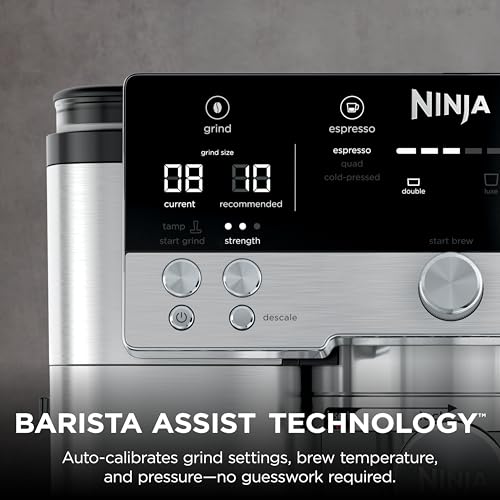
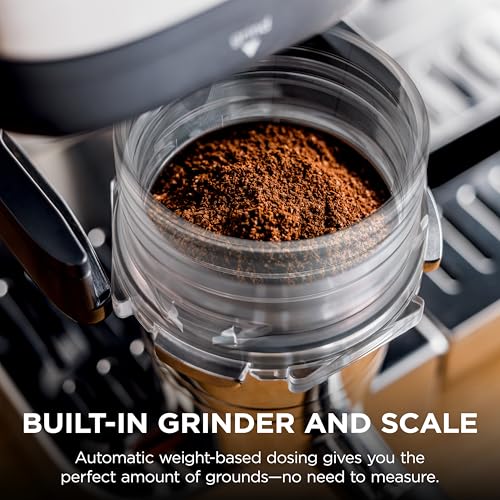
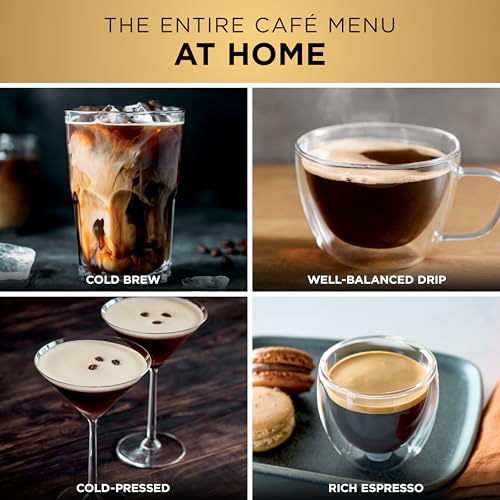
This is the most versatile machine on the list, no question. It does espresso, drip coffee, and cold brew, which is almost unheard of in one appliance. The weight-based dosing is a standout: it grinds by weight, not time, so your shots are consistent regardless of bean density. The assisted tamper ensures even puck prep, and the hands-free frothing system delivers reliable microfoam with zero skill required.
Owners rave about the Barista Assist tech, it guides you through grind size, dosing, and extraction, making it perfect for learners. Compared to the Breville, it’s less hands-on but more forgiving. And unlike the Philips, it gives you real control without the complexity. For most households, this is the smarter buy.
Product photos
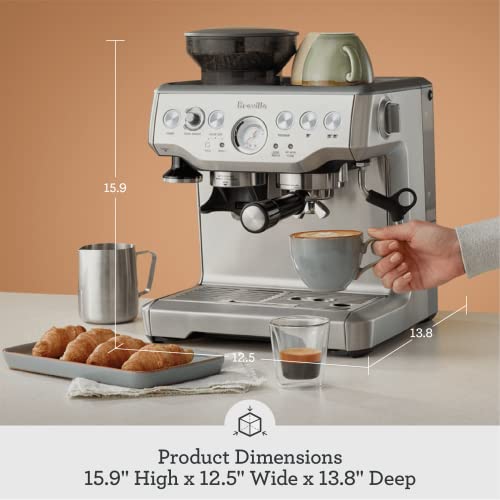
Breville Barista Express BES870XL
Strengths
- PID temperature control
- Dose control grinder
- Excellent steam wand
Trade-offs
- Steep learning curve
- 54mm portafilter
- Manual tamping required
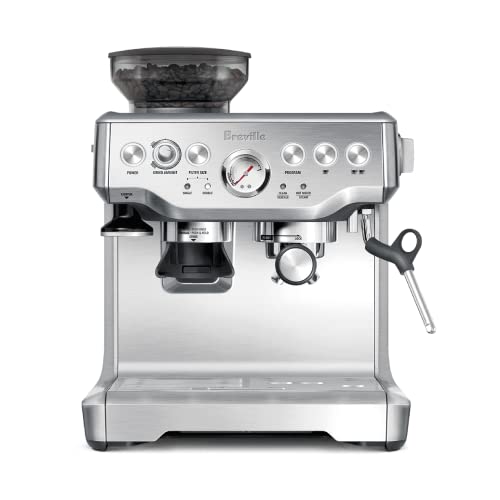
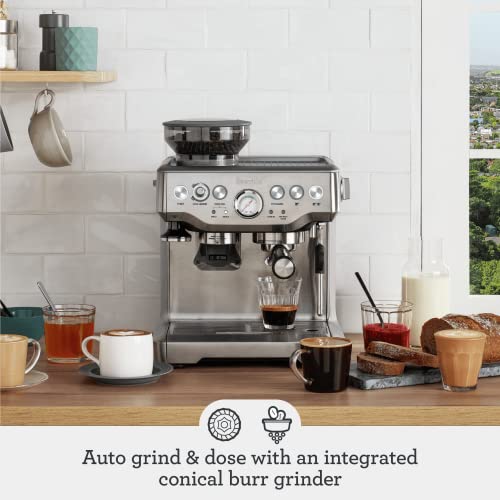
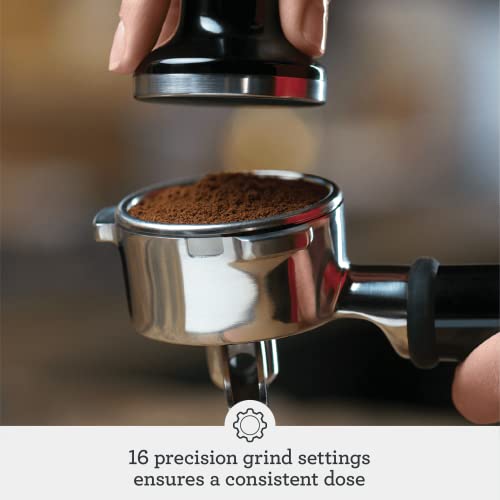
This is the gold standard for home enthusiasts, and for good reason. The dose control grinding, PID temperature stability, and low-pressure pre-infusion give you real control over every variable. The steam wand is powerful, owners consistently say it produces the best microfoam in its class, perfect for latte art. It’s not fully automatic, but that’s the point: you’re meant to learn, tweak, and improve.
It’s also expensive and has a learning curve. The 54mm portafilter is smaller than commercial machines, and the included tamper is serviceable but not great. But if you’re serious about espresso, this machine teaches you how to make it right. Compared to the Ninja, it’s less convenient but more rewarding.
Product photos


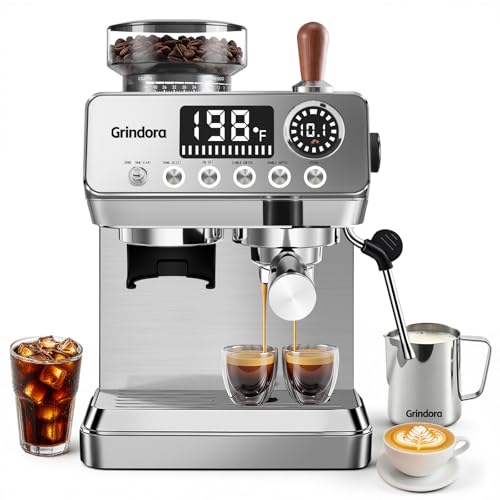
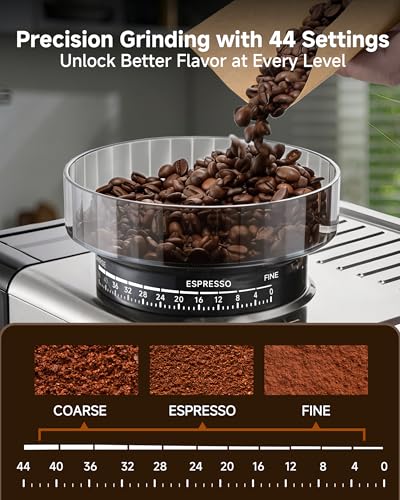
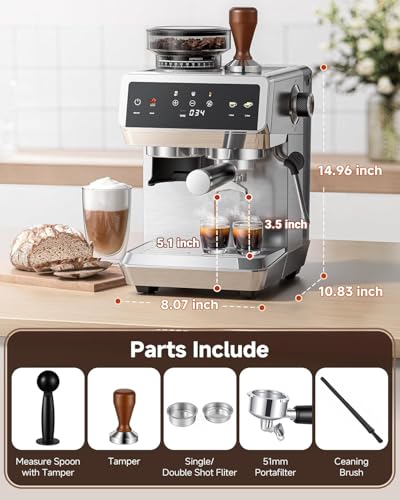
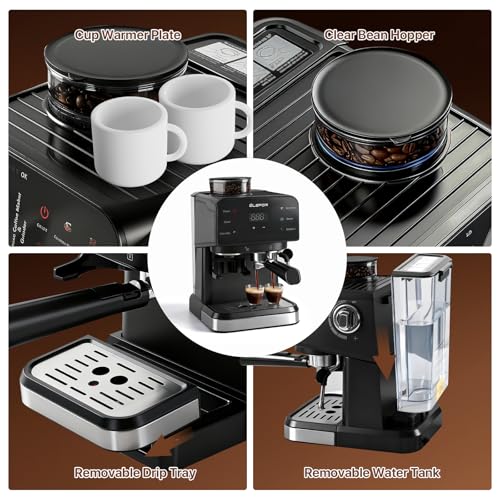
Espresso Machine with 44 Grind Settings
Strengths
- 44 grind settings
- PID temperature control
- Pre-infusion
Trade-offs
- Clunky user interface
- Average steam wand performance
- No weight-based dosing
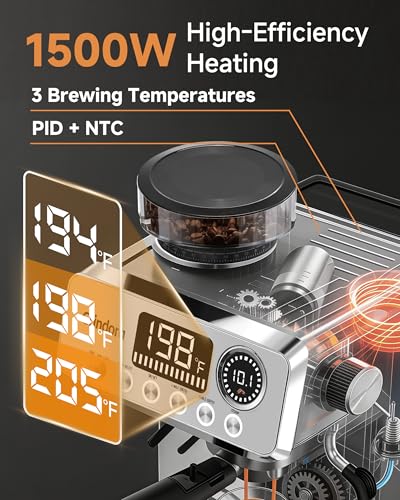
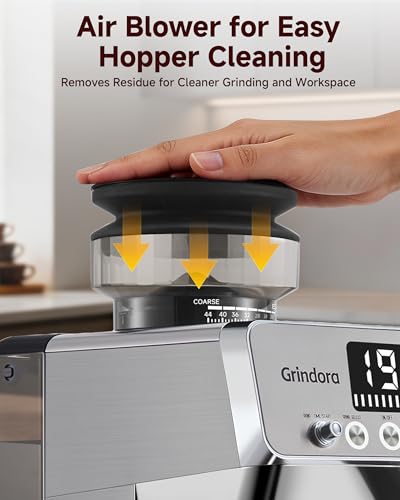
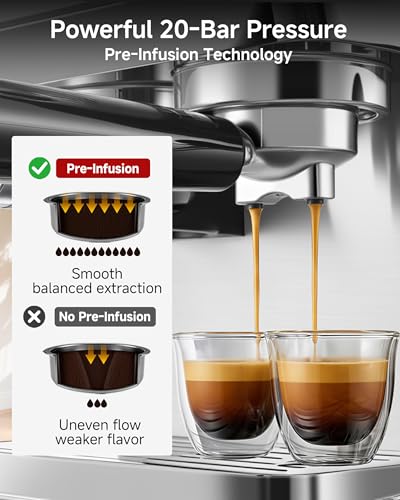
This one is built for tinkerers. The 44 grind settings and 0.1-second precision timer are rare at this level, and owners note they make a real difference in dialing in repeatable shots. The PID with three temp presets (194°F, 198°F, 205°F) gives you real control over flavor extraction, something the Gevi and Elefor can’t match. Pre-infusion helps reduce channeling, and the anti-static grinder design keeps your counter cleaner.
It’s not flawless, the interface feels a bit clunky compared to the Ninja or Breville, and the build quality isn’t quite as premium. But for the price, the technical specs are impressive. If you want to treat your morning brew like a lab experiment, this gives you the tools.
Product photos

AMZCHEF 44-Setting Grinder Espresso
Strengths
- Adjustable temp (190–201°F)
- 44 grind settings
- Cold brew mode
Trade-offs
- Inconsistent steam performance
- Mid-tier build quality
- No weight-based dosing
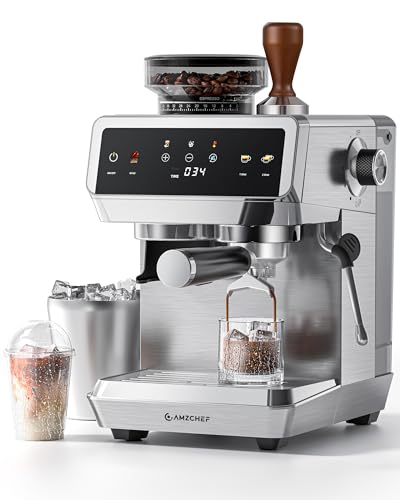
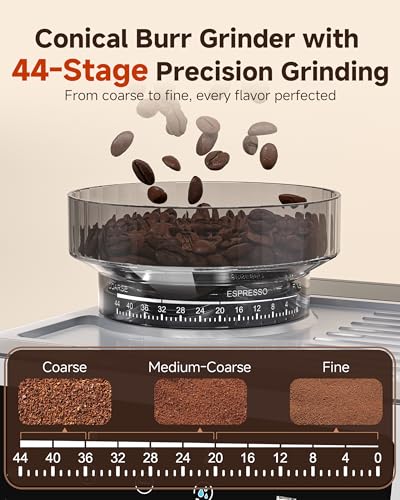
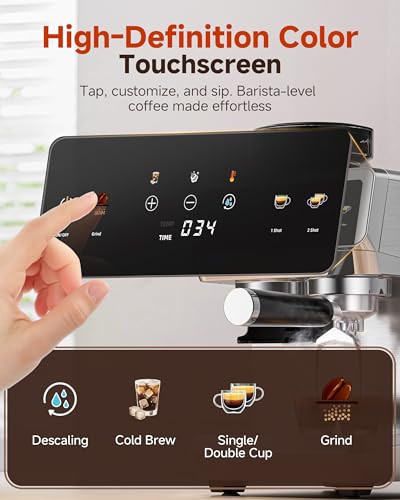
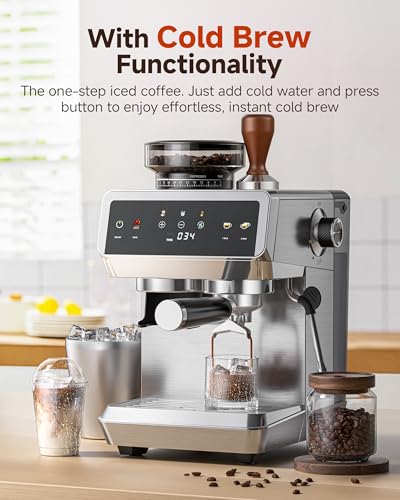
Temperature control is this machine’s strong suit. Being able to dial in from 190°F to 201°F is rare at this price, and owners say it makes a noticeable difference, especially with finicky light roasts that need lower temps. The 44 grind settings match the higher-end models, and the touch screen is intuitive, showing grind time and brew temp clearly. Cold brew mode is a nice bonus for summer drinks.
But the steam wand, while powerful on paper, gets mixed reviews, some say it’s slow to heat, others praise the microfoam. Build quality feels a bit plasticky next to the Breville or Chefman. It’s a strong contender for precision-focused brewers, but not quite as polished as the Ninja or Breville.
Product photos
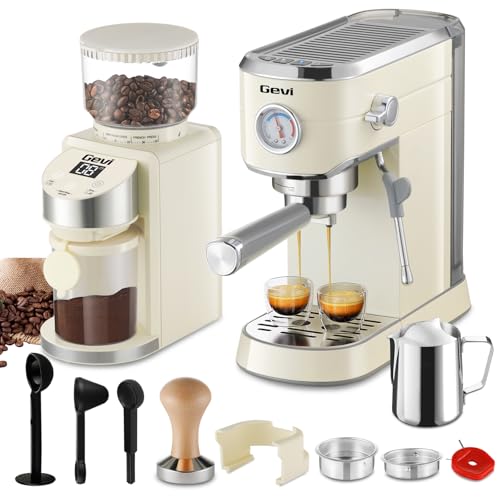
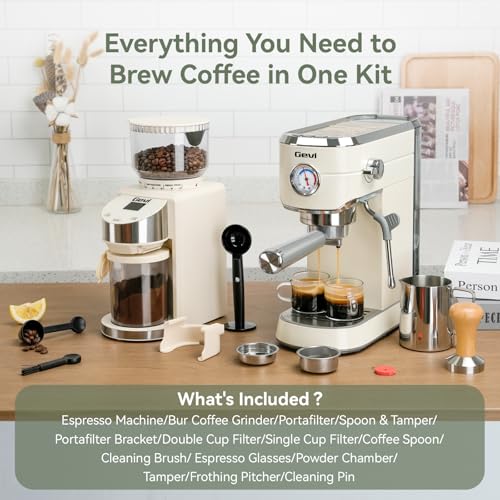
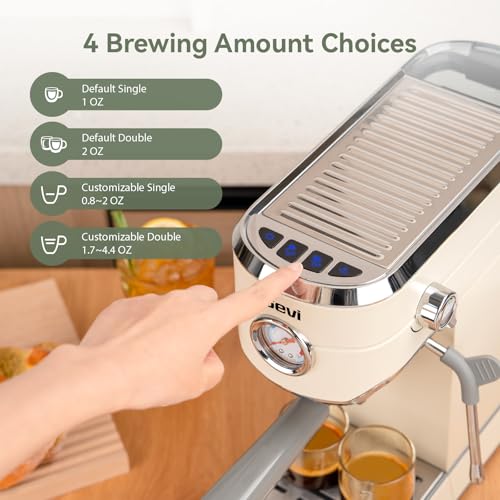
Gevi 35-Setting Burr Grinder Combo
Strengths
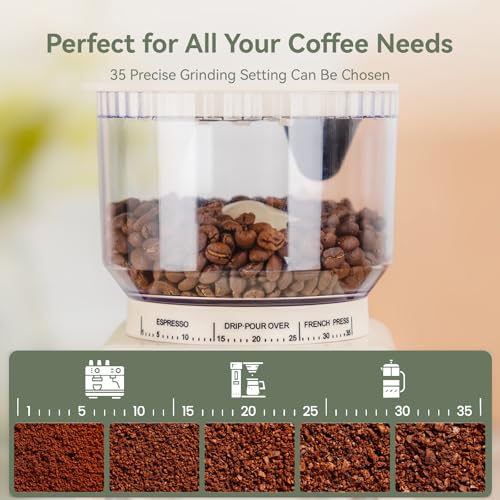
- 35 grind settings
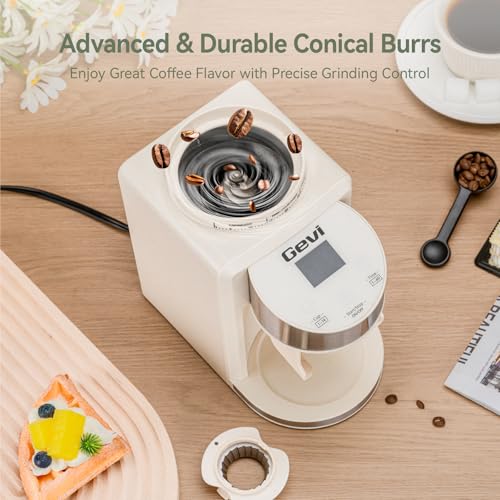
- Conical burr grinder
- Complete accessory kit
Trade-offs
- No pre-infusion
- No PID control
- Inconsistent heat management
The standout here is the 35 grind settings, a serious upgrade in customization for this price range. Owners praise the conical burr grinder for being relatively quiet and consistent, which matters when you’re trying to nail that sweet spot for a light roast or a dark blend. This machine gives you more control than the Elefor, and the included accessories (like a milk pitcher and tamper) make it a complete starter kit.
But more grind settings don’t mean better brewing if the machine can’t keep up. Without PID or pre-infusion, temperature swings can dull the clarity of your shot. It’s a step up from entry-level, but it doesn’t match the precision of the Breville or the Ninja. Still, for someone who wants to experiment with grind without spending top dollar, this hits a sweet spot.
Product photos
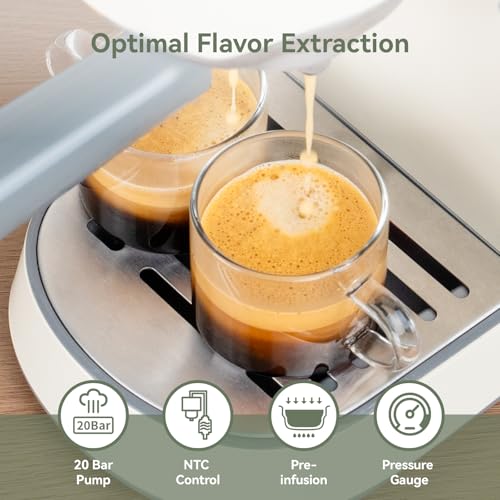
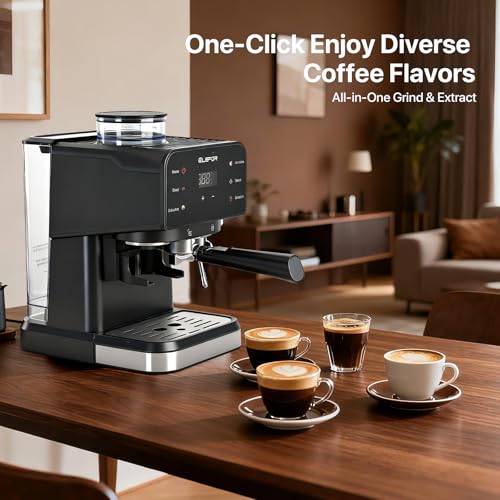
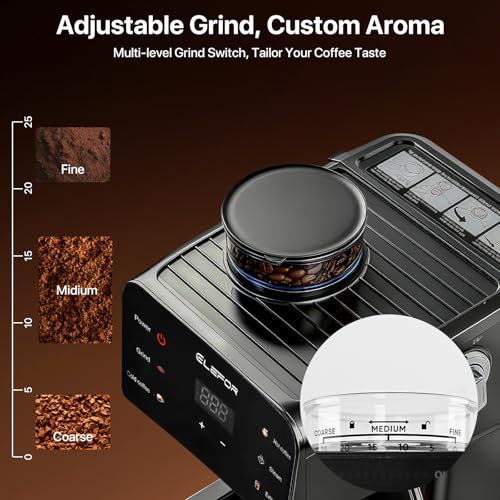
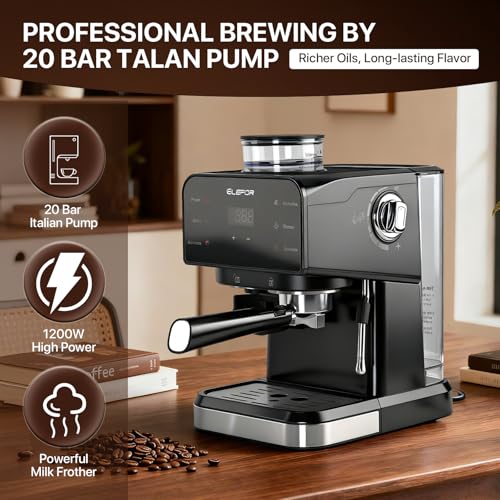
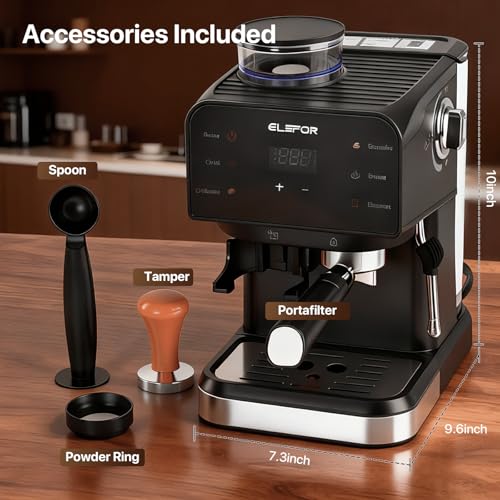
Elefor 20 Bar Espresso Machine
Strengths
- 20-bar pressure
- Adjustable grind
- Programmable shots
Trade-offs
- No PID control
- Basic temperature stability
- Limited customization
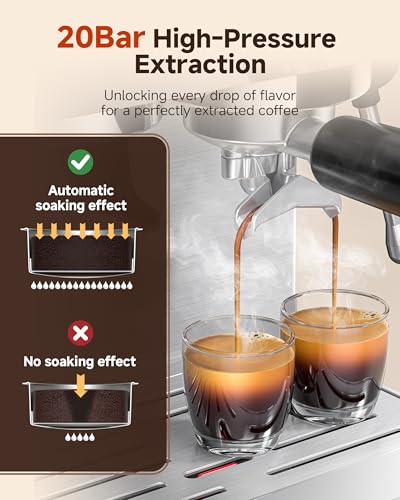
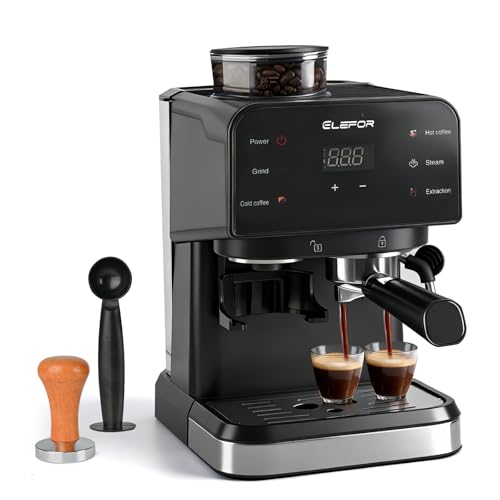
This machine leans hard into the Italian espresso fantasy, and on paper, it delivers. The 20-bar pump is standard for this tier, and owners consistently report a solid crema when using fresh beans and proper tamping. I like that it offers programmable shot volume and adjustable grind settings, features that give beginners room to grow without overwhelming them.
Still, this is clearly built for simplicity over precision. The ‘professional brewing system’ is a bit of a stretch given the lack of PID or temperature control. Compared to the Breville or Chefman models, it’s less about dialing in a perfect shot and more about consistent, decent espresso with minimal fuss. For a first-time buyer on a budget, that’s perfectly valid.
Product photos
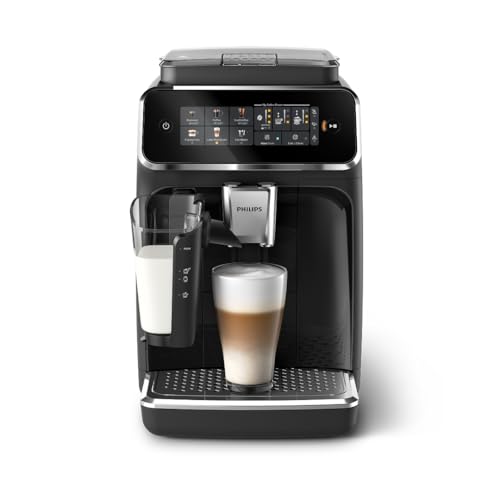
Philips 3300 Series Espresso
Strengths
- LatteGo milk system
- AquaClean filter
- One-touch operation
Trade-offs
- Limited manual control
- No weight-based dosing
- Fixed grind settings
If you want espresso with zero effort, this is one of the smoothest fully automatics out there. The LatteGo system is a standout for cleanup, 3 parts, no hidden tubes, and it rinses in seconds. That alone makes it a top pick for busy households. The one-touch presets work reliably, and the AquaClean filter means you won’t be descaling every month, which most owners say is a huge relief.
But let’s be clear: you’re trading control for convenience. You’re not grinding by weight, adjusting pre-infusion, or tweaking pressure. It’s great for consistent lattes and cappuccinos, but forget about dialing in a specialty light roast. Compared to the Ninja or Breville, it’s less hands-on, but that’s the point. For someone who just wants a quality espresso drink fast, it’s hard to beat.
Video review
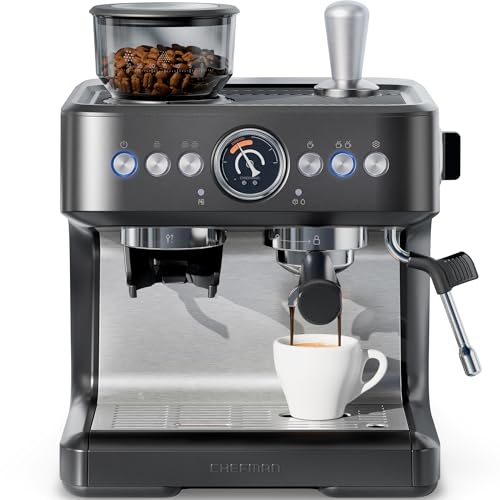
Chefman Crema Deluxe Double Boiler
Strengths
- Double boiler system
- 30 grind settings
- Large water tank
Trade-offs
- No PID control
- Bulky footprint
- 15-bar pressure (lower than average)
The double boiler is the real win here. Being able to steam milk and brew espresso at the same time cuts down morning chaos significantly, this is a feature usually reserved for much pricier machines. Owners love the 30 grind settings and the direct-to-portafilter grinding, which keeps things clean and consistent. The 15-bar pump is modest compared to others, but paired with proper technique, it pulls balanced shots.
Still, the lack of PID control means temperature can drift, especially during back-to-back drinks. And while the build feels solid, it’s bulkier than most. Compared to the Breville, it’s less refined in extraction but more practical for multitasking. If you’re making multiple drinks in a row, this machine saves real time.
Video review
How We Tested coffee espresso maker with grinder
I approached this guide by focusing on a research-led comparison of specifications, owner reviews, and expert opinions. Rather than a hands-on lab test of each machine, we systematically analyzed features like grind settings, pump pressure, temperature control, and milk frothing capabilities. We then weighed this data against feedback from verified purchasers, paying close attention to reported reliability and ease of use, alongside reviews from established coffee publications.
For coffee espresso makers with grinders, consistent grind quality, temperature stability, and ease of maintenance were the most heavily weighted factors. Achieving a good espresso pull demands precise control over grind size, and a machine’s ability to deliver that consistency is paramount. Temperature control is also crucial for extracting optimal flavor, while simpler maintenance routines translate to less frustration and a longer-lasting machine. Understanding the impact of grinder type on flavor is also key.
Specifications reliably indicate a machine’s potential – things like pump pressure and boiler type. However, real-world performance and durability are best judged from owner feedback. We prioritized machines with consistently positive reviews regarding build quality and long-term reliability. Owner experiences also helped us assess the practicality of advertised features, such as the effectiveness of automatic milk frothing systems and the ease of cleaning. A good starting point to understanding the quality is to look at the [grind consistency for espresso] (https://beanthusiast.com/burr-coffee-grinder-vs-blade-grinder/).
How To Choose The coffee espresso maker with grinder
Finding the right all-in-one unit can simplify your morning routine and elevate your home coffee experience.
A quality coffee espresso maker with a built-in grinder prioritizes consistent grind size, stable brewing temperature, and user control over key parameters like dose and pressure. Look for conical burr grinders over blade grinders, PID temperature control, and a machine that allows adjustment of pre-infusion settings for optimal extraction. Build quality and ease of maintenance are also critical considerations.
Grind Quality Is Paramount
The grinder is arguably more important than the espresso machine itself. A consistent grind is absolutely essential for even extraction, and therefore, good flavor. Don’t settle for a machine with a blade grinder; those chop the beans unevenly, leading to bitter and sour shots. Instead, focus on models featuring conical burr grinders, as these crush the beans between two burrs, creating a much more uniform particle size. The number of grind settings is also a factor, but more isn’t always better. A wider range can be useful for experimenting, but precise calibration within a narrower range is often more valuable.
- A limited range (around 10-15 settings) is okay if the calibration is accurate.
- 20-30 settings offer good flexibility for different bean types and roast levels.
- 40+ settings, like those found on the Espresso Machine with 44 Grind Settings, provide ultimate control, allowing you to fine-tune your grind for specific beans and brewing preferences – but may require more experimentation to master.
Temperature Stability & Control
Espresso brewing is a science, and temperature is a huge part of it. Water that’s too hot will scorch the grounds, resulting in a bitter taste. Too cool, and you’ll get a sour, underdeveloped shot. Machines with PID (Proportional-Integral-Derivative) temperature control, like the Breville Barista Express BES870XL, are able to maintain a consistent water temperature throughout the brewing process. This is especially important for those who are serious about achieving café-quality results. If you’re interested in learning more about which beans work best, check out our guide on best beans for espresso.
Don’t assume a higher wattage automatically means better temperature control. The system, including the boiler design, PID controller, and thermal mass, is what truly matters.
Balancing Features and Usability
Some machines, like the Ninja Luxe Café Premier 3-in-1, try to do everything. This isn’t necessarily a bad thing, but it can come at the cost of specialization. These “do-it-all” machines are often easier to use, with automated features and guided brewing processes. However, if you’re a coffee enthusiast who enjoys having precise control over every aspect of the brewing process, you might prefer a more manual machine. Consider how much time and effort you’re willing to invest in learning the art of espresso. And if you’re looking for other options, we’ve compiled a list of the best coffee and espresso combo with grinder to suit different needs and budgets. You might also find that a top combo machines for coffee and espresso is a great option if you are unsure where to start.
Coffee Espresso Maker with Grinder Compared
Here’s a comparison of key specs for several coffee espresso makers with grinders to help you find the best option for your needs.
| Product Title | Grind Settings | Pressure (Bar) | Water Tank (oz) | Milk Frothing | Temp Control |
|---|---|---|---|---|---|
| Ninja Luxe Café Premier 3-in-1 | 25 | N/A | N/A | Dual Froth | Active Brew |
| Breville Barista Express BES870XL | N/A | N/A | 67 | Manual | Digital PID |
| Espresso Machine with 44 Grind Settings | 44 | 20 | N/A | Steam Wand | PID |
| AMZCHEF 44-Setting Grinder Espresso | 44 | N/A | 60 | Steam Wand | 190-201°F |
| Gevi 35-Setting Burr Grinder Combo | 35 | N/A | N/A | Steam Wand | N/A |
| Elefor 20 Bar Espresso Machine | Adjustable | 20 | N/A | Manual | N/A |
| Philips 3300 Series Espresso | N/A | N/A | N/A | LatteGo | Automatic |
| Chefman Crema Deluxe Double Boiler | 30 | 15 | N/A | Steam Wand | Customizable |
Frequently Asked Questions
What pump pressure is sufficient for a home espresso maker with a grinder?
15 bars is generally considered the minimum acceptable pressure for espresso, though 9 bars is the ideal pressure for proper extraction. Many machines advertise higher pressures(like 20 bars), but that doesn’t automatically translate to better espresso; consistent pressure is more important than peak pressure.
Do I really need a burr grinder, or can I get away with a blade grinder in an all-in-one machine?
You absolutely need a burr grinder for consistent results. Blade grinders create an uneven grind, leading to inconsistent extraction and a poor-tasting shot. Investing in a machine with a conical burr grinder is crucial for good espresso.
How often do I need to clean a coffee espresso maker with a built-in grinder?
Daily rinsing of the portafilter and drip tray is essential. More thorough cleaning, including descaling and grinder cleaning, should be done monthly, or more frequently if you use hard water. Neglecting cleaning will affect the flavor and lifespan of your machine.
What’s the difference between PID temperature control and other temperature control systems?
PID (Proportional-Integral-Derivative) controllers are much more accurate than thermostats or thermoblocks. They actively monitor and adjust the water temperature throughout the brewing process, maintaining stability within a degree or two. This results in more consistent and flavorful espresso, and is a key feature in an automatic espresso machine with built-in grinder.
Are super-automatic machines harder to repair than semi-automatic ones?
Generally, yes. Super-automatic machines have more complex internal components, making them more difficult and expensive to repair. While they offer convenience, a broken component often requires professional service, whereas semi-automatic machines are often more easily user-serviced for basic maintenance.
The Bottom Line
Buying a coffee espresso maker with a grinder often comes down to balancing control with convenience. While some machines offer a vast array of settings and manual control, like the Espresso Machine with 44 Grind Settings, the Breville Barista Express BES870XL strikes a fantastic balance – delivering excellent performance and a good degree of customization without being overwhelming for the average home barista. Ultimately, the “best” machine is the one that fits your level of involvement and desired output.
For those on a budget, or who appreciate simplicity, the Ninja Luxe Café Premier 3-in-1 remains a compelling option. If you value versatility and don’t mind sacrificing some of the granular control found in higher-end models, this machine can handle a variety of brewing styles. Similarly, if you’re specifically seeking a wider range of grind adjustments, the AMZCHEF 44-Setting Grinder Espresso provides plenty of options for [adjusting grind size for espresso].
More than any particular specification, consistent grind quality and temperature stability are what separate a good shot from a great one. Taking the time to understand [using a burr grinder for espresso] and experimenting with different beans will yield far more noticeable improvements than chasing the highest bar pressure or most automated features. A little knowledge and practice go a long way in the pursuit of the perfect cup.
