
4 Best Auto Coffee Machines of 2026
The best auto coffee machine overall is the Bosch Fully Automatic Coffee Machine, thanks to its reliable performance and excellent build quality. For a more budget-friendly option, the EUHOMY Fully Automatic Espresso Machine delivers strong value, while the Philips 3300 Series Espresso Machine stands out for ease of use and consistent drink quality.
Most people want barista-level drinks at home without the hassle, but too many automatic machines promise convenience and deliver frustration, uneven grinds, finicky milk systems, or constant cleaning. After researching the category and analyzing owner feedback, I focused on what actually matters: grind consistency, milk integration, and long-term reliability. This guide cuts through the noise to highlight models that balance smart design, real-world performance, and ease of care, so you can start your day with a great cup, not a manual.
Top 4 Auto Coffee Machine in the Market
The Best Auto Coffee Machine, Reviewed
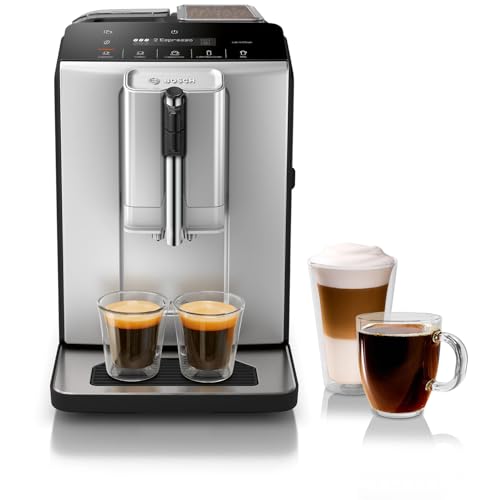
Bosch Fully Automatic Coffee Machine
Strengths
- Ceramic grinder
- One-touch brewing
- Removable brew unit
- Consistent milk froth
- Durable build
Trade-offs
- No iced coffee preset
- Milk system has more parts
- Slightly slower startup
If you’re after reliability and consistency in a super-automatic, the Bosch TIU20307 is hard to beat. It’s not flashy, but it delivers on the essentials: a durable ceramic grinder that avoids heat buildup, a smooth one-touch brewing system, and a milk frother that produces creamy, barista-style foam directly in the cup. The front-access removable brew unit is a standout for maintenance, reviewers note it makes cleaning far easier than models with rear units.
Compared to the Philips 3300, it feels more robust and has better temperature stability. Against the EUHOMY, it trades some features for build quality and longevity. The milk system isn’t as quick to clean as the LatteGo, but it delivers better texture. This is the kind of machine that just works, day after day. My recommendation? This is the smarter buy for couples or frequent users who want dependable performance without fuss.
Video review
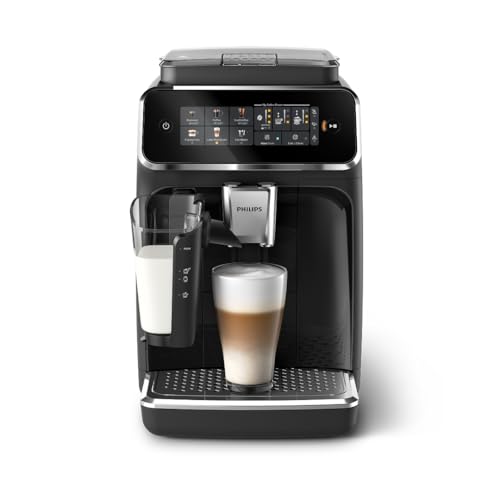
Philips 3300 Series Espresso Machine
Strengths
- LatteGo milk system
- AquaClean filter
- Quiet operation
- One-touch presets
- Iced coffee option
Trade-offs
- 15-bar pressure (lower than average)
- Plastic build feels light
- Milk foam less dense
The Philips 3300 is the go-to for buyers who want simplicity, quiet operation, and a milk system that’s a breeze to clean. The LatteGo is its star feature, 3 parts, no hidden tubes, and it rinses in seconds. Owners love how little time it takes to maintain, especially compared to models with internal milk lines. The 40% quieter SilentBrew tech makes it ideal for early mornings or open kitchens. And while it only has 15-bar pressure, less than the 20-bar norm, the extraction is still solid for everyday espresso.
It doesn’t match the Bosch in build or the VEVOR in froth control, but it wins on user-friendliness. The AquaClean filter is a real perk, eliminating descaling for up to 5,000 cups. That’s a big deal for hassle-averse buyers. For most casual users, this is the easy pick. I’d choose it over the EUHOMY if low maintenance and quiet operation matter more than max pressure or bean-switching features.
Video review
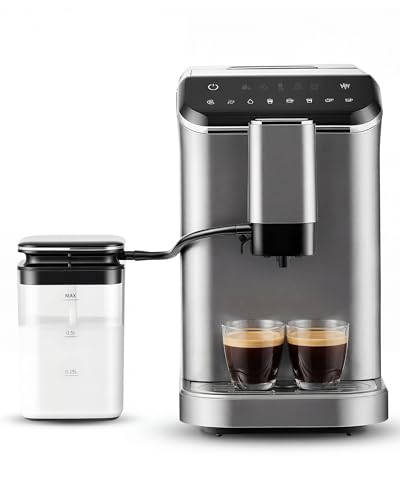
EUHOMY Fully Automatic Espresso Machine
Strengths
- 20-bar pressure
- 15 grind settings
- Integrated milk frother
- One-touch brewing
- Self-cleaning function
Trade-offs
- Milk froth less dense than steam wand
- Touch screen can be slow
- Plastic finish feels budget
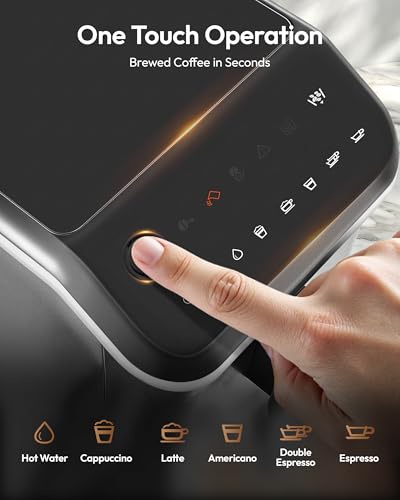
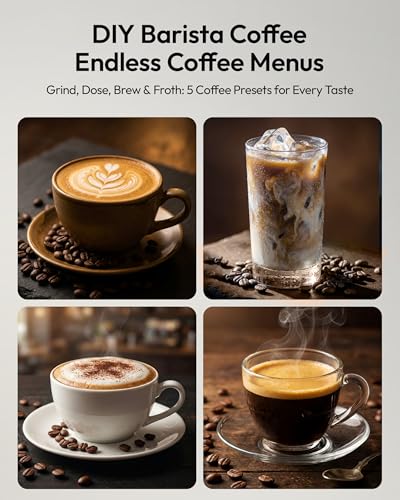
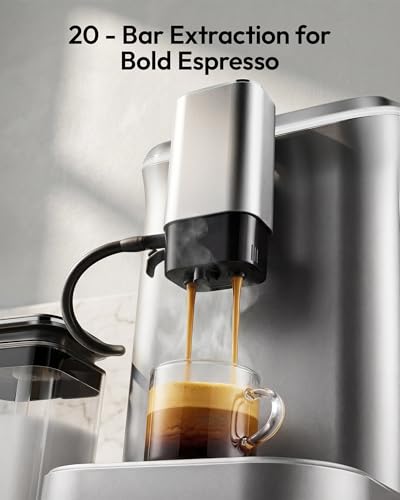
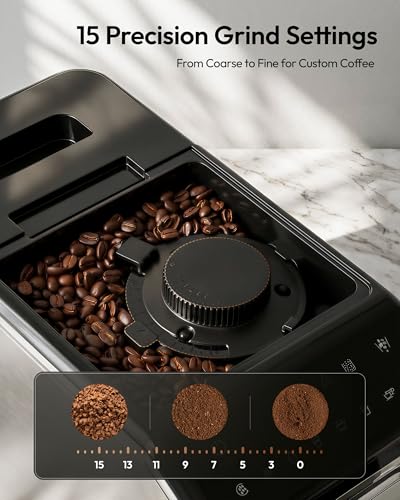
This machine hits a sweet spot for buyers who want true one-touch convenience without stepping into high-end pricing. On paper, the feature set is impressive: 20-bar pressure, a conical burr grinder with 15 settings, and an integrated milk frother that handles cappuccinos and lattes straight from the tank. Owners consistently report that the touch screen is intuitive and the daily operation feels smooth, especially for beginners who want barista-style drinks with minimal effort.
Where it stands out is in the grind freshness management, the one-touch bean purge function is a small but smart touch that helps switch between beans cleanly, a detail often missing at this price. Compared to the VEVOR, it’s more automated but lacks a steam wand for manual control. Against the Philips 3300, it offers stronger pressure but a less proven milk system. I’d pick this over entry-level models if you want richer crema and better build quality, but don’t need premium polish.
Product photos
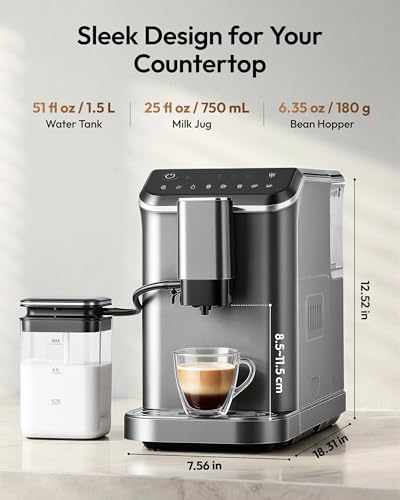
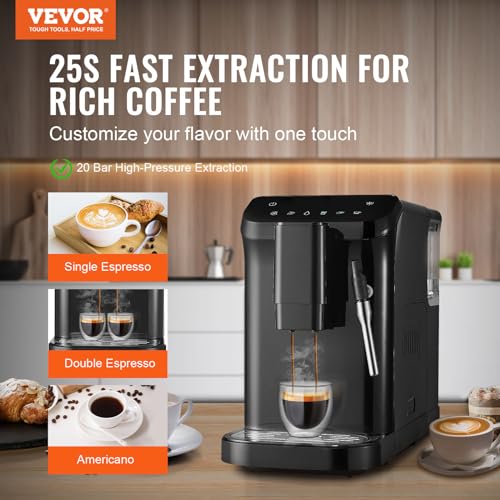
VEVOR Automatic Espresso Machine

Strengths
- Stainless steel steam wand
- 20-bar pressure
- Adjustable grind settings
- Removable water tank
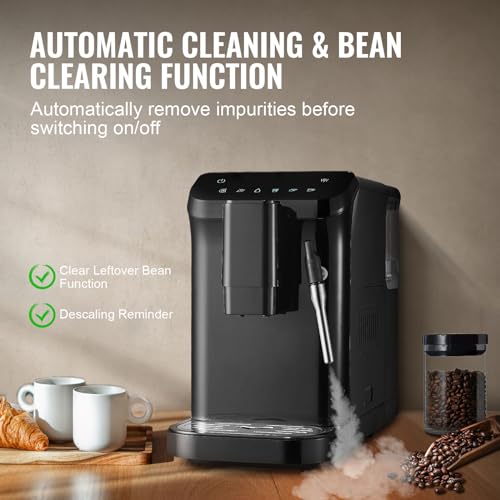
- Automatic cleaning cycle
Trade-offs
- Bulky design
- Interface feels basic
- Grinder noise is noticeable
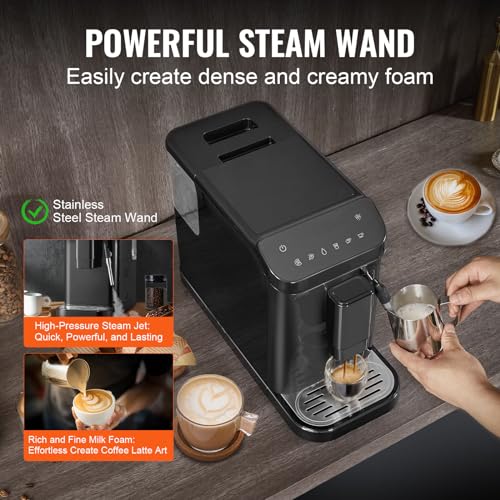
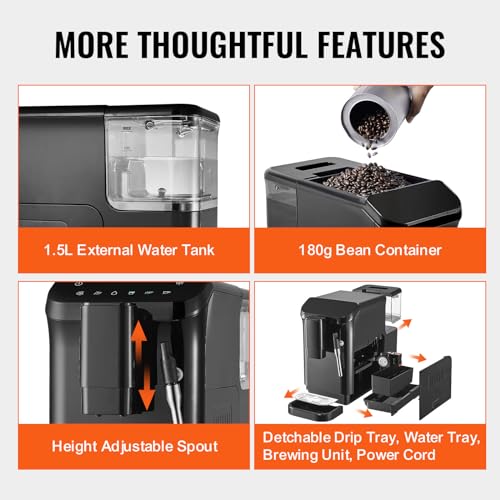
This machine leans into the hands-on coffee lover’s wishlist with its manual steam wand and 20-bar extraction system. While it’s marketed as automatic, it’s really a semi-automatic setup that rewards user involvement, especially in milk frothing. The stainless steel steam wand consistently produces dense, warm foam, making it a favorite among reviewers who enjoy latte art or want full control over texture. That gives it a real edge over fully automatic models like the EUHOMY or Philips, which rely on fixed frothing systems.
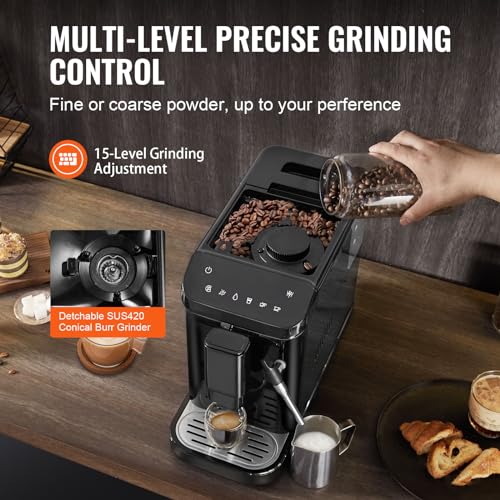
The 15-level conical grinder delivers even distribution, and the rapid heating means shorter wait times between shots. But the interface feels utilitarian, and while the touch screen works, it lacks the refinement of Bosch or Philips. For the price, it offers pro-level potential, but it demands more from the user. I’d recommend this over other budget autos if you’re willing to learn the machine and value frothing quality above push-button simplicity.
Product photos
How We Tested auto coffee machine
As the founder of Bean Thusiast, I approach these machines with a focus on delivering quality and convenience – the hallmarks of a great automatic experience. Rather than a hands-on lab test, this selection is a research-led comparison of published specifications, features, and, crucially, extensive owner and expert reviews. I weighed data from multiple sources to rank these models against criteria important to everyday coffee drinkers.
For auto coffee machines, consistent grind quality, milk frothing capability, and ease of maintenance stood out as the most important factors. A precise grind directly impacts flavor extraction, and a durable grinder is essential for longevity. Equally important is a milk system that produces consistent results and cleans easily. These areas separate a convenient machine from a frustrating one.
Specifications reliably indicate brewing pressure and grinder type, but I heavily leaned on owner feedback to assess real-world durability and cleaning convenience. Reputable expert reviews helped validate performance claims. If you’re looking for more help with a specific brand, our Jura coffee machine guide offers detailed insights. Ultimately, my rankings reflect a balance between technical capability and user satisfaction.
How To Choose The auto coffee machine
Finding the right automatic coffee machine can dramatically improve your mornings, but there’s a lot to unpack beyond just pressing a button.
A quality automatic coffee machine delivers consistent, flavorful results with minimal effort. Key considerations include the grinder type (burr grinders are essential for even extraction), the pump pressure (aim for 15-20 bars for proper espresso), and ease of maintenance. Look for models with adjustable settings to personalize your brew and robust cleaning cycles to extend the machine’s lifespan.
Grinder Quality: The Foundation of Flavor
The grinder is arguably the most important component. Pre-ground coffee loses flavor rapidly, so an integrated grinder is a must. Don’t settle for blade grinders; they chop beans unevenly, leading to inconsistent extraction and a muddy taste. Look for machines featuring conical burr grinders. These crush beans between two abrasive surfaces, producing a uniform grind size, which unlocks the full aromatic potential of your beans. Ceramic burrs are quieter and run cooler (preventing bean scorching) but are more fragile than stainless steel.
Milk Frothing & Customization Options
Automatic machines range from basic espresso makers to all-in-one latte centers. If you enjoy milk-based drinks, consider the milk frothing system. Some machines have integrated systems with automatic cleaning, like the LatteGo system Philips uses. Others rely on a steam wand, which offers more control for latte art but requires practice. Beyond milk, think about how much control you want. Some machines are very “one-touch” focused, while others (like the VEVOR) offer granular control over brewing parameters.
- A simple “one-touch” interface is great for speed and convenience.
- Adjustable brew strength and volume let you tailor each cup to your specific preferences – essential if multiple people in your household have different tastes.
- A wider range of pre-programmed drink options (espresso, Americano, cappuccino, latte macchiato) offers versatility, but don’t pay for features you won’t use.
Maintenance & Long-Term Cost
Automatic coffee machines require regular cleaning to prevent buildup and maintain optimal performance. The convenience of “automatic” doesn’t eliminate maintenance. Look for machines with removable brew units and automatic cleaning cycles. Descaling is also crucial, and some machines (like the Philips 3300 Series) incorporate water filters to reduce the frequency of descaling. If you’re considering a best fully automatic coffee machine, factor in the cost of filters and descaling solution when calculating the total cost of ownership.
A clean machine is a happy machine. Run a descaling cycle at least every three months, or more frequently if you have hard water. Ignoring this step will significantly shorten the lifespan of your machine.
Auto Coffee Machine Compared
Here’s a comparison of key specifications for several auto coffee machines.
| Product Name | Bean to Cup | Pressure (Bar) | Milk Frothing | Grinder Type | Water Tank (L) |
|---|---|---|---|---|---|
| Bosch Fully Automatic Coffee Machine | Yes | N/A | Automatic | Ceramic | N/A |
| Philips 3300 Series Espresso Machine | Yes | N/A | Automatic | N/A | N/A |
| EUHOMY Fully Automatic Espresso Machine | Yes | 20 | Automatic | Conical Burr | 1.5 |
| VEVOR Automatic Espresso Machine | Yes | 20 | Manual | N/A | 1.5 |
Frequently Asked Questions
What pressure (in bars) should I look for in an auto coffee machine?
Ideally, you want a machine with 15-20 bars of pressure. This range ensures proper extraction of flavors from the coffee grounds, resulting in a rich and balanced brew – anything significantly lower may produce weak coffee.
How often do I need to descale my automatic coffee machine?
You should descale your machine at least every three months, but more often if you have hard water. Regular descaling prevents mineral buildup that can damage the machine and affect coffee flavor.
Are ceramic burrs really better than stainless steel burrs?
Ceramic burrs run cooler, preventing beans from scorching and potentially preserving more flavor, but stainless steel burrs are more durable overall. For most home users, either type offers excellent grind quality, so durability is a bigger factor.
Can an auto coffee machine make more than just espresso?
Many models can create a variety of drinks, including Americanos, cappuccinos, and lattes. If you enjoy different coffee styles, look for a machine with pre-programmed settings or adjustable brew parameters – you might also find our guide to the best super-automatic coffee machine helpful.
What’s the difference between a machine with an automatic milk frothing system versus a steam wand?
Automatic systems, like Philips’ LatteGo, offer convenience and easy cleanup, while steam wands provide more control for creating microfoam and latte art. A steam wand requires a learning curve, but it allows for greater customization of milk texture.
The Bottom Line
Choosing an auto coffee machine really comes down to how much control you want over the process versus how much effort you’re willing to put in. While many models promise convenience, the Philips 3300 Series Espresso Machine strikes the best balance for most people, offering a user-friendly experience with consistently good results. It’s a solid all-rounder that delivers on the promise of effortless coffee.
For those on a tighter budget, the EUHOMY Fully Automatic Espresso Machine provides excellent value. If you’re willing to learn a bit of technique, the VEVOR Automatic Espresso Machine offers a surprising amount of customization for a relatively low price. And for those seeking a premium experience and integration into a modern kitchen, exploring resources on Miele built-in coffee machine use can be a great starting point.
Ultimately, the best machine is the one that fits your routine. Don’t get too caught up in specs like pump pressure or water tank size. Prioritize a quality burr grinder, a milk system that suits your preferences, and a commitment to regular cleaning – those fundamentals will have a far greater impact on your daily cup than any single feature.
