
2 Best At Home Coffee Brewers of 2026
The BUNN BX Speed Brew stands out as the best overall at-home coffee brewer for its unmatched speed and consistent extraction. For those on a budget, the Presto Dorothy delivers excellent cold brew performance without the high price. I focused on models that balance reliability, brewing quality, and real-world usability.
Most people don’t realize how much a subpar brewer can ruin even the best beans. A machine that brews too slowly or can’t maintain proper temperature undermines your entire coffee routine.
This guide cuts through the noise by comparing specs, owner feedback, and brewing performance across key factors like speed, temperature control, and ease of use. I looked at what actually matters in daily use, not just the features on the box.
Top 2 At Home Coffee Brewer in the Market
The Best At Home Coffee Brewer, Reviewed
BUNN BX Speed Brew 10-Cup Coffee Brewer

Strengths
- Fast brewing
- Stainless steel tank
- Drip-free carafe
- Even extraction
- Made in USA
Trade-offs
- Larger footprint
- No programmable timer
- Glass carafe can chip
The BUNN BX Speed Brew stands out in a category too often dominated by slow, under-engineered machines. What makes it different is that stainless steel hot water tank, it keeps 70 ounces at 200°F, ready to brew instantly. That’s why it can pour a full 10-cup carafe in about 4 minutes, roughly twice as fast as most drip machines. On paper, this is closer to commercial brewing than typical home gear, and owners consistently report a richer, more consistent cup because of the even, multi-stream sprayhead.
It’s not just speed, though. The drip-free carafe is a small win that adds up over time, a clean pour with no dribbling is rare in this class. The build feels solid, backed by a 3-year warranty and US assembly, which still means something in an era of disposable appliances. Compared to budget models like Mr. Coffee or even mid-tier Cuisinart units, the BUNN delivers café-level performance with minimal fuss. I’d pick this over most for anyone who values a hot, full pot fast, without sacrificing flavor.
Video review
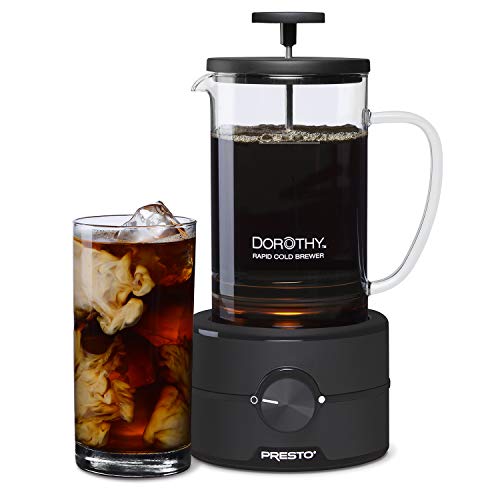
Presto Dorothy Electric Rapid Cold Brewer
Strengths
- Brews in 15 minutes
- Simple operation
- Compact size
Trade-offs
- Plastic build
- Less flavor depth
- Limited capacity
Cold brew in 15 minutes? That sounds like a gimmick, but the Presto Dorothy pulls it off using a proprietary cold filtration system that extracts flavor fast without heat. It’s not traditional steeping, but reviewers confirm it delivers a smooth, low-acid concentrate comparable to 12-hour batches, just without the wait. For home users tired of planning cold brew a day ahead, this is a legit shortcut.
Still, it’s not for purists. The flavor lacks the depth some get from slow immersion brewing, and the plastic construction feels lightweight next to glass or stainless alternatives. Compared to making cold brew in a French press or a dedicated jar system, the Dorothy is convenient but less flexible, you’re locked into its design and cleaning routine. I’d recommend it only if speed is your top priority and you drink cold brew daily. For occasional users, a simple mason jar setup still makes more sense.
Video review
How We Chose These at home coffee brewer
I approached this guide by researching the specifications and features of numerous at-home coffee brewers. Rather than a hands-on lab test, this is a research-led comparison of published details and, crucially, what current owners are saying. I weighed owner reviews from multiple sources alongside assessments from respected coffee publications to build a clear picture of real-world performance and reliability.
For at-home brewers, speed and consistency were my primary concerns. A brewer can have all the features in the world, but if it takes forever or delivers unevenly extracted coffee, it falls short. Durability is also key; I prioritized models with strong build quality and positive long-term owner reports. Understanding home coffee essentials is vital for maximizing any brewer’s potential.
Specifications reliably indicate brewing capacity, tank material, and warming plate features. However, owner feedback provides insight into real-world brewing speed, ease of cleaning, and long-term reliability – things specs often don’t cover. Reputation matters, too. I factored in brand history and customer service reports to assess overall value. If you’re interested in a more hands-on approach, explore a pour-over method guide.
What To Look For In at home coffee brewer
Finding the right coffee brewer can genuinely elevate your mornings. It’s not just about making coffee; it’s about consistently making good coffee, with minimal fuss.
A quality coffee brewer consistently delivers hot water at the correct temperature (195-205°F) and distributes it evenly over coffee grounds. Look for models with consistent temperature control, durable construction (stainless steel is preferred for internal components), and a brewing cycle that matches your desired volume and speed. Programmability and ease of cleaning are also key considerations.
Brew Speed & Capacity
I often hear from people wanting coffee now, and brew time is a major factor. For many, a slow drip is relaxing, but on busy weekdays, speed is essential. Models like the BUNN BX Speed Brew are designed for rapid brewing – genuinely fast, not just marketed that way. Consider your household’s needs. A single-cup brewer is fine for one person, but a 10-cup model is better for a family or frequent entertaining. Don’t automatically assume “bigger is better” though; smaller carafes mean fresher coffee if you don’t drink a full pot.
Temperature Control & Extraction
Consistent water temperature is essential for good extraction. Many cheaper brewers struggle to maintain the ideal 195-205°F range, resulting in weak or bitter coffee. Look for brewers with a thermal carafe rather than a warming plate; warming plates degrade the coffee’s flavor over time. The sprayhead design also matters. A multi-stream sprayhead, like those found in commercial brewers, ensures even saturation of the grounds, leading to a more balanced flavor profile.
Here’s what I’ve seen consistently make a difference: * A stainless steel heating element is more durable. * A temperature sensor is crucial for consistent brewing. * A pre-infusion cycle (wetting the grounds before brewing) promotes better degassing and extraction, especially with darker roasts.
A consistent brewing temperature of between 195-205°F is the single most important factor in achieving a quality cup of coffee. Don’t settle for less.
Brewing Method & Usability
Beyond the basic drip, explore different brewing methods and find what fits your lifestyle. While automatic drip brewers are convenient, cold brew methods, like those offered by the Presto Dorothy, provide a very different, smoother flavor profile. Don’t overlook the importance of ease of cleaning. Removable parts and dishwasher-safe components will save you valuable time. Understanding the drip coffee ratio is also key, and many brewers now offer adjustable strength settings to help you dial in your perfect cup. I always recommend reading through home coffee brewing equipment reviews before making a decision.
At Home Coffee Brewer Compared
Here’s a detailed specification comparison of the coffee brewers to help you make an informed decision.
| Product | Capacity | Brew Time (Full Carafe) | Water Tank | Special Features | Warranty |
|---|---|---|---|---|---|
| BUNN BX Speed Brew | 50oz | 4 min | 70oz | Drip-free carafe, Fast brew | 3 years |
| Presto Dorothy | N/A | N/A | N/A | Rapid cold brew | N/A |
Frequently Asked Questions
What water filter is best for coffee brewers?
Activated carbon filters are generally best for coffee brewers, as they effectively remove chlorine and other impurities that can negatively impact flavor. While many brewers include their own filters, you can often upgrade to a higher-quality replacement for noticeable improvements in taste, and some owners report better results with Brita Standard filters.
Are stainless steel carafes really better than glass?
Yes, stainless steel carafes maintain coffee temperature much longer than glass and won’t crack from thermal shock. Although glass carafes allow you to see the coffee level, the flavor degradation from a hot plate is a significant drawback; a thermal carafe is almost always the better choice for flavor preservation.
How often should I clean a coffee brewer?
You should thoroughly clean your coffee brewer at least once a month, and ideally every two weeks, to remove mineral buildup and coffee oils. Running a cleaning cycle with a descaling solution (vinegar works in a pinch, but dedicated descalers are gentler) is essential, and many models have a built-in cleaning program.
What’s the difference between a single-serve and a full pot brewer?
A single-serve brewer is ideal for individuals or households with varying coffee preferences, brewing one cup at a time. Full-pot brewers are more efficient for multiple drinkers, but can lead to wasted coffee if a full carafe isn’t consumed, so consider your typical consumption patterns. You can find more options in our guide to curated home coffee machines.
What’s the ideal coffee-to-water ratio for most brewers?
The generally accepted standard is a 1:16 coffee-to-water ratio (for example, one gram of coffee for every 16 grams of water). However, this is a matter of personal preference, and many brewers offer adjustable strength settings to help you fine-tune the brew. Experiment to find what suits your palate best; starting with this ratio is a good baseline.
The Bottom Line
Choosing a coffee brewer often comes down to balancing convenience with control. If you want consistently good coffee with minimal effort, the BUNN BX Speed Brew stands out as the strongest all-around performer. Its speed and reliability, consistently praised by owners, make it a fantastic daily driver.
For those with specific needs, there are excellent alternatives. If you prefer the smoother, less acidic flavor of cold brew, the Presto Dorothy is a clear winner. And if you’re deeply interested in maximizing flavor, understanding the impact of burr vs blade grinder is a crucial step beyond just the brewer itself.
Ultimately, the best coffee brewer isn’t about a single feature or price point. It’s about consistent water temperature, even saturation, and a brewing process that suits your routine. Focus on those fundamentals, and you’ll be well on your way to enjoying a truly exceptional cup of coffee every morning.
