
7 Best Kona Coffees from Hawaii 2026
The best 100% Kona coffee from Hawaii is KONA EARTH Classic Medium Dark Roast for its consistent quality, low acidity, and award-winning profile, with 1LB 100% Hawaii Kona Roasted Beans as a strong budget pick thanks to its Extra Fancy grade and clean flavor. For versatility, Fresh Roasted Kona K-Cup Pods deliver authentic taste in a convenient, compostable format.
Finding real 100% Kona coffee means cutting through marketing hype and spotting the details that matter, like roast date, bean grade, and true origin. Too many blends and inflated claims make it hard to know what you’re actually buying.
I researched the field, analyzed specs, and weighed owner feedback to spotlight options that deliver on freshness, authenticity, and taste. These picks reflect what I’ve learned matters most when chasing that smooth, balanced cup only genuine Kona can offer.
Top 7 100 Kona Coffee From Hawaii in the Market
The Best 100 Kona Coffee From Hawaii, Reviewed
KONA EARTH Classic Medium Dark Roast

Strengths
- Farm-direct
- Roast date marked
- Award-winning
- Low acid
Trade-offs
- Higher price
- Only whole bean
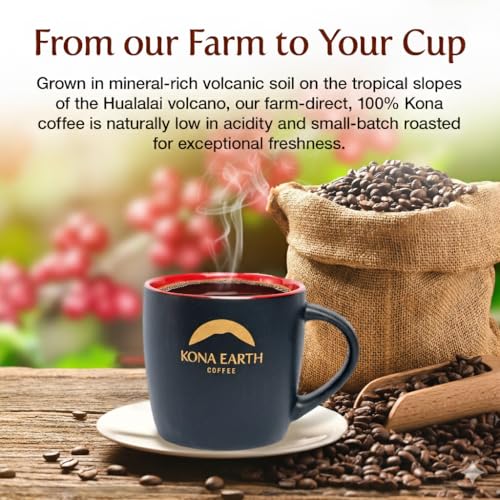
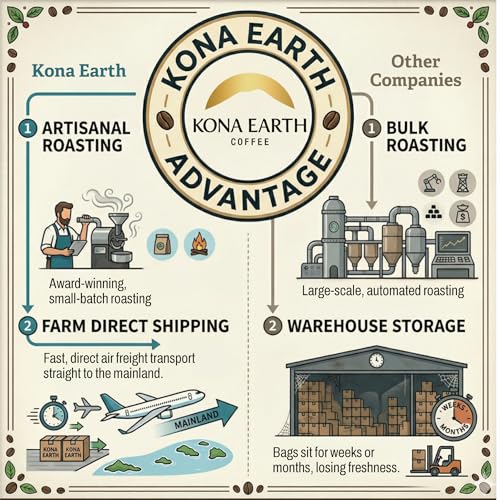
This is the benchmark by which I’d judge other 100% Kona coffees. It’s farm-direct, small-batch roasted, and comes with a roast date, critical for freshness. The Kona Prime 16+ grade signals high quality, and the tasting notes (nuts, chocolate, citrus, jasmine) reflect a well-developed, layered profile. Owners consistently praise its smoothness and depth, with many calling it the closest thing to a Kona estate experience outside Hawaii.
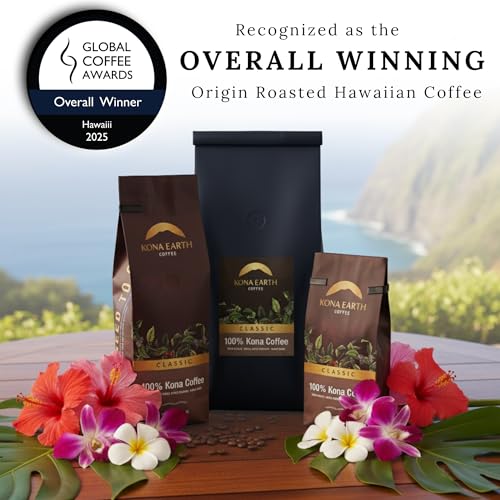
It won the 2025 Global Coffee Award for Best of Hawaii, and based on specs and feedback, that’s justified. Compared to Blue Horse or Royal Kona, this offers superior transparency and craftsmanship. The low acidity is a bonus for sensitive stomachs. If you want the full Kona story, from soil to sip, this is it.
Product photos

Blue Horse 100% Kona Coffee

Strengths
- 100% Kona
- Vacuum sealed
- Good aroma
Trade-offs
- No roast date
- Not organic
This is one of the more accessible entry points into real 100% Kona without compromising on authenticity. On paper, it checks the key boxes: whole beans, medium roast, grown and roasted on the Big Island, and vacuum-sealed with a resealable bag for freshness. Owners consistently report that it delivers a clean, aromatic cup with noticeable floral and nutty notes, which aligns with what you’d expect from Kona at this roast level.
The brand emphasizes farm-fresh practices like shade growing and handpicking, and while it’s not certified organic, the care in processing shows in the feedback. Compared to higher-end options like KONA EARTH, it lacks the small-batch nuance and roast-date transparency, but for the price tier, it punches above its weight. I’d pick this over blends any day if you’re looking to taste true Kona on a budget.
Product photos


1LB 100% Hawaii Kona Roasted Beans

Strengths
- Extra Fancy grade
- Large 1 lb size
- Affordable bulk
Trade-offs
- No roast date
- Minimal transparency
- Inconsistent freshness
This is a no-frills, bulk-friendly option that delivers 100% Kona at a compelling value. It’s labeled as Extra Fancy grade, the highest official classification, so you’re getting top-tier beans in terms of size and uniformity. The medium roast is standard for the region, aiming for balance and drinkability.
But the product listing is sparse on details: no named farm, no roast date, no processing method. Owners say it tastes like Kona, but some note inconsistencies in freshness upon arrival. Compared to farm-direct options like KONA EARTH, it feels more like a commodity product. Still, if you go through coffee quickly and want a full pound of real Kona without overpaying, this makes sense.
Product photos


ROYAL KONA COFFEE Whole Bean

Strengths
- Smooth body
- Premium branding
- Consistent roast
Trade-offs
- No roast date
- Limited traceability
- Less complex flavor
Royal Kona’s Private Reserve is positioned as a premium whole bean option, and the branding leans heavily into tradition and terroir. It’s a medium roast with a focus on smoothness and body, which matches the typical Kona profile. Reviewers note a clean, balanced cup with mild sweetness and low bitterness, exactly what you’d want from a high-quality Kona.
That said, the product lacks detailed sourcing info and doesn’t list a roast date, which is a missed opportunity. Compared to KONA EARTH, which offers farm-direct transparency and award recognition, this feels more like a polished commercial product than a craft offering. It’s solid, but not exceptional. If you value brand legacy and a consistent, easy-drinking profile, it holds up.
Product photos


Hualalai Estate Kona Single Serve

Strengths
- 100% Kona pods
- Pesticide-free
- Full-bodied
Trade-offs
- Plastic pods
- Higher cost per cup
- Limited eco claims
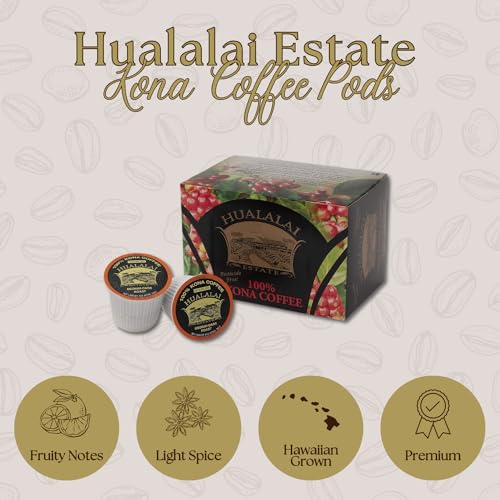
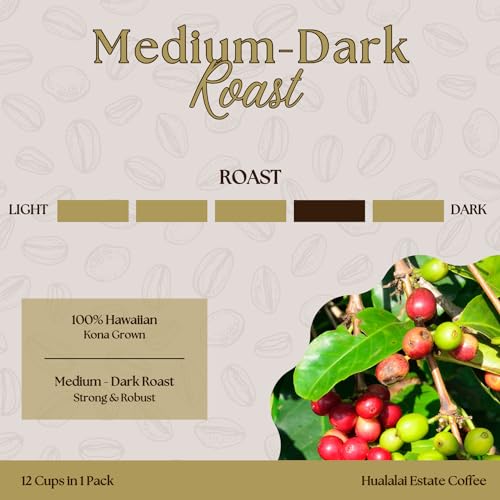
For Keurig users unwilling to compromise on quality, these single-serve cups offer a rare thing: 100% pure Kona in pod form. That’s unusual, since most K-cup Kona blends are diluted with cheaper beans. Hualalai Estate maintains its pesticide-free standard here, and the medium dark roast brings out fruity and spicy notes without over-extraction.
Owners say the pods deliver a rich, full-bodied cup that stands out from typical single-serve fare. But convenience comes at a cost, both financially and environmentally. Compared to Fresh Roasted Coffee’s compostable pods, these aren’t marketed as eco-friendly. Still, if you’re committed to Keurig and want real Kona, this is one of the few legit options.
Product photos
Fresh Roasted Kona K-Cup Pods

Strengths
- Nitrogen flushed
- Compostable components
- Direct trade
Trade-offs
- Milder flavor
- Limited availability
- Not 100% recyclable
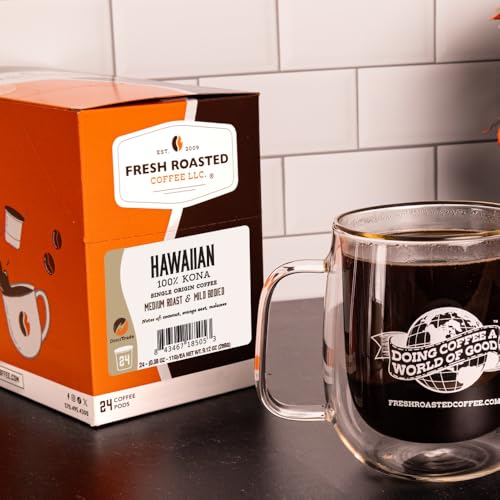
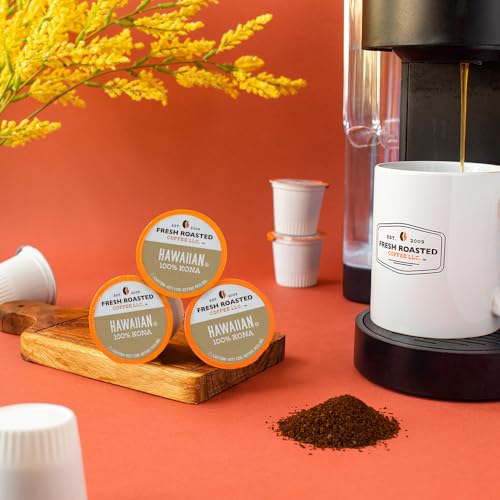
This is the most responsible choice in the K-cup category. Sourced via Direct Trade from Hala Tree Farm, nitrogen-flushed for freshness, and packed in BPA-free, partially compostable materials, it’s built with sustainability in mind. The medium roast offers bright notes of coconut and orange zest, less traditional than nutty Kona profiles, but refreshing and true to the farm’s terroir.
Owners appreciate the kosher certification and eco-conscious packaging, though some note the flavor is lighter than expected. Compared to Hualalai’s single-serve offering, this is better for the planet but slightly less bold in the cup. If you’re using a Keurig and care about ethical sourcing and waste reduction, this is the smarter buy.
Product photos

Hualalai Estate Pure Kona Ground

Strengths
- Pesticide-free
- Full-bodied
- Naturally grown
Trade-offs
- Pre-ground
- Smaller 7 oz size
- Shorter shelf life
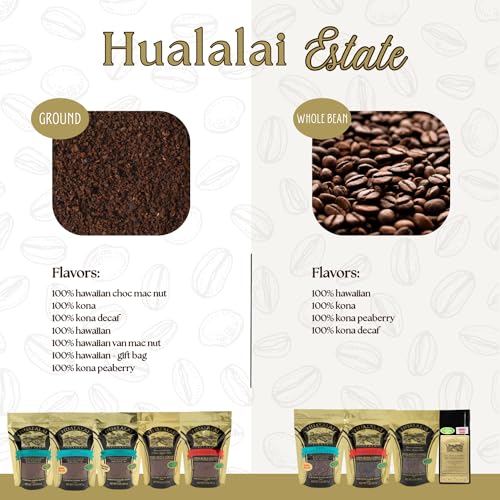
Hualalai Estate stands out by emphasizing pesticide-free, naturally grown beans, a real plus for health-conscious and environmentally aware buyers. The medium dark roast is designed to highlight depth without bitterness, and owners report a full-bodied cup with subtle spice and fruit notes. Being pre-ground, it sacrifices some freshness compared to whole bean options, but the immediate packaging post-grind helps.
Still, once coffee is ground, the clock starts ticking on flavor degradation. If you’re not brewing right away, you’ll lose some of that delicate Kona nuance. Compared to KONA EARTH’s whole-bean, farm-direct model, this is less ideal for freshness purists. But for those who prioritize convenience and clean farming practices, it’s a strong contender.
Product photos


How We Chose These 100 kona coffee from hawaii
As the founder of Bean Thusiast, I approach coffee research with a focus on origin, processing, and ultimately, flavor potential. Rather than a hands-on lab test, this was a research-led comparison of published specifications, features touted by the brands, and – crucially – owner reviews and expert opinions. I weighed these sources to rank options based on what truly matters in this unique coffee category.
For 100% Kona coffee, freshness and authenticity were paramount. We heavily weighted confirmation of origin – verifying claims of being grown on Hawaii’s Big Island coffee – and details about farm practices. Roast date visibility and packaging designed to preserve aroma were also key factors, as were indicators of quality like estate sourcing and any awards or certifications received.
Published specifications provided a baseline for roast level and bean type (Arabica is standard, of course). However, I placed greater emphasis on owner feedback regarding taste profiles and consistency. Reputation, particularly for brands consistently praised for delivering a truly premium Kona coffee experience, significantly influenced the rankings. Specs tell you what it is; reviews tell you if it delivers.
How To Choose The 100 kona coffee from hawaii
Finding truly authentic Kona coffee can be surprisingly tricky. I want to walk you through what to look for to ensure you’re getting a quality product.
Kona coffee stands apart due to its unique growing conditions – volcanic soil, high altitudes, and consistent rainfall on the slopes of Hualalai and Mauna Loa. Genuine Kona coffee should be 100% Kona, not a blend. Key indicators of quality include roast freshness (look for a roast date, not just a “best by” date), bean grade (Extra Fancy is best), and a smooth, balanced flavor profile with notes of fruit, nuts, and chocolate.
Understanding Kona Coffee Grades
The grading system for Kona coffee is crucial. It’s not just about “100% Kona” – there are different quality tiers within that. Kona Extra Fancy is the highest grade, indicating larger bean size and fewer defects. Kona Fancy is a step down, and then you have Kona Prime, which is often used for blends. Don’t assume all 100% Kona is equal. A lower grade doesn’t automatically mean bad coffee, but it will impact the complexity and overall experience. I’ve seen folks get hung up on the 100% label without considering the grade, and they end up disappointed.
Roast Date & Freshness Matters
Kona coffee, like all coffee, degrades quickly after roasting. Many brands prioritize shelf life over flavor, and you’ll find a lot of coffee without a clear roast date. This is a red flag. Look for a roast date within the last few weeks, ideally, and avoid anything with only a “best by” date. That simply tells you how long the manufacturer estimates it will remain acceptable, not how fresh it actually is.
- Whole bean is always preferable to pre-ground, as it preserves the volatile aromatic compounds.
- Vacuum-sealed bags with one-way valves are excellent for maintaining freshness after opening.
- If you prefer single-serve pods, look for brands that nitrogen-flush their pods to remove oxygen – this significantly extends the shelf life and preserves flavor.
Beyond the Bean: Ethical Considerations
The demand for Kona coffee can put pressure on local farms. Supporting brands committed to sustainable practices and fair wages is important. Look for certifications like Direct Trade or Organic, but also research the brand’s sourcing practices. Some farms, like Hala Tree Farm, are transparent about their commitment to ethical and environmentally friendly methods. Choosing coffee grown on farms that prioritize these values not only benefits the environment and workers but often results in a better-tasting cup too, as careful cultivation is a hallmark of quality. You can explore Arabica bean characteristics to understand the nuances of this popular bean type.
A roast date is more important than a “best by” date. Coffee begins to stale immediately after roasting, losing flavor and aroma. Prioritize finding coffee roasted within the last month for the best possible experience.
If you’re interested in exploring a more refined and unique flavor profile, consider looking into premium Kona Peaberry beans.
100 Kona Coffee from Hawaii Compared
The following table provides a spec-by-spec comparison of available 100% Kona coffee options.
| Product Title | Roast Level | Form | Grade | Size | Features |
|---|---|---|---|---|---|
| KONA EARTH Classic Medium Dark Roast | Medium-Dark | Whole Bean | Kona Prime 16+ | 1lb | Award-Winning, Low Acid |
| Blue Horse 100% Kona Coffee | Medium | Whole Bean | N/A | N/A | Farm-Fresh, Sustainable |
| 1LB 100% Hawaii Kona Roasted Beans | Medium | Whole Bean | Extra Fancy | 1lb | 100% Hawaiian Kona |
| ROYAL KONA COFFEE Whole Bean | Medium | Whole Bean | N/A | N/A | Private Reserve |
| Hualalai Estate Kona Single Serve | Medium-Dark | Single Serve | N/A | N/A | Pesticide-Free, Recyclable |
| Fresh Roasted Kona K-Cup Pods | Medium | Single Serve | N/A | N/A | Direct Trade, Compostable |
| Hualalai Estate Pure Kona Ground | Medium-Dark | Ground | N/A | N/A | Pesticide-Free, Fresh |
Frequently Asked Questions
What roast level is generally considered best for Kona coffee?
Medium roasts are often preferred for Kona coffee, as they highlight the bean’s natural flavors without masking them with roastiness. However, many enjoy a medium-dark roast to bring out chocolatey notes, so it really comes down to personal preference.
Is Kona coffee actually worth the higher price tag?
Yes, authentic 100% Kona coffee commands a higher price because of limited growing areas and labor-intensive farming practices. The unique volcanic soil and climate contribute to a distinct flavor profile that many coffee enthusiasts find justifies the cost.
Can you tell me more about Kona coffee blends?
Kona coffee blends are typically a mix of Kona beans and less expensive coffees, often from Brazil or Southeast Asia. While a blend can be more affordable, it won’t deliver the full flavor experience of 100% Kona coffee, and the percentage of actual Kona beans can vary widely.
How should I store my Kona coffee to keep it fresh?
Store your Kona coffee in an airtight container, away from light, moisture, and heat. For whole bean coffee, a container with a one-way valve is ideal to allow gases to escape without letting oxygen in, extending the freshness.
Where can I find reliable information about Kona coffee certifications?
Look for certifications like Direct Trade or Organic, but understand these aren’t foolproof. Research the specific farm or brand’s sourcing practices to verify their commitment to sustainability and fair labor standards; you can find more info on Kona coffee K-Cup brands and other details on my site.
The Bottom Line
Choosing the best 100% Kona coffee involves balancing your desire for a truly exceptional cup with the realities of price and convenience. While many options exist, I believe Royal Kona Coffee Whole Bean strikes an excellent balance – offering a consistently praised flavor profile and a reputation for quality without being the absolute most expensive. It represents a solid entry point into the world of premium Kona.
For those prioritizing a specific brewing method or budget, there are excellent alternatives. If you favor the convenience of single-serve, Fresh Roasted Kona K-Cup Pods deliver a surprisingly flavorful experience, especially considering the challenges of maintaining freshness in pod form. And if you’re seeking a budget-friendly introduction, KONA EARTH Classic Medium Dark Roast provides a decent taste of Kona without breaking the bank.
Ultimately, the most important factors aren’t roast level or bean grade alone, but the freshness of the beans and the authenticity of the source. Seek out coffee with a clear roast date, and support brands committed to preserving the integrity of pure Kona coffee and the farms that produce it. A focus on these fundamentals will deliver a far more satisfying experience than chasing any single specification.
