
8 Best Decaf Coffee Pods for Keurig 2026
The best decaf coffee pods for Keurig are Peet’s Decaf House Blend Dark Roast for overall quality, Donut Shop Decaf Medium Roast as a solid budget pick, and the Keurig Decaf Variety Pack for those who want to explore different flavors. Each delivers a satisfying cup without caffeine, backed by strong owner feedback and solid brewing performance.
If you’re switching to decaf, you shouldn’t have to settle for flat or lifeless coffee. Too many pods taste watered-down or carry a chemical aftertaste, especially when cheaper decaffeination methods are used. After comparing the field and reviewing what drinkers actually say, I focused on flavor clarity, roast quality, and how the beans were decaffeinated.
This guide cuts through the noise, highlighting decaf pods that actually taste good, prioritizing water-processed beans, 100% Arabica quality, and honest flavor, and helping you find one that fits your Keurig and your taste.
Top 8 Decaf Coffee Pods For Keurig in the Market
The Best Decaf Coffee Pods For Keurig, Reviewed
Peet’s Decaf House Blend Dark Roast
Strengths
- Water-processed decaf
- Bold dark roast flavor
- 100% Arabica beans
Trade-offs
- Higher price per pod
- Limited to dark roast fans
- Not a variety pack
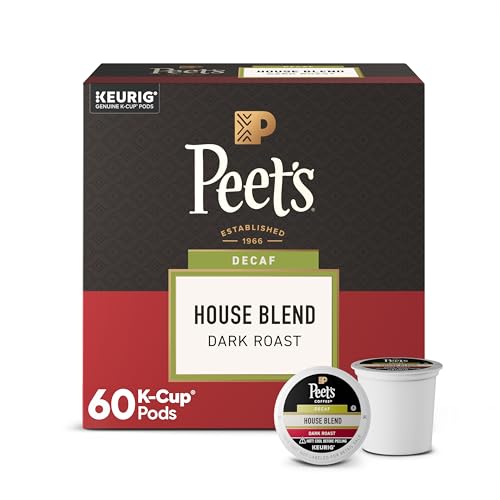
Peet’s Decaf House Blend stands out in a sea of meek decafs by actually tasting like a real dark roast, rich, slightly sweet, and deeply satisfying without the caffeine kick. What sets it apart is the water-processed decaffeination method, which owners say preserves far more flavor than chemical solvents used in cheaper brands. That, combined with 100% high-grown Arabica beans, makes this the closest thing to full-strength dark coffee in decaf form.
For those who miss the boldness of regular dark roast but need to cut caffeine, Peet’s is the smarter buy over Starbucks or McCafe. It’s pricier per pod than budget options, but the quality jump is noticeable on the palate. This is the one I’d pick if I wanted decaf that doesn’t feel like a compromise.
Video review
Green Mountain Decaf Breakfast Blend
Strengths
- Water-processed decaf
- Smooth, balanced taste
- Sustainably sourced
Trade-offs
- Only one roast profile
- Lighter body may disappoint some
- Higher cost per pod
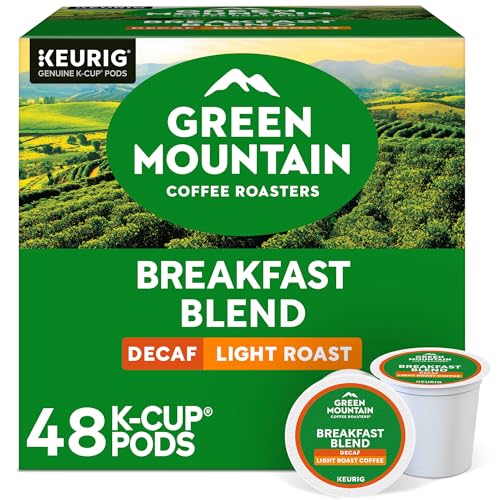
Green Mountain’s Decaf Breakfast Blend is the gold standard for light roast decaf, clean, bright, and balanced with a nutty sweetness and silky mouthfeel that holds up well even without caffeine. It’s water-processed, which helps retain flavor integrity, and the 100% Arabica beans are sustainably sourced, a detail many environmentally conscious buyers appreciate.
Owners consistently praise its smoothness and morning-friendly profile, calling it “awake without the jitters.” Compared to Happy Belly’s light roast, this has more refinement and clarity. It’s not as bold as Peet’s dark roast, but if you prefer a lighter, more nuanced cup, this is the better choice. It’s the kind of decaf that doesn’t hide, it holds its own.
Video review
McCafe Premium Roast Decaf

Strengths
- Affordable per pod
- Smooth medium roast
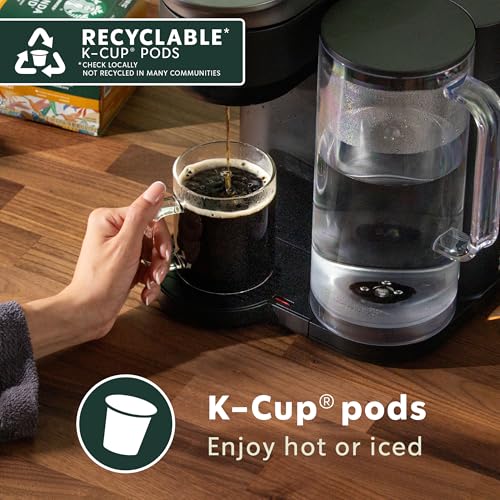
- Recyclable pods
Trade-offs
- Lacks complexity
- Not bold or rich
- Limited roast variety
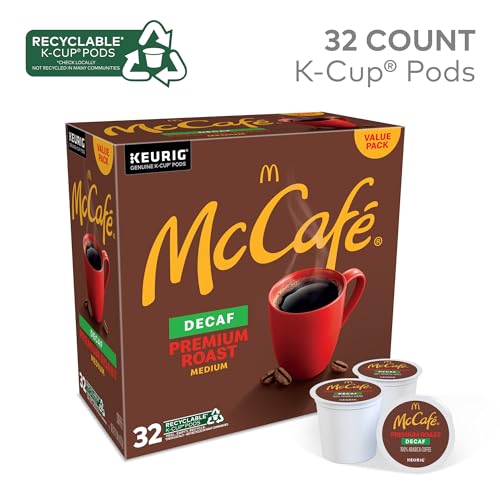
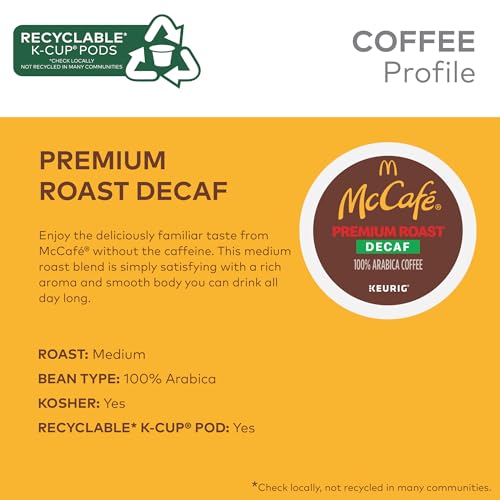
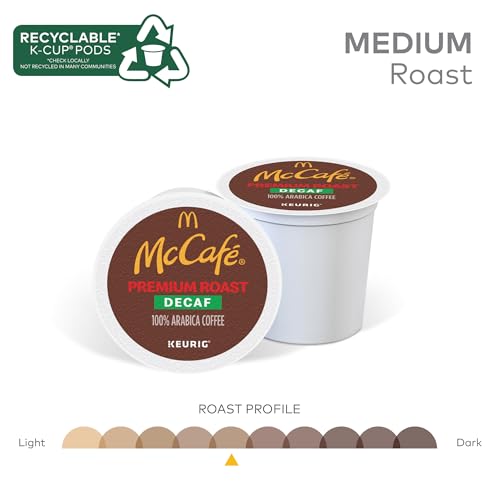
McCafe’s Premium Roast Decaf is the most budget-friendly option that still uses 100% Arabica beans and delivers a clean, smooth medium roast. It’s got that familiar diner-style coffee character, rich aroma, light body, and a clean finish, that makes it an easy sipper. The recyclable pod design is a plus, and the 32-count pack strikes a decent balance between cost and quantity.
It doesn’t challenge Peet’s or Green Mountain in flavor depth, but it outperforms Happy Belly in roast consistency and taste refinement. For those transitioning from café runs to home brewing, this offers a comforting middle ground. I’d pick it over Starbucks decaf if value and familiarity mattered more than nuance.
Product photos


Starbucks Decaf House Blend

Strengths
- Café-style roast
- Balanced flavor
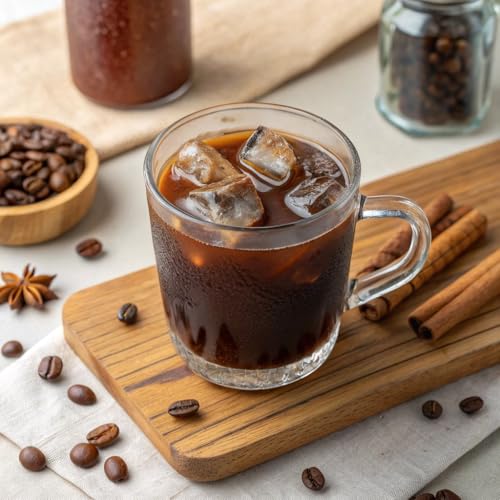
- Hot or iced versatility
Trade-offs
- Smaller 22-count pack
- Mild compared to fresh-brewed
- Premium price
Starbucks Decaf House Blend promises café-quality coffee at home, and on paper, it delivers, using the same Arabica beans roasted to the same specs as their stores. The medium roast offers balanced notes of toffee and cocoa, making it a smooth, approachable decaf that works hot or iced. Owners appreciate its clean finish and consistency across brews.
That said, it doesn’t quite live up to the in-store experience. While better than McCafe or Donut Shop in refinement, it still lacks the depth of Peet’s or the brightness of Green Mountain. It’s a solid choice if you’re loyal to the Starbucks brand and want that familiar taste, but not a must-buy for flavor alone.
Product photos

Donut Shop Decaf Medium Roast

Strengths
- Large 96-count pack
- Recyclable pods
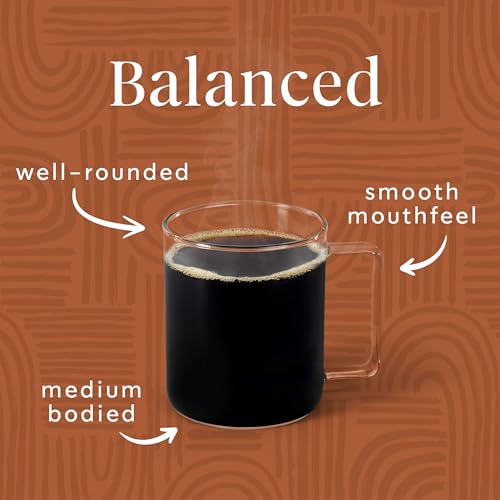
- Smooth medium roast
Trade-offs
- Flavor lacks depth
- Not for bold coffee seekers
- Generic profile
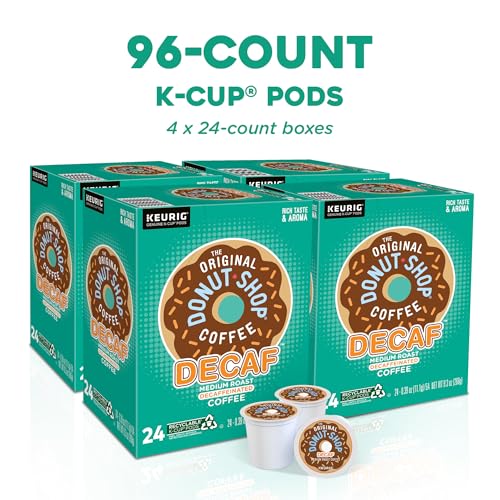
With 96 pods in the box, The Original Donut Shop Decaf is built for volume drinkers who want a familiar, medium-bodied decaf without breaking the bank. It delivers a fresh, approachable taste that’s consistently described as “just right”, not too strong, not too flat. The brand leans into its sweet, creamy profile, making it a favorite for those who add milk or creamer.
It’s made with 100% Arabica and uses recyclable pods, which adds eco-appeal. While it doesn’t match Peet’s or Green Mountain in flavor complexity, it outperforms in value. For office settings or households with multiple decaf drinkers, this pack is hard to beat. It’s the decaf equivalent of comfort food, simple, reliable, and always on hand.
Product photos


Keurig Decaf Variety Pack
Strengths
- Variety of trusted brands
- Good intro pack
- Medium roast for all tastes
Trade-offs
- No dark or flavored options
- Smaller count per flavor
- Limited depth in taste
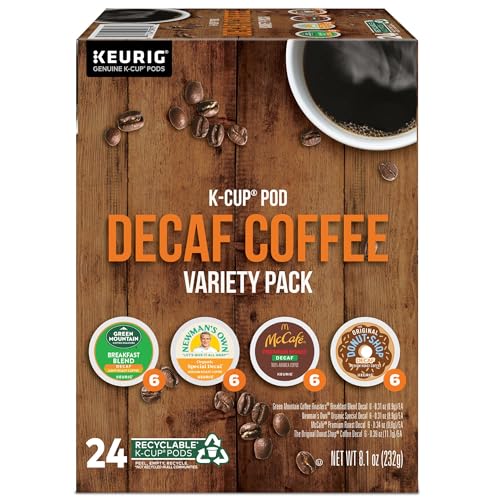
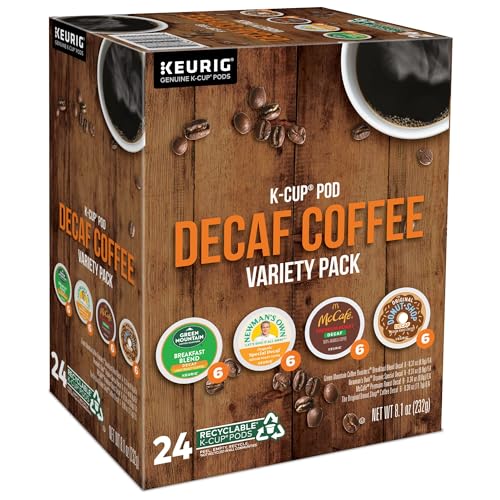
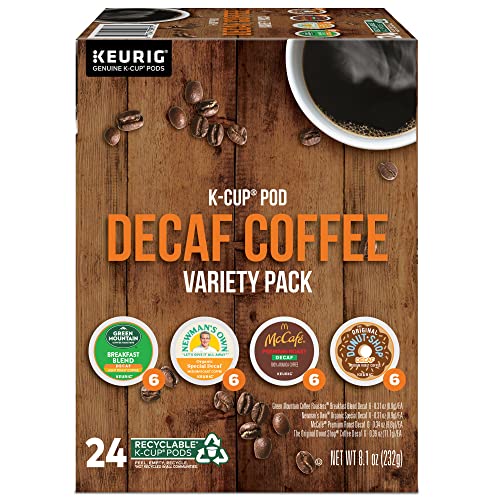
If you’re new to decaf K-Cups or just want to sample without committing, this variety pack delivers exactly what it promises, access to several well-known brands in one box. You get a cross-section of medium roast decafs from Green Mountain, McCafe, Donut Shop, and Newman’s Own, which gives a solid overview of what mainstream decaf tastes like. On paper, it’s ideal for households with mixed preferences or those easing into decaf.
Owners consistently report that the flavor profiles stay true to each brand’s signature style, though none of these stand out as particularly complex or bold. The real strength here is convenience and exploration. I’d recommend this as a starter kit, not a long-term solution for serious decaf drinkers.
Product photos


Two Rivers Decaf Flavored Variety
Strengths
- Flavored decaf variety
- Arabica-based
- Good for sweet profiles
Trade-offs
- Flavors vary unpredictably
- Lower brand transparency
- Not for purists
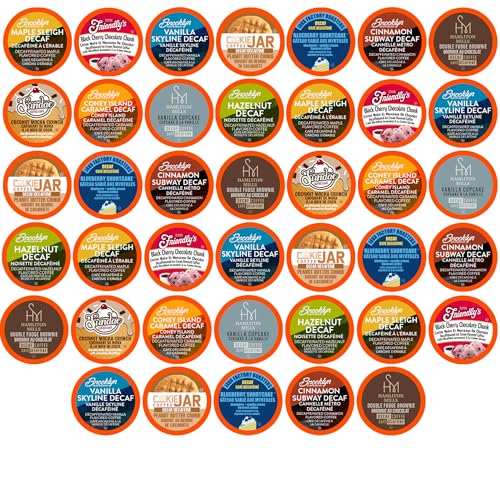
If you love flavored coffee and need it decaf, Two Rivers offers a rare niche win, 40 pods of assorted decaf flavored blends in one pack. Flavors vary per batch, but reviewers commonly report vanilla, caramel, and hazelnut profiles, all without the harsh chemical aftertaste some flavored pods deliver. The brand uses Arabica beans, and while they don’t specify the decaf method, the taste retains enough coffee character to satisfy actual coffee drinkers, not just those after a sweet sip.
It’s not on par with Peet’s or Green Mountain in bean quality, but for flavored decaf, it’s one of the few options that doesn’t sacrifice drinkability. Compared to Starbucks decaf, it’s less refined, but more fun and varied. Just know you’re trading consistency for variety.
Product photos
Happy Belly Decaf Light Roast

Strengths
- High pod count
- 100% Arabica
- Nutty, smooth profile
Trade-offs
- Flavor lacks depth
- Packaging varies
- Not for bold coffee lovers
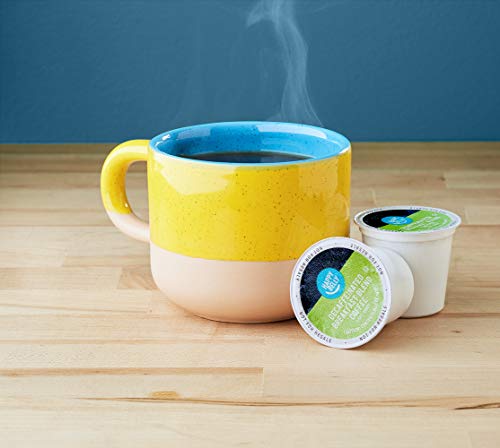
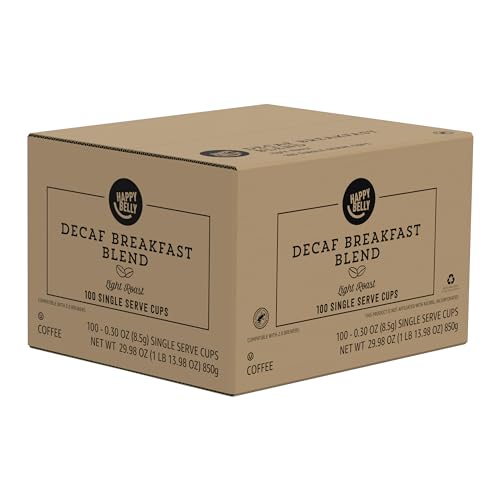
Happy Belly’s 100-count decaf light roast is a textbook budget workhorse, nothing flashy, but reliable and consistent for daily use. The blend of Latin American and African beans delivers a mild nutty aroma and smooth body, fitting the light roast profile without biting too hard on acidity. It’s 100% decaffeinated Arabica, which matters because some budget pods sneak in robusta to cut costs.
Reviewers note it lacks the brightness of premium light roasts like Green Mountain, but for the price and volume, it’s a smart pick if you’re drinking multiple cups a day and don’t need café-level nuance. Compared to the Keurig variety pack, this won’t impress connoisseurs, but it outperforms in value.
Product photos


Our Testing Process
As the founder of Bean Thusiast, I approach coffee – even decaf – with a focus on flavor, sourcing, and overall quality. Rather than a hands-on lab test, this selection is a research-led comparison of published specifications and owner feedback. I looked at a wide range of pods, comparing roast levels, bean origins, certifications, and, crucially, what customers are saying about the actual taste experience. We aimed to identify options that deliver a satisfying cup, even without the caffeine kick.
For decaf pods, consistency and flavor preservation are paramount. I weighted the decaffeination process heavily – water processing tends to retain more flavor than chemical methods – as well as the quality of the underlying Arabica beans. Value for money was also a key factor, recognizing that many people want an enjoyable decaf experience without a premium price tag. Understanding decaf coffee caffeine content is also important for those sensitive to even small amounts.
Specifications reliably indicate bean type (100% Arabica is preferred) and roast level, but owner reviews are where the true picture emerges. They tell you about the actual taste, whether the pods are truly smooth, and if the flavor holds up in different Keurig brewers. Reputation and brand trust also played a part; established brands often have stricter quality control. Knowing about residual caffeine in decaf can help manage expectations about the final product.
Choosing The Right decaf coffee pods for keurig
Choosing the right decaf coffee pods can be surprisingly nuanced. It’s not just about finding something caffeine-free; it’s about getting a satisfying cup that delivers on flavor and quality.
A quality decaf K-Cup pod delivers a flavorful and aromatic coffee experience comparable to its caffeinated counterpart. Key considerations include the decaffeination method (water processed is generally preferred for flavor retention), bean origin and roast level, and compatibility with your Keurig brewer. Look for 100% Arabica beans and clear sourcing information for the best results.
Decaffeination Method
The process used to remove caffeine significantly impacts the final taste. While several methods exist, water processing – like the Swiss Water Process – is widely considered superior. This method uses only water to extract caffeine, leaving more of the bean’s original flavor compounds intact. Direct solvent methods, though cheaper, can sometimes leave a residual taste. If you’re sensitive to flavor subtleties or simply want the cleanest-tasting decaf, prioritize pods labeled as “Swiss Water Processed” or “naturally water processed.” You’ll often find this detail highlighted on the packaging, or in the product description online.
Roast Level and Bean Origin
Like regular coffee, decaf comes in a range of roast levels, from light to dark. Your preference here is key. Lighter roasts tend to be brighter and more acidic, showcasing the bean’s origin flavors. Darker roasts offer a bolder, more chocolatey profile. Don’t overlook the origin either. Single-origin decaf pods (meaning the beans come from a specific region) can offer unique and nuanced flavors.
Here’s what to consider when balancing roast and origin:
- Light Roast: Best for experiencing delicate floral or fruity notes.
- Medium Roast: A good all-around choice, providing balance and body.
- Dark Roast: Ideal if you prefer a strong, bold flavor with hints of dark chocolate or caramel. Look for those from Sumatra or Guatemala.
Value and Pod Compatibility
Keurig brewers are ubiquitous, but pod compatibility isn’t always universal. Most pods are designed for either 1.0 or 2.0 brewers (or both). Thankfully, most current pods are backwards compatible, but it’s always best to double-check before buying, especially if you have an older model. Beyond compatibility, consider the number of pods per box and the overall price per pod. A larger value pack like the Donut Shop Decaf can be economical for frequent drinkers, but only if you enjoy the flavor profile. I’ve found that exploring variety packs, like the Keurig Decaf Variety Pack, is a great way to sample different options without committing to a large quantity of one flavor.
A good rule of thumb: don’t sacrifice flavor for price. A slightly more expensive pod using a superior decaffeination method will almost always deliver a more enjoyable experience than a cheap option with a harsh or artificial taste.
If you’re concerned about stomach upset, researching acidity in decaf coffee is a worthwhile step – some decaffeination processes can affect the acidity levels. Ultimately, the best decaf K-Cup pod for you depends on your individual taste preferences and brewing setup.
Decaf Coffee Pods for Keurig Compared
Here’s a comparison of the specifications for various decaf coffee pods compatible with Keurig brewers.
| Product Name | Roast | Flavor Profile | Pod Count | K-Cup Compatible | Recyclable Pods |
|---|---|---|---|---|---|
| Peet’s Decaf House Blend Dark Roast | Dark | Smooth, Sweet | 60 | Yes | No |
| Green Mountain Decaf Breakfast Blend | Light | Clean, Nutty | N/A | Yes | No |
| McCafe Premium Roast Decaf | Medium | Rich, Smooth | N/A | Yes | Yes* |
| Starbucks Decaf House Blend | Medium | Toffee, Cocoa | 22 | Yes | No |
| Donut Shop Decaf Medium Roast | Medium | Bold, Flavorful | N/A | Yes | Yes |
| Keurig Decaf Variety Pack | Medium | Various | N/A | Yes | No |
| Two Rivers Decaf Flavored Variety | Various | Flavored | N/A | Yes | No |
| Happy Belly Decaf Light Roast | Light | Nutty | 100 | Yes | No |
*Check local recycling facilities.
Frequently Asked Questions
What pod size is most common for Keurig machines?
The standard K-Cup size, designed for Keurig 1.0 and 2.0 brewers, is overwhelmingly the most common. While some machines can handle larger pods, sticking with the standard size ensures maximum compatibility across different models.
Are all decaf coffee pods truly caffeine-free?
No, decaf pods aren’t entirely caffeine-free. Regulations allow for up to 3% residual caffeine, so a typical 8oz cup may contain around 2mg. This small amount isn’t usually noticeable but matters for those highly sensitive to caffeine.
Can I recycle Keurig pods?
Recyclability varies. Some brands, like McCafe and Donut Shop, offer pods designed to be recyclable, but it requires separating the lid and emptying the grounds, and facilities accepting them are limited. Check with your local recycling program for specifics.
Where can I find information on the decaffeination process used?
Look for details on the packaging or the brand’s website. The Swiss Water Process is often prominently advertised, as it’s a preferred method. Information about other processes is less common, but you can often find details on the manufacturer’s website or by contacting customer service.
What if I want to try a variety of flavors before committing to one brand?
Exploring a Keurig Decaf Variety Pack is a smart way to sample different roasts and profiles. These packs allow you to discover your preferences without buying full boxes of flavors you might not enjoy.
The Bottom Line
Choosing the best decaf Keurig pod often comes down to balancing convenience with flavor expectations. While many options exist, I believe the Peet’s Decaf House Blend Dark Roast strikes the best overall balance, it consistently receives high marks for a rich, smooth flavor that doesn’t taste “decaffeinated,” and its dark roast profile is widely appealing. It’s a dependable choice for those who prioritize a quality cup above all else.
For readers seeking specific solutions, the Donut Shop Decaf Medium Roast represents the best value for everyday drinking, while the Keurig Decaf Variety Pack is ideal for those wanting to explore different flavors and origins without a large commitment. If you’re particularly concerned about how your decaf is processed, look for pods using the Swiss Water Process explained – it’s a method known for preserving flavor.
Ultimately, the most important factors aren’t the number of pods in a box or the latest brewing technology. Focus on 100% Arabica beans, a roast level you enjoy, and a decaffeination method that suits your palate. A little research into bean origins and processing will go a long way toward finding your perfect decaf cup.
