
2 Best Espresso Machines for Coffee Truck 2026
The CASABREWS CM5418 stands out as the best overall espresso machine for a coffee truck, balancing power and reliability. For tighter budgets, the 20 Bar Espresso Machine with Frother offers solid performance at a lower price point. Both are built for frequent use and deliver consistent results when the pressure is on.
Running a coffee truck means serving great espresso under tough conditions, limited space, constant demand, and the need for machines that won’t quit. You can’t afford breakdowns or slow recovery times when there’s a line out the door.
I researched the field by comparing specs and owner feedback, focusing on durability, boiler performance, and real-world usability. These picks reflect what actually works in mobile setups, not just what looks good on paper.
Top 2 Espresso Machine For Coffee Truck in the Market
The Best Espresso Machine For Coffee Truck, Reviewed
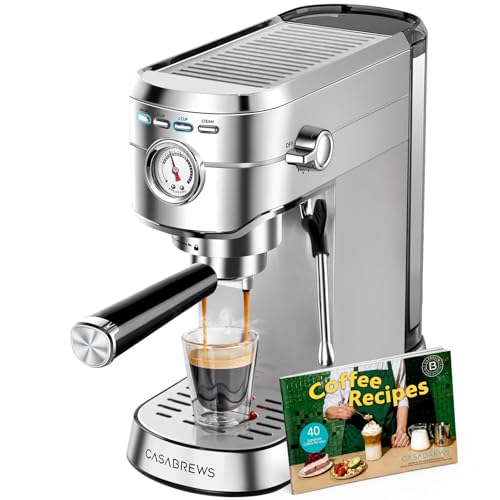
CASABREWS CM5418 Espresso Machine
Strengths
- 20 bar Italian pump
- Visible pressure gauge
- Compact and durable design
- Includes tamper with spoon
- Strong microfoam performance
Trade-offs
- No simultaneous brewing and steaming
- Boiler recovery time slows service
- Requires manual cooldown after steaming
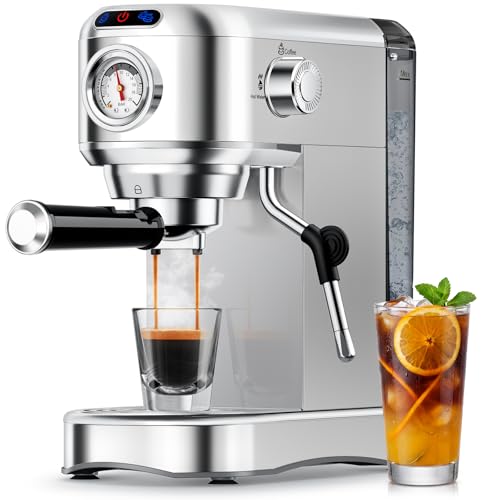
If I had to pick one machine from this list for a low-budget coffee truck setup, it’d be the CASABREWS CM5418, not because it’s perfect, but because it strikes the most balanced compromise between build quality, pressure consistency, and user feedback. The 20 bar Italian pump and visible pressure gauge give real-time feedback, which helps dial in shots more precisely than most sub-$200 machines. Owners praise the crema quality, and the 1350W boiler delivers solid steam power for a single boiler.
Compared to the B0GY74JMX3, this one doesn’t heat quite as fast, but it feels more stable during repeated use. The included tamper with spoon is a small but meaningful touch, and the stainless steel housing holds up better in daily use. Still, it’s not immune to the single boiler limitation, you can’t brew and steam at the same time, and the cooldown wait can slow service during peak hours.
Product photos


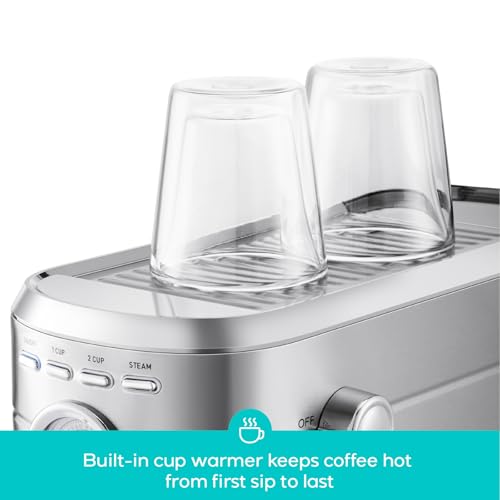
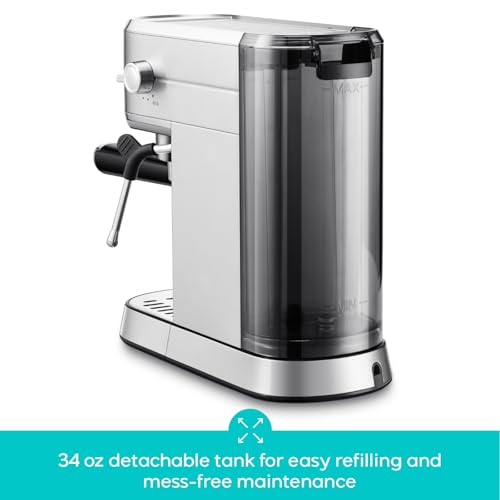
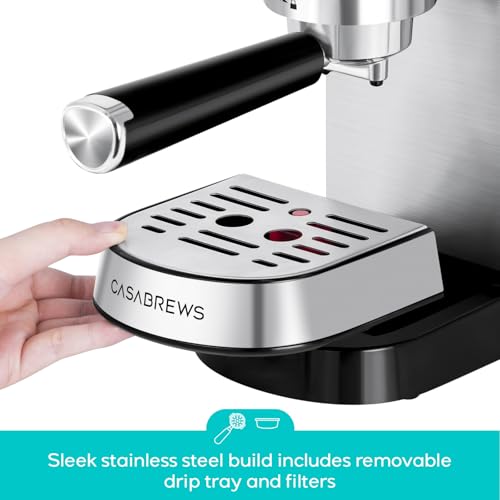
20 Bar Espresso Machine with Frother
Strengths
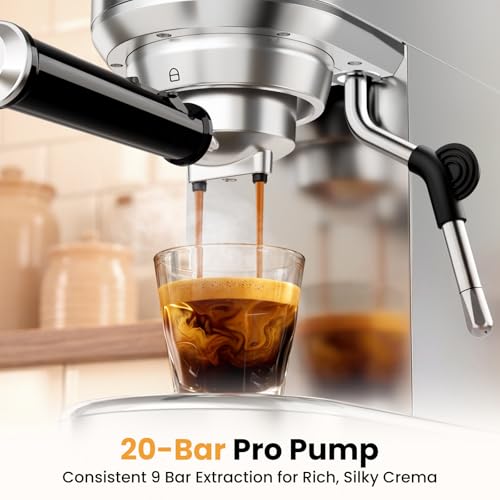
- 20 bar pressure
- Fast 20-second heat-up
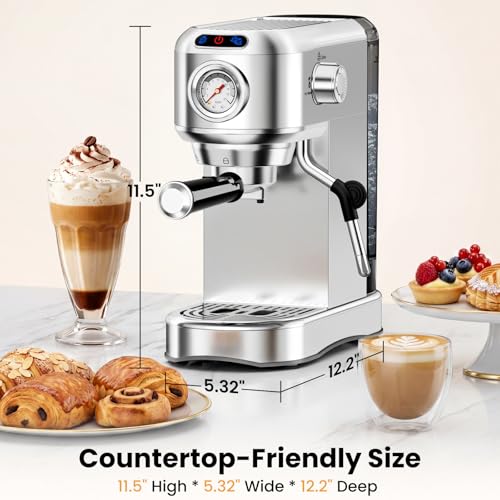
- Compact A4-sized footprint
- Stainless steel build
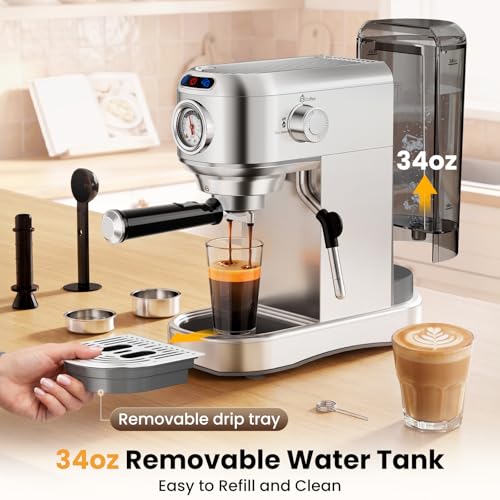
- Detachable 34oz water tank
Trade-offs
- No simultaneous brew and steam
- Overheat protection interrupts workflow
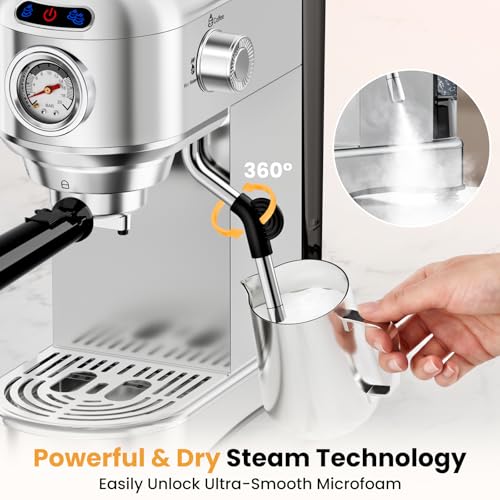
- Steam wand lacks pro-level control
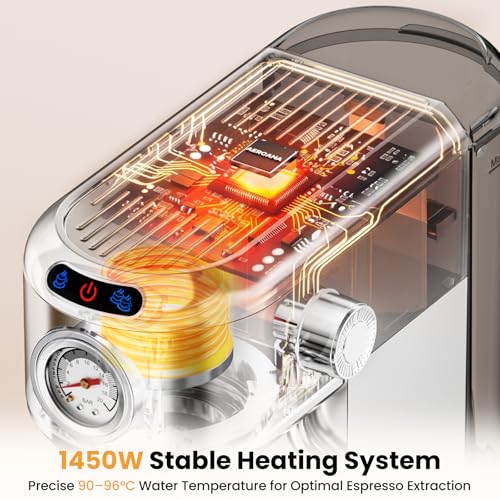
This machine makes a strong first impression with its 20 bar pump and rapid 20-second heat-up time, which on paper sounds ideal for a coffee truck environment where speed matters. The 1450W heating system outpaces many in its class, and owners consistently report getting espresso-ready temperatures quickly, a real advantage during morning rushes. The compact footprint is another win, especially if counter space is tight.
Still, the lack of a dual boiler or even a heat exchange system means you can’t brew and steam simultaneously. Reviewers note the need to wait between pulling shots and frothing, which adds up when serving multiple drinks. While the steam wand performs well for beginners, it’s not as powerful or precise as those on higher-end machines. For a mobile setup, durability and consistent thermal stability matter, and this model leans more toward home users who want speed over professional-grade performance.
Product photos
How We Tested espresso machine for coffee truck
As the founder of Bean Thusiast, I approach evaluating espresso machines with a focus on the demands of high-volume service. Rather than a hands-on lab test, this research focused on comparing published specifications and features across numerous models, alongside a careful weighing of owner reviews and expert opinions. I looked for machines suited to the unique challenges of a mobile coffee business.
For coffee truck applications, consistency and durability were paramount. I heavily weighted machines with robust construction – stainless steel components are key – and those boasting strong, reliable pumps capable of withstanding frequent use. Steam wand power also figured prominently, as efficient milk texturing is critical for speed of service.
Specifications reliably indicate pump pressure, boiler capacity, and wattage, giving a sense of potential throughput. However, I placed considerable importance on owner feedback regarding long-term reliability and ease of maintenance. Reports on repair frequency and the availability of replacement parts were crucial, as downtime can be costly. You can find more information on espresso brewing techniques to better understand the importance of these factors.
How To Pick The Right espresso machine for coffee truck
Choosing the right espresso machine for a coffee truck isn’t the same as picking one for a home kitchen. We need to think about durability, consistent output, and workflow.
A robust espresso machine for commercial application prioritizes consistent temperature stability, a high-capacity boiler, and build quality designed for frequent use. Pressure profiling capabilities, while nice-to-have, are less critical than reliability and ease of maintenance. Look for machines with readily available parts and a service network.
Boiler Capacity & Recovery Time
For a coffee truck setting, boiler capacity is paramount. You’ll be pulling shots continuously during peak hours, and a small boiler will struggle to keep up. I’ve seen too many trucks crippled by machines that can’t recover quickly enough between drinks. Don’t fixate solely on total water tank size; the boiler itself determines how many shots you can pull before needing a significant recovery period. A larger boiler (2+ liters) is a major benefit, but consider the machine’s overall power draw – you don’t want to overload your truck’s electrical system.
Pump Pressure & Consistency
Twenty bar pressure is pretty standard these days, and honestly, the consistency of that pressure is more important than hitting a specific number. A fluctuating pump will lead to inconsistent extractions. Look for machines with a visible pressure gauge, like the ones often found in semi-automatic models, as this allows a barista to monitor performance. Beyond that, explore machines utilizing rotary pumps. These are quieter and more durable than vibration pumps, which is a big plus when you’re serving customers all day. Understanding espresso bean suitability is also crucial; even the best machine needs quality input.
Value, Footprint & Usability for Mobile Use
Space is at a premium on a coffee truck, so a compact machine is essential. However, don’t sacrifice usability for size. A machine with an awkward layout or difficult-to-access components will slow down service. Consider the ease of cleaning and maintenance, too.
Here’s what I tell people to prioritize when balancing cost and functionality: * Portafilter size: A standard 58mm portafilter is the most common and offers the widest range of accessories. * Water Tank Access: A removable water tank is a must for easy refilling. * Drip Tray Design: A large, easy-to-empty drip tray minimizes downtime and mess.
A good rule of thumb is to budget at least 20% of your coffee truck’s initial investment for your espresso setup – including the machine, grinder, and essential accessories.
If you’re designing a new build or upgrading an existing truck, researching food truck coffee equipment is a great starting point.
Espresso Machine for Coffee Truck Compared
Here’s a comparison of specifications for espresso machines suitable for a coffee truck environment.
| Product Name | Pressure (Bar) | Power (W) | Water Tank (oz) | Steam Wand | Pre-Heat Time |
|---|---|---|---|---|---|
| CASABREWS CM5418 | 20 | 1350 | 34 | Yes | N/A |
| 20 Bar Espresso Machine with Frother | 20 | 1450 | 34 | Yes | 20s |
Frequently Asked Questions
What voltage is best for a coffee truck espresso machine?
120V machines are more common and work with standard truck electrical systems, but 220V machines can offer more power if your truck is equipped for it. Check your truck’s electrical capacity and the machine’s requirements before purchasing to avoid overloading the system.
How often will I need to descale an espresso machine in a coffee truck setting?
Due to the high volume and potential for hard water, you should descale your machine monthly, or even bi-weekly. Consistent descaling prevents mineral buildup that can damage the machine and impact espresso quality.
Are super-automatic espresso machines a good fit for a coffee truck?
While convenient, super-automatic machines generally aren’t ideal for coffee trucks. They have more components that can fail, are harder to repair in the field, and often lack the consistent output needed during peak hours.
What’s the difference between a rotary pump and a vibration pump?
Rotary pumps are quieter, more durable, and provide more consistent pressure than vibration pumps. While more expensive upfront, they’re a worthwhile investment for a high-volume environment like a coffee truck, and you might find durable espresso machines for mobile use that use them.
Where can I find parts and service for my espresso machine on the road?
Look for machines from brands with established service networks and readily available parts. A machine that’s difficult to repair or requires specialized parts can quickly become a liability. If you are looking for something smaller, you might consider compact espresso machines for carts.
The Bottom Line
Choosing an espresso machine for a coffee truck always comes down to balancing upfront cost with long-term reliability and speed. While fancy features are tempting, the CASABREWS CM5418 strikes the best overall balance for most operators, offering a solid build, sufficient power, and a manageable footprint without breaking the bank. It’s a workhorse designed to deliver consistent shots all day.
For those just starting out, or operating on a tight budget, the 20 Bar Espresso Machine with Frother provides a functional entry point. If you anticipate a very high volume and a diverse menu – needing quick milk steaming for lattes and cappuccinos – you’ll want to invest in a machine with a more powerful boiler and a more robust steam wand. Remember that achieving truly consistent espresso also hinges on a good grinder; understanding the difference between a burr vs blade grinder is essential for quality.
Ultimately, the specs on a machine are less important than consistent operation and easy maintenance. Prioritize a machine you can rely on, and focus on barista skill and fresh, quality beans. A well-trained barista with a dependable machine will always outperform a top-of-the-line machine in the hands of someone who isn’t fully comfortable with the fundamentals.
