
8 Best 100% Arabica Coffee Beans of 2026
After comparing the field and weighing origin, roast, and owner feedback, the Lavazza Qualità Oro stands out as the best overall 100% Arabica coffee bean for its balanced, aromatic profile. For a budget-friendly daily drinker, Amazon Fresh Colombia Medium Roast delivers consistent quality, while the Illy Classico offers refined versatility for espresso or drip.
Most coffee lovers want a reliable, flavorful cup every morning without overpaying or getting misled by fancy packaging. The real challenge is cutting through the noise to find beans that actually deliver on their promises.
As the founder of Bean Thusiast, I focused on what matters: roast clarity, transparent origins, and real-world feedback. These picks reflect a blend of flavor, freshness potential, and value, all based on specs and owner experiences, not hype.
Top 8 100 Arabica Coffee Beans in the Market
The Best 100 Arabica Coffee Beans, Reviewed
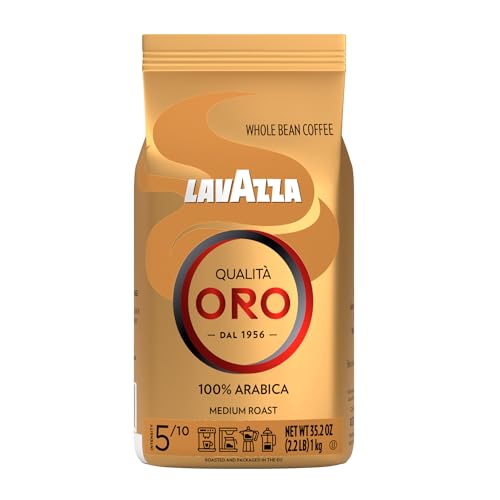
Lavazza Qualità Oro Whole Bean
Strengths
- Fruity & aromatic
- 100% Arabica blend
- Versatile brewing
Trade-offs
- Not ideal for dark roast lovers
- Subtle body
- Some find acidity sharp
Lavazza Qualità Oro stands out in the 100% Arabica category for its thoughtful blend of Central American and African highland beans. On paper, that origin mix promises brightness and complexity, and reviewers confirm it delivers a vibrant, aromatic cup with noticeable fruity notes, more lively than your average medium roast. It’s not marketed as an espresso-only bean, but its structure holds up well across methods, especially when ground finer.
I’d pick this over many mainstream blends because it offers a more dynamic flavor profile without sacrificing balance. Compared to Starbucks Pike Place, it’s less roasty and more nuanced. For those stepping up from grocery-store coffee, this is a smart upgrade that doesn’t require barista-level gear.
Product photos



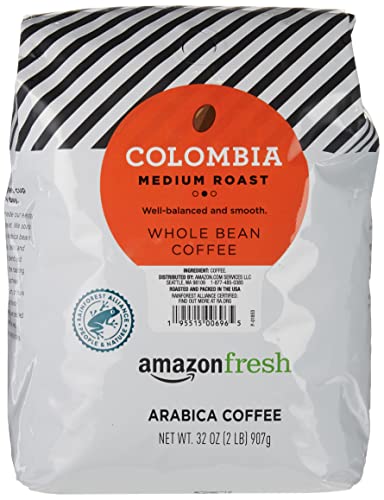
Amazon Fresh Colombia Medium Roast
Strengths
- 100% Arabica
- Large 32 oz bag
- Balanced medium roast
Trade-offs
- Limited complexity
- Basic packaging
- Not for flavor chasers
For a budget-friendly 100% Arabica option, this Amazon Fresh Colombia roast delivers solid value on paper. The 32-ounce bag is generous, and the fact that it’s roasted in the U.S. from Colombian beans suggests a level of freshness control that budget roasts don’t always offer. Owners consistently report a clean, balanced cup with mild acidity and a smooth, straightforward finish, nothing flashy, but reliable for daily use.
It won’t impress specialty coffee lovers chasing nuanced terroir notes, but for those who want a no-fuss morning brew without overspending, this is a practical pick. Compared to pricier Colombian offerings, it lacks depth, but for drip or pour-over simplicity, it holds its own.
Product photos



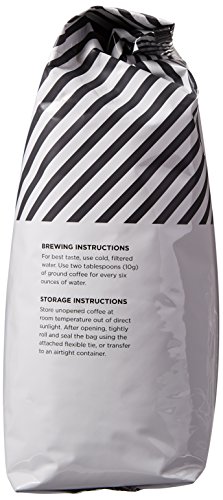
Illy Classico Whole Bean Coffee

Strengths
- Elegant flavor profile
- Pressurized freshness can
- Smooth with milk
Trade-offs
- Small 8.8 oz size
- Expensive per ounce
- Subtle for strong coffee fans
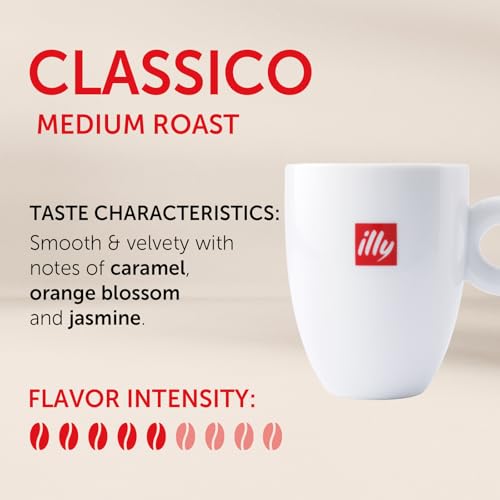
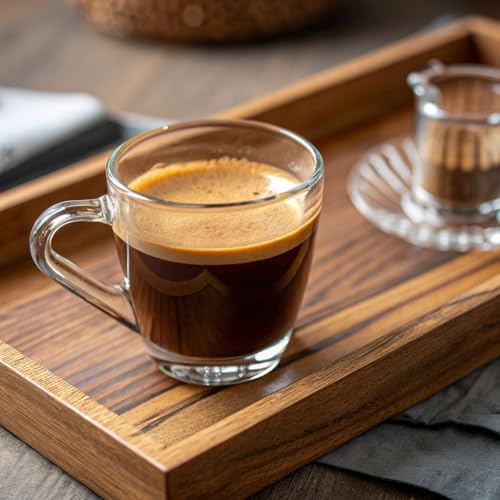
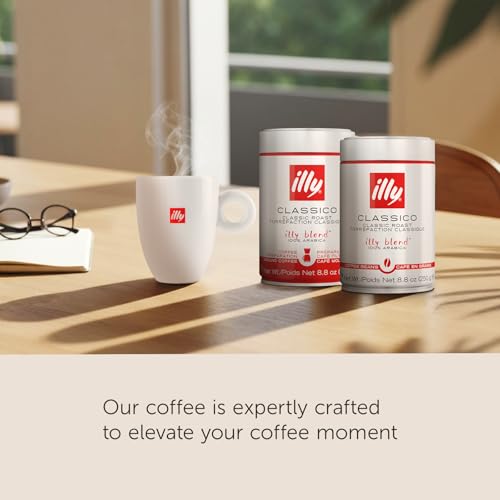
Illy Classico is a premium pick in both price and presentation, the pressurized can is designed to lock in freshness, and the blend is tuned for elegance over power. The advertised notes of caramel, orange blossom, and jasmine aren’t just marketing fluff; owners consistently report a delicate, perfumed cup with a lingering sweetness that stands out in milk-based drinks.
It’s not the most robust option here, and the 8.8-ounce size means it won’t last long for heavy drinkers. But for those who appreciate a refined, Italian-style roast with poise and balance, it’s hard to beat. Compared to Starbucks or Tim Hortons, it’s in a different league in finesse, though less suited for bold drip coffee routines.
Product photos
Lavazza Espresso Whole Bean Coffee

Strengths
- Great for espresso
- Balanced acidity
- 100% Arabica blend
Trade-offs
- Mild body for dark roast fans
- Not deeply chocolaty
- Floral notes fade over time
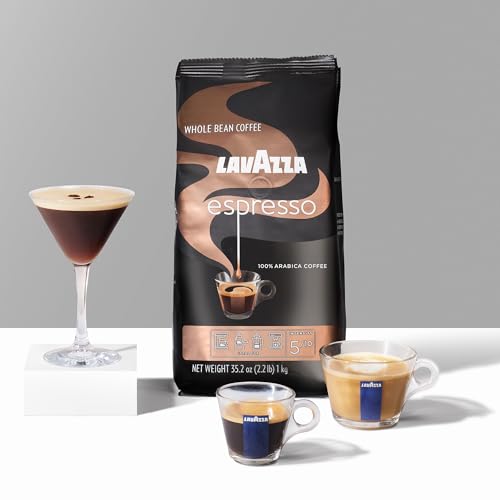
If you’re after a 100% Arabica bean that genuinely performs under pressure, Lavazza Espresso is built for the task. With a 5/10 intensity rating and a blend from South America and Africa, it’s designed to extract cleanly in espresso machines while still offering floral and fruity notes. Reviewers highlight its sweet finish and aromatic clarity, especially when used in a moka pot or with a home espresso setup.
It’s not as aggressive as some Italian roasts, which makes it more approachable for daily use. Compared to Caffè Borbone, it’s slightly drier and less sweet on the palate. I’d recommend this as a go-to for espresso lovers who don’t want to sacrifice acidity for body. The 2.2-pound bag also means less frequent repurchasing.
Product photos


Caffè Borbone 100% Arabica Beans
Strengths
- Well-balanced flavor
- Large 2.2 lb bag
- Adapts to all brewers
Trade-offs
- Muted acidity
- Generic flavor profile
- Less origin character
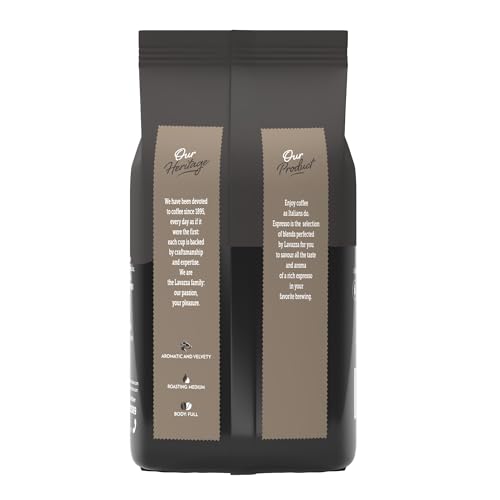
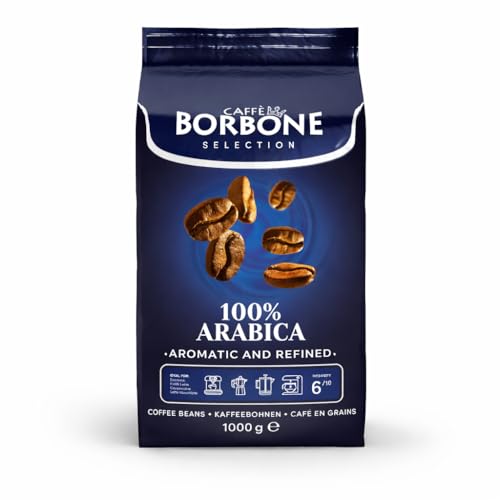
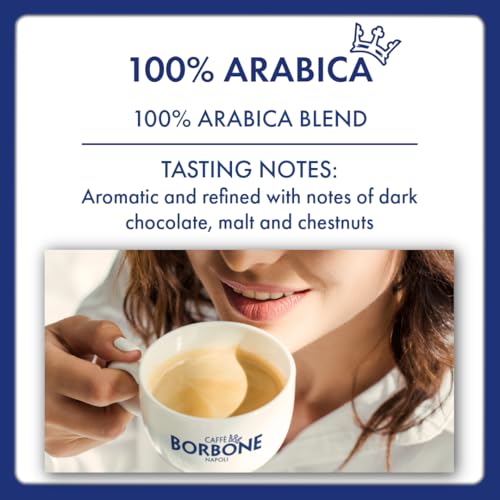
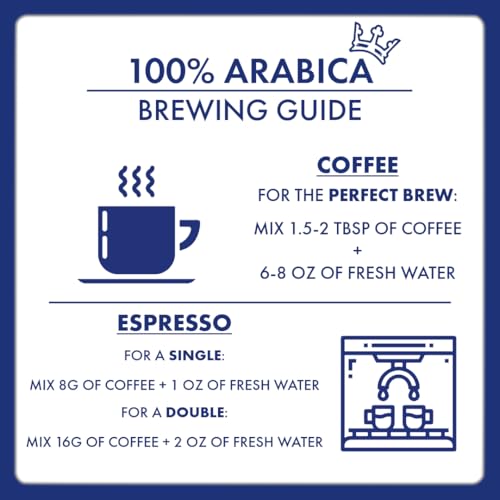
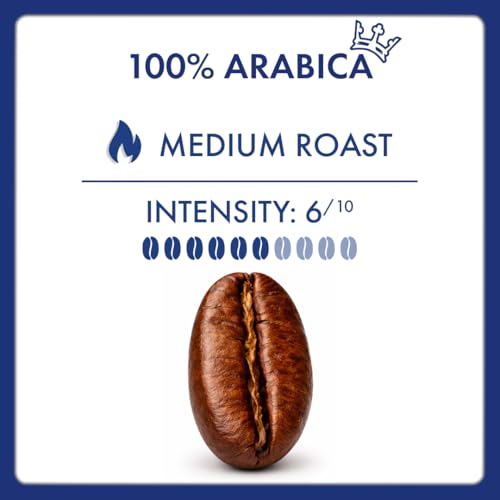
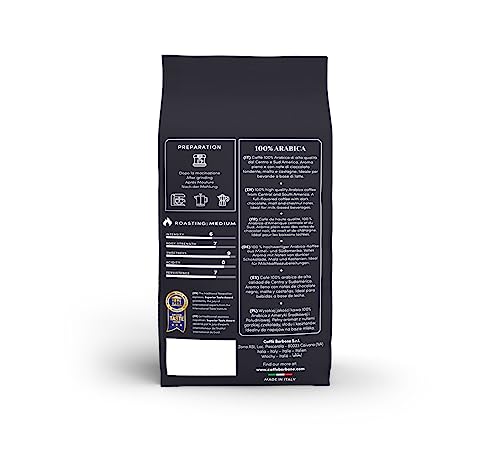
Caffè Borbone’s 100% Arabica blend aims for balance, and on paper, it hits the mark, medium roast, gentle sweetness, floral and fruity notes, with beans sourced from both South America and Asia. Reviewers note it brews evenly across methods, from drip to moka pot, and holds up well with milk. The 2.2-pound bag offers excellent value for households that go through coffee quickly.
It doesn’t have the intensity of a true Italian espresso roast, nor the vibrancy of an East African single origin. But as an all-rounder, it’s hard to fault. Compared to Lavazza Qualità Oro, it’s slightly sweeter and rounder, though less bright. My recommendation? A smart middle-ground bean for families or offices.
Product photos
Tim Hortons Original Blend Whole Bean
Strengths
- 32 oz value size
- Smooth, mild flavor
- 100% Arabica
Trade-offs
- Lacks complexity
- Basic roast profile
- Best in drip only
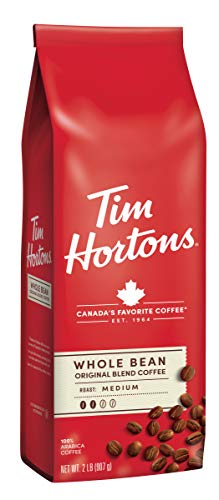
Tim Hortons Original blend leans into its identity as a no-nonsense, everyday coffee. The 32-ounce bag is a major plus for value seekers, and the 100% Arabica base is a step up from many economy blends. Owners describe it as mild, smooth, and slightly sweet, nothing flashy, but dependable for automatic drip machines.
It’s not designed for pour-over enthusiasts or espresso lovers, and the flavor profile is notably flatter than Lavazza or Don Francisco’s. But for offices or households that need a large quantity of easy-drinking coffee, it’s a solid budget workhorse. Compared to Amazon Fresh’s Colombia roast, it’s less vibrant but similarly priced and larger in volume.
Product photos


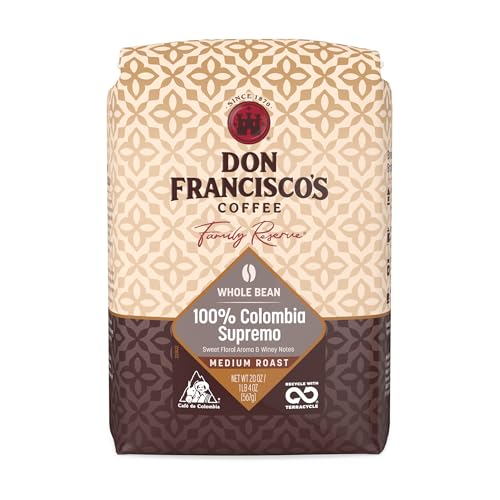
Don Francisco’s Colombia Supremo
Strengths
- Nitrogen-flushed packaging
- Smooth, balanced cup
- Great for pour-over
Trade-offs
- Limited boldness
- Not for dark roast fans
- Lower availability
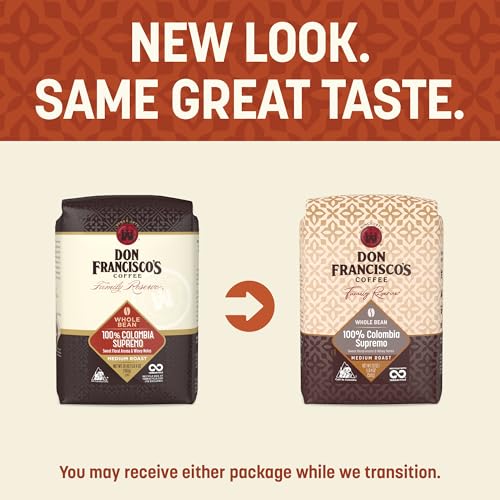
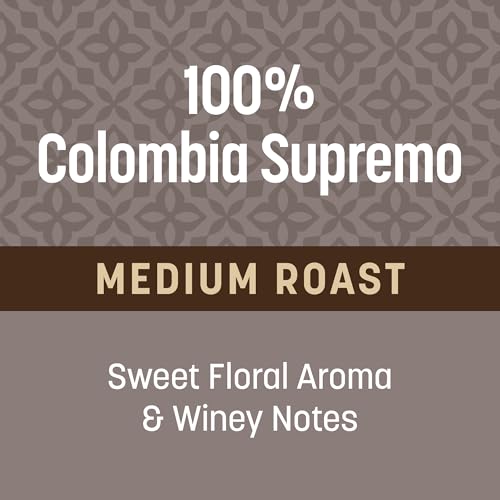
Don Francisco’s Colombia Supremo makes a quiet but strong case for itself with its nitrogen-flushed, one-way valve packaging, a rarity at this price point. That attention to freshness helps preserve the winey notes and sweet floral aroma the brand promotes. Owners praise its smooth, well-balanced cup, with just enough acidity to keep it interesting without tipping into sharpness.
It’s not as complex as African blends, but it delivers a clean, polished Colombian profile that works across brewing methods. Compared to Amazon Fresh’s Colombia roast, it’s more refined and aromatic. For those who want a smooth, easy-drinking bean with heritage branding and thoughtful packaging, this is a standout.
Product photos
Starbucks Pike Place Roast
Strengths
- Smooth, balanced flavor
- Ethically sourced
- Widely available
Trade-offs
- Roast masks origin notes
- Smaller 18 oz bag
- Can taste flat to experts
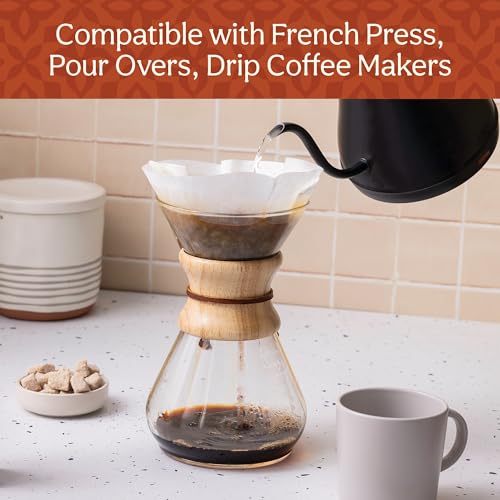
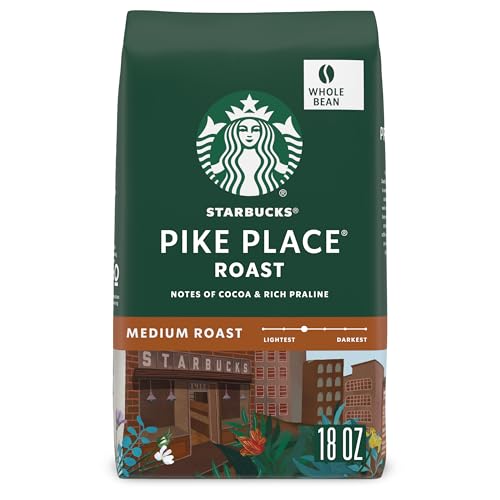
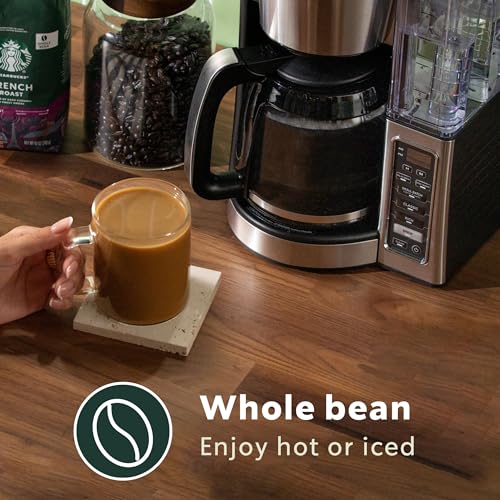
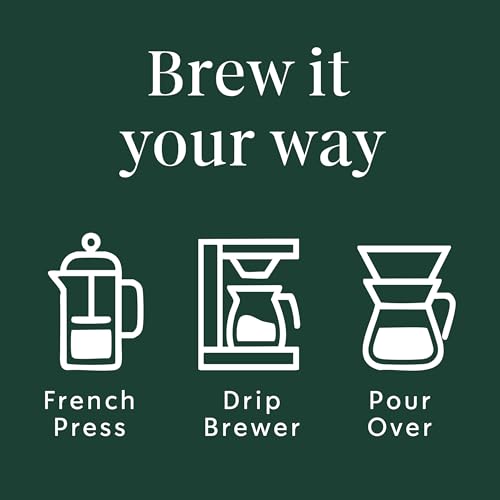
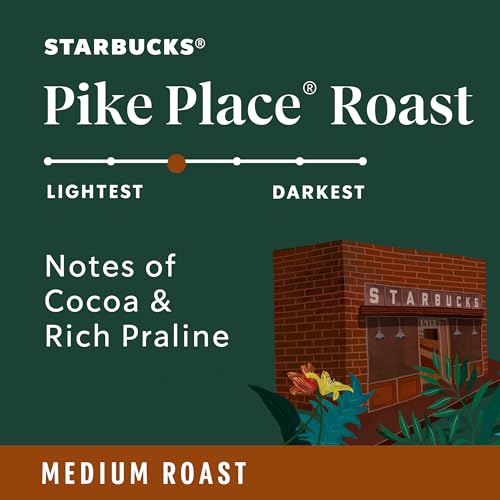
Starbucks Pike Place Roast is the definition of a widely available, consistent medium roast. It’s not trying to be exotic, just reliable. The blend of Latin American beans gives it that signature smooth, approachable profile with hints of cocoa and praline, which many find comforting. Owners note it brews well across methods, from drip to French press, and the ethical sourcing commitment adds some peace of mind.
That said, it’s roasted with a slightly heavier hand than true light-roast purists will enjoy, muting some of the bean’s origin character. Compared to Lavazza Qualità Oro, it’s more uniform and less lively. But for travelers or those who want café-like consistency at home, its availability and predictability make it a strong contender.
Product photos
How We Chose These 100 arabica coffee beans
As the founder of Bean Thusiast, I approach coffee selection with a focus on understanding the nuances within the bean itself. Rather than a hands-on lab test, this was a research-led comparison of published specifications and owner feedback for these 100% Arabica options. I compared roast levels, origin stories, and flavor profiles, then weighed those against what owners are actually saying about the experience.
For this category, the most important factors quickly became roast level and origin. A medium roast consistently delivers a balanced cup appealing to a wider range of palates, while the origin significantly impacts the flavor notes – Colombian beans often offer a brighter acidity, while those from Africa can lean toward fruity profiles. These elements dictate the overall enjoyment and versatility of the beans.
Specifications reliably reveal the origin and roast level, but owner reviews provided critical insight into the actual experience – smoothness, aroma intensity, and whether the beans deliver on advertised flavor notes. I also considered brand reputation; established roasters often maintain consistent quality. You can learn more about the Arabica vs Robusta comparison to understand why we focused solely on 100% Arabica varieties for this guide.
How To Choose The 100 arabica coffee beans
Finding the right Arabica beans is about more than just a pretty bag; it’s about unlocking a consistent, enjoyable experience in your daily cup.
Quality Arabica beans demonstrate a clear origin story, consistent roasting (indicated by roast date – not just a “best by” date!), and a flavor profile that matches the description. Look for whole bean options to maximize freshness and control your grind. Evaluate the roast level to align with your preferred brewing method and taste preferences.
Understanding Roast Level
The roast level profoundly impacts the final flavor. A lighter roast will showcase more of the bean’s origin characteristics – those floral or fruity notes you often read about. Medium roasts, like many Colombian beans, offer a balance of acidity, body, and flavor. Darker roasts develop bolder, bittersweet flavors, sometimes obscuring the origin notes entirely. I often recommend starting with a medium roast to appreciate the nuances of Arabica, then exploring lighter or darker profiles from there.
Assessing Origin and Processing
Arabica beans from different regions possess distinct characteristics. Ethiopian Yirgacheffe is known for its bright acidity and floral aromas, while Sumatran Mandheling typically offers earthy tones and a full body. Beyond region, processing matters. Washed coffees tend to be cleaner and brighter, while natural processed coffees exhibit more fruit-forward sweetness. Don’t be afraid to experiment; exploring different origins is one of the most rewarding aspects of coffee. You’ll find top Arabica coffee beans offer a wide range of profiles.
- A single-origin bean guarantees a specific geographic source, offering a purer expression of that terroir.
- A blend, carefully crafted, might provide more consistency and balance, masking potential variations between harvests.
- Consider the altitude at which the beans were grown; higher altitudes generally lead to denser, more flavorful beans – a crucial factor when selecting the best coffee beans.
Balancing Quality and Value
While premium beans like Illy Classico deliver a refined experience, they aren’t always necessary for a great cup. Several brands, like Amazon Fresh and Tim Hortons, offer excellent value without sacrificing 100% Arabica quality. Don’t equate price with quality alone. A fresher, properly stored bag of a more affordable bean will often outperform stale, expensive beans.
A general rule of thumb: always prioritize a roast date over a “best by” date. Coffee degrades significantly after roasting, losing its aroma and flavor.
I encourage you to explore different options and find what suits your palate and budget. Remember, the “best” coffee is the one you enjoy the most. For more in-depth guidance, read our buying guide for coffee beans to help you navigate the world of coffee. You might also be interested in our premium Arabica coffee recommendations.
100 Arabica Coffee Beans Compared
Here’s a comparison of key specifications for various 100% Arabica coffee bean options.
| Product Name | Roast | Origin | Weight (oz) | Flavor Notes | Intensity |
|---|---|---|---|---|---|
| Lavazza Qualità Oro Whole Bean | Medium | Central/Africa | N/A | Fruity & Aromatic | N/A |
| Amazon Fresh Colombia Medium Roast | Medium | Colombia | 32 | Balanced, Smooth | N/A |
| Illy Classico Whole Bean Coffee | N/A | N/A | N/A | Caramel, Orange Blossom | N/A |
| Lavazza Espresso Whole Bean Coffee | Medium | South America/Africa | N/A | Floral, Fruit | 5/10 |
| Caffè Borbone 100% Arabica Beans | Medium | South America/Asia | 48.5 | Floral, Fruity | N/A |
| Tim Hortons Original Blend | Medium | N/A | N/A | N/A | N/A |
| Don Francisco’s Colombia Supremo | N/A | Colombia | 20 | Floral, Winey | N/A |
| Starbucks Pike Place Roast | Medium | Latin America | 18 | Cocoa, Praline | N/A |
Frequently Asked Questions
What roast level is best for trying single-origin Arabica beans?
A lighter roast is generally best for single-origin beans, as it allows the unique flavor characteristics of the bean’s origin to shine through without being overshadowed by the roasting process. This lets you truly experience the terroir of the coffee.
How can I tell if Arabica beans are truly fresh?
Check for a roast date on the bag rather than a “best by” date. Coffee begins to stale quickly after roasting, so a recent roast date (within the last few weeks) indicates maximum freshness and flavor.
Will a burr grinder significantly improve my Arabica coffee experience?
Yes, a burr grinder will dramatically improve your experience. Unlike blade grinders, burr grinders produce a consistent particle size, which leads to a more even extraction and a better-tasting cup.
Are blended Arabica beans lower quality than single-origin?
Not necessarily. Blends can offer a more consistent flavor profile, balancing out variations between harvests, while single-origin highlights a specific region’s characteristics. Many best-rated Arabica coffee brands use skillful blending.
What’s the difference between washed and natural processed Arabica beans?
Washed beans are typically cleaner and brighter in acidity, as the fruit pulp is removed before drying. Natural processed beans retain the fruit during drying, resulting in a sweeter, more fruit-forward flavor profile and a heavier body.
The Bottom Line
Choosing from 100 Arabica options really comes down to balancing your desire for control over the process with how much fuss you want to deal with. For the consistently excellent, broadly appealing experience, I believe Lavazza Qualità Oro Whole Bean delivers the best overall combination of flavor, aroma, and accessibility. It’s a reliable choice for daily brewing.
If you’re specifically seeking value, Amazon Fresh Colombia Medium Roast stands out as a fantastic option. For those prioritizing versatility and a wider range of brewing methods, Starbucks Pike Place Roast offers a dependable and well-rounded profile. Exploring geographic Arabica varieties can help you understand the nuances of each.
Ultimately, the specs – roast level, origin, even altitude – matter less than freshness and proper storage. Prioritize buying whole bean and grinding just before brewing. A consistent, quality grind and filtered water will dramatically improve any bag of beans you choose, setting you up for a truly enjoyable cup.
