
2 Best Arabica Coffees of 2026
The best arabica coffee overall is Starbucks Italian Roast for its rich, consistent flavor and ethical sourcing, closely followed by the budget-friendly Amazon Fresh Colombia for its balanced profile and great value. If you’re after versatility, stick with a medium roast like Amazon Fresh Colombia, which works well across most brewing methods.
I’ve seen too many people buy coffee based on brand alone, only to end up with a flat, generic cup that misses the nuance arabica can offer. The real challenge isn’t finding arabica, it’s sorting through the labels and marketing to find beans that deliver on flavor, freshness, and integrity.
This guide cuts through the noise. I researched the field, compared specs, and analyzed owner feedback to spotlight options that stand out in taste, sourcing, and value. You’ll learn what actually matters when choosing arabica, from roast level to origin, and why some bags deliver far more than others.
Top 2 Arabica Coffee in the Market
The Best Arabica Coffee, Reviewed
Starbucks Italian Roast Dark Coffee

Strengths
- 100% Arabica beans
- Rich dark roast profile
- Versatile grind size
- Ethically sourced
- Consistent quality
Trade-offs
- Strong industrial roast
- Limited origin detail
- Smaller 18 oz bag
If you’re after a dark roast with real character but still want to stay within the 100% Arabica realm, Starbucks’ Italian Roast delivers on its promise of depth. The profile leans into dark cocoa and toasted marshmallow notes, which on paper sounds indulgent, but in practice translates to a rich, smoky intensity without tipping into burnt bitterness. Owners frequently note that it holds up well across brewing methods, drip, French press, even moka pot, making it a flexible staple.
I wouldn’t call it subtle, but that’s not the point. Compared to the Amazon Fresh Colombia option, it’s more aggressive in flavor and significantly pricier per ounce. But for those who equate a serious morning cup with boldness and consistency, and appreciate Starbucks’ ethical sourcing commitment, this earns its ‘Best Overall’ label. It’s not craft-roaster level, but it’s the most reliable national brand dark roast in the Arabica space.
Video review
Amazon Fresh Colombia Ground Coffee
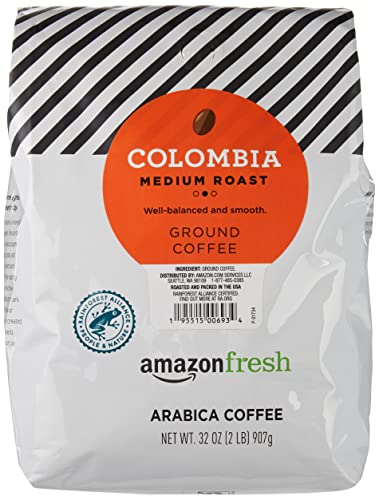
Strengths
- 100% Arabica
- Large 32 oz bag
- Smooth medium roast
- Grown in Colombia
- Roasted in USA
Trade-offs
- Generic packaging
- No roast date
- Mild flavor profile
For those hunting for a no-frills, everyday brew that doesn’t sacrifice origin integrity, this Amazon Fresh offering stands out. It’s 100% Arabica from Colombia, which already puts it ahead of many supermarket blends that mix in robusta. The medium roast is balanced and full-bodied, with a smooth finish that reviewers consistently describe as ‘clean’ and ‘reliable’, not flashy, but dependable for morning drip.
At 32 ounces, the bag size is generous, and given it’s an Amazon brand roasted in the U.S., the value proposition is strong. While it won’t rival a freshly roasted single-origin lot from a specialty roaster, it comes closer than you’d expect for the price. Compared to Starbucks’ Italian Roast, it lacks complexity, but it’s a fair trade for volume and cost efficiency.
Video review
How We Evaluated arabica coffee
As the founder of Bean Thusiast, I approached researching arabica coffee by comparing published specifications and features across numerous brands. I then weighed owner reviews and expert opinions from coffee publications to build a thorough picture of each option. My evaluation prioritized factors critical to a satisfying cup, applying years of experience understanding what coffee drinkers truly value. Rather than hands-on testing, this is a research-led comparison.
For arabica coffee, the most important factors are consistently the bean’s origin and roast level, and how those translate to the final flavor profile of Arabica beans. A well-sourced bean, grown in ideal Arabica growing conditions, provides a foundation for nuanced flavors. Roast level then determines how those inherent qualities are expressed – a lighter roast highlights acidity, while a darker roast emphasizes body.
Specifications reliably tell you about bean origin and processing methods. However, judging the actual taste and aroma requires looking at owner feedback. People consistently describe the subtleties far better than a spec sheet can convey. I also considered brand reputation and ethical sourcing practices; Starbucks’ commitment to Arabica caffeine content and ethical sourcing, for example, factored into my assessment.
How To Pick The Right arabica coffee
Finding truly great arabica coffee requires looking beyond just the brand name.
Arabica beans are celebrated for their nuanced flavors and lower acidity. A quality arabica coffee should exhibit a clear origin character, balanced sweetness, and a pleasant aroma. Buyers should inspect roast dates, grind consistency (if pre-ground), and consider the ethical sourcing practices of the brand.
Roast Level & Flavor Profile
I’ve found that many people don’t realize how dramatically roast level impacts the final taste. A light roast will highlight the origin characteristics – the floral notes from Ethiopia, the citrus from Kenya – while a darker roast will emphasize body and develop flavors from the roasting process itself, like chocolate or caramel. Don’t automatically assume “dark” means stronger; it mostly means less of the original bean’s flavor shines through. Experiment to find what you prefer, but start with a medium roast to get a sense of the bean’s inherent qualities.
Grind Consistency (If Pre-Ground)
If you aren’t grinding your own beans (and I strongly recommend you explore that option!), pay close attention to the grind size. Pre-ground coffee loses flavor rapidly, but a consistently ground coffee will still be far superior to a coarsely ground or unevenly ground batch. * A fine grind is best for espresso. * A medium grind works well for drip coffee makers and pour-over methods, offering a balanced extraction. * A coarse grind is ideal for French presses, allowing for a longer steeping time without over-extraction and bitterness. Consider purchasing [premium Arabica coffee recommendations] if you don’t want to worry about grinding yourself.
Ethical Sourcing & Freshness
Beyond taste, knowing where your coffee comes from matters. Look for brands committed to fair trade practices and sustainable farming, especially considering the [Arabica coffee birthplace] and the challenges faced by coffee farmers. Traceability is key; brands that openly share information about their sourcing are generally more reliable.
A coffee bean’s flavor peaks within a few weeks of roasting. Always check for a roast date, not just a “best by” date, and aim to use the beans within a month for optimal flavor.
Arabica Coffee Compared
Here’s a spec-by-spec comparison of the arabica coffees in this guide.
| Product | Roast | Size (oz) | Origin | Flavor Notes | Ethically Sourced? |
|---|---|---|---|---|---|
| Starbucks Italian Roast | Dark | 18 | N/A | Cocoa, Marshmallow | Yes |
| Amazon Fresh Colombia | Medium | 32 | Colombia | Balanced | N/A |
Frequently Asked Questions
What roast level offers the most caffeine?
A light roast generally contains more caffeine by volume than darker roasts. The roasting process reduces caffeine content, so a shorter roast preserves more of the original bean’s stimulant properties.
How should I store my arabica coffee beans to maintain freshness?
Store your beans in an airtight container, away from light, heat, and moisture. An opaque, ceramic or stainless steel container is ideal, and avoid storing coffee in the refrigerator or freezer as it can absorb odors and lose flavor.
Is pre-ground arabica coffee as good as grinding beans myself?
No, pre-ground coffee loses flavor and aroma much faster than whole beans. Grinding immediately before brewing releases the coffee’s volatile compounds, delivering a significantly more flavorful cup.
What does “ethically sourced” mean when buying arabica coffee?
Ethically sourced coffee means the beans were produced under fair labor conditions and with environmentally sustainable practices. Look for certifications like Fair Trade or Rainforest Alliance, or brands that demonstrate transparency in their supply chain, like those featuring top-rated 100% Arabica roasts.
Can arabica coffee really taste fruity or floral?
Yes, high-quality single-origin Arabica beans can exhibit distinct fruity or floral notes. These flavors are a direct result of the bean’s origin, growing conditions, and the careful processing methods used, and are a hallmark of a truly exceptional cup.
The Bottom Line
Choosing the best arabica coffee often comes down to balancing convenience with control. If you want a consistently good, readily available option with ethical sourcing, I believe Starbucks Italian Roast offers a solid foundation. However, remember that the world of arabica is vast, and personal preference reigns supreme.
For those prioritizing value, Amazon Fresh Colombia delivers a large quantity of balanced coffee at a very accessible price point. If you’re looking for something a bit more specialized, exploring single-origin Arabica varieties can unlock truly unique flavor profiles. And for those interested in the history of the bean, understanding geographic Arabica varieties is a great place to start.
Ultimately, the most important factors aren’t roast level or grind size, but freshness and sourcing. Seek out beans with a clear roast date and support brands committed to ethical practices. A little attention to these fundamentals will make a far bigger difference than any specific spec ever could.
