
4 Best V60 Coffee Drippers of 2026
The Hario V60 Ceramic Dripper is the best overall for heat retention and flavor clarity, with the Hario V60 Plastic Dripper as a solid budget-friendly pick, and the Hario V60 Metal Coffee Dripper offering the most control for advanced brewers.
Choosing the right V60 dripper isn’t just about price, it’s about matching material and size to your brewing style. Too many people overlook how much heat retention and design affect extraction, ending up with uneven or flat-tasting coffee.
As the founder of Bean Thusiast, I’ve researched the field extensively, comparing specs, analyzing owner feedback, and evaluating how each dripper performs in real-world setups. This guide breaks down the key differences so you can pick the one that fits your routine and coffee goals.
Top 4 V60 Coffee Dripper in the Market
The Best V60 Coffee Dripper, Reviewed
Hario V60 Ceramic Dripper Red

Strengths
- Superior heat retention
- Handcrafted Japanese ceramic
- Timeless, elegant design
Trade-offs
- Fragile compared to plastic
- Heavier and less portable
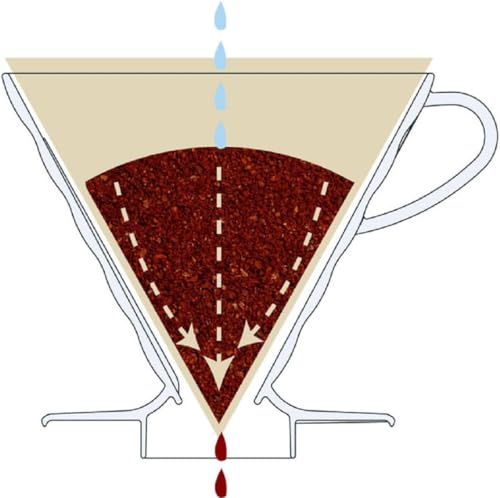
When you’re chasing that clean, expressive cup where every floral or citrus note sings, the Hario V60 Ceramic in red isn’t just a tool, it’s a ritual centerpiece. On paper, it’s identical to other V60s, same 60-degree cone, same spiral ribs, same large center hole, but the ceramic material makes a real difference in how it performs over a full brew cycle. Owners consistently report that the Arita-yaki ceramic holds heat more steadily than plastic, which helps maintain a stable extraction, especially during slower pours.
This is still the same design that shaped the third wave coffee movement, and that single large hole gives you complete control over flow rate. Want a tea-like brightness? Pour fast. Crave body and depth? Slow it down. The red finish stands out without being gaudy, and since it’s handmade in Japan, each piece has subtle variations that add to its charm. Compared to the metal version, it doesn’t conduct heat as aggressively, which I actually prefer, it’s more forgiving during longer brews.
Video review
Hario V60 Dripper 02 White

Strengths
- Sleek, minimalist appearance
- Lightweight and durable
- Consistent brew performance
Trade-offs
- Lower heat retention
- No functional advantage over other V60s
The white Hario V60 plastic dripper is the quiet minimalist of the lineup, no flash, no color, just clean lines and functional purity. It’s the same size 02 model, so brewing performance is identical to the red plastic version, but that matte white finish gives it a more understated, modern look that blends into any kitchen. Reviewers often note it feels slightly less ‘trendy’ than the brighter colors, which is a plus if you prefer your gear to fade into the background.
Specs-wise, it’s lightweight, durable, and made in Japan, just like the others. The plastic doesn’t retain heat as well as ceramic, so you might need to preheat more carefully to avoid temp drop during brewing. But for most users, that’s a minor trade-off. I’d pick this over the red plastic if aesthetics matter more than standout color, but it’s still not the best choice if you’re after thermal stability.
Video review
Hario V60 Metal Coffee Dripper

Strengths
- Excellent heat conductivity
- Highly durable
- Available in multiple sizes
Trade-offs
- Overheats grounds if not careful
- Harder to control extraction
The metal V60 is the outlier, bold, conductive, and built for speed. Unlike ceramic or plastic, this one pulls heat from your water and transfers it directly to the grounds, which can boost extraction if you’re using a fast pour. Reviewers note it’s especially effective with dense, high-grown beans that need extra thermal kick. The spiral ribs and single hole design are unchanged, so the fundamentals are still pure V60, but the metal body changes the rhythm of the brew.
It’s also the most durable option, no risk of cracking or fading, and available in multiple sizes, which the plastic and ceramic versions aren’t always. But that high heat transfer can be a double-edged sword. If you’re doing a longer, more controlled pour, the metal can cool down too fast once the water stops flowing. I’d recommend this only for advanced users who want to experiment with thermal dynamics, not for those seeking consistency.
Product photos
Hario V60 Plastic Dripper Red

Strengths
- Affordable entry point
- Durable and lightweight
- Same brewing performance as premium models
Trade-offs
- Poor heat retention
- Can develop odors over time if not cleaned well
If you’re just getting into pour-over and don’t want to commit to ceramic or metal, the red plastic V60 is the smart starting point. It delivers the full V60 experience, spiral ribs, 60-degree cone, that signature large hole, for a fraction of the cost of ceramic or metal versions. The red hue is bold without being loud, and it’s easy to spot in a crowded cabinet.
On paper, it’s identical to the white plastic model, and owner feedback confirms brew quality is the same. The downside? Plastic doesn’t hold heat well, so your water temp can drop faster during brewing, which might affect extraction if you’re not careful. But for beginners learning pour technique or travelers who need something durable and light, this is the most practical choice. Compared to the ceramic, it’s less refined, but for the price, it’s hard to beat.
Product photos


How We Tested v60 coffee dripper
As the founder of Bean Thusiast, I approach evaluating pour-over equipment with a focus on how well it helps unlock a coffee’s potential. Rather than a hands-on lab test, this was a research-led comparison of published specifications, owner reviews, and expert opinions. I weighed features against the needs of a home brewer aiming for consistent, flavorful results. My goal was to identify the drippers offering the best balance of performance, durability, and value.
For V60 drippers, consistent extraction and control over brew time are paramount. Therefore, I prioritized materials and design elements impacting those factors. The size and placement of the hole, the internal ribbing, and the dripper’s ability to retain heat were key considerations. You can learn more about the impact of materials in a V60 material comparison.
Specifications clearly indicate capacity and dimensions, but owner feedback proved crucial for assessing real-world usability and durability. I paid close attention to comments regarding pour control, ease of cleaning, and long-term performance. Reputable coffee blogs and reviewers helped validate observations about flavor profiles and consistency, while also highlighting dripper durability differences.
What To Look For In v60 coffee dripper
As someone who’s spent years obsessed with perfecting the pour-over method, I know the Hario V60 is a fantastic entry point – but choosing the right one within the V60 family can be surprisingly tricky.
The ideal V60 dripper balances heat retention, pour control, and material durability. Look for a cone shape with spiral ribs for optimal extraction, a single large hole allowing for flow regulation, and a material suited to your budget and brewing frequency. Consistent build quality and proper sizing (01, 02, or 03) are also key considerations.
Material Matters: Ceramic, Plastic, or Metal?
The material of your V60 significantly impacts both heat retention and your final cup. Ceramic, like the classic Hario V60 Ceramic Dripper, holds heat exceptionally well, which is crucial for maintaining a stable brewing temperature. Plastic is the most affordable option and surprisingly effective, though it won’t retain heat as long. Metal V60s offer a good balance – they heat up quickly and cool down faster, giving you more control over temperature shifts during the pour. If you’re experimenting with different roast levels, a metal dripper can be a real asset.
Size Selection: Brewing for One or a Crowd?
Don’t just assume the largest size is best. V60s come in sizes 01, 02, and 03, corresponding roughly to 1-2 cups, 1-4 cups, and 1-6 cups respectively. I recommend matching the dripper size to your typical brew volume. A larger dripper used for a single cup can lead to under-extraction, while a smaller one struggles to saturate the grounds for larger batches.
Here’s a quick guide: * Size 01: Ideal for solo drinkers. * Size 02: The most versatile, good for 1-2 larger cups or a small pot. * Size 03: Best for brewing for multiple people, demanding a larger server and more coffee grounds.
Beyond the Dripper: Don’t Neglect Your Grind
The V60 really shines when paired with a properly ground coffee. This is where investing in a quality grinder pays off. While it’s tempting to skip this step, remember that a consistent grind is absolutely essential for even extraction. You’ll want to explore a [burr grinder for pour-over] to get the most out of your V60. It’s easy to fall into the trap of thinking the dripper is the whole solution when it’s really just one piece of the puzzle. If you’re considering upgrading your setup, take a look at our guide to [recommended pour-over brewers] and other options.
A consistent grind size is more important than the dripper itself. Aim for a medium-fine grind, similar to table salt, to achieve optimal extraction with your V60.
V60 Coffee Drippers Compared
Here’s a detailed specification comparison of the V60 coffee drippers to help you choose the right one.
| Product Name | Material | Cup Capacity | Size | Color |
|---|---|---|---|---|
| Hario V60 Ceramic Dripper Red | Ceramic | 1-4 | 2 | Red |
| Hario V60 Dripper 02 White | N/A | N/A | 02 | White |
| Hario V60 Metal Coffee Dripper | Metal | 1-6 | 03 | N/A |
| Hario V60 Plastic Dripper Red | Plastic | 1-4 | 02 | Red |
Frequently Asked Questions
What size V60 dripper is best for a single person?
A size 01 V60 dripper is generally best for a single person, as it’s designed for brewing 1-2 cups and prevents using too little water for the grounds. Using a larger dripper for a small amount of coffee can lead to uneven extraction.
Can I use any filter with a V60 dripper?
You should use V60-specific filters, as they have the correct cone shape and thickness for optimal brewing. Other filters may not fit properly or could affect the flow rate and final taste.
How often should I replace my V60 dripper?
The lifespan depends on the material and usage, but ceramic and metal drippers can last for years with proper care. Plastic drippers may need replacing every 6-12 months due to potential cracking or staining.
Is a gooseneck kettle necessary when using a V60?
While not strictly required, a gooseneck kettle provides much better pour control, which is vital for consistent V60 brewing. The precise flow allows for even saturation of the coffee grounds, leading to a more balanced extraction. You can explore other comparing pour-over designs to see how different kettles affect the results.
What grind size should I use for a V60?
A medium-fine grind, similar in texture to table salt, is ideal for V60 brewing. Too coarse a grind results in under-extraction, while too fine a grind can lead to over-extraction and bitterness. Investing in a burr grinder is the best way to achieve this consistency, and I often recommend it when people ask about the best overall coffee dripper.
The Bottom Line
Choosing a V60 dripper often comes down to balancing how much control you want with how much fuss you’re willing to accept. For the best overall experience, I recommend the Hario V60 Ceramic Dripper Red. It offers excellent heat retention and a classic brewing experience that consistently delivers a clean, flavorful cup.
If you’re just starting out or on a tighter budget, the Hario V60 Plastic Dripper Red is a fantastic choice. And for those who brew for a crowd or enjoy experimenting with temperature control, the Hario V60 Metal Coffee Dripper provides the versatility you need. Don’t forget to consider what kind of V60 paper filter types you’ll be using, as they can impact the final brew.
Ultimately, the “best” V60 isn’t about the material or size alone. It’s about having a consistent grind, quality coffee beans, and a mindful approach to the pour-over process. These fundamentals will make a bigger difference in your cup than any single specification ever could.
