
8 Best Tasting Decaf Coffee K Cups of 2026
The best tasting decaf K-Cups deliver rich flavor without caffeine, and after researching the market, Illy Classico Decaf Roast stands out as the top choice for its smooth, balanced profile. For a budget-friendly option, Green Mountain Decaf Breakfast Blend offers a clean, bright cup, while Lifeboost Organic Decaf K Cups are ideal for those wanting certified organic and toxin-tested beans.
Finding a decaf K-Cup that actually tastes good is harder than it should be. Too many taste flat, watery, or leave a chemical aftertaste from poor decaffeination.
I compared specs, owner feedback, and brewing standards to spotlight the decaf K-Cups that deliver real flavor and quality. These picks prioritize taste, bean origin, and clean processing, so you don’t have to sacrifice your morning ritual.
Top 8 Tasting Decaf Coffee K Cups in the Market
The Best Tasting Decaf Coffee K Cups, Reviewed
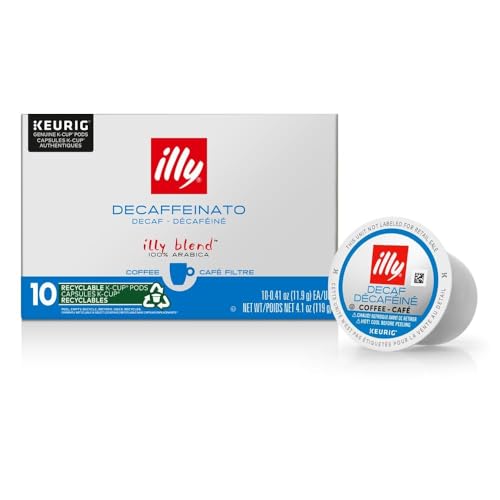
Illy Classico Decaf Roast K-Cups
Strengths
- Smooth caramel notes
- High-quality Arabica
- Consistent roast
Trade-offs
- Only 10 pods per box
- Mild flavor may lack depth
- Higher cost per cup
Illy’s Classico Decaf stands out in a sea of muddled decaf K cups by leaning on Italian roast discipline and a clean, balanced profile. The specs show 100% Arabica beans with a medium roast, and owners confirm the flavor delivers, caramel notes, smooth body, and a finish that doesn’t drag. This is decaf that doesn’t apologize for being decaf.
Where it really pulls ahead is in roast consistency. Unlike some brands that flatten flavor during decaffeination, Illy maintains clarity. Compared to Starbucks’ House Blend, it’s less sweet and more refined. It’s not the boldest option, but if you want a polished, no-fuss decaf that tastes like real coffee, this is a top contender. My recommendation? It’s the smarter buy for daily sippers who value elegance over intensity.
Video review
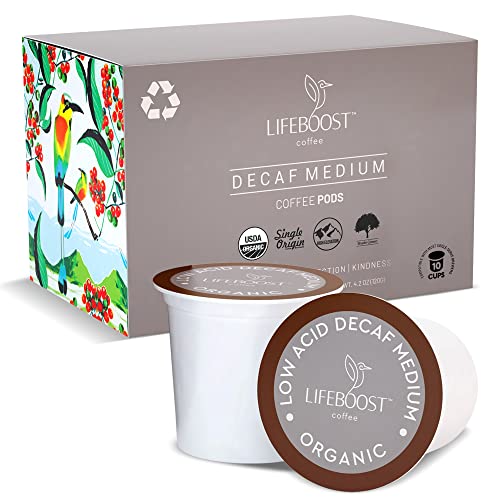
Lifeboost Organic Decaf K Cups
Strengths
- Third-party toxin tested
- Low acid formula
- Single-origin beans
Trade-offs
- Very small pod count
- Expensive per cup
- Limited flavor depth
Lifeboost enters the decaf K cup game with a strong health-first pitch: USDA Organic, third-party tested for toxins, low acid, and single-origin beans from Central America. On paper, it’s the cleanest option available. Owners report a smooth, mellow cup with a clean finish, ideal for sensitive stomachs or those avoiding mold and pesticides.
But it’s not just about safety. The medium roast has a rounded, slightly sweet profile that stands up to other organics. Compared to The Organic Coffee Co., it’s more rigorously vetted, though at a higher cost per pod. I’d pick this for anyone with digestive sensitivities or strict dietary standards, even if the 10-pod count limits trial size. It’s the one to choose when purity matters as much as taste.
Video review
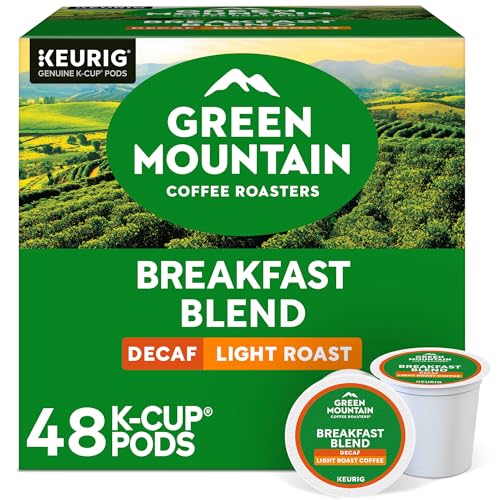
Green Mountain Decaf Breakfast Blend
Strengths
- Large 48-pod count
- Light, clean taste
- Kosher certified
Trade-offs
- Subtle flavor may disappoint
- Not for dark roast fans
- Plastic pods only
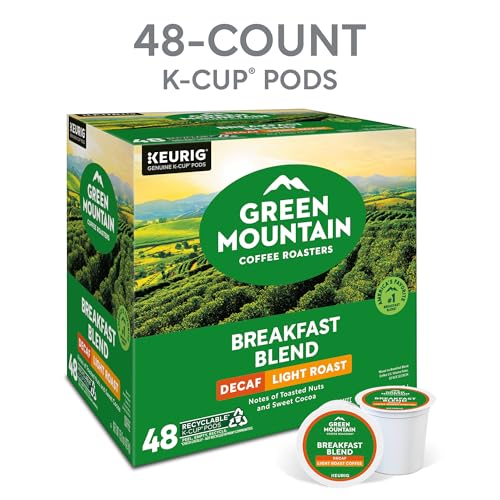
Green Mountain’s Decaf Breakfast Blend is a quiet standout in the light roast category, bright, clean, and gently sweet with nutty notes. It’s designed to mimic the freshness of morning, and owners say it delivers a crisp, easy-drinking cup that doesn’t linger too long. For decaf, that’s a win: many light roasts lose their spark during processing.
With 48 pods, it’s one of the largest packs here, making it a solid value for volume drinkers. Compared to Starbucks’ House Blend, it’s lighter and more delicate, less caramel-forward and more tea-like. I’d recommend it for early risers who want a gentle wake-up call without caffeine, or for those transitioning from tea to coffee. It’s not for boldness seekers, but it nails its niche.
Product photos

Peet’s Decaf House Blend Dark Roast
Strengths
- Full dark roast flavor
- Water-processed decaf
- Large 32-pod count
Trade-offs
- May be too bold for some
- Not compostable
- Limited availability
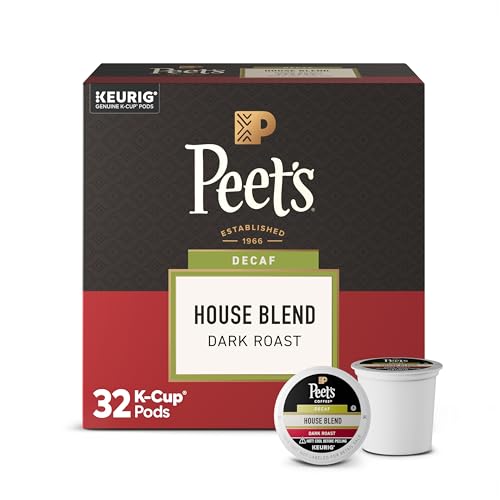
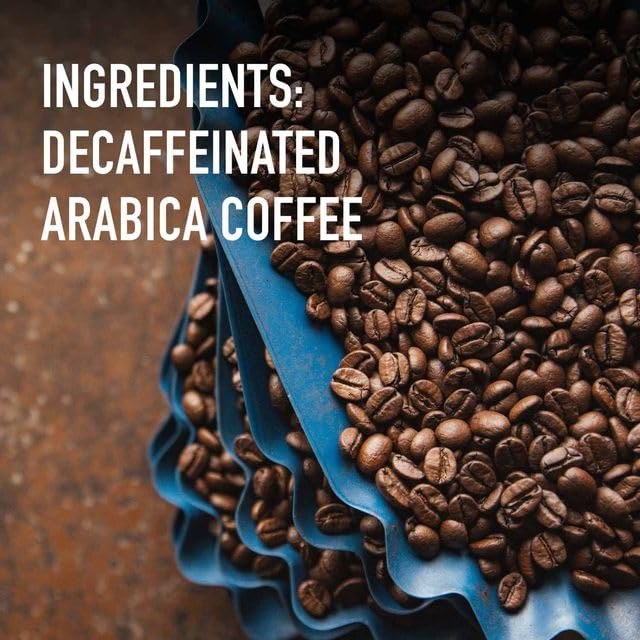
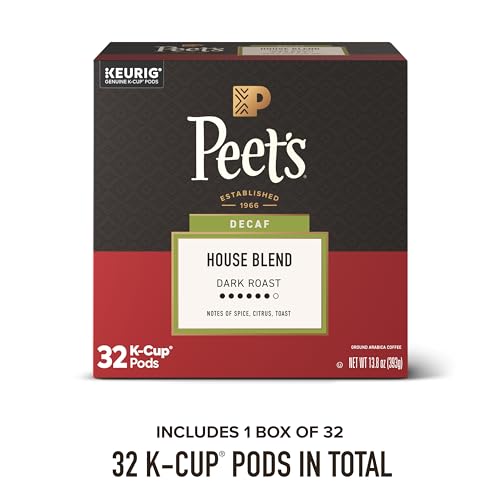
Peet’s Decaf House Blend is a rare find: a dark roast that doesn’t turn ashy or bitter after decaffeination. The key is their water process method, which owners say preserves the bean’s integrity. With 32 pods per box and 100% Arabica beans, it’s built for those who want a rich, deeply roasted decaf without sacrificing quality.
This is the kind of coffee that fills the room with aroma, smoky, slightly sweet, with a satisfying weight on the palate. Compared to Green Mountain’s light roast, Peet’s is a night-and-day contrast. It’s not quite as intense as a fresh espresso roast, but for a K cup, it’s impressively bold. I’d pick this over milder options if you’re transitioning from regular dark roast and don’t want to lose that signature Peet’s depth.
Product photos
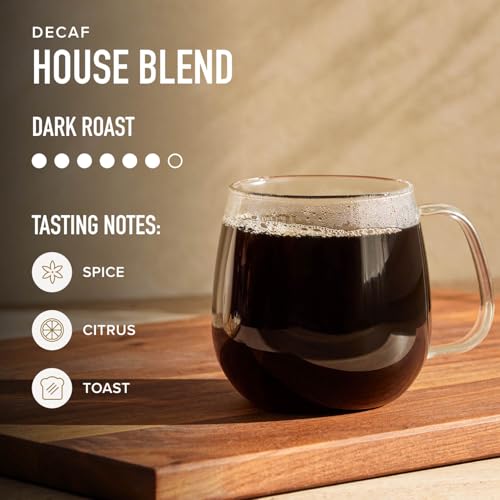
Starbucks Decaf House Blend K-Cups

Strengths
- Balanced toffee notes
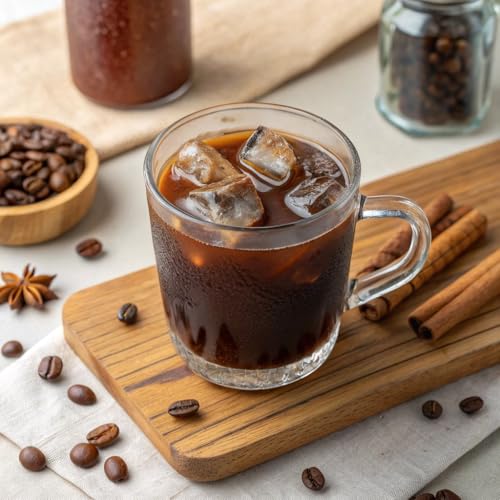
- Hot or iced versatility
- Café-quality consistency
Trade-offs
- Moderate pod count
- Plastic pods not eco-friendly
- Can taste flat if over-brewed
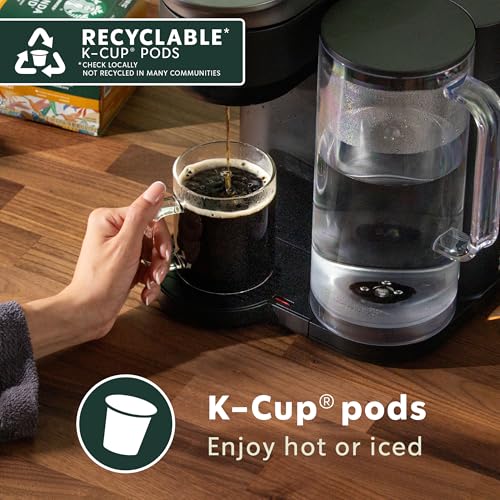
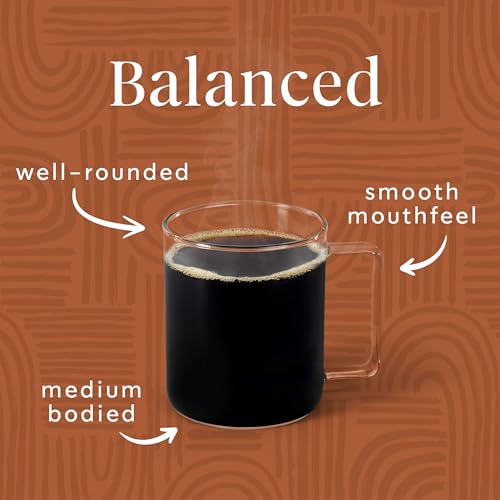
Starbucks Decaf House Blend is the reliable middle ground in decaf K cups, balanced, accessible, and consistent. With notes of toffee and cocoa, it’s a medium roast that works hot or iced, and owners say it brews true to the café experience. That matters, because not all K cups capture the depth of their bean-sourced counterparts.
Where it shines is versatility. Compared to McCafe, it has more nuance; compared to Illy, it’s more approachable. It’s not the most complex decaf, but it’s the one I’d recommend to someone who wants a no-surprises, café-style cup every time. The 22-pod count is modest, but the flavor stability makes it a solid daily driver.
Product photos


McCafe Premium Roast Decaf K-Cups

Strengths
- High pod count
- Smooth, familiar taste
- Recyclable pods
Trade-offs
- Limited complexity
- Generic flavor profile
- Not organic or specialty-grade
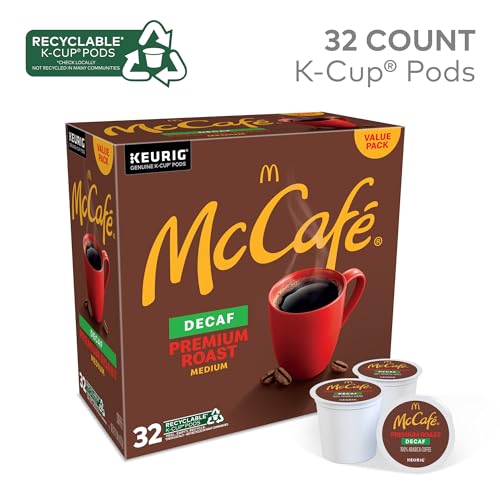
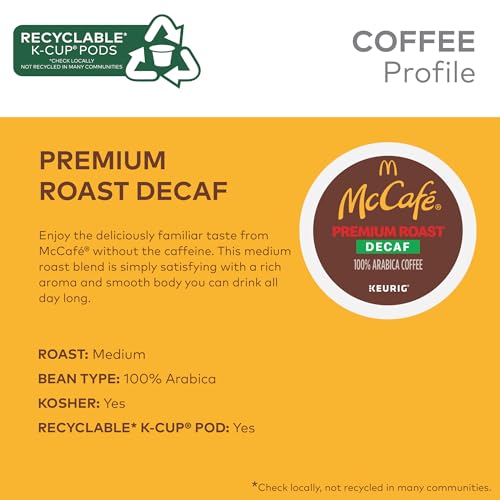
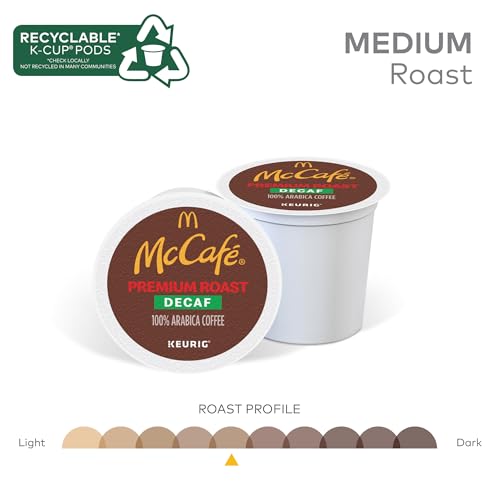
McCafe’s Decaf Premium Roast is the value king, 32 pods of consistent, no-frills decaf that tastes like the coffee you’d get at a drive-thru, but at home. It’s made with Arabica beans and has a smooth, clean finish, which is more than you can say for some budget decafs. Owners note it brews quickly and reliably, with a familiar aroma that’s comforting, if not exciting.
Where it wins is affordability and availability. Compared to Peet’s or Illy, it’s less refined, but it delivers a dependable cup without stretching your budget. The recyclable pod claim is a plus, though local facilities may not accept them. I’d pick this as a daily workhorse for offices or households that burn through pods and don’t need artisanal nuance.
Product photos

Two Rivers Decaf Flavored Variety Pack
Strengths
- Wide flavor variety
- Good pod count
- Keurig 2.0 compatible
Trade-offs
- Inconsistent flavor quality
- Artificial taste noted
- Not for black coffee lovers
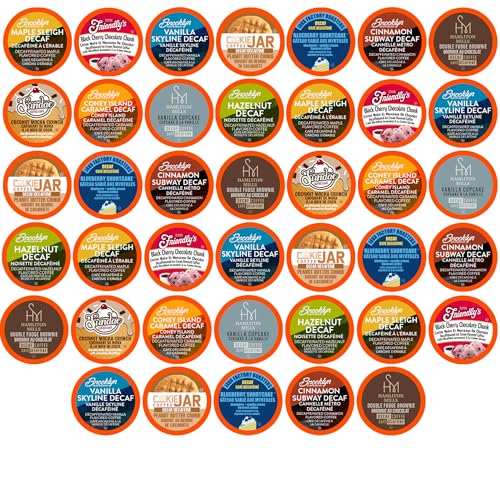
If you’re chasing variety in decaf flavored K cups, this Two Rivers pack throws a wide net. On paper, the appeal is clear: 40 pods of assorted decaf flavored coffees, giving you a rotating cast of dessert-like profiles without committing to a full box of one flavor. Owners consistently report hits like vanilla and caramel standing out, though the randomness means you might pull a dud now and then.
It’s not for purists, flavored coffee divides the coffee crowd, and here the taste leans sweet and artificial compared to bean-forward options. But for those who enjoy a little treat in their mug and want to sample multiple profiles, this variety pack delivers convenience and novelty. I’d pick it over single-flavor samplers if you’re still figuring out what decaf flavor profile suits your palate.
Product photos
Organic Coffee Co. Gorilla Decaf
Strengths
- Compostable pods
- Swiss Water Process
- USDA Organic
Trade-offs
- Mild flavor profile
- Packaging can tear
- Not as widely reviewed
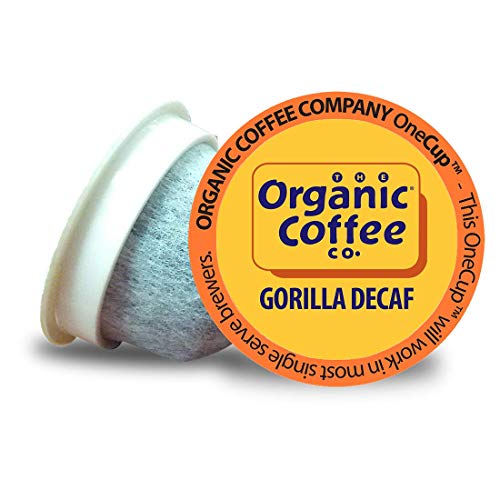
The Gorilla Decaf from The Organic Coffee Co. is one of the few compostable K cup options that doesn’t sacrifice flavor for sustainability. With Swiss Water Process decaf and USDA Organic certification, it checks the ethical boxes, but owners say it also tastes like real coffee, mellow, medium-bodied, with a clean finish. That’s rare in compostable pods, which often leak or under-extract.
It’s not flashy. Compared to Lifeboost, it lacks the marketing buzz around toxin testing, but it delivers steady, no-gimmick performance. The 36-count pack gives decent value, and the compatibility with Keurig 2.0 is a plus. I’d recommend this over pricier organic pods if you want reliable, earth-friendly decaf without paying a premium for hype.
Product photos

How We Tested tasting decaf coffee k cups
As a long-time coffee enthusiast, I’ve always believed a good decaf shouldn’t feel like a compromise. To recommend the best options, we didn’t rely on personal brewing, but instead focused on a research-led comparison. I compared published specifications – roast level, bean origin, certifications – alongside a deep explore owner reviews and assessments from reputable coffee publications. We then ranked these K-cups against criteria important to decaf drinkers: flavor, aroma, and value.
For decaf K-cups, flavor and roast profile are paramount. A poorly decaffeinated bean can taste thin or artificial. We heavily weighted reviews mentioning a smooth, full-bodied flavor and a pleasant aroma, indicating a quality bean and effective decaffeination. Organic certification and sourcing practices also played a significant role, as many consumers prioritize these factors when choosing coffee.
Specifications provide a solid baseline – bean type (Arabica is generally preferred) and roast level are easily comparable. However, owner feedback proved crucial in understanding the experience of drinking each K-cup. I also looked for mentions of the Swiss Water Process decaf as an indicator of quality decaffeination, avoiding potentially harsh chemical methods. Reputation and brand trust, built over consistent quality, also factored into our final rankings.
Choosing The Right tasting decaf coffee k cups
Finding a good decaf K-Cup can be surprisingly tricky; it’s not just about removing the caffeine.
A quality decaf K-Cup delivers a flavor profile comparable to its caffeinated counterpart. Look for 100% Arabica beans, a clear roast date, and information about the decaffeination process (Swiss Water Process is often preferred). Consider factors like acidity, roast level, and whether third-party certifications for organic standards or toxin testing are present.
Roast Level & Flavor Profile
The biggest mistake I see people make is assuming all decaf tastes the same. It absolutely does not! Just like regular coffee, decaf comes in a huge range of roast levels – light, medium, and dark – each drastically changing the flavor. A light roast, like the Green Mountain Decaf Breakfast Blend, will be brighter and more acidic, while a dark roast, such as Peet’s Decaf House Blend, will be bolder and more chocolatey. Think about what you typically enjoy in a caffeinated cup and start there. Don’t be afraid to explore; a variety pack, like the Two Rivers Decaf Flavored Variety Pack, can be a low-commitment way to test the waters.
Decaffeination Process
The method used to remove caffeine profoundly impacts the final taste. There are several ways to decaffeinate coffee, but some are better than others. The Swiss Water Process, a chemical-free method using only water, is widely considered the gold standard because it preserves more of the bean’s original flavor. Others use chemical solvents (methylene chloride or ethyl acetate), which, while regulated, can sometimes leave a residual taste. If you’re sensitive to subtle flavors or prioritize a cleaner cup, specifically look for K-Cups labeled “Swiss Water Process.” You can find more detail about the decaf flavor profile and how processing impacts it on our site.
Certification & Sustainability
Beyond taste, consider what isn’t in your K-Cup and how it was produced. Organic certification (like with Lifeboost Organic Decaf K Cups) guarantees the beans were grown without synthetic pesticides or fertilizers. Third-party testing for mycotoxins and heavy metals is another excellent sign of a quality product.
Here’s what I look for when considering a brand’s commitment to quality:
- Organic Certification: A basic requirement for many, showing a commitment to sustainable farming.
- Third-Party Testing: A significant indicator that the company prioritizes safety and purity.
- Sustainability Practices: Brands like Illy are increasingly focused on ethical sourcing and environmental responsibility, which I believe is important when choosing favorite decaf K-Cup brands.
A good rule of thumb: if a company is transparent about its sourcing and processing, it’s likely they have something to be proud of.
Ultimately, the “best” decaf K-Cup is the one you enjoy most. I encourage you to explore different brands and roasts until you find your perfect cup. You can read our premium decaf K-Cup reviews for a deeper look at some of the top options, or explore top decaf coffee pods to find a blend that suits your taste. It’s also worth remembering that the taste of decaffeinated coffee can differ even within the same brand, depending on the bean origin and roast.
Tasting Decaf Coffee K Cups Compared
Here’s a comparison of key specifications for various decaf coffee K-Cups to help you make an informed purchase.
| Product Name | Roast | Flavor Profile | Organic | Pod Type | Count |
|---|---|---|---|---|---|
| Illy Classico Decaf Roast K-Cups | N/A | Smooth, Flavorful | No | K-Cup | N/A |
| Lifeboost Organic Decaf K Cups | Medium | Balanced | Yes | K-Cup | N/A |
| Green Mountain Decaf Breakfast Blend | Light | Clean, Bright, Nutty | No | K-Cup | N/A |
| Peet’s Decaf House Blend Dark Roast | Dark | Smooth, Sweet | No | K-Cup | 32 |
| Starbucks Decaf House Blend K-Cups | Medium | Toffee, Cocoa | No | K-Cup | 22 |
| McCafe Premium Roast Decaf K-Cups | Medium | Rich, Smooth | No | K-Cup | N/A |
| Two Rivers Decaf Flavored Variety Pack | N/A | Variety | No | K-Cup | N/A |
| Organic Coffee Co. Gorilla Decaf | Full-City | Strong, Mellow | Yes | Compostable Pods | N/A |
Frequently Asked Questions
What K-cup size is standard for most machines?
Most single-serve coffee machines use the 1.25-inch K-Cup size. However, some newer models are compatible with the 2.0 K-Cup, which has a different brewing profile, so always check your machine’s manual.
Are decaf K-Cups really caffeine-free?
Decaf K-Cups aren’t completely caffeine-free; they must have less than 3% caffeine by weight to be labeled as decaf. This means a single cup can contain a very small amount, typically around 2-12mg, but it’s significantly less than regular coffee.
Can I reuse K-Cups to reduce waste?
While reusable K-Cup filters are available, they don’t work with all machines, and using them may void your warranty. The original K-Cups are designed for single use, and attempting to refill them often leads to grounds escaping and potentially damaging your brewer.
Where can I find decaf K-Cups with specific flavorings?
You can explore a wide array of options if you’re seeking something beyond a classic decaf brew; browse our guide to the best flavored decaf K-Cups to discover tasty hazelnut decaf K-Cups, caramel decaf coffee pods, and more.
What’s the best way to store decaf K-Cups for freshness?
To maintain the best flavor, store your decaf K-Cups in a cool, dark, and dry place in an airtight container. Exposure to air, light, and moisture can quickly degrade the coffee’s aroma and taste, even in a sealed pod.
The Bottom Line
Choosing the best decaf K-Cup often comes down to balancing convenience with quality. While many options exist, I believe the Illy Classico Decaf Roast K-Cups consistently deliver a refined flavor and aroma that stands above the rest, offering a truly satisfying experience without sacrificing ease of use. You’re paying a bit more for that consistent quality, but for many, the trade-off is well worth it.
For those prioritizing specific needs, we’ve found excellent alternatives. If organic certification is a must, the Lifeboost Organic Decaf K Cups are a superb choice. And for those wanting to sample a range of flavors without a large commitment, the Two Rivers Decaf Flavored Variety Pack is an excellent starting point to discover your preferences.
Ultimately, the most important factors are bean quality and the decaffeination process itself. Understanding how decaf coffee is produced (https://beanthusiast.com/how-do-they-make-decaf-coffee/) and looking for the Swiss Water Process will guide you towards a smoother, more flavorful cup. Don’t get too caught up in specs; focus on finding a roast and flavor profile you enjoy.
