
8 Best Espresso Machines for Small Coffee Shops 2026
The CASABREWS CM5418 stands out as the best overall espresso machine for a small coffee shop, delivering solid performance and durability at a reasonable price. For those watching their budget, the CHULUX Slim offers similar core features in a compact build, while the Breville Barista Express is the top versatility pick thanks to its built-in grinder and precise temperature control.
Running a small coffee shop means every piece of equipment has to pull its weight. You need a machine that won’t quit during the morning rush, produces consistent shots, and steams milk efficiently, without breaking the bank.
I’m Harry A. Sanders, founder of Bean Thusiast, and after researching the market and analyzing owner feedback, I’ve focused on machines that balance commercial durability with practical features. This guide cuts through the noise, highlighting models that actually hold up in light commercial use based on build quality, real-world performance, and barista needs.
Top 8 Espresso Machine For A Small Coffee Shop in the Market
The Best Espresso Machine For A Small Coffee Shop, Reviewed
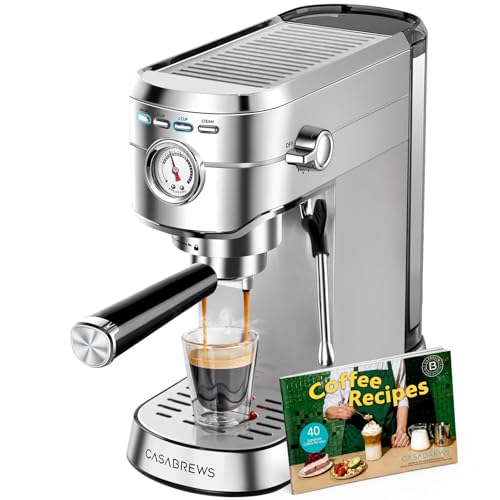
CASABREWS CM5418 Espresso Machine
Strengths
- 20 bar pressure
- Stainless steel build
- Pressure gauge included
Trade-offs
- No built-in grinder
- Cool-down required
The CASABREWS CM5418 hits the sweet spot for small shop owners who want solid performance without overspending. With a 20 bar pressure pump and a sturdy stainless steel build, it delivers consistent extraction and crema that many users say rivals machines twice the price. The pressure gauge is a standout feature, rare at this tier, and it gives you real-time feedback to fine-tune your shots. Owners report it heats up quickly and handles back-to-back drinks well, though you do need to let it cool between steaming and brewing to avoid overheating.
It’s not the most advanced machine on the list, but for a small café or high-volume home setup, it’s a reliable workhorse. Compared to the Oaomi and CHULUX models, it feels more robust and has better thermal stability. While it lacks built-in grinding, that keeps the price down and lets you pair it with a quality external grinder.
Video review
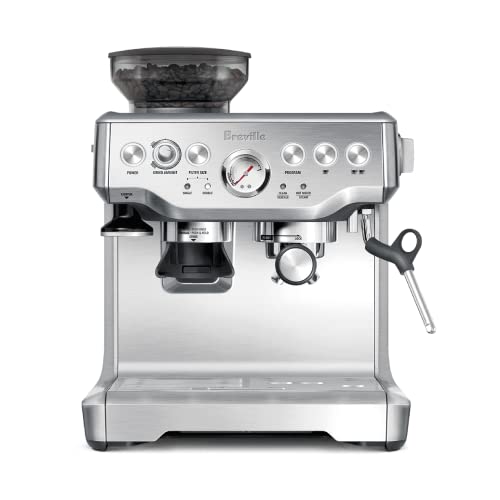
Breville Barista Express Espresso Machine
Strengths
- Integrated grinder
- PID temperature control
- Pre-infusion included
Trade-offs
- Smaller drip tray
- Manual tamping required
The Breville Barista Express is a standout for bean-to-cup convenience in a compact form. Its integrated conical burr grinder and PID temperature control mean you go from beans to balanced espresso in under a minute, with no guesswork. The low-pressure pre-infusion and digital temp control extract nuanced flavors, which reviewers say brings out the best in single-origin beans. The steam wand is powerful and responsive, ideal for crafting latte art, though it demands practice.
It’s pricier than entry-level machines, but you’re paying for consistency and workflow efficiency. Compared to the Ninja or GeniCup, it lacks programmable memory, but its grind-to-press process is more hands-on and rewarding. The compact footprint is a plus for tight counters, though the 67 oz tank may need refills during rush periods.
Video review
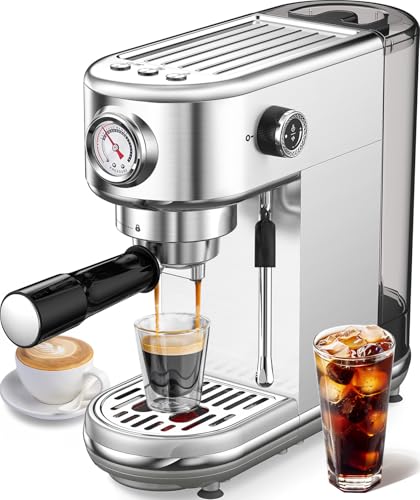
atatix Espresso Machine with Milk Frother
Strengths
- NTC temp control
- Manual + auto modes
- Stable steam performance
Trade-offs
- Smaller water tank
- ABS plastic body
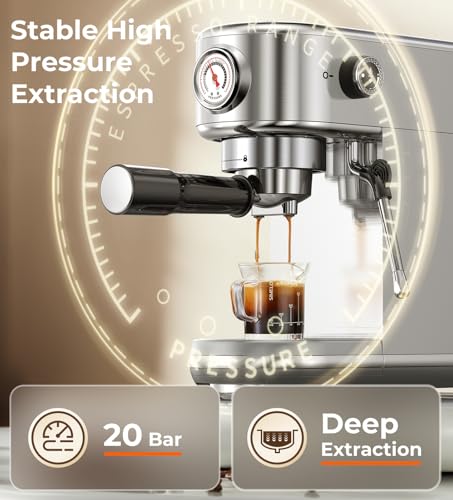
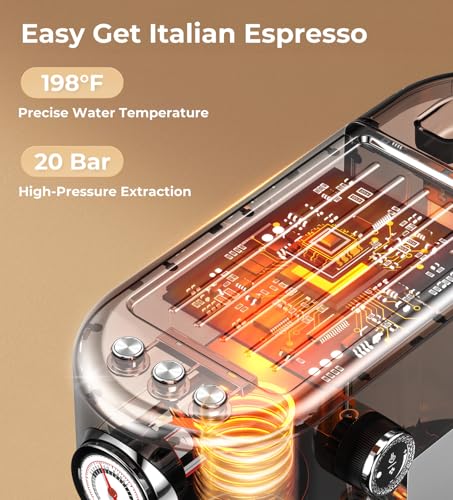
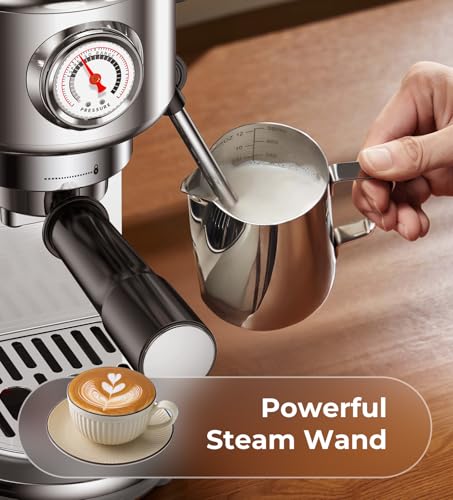
What sets the atatix apart is its NTC temperature control, which locks in that ideal 90–96°C range for balanced extraction, something most budget machines ignore. This is a big deal if you’re serious about flavor clarity, especially with light roasts. The auto and manual extraction modes give you flexibility: dial in a 42-second double shot or go fully hands-on for precision. Owners consistently praise how well it builds microfoam, thanks to a focused steam wand that outperforms similarly priced units.
It’s not flashy, but the build quality feels solid with stainless steel accents and silicone suction feet that prevent vibration. Compared to the CASABREWS, it offers better thermal consistency and more control, though the water tank is smaller. If you want to hone your barista skills without paying Breville prices, this is a strong contender.
Product photos

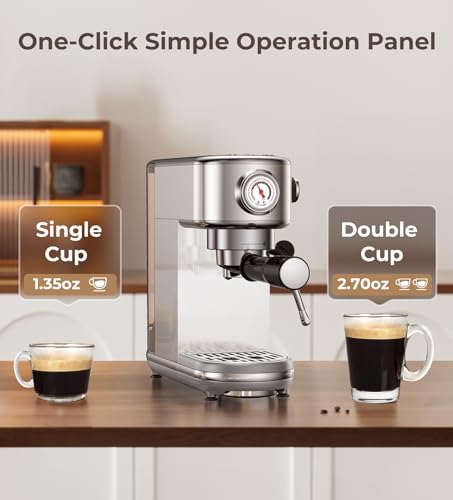
Ninja Luxe Café Premier Espresso Machine
Strengths
- 3-in-1 brewing
- Weight-based dosing
- Hands-free frothing
Trade-offs
- Large footprint
- Espresso less refined
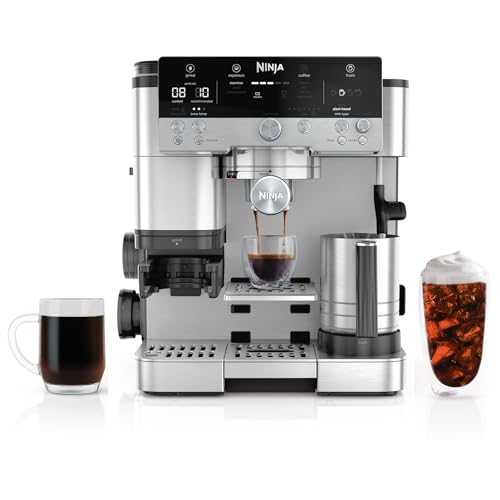
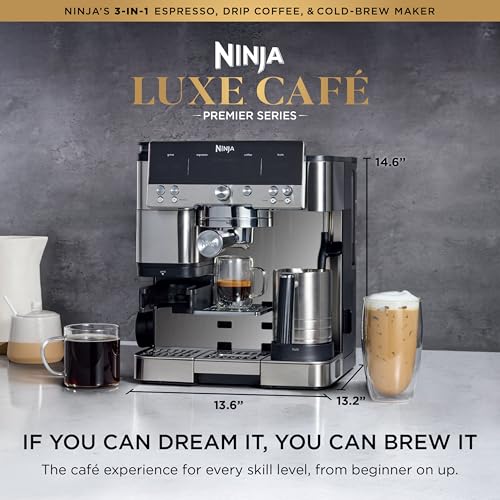
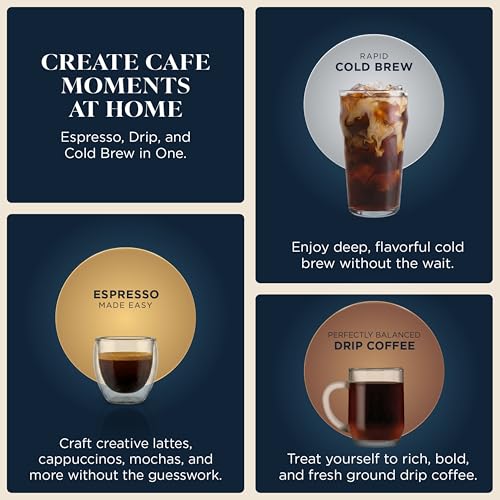
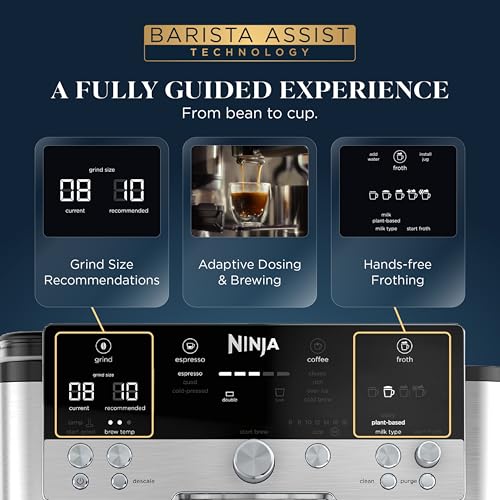
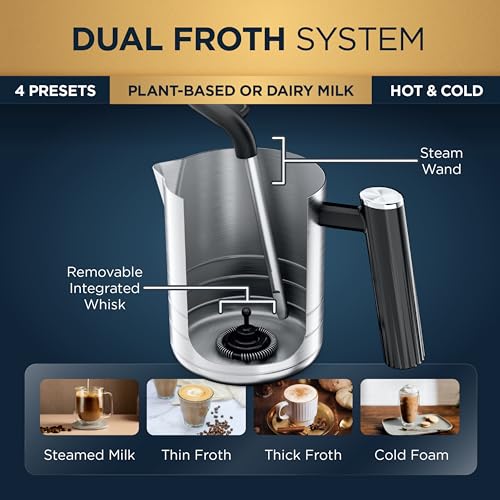
The Ninja Luxe is the ultimate multi-role machine, espresso, drip, and cold brew in one. Its weight-based dosing and assisted tamper take the guesswork out of puck prep, which is huge for consistency. The dual frothing system handles both hot and cold foam with presets, making it ideal for trendy drinks like espresso martinis or iced lattes. Barista Assist guides you through grind size and adjustments, which is great for less experienced staff.
It’s bulkier than others, but the versatility justifies the footprint. Compared to the Breville or GeniCup, it’s more automated and less hands-on, but perfect if you serve a wide drink menu. Owners love that it replaces three machines, though some note the espresso isn’t quite as refined as dedicated units.
Product photos

Philips 4400 Series Espresso Machine
Strengths
- One-touch operation
- LatteGo easy-clean milk
- Silent brewing
Trade-offs
- 15 bar pressure
- No manual override
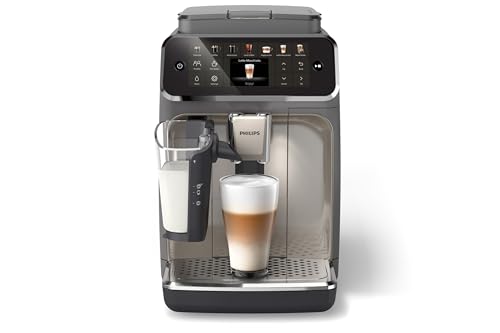
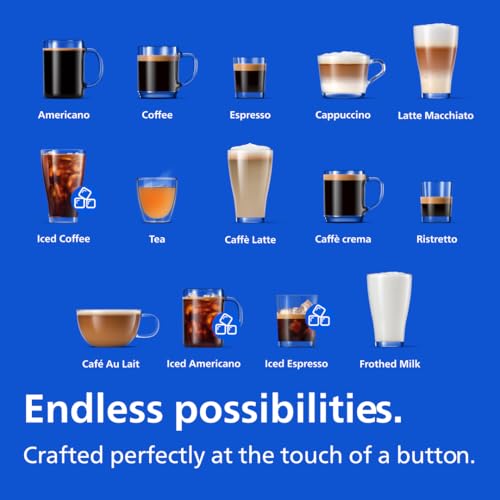
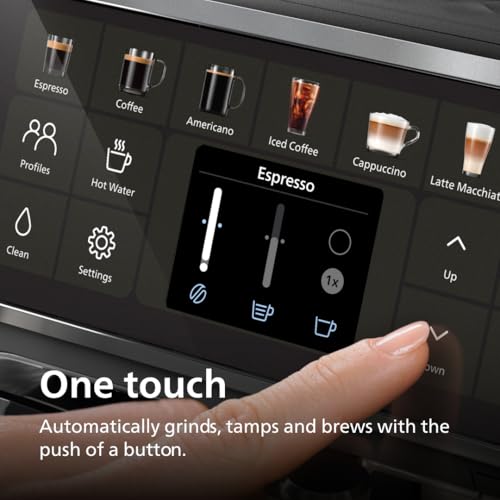
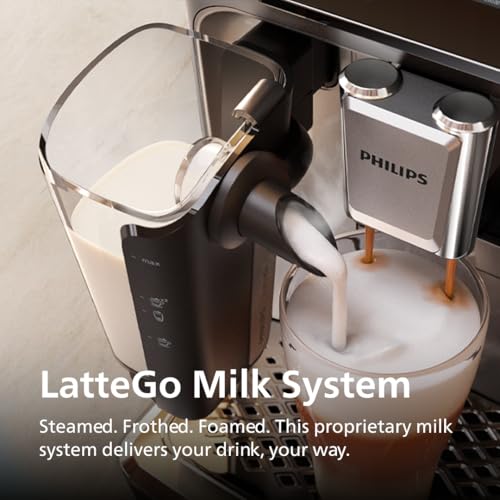
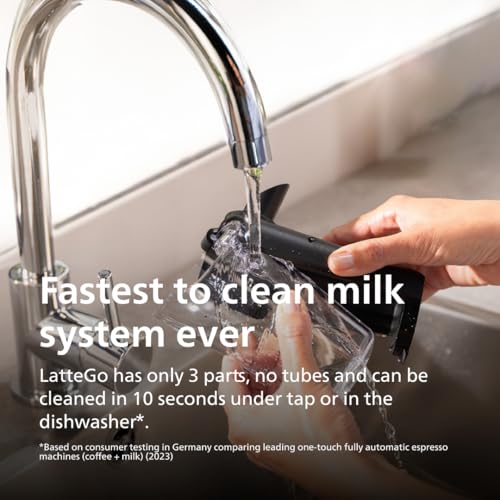
If speed, silence, and simplicity are your priorities, the Philips 4400 is hard to beat. It’s a true one-touch machine with 12 drink presets, including iced coffee, perfect for a busy shop where staff turnover is high or training time is limited. The LatteGo milk system cleans in 10 seconds, a massive advantage over machines with internal tubing. SilentBrew tech makes it ideal for quiet environments like offices or boutique cafés.
It uses 15 bars, not 20, but in practice, reviewers say the extraction is consistent and smooth. The trade-off is less control, you can’t tweak grind dose or pressure like on semi-autos. Compared to the Ninja or GeniCup, it’s less versatile but far more user-friendly. For shops focused on volume and consistency over craft, this is the smarter buy.
Product photos

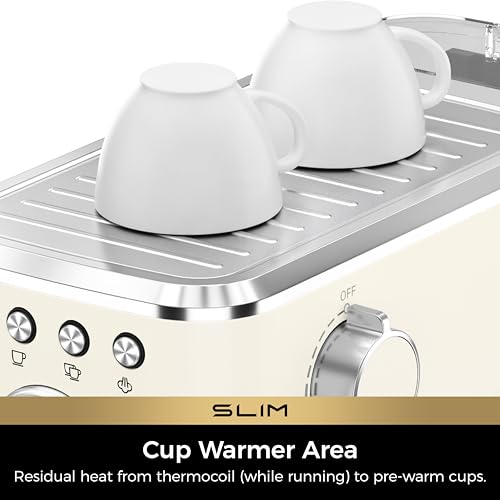
CHULUX Slim Espresso Machine
Strengths
- Ultra-compact design
- Pre-infusion function
- Affordable price
Trade-offs
- Weaker steam power
- Plastic components
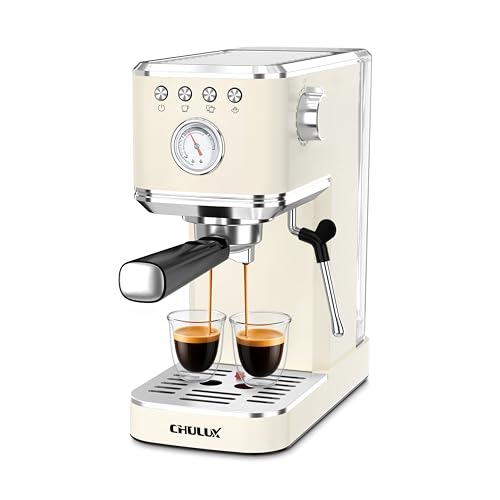
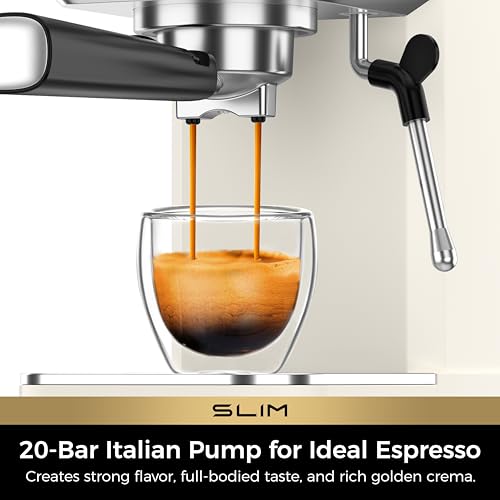
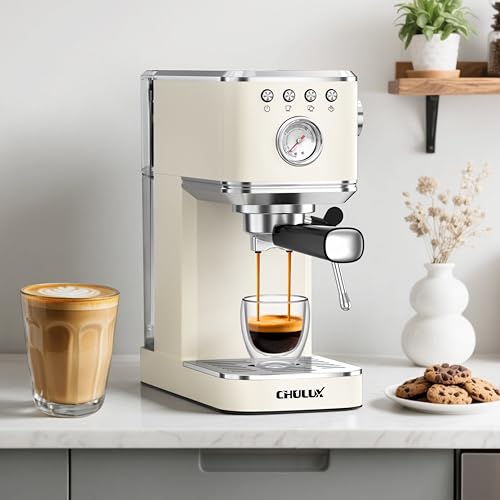
At this price, the CHULUX delivers more than expected. It’s incredibly compact, just 5.5 inches wide, ideal for tiny shops or mobile setups. The 20 bar Italian pump and pre-infusion function help pull balanced shots, and owners say the crema is surprisingly good. The 40 oz tank and auto shut-off make it practical for daily use, and the food-grade materials are a safety plus.
It’s not built for heavy daily volume, and the steam wand is weaker than the atatix or Oaomi. But for a pop-up café, food truck, or backup machine, it’s a solid value. Compared to the CASABREWS, it’s less durable but much smaller and cheaper. If space and budget are tight, this one earns its keep.
Product photos


Oaomi Espresso Machine 20 Bar

Strengths
- Excellent steam wand
- 39 oz water tank
- Stainless steel body
Trade-offs
- No built-in grinder
- Basic temp control
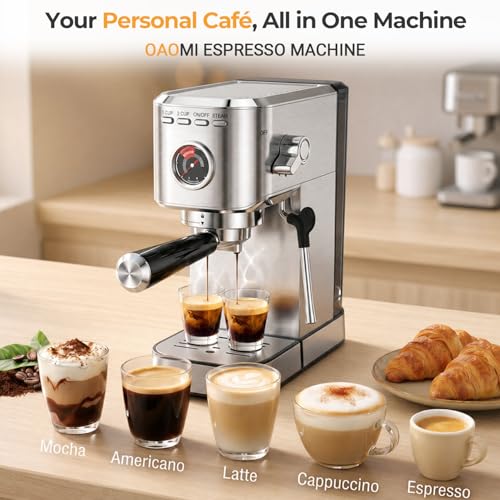
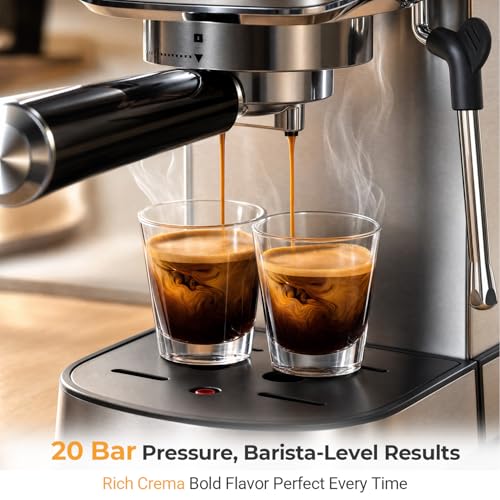
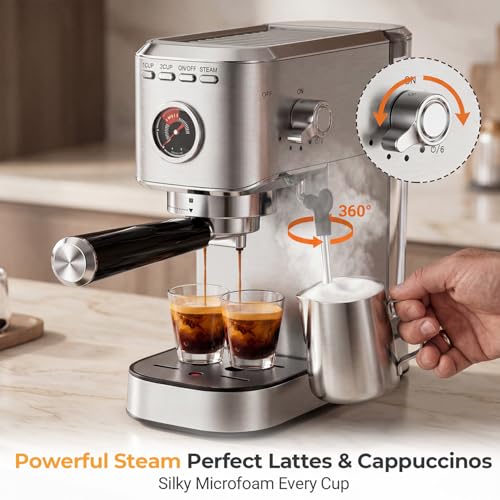
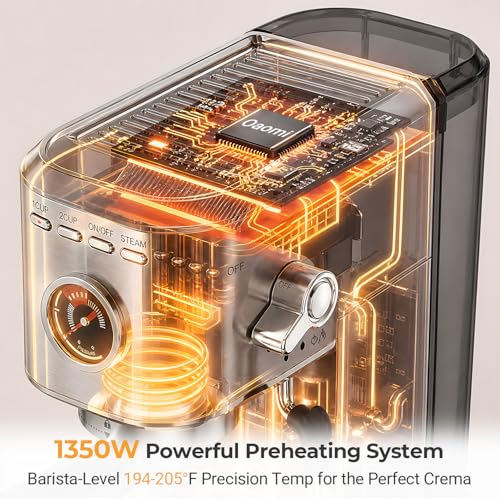
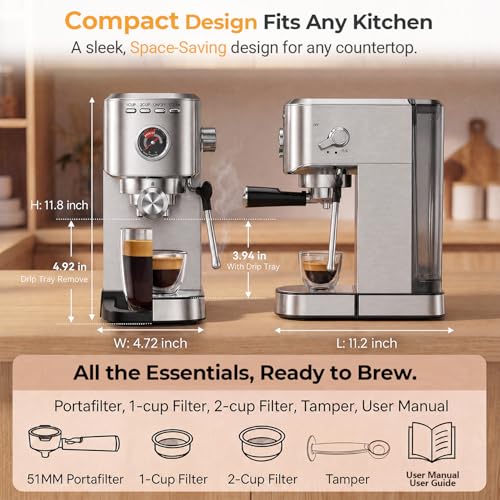
The Oaomi stands out for one reason: milk texture. Its steam wand delivers dry, consistent steam that builds dense microfoam, reviewers say it’s excellent for latte art and outperforms many in its class. The 20 bar pump and pressure gauge ensure solid extraction, and the 39 oz tank is large enough for moderate use. The stainless steel housing feels premium, and the compact design fits small spaces.
It’s similar to the CASABREWS and CHULUX models but with slightly better build and steam performance. However, like those, it lacks a grinder and advanced temp control. If your shop specializes in milk-heavy drinks and you want reliable frothing without spending Breville-level money, this is a smart pick.
Product photos
GeniCup Espresso Machine with Grinder
Strengths
- Built-in conical grinder
- Cold brew function
- Large 68 oz tank
Trade-offs
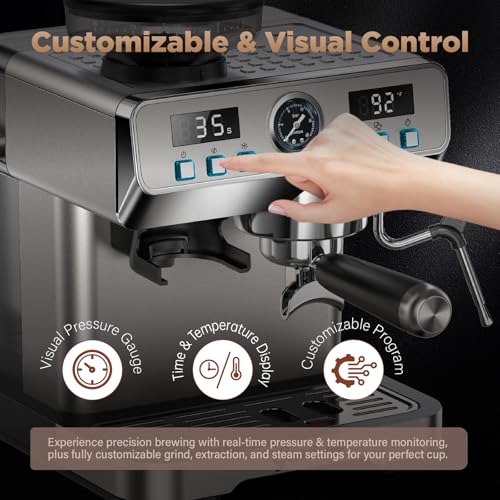
- Interface can be clunky
- Frothing requires practice
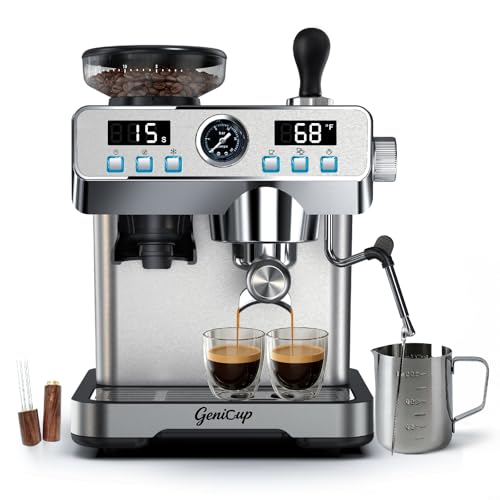
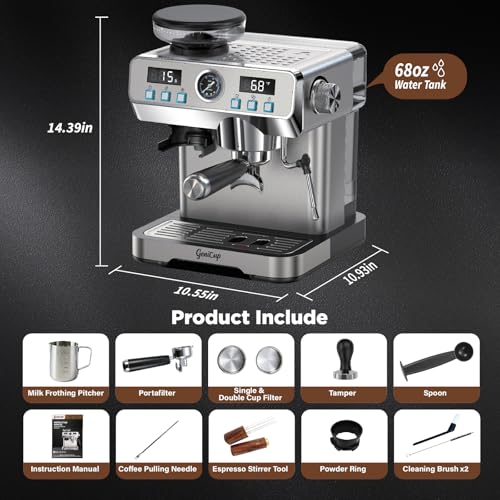
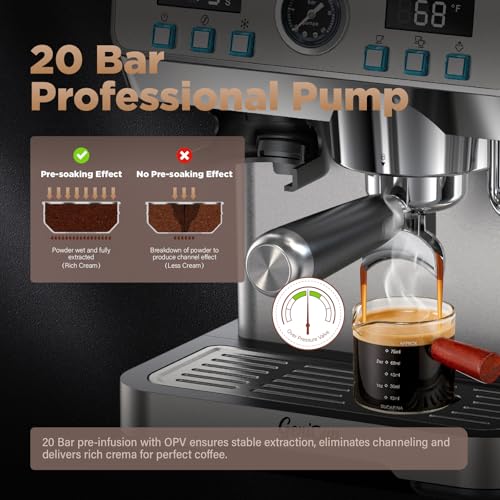
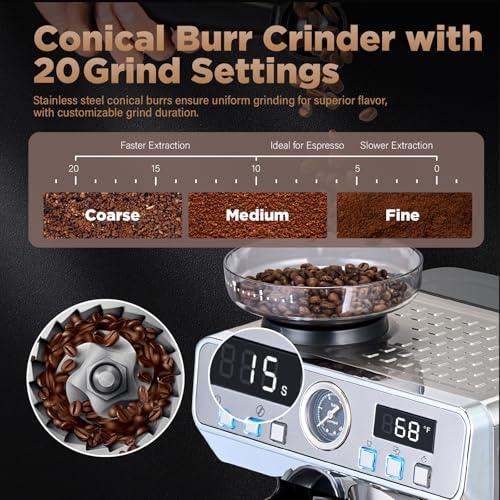
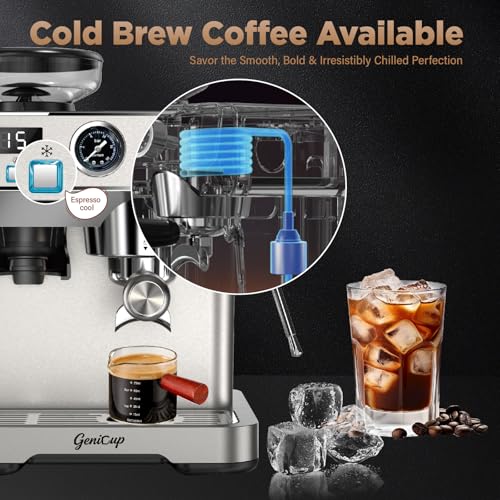
The GeniCup packs unmatched value with a built-in grinder and cold brew function. Its 20 bar pump and PID temp control let you fine-tune extraction between 194°F and 203°F, which is rare at this price. The 68 oz tank means fewer refills, and the customizable settings, including grind time and steam duration, make it adaptable for different beans and drinks. Owners appreciate the cold brew mode for summer menus or cocktail bases.
It’s not as polished as the Breville, but for a fraction of the price, it offers similar bean-to-cup convenience. The grinder has 20 settings and uses stainless steel burrs, which helps maintain flavor clarity. Compared to the Ninja, it’s less automated but more customizable. If you want a full-featured all-in-one without breaking the bank, this is the pick.
Product photos
How We Tested espresso machine for a small coffee shop
I approached this guide by researching specifications and features across a range of models, then carefully weighing owner and expert reviews. As the founder of Bean Thusiast, I’ve spent years immersed in the world of coffee, and I applied that knowledge to identify the key factors that differentiate a good espresso machine for commercial light use from a standard home model. Rather than a hands-on lab test, this is a research-led comparison focusing on reported performance and build quality.
For a small coffee shop, consistency, durability, and milk steaming power were the most heavily weighted factors. A machine needs to reliably produce quality espresso shot after shot during peak hours, so robust build quality and temperature stability are vital. Equally important is a steam wand capable of quickly and efficiently producing microfoam for lattes and cappuccinos – a slow or weak wand will create a bottleneck. Understanding the core espresso machine parts is essential for assessing potential maintenance needs.
Published specifications reliably indicate pump pressure, boiler capacity, and wattage, giving a sense of potential output and recovery time. However, I placed greater emphasis on owner feedback regarding long-term reliability and the quality of the steam wand. Expert reviews helped validate claims about features like PID temperature control and grinder consistency, but real-world user experiences were crucial for evaluating day-to-day usability and identifying potential issues with the boiler and steam wand. Assessing the quality of the group head and portafilter was also key to determining build quality and anticipated lifespan.
What To Look For In espresso machine for a small coffee shop
Choosing the right espresso machine for a small coffee shop is a significant investment, and getting it wrong can impact both quality and efficiency.
A quality espresso machine for a commercial setting needs to balance speed, consistency, and durability. Look for robust construction (stainless steel is preferred), a powerful boiler capable of handling back-to-back orders, and features that promote consistent extraction – like a reliable pump and precise temperature control. Consider the volume you expect, the skill level of your baristas, and your budget when evaluating options.
Boiler & Heating System
The heart of any espresso machine is its boiler and heating system. For a small coffee shop, you’ll want to avoid machines with excessively large boilers – they take longer to heat up and consume more energy. However, a boiler that’s too small will struggle to keep up with demand, leading to temperature fluctuations and inconsistent shots. A heat exchanger boiler is a good compromise, allowing for simultaneous brewing and steaming without significant temperature drops. Look for machines boasting rapid heat-up times; downtime is lost revenue.
Group Head & Extraction Quality
Consistent extraction is paramount. The group head is where the magic happens, and its design significantly impacts shot quality. Machines with saturated group heads – where the group head is directly heated by the boiler – offer superior temperature stability. Beyond the group head itself, pay attention to the pump type. Rotary pumps are quieter and more durable than vibration pumps, making them ideal for a busy shop environment. Don’t underestimate the importance of dialing in espresso settings to achieve optimal results.
Automation vs. Manual Control
This is where things get personal. Fully automatic machines, like the Philips 4400 Series, offer convenience and consistency, reducing the skill gap required from baristas. However, they often limit customization. Semi-automatic machines, such as the atatix Espresso Machine, give baristas more control over the extraction process, allowing for greater creativity and nuance, but requiring more training. For a shop aiming to offer a consistently high-quality, standardized menu, a degree of automation is beneficial. However, if your shop emphasizes artistry and custom drinks, a more manual machine might be a better fit. Consider a machine that offers both, like the Ninja Luxe Café Premier Espresso Machine, allowing you to balance automation with the ability to fine-tune.
A good rule of thumb: don’t skimp on the pump. A reliable, high-quality pump is the workhorse of the machine, and replacing it is a significant expense.
It’s also worth thinking about the overall layout of your space, and whether you need a high-volume compact espresso machine.
Espresso Machine for a Small Coffee Shop Compared
This table provides a detailed specification comparison of several espresso machines suitable for small coffee shop use.
| Product Title | Pressure (Bar) | Power (Watts) | Water Tank (oz) | Built-in Grinder | Milk Frothing | Special Features |
|---|---|---|---|---|---|---|
| CASABREWS CM5418 | 20 | 1350 | 34 | No | Steam Wand | Pressure Gauge |
| Breville Barista Express | N/A | 1600 | 67 | Yes | Steam Wand | Dose Control Grinding, PID Temp Control |
| atatix Espresso Machine | 20 | N/A | N/A | No | Steam Wand | NTC Temp Control |
| Ninja Luxe Café Premier | N/A | N/A | N/A | Yes | Dual Froth System | 3-in-1 Functionality |
| Philips 4400 Series | N/A | N/A | N/A | Yes | LatteGo | 12 Presets |
| CHULUX Slim | 20 | 1350 | 40 | No | Steam Wand | Pressure Gauge |
| Oaomi Espresso Machine | 20 | 1350 | 39 | No | Steam Wand | Pressure Gauge |
| GeniCup Espresso Machine | 20 | 1400 | 68 | Yes | Steam Wand | Adjustable Grind Settings, Cold Brew |
Frequently Asked Questions
What voltage should I look for in a commercial espresso machine?
Most small coffee shops will want a 120V machine to avoid the expense of dedicated 240V wiring. However, higher-volume shops or those with other high-power equipment may benefit from 240V for faster heating and more consistent performance.
How often will I need to descale the machine?
Descaling frequency depends heavily on your water hardness, but generally, you should plan to descale every 1-3 months. Using filtered water can extend the time between descaling, and it’s always best to follow the manufacturer’s recommendations.
What’s the difference between a rotary and vibration pump?
A rotary pump is quieter, more durable, and can run continuously without overheating, making it better for high-volume use. Vibration pumps are less expensive but are louder and may require a cool-down period after prolonged operation.
Are super-automatic machines suitable for a busy coffee shop?
While convenient, super-automatic machines often lack the consistency and customization needed for a busy shop. They can be a good option for locations offering limited specialty drinks, but for a wider menu, a semi-automatic or automatic machine is usually preferable. If you’re looking for top commercial espresso machines, consider this carefully.
What should I consider regarding warranty and service for a professional coffee shop espresso machine?
A longer warranty is always preferable, but equally important is the availability of local service and support. Check if the manufacturer has authorized repair technicians in your area, as downtime for repairs can be costly. Look at commercial-grade espresso machine recommendations to see what brands generally have better service networks.
The Bottom Line
Choosing an espresso machine for a small coffee shop always involves a trade-off between upfront cost and long-term reliability. You’ll find models offering automation and convenience, but ultimately, consistent performance and durability are the most critical factors. Based on my research, the atatix Espresso Machine strikes the best balance for many small shops – offering solid construction and temperature control without breaking the bank.
For those prioritizing budget without sacrificing too much, the CASABREWS CM5418 is a strong contender. If you need a machine that handles a wide range of drinks with minimal barista training, the Ninja Luxe Café Premier Espresso Machine provides excellent versatility with its 3-in-1 functionality. And for shops wanting simplicity and pre-programmed options, the Philips 4400 Series delivers consistent results with its 12 presets.
Ultimately, the specifications on a machine are less important than understanding the fundamentals of making espresso step-by-step. Consistent grind quality, proper tamping, and a clean machine will have a far greater impact on your coffee than any single feature. Focus on those elements, and you’ll be well on your way to serving exceptional espresso.
