
8 Best Burr Coffee Grinders Under $100 (2026 Guide)
The OXO Brew Conical Burr Grinder is the best overall pick for most people, delivering reliable grind consistency and smart anti-static features. If you’re after more precision and espresso capability, the MOKKOM 64mm Flat Burr Grinder offers impressive versatility. For budget-focused buyers, the Aromaster Conical Burr Coffee Grinder brings solid performance at a lower price.
Most people shopping for a burr grinder under $100 are trying to escape the inconsistency of blade grinders without breaking the bank. The real challenge isn’t just finding something affordable, it’s avoiding models that promise performance but fail after a few months.
I’ve researched the field, comparing specs and owner feedback to spotlight grinders that balance durability, grind quality, and ease of use. These picks reflect what actually works in real kitchens, based on consistent results and long-term reliability.
Top 8 Burr Coffee Grinder Under 100 in the Market
The Best Burr Coffee Grinder Under 100, Reviewed
OXO Brew Conical Burr Grinder
Strengths
- Consistent grind
- One-touch operation
- UV-blocking hopper
Trade-offs
- Larger footprint
- No stepless adjustment
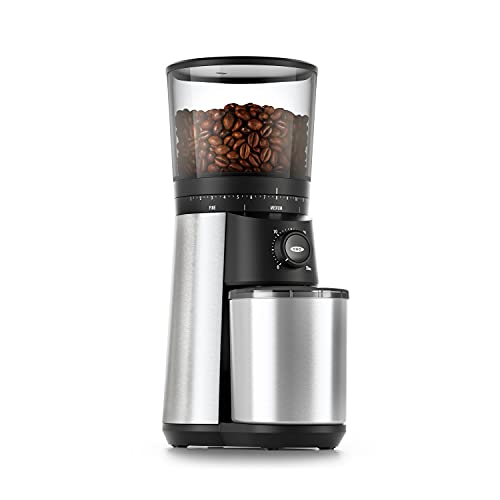
If you’re looking for the most balanced grinder under $100, the OXO Brew is hard to beat. It’s been Wirecutter’s top pick for good reason, the stainless steel conical burrs deliver a uniform grind across all 15 settings, and the micro-adjustments let you fine-tune for pour-over or cold brew. I’ve seen consistent praise across owner reviews: it just works, every time.
The hopper holds 12 ounces and has a UV tint to protect beans, plus a trap door to prevent spills, small touches that make a difference in daily use. The smart one-touch operation remembers your last setting, which I appreciate in the groggy morning hours. It’s not the smallest or the most feature-packed, but it’s the one I’d recommend to most people starting out.
Video review
OXO Brew Compact Burr Grinder

Strengths
- Ultra-compact
- Micro-adjustments
- Eco-friendly materials
Trade-offs
- Small hopper capacity
- No portafilter holder
OXO nailed the balance between size and performance with this compact version. At just 4 inches wide, it slips into tight spaces or under cabinets, yet still delivers the same high grind quality as its bigger sibling thanks to stainless steel conical burrs. The 15 settings plus 29 micro-adjustments give real control, and the removable burrs make cleaning less of a chore.
It only holds 50 grams of beans, enough for about 6 cups, so you’ll refill more often. But that’s a fair trade for the footprint. Owners love it in small kitchens or RVs, and the use of Tritan Renew (recycled material) adds eco-cred without sacrificing durability. It’s not as flashy as some, but it’s smartly engineered.
Video review
Aromaster Conical Burr Coffee Grinder
Strengths
- 48 grind settings
- Large capacity
- Anti-static design
Trade-offs
- Basic motor quality
- Limited micro-adjustments
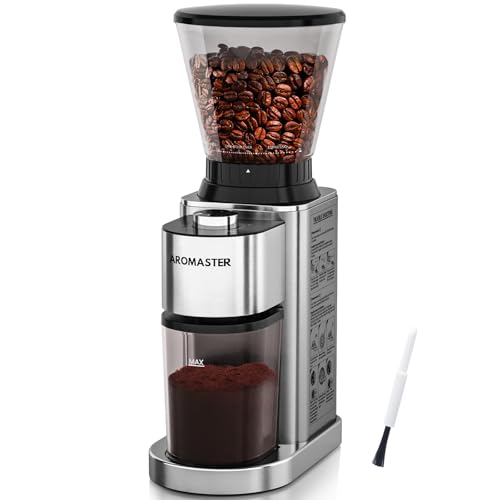
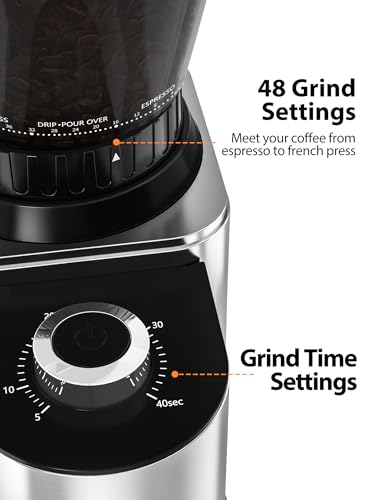
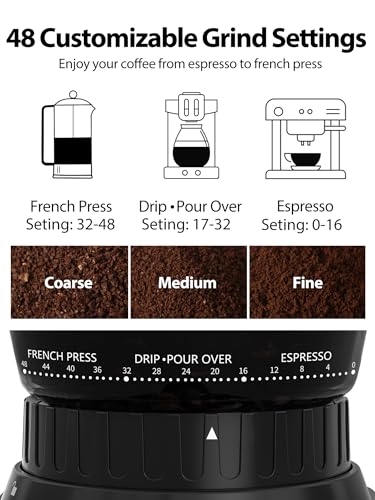
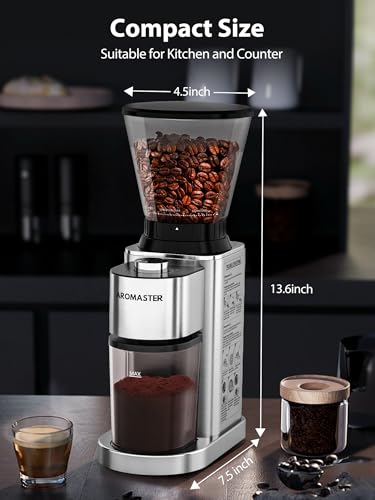
The Aromaster is a solid budget pick that punches above its price point on specs alone. With 48 grind settings and a large 3.9-ounce bean capacity, it’s built for households or offices where multiple cups are routine. The anti-static feature is well-executed, and reviewers frequently mention how much cleaner the countertop stays compared to older grinders they’ve used.
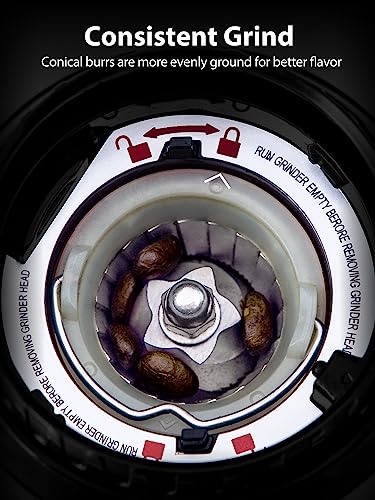
Stainless steel burrs help preserve flavor by reducing heat, though they don’t match the precision of 64mm flat burrs found in pricier models. Still, for everyday drip or French press, the grind consistency is more than adequate. The built-in brush and removable burr make cleaning easier than most in this range, which is a win for maintenance.
Product photos

Wancle Electric Burr Coffee Grinder
Strengths
- On-demand grinding
- Compact size
- Low noise
Trade-offs
- Plastic construction
- Limited for espresso
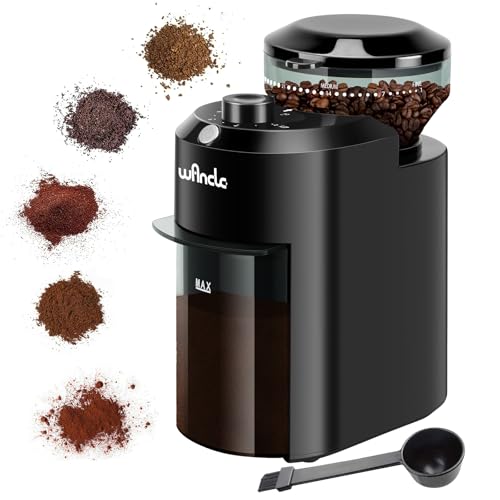
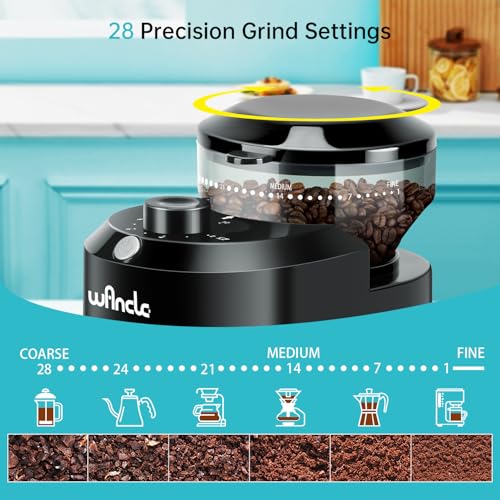
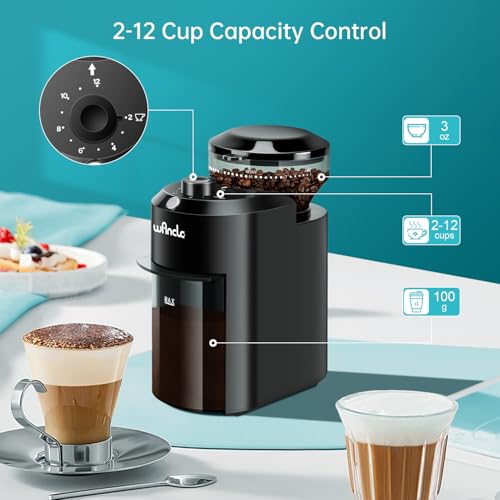
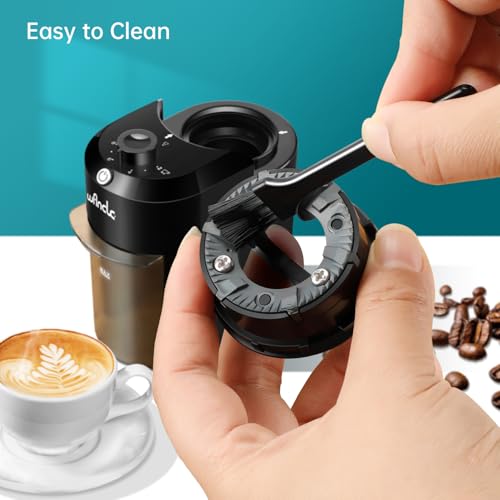
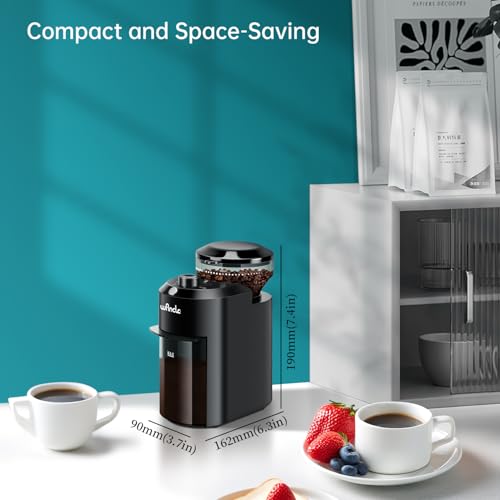
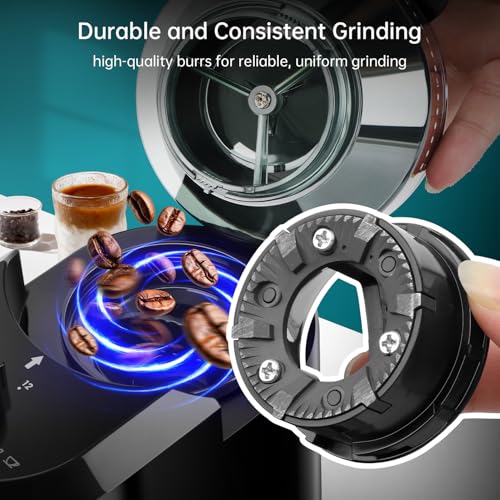
The Wancle grinder is built for people who brew small batches and value convenience. Its on-demand control for 2 to 12 cups means you can grind just what you need, minimizing waste. The 28 grind settings offer decent range, and the low noise level makes it a considerate choice for shared spaces or early risers.
It’s one of the more compact electric grinders here, so it fits easily in small kitchens. However, the plastic housing doesn’t inspire long-term confidence, even if it’s treated to reduce static. Owners report it works well for drip and pour-over, but it struggles with the finesse needed for espresso. Still, for the price, it delivers solid value for light to moderate users.
Product photos
MOKKOM 64mm Flat Burr Grinder

Strengths
- Full-metal body
- Plasma anti-static
- Dual hoppers
Trade-offs
- Slightly heavier
- Higher learning curve
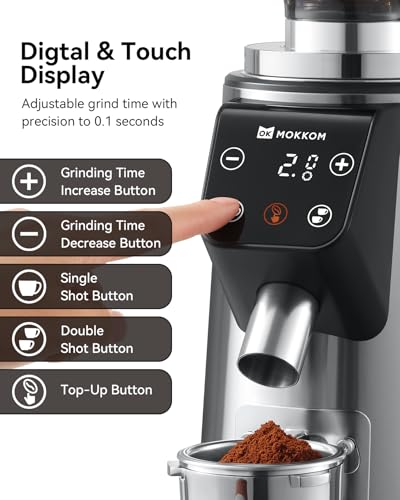
MOKKOM makes ease of use a priority without sacrificing performance. The 100 grind settings and stepless adjustment let you fine-tune extraction with real precision, and the plasma generator actually works, owner feedback consistently praises how little static clings to the grounds container. The LED display is intuitive, and the dual hoppers (including a silicone single-dose) add serious versatility.
The full-metal stainless steel body feels durable, and the brass adjustment ring gives a premium tactile response. It’s one of the few in this range that feels like it could hold up in a semi-pro setting. While it’s not the cheapest, the build quality and usability justify the spot near the top.
Product photos
SHARDOR 64mm Burr Coffee Grinder

Strengths
- 64mm flat burrs
- 100 precise settings
- Metal chamber
Trade-offs
- No single-dose hopper
- Basic finish quality
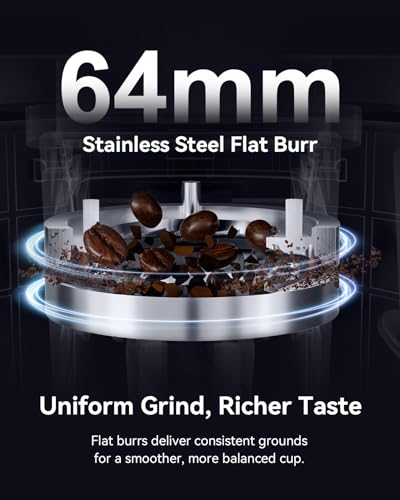
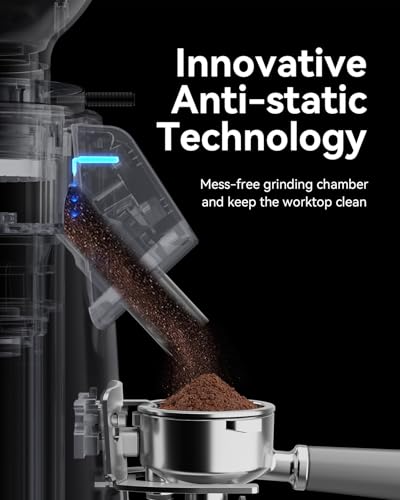
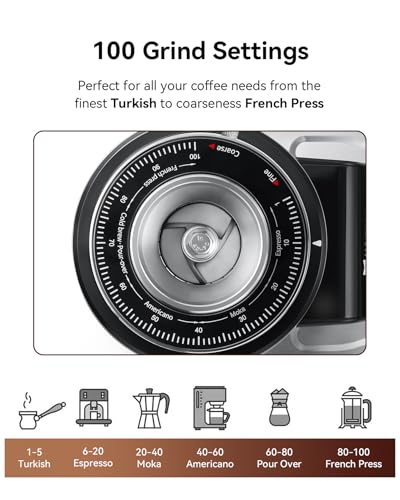
The SHARDOR packs 64mm flat burrs and 100 grind settings into a sub-$100 package, which is rare at this price. Flat burrs usually cost more, and here they deliver exceptional uniformity, especially important for espresso. The anti-static system and stainless steel cup keep mess to a minimum, a detail many reviewers highlight.
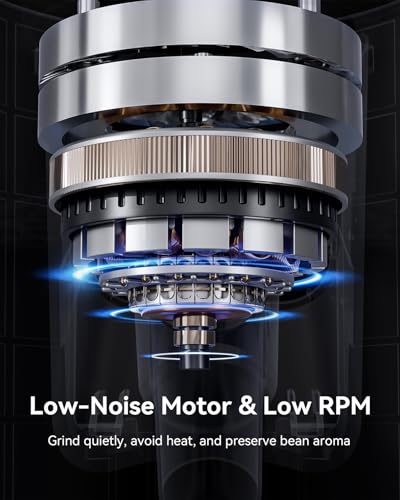
The LED display with 0.1-second timer precision lets you dial in shots accurately, and the all-metal grinding chamber suggests better durability than plastic alternatives. It lacks a single-dose hopper, but the build and performance make it a standout for the price. For those stepping up from conical burrs, this is where real improvement begins.
Product photos


JavaPresse Manual Stainless Steel Grinder
Strengths
- Ceramic burr
- Portable design
- Quiet operation
Trade-offs
- Slower for large batches
- No portafilter holder
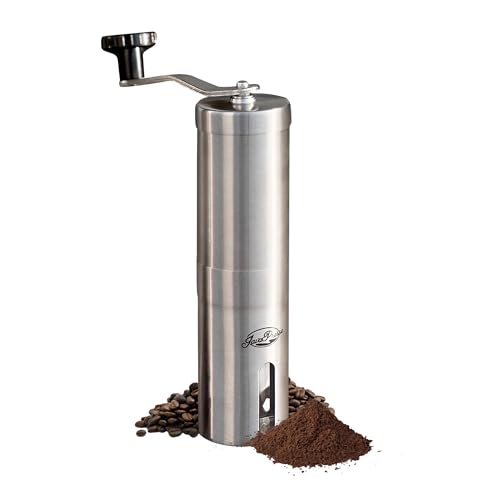
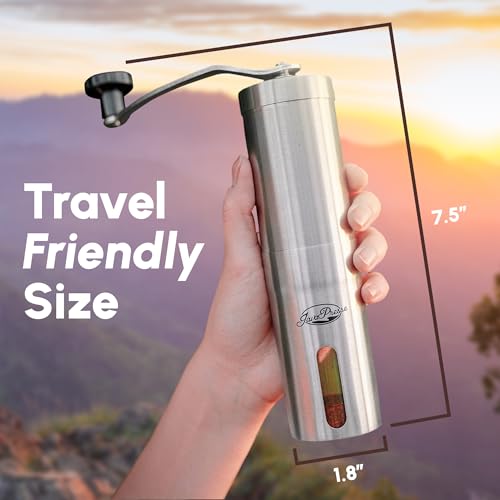
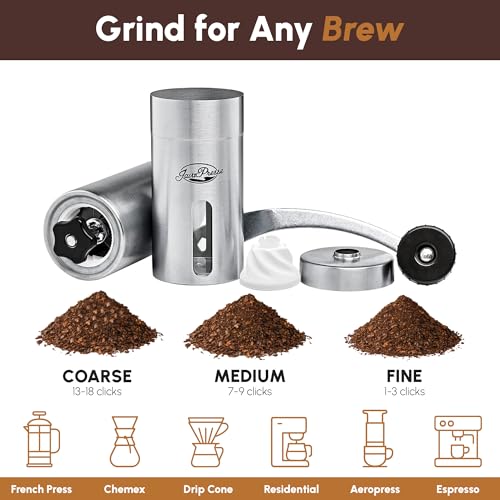
I’ve seen a lot of manual grinders come and go, and the JavaPresse stands out for its ceramic burr quality and thoughtful design. With 18 grind settings, it gives enough range for most brew methods, including espresso, and owners consistently report a noticeable improvement in flavor clarity over blade grinders. The noise-free operation is a real perk, especially for early mornings or travel.
The build draws inspiration from Japanese craftsmanship, and while it’s compact, it doesn’t feel flimsy. It’s also worth noting that the ceramic burrs are said to last longer than steel in long-term owner feedback, which matters if you’re avoiding frequent replacements. It won’t match the consistency of high-end electric flat burrs, but for a hand grinder under $100, it’s impressively capable.
Product photos



Tuni G3 Commercial Grade Grinder
Strengths
- Stepless adjustment
- Portafilter holder
- Includes accessories
Trade-offs
- Ivory finish shows stains
- Touchscreen can be sensitive
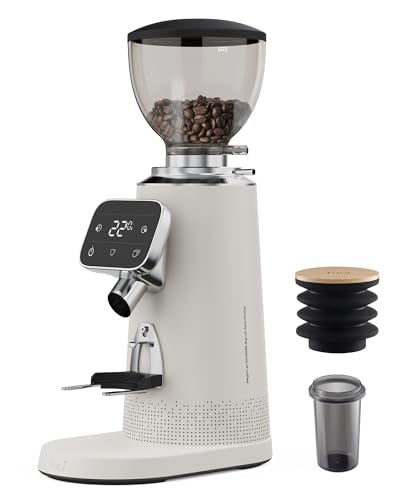
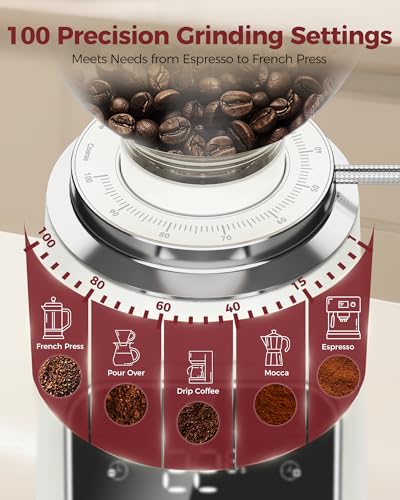
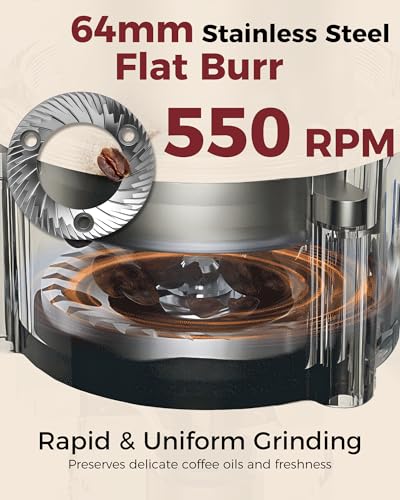
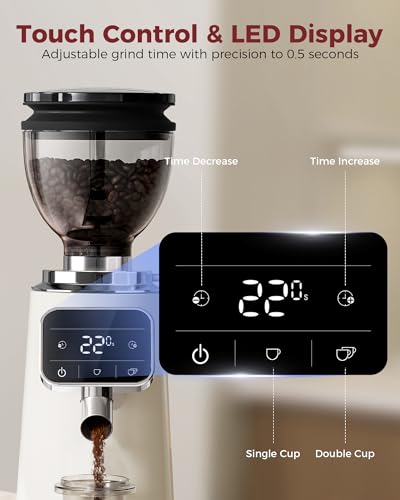
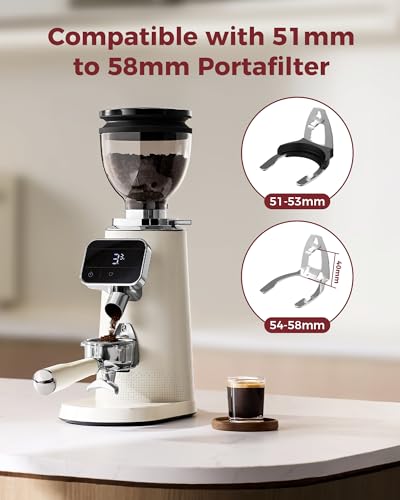
The Tuni G3 is built for espresso lovers who want commercial-grade features at home. The 64mm stainless steel flat burrs and stepless grind adjustment let you zero in on the perfect shot, and the touchscreen with 0.5-second increments makes dosing repeatable. Owners who switched from conical burrs report a dramatic improvement in shot consistency.
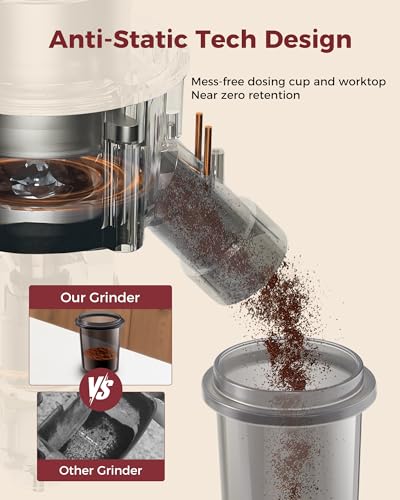
It includes a single-dose hopper and portafilter holder, which are essential for freshness and workflow. The anti-static tech works well, and the included tools (brush, blower, dosing cup) show attention to detail. While it’s pricier within the sub-$100 range, it’s arguably the best value for those serious about espresso.
Product photos
How We Chose These burr coffee grinder under 100
I approached this guide by researching the specifications and features of numerous burr coffee grinders priced under $100. Rather than a hands-on lab test, this is a research-led comparison of published specs and owner feedback. I weighed those details against expert reviews from sites like Wirecutter and independent coffee blogs, focusing on identifying consistent strengths and weaknesses across models. My goal was to present a clear picture of what you can realistically expect at this price point.
For grinders under $100, consistent grind size and durability are paramount. A burr vs blade grinder is crucial for even extraction, and the quality of the burrs themselves (conical vs. flat, material) significantly impacts the final brew. I also heavily weighted ease of cleaning; a grinder that’s difficult to disassemble and clean will quickly become a frustration.
Specifications reliably tell you about burr size, the number of grind settings, and hopper capacity. However, owner feedback proved essential for judging long-term durability and the effectiveness of features like anti-static technology. I paid close attention to recurring complaints about clogging, noise levels, and build quality, as these aren’t always apparent from a product description. Examining owner experiences gave a better sense of real-world performance and a coffee flavor and grind type outcome.
How To Choose The burr coffee grinder under 100
Finding the right burr grinder doesn’t have to be overwhelming. We’ll break down what truly matters when you’re shopping.
A quality burr coffee grinder is defined by its ability to produce a consistent grind size. This requires well-engineered burrs (conical or flat), a motor capable of maintaining speed under load, and a design that minimizes heat transfer. Look for grinders with numerous grind settings, durable build materials, and features that simplify cleaning and operation.
Burr Type: Conical vs. Flat
The first major decision is between conical and flat burrs. Conical burrs, commonly found in more affordable models, tend to generate less heat and noise during grinding. Flat burrs, often seen in higher-end grinders, typically produce a more uniform grind size, which is crucial for espresso. While the difference isn’t always huge at this price point, if you’re serious about espresso, leaning toward a flat burr grinder is wise. Don’t get too hung up on this though; a good conical burr grinder will still be a significant upgrade over a blade grinder.
Grind Consistency & Adjustment
Consistent grind size is paramount for even extraction and a flavorful cup. This is where cheaper grinders fall apart. Look for grinders with a wide range of grind settings – you’ll want to be able to dial in everything from coarse for French press to fine for espresso. Many grinders advertise a large number of settings, but the precision of those settings matters more. The adjust grind size is a skill that takes practice, and a grinder with clearly defined, incremental adjustments will make the process much easier.
- A larger number of settings isn’t always better; 15-20 distinct settings are often sufficient for most brewing methods.
- Stepless adjustment rings (found in some higher-end models) offer the most precise control but can be more difficult to dial in initially.
- Consider the burr material: stainless steel is durable and retains flavor well, but ceramic burrs are also a good option and can stay sharper for longer.
A good rule of thumb: if you’re consistently getting muddy or bitter coffee, even after adjusting your brew method, your grind consistency is likely the issue.
Value & Usability Features
At the under-$100 price point, you’ll need to prioritize. Don’t overspend on features you won’t use. Static is a common problem with grinders, causing coffee grounds to cling to the container and make a mess. Look for grinders with features designed to reduce static, like stainless steel grounds containers or anti-static coatings. If you’re looking for some other great options, check out our guide to the best coffee grinder under $100 to see some affordable coffee grinder picks. Cleaning is also important; removable burrs and containers make maintenance much easier. And finally, consider how you plan to use the grinder. If you primarily brew single cups, a smaller hopper might be sufficient, but if you brew for a family, a larger hopper is a must. Learning burr grinder operation is key to getting the most out of your new grinder.
Burr Coffee Grinders Under 100 Compared
Here is a comparison of specifications for several burr coffee grinders priced under $100.
| Product Title | Burr Type | Grind Settings | Hopper Capacity | Special Features | Voltage |
|---|---|---|---|---|---|
| OXO Brew Conical Burr Grinder | Conical | 15 + Micro | 12 oz | Static-fighting, UV blocking | N/A |
| OXO Brew Compact Burr Grinder | Conical | 15 + 29 Micro | 50g (6 cups) | Compact design | N/A |
| Aromaster Conical Burr Coffee Grinder | Conical | 48 | 3.9 oz | Anti-static, Easy Cleaning | 120V |
| Wancle Electric Burr Coffee Grinder | Flat | 28 | N/A | On-demand, Low Noise | 100-120V |
| MOKKOM 64mm Flat Burr Grinder | Flat | 100 | 350g / 12.35oz | Plasma Generator, LED Display | N/A |
| SHARDOR 64mm Burr Coffee Grinder | Flat | 100 | N/A | Anti-static, LED Display | 120V |
| JavaPresse Manual Stainless Steel Grinder | Ceramic | 18 | N/A | Portable, Hand Crank | N/A |
| Tuni G3 Commercial Grade Grinder | Flat | 100 | 250g / 50g | Dual Hoppers, Anti-static | N/A |
Frequently Asked Questions
What grind setting should I use for a French press?
A coarse grind setting is best for a French press; aim for the largest setting on your grinder or around a 15-20 on a numbered scale. This prevents grounds from passing through the filter and creating a muddy brew.
Can a burr grinder handle oily coffee beans?
Yes, most burr grinders can handle oily beans, but clogging can be more frequent. Look for grinders with anti-static features or regularly clean the burrs to prevent buildup.
What’s the difference between stepped and stepless grind adjustments?
Stepped adjustments offer pre-defined settings, while stepless allows for infinite adjustments within the grinder’s range. Stepless provides more precision, but requires more practice to dial in, while stepped is easier for beginners.
How often should I clean my burr grinder?
You should clean your burr grinder every 1-2 weeks with regular use. This prevents coffee oils from accumulating and affecting the flavor of your coffee. A deeper cleaning, including burr removal, should be done monthly.
Are more expensive burr grinders always better?
Not necessarily. While spending more often gets you features like more precise adjustments and better build quality, a well-maintained grinder under $100 can produce excellent results. For many, the best overall burr coffee grinder is a balance of price and performance, and a cheaper model provides a significant upgrade over a blade grinder.
The Bottom Line
Choosing a burr coffee grinder under $100 often comes down to balancing control with convenience. While you won’t get the absolute precision of higher-end models, the OXO Brew Conical Burr Grinder strikes a fantastic balance, offering enough adjustability for most brewing methods alongside a reputation for consistent performance. It’s a solid all-around choice for anyone looking to significantly improve their coffee game without breaking the bank.
For those with specific needs, the field narrows nicely. If budget is your primary concern, the Aromaster Conical Burr Coffee Grinder delivers a functional burr grinding experience at a very accessible price. And if you’re prioritizing versatility and don’t mind a slightly steeper learning curve, the MOKKOM 64mm Flat Burr Grinder’s extensive grind settings and plasma generator are hard to ignore.
Ultimately, the best burr grinder isn’t about chasing the highest number of settings or the flashiest features. Understanding burr grinder benefits – consistent grind size, minimal heat, and flavor preservation – is far more important than any single specification. Prioritize those fundamentals, and you’ll be well on your way to brewing a better cup of coffee.
