
9 Best Coffee Grinders for Beginners 2026
The OXO Brew Conical Burr Grinder stands out as the best overall pick for beginners, delivering consistent grinds and user-friendly features. For those on a tighter budget, the SHARDOR Burr Grinder 32 Settings offers impressive performance at a lower price, while the CEVING Mini Manual Coffee Grinder is a top choice for portability and simplicity.
Starting with a poor grinder can sour your entire coffee experience, no matter how good the beans or brew method. Many beginners waste money on blade grinders or overspend on features they don’t need.
As the founder of Bean Thusiast, I focused this guide on what actually matters, grind consistency, ease of use, and long-term value, based on specs, owner feedback, and years of studying coffee equipment. These picks balance performance and practicality for anyone stepping into the world of fresh-ground coffee.
Top 9 Beginner Coffee Grinder in the Market
The Best Beginner Coffee Grinder, Reviewed
CEVING Mini Manual Coffee Grinder

Strengths
- 40 external settings
- Ceramic conical burr
- Ultra-portable
Trade-offs
- Small capacity
- Manual effort required
- No catch bin lock
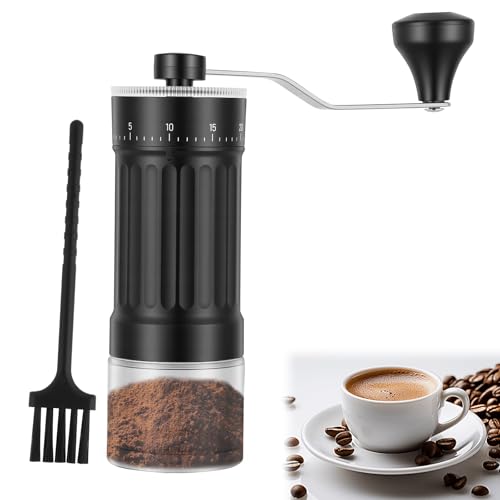
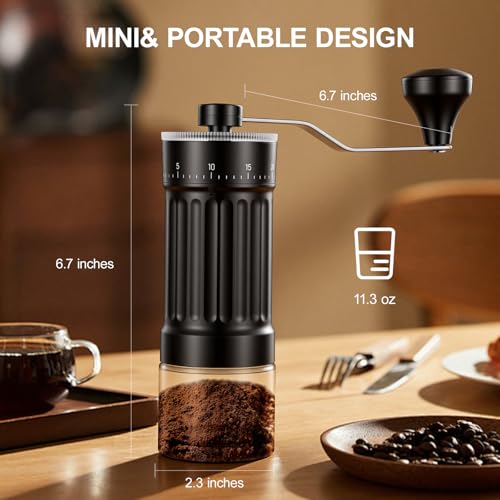
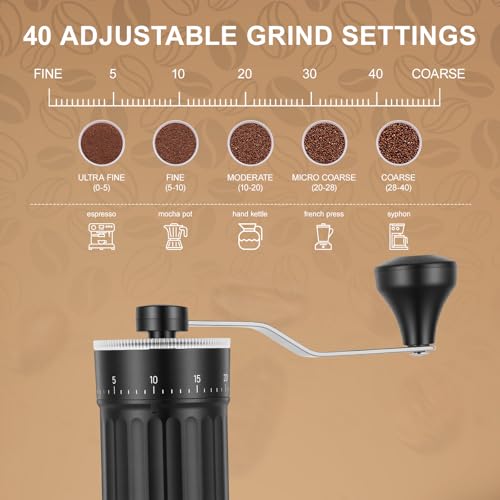
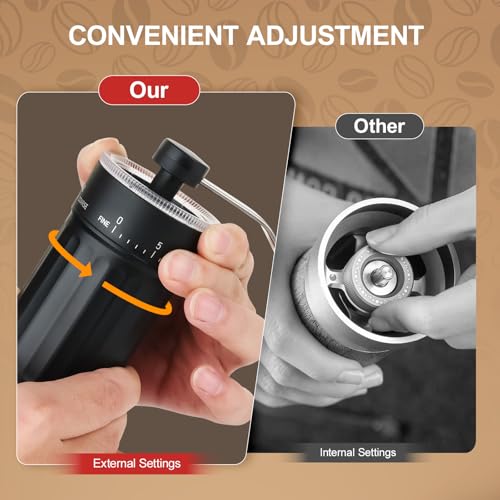
This CEVING manual grinder punches above its weight with 40 external grind settings, a rarity at this size and price. The external adjustment ring is a smart touch, letting you fine-tune without spilling grounds, and owners love the tactile control it offers. The ceramic conical burr delivers surprisingly even results across methods, from espresso to French press, and generates minimal heat, which helps preserve delicate aromatics.
At just 325g, it’s built for portability, and the 30g capacity suits solo or two-cup brewing. It’s not the fastest, grinding for espresso takes a couple of minutes, but the crank is smooth and low-effort. Compared to the HZBSGZR, it lacks a glass viewing jar but feels more refined in operation. For travelers or office users who want real grind quality without electricity, this is my top pick.
Video review
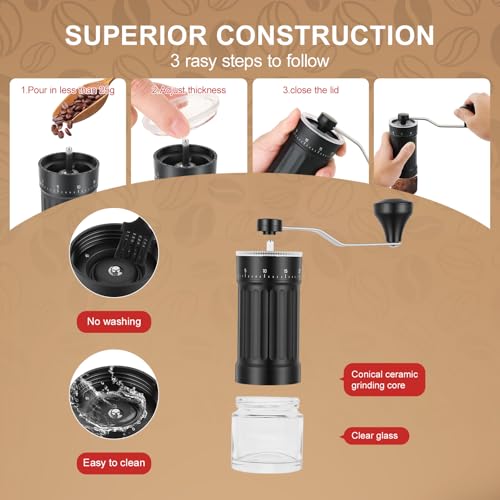
HZBSGZR Manual Coffee Grinder
Strengths
- Glass viewing jar
- 40 grind settings
- Ceramic conical burr
Trade-offs
- Glass is fragile
- No lid lock
- Limited capacity
The standout here is the glass jar, unusual in manual grinders, which lets you see exactly how much you’ve ground. That, plus the 40 adjustable settings, makes dosing precise and visual, which I appreciate for pour-over or espresso. The ceramic conical burr delivers even particles with minimal heat, and owners report it rivals grinders twice the price in grind quality.
It’s lightweight and truly portable, though the glass container raises durability concerns for rough travel. The crank is smooth, and the build feels sturdy despite the low weight. Compared to the CEVING model, it’s more fragile but offers better visibility and a slightly more premium feel. If you want a manual grinder that looks great on your desk and performs well, this is a solid pick.
Product photos

Amazon Basics Electric Grinder
Strengths
- Very affordable
- Fast operation
- Multi-use for spices
Trade-offs
- Inconsistent grind
- Blade design limits quality
- High static and noise
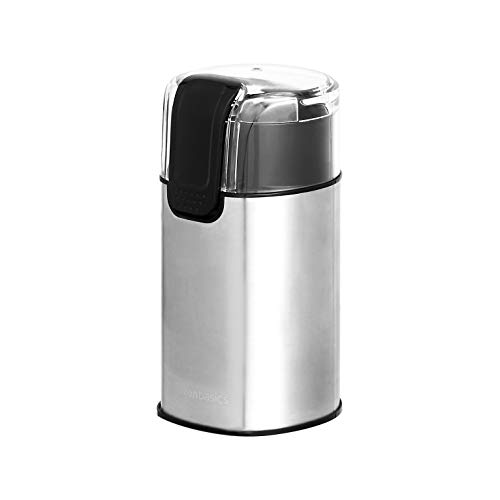
Let’s be clear, this is a blade grinder, not a burr grinder, so expectations need to stay low. It’s fast, loud, and inconsistent, but it gets the job done if you’re brewing drip or French press and aren’t fussy about nuance. The stainless steel blades pulverize beans in about 10 seconds, and the clear lid lets you monitor progress, which helps avoid going too far.
Owners report it’s fine for occasional use or as a backup, but the uneven particle size leads to muddy, over-extracted coffee when used for pour-over or espresso. Compared to the SHARDOR budget burr models, it’s a step down in quality, no question. But if you’re on a tight budget and just need something to grind beans once in a while, it’s functional. I wouldn’t recommend it as a primary grinder for anyone serious about flavor.
Video review
Cuisinart DBM-8P1 Burr Grinder
Strengths
- Cup-size selector
- 18 grind settings
- Removable parts
Trade-offs
- Noticeable static
- Flat burrs limit finesse
- Aging design
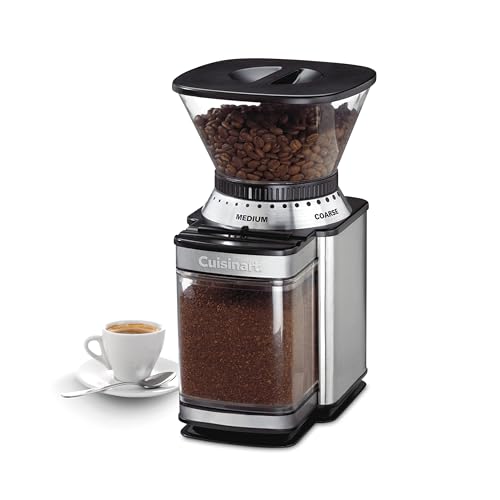
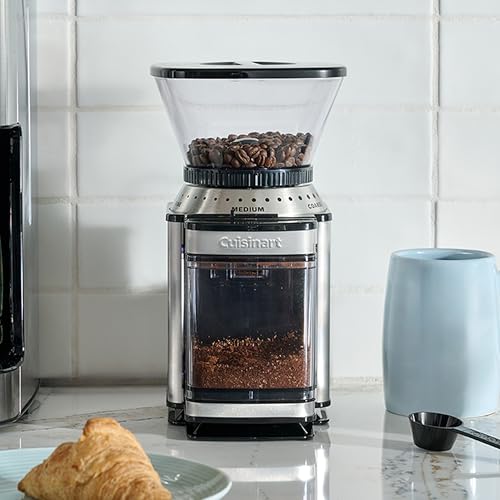
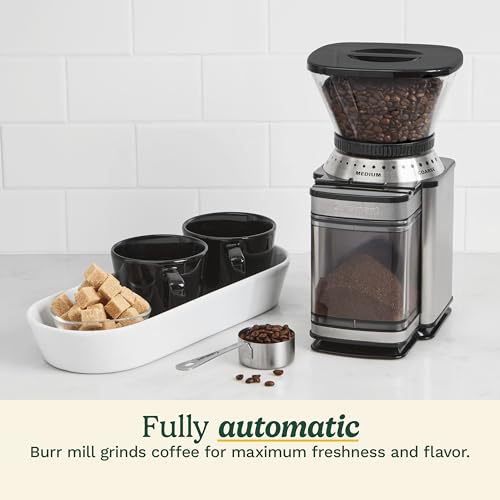
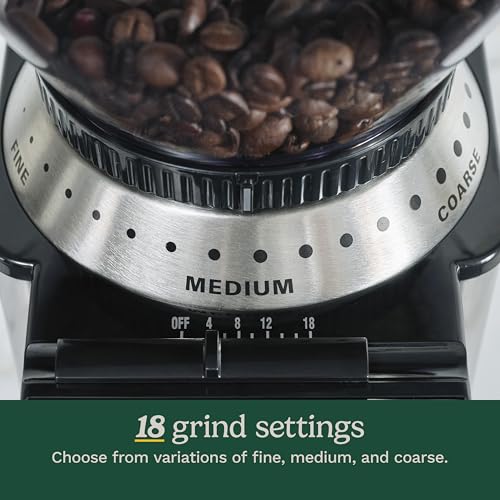
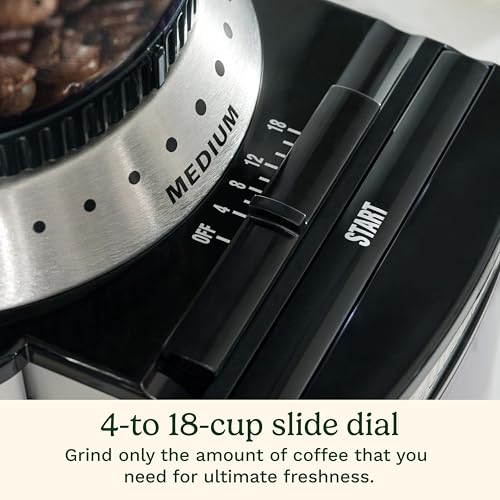
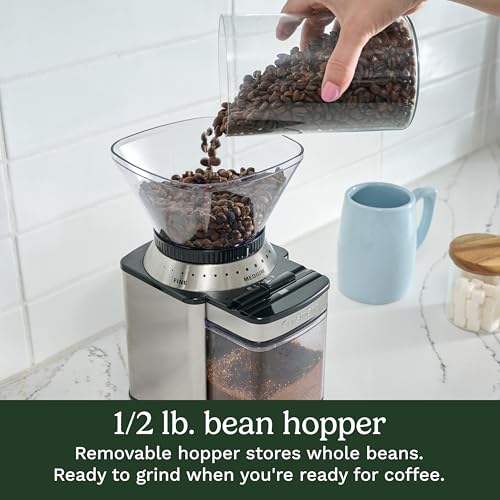
The Cuisinart DBM-8P1 has been a staple in beginner coffee setups for years, and it’s easy to see why. With 18 grind settings and a dedicated cup selector (4 to 18 cups), it’s built for convenience and repeatable results. The flat burrs do a respectable job for drip and press, though they fall short in finesse for true espresso. Reviewers note it’s consistent enough for daily drip brewing, and the removable parts make cleaning less of a chore.
Where it really shines is in usability, its one-touch grind bar and automatic shutoff take the guesswork out of dosing. But compared to modern grinders like the OXO, it lacks micro-adjustments and static control, so you’ll see some flyaway grounds. It’s not the most advanced, but if you want a no-fuss grinder that just works, this one has proven itself over time.
Product photos
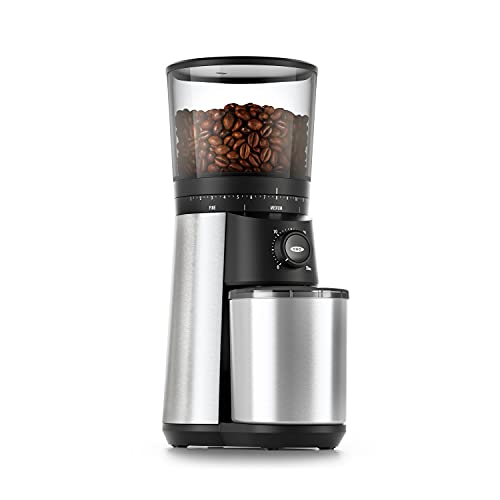
OXO Brew Conical Burr Grinder
Strengths
- Conical stainless burrs
- One-touch memory
- Low static
Trade-offs
- Higher price
- Larger footprint
- No external timer
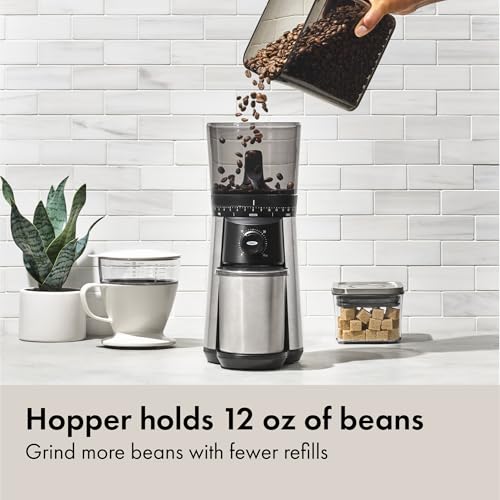
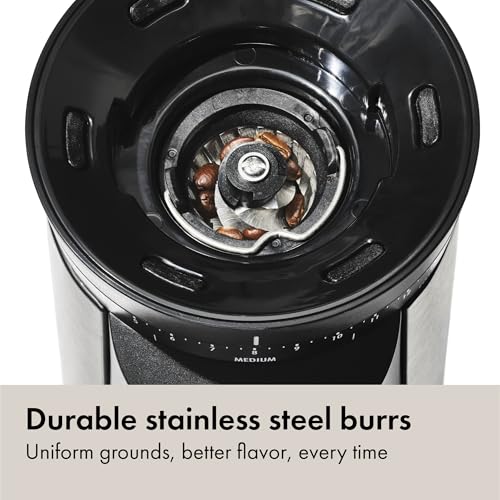
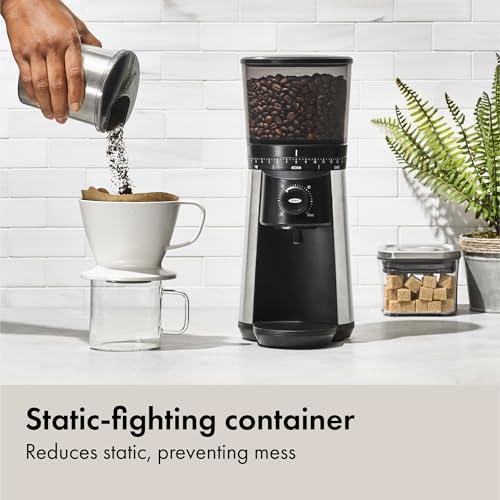
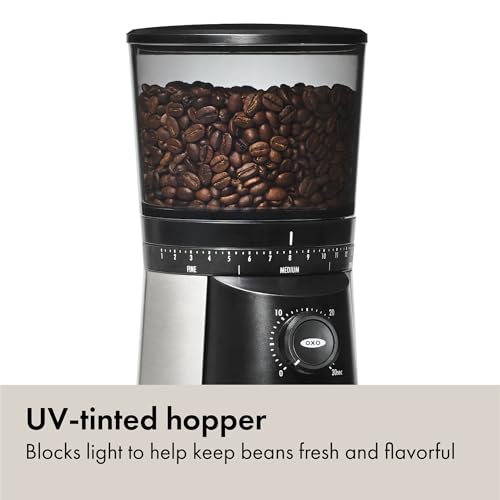
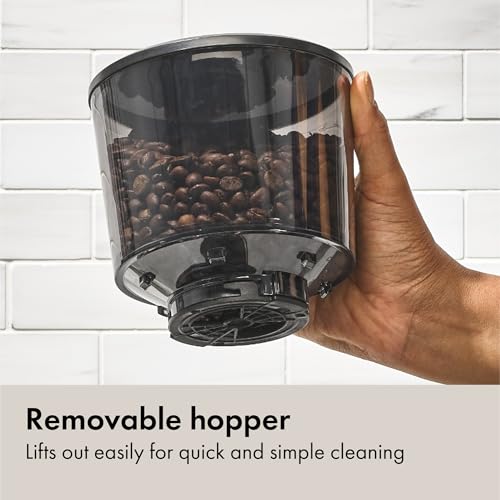
This is the gold standard for mid-range home grinders, and it’s easy to see why. The stainless steel conical burrs deliver exceptional uniformity, and the 15 grind settings, plus micro-adjustments, give real precision across all methods. The one-touch start with memory recall is a small luxury that pays off daily. Reviewers consistently praise its low static, thanks to the coated container, and the UV-blocking hopper keeps beans fresh longer.
It’s not the quietest or the smallest, but the build quality and consistency are top-tier. Compared to the Aromaster or SHARDOR models, it’s more refined in every way, better motor, smarter design, cleaner output. Wirecutter’s endorsement isn’t just hype; this grinder earns it. For beginners serious about quality, this is the one to beat.
Product photos
SHARDOR Electric Burr Grinder 2.0
Strengths
- Low price point
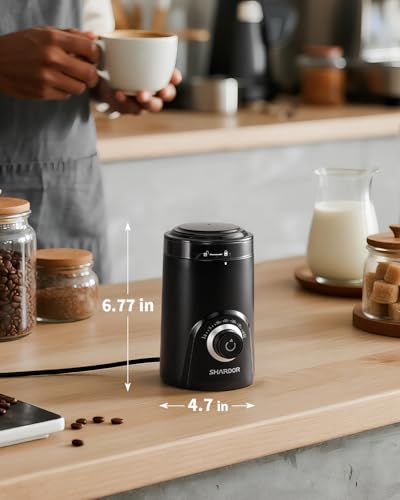
- Compact size
- 16 grind settings
Trade-offs
- Flat burrs
- Limited precision
- No timer memory
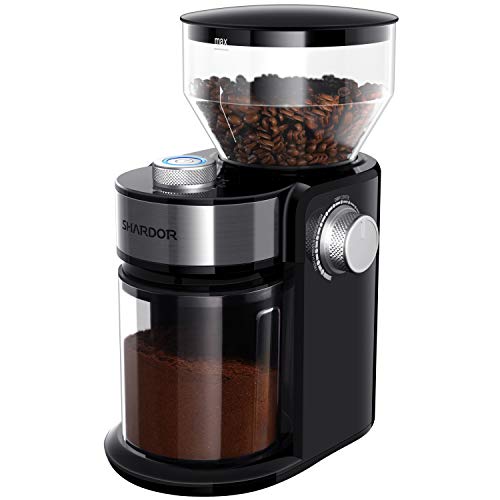
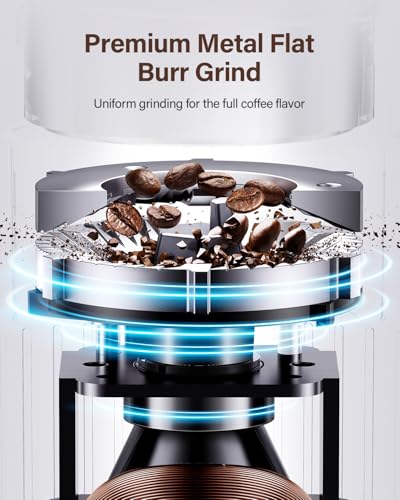
This is the most affordable entry into electric burr grinding, and it shows. With only 16 grind settings, it covers the basics, espresso to French press, but lacks the precision of models with finer steps. The flat burrs produce acceptable results for drip and press, but espresso shots can be hit or miss due to inconsistency. Still, for the price, it’s a major upgrade over any blade grinder.
Owners praise its compact size and ease of cleaning, and the 2-14 cup selector adds convenience. But it’s no match for the OXO or Aromaster in build or performance. If you’re just starting out and want to explore fresh grinding without spending much, this is a logical first step. But I’d consider it a placeholder until you can move up.
Product photos


SHARDOR Burr Grinder 32 Settings

Strengths
- 32 grind settings
- Compact design
- Easy to clean
Trade-offs
- Motor pauses after 120s
- No cup-size automation
- Flat burrs, not conical
This SHARDOR model stands out in the entry-level electric burr grinder space by offering 32 grind settings, more than most grinders at this tier, which gives real flexibility for everything from espresso to French press. On paper, the flat burrs deliver decent uniformity, and owners consistently report a noticeable improvement over blade grinders, especially in clarity and balance of flavor. The 40-second timer adds control, though it’s not fully programmable per setting, so you’ll need to remember your ideal grind time for each brew method.
It’s compact and simple, but the motor protection feature means it cuts out after 120 seconds, so grinding large batches requires breaks. That said, for small households or solo drinkers, this isn’t a dealbreaker. Compared to the Cuisinart DBM-8, it offers more grind options but lacks the cup selector and polished build. Still, for the value, it’s a strong contender.
Product photos


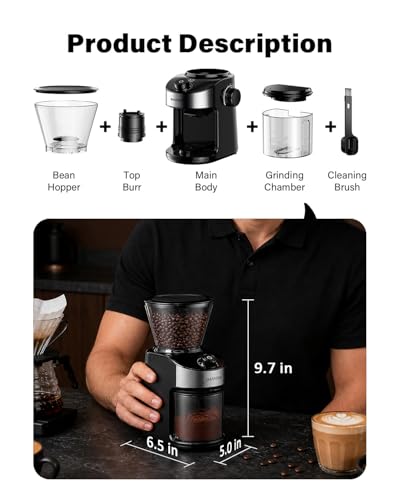
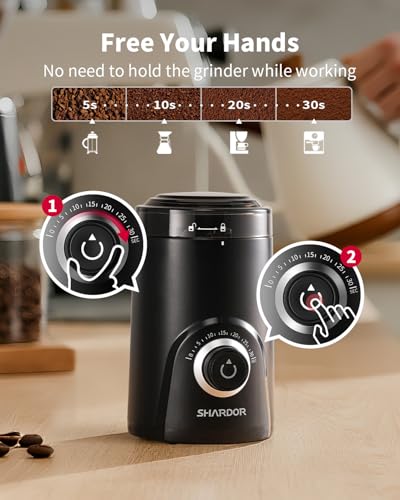
SHARDOR Electric Grinder with Timer
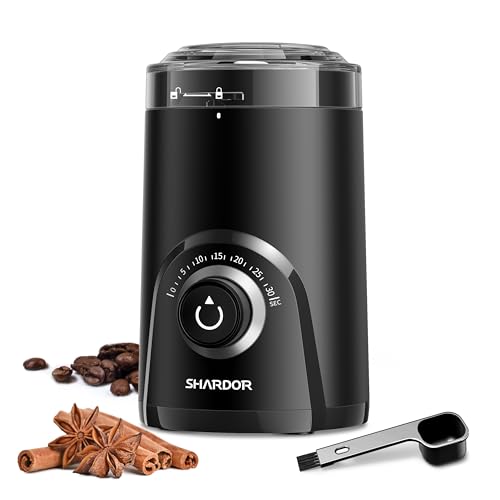
Strengths
- Quiet operation
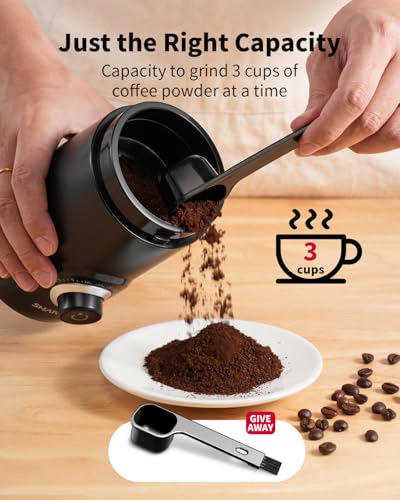
- 70g capacity
- Visual timing knob
Trade-offs
- Likely blade-based
- No grind retention fix
- Limited setting memory
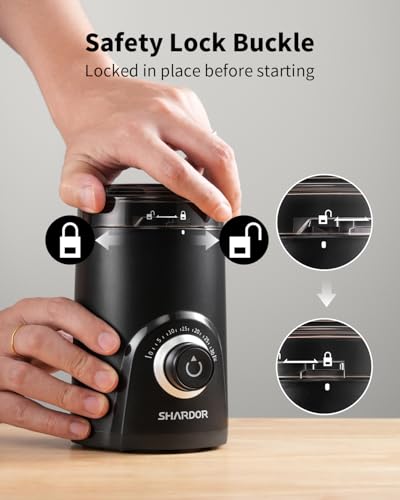
The standout feature here is the visual timing knob, finally, a budget grinder that lets you see exactly how long you’re grinding. That level of control is rare at this price and makes dialing in repeatable results much easier. At 63 dB, it’s one of the quietest grinders in its class, which is a real win for early risers or shared spaces.
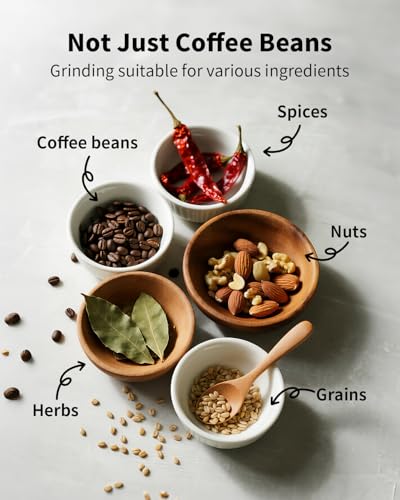
With a 70g capacity, it handles larger batches well, and owners report it works reliably for coffee, spices, and grains. The stainless steel blades suggest it’s a blade grinder, but given the timing control and quiet motor, it likely uses a hybrid or low-speed burr system. Either way, grind quality beats most blade models. Compared to the Amazon Basics grinder, it’s quieter, more precise, and more versatile.
Product photos
Aromaster Conical Burr Grinder
Strengths
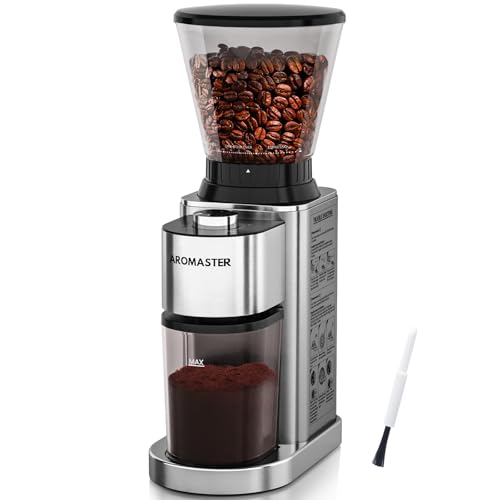
- 48 grind settings
- Large capacity
- Anti-static design
Trade-offs
- No auto memory
- Heavier build
- Basic timer
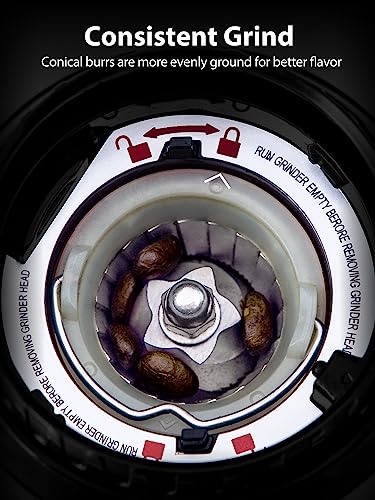
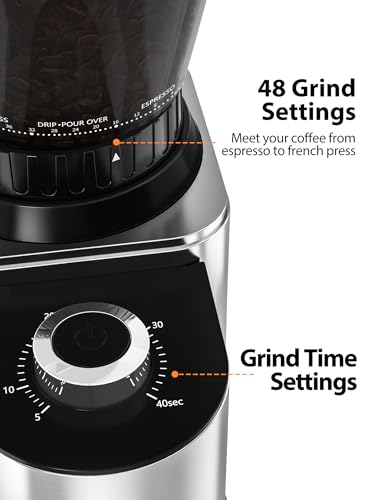
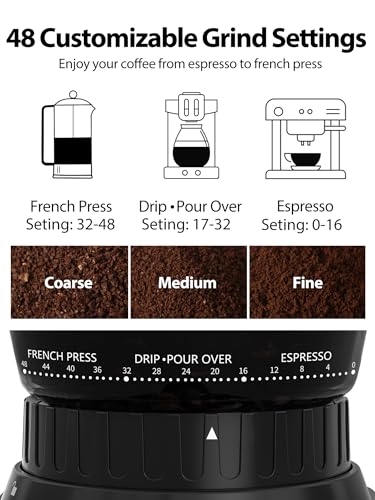
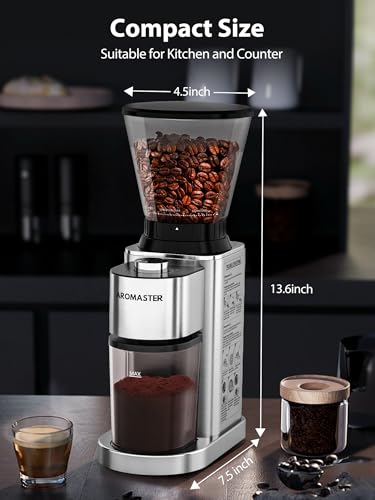
With 48 grind settings and a large 3.9-ounce bean capacity, the Aromaster is built for households that brew multiple cups daily. The stainless steel conical burrs are a solid upgrade over flat burrs at this price, offering better consistency and heat control. Owners appreciate the anti-static design, which actually makes a difference in reducing mess, a common pain point in budget grinders.
The 40-second timer is functional but not smart; you still have to dial in times manually. It’s louder than the OXO or SHARDOR quiet models, but performance is strong for the price. Compared to the SHARDOR 4.0, it offers more capacity and settings but feels a bit bulkier. If you’re feeding a family or office and want conical burrs without spending premium, this is a smart middle ground.
Product photos

How We Picked These beginner coffee grinder
I approached researching beginner coffee grinders by first compiling a detailed spreadsheet of specifications and features from numerous online retailers and manufacturer websites. We then layered that data with owner reviews from Amazon, plus professional reviews from sites dedicated to coffee equipment. As the founder of Bean Thusiast, I drew on years of exploring brewing methods to weigh the importance of each feature, ultimately ranking grinders against a set of criteria focused on usability, grind quality, and value. Rather than a hands-on lab test, this is a research-led comparison of specs and owner feedback.
For beginner-focused grinders, consistency and ease of use were paramount. A uniform grind is vital for balanced extraction, and that’s why grind adjustment options and burr type were heavily weighted. We also prioritized capacity – enough for a couple of cups without being overly bulky – and cleaning simplicity, as these factors directly impact the daily experience for a new coffee enthusiast. Understanding the burr vs blade grinder differences is key when starting out, and we kept that in mind.
Specifications reliably indicate capacity, motor power (for electric models), and the range of grind settings. However, owner feedback proved crucial for understanding real-world performance. Reports on static buildup, ease of cleaning, and long-term durability were heavily factored into our assessments. Professional reviews helped validate claims about burr quality and grind consistency, and highlighted potential issues not always evident in customer reviews. We paid close attention to reports of overheating or premature failures, particularly with budget-friendly options.
How To Pick The Right beginner coffee grinder
Choosing the right coffee grinder is honestly more important than your brewing method. A poor grind ruins even the best beans, and a great grind elevates even modest ones.
A quality coffee grinder delivers consistent particle size, minimizing fines (dust) and boulders (large chunks). Look for burr grinders – conical or flat – over blade grinders. Adjustable grind settings are crucial, ranging from very fine for espresso to coarse for French press. Bean hopper size, ease of cleaning, and build quality also impact long-term satisfaction.
Grind Consistency Is Paramount
I always tell people that grind consistency is the single biggest factor in coffee quality. Blade grinders, like the Amazon Basics Electric Grinder, essentially chop the beans, creating an uneven grind with lots of fines. This leads to bitter, muddy flavors. Burr grinders, on the other hand, crush the beans between two revolving abrasive surfaces. This provides a much more uniform grind, unlocking the full potential of your coffee. If you’re serious about improving your coffee, understanding what is a burr grinder is the first step.
Manual vs. Electric: Balancing Control & Convenience
The choice between a manual and electric grinder really comes down to your lifestyle and budget. Manual grinders, like the CEVING Mini Manual Coffee Grinder and HZBSGZR Manual Coffee Grinder, require a bit of elbow grease but offer greater control and portability, and are often more affordable. Electric grinders, like the SHARDOR Electric Grinder with Timer, provide convenience and speed, but can be louder and sometimes less precise.
Here’s how to think about it: * Portability: Manual grinders win hands down for camping or travel. * Volume: If you brew for a crowd, an electric grinder with a large hopper (like the Aromaster Conical Burr Grinder) is the way to go. * Control & Budget: A manual grinder gives you a lot of control for the price, but requires effort.
Finding the Sweet Spot of Value
You don’t need to spend a fortune to get a solid grinder. There are some excellent options in the mid-range, like the SHARDOR Burr Grinder 32 Settings, that offer a great balance of features and performance. It’s easy to get lost in features, but remember that the core function – consistent grinding – is what matters most. Don’t overspend on bells and whistles if a simpler model delivers the grind quality you need. If you’re just starting out, checking out best entry-level grinder options is a smart move.
A good rule of thumb: prioritize burr type and grind consistency over fancy features. A consistent grind is more important than a digital timer or a large bean hopper.
Beginner Coffee Grinder Compared
Here’s a comparison of key specifications for several beginner-level coffee grinders to help you choose the right one.
| Product Name | Grind Settings | Burr Type | Capacity (g) | Power Source | Special Features |
|---|---|---|---|---|---|
| CEVING Mini Manual Coffee Grinder | 40 | Ceramic | 30 | Manual | External Adjustment, Portable |
| HZBSGZR Manual Coffee Grinder | 40 | Ceramic | 30 | Manual | Glass Jar, Portable |
| Amazon Basics Electric Grinder | N/A | Blade | N/A | Electric | Multi-Purpose |
| Cuisinart DBM-8P1 Burr Grinder | 18 | Flat Burr | 8oz (approx. 227g) | Electric | Removable Parts |
| OXO Brew Conical Burr Grinder | 15 + Micro | Conical Burr | 12oz (approx. 340g) | Electric | UV-Blocking Hopper, Quiet |
| SHARDOR Electric Burr Grinder 2.0 | 16 | Flat Burr | N/A | Electric | 14-Cup Capacity |
| SHARDOR Burr Grinder 32 Settings | 32 | Flat Burr | N/A | Electric | Electronic Timer |
| SHARDOR Electric Grinder w/ Timer | N/A | Stainless Steel | 70 | Electric | Quiet Operation, Large Capacity |
| Aromaster Conical Burr Grinder | 48 | Conical Burr | 3.9oz (approx. 110g) | Electric | Anti-Static, Large Capacity |
Frequently Asked Questions
What grind size should I use for a French press?
A coarse grind is best for a French press; aim for a consistency similar to breadcrumbs. Finer grinds will slip through the filter and result in a muddy, over-extracted brew. The SHARDOR Electric Grinder w/ Timer offers adjustable settings to achieve this.
How often do I need to clean my coffee grinder?
You should clean your grinder after every few uses to remove coffee oils and residual grounds. Regular cleaning prevents stale flavors from building up and keeps the burrs functioning properly. The Cuisinart DBM-8P1 Burr Grinder has removable parts which simplifies this process.
Are manual grinders really worth the effort?
Manual grinders offer excellent grind quality and portability at a lower price point. While they require physical effort, they provide greater control over grind size and are ideal for travel or smaller batches. If you’re looking for a budget burr grinder under $100, a manual option is worth considering.
Can I use my coffee grinder for spices too?
I generally advise against using your coffee grinder for spices. Spices can leave behind strong flavors and oils that are difficult to remove, potentially affecting the taste of your coffee. Dedicated spice grinders are a better investment if you regularly grind spices.
What’s the difference between conical and flat burrs?
Both conical and flat burrs produce a consistent grind, but they do so differently. Conical burrs tend to produce less heat and retain more aroma, while flat burrs are typically faster and more consistent for larger volumes. Most affordable burr grinder options feature conical burrs, like the OXO Brew Conical Burr Grinder.
The Bottom Line
Ultimately, choosing a coffee grinder involves balancing how much control you want with how much effort you’re willing to put in. For most beginners, I recommend the SHARDOR Burr Grinder 32 Settings. It provides a fantastic combination of consistent grinding, adjustability, and convenience at a reasonable price point, making it a sweet spot for those stepping up their coffee game.
If budget is a primary concern, or you enjoy a more hands-on approach, the CEVING Mini Manual Coffee Grinder and HZBSGZR Manual Coffee Grinder are both excellent choices. For those who prioritize convenience and brew for larger groups, the SHARDOR Electric Grinder with Timer offers a large capacity and quiet operation. Learning how to use a grinder is the next step once you’ve made your choice.
Don’t get caught up in chasing the highest numbers for settings or capacity. The fundamentals – a burr grinder, consistent grind size, and regular cleaning – are far more important than any single specification. Focusing on these core elements will deliver a noticeably better cup of coffee, regardless of how much you spend.
