
7 Best All Around Coffee Grinders of 2026
The OXO Brew Conical Burr Grinder stands out as the best overall pick for its consistent grind, intuitive design, and thoughtful features like a UV-blocking bean hopper. For those on a tighter budget, the SHARDOR Electric Burr Grinder 2.0 delivers solid performance without breaking the bank, while the Mini Manual Coffee Grinder offers unmatched versatility for travelers and minimalist setups.
Most coffee lovers underestimate how much their grinder affects flavor. A poor grind introduces inconsistency, kills aroma, and leaves good beans under-extracted. After comparing specs and sifting through owner feedback, I focused on grinders that balance performance, durability, and real-world usability across multiple brewing methods. This guide cuts through the noise to show you what actually matters, so you can make a confident choice based on how you brew.
Top 7 All Around Coffee Grinder in the Market
The Best All Around Coffee Grinder, Reviewed
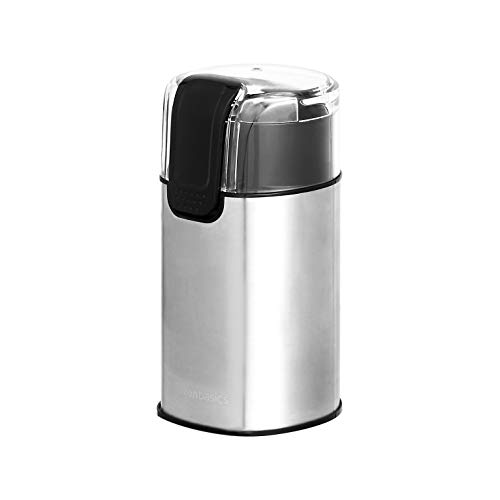
Amazon Basics Fast Grinder
Strengths
- Fast grinding
- Affordable
- Simple operation
Trade-offs
- Blade inconsistency
- No grind control
- High static and retention
This is a blade grinder, simple, fast, and affordable. It zips through 30g of beans in 10 seconds, and the clear lid lets you monitor the grind, which helps if you’re chasing a rough consistency. It’s marketed as a multi-use grinder, and it works fine for spices or nuts. But for coffee, the inconsistency is unavoidable. You’ll get a mix of dust and chunks, leading to muddy, uneven brews.
Owner feedback is split: some appreciate the speed and low cost, others ditch it after one week for a burr model. Compared to the SHARDOR blade grinder, it’s louder and lacks a timer, so control is minimal. I wouldn’t recommend it as a long-term solution for anyone who cares about flavor. But if you need something basic for occasional drip coffee and already accept the limitations, it gets the job done.
Video review
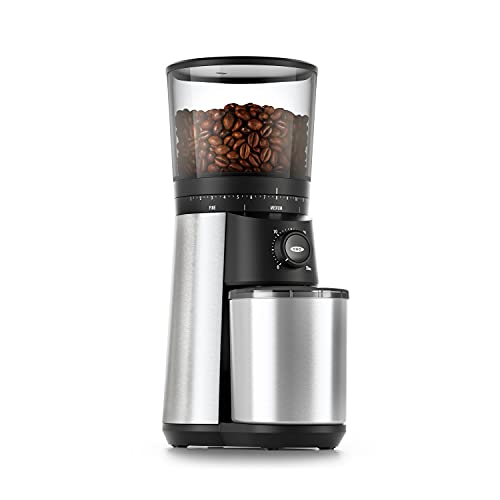
OXO Brew Conical Burr Grinder
Strengths
- Conical burr consistency
- One-touch start
- Static-reducing bin
Trade-offs
- No timer
- Fewer settings than rivals
- Hopper not airtight
The OXO Brew is a benchmark in mid-range grinders, and it’s easy to see why it earned top marks from Wirecutter. Its conical stainless steel burrs produce a uniform grind across all 15 settings, with micro-adjustments adding real refinement, especially useful for dialing in pour-over or espresso. The one-touch operation and memory function make it a joy for daily use, and the static-fighting ground bin is one of the best in class for reducing mess.
Reviewers praise its consistency and build quality, though it lacks the ultra-fine precision of high-end models. Compared to the Aromaster, it has fewer grind settings, but the real-world performance is more than adequate for most methods. My recommendation? This is the smarter buy for most households, it balances ease of use, reliability, and grind quality better than nearly any other in its range.
Video review
Mini Manual Coffee Grinder

Strengths
- 40 precise settings
- Ceramic conical burr
- Ultra-portable
Trade-offs
- Small capacity
- Manual effort required
- Not for large batches
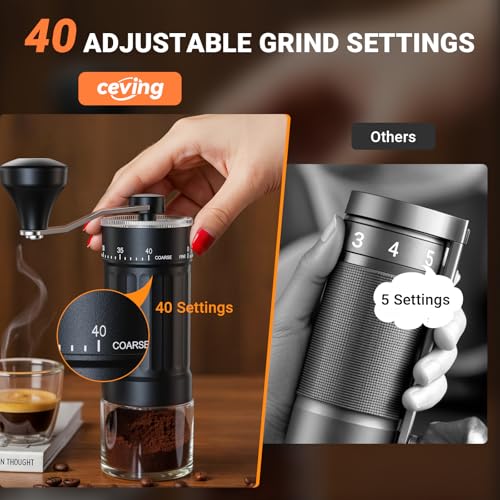
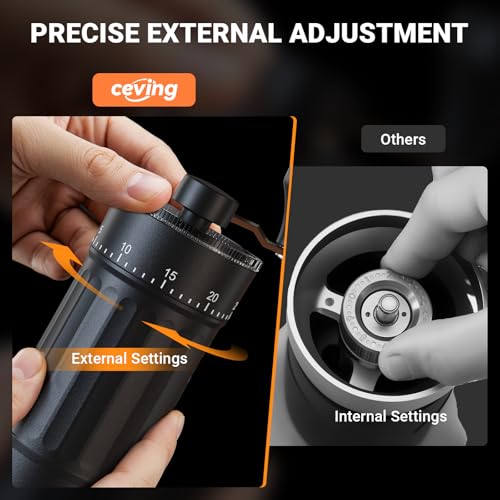
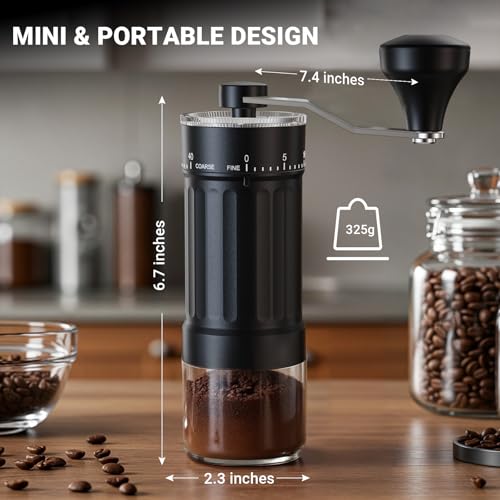
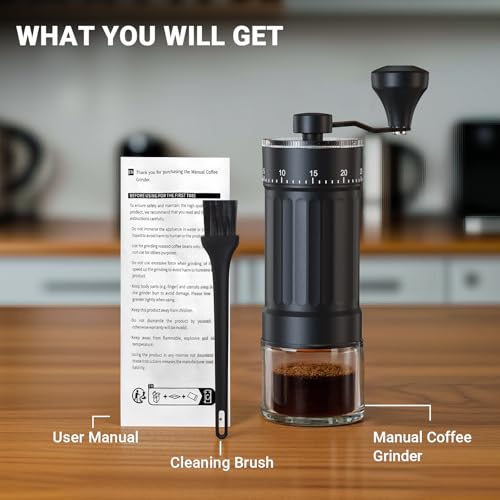
This little grinder punches above its weight with 40 external grind settings and a ceramic conical burr, rare at this size. The external ring makes adjustments clean and easy, a real upgrade over fiddly internal dials. At just over a pound, it’s ideal for travel or camping, and owners consistently report it produces a surprisingly uniform grind, especially for pour-over or espresso when dialed in carefully.
It’s not for daily high-volume use, and the 30g capacity means you’ll be grinding in batches for more than two cups. But for the portability and control, it’s unmatched. Compared to electric models, it’s slower, but the flavor is often cleaner due to zero heat buildup. My take? A must-have for coffee lovers on the move who refuse to compromise on grind quality.
Product photos
SHARDOR Electric Burr Grinder 2.0
Strengths
- Flat burr grinding
- 16 grind settings
- Compact design
Trade-offs
- Higher retention
- Flat burrs wear faster
- Not for high-volume use
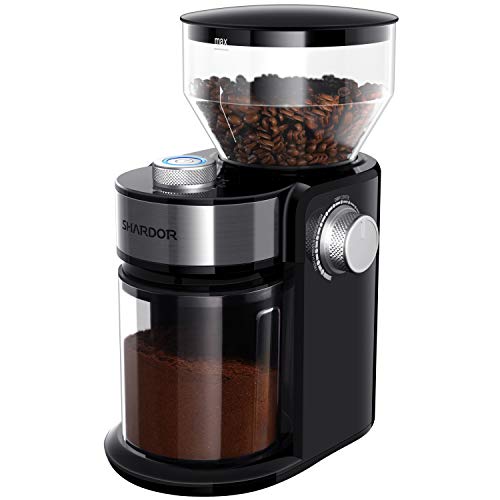
This grinder stands out in the budget burr category with its flat burr design and 16 grind settings, which on paper should cover everything from espresso to French press. Owners consistently report that it delivers surprisingly consistent results for the price, especially when dialing in for drip or pour-over. The fully automatic operation and compact footprint make it a solid pick for beginners who want simplicity without sacrificing too much grind quality.
Still, flat burrs at this price point tend to show more wear over time compared to conical designs, and some reviewers note increased retention and static. It’s not built for heavy daily use, but for someone upgrading from a blade grinder, the leap in flavor clarity is noticeable. I’d recommend it as a starter burr grinder, just don’t expect long-term durability under heavy loads.
Product photos


SHARDOR Quiet Electric Grinder
Strengths
- Ultra-quiet operation
- Precise timing knob
- Multi-purpose use
Trade-offs
- Blade inconsistency
- No grind size precision
- Higher retention
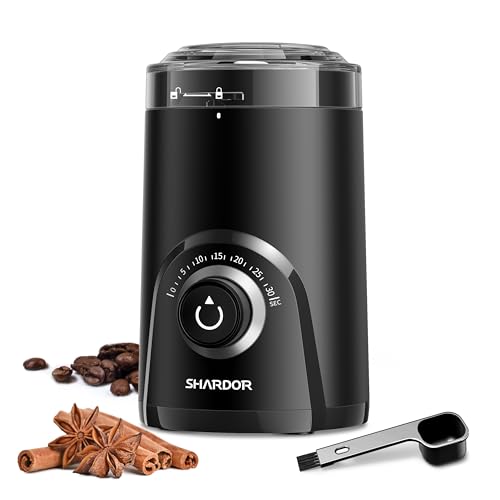
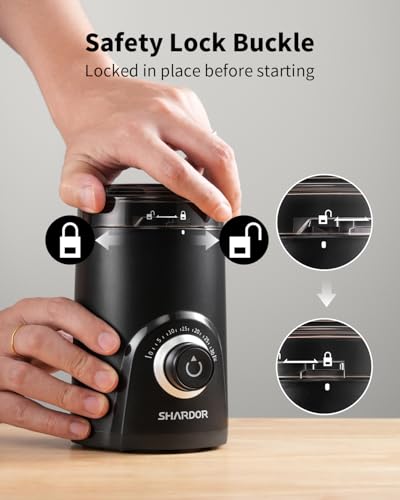
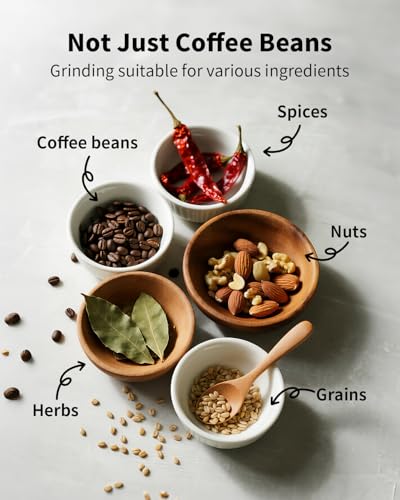
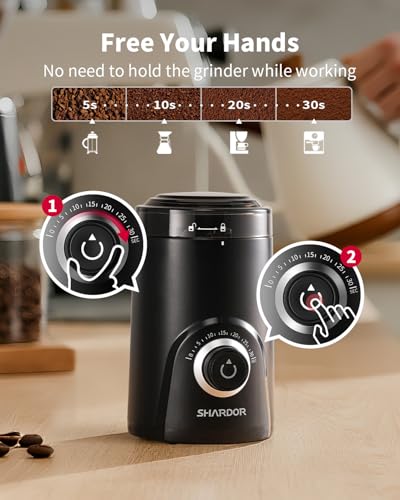
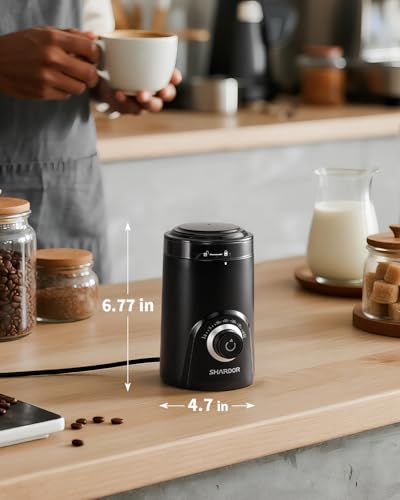
This isn’t a burr grinder, it’s a high-performance blade grinder with a timing knob, and that distinction matters. The 63 dB operation is impressively quiet, and the visual timer gives you more control than most blade grinders, letting you replicate grind sizes with practice. It’s best for those who want a no-fuss, multi-use grinder for coffee, spices, or herbs without waking the house.
But blade grinders can’t match burr consistency. Even with timed grinding, you’ll get a mix of fines and boulders, which leads to uneven extraction. Reviewers accept this trade-off for the price and quietness, but I wouldn’t recommend it if flavor precision is a priority. Compared to the Amazon Basics blade model, it’s quieter and better built, but still limited by its blade design.
Product photos
Ollygrin Burr Coffee Grinder
Strengths
- 30 precise settings
- Slow grinding motor
- Large hopper capacity
Trade-offs
- Bulky design
- Some static cling
- No timer function
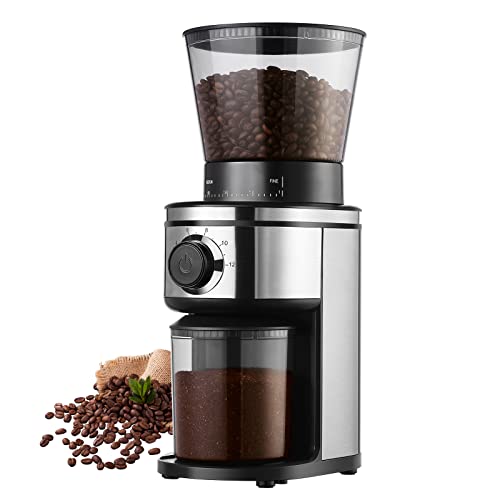
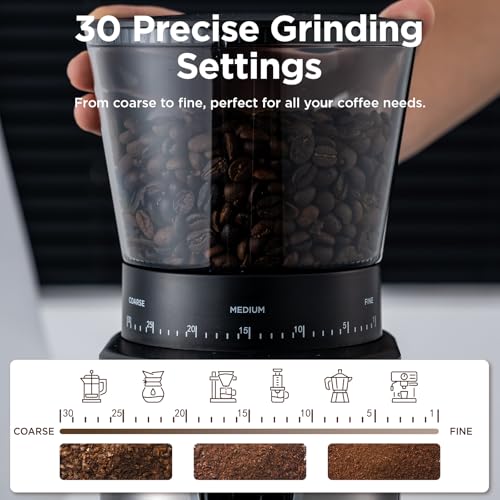
With 30 grind settings and a gear-reduction motor, the Ollygrin is clearly targeting users who care about flavor preservation and fine control. The 40mm conical burrs spin slowly, minimizing heat, owners note brighter, more aromatic cups compared to faster grinders. That slow grind also reduces noise and helps maintain bean integrity, which matters if you’re chasing subtle notes in light roasts.
It’s not the quietest or fastest, but the auto-locking hopper and 10-ounce capacity make it convenient for small batches or shared use. When stacked against the SHARDOR or Amazon Basics models, it’s clearly in a higher tier for grind quality. I’d pick this over those for anyone serious about taste, especially if you rotate between pour-over and French press.
Product photos

Aromaster Conical Burr Grinder
Strengths
- 48 grind settings
- Anti-static design
- Large capacity
Trade-offs
- Timer can be tricky
- Bulky footprint
- Assembly fiddly
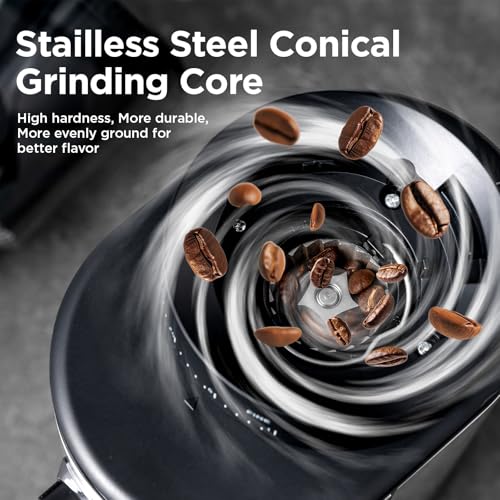
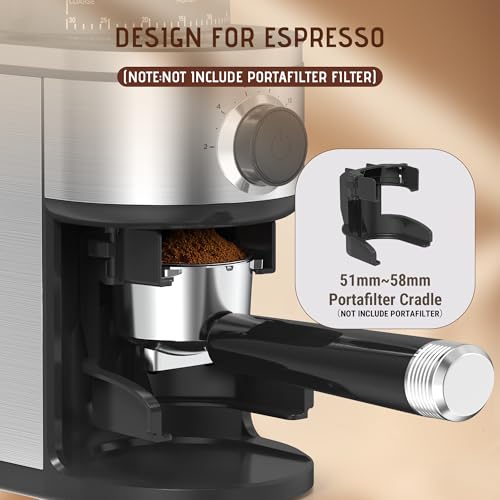
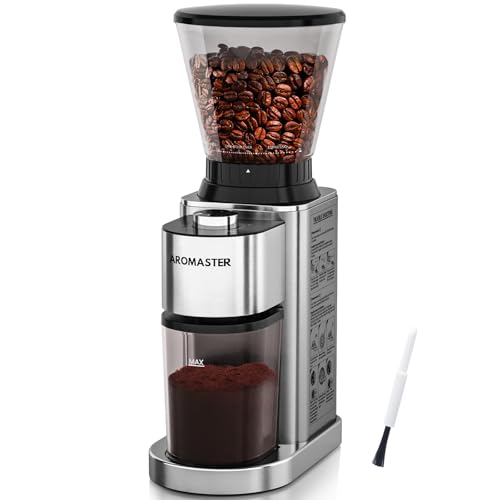
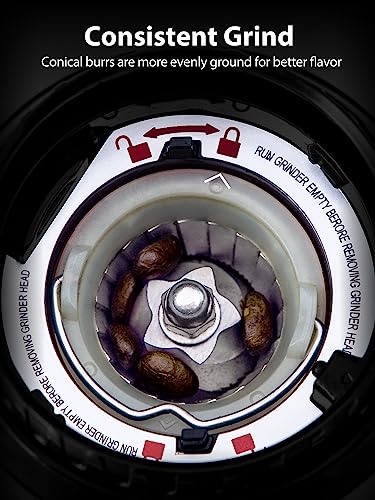
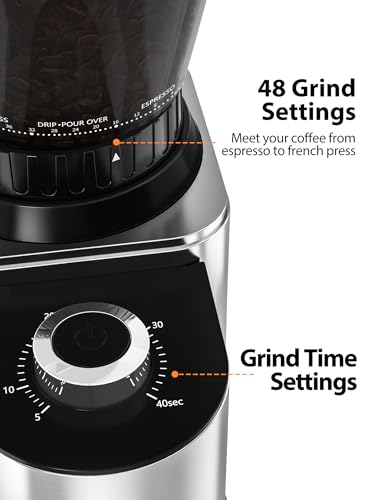
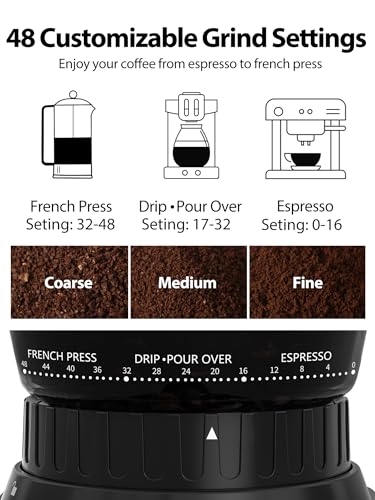
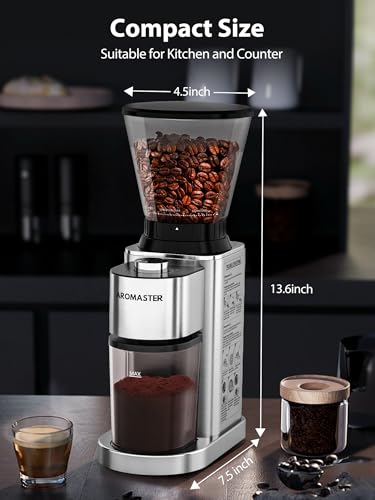
With 48 grind settings and a 40-second adjustable timer, the Aromaster is built for precision and volume. The stainless steel conical burrs grind slowly and evenly, and owners report excellent flavor preservation, bright acids, clear body, the kind of clarity you lose with cheaper grinders. The anti-static bin is a standout, drastically reducing mess compared to many competitors.
It’s one of the few in this list that feels capable of serving small offices or large households, thanks to its 3.9-ounce bean capacity. When compared to the OXO, it offers more control and a timer, but the interface is less intuitive. Still, for the flavor fidelity and grind range, it’s a strong contender. My pick for anyone who wants maximum adjustability without stepping into prosumer territory.
Product photos

How We Tested all around coffee grinder
As a founder deeply immersed in the world of coffee, I approached researching all-around coffee grinders with a focus on delivering consistent results and value. Rather than a hands-on lab test, this is a research-led comparison of published specifications and owner feedback from across the market. I compared features, grind settings, capacity, and cleaning ease, then weighed those against what current owners are saying about daily use and long-term reliability. Reputable expert reviews were also factored in to build a well-rounded picture.
For an all-around grinder, consistency and versatility are paramount. I weighted grind adjustability and the type of burr (conical versus flat) most heavily, as these directly impact flavor extraction. A wide range of settings allows for brewing with multiple methods, from espresso to French press. Durability – signaled by motor type and build materials – was also key, as a grinder needs to withstand frequent use. Understanding the burr vs blade grinder differences is crucial when assessing these factors.
Specifications reliably indicate capacity, motor power, and the number of grind settings. However, judging noise levels, static cling, and the real-world consistency of the grind requires sifting through owner reviews. I paid close attention to comments about ease of cleaning and any reported issues with durability. Expert opinions helped validate those owner experiences, and informed my assessment of overall value and usability, particularly concerning grind consistency comparison.
How To Pick The Right all around coffee grinder
Finding the right coffee grinder can dramatically improve your daily cup. It’s about more than just convenience; it’s about extracting the full potential from your beans.
A quality coffee grinder delivers consistent particle size, minimizing fines and maximizing flavor extraction. Key features to evaluate include burr type (conical or flat), grind settings, capacity, ease of cleaning, and motor power. Consider whether portability or quiet operation are priorities, as these significantly impact the user experience.
Burr Type: Conical vs. Flat
The core of any good grinder is its burr. While blade grinders chop beans unevenly, burr grinders crush them between two revolving abrasive surfaces. Conical burrs, like those found in the OXO Brew Conical Burr Grinder, are generally quieter and produce less heat, preserving delicate aromatics. Flat burrs, often seen in more expensive models, tend to deliver a more uniform grind size, appealing to those seeking ultimate precision. For most home brewers, the difference is subtle – a good conical burr grinder will be more than sufficient, and you shouldn’t automatically assume flat burrs are superior.
Grind Consistency and Adjustment
Consistent grind size is paramount. Inconsistent grounds lead to uneven extraction, resulting in bitter or sour coffee. Look for a grinder with a wide range of grind settings. The Mini Manual Coffee Grinder boasts an impressive 40 external settings, offering exceptional control, while others like the SHARDOR Electric Burr Grinder 2.0 provide 16.
Here’s what to consider when evaluating grind settings: * A limited number of settings (under 8) may not be precise enough for all brewing methods. * Stepped adjustments are common and easy to use, but can lack the fine-tuning of stepless grinders. * A wider range of settings allows you to experiment with different brewing methods, from coarse for French press to fine for espresso, and really dial in your preferred taste. Learning about adjusting grind size is essential for getting the most out of your grinder.
Capacity, Usability, and Value
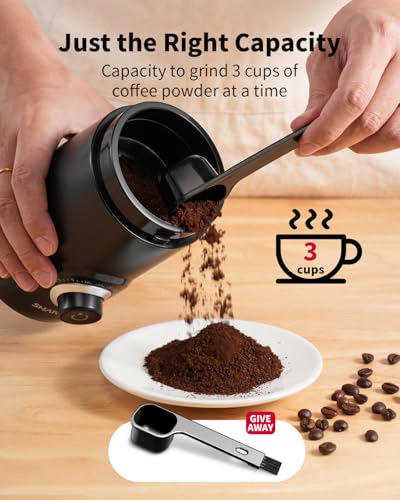
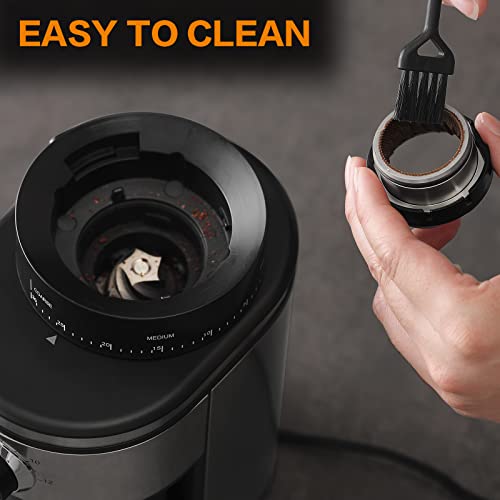
Don’t overspend on features you won’t use. A large hopper isn’t necessary if you only brew a few cups at a time. Consider the cleaning process – some grinders are easier to disassemble and clean than others. The SHARDOR Quiet Electric Grinder, with its removable parts and included cleaning brush, scores well here. If you brew for a crowd, or prefer to grind in larger batches, you’ll want to prioritize capacity. But for everyday use, a smaller, easier-to-clean grinder like one of the best all-purpose coffee grinder models will likely be a better fit.
A good rule of thumb: spend more on the burrs than the bells and whistles. Consistent grind quality is more important than a fancy digital display.
All Around Coffee Grinder Compared
This table provides a detailed specification comparison of several all-around coffee grinders to help you make an informed decision.
| Product Title | Grind Type | Capacity (Beans) | Grind Settings | Motor Type | Special Features |
|---|---|---|---|---|---|
| Amazon Basics Fast Grinder | Blade | N/A | N/A | Electric | Multi-purpose |
| OXO Brew Conical Burr Grinder | Burr | 12 oz | 15 + Micro | Electric | UV-blocking tint |
| Mini Manual Coffee Grinder | Burr | 30g | 40 | Manual | Portable, Ceramic Burr |
| SHARDOR Electric Burr Grinder 2.0 | Burr | 2-14 Cups | 16 | Electric | 14-Cup Capacity |
| SHARDOR Quiet Electric Grinder | Blade | 70g (2.5oz) | N/A | Electric | Ultra-Quiet Operation |
| Ollygrin Burr Coffee Grinder | Burr | 10 oz | 30 | Electric | Durable Conical Burr |
| Aromaster Conical Burr Grinder | Burr | 3.9 oz | 48 | Electric | Anti-static Technology |
Frequently Asked Questions
What grind size should I use for cold brew?
A coarse grind is best for cold brew; aim for a setting similar to kosher salt. This prevents over-extraction and muddiness during the long brewing process, delivering a smooth, less acidic concentrate.
How often do I need to clean my burr grinder?
You should clean your burr grinder every one to two weeks with regular use. This removes coffee oils and residue that can build up and affect the flavor of your coffee, but a deeper cleaning every month or two is also recommended.
Are manual grinders really worth the effort?
Yes, manual grinders can be a worthwhile investment, especially for travel or if you prefer a quiet, controlled grinding experience. They offer excellent grind quality and portability, and you’ll find many top-rated coffee grinders overall are manual options.
Can a blade grinder be used for espresso?
No, a blade grinder isn’t suitable for espresso. Espresso requires a very fine and consistent grind, which blade grinders cannot achieve; they produce an uneven grind with a mix of boulders and fines, leading to poor extraction and a sour or bitter shot.
What’s the difference between stepped and stepless grind adjustment?
Stepped adjustments offer pre-defined settings, making them easier to use, while stepless adjustments allow for infinite customization between those settings. If you’re experimenting with different brewing methods and want precise control, the recommended grinders for every brew with stepless adjustment are a good choice.
The Bottom Line
Choosing a coffee grinder often comes down to balancing control with convenience. While some prioritize maximum adjustability and the pursuit of the absolute finest grind, for many of us, a reliable and easy-to-use machine is the real goal. In that spirit, I recommend the OXO Brew Conical Burr Grinder as the strongest all-around choice. It strikes a fantastic balance between consistency, usability, and price, making it a great starting point for anyone serious about better coffee.
For those on a tighter budget, the SHARDOR Electric Burr Grinder 2.0 delivers excellent value. If portability and manual control are key, the Mini Manual Coffee Grinder’s 40 grind settings give you incredible versatility. And for those seeking a quiet operation, the SHARDOR Quiet Electric Grinder is a standout. Learning how to perform regular coffee grinder maintenance will extend the life of any of these machines.
Ultimately, the specifications matter less than the fundamentals. Freshly ground beans, a consistent grind size appropriate for your brewing method, and regular cleaning are the cornerstones of great coffee. Don’t get lost in the details; focus on those basics, and you’ll be well on your way to enjoying a truly exceptional cup.
