
8 Best Coarse Coffee Grinders of 2026
The CEVING 60g Manual Coffee Grinder stands out as the best overall coarse coffee grinder for its consistent grind and external adjustment, with the CEVING Mini Manual Coffee Grinder as a strong budget-friendly pick for travelers and single brewers.
Most people shopping for a coarse coffee grinder are trying to fix a problem they didn’t know they had, uneven extraction from inconsistent grinds. That off-balance, bitter or sour cup often comes down to poor grinding, not bad beans or technique.
This guide cuts through the noise. I compared specs and owner feedback across grinders, focusing on what matters most: grind consistency, burr quality, and real-world usability. These picks deliver reliable performance for French press, cold brew, and other coarse-grind methods.
Top 8 Coarse Coffee Grinder in the Market
The Best Coarse Coffee Grinder, Reviewed
CEVING 60g Manual Coffee Grinder

Strengths
- 60g large capacity
- 40 precise external settings
- Stainless steel burrs
- Portable yet powerful
Trade-offs
- Heavier than mini grinders
- Manual effort required
- Not for high-volume daily use
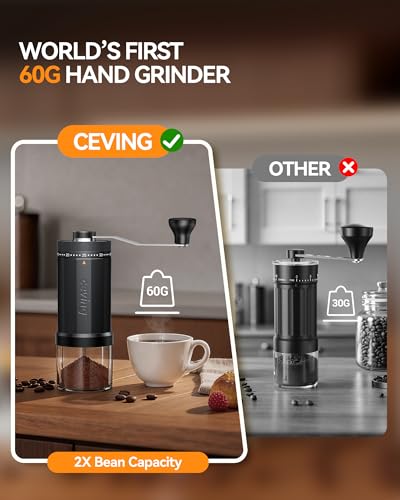
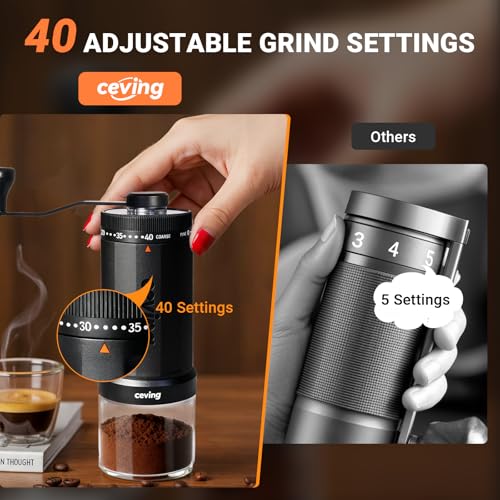
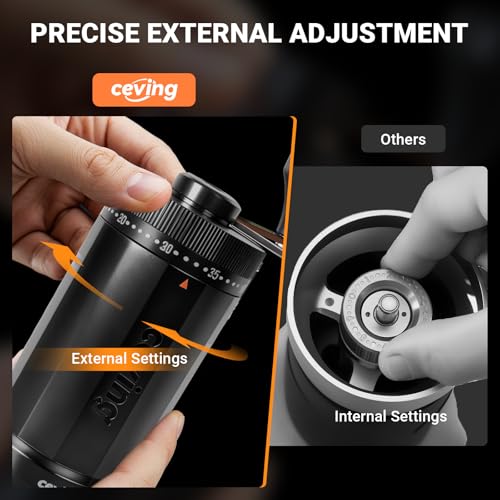
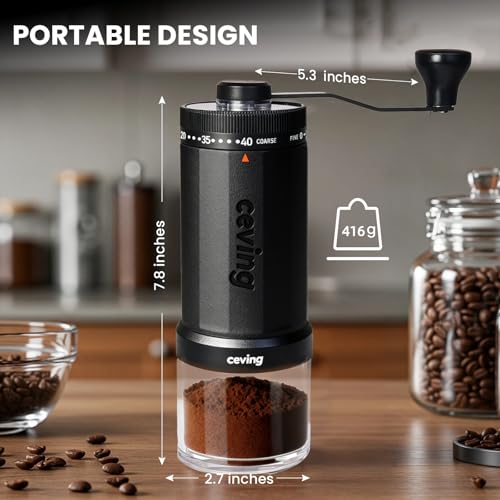
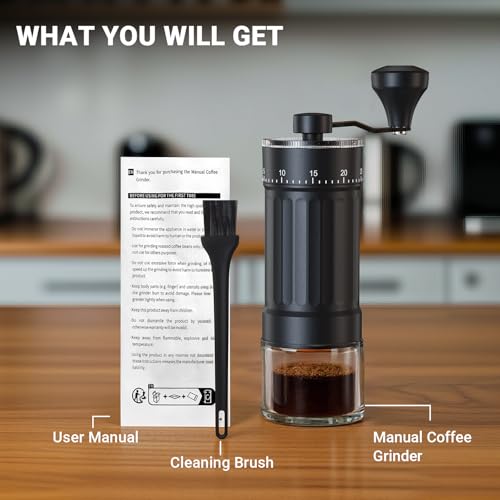
This CEVING manual grinder is a standout for hand-grind users. The 60g capacity is legit, double most portables, so you can grind enough for multiple cups without stopping. Paired with 40 external click settings and CNC stainless steel burrs, it delivers barista-tier consistency anywhere.
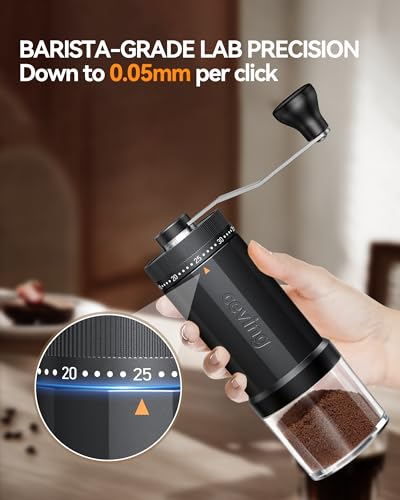
Owners love the build quality and the fact that it grinds fast for a manual unit. The 0.05mm adjustment is real, and it shows in the cup. Yes, it’s heavier than mini grinders, but that’s the trade-off for power and capacity. For travel, camping, or backup at home, it’s the most capable manual option here.
Product photos
CEVING Mini Manual Coffee Grinder

Strengths
- 40 precise settings
- Ultra-portable
- Ceramic conical burr
Trade-offs
- 30g capacity too small for families
- Slower grinding by hand
- Not ideal for large batches
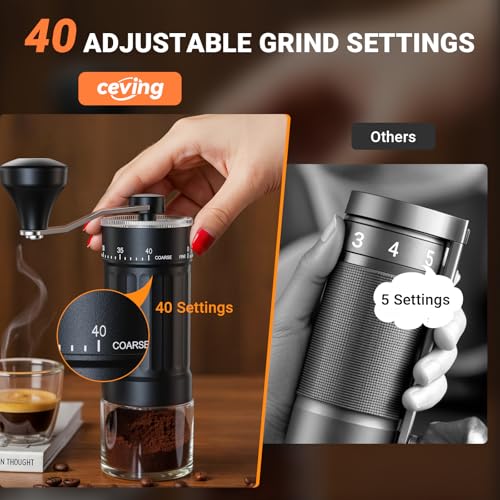
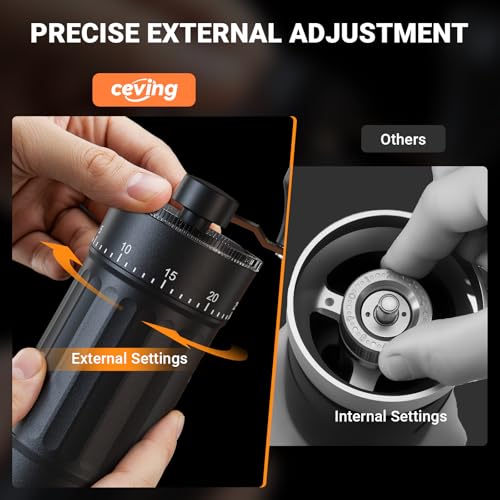
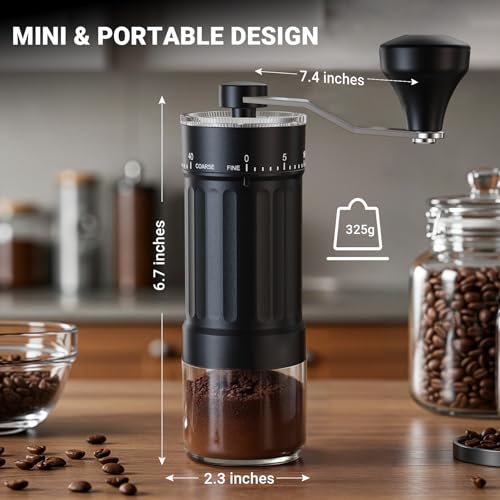
This tiny manual grinder is built for life on the move. With 40 external grind settings and a ceramic conical burr, it offers surprising precision for its size, enough to dial in pour-over or espresso while camping or traveling. At just 325g, it’s featherlight, and the external adjustment ring is a real win for quick changes without spilling grounds.
The 30g capacity is the main limitation. You’ll need two rounds for more than two mugs, and hand grinding that much can test your wrist endurance. But for its niche, it’s impressive: ceramic burrs stay cool, and the grind quality beats most mini grinders I’ve seen.
Product photos
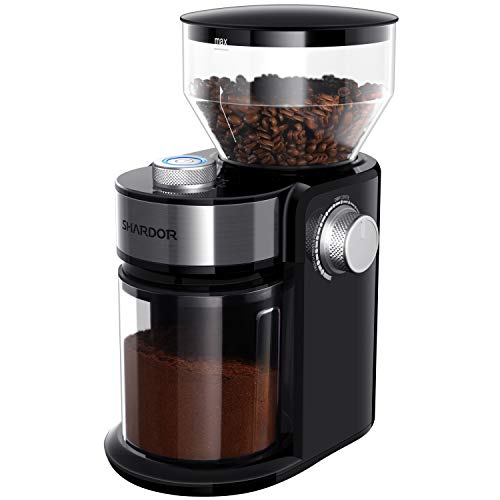
SHARDOR Electric Burr Coffee Grinder 2.0
Strengths
- Affordable price
- 16 precise settings
- Compact design
- Easy to clean
Trade-offs
- Noticeable static
- Flat burrs overheat slightly
- Minor inconsistency at fine settings
If you’re budget-conscious but refuse to compromise on burr quality, the SHARDOR 2.0 is a smart entry point. It uses flat burrs with 16 settings, and owners consistently report it outperforms its price tag, especially for French press and pour-over. The 14-cup capacity is practical for small households, and the compact footprint makes it a solid pick for tight kitchens.
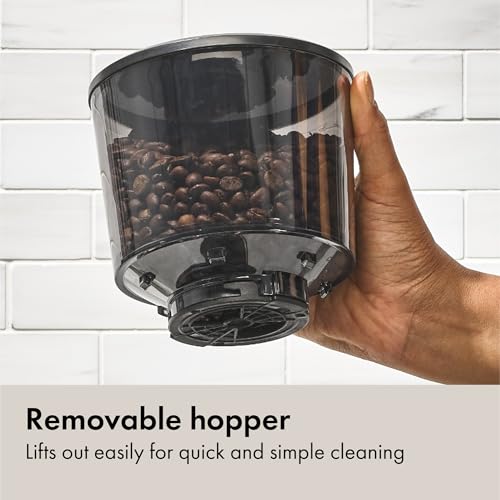
It’s not without quirks. The grind consistency isn’t lab-grade, and some users report slight static cling. But for the cost, it delivers reliable performance and is easier to clean than many rivals, thanks to the removable burr and chamber.
Product photos


SHARDOR Electric Coffee Grinder 70g
Strengths
- Visual timing knob
- Quiet operation
- 70g large capacity
- Multi-use design
Trade-offs
- Blade grinder, not burr
- Less consistent particle size
- Not for espresso
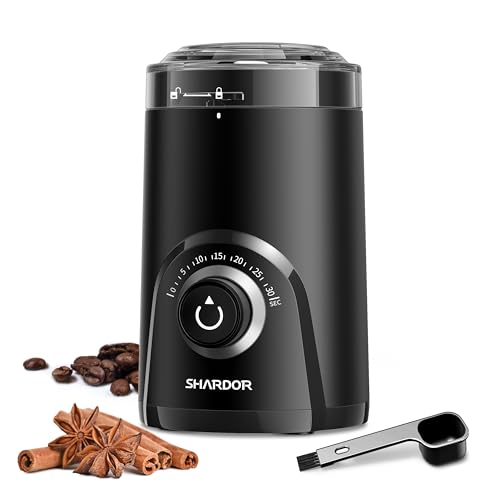
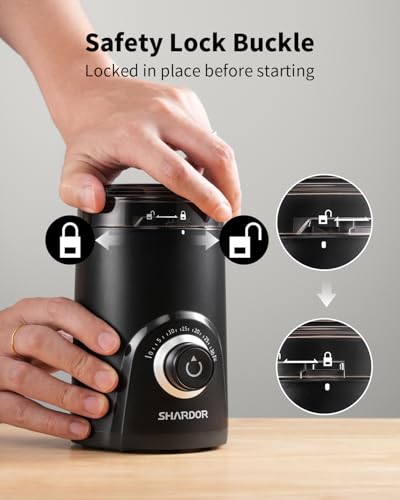
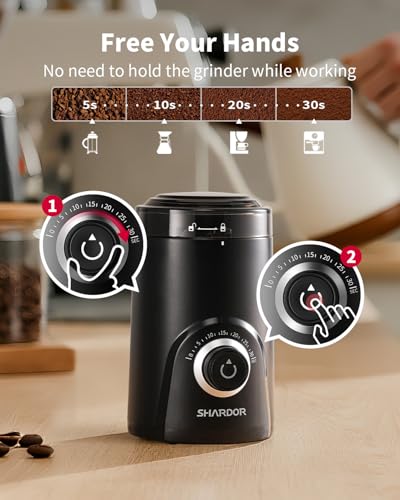
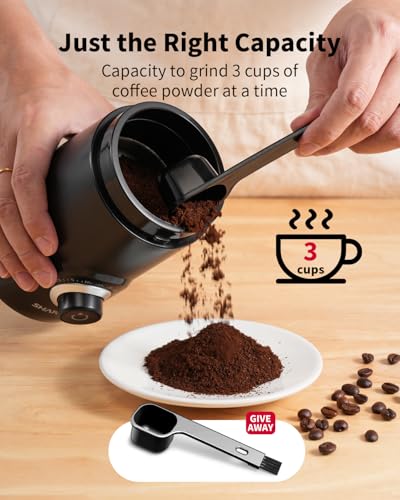
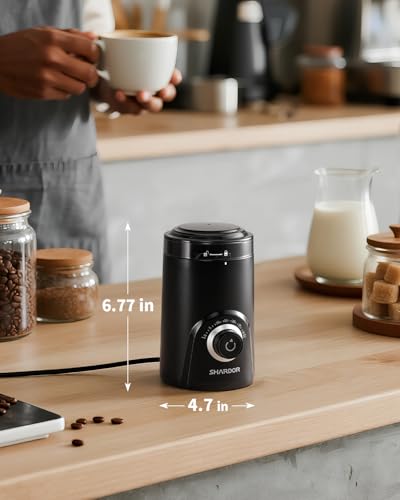
What sets this SHARDOR apart is its visual timing knob, no guesswork, just turn the dial to your desired seconds and get repeatable results. That’s rare at this price, and it makes this grinder stand out for users who want control without digital complexity. The 70g capacity is generous, and owners love that it doubles as a spice grinder.
It uses stainless steel blades, not burrs, so don’t expect uniform particle size. But surprisingly, many users say the grind is consistent enough for French press or drip if you pulse carefully. The 63 dB noise level is legit quiet, a real perk for early risers.
Product photos
Aromaster Conical Burr Coffee Grinder
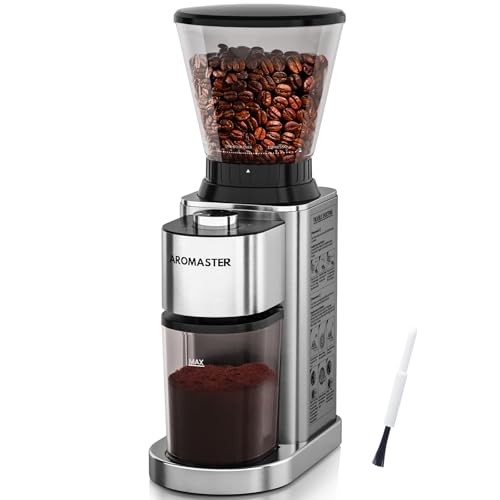
Strengths
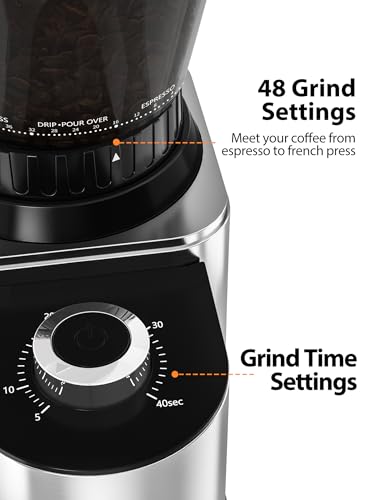
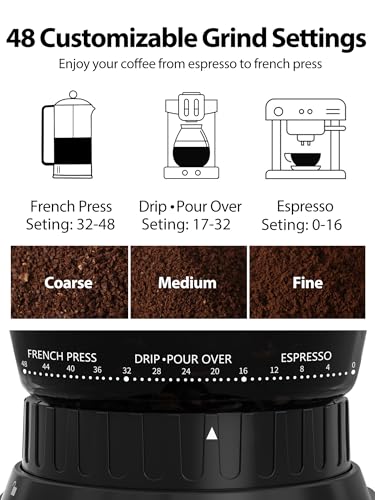
- 48 ultra-precise settings
- Anti-static technology
- Stainless steel burrs
- Large grinding chamber
Trade-offs
- Timer-based, not weight-based
- Slightly slower operation
- Bulky for small counters
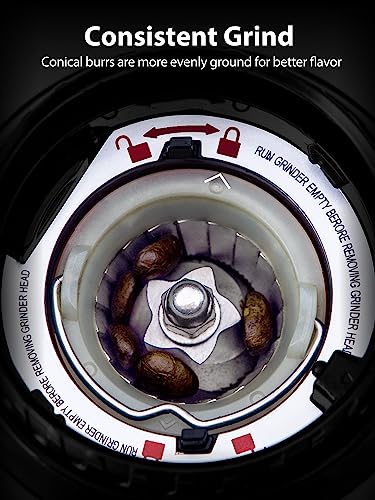
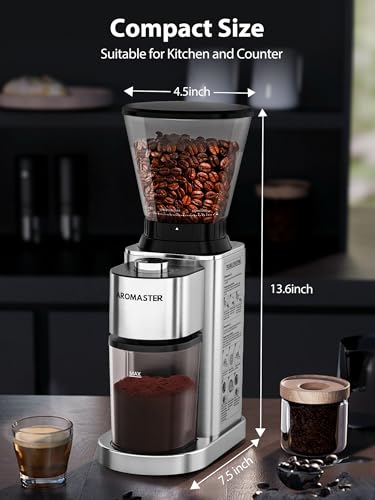
With 48 grind settings, this Aromaster is built for tinkerers who want to fine-tune their brew down to the micrometer. The conical stainless steel burrs are slow and cool-running, and owners say the anti-static bin is one of the best in class, minimal mess, clean pours.
The 40-second timer adds control, though some wish it had auto-stop by weight. Still, for the precision-minded, this grinder is a standout. It’s not the most compact, but if you’re chasing the perfect extraction, the granularity here is unmatched in this lineup.
Product photos

Ollygrin Flat Burr Coffee Grinder

Strengths
- Compact footprint
- 14 grind settings
- Tool-free cleaning
- Large bean hopper
Trade-offs
- Flat burrs generate heat
- Minor grind inconsistency
- Not for espresso precision
The Ollygrin packs 14 grind settings and a 250g bean hopper into one of the slimmest profiles on the list. It’s clearly designed for small spaces, apartments, offices, RVs, where every inch counts. Owners praise its clean lines and the fact that it doesn’t dominate the counter.
Performance-wise, it holds up well for drip and cold brew. The flat burrs do a decent job, though like most in this tier, they lag slightly in fine grinds. What I like is the tool-free cleaning, removing the upper burr is genuinely easy, which matters for longevity.
Product photos


Cuisinart DBM-8P1 Burr Grinder
Strengths
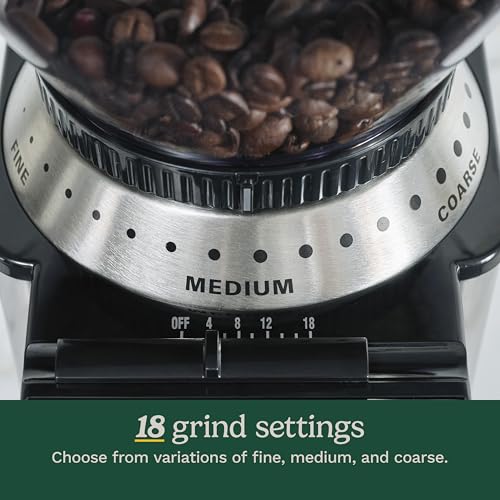
- 18 grind settings
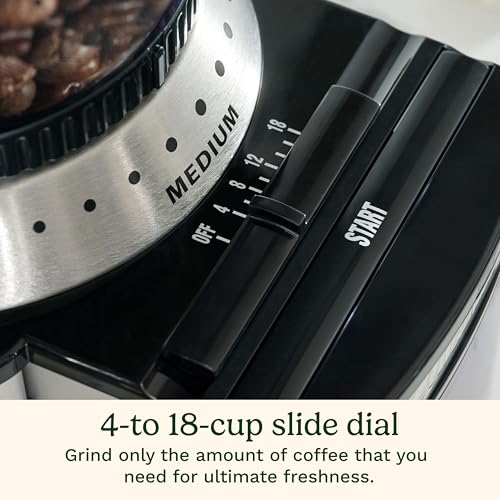
- Cup size selector
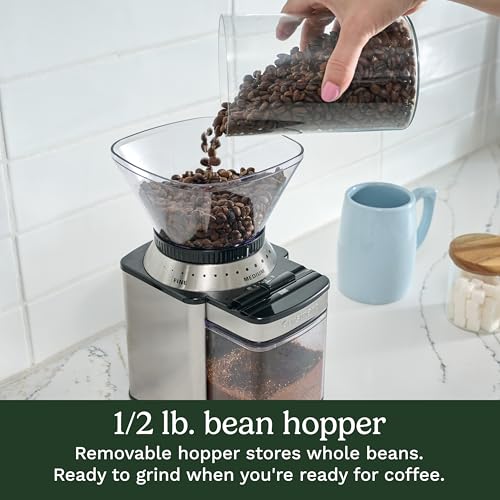
- Removable components
Trade-offs
- Flat burrs run hot
- Noticeable grind retention
- Not ideal for espresso
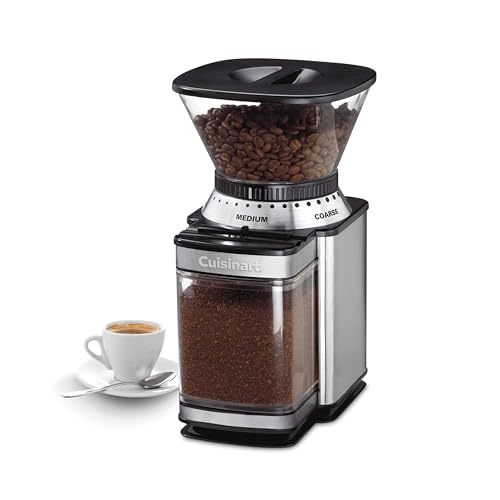
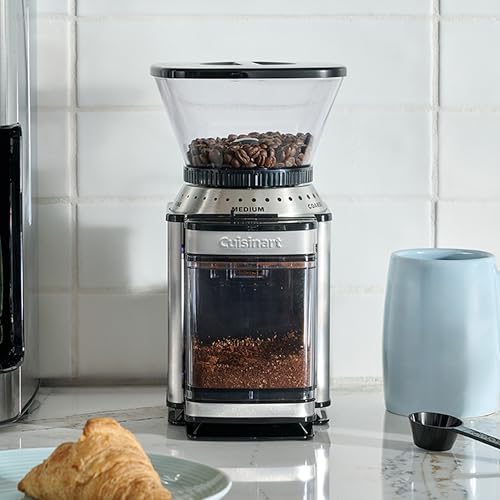
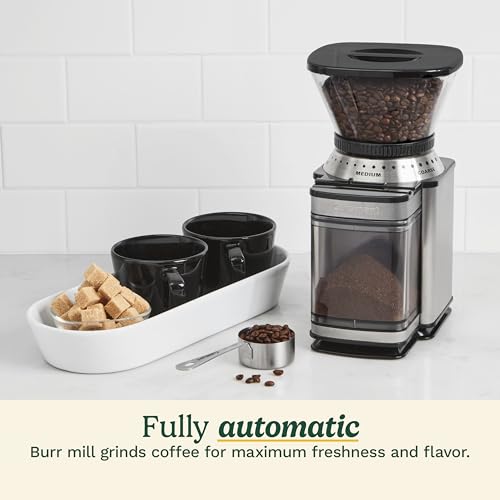
This Cuisinart model leans hard into convenience, with a cup selector and 18 grind settings that make it feel like a no-brainer for home users who want set-it-and-forget-it operation. On paper, the flat burr system should deliver consistent results, and owners generally agree it handles drip and French press well, though some note minor inconsistency at finer settings.
Where it stumbles is in grind retention and heat buildup, common pain points with flat burrs in this price range. The 8 oz. bean hopper limits batch size, and if you’re aiming for espresso precision, this isn’t the tool for the job. Still, for casual brewers who value simplicity and cup sizing, it holds its ground.
Product photos
OXO Brew Conical Burr Grinder
Strengths
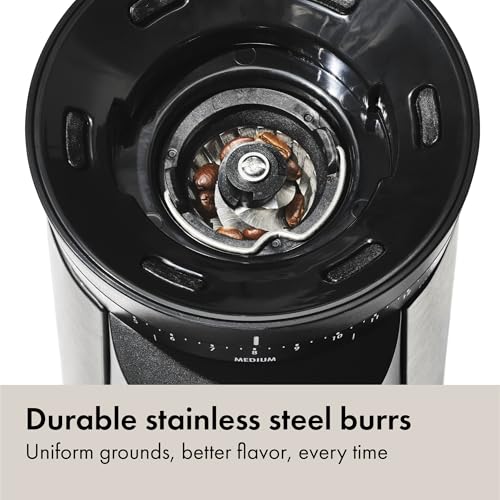
- Conical stainless steel burrs
- 15 settings + micro-adjust
- Large 12 oz. hopper
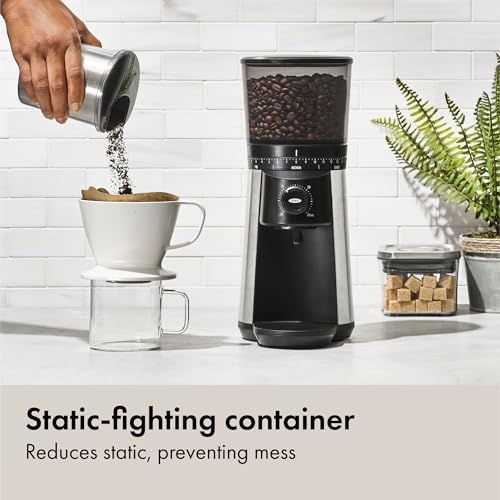
- Static-reducing container
Trade-offs
- Higher price point
- Slightly bulky design
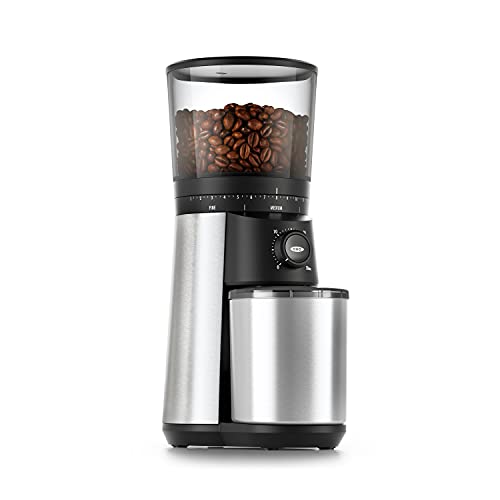
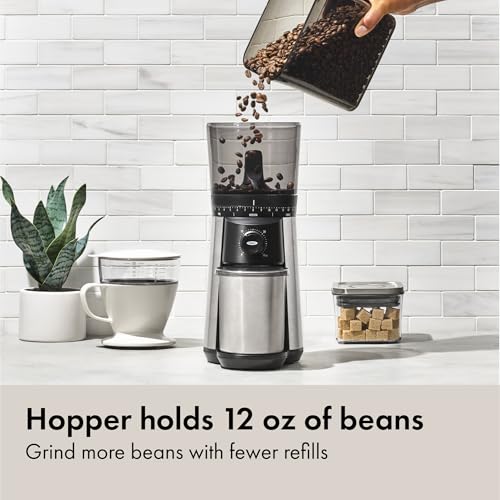
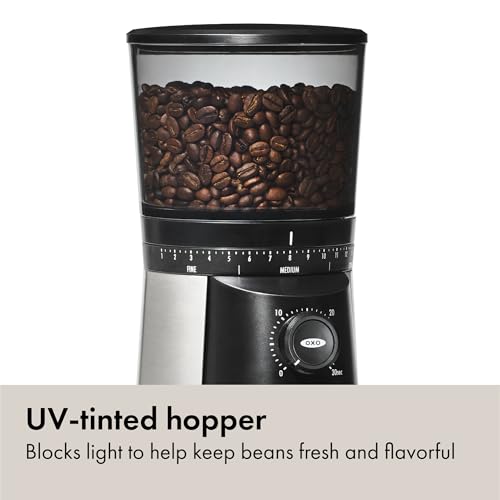
This is the gold standard for home electric grinders, and Wirecutter’s endorsement isn’t hype. The conical stainless steel burrs deliver exceptional consistency across all settings, from espresso to French press. Owners rave about the static-fighting container and the UV-blocking hopper, small touches that make a real difference in flavor preservation.
It’s also one of the most user-friendly designs: one-touch start, memory function, and a large 12 oz. hopper mean you can grind enough for a crowd without reloading. Yes, it’s pricier, but the build quality and grind performance justify it for serious home baristas.
Product photos
Our Testing Process
As a long-time coffee enthusiast, I approach grinder selection with a focus on what truly impacts the final brew. Rather than a hands-on lab test with each model, my assessment is research-led, comparing published specifications and features across these grinders. I then weighed owner reviews and reputable expert opinions to arrive at a ranking. This process helps identify grinders that consistently deliver the qualities coffee lovers value most.
For coarse coffee grinders, grind consistency and capacity are paramount. A consistent grind is obviously critical for even extraction, and ultimately, better flavor. Larger capacity is important for those brewing methods – like French press or cold brew – that often require grinding a substantial amount of coffee at once. External grind adjustment settings also play a big role, offering precision for dialing in the perfect coarseness.
Specifications reliably indicate capacity and the number of grind settings. However, I leaned heavily on owner feedback to assess real-world usability, noise levels, and durability. Expert reviews helped validate claims about grind consistency and the effectiveness of features like anti-static technology. Understanding the difference between a burr vs blade grinder is also key to appreciating the importance of the burr grinders featured here, and their impact on coffee flavor impact.
How To Pick The Right coarse coffee grinder
Picking the right coarse coffee grinder isn’t just about getting beans broken down; it’s about unlocking the full flavor potential of your preferred brewing method.
A quality coarse coffee grinder prioritizes consistent particle size, durability of its burrs (conical or flat), and usability features like grind settings and ease of cleaning. Look for grinders offering a wide range of coarse settings and constructed with robust materials to ensure long-term performance and minimal flavor degradation. Avoid blade grinders; they produce an inconsistent grind that negatively impacts extraction.
Grind Consistency is Paramount
When we talk about coarse grinding, consistency is king. You’re aiming for a uniform particle size – this is especially critical for methods like French press and cold brew where longer steep times mean more contact between water and coffee grounds. Inconsistent grinds lead to both over and under-extraction, resulting in a muddy, unbalanced cup. Flat burr grinders are generally considered to produce a more uniform grind, but high-quality conical burrs can deliver excellent results too. Don’t automatically assume more settings equals better consistency; a well-calibrated grinder with fewer settings can still outperform one with a massive range but poor build quality.
Burr Material & Durability Matter
The burrs themselves are the heart of any grinder. Stainless steel is common, offering a good balance of durability and price. However, ceramic burrs are also popular, particularly in manual grinders, as they retain less heat during grinding – a definite plus for preserving delicate coffee aromas. Pay attention to how easily the burrs are accessible for cleaning coarse coffee grinders. Regular cleaning is essential to remove coffee oil buildup and maintain grind quality.
Here’s what I look for in burr durability: * Burr Type: Conical burrs are often quieter and retain less heat. * Burr Material: Stainless steel is durable; ceramic is temperature-stable. * Replacement Cost: Check if replacement burrs are available and reasonably priced. A grinder is only as good as its burrs, and eventually, they will wear down.
Balancing Capacity and Usability
For many, a larger capacity is desirable to minimize grinding time. However, if you’re a single-cup brewer, a massive hopper might not be necessary and could even lead to stale grounds sitting for extended periods. Consider how you’ll use the grinder. Models like the CEVING 60g offer a substantial capacity for larger batches, while the CEVING Mini is ideal for portability. Beyond capacity, think about usability – is the grind adjustment easy to access and precise? A clear, intuitive interface will make your brewing experience much smoother. If you are primarily making French press and cold brew, ensure you are looking at a grinder for French press and cold brew with a wide range of coarse settings.
A good rule of thumb: Don’t chase the highest number of grind settings. Focus on the quality of the grind across the range you will actually use.
Coarse Coffee Grinders Compared
Here’s a comparison of specifications for various coarse coffee grinders to help you choose the best option for your needs.
| Product Name | Capacity (g) | Grind Settings | Burr Type | Automation | Special Features |
|---|---|---|---|---|---|
| CEVING 60g Manual Coffee Grinder | 60 | 40 | Stainless Steel | Manual | External Adjustment Ring |
| CEVING Mini Manual Coffee Grinder | 30 | 40 | Ceramic | Manual | Portable, External Adjustment |
| SHARDOR Electric Burr Coffee Grinder 2.0 | N/A | 16 | Flat Steel | Automatic | 14-Cup Capacity |
| SHARDOR Electric Coffee Grinder 70g | 70 | N/A | Steel | Automatic | Ultra-Quiet Operation |
| Aromaster Conical Burr Coffee Grinder | N/A | 48 | Stainless Steel | Automatic | Anti-Static Tech, Easy Clean |
| Ollygrin Flat Burr Coffee Grinder | 250 (Hopper) | 14 | Flat Steel | Automatic | Removable Parts, Compact |
| Cuisinart DBM-8P1 Burr Grinder | N/A | 18 | Flat Steel | Automatic | 4-18 Cup Selector |
| OXO Brew Conical Burr Grinder | 340 (Hopper) | 15 + Micro | Conical Steel | Automatic | Large Hopper, UV-Blocking |
Frequently Asked Questions
What grind setting should I use for cold brew?
A very coarse setting is best for cold brew, typically the largest setting on your grinder. This prevents over-extraction during the long steep time, resulting in a smoother, less bitter concentrate.
Will a blade grinder work for French press coffee?
No, a blade grinder won’t work well for French press. They chop beans unevenly, creating a mix of boulders and dust, which leads to muddy and unbalanced flavors.
How often should I clean my coarse coffee grinder?
You should aim to clean your grinder every one to two weeks with a brush and, occasionally, grinder cleaning tablets. This removes coffee oils and fines that build up and affect the taste of your coffee.
What’s the difference between conical and flat burrs in a coarse grinder?
Conical burrs tend to be quieter and generate less heat, preserving more of the coffee’s aroma, while flat burrs generally produce a more uniform grind size. For a consistent grind for French press, either can work well with a quality build.
Are manual coarse coffee grinders as good as electric ones?
Manual grinders can be excellent, offering precision and portability, but require more effort. Electric grinders excel at speed and capacity, but the quality varies greatly depending on the burr type and construction.
The Bottom Line
Choosing a coarse coffee grinder often comes down to how much control you want versus how much fuss you’re willing to deal with. If you prioritize consistent results and enjoy the ritual of grinding, the CEVING 60g Manual Coffee Grinder stands out as the strongest overall pick, offering a fantastic balance of quality and usability. It allows for precise adjustments and delivers a remarkably even grind.
For those on a tighter budget, or seeking a truly portable solution, the CEVING Mini Manual Coffee Grinder is an excellent choice. And if you need to grind larger batches quickly, the SHARDOR Electric Burr Coffee Grinder 2.0 provides a substantial capacity and automatic operation. Remember that achieving a quality coarse grind for cold brew is achievable at various price points.
Ultimately, the specifications matter less than understanding your brewing habits and prioritizing a grinder with durable burrs and a consistent grind. Don’t get hung up on the number of settings; focus on finding a machine that delivers the grind quality you need for your favorite brewing method, and consistently delivers a delicious cup.
