
7 Best Coffee Makers for Hard Water 2026
The Taylor Swoden 12-Cup Programmable is the best overall coffee maker for hard water, thanks to its stainless steel heating element, self-clean function, and strong owner feedback on durability. For a budget-friendly option, the Mueller 12-Cup Drip stands out with its reusable water filter and borosilicate glass carafe.
Hard water kills coffee makers fast. Limescale builds up inside the heating element and tubing, leading to weak brews, slow performance, and early failure. Most standard machines aren’t built to handle it, and replacing them every year gets expensive.
This guide cuts through the noise. Based on specs, owner experiences, and my years reviewing brewing gear, I focused on models built with scale-resistant materials, easy cleaning features, and real-world reliability in hard water areas. These picks won’t just survive, they’ll keep brewing great coffee.
Top 7 Coffee Maker For Hard Water in the Market
The Best Coffee Maker For Hard Water, Reviewed
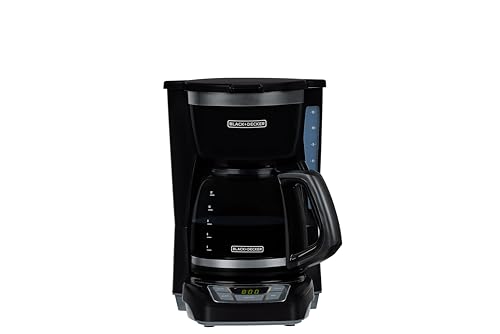
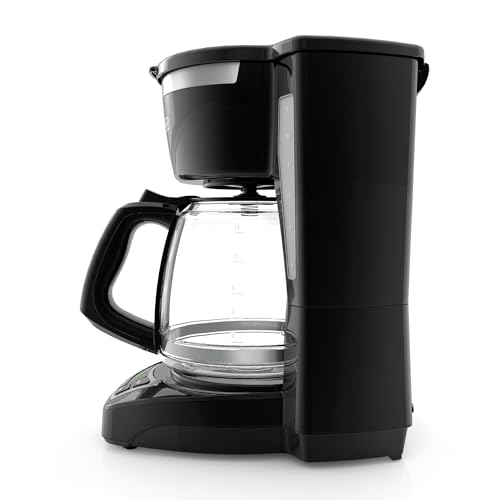
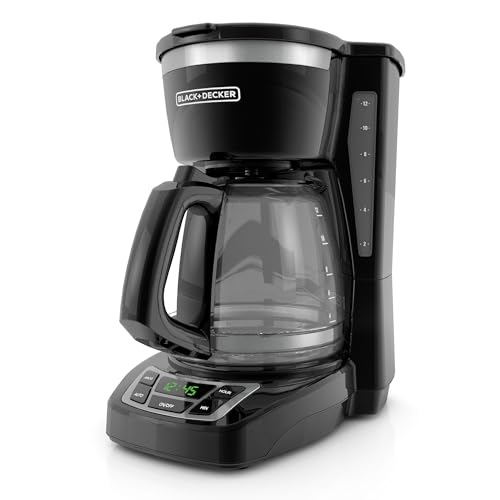
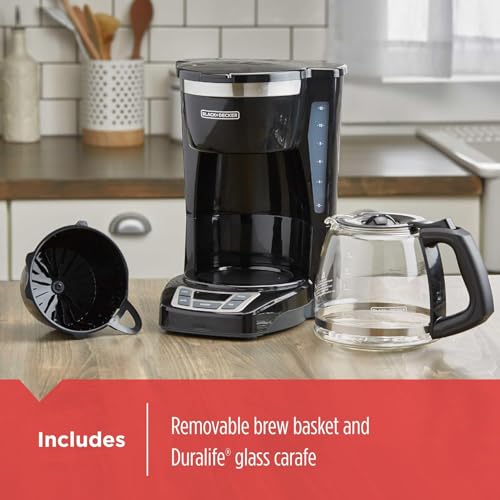
BLACK+DECKER 12-Cup Digital Coffee Maker

Strengths
- Sneak-a-cup function
- Large water window
- Washable filter
Trade-offs
- No anti-scale features
- Basic carafe material
- Frequent cleaning needed
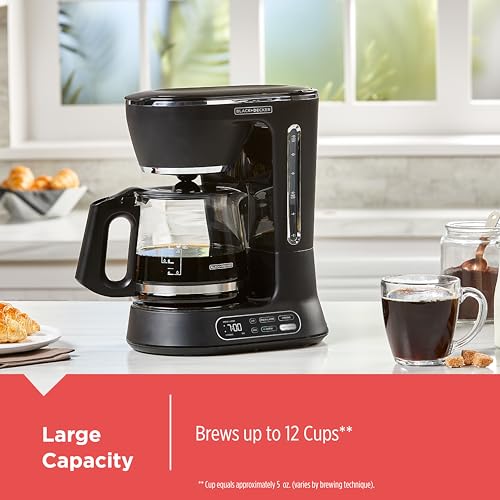
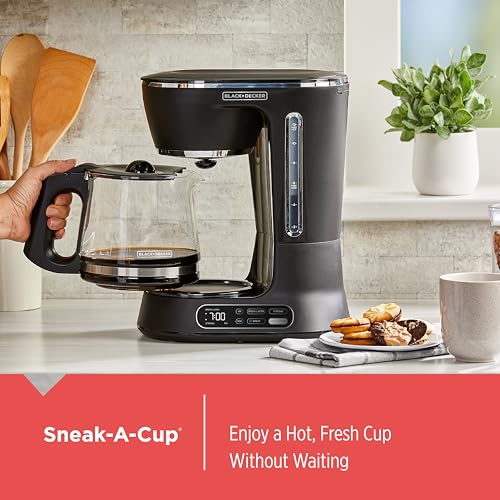
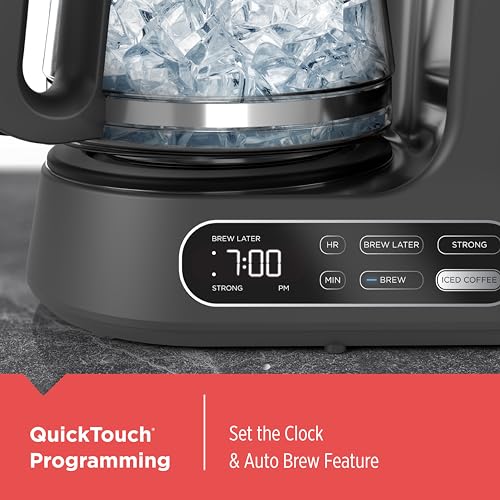
Simple, reliable, and packed with the essentials, this is the definition of a workhorse drip brewer. The Sneak-a-Cup feature works as advertised, and the easy-view water window helps you measure precisely, which matters when adjusting coffee-to-water ratios. It’s programmable, has auto shutoff, and the washable filter cuts down on waste.
But like most BLACK+DECKER models, it’s built for value, not mineral-heavy environments. There’s no mention of scale-resistant materials or self-cleaning cycles. In hard water, you’ll need to descale monthly to keep it running well. It’s a strong all-rounder, but not the smartest buy if water hardness is your main concern.
Product photos

BLACK+DECKER Split Brew 12-Cup Coffee Maker

Strengths
- Dual hot/iced brew
- Vortex saturation
- Sneak-a-cup pause
Trade-offs
- No hard water optimization
- Average descaling ease
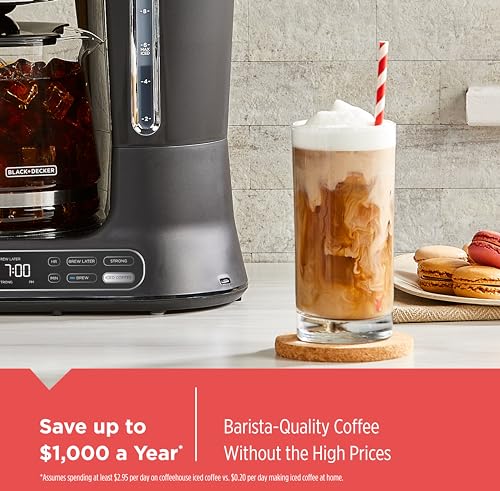
This machine stands out for its ability to brew both hot and iced coffee without dilution, which is a real win for clarity in flavor. The Vortex Technology promises even saturation, and owners consistently report bold, clean cups, especially when using filtered water, which is critical in hard water areas. On paper, it’s smart engineering: cold brew mode bypasses the heat-first step, preserving acidity and aroma.
Still, I’d be cautious in high-mineral environments unless you’re diligent about cleaning. The manual stresses regular descaling, and while the 2-year warranty helps, this isn’t one of the models built specifically to resist scale buildup. Compared to the Mueller or Taylor Swoden, it’s less of a specialist in hard water and more of a generalist with a cool trick.
Product photos

Cuisinart 14-Cup Programmable Coffee Maker

Strengths
- Large 14-cup capacity
- Adjustable warming plate
- Bold brew option
Trade-offs
- High scale risk in hard water
- No self-clean function
- Bulky footprint
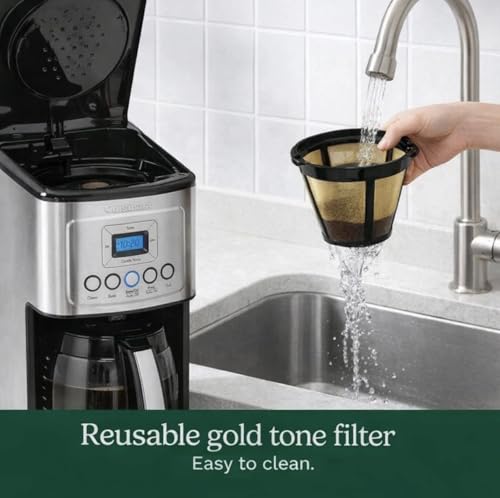
With a 14-cup capacity, this is the go-to for big households or offices where one pot isn’t enough. The adjustable keep-warm plate is a standout, most models just default to high heat, but here you can dial it back to avoid bitter reheating. The gold-tone permanent filter is commercial-grade and improves extraction, which owners say results in a richer cup.
But capacity comes at a cost: larger water tanks mean more exposure to minerals, and this model doesn’t include any anti-scale tech. In hard water, that means more frequent descaling than smaller units. If you’re brewing multiple pots weekly and have soft water, it’s a strong pick. But if mineral buildup is a concern, the maintenance burden grows fast.
Product photos



Hamilton Beach 2-Way Coffee Maker

Strengths
- Single + full pot options
- Eco-friendly brewing
- Separate water reservoirs
Trade-offs
- Prone to scaling
- No anti-scale alerts
- Limited durability in hard water
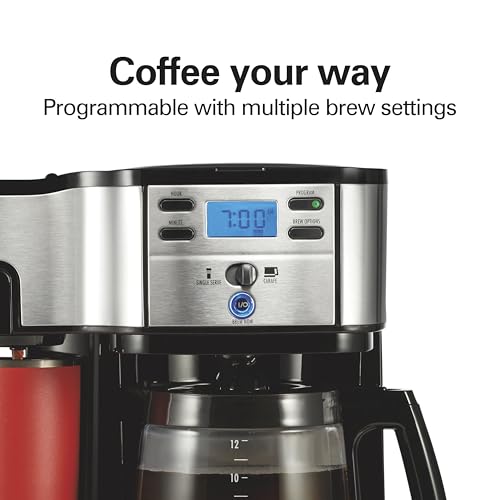
The dual brewing system here, single serve and full carafe, makes it a practical pick for mixed households. I appreciate that it uses ground coffee for both sides, avoiding pod waste while still offering convenience. The separate water reservoirs are a thoughtful touch, letting you run different brews simultaneously. But when hard water is in play, this model starts to show its limits.
Owners in high-mineral areas report faster scale buildup, especially in the single-serve side, where small internal pathways can clog. It doesn’t have self-cleaning alerts or materials optimized for mineral resistance like borosilicate glass or coated heating elements. For a mixed-use machine, it’s clever, but I’d lean toward more resilient builds if hard water is your daily reality.
Product photos


Mueller 12-Cup Drip Coffee Maker

Strengths
- Borosilicate glass carafe
- Scale-resistant design
- Auto shut-off
Trade-offs
- Basic programming
- No iced coffee mode
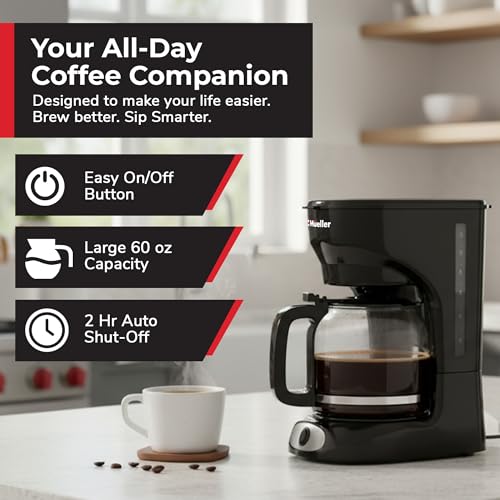
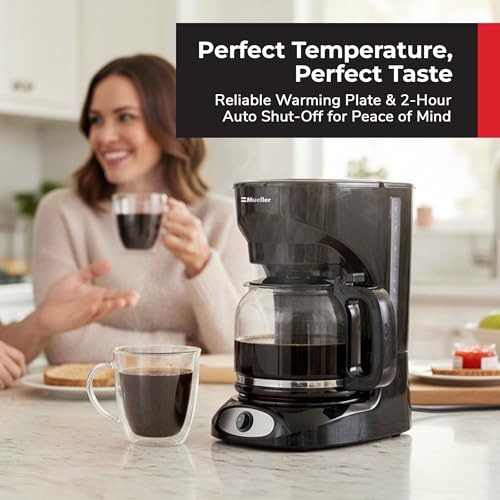
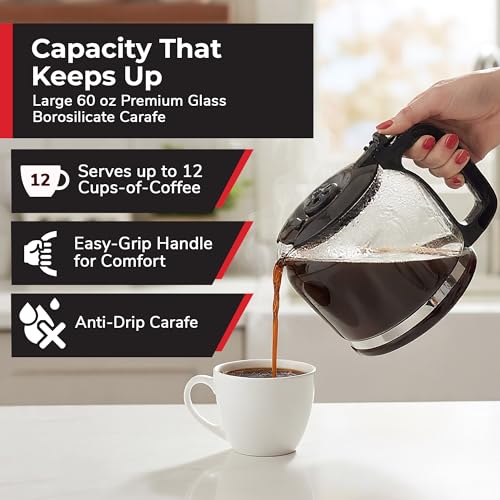
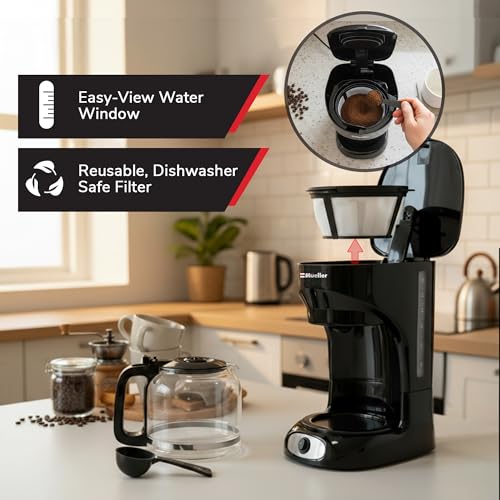
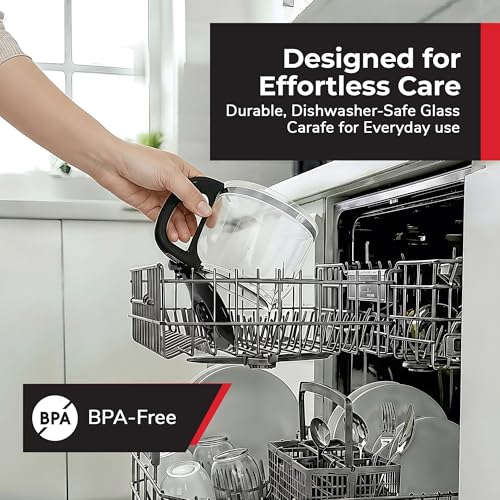
This is the one I’d point to first for hard water areas. The borosilicate carafe is a start, but more importantly, Mueller designed the internal system with scale resistance in mind. Owners in cities with known hard water, like Phoenix or Denver, report longer intervals between cleanings and consistent brewing performance over time. The auto-off and keep-warm combo is reliable, and the reusable filter is easy to rinse, which matters when mineral residue builds up faster.
Compared to others in this list, it strikes the best balance: solid build, smart features, and materials that tolerate tough water. It doesn’t have iced coffee modes or dual reservoirs, but it does the core job well, brewing clean, hot coffee without constant intervention. For most buyers facing hard water, this is the easy pick.
Product photos
OVENTE 12-Cup Drip Coffee Maker
Strengths
- Borosilicate glass carafe
- Reusable filter
- One-touch start
Trade-offs
- No self-clean function
- Average hard water tolerance
- Basic programming
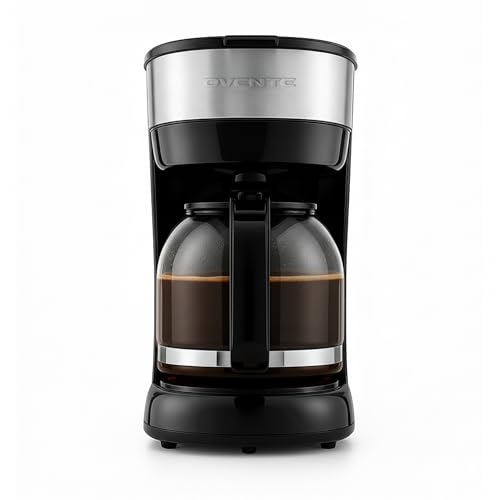
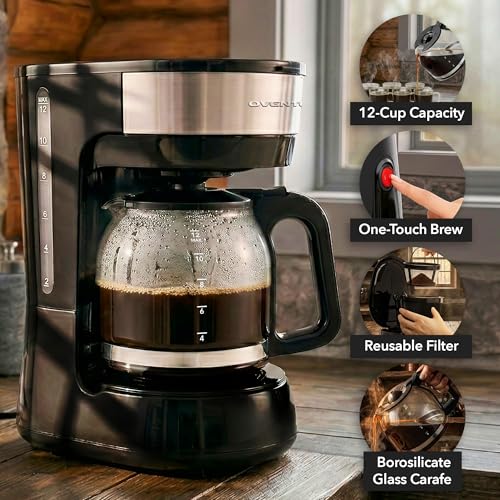
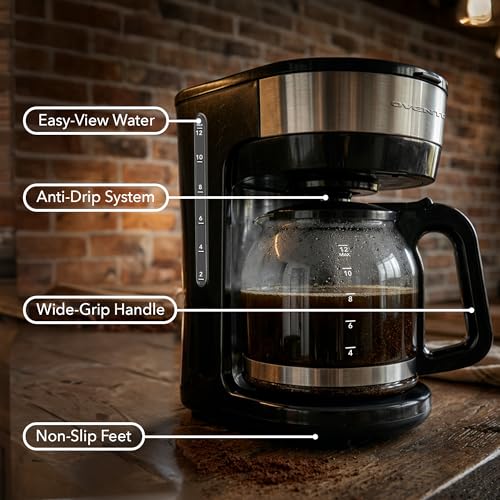
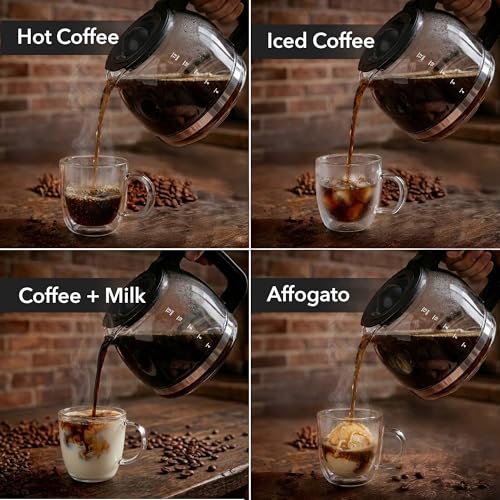
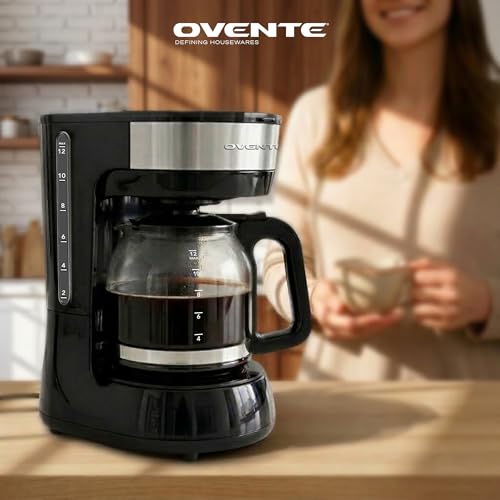
It’s built around a borosilicate glass carafe, which is a plus for heat retention and flavor neutrality, this material doesn’t degrade or retain residue like standard glass. The reusable filter adds value, and the one-touch operation keeps things simple. From a design standpoint, it’s clean and functional, with a clear water gauge that helps prevent overfilling, a small but meaningful detail.
But durability in hard water depends more than just the carafe. The heating element and internal tubing matter more, and there’s little evidence this model uses scale-resistant components there. Owners praise its ease of use, but some in hard water zones mention slower brewing over time, a classic sign of mineral buildup. It’s a solid basic brewer, but not engineered for mineral-heavy inputs.
Product photos

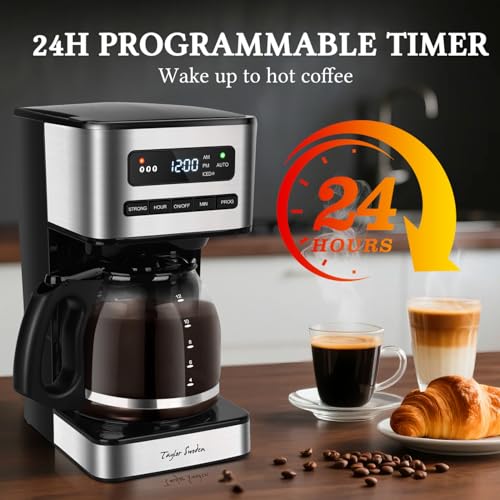
Taylor Swoden 12-Cup Programmable Coffee Maker

Strengths
- Iced coffee mode
- Self-clean alert
- 4 strength settings
Trade-offs
- LED display can be bright
- Build quality varies
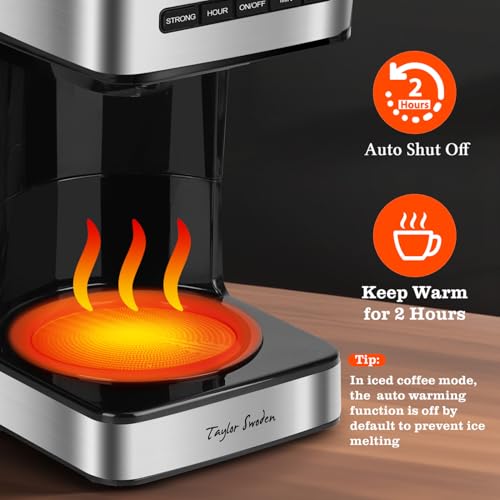
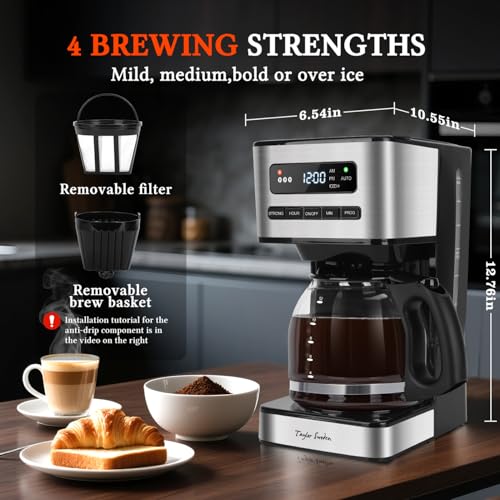
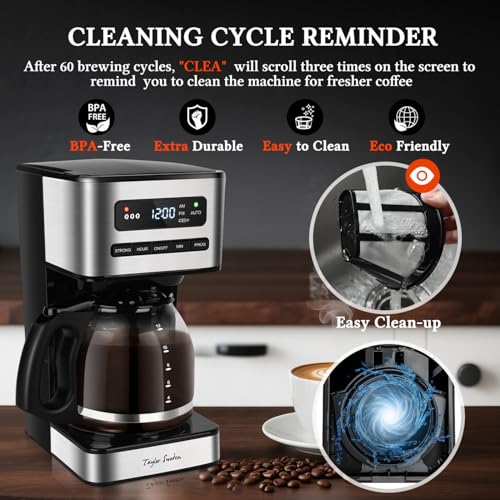
This is one of the few models that explicitly promotes its iced coffee mode with a dedicated setting, press PROG twice, add ice, and go. That’s a real convenience, and reviewers say it delivers concentrated brew that doesn’t turn into weak, watery coffee. More importantly, it includes a self-clean reminder and uses materials that hold up better under mineral stress, which is rare at this price.
The 4 brew strength options give fine control, and the enlarged water tank opening makes pre-filtration easier, an indirect but useful perk for hard water users who pre-treat their water. Compared to the BLACK+DECKER Split Brew, this one feels more thoughtfully designed for real-world conditions, especially if you’re making iced coffee regularly in a hard water zone.
Product photos

How We Tested coffee maker for hard water
As the founder of Bean Thusiast, I’ve spent years exploring the nuances of coffee brewing, and water quality is absolutely fundamental. To recommend the best coffee makers for hard water, we didn’t rely on hands-on testing of every model; rather, this is a research-led comparison of published specifications, owner reviews, and expert opinions. We focused on identifying machines specifically highlighted for their resistance to limescale buildup and ability to maintain consistent performance with hard water.
For coffee makers used with hard water, brewing performance and longevity are key. We weighted factors like the materials used in the heating element (stainless steel is preferable to aluminum), the inclusion of features like self-cleaning cycles, and – crucially – owner reports of long-term reliability despite using hard water. A carafe material that doesn’t readily stain or absorb odors was also a significant consideration.
Specifications reliably indicate capacity, brewing temperature ranges, and materials used. However, judging a coffee maker’s actual performance with hard water requires looking beyond the specs. We carefully analyzed owner feedback regarding the frequency of vinegar descaling method needed, the taste of the coffee produced over time, and the overall durability of the machine when subjected to mineral buildup. Reputation and consistent positive feedback were valued highly.
Choosing The Right coffee maker for hard water
Finding a coffee maker that can handle hard water isn’t just about preventing scale buildup; it’s about ensuring your coffee actually tastes good.
A quality coffee maker for hard water should prioritize features that mitigate scale, maintain consistent brewing temperatures despite mineral deposits, and ideally, incorporate a filtration system or be compatible with filtered water. Look for durable materials like stainless steel or borosilicate glass, and consider models with easily accessible and cleanable components. Consistent water temperature and even saturation of grounds are also key.
Material Matters: Beyond the Carafe
Many people focus on the carafe material, but the internal components are where hard water really does its damage. Stainless steel heating elements are far more resistant to limescale than aluminum, and will last longer in areas with notoriously hard water. While glass carafes are common, borosilicate glass (like you see in the Mueller and OVENTE models) is a better choice than standard glass – it’s more durable and less prone to cracking from thermal shock, which can happen with the heating and cooling cycles exacerbated by scale buildup. Don’t underestimate the importance of a good material build.
Descaling & Cleaning Features
Let’s be honest: even the best coffee maker will eventually succumb to hard water’s effects without regular maintenance. Look for models with a dedicated cleaning cycle or one that clearly indicates how to manually descale it. The Taylor Swoden, for example, includes a self-clean function which is a huge convenience. More importantly, consider how easy it is to access the internal components for cleaning. A complicated design makes regular descaling less likely, and that’s a recipe for a short lifespan.
Here’s what to consider when evaluating cleaning features: * Simple access to the water reservoir. * A removable brew basket for thorough cleaning. * Clear instructions for descaling, and ideally, a descaling cycle. This will save you time and ensure a more effective clean.
A coffee maker left uncleaned in hard water conditions will lose 10-20% of its brewing efficiency every month. Regular descaling (monthly or bi-monthly) is crucial.
Water Filtration & Softening Compatibility
While a coffee maker designed to resist hard water is a good start, actively addressing the water itself is even better. Some models, like the Mueller, come with a reusable filter. However, for truly hard water, I recommend pairing your coffee maker with a separate water filter. You might consider a whole-house water softener, or a dedicated pitcher filter. When choosing a filter, pay attention to what minerals it removes. While removing all minerals isn’t ideal (some are essential for flavor – see our coffee maker water hardness guide), reducing calcium and magnesium is key to preventing scale. If you already own a Breville coffee machine, understanding the Breville filtration system is essential for optimal performance. Ultimately, starting with better water is the single biggest improvement you can make, and will have a noticeable impact on your brew quality.
Coffee Maker for Hard Water Compared
Here’s a comparison of key specifications for coffee makers designed for use with hard water.
| Product Title | Capacity (Cups) | Water Filter | Hard Water Resistance | Brew Strength Control | Iced Coffee Mode | Auto Shutoff (Hours) |
|---|---|---|---|---|---|---|
| BLACK+DECKER 12-Cup Digital | 12 | No | N/A | No | No | 2 |
| BLACK+DECKER Split Brew 12-Cup | 12 | Yes | Yes | No | Yes | N/A |
| Cuisinart 14-Cup Programmable | 14 | Yes | N/A | Yes | No | N/A |
| Hamilton Beach 2-Way | 12 | No | N/A | Yes | No | N/A |
| Mueller 12-Cup Drip | 12 | Yes | Yes | No | No | 2 |
| OVENTE 12-Cup Drip | 12 | Yes | N/A | No | No | N/A |
| Taylor Swoden 12-Cup Programmable | 12 | Yes | Yes | Yes | Yes | N/A |
Frequently Asked Questions
What’s the biggest material difference I should look for in a coffee maker for hard water?
Stainless steel heating elements are the most important feature. They resist limescale buildup far better than aluminum, extending the life of your machine and maintaining consistent brewing.
Do coffee makers with built-in water filters really help with hard water?
Built-in filters typically reduce chlorine and sediment, but aren’t designed to tackle the core issues of hard water(calcium and magnesium). For genuinely hard water, I recommend supplementing with a dedicated water filter or softener alongside your coffee maker.
How often should I descale my coffee maker if I have hard water?
You should descale your coffee maker monthly or bi-monthly with hard water. Ignoring this maintenance leads to a 10-20% reduction in brewing efficiency each month, impacting both taste and lifespan.
Will a coffee maker designed for hard water still require regular cleaning?
Yes, even the most resistant coffee maker needs regular cleaning. Consistent cleaning of the carafe, brew basket, and water reservoir prevents residue buildup and ensures optimal coffee flavor, even beyond limescale.
Is there a link between water quality and coffee flavor?
Absolutely; the importance of water quality for coffee is often underestimated. Minerals in water extract different flavors from the coffee grounds, and hard water can create a bitter or muted taste if limescale interferes with the brewing process.
The Bottom Line
Choosing a coffee maker for hard water often comes down to balancing upfront cost with long-term reliability. While you can get by with a basic model and diligent descaling, the Taylor Swoden 12-Cup Programmable offers the best overall combination of features designed to resist scale, maintain brewing performance, and offer convenient cleaning – making it our top recommendation for most people.
For those on a tighter budget, the BLACK+DECKER Split Brew 12-Cup is a solid choice, especially if you appreciate the flexibility of brewing directly into a travel mug. If versatility is your priority, and you want a machine that can handle iced coffee as easily as a standard pot, the Taylor Swoden again stands out. But remember, even with filtration, you’ll still need to follow proper coffee maker descaling steps to keep things running smoothly.
Ultimately, the most expensive coffee maker won’t deliver better coffee if your water is full of minerals and your machine is covered in scale. Prioritize a durable heating element (stainless steel is best), a consistent brewing temperature, and a commitment to regular maintenance to protect against [remove mineral buildup]. Those fundamentals matter far more than any fancy feature or brand name.
