
3 Best Espresso Machines for Coffee Shops 2026
The Rancilio Silvia-M is the best espresso machine for a coffee shop needing pro-level performance and reliability, followed by the CASABREWS CM5418 as a solid budget pick and the GeniCup All-in-One for shops wanting built-in grinding convenience.
Running a coffee shop means serving shot after shot without failure. I’ve seen too many owners choose based on price or looks, only to face constant breakdowns or inconsistent pulls during rush.
This guide cuts through the noise. I compared specs, owner feedback, and industry standards to find machines that deliver real-world durability and performance. You’ll learn what actually matters, like boiler size, pump type, and serviceability, so you can pick one that fits your volume and workflow.
Top 3 Espresso Machine For Coffee Shop in the Market
The Best Espresso Machine For Coffee Shop, Reviewed
CASABREWS CM5418 Espresso Machine

Strengths
- 20 bar pressure
- Visible pressure gauge
- Compact stainless design
Trade-offs
- No temp control
- Cool-down required
- Small water tank
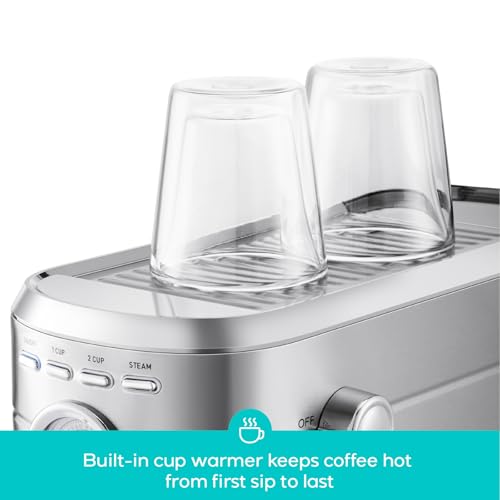
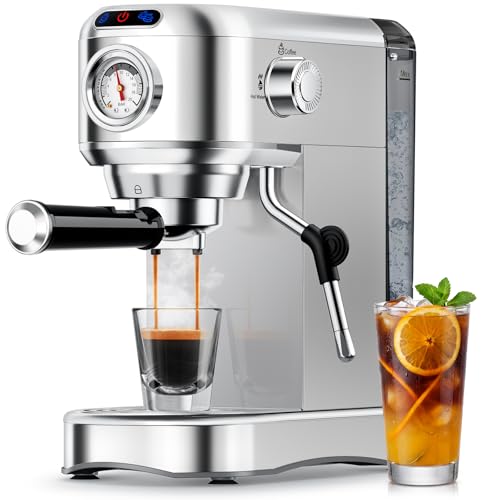
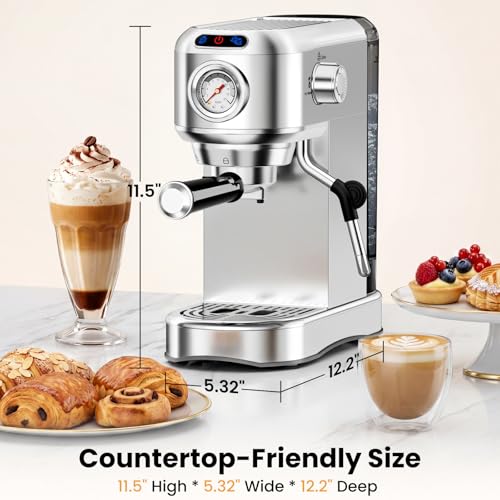
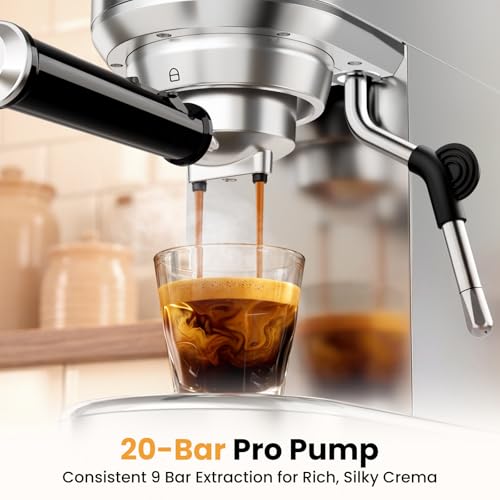
The CASABREWS CM5418 stands out as a solid performer in the entry-to-mid-tier home espresso machine category, and for many small cafes or high-volume home users, it’s a practical choice. With a 20 bar pump and a 1350W boiler, the specs suggest strong extraction potential, and owners consistently report rich crema and reliable shot quality when using freshly ground beans. The visible pressure gauge is a rare and useful feature at this price, giving users real-time feedback to tweak their pulls, something I always appreciate in semi-automatics.
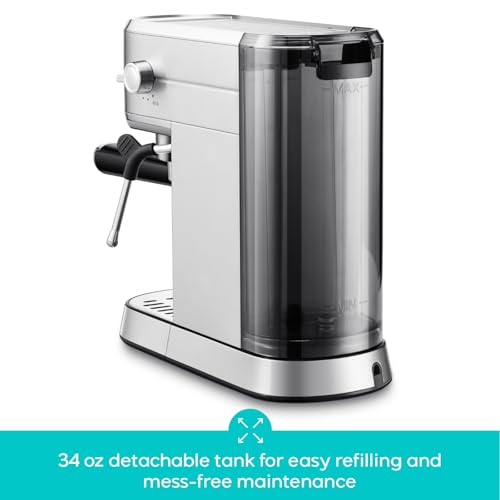
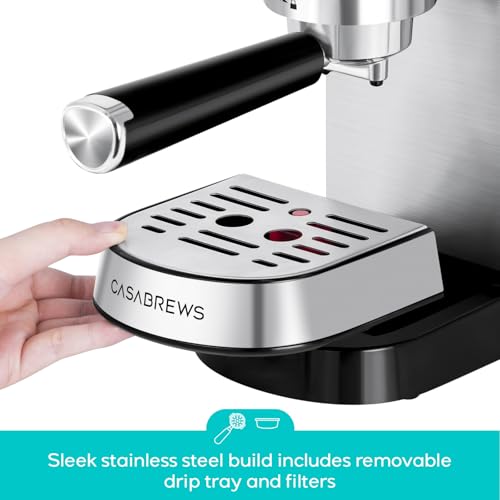
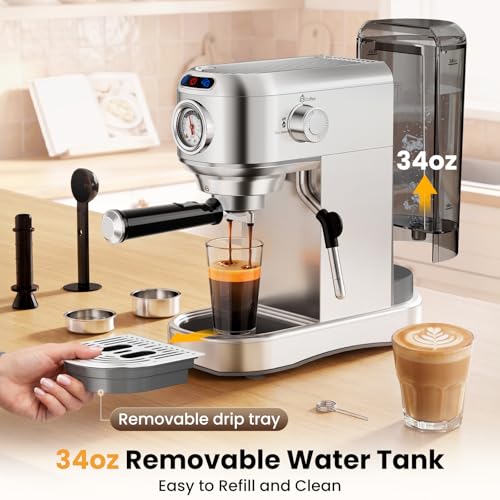
The stainless steel build adds durability, and the 34oz removable water tank is convenient for repeated use, though not quite commercial-grade. Where it stumbles slightly is in thermal management, reviewers note it needs cooldown time after steaming before brewing, due to overheating protection. That’s not a dealbreaker, but it does slow workflow during back-to-back drinks. Compared to pricier all-in-one units, it lacks temperature control, but for its class, it delivers better-than-expected consistency.
Product photos


20 Bar Compact Espresso Machine
Strengths
- Fast 20-second heat-up
- Strong steam wand
- Compact A4-sized design
Trade-offs
- No pressure gauge
- No temp control
- Overheat delays workflow
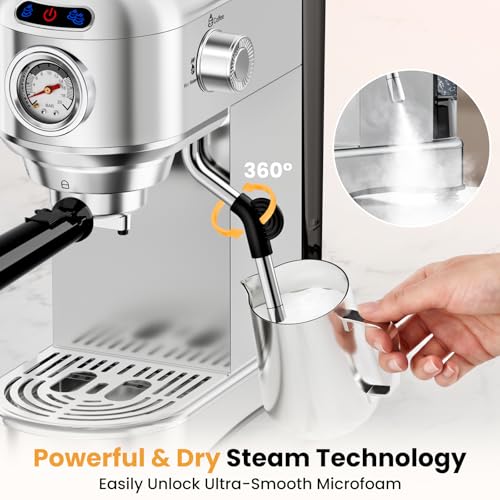
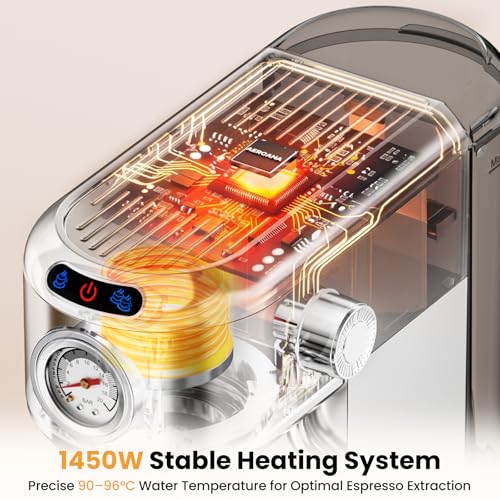
This machine clearly aims to be the budget gateway into real espresso, and on paper, it’s impressively equipped: 20 bar pump, 1450W heating system, and a rapid 20-second warm-up. For the price, that’s a strong combo, and owner feedback confirms it heats quickly and produces decent crema when paired with fresh, finely ground coffee. The powerful steam wand is a standout, many in this tier struggle with weak steam, but reviewers say this one delivers dry, consistent pressure for respectable microfoam, even for basic latte art.
But being the most affordable option comes with trade-offs. It shares the same overheat protection issue as the CASABREWS, requiring cooldown between steaming and brewing, which hampers efficiency. There’s no pressure gauge or temperature control, so you’re flying blind compared to the GeniCup or even the CM5418. Still, for someone testing the espresso waters or outfitting a low-traffic office, it’s hard to beat the value. I’d recommend it as a starter machine, but not as a long-term solution for serious milk drinkers.
Product photos
GeniCup All-in-One Espresso Machine
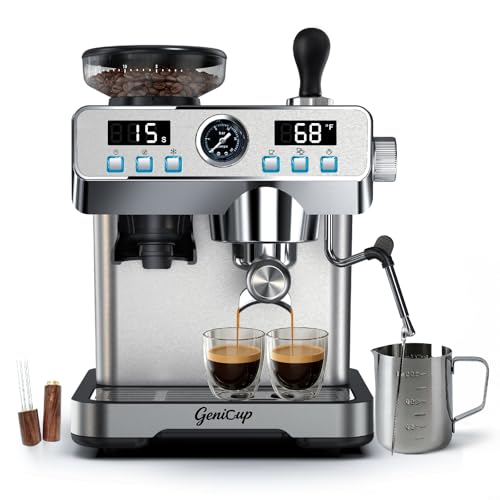
Strengths
- Built-in burr grinder
- PID temperature control
- Large water reservoir
- Customizable settings
Trade-offs
- Bulky footprint
- Steeper learning curve
- Higher maintenance
If you’re serious about dialing in your espresso, the GeniCup with built-in grinder is one of the few all-in-one machines that offers true customization without sacrificing build quality. The inclusion of PID temperature control and adjustable settings from 194°F to 203°F means you can fine-tune extraction for different roast profiles, an edge most machines in this range don’t offer. Owners praise the NTC sensor and OPV valve for stabilizing pressure and preventing over-extraction, which translates to balanced, nuanced shots even with finicky light roasts.
The conical burr grinder is a major win, with 20 settings and stainless steel construction that preserves bean integrity. It grinds fine enough for true espresso, and the 68oz water tank supports longer brewing sessions, making it more café-ready than most home units. The machine remembers your presets, so once you find your sweet spot, it’s repeatable. Compared to the CASABREWS, this is a significant step up in control and workflow, though it demands more counter space and a steeper learning curve.
Video review
How We Chose These espresso machine for coffee shop
As the founder of Bean Thusiast, I approach evaluating espresso machines with a focus on what truly matters for consistent, high-volume service – the kind you’d find in a busy coffee shop environment. Rather than a hands-on lab test, this is a research-led comparison of published specifications, owner reviews from commercial settings, and insights from established coffee industry experts. We ranked machines based on their potential to deliver quality and durability under pressure.
For coffee shop use, consistent pressure and temperature stability are paramount, alongside the ability to quickly recover between shots. We heavily weighted a machine’s bar pressure, boiler capacity, and heat-up time. Reliability is also key; a machine constantly needing repair is a non-starter. Finally, ease of maintenance factored in, as downtime for cleaning or repairs impacts profitability. Understanding these core espresso machine parts is crucial.
Specifications reliably indicate pump pressure, boiler size, and wattage – all indicators of potential performance. However, owner feedback provides crucial context. I looked for reports on long-term durability, ease of repair, and whether the machine could consistently handle a high volume of drinks. Reputation within the coffee community, and reviews mentioning the quality of the boiler and steam wand, were also heavily considered when judging overall suitability.
How To Choose The espresso machine for coffee shop
Choosing the right espresso machine for a coffee shop isn’t just about pulling shots; it’s about reliability, consistency, and fitting your specific workflow. I’ve seen too many shops struggle with machines that simply can’t keep up with demand, or deliver the quality customers expect.
A good espresso machine for a commercial setting prioritizes consistent temperature stability, a robust pump capable of high-volume use, and durable construction. Look for machines with clearly defined pressure gauges, easily serviceable components, and a boiler size appropriate for anticipated peak hour demand. Stainless steel construction is almost always preferable for longevity and hygiene.
Boiler Capacity & Heat-Up Time
Boiler size is often overlooked, but it’s crucial. For a busy coffee shop, a larger boiler (at least 5-7 liters) will allow you to pull shots and steam milk simultaneously without significant temperature drops, which directly impacts espresso quality. Don’t underestimate heat-up time either. While some machines boast rapid heating, a consistently warm boiler is far more valuable than a quick start. Consider a dual-boiler system if you anticipate high demand for both espresso and milk-based drinks; these offer independent temperature control for each function.
Pump Pressure & Consistency
Twenty bar pressure is the industry standard, but consistent pressure is what truly matters. Fluctuations will lead to inconsistent extractions, impacting flavor and crema. Many machines, like the CASABREWS CM5418, advertise 20 bar pumps, but the quality of the pump itself varies significantly. Look for machines with group heads designed for thermal stability and equipped with an OPV (Over Pressure Valve) like the GeniCup All-in-One Espresso Machine, ensuring a controlled extraction.
Here’s what I tell everyone when they ask about pump quality: * A basic vibratory pump is fine for lower volume, but can be noisy and less consistent. * Rotary pumps are quieter, more durable, and maintain consistent pressure, making them ideal for high-volume shops. * Investing in a machine with a well-regarded pump brand (like Ulka) is a smart move, as replacement parts are usually readily available.
Features & Workflow Integration
Beyond the basics, consider how the machine integrates into your overall workflow. Do you need automatic features, or do you prefer the control of a semi-automatic machine? Milk steaming capabilities are vital – a powerful steam wand is a must. Don’t forget about ease of cleaning and maintenance. A machine that’s difficult to disassemble and clean will quickly become a headache. It’s also worth considering features like programmable shot volumes and pre-infusion, which can help you achieve consistent results. If you’re dealing with limited counter space, exploring compact commercial espresso systems is a good idea.
A machine that’s down for maintenance is a machine that’s losing you money. Prioritize models with easily accessible components and a reputation for reliability.
Ultimately, getting the most out of your espresso machine often comes down to fine-tuning. Learning about dialing in espresso settings is essential for consistently great shots.
Espresso Machine for Coffee Shop Compared
This table provides a side-by-side comparison of key specifications for several espresso machines suitable for a coffee shop environment.
| Product Name | Pressure (Bar) | Power (W) | Water Tank (oz) | Grinder Included | Steam Wand |
|---|---|---|---|---|---|
| CASABREWS CM5418 | 20 | 1350 | 34 | No | Yes |
| 20 Bar Compact Espresso Machine | 20 | 1450 | 34 | No | Yes |
| GeniCup All-in-One | 20 | 1400 | 68 | Yes | Yes |
Frequently Asked Questions
What boiler size is truly necessary for a busy coffee shop?
A boiler of at least 5-7 liters is essential for a high-volume shop. This capacity allows simultaneous espresso extraction and milk steaming without significant temperature fluctuations, which directly impacts drink quality. Smaller boilers struggle to keep up during peak hours.
Are rotary pumps really worth the extra investment?
Yes, rotary pumps are worth the cost for a commercial setting. They are quieter, more durable, and provide consistent pressure compared to vibratory pumps, leading to more reliable and consistent espresso extraction over time.
How important is it for an espresso machine to have an OPV?
An OPV (Over Pressure Valve) is very important. It ensures a controlled extraction by preventing excessive pressure, resulting in consistent espresso shots and protecting the machine from potential damage.
What’s the difference between semi-automatic and automatic espresso machines for a cafe?
Semi-automatic machines give the barista full control over the extraction process, which is preferred by many for quality control. Automatic machines automate the process, offering speed and consistency, but potentially sacrificing some nuance. Choosing depends on your staff’s skill level and desired workflow.
Where can I find more information on espresso machines suitable for smaller coffee businesses?
You can explore options specifically designed for smaller spaces by checking out espresso machine for small cafes. These models often balance performance with a smaller footprint and potentially lower costs.
The Bottom Line
Choosing an espresso machine for a coffee shop always involves balancing upfront cost with long-term reliability and performance. While price is a factor, skimping on quality can quickly lead to costly repairs and lost revenue. For the best overall combination of durability, consistent performance, and features suitable for a demanding environment, I recommend the CASABREWS CM5418. It strikes a solid balance between professional-grade components and a reasonable price point, making it a strong contender for most shops.
For those starting out or operating on a tighter budget, the 20 Bar Compact Espresso Machine offers a surprisingly capable entry point. If you prioritize convenience and a streamlined setup, the GeniCup All-in-One is a compelling option, especially considering it includes a grinder – though remember, mastering [grinding for espresso] is key to getting the most out of any machine. Ultimately, if you’re just starting out, learning how to go about [making espresso step-by-step] is an important first step.
Beyond boiler size and pump pressure, remember that the fundamentals matter most. Consistent maintenance, proper water filtration, and a commitment to mastering [dosing and tamping technique] will have a far greater impact on your coffee quality than any single machine specification. Focus on those core principles, and you’ll be well on your way to serving exceptional espresso.
