
6 Best Integrated Coffee Machines of 2026
The Ninja Luxe Café Premier Espresso is our top pick for its reliable dual brewing system and hands-free milk frothing, delivering strong performance for both coffee and espresso drinkers. For a more budget-friendly option, the Philips 3300 Series offers solid build quality and the user-friendly LatteGo frothing system, while the Philips 5500 Series stands out for versatility with extensive programmability and customization.
Most people buying an integrated coffee machine want simplicity without sacrificing quality. The real challenge is finding one that handles both drip coffee and espresso well, without turning your countertop into a maintenance chore.
After researching the field and analyzing specs and owner feedback, I focused on machines that balance consistent brewing, durable grinders, and easy cleaning. This guide cuts through the noise to highlight models that actually deliver on their promises, based on what matters most in daily use.
Top 6 Integrated Coffee Machine in the Market
The Best Integrated Coffee Machine, Reviewed
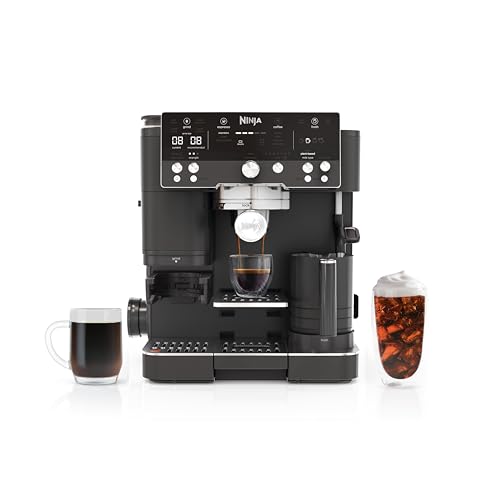
Ninja Luxe Café Premier Espresso Machine
Strengths
- 3-in-1 versatility
- Weight-based dosing
- Barista Assist guidance
- Hands-free frothing
- Assisted tamper
Trade-offs
- Larger footprint
- Steeper learning curve
- Not pro-level espresso
The Ninja Luxe Café Premier stands out in the integrated coffee machine space by offering a rare trifecta: drip coffee, espresso, and cold brew in one unit. That versatility alone makes it a strong contender for buyers who want more than just espresso-based drinks. On paper, its Barista Assist Technology is impressive, weight-based dosing, grind-size recommendations, and active brew adjustments help reduce guesswork, which owners consistently report leads to more balanced, repeatable results. The assisted tamper and hands-free frother add real convenience without sacrificing quality, especially for beginners.
Where this machine really shines is in flexibility. With 25 grind settings, three drip styles, and two cold brew options, it covers almost every morning scenario. Reviewers note the cold-pressed espresso is particularly smooth, great for iced drinks or espresso martinis. Compared to single-focus machines, it’s not quite as refined as a dedicated espresso maker, but for a 3-in-1, it delivers solid performance across categories. My recommendation? If you hate clutter and want one machine to do it all, this is the easiest path to a varied coffee routine.
Video review
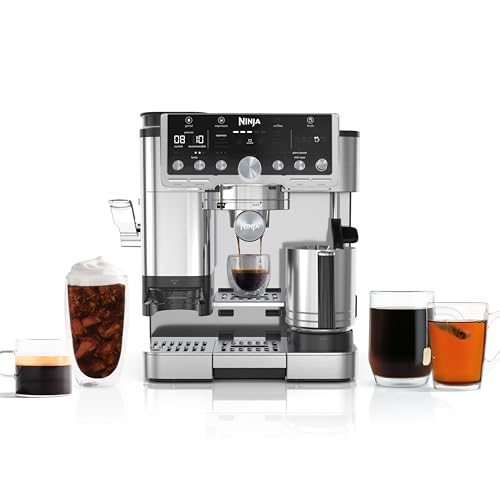
Ninja Luxe Café Pro Espresso Machine
Strengths
- 4-in-1 functionality
- Integrated tamper
- XL milk jug
- Five froth presets
- Hot water on demand
Trade-offs
- Large footprint
- Complex interface
- Longer setup time
The Ninja Luxe Café Pro Series is the most fully loaded machine in this lineup, 4-in-1 functionality with espresso, drip, cold brew, and an independent hot water system for americanos or tea. That alone makes it a standout for versatility. It builds on the Premier model with an integrated tamper and upgraded Dual Froth System Pro, which includes five froth settings and an XL milk jug. Owners report the extra-thick froth and cold foam settings are particularly effective, making it easier to replicate café-style lattes at home.
Barista Assist Technology returns here, offering the same weight-based dosing and grind recommendations, which helps maintain consistency across such a wide range of drinks. The added hot water system is a small but meaningful upgrade, something the Philips models lack. While it’s bulkier and more complex than the Philips units, its breadth of function justifies the space for many. If you want one machine to replace your kettle, drip brewer, and espresso setup, this is the most complete package available.
Video review
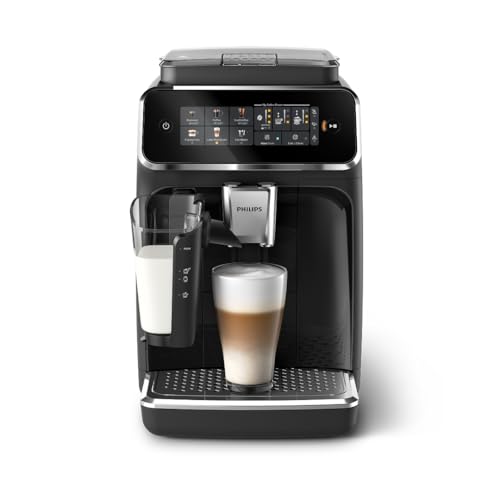
Philips 3300 Series Espresso Machine
Strengths
- LatteGo easy clean
- AquaClean filter
- Quiet operation
- Simple interface
- Low maintenance
Trade-offs
- Only 6 presets
- No saved profiles
- Basic customization
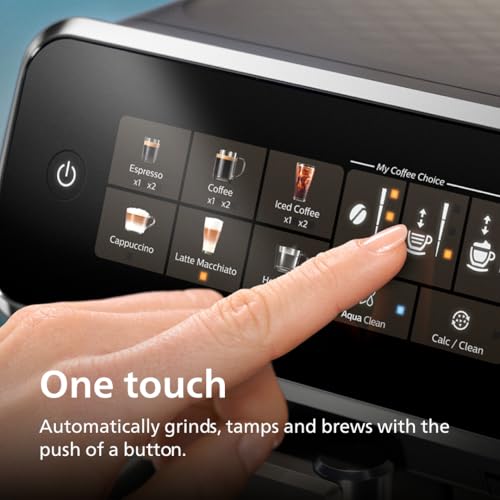
The Philips 3300 Series is the most accessible entry point into the LatteGo ecosystem, and it’s a smart pick for budget-focused buyers who still want full automation. It delivers the same core strengths as its siblings: smooth milk frothing, quiet operation, and one-touch brewing, but with only six presets and no profile saving. Still, for a single drinker or a couple with simple routines, that’s often enough. The AquaClean filter is a major plus: it delays descaling for up to 5,000 cups, which reviewers say drastically cuts maintenance hassle.
While it lacks the customization of higher-end models, it doesn’t feel cheap. The build quality holds up, and the 15-bar pump ensures decent crema. Compared to budget alternatives, it’s more reliable and easier to clean. I’d recommend this over the EUHOMY model for its proven milk system and lower long-term maintenance. It won’t impress advanced users, but for beginners stepping up from pod machines, it’s a solid foundation.
Product photos
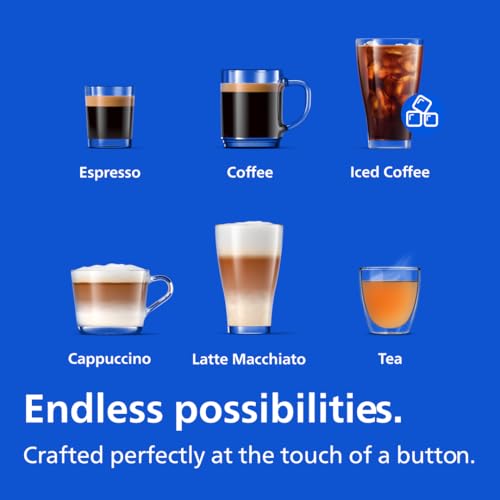

Philips 5500 Series Espresso Machine
Strengths
- 20 drink presets
- LatteGo easy clean
- SilentBrew technology
- 4 user profiles
- One-touch operation
Trade-offs
- No cold brew option
- Higher price point
- Limited grind adjustment
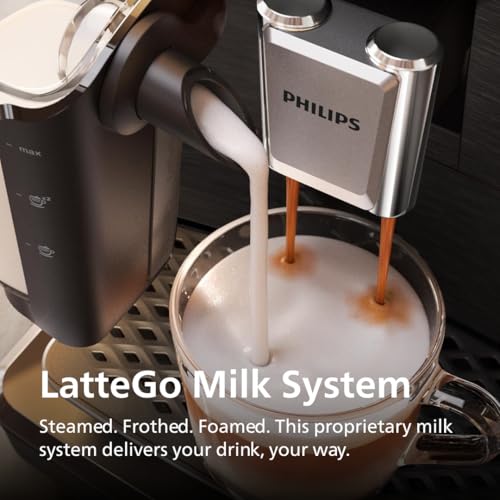
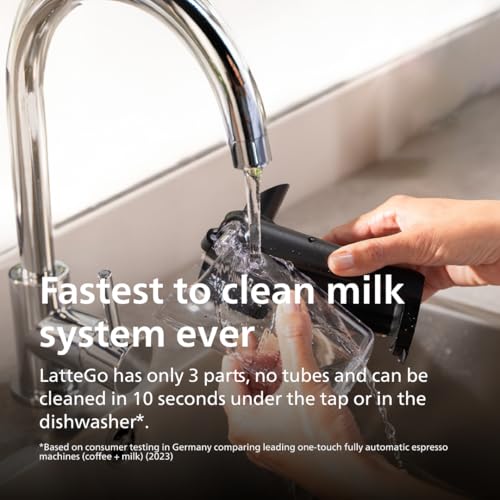
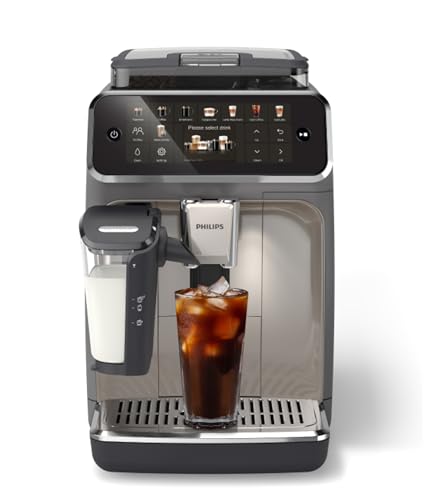
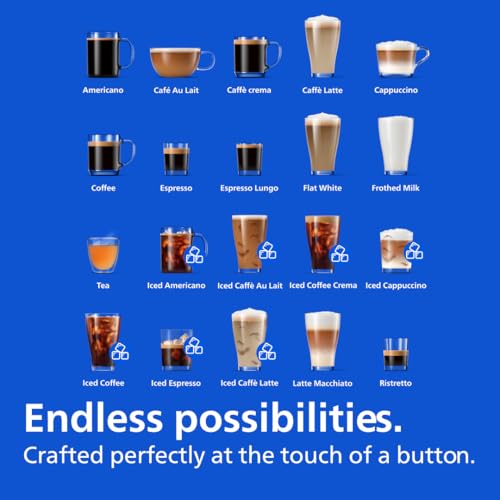
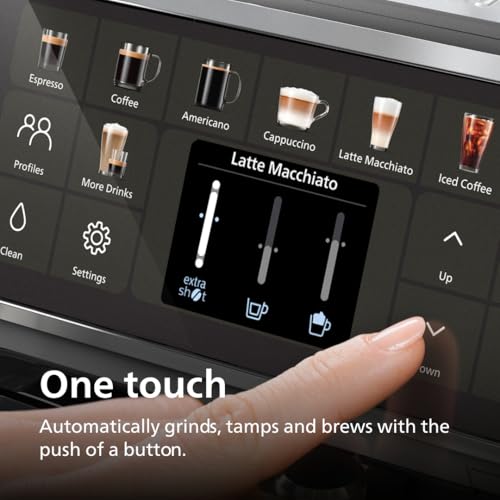
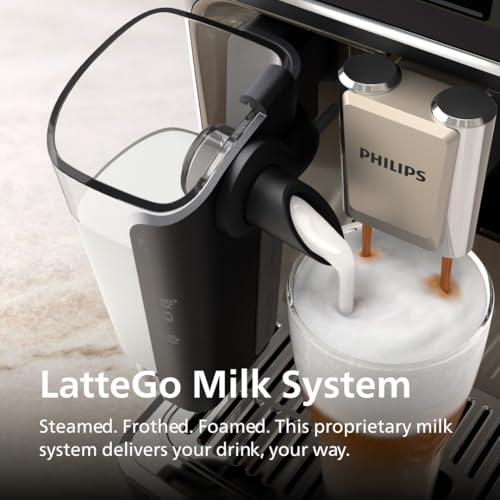
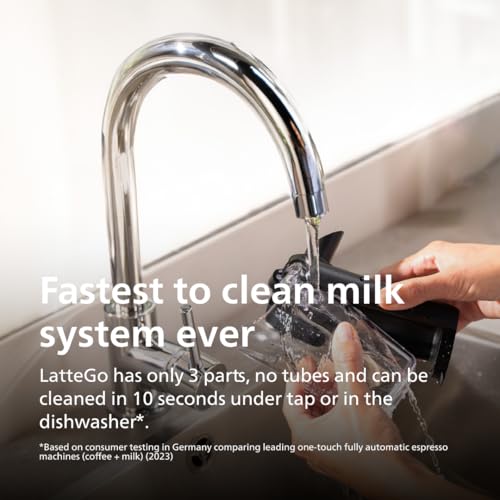
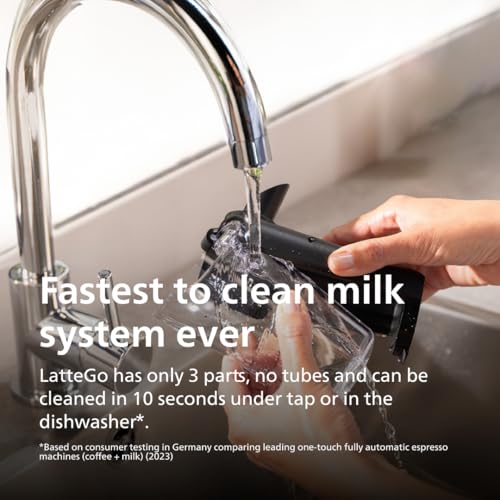
If customization and daily convenience are your priorities, the Philips 5500 Series is hard to beat. It’s a true super-automatic with 20 drink presets, including iced options, and lets you save up to four personalized profiles, something I always recommend for households with multiple drinkers. The LatteGo milk system is a standout: owners consistently praise how fast and easy it is to clean, with just three parts and no hidden tubes. That’s a real win for long-term maintenance, especially compared to frothers with internal coils.
The 15-bar pump delivers solid extraction, and the SilentBrew tech makes this one of the quietest machines in its class, perfect for early mornings. While it doesn’t offer the cold brew or drip options of the Ninja, it beats it in automation: this machine grinds, tamps, brews, and froths with zero manual steps. For most buyers, this is the smarter buy if your focus is espresso and milk drinks. I’d pick it over the 4400 model for the extra presets and profile storage.
Product photos
Philips 4400 Series Espresso Machine
Strengths
- LatteGo milk system
- SilentBrew tech
- 12 drink presets
- Two user profiles
- Easy maintenance
Trade-offs
- Only 2 saved profiles
- Fewer iced options
- No cold brew
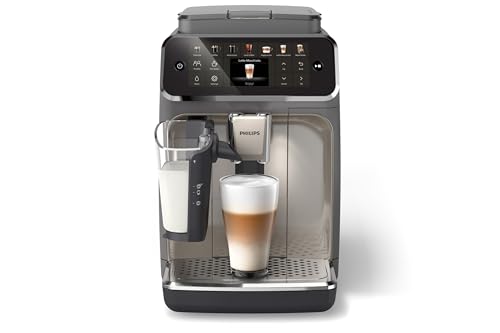
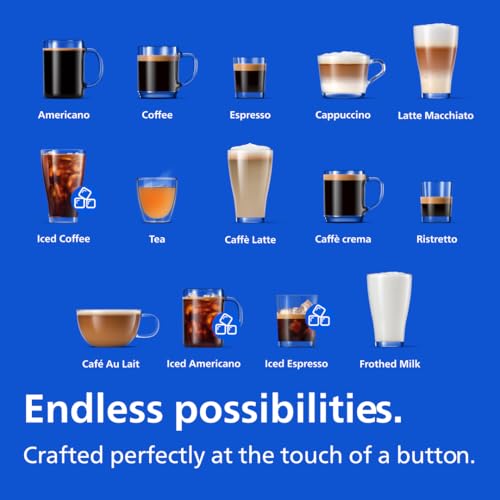
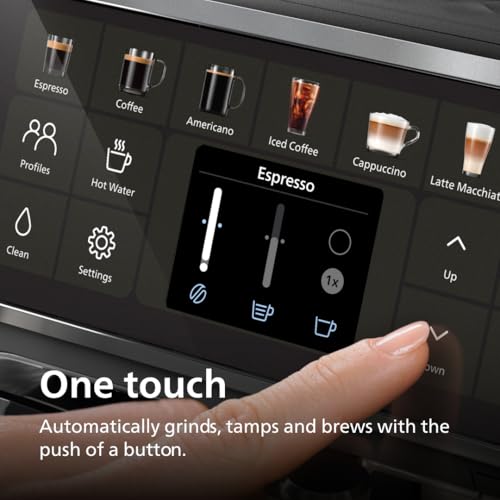
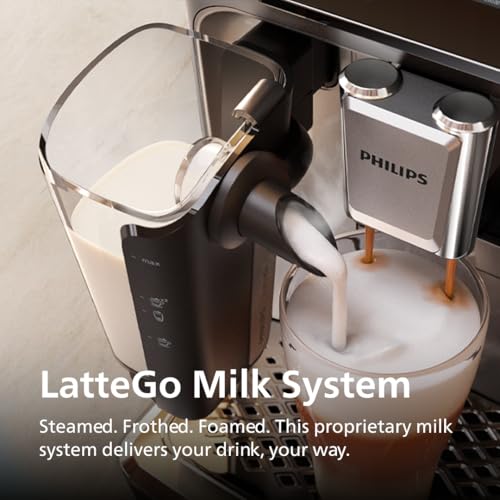
The Philips 4400 Series is essentially the slightly scaled-back sibling of the 5500, and it makes a strong case for itself as the best mid-range option. It keeps the same excellent LatteGo milk system and SilentBrew performance, which means quiet operation and effortless cleaning, two things that matter most in daily use. With 12 presets and two user profiles, it’s still highly customizable, just not quite as expansive as the 5500. For most households, that’s more than enough.
Where it pulls ahead is value. It delivers the core Philips experience, consistent espresso, creamy milk froth, and reliable automation, without the premium price. Reviewers note the build quality feels just as solid as the higher-end model. Compared to the 3300, it offers more drink options and better personalization. I’d recommend this over the 5500 if you don’t need four saved profiles or the extra iced coffee presets. It’s the sweet spot for espresso lovers who want convenience without overpaying.
Product photos
EUHOMY Fully Automatic Espresso Machine
Strengths
- 20-bar pressure
- Touchscreen interface
- One-touch bean purge
- Removable milk container
- Self-cleaning cycles
Trade-offs
- Less durable build
- Milk system slower to clean
- Unproven long-term reliability
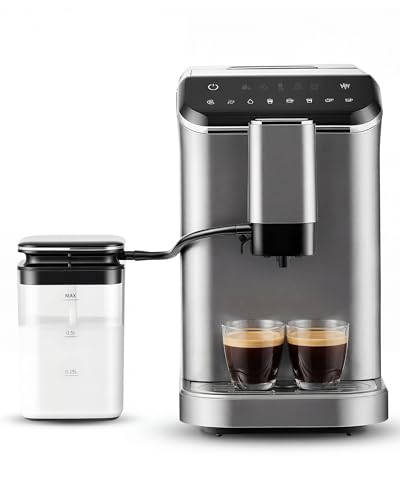
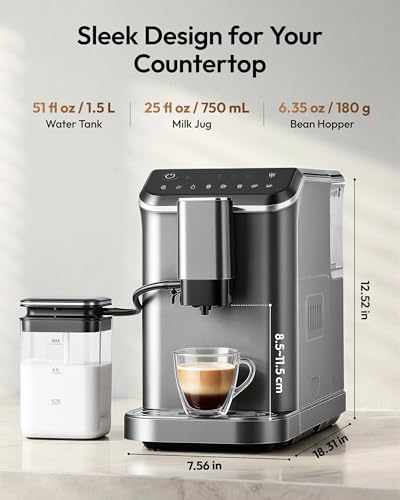
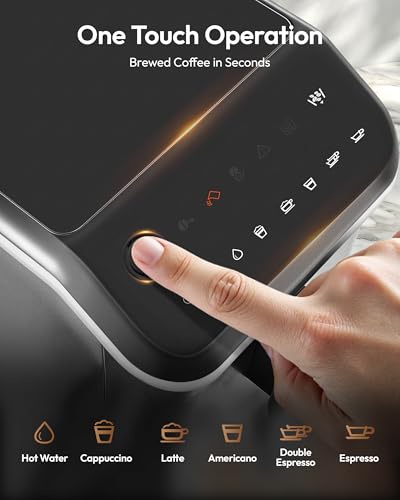
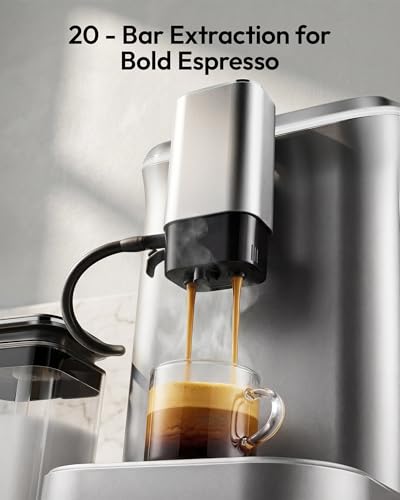
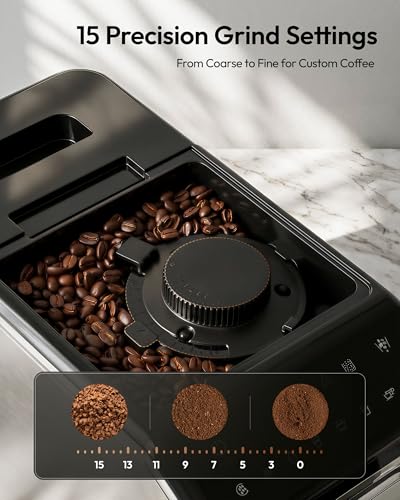
The EUHOMY stands out as the most affordable touchscreen super-automatic with a 20-bar pump, which sounds impressive on paper, higher pressure than most Philips models. In practice, owners report it delivers rich crema and strong extraction, especially when using fresh beans. The 15 grind settings and one-touch bean purge are thoughtful touches for flavor management, and the removable milk container makes frothing convenient. However, the milk system isn’t as fast to clean as Philips’ LatteGo, no snap-and-rinse design here.
Build quality is functional but not premium. Some reviewers note plastic components feel lightweight, and long-term durability is still unproven compared to Philips. It’s a good option if you want a touchscreen interface on a budget, but it lacks the refinement and ease of maintenance that make the Philips line a top seller. I’d pick the 3300 over this for better reliability and cleaning speed, unless the higher pressure and touchscreen are must-haves.
Product photos
How We Picked These integrated coffee machine
As a long-time coffee enthusiast, I approached researching integrated coffee machines by first compiling a detailed specification sheet for each model. I compared features like brewing styles, grinder settings, milk frothing systems, and included accessories. Beyond the raw specs, I then weighed owner reviews from across the web – Amazon, specialist retailers, and coffee forums – alongside assessments from trusted review sites. This research-led comparison, rather than a hands-on lab test, allowed me to rank machines against clear criteria.
For this category, the ability to consistently deliver quality espresso and drip coffee was paramount. Integrated machines aim to do both, but many compromise on one side or the other. Beyond versatility, I heavily weighted the quality of the grinder; a consistent grind is fundamental to good extraction. Finally, ease of cleaning and maintenance played a significant role, as even the best machine is useless if it’s too much work to keep running.
Specifications reliably indicate brewing pressure, grinder burr type (conical vs. flat), and tank capacity. However, owner feedback proved crucial for judging real-world performance – particularly concerning grind consistency, milk frothing quality, and the long-term durability of components. I also paid close attention to reputations for customer support, as complex machines inevitably require assistance. For those considering a high-end, built-in option, you might also find our Miele built-in coffee machine guide helpful.
How To Choose The integrated coffee machine
Finding the right integrated coffee machine means balancing convenience with control. It’s a category that’s exploded recently, offering everything from fully automatic bean-to-cup brewing to machines that combine espresso and drip coffee capabilities.
A truly good integrated coffee machine delivers consistent results with minimal effort. Key features to examine include the quality of the grinder (burr grinders are essential), the precision of temperature control, the ease of cleaning and maintenance, and the breadth of customizable settings to suit individual preferences. A well-designed machine will also incorporate features that minimize waste and maximize bean freshness.
Grinder Quality & Grind Settings
The grinder is arguably the most important component. Pre-ground coffee quickly loses its flavor, so an integrated machine must have a built-in grinder. Don’t settle for blade grinders; they chop the beans unevenly, leading to inconsistent extraction. Look for a conical burr grinder, as these produce a more uniform grind size. The number of grind settings is also crucial. More settings allow for fine-tuning to different bean types and brewing methods. A wider range (20+ settings) is preferable, giving you the flexibility to experiment and find the sweet spot for your preferred roast.
Milk Frothing & System Design
If lattes and cappuccinos are part of your daily routine, pay close attention to the milk frothing system. Some machines offer automatic frothing, while others require manual steaming. Automatic systems, like the LatteGo system found in several Philips models, are significantly easier to clean – a huge benefit. Consider the capacity of the milk carafe and whether it’s dishwasher safe. Beyond the frothing itself, the overall system design matters. Integrated machines can be complex, and easy access to components for cleaning is paramount. You don’t want to spend 30 minutes disassembling and scrubbing after every use.
- A simple, intuitive interface is worth prioritizing.
- Look for removable brew groups and drip trays for easy cleaning.
- Machines with automatic cleaning cycles are a significant time-saver, even if they require periodic descaling. This is especially true when compared to the more involved maintenance of a Breville integrated espresso system, which requires regular attention to detail.
Customization & Programmability
While convenience is a major draw of integrated machines, you shouldn’t sacrifice control. The ability to adjust coffee strength, volume, and temperature is essential for tailoring your brew to your exact preferences. Programmable user profiles are a fantastic feature, allowing multiple users to save their ideal settings. If you’re looking for a machine that offers an exceptional level of customization, explore the top super-automatic coffee machines, as they often provide a wider range of adjustable parameters. Don’t underestimate the value of preset brewing options, either; having a one-touch button for your favorite drink can streamline your morning routine.
A well-calibrated machine will let you adjust everything from the pre-infusion time to the water temperature, giving you the power to truly dial in your perfect cup.
Integrated Coffee Machine Compared
Here’s a comparison of key specifications for several integrated coffee machines.
| Product Name | Brew Styles | Milk Frothing | Grinder Type | Pressure (Bar) | Water Tank (L) |
|---|---|---|---|---|---|
| Ninja Luxe Café Premier Espresso | 6 Coffee, 2 Espresso | Hands-Free | Conical Burr | N/A | N/A |
| Ninja Luxe Café Pro Espresso | 5 Espresso, 3 Coffee | Dual Froth Pro | Conical Burr | N/A | N/A |
| Philips 3300 Series Espresso Machine | 6 | LatteGo | Integrated | N/A | N/A |
| Philips 5500 Series Espresso Machine | 20 | LatteGo | Integrated | N/A | N/A |
| Philips 4400 Series Espresso Machine | 12 | LatteGo | Integrated | N/A | N/A |
| EUHOMY Fully Automatic Espresso Machine | 4 | Automatic | Conical Burr | 20 | 1.5 |
Frequently Asked Questions
What water filter type is best for these machines?
Activated carbon filters are generally recommended, as they effectively remove chlorine and other impurities that can affect coffee flavor. Many manufacturers offer proprietary filters designed specifically for their machines, and these will often provide the best performance and longevity.
Are integrated coffee machines more prone to breakdowns than standard drip brewers?
Yes, they can be. With more complex components like grinders and automatic milk frothing systems, there are more potential points of failure, though modern machines are becoming increasingly reliable. Investing in a model with a good reputation for customer support, like those offering extended warranties, is a smart move.
What is the typical lifespan of the grinder in an integrated machine?
The lifespan varies greatly depending on usage and bean type, but a well-maintained conical burr grinder can last for 5-10 years. Harder beans and frequent use will accelerate wear, so proper cleaning and descaling are critical to maximizing its lifespan.
Can these machines handle oily or flavored coffee beans?
Most can, but oily beans can sometimes cause clogging in the grinder and brew group. Regular cleaning is even more essential with oily beans. For flavored beans, check the manufacturer’s recommendations, as some flavorings can leave residue that affects performance.
Where can I find more information on high-end automatic options?
If you are seeking a wider range of features and customization, you might want to explore high-performance automatic coffee machines. These models often provide more granular control over brewing parameters and typically offer superior build quality.
The Bottom Line
Choosing an integrated coffee machine often comes down to how much control you want versus how much fuss you’re willing to tolerate. While many models attempt to do everything, the Ninja Luxe Café Premier Espresso strikes the best balance for most people, offering a wide range of brew styles and convenient hands-free milk frothing without sacrificing too much on quality. It’s a versatile option that delivers a lot for the price.
For those on a tighter budget, the Philips 3300 Series Espresso Machine is a fantastic entry point. If milk-based drinks are your priority, its LatteGo system is a standout feature, making cleaning far simpler than many competitors. Alternatively, if you’re looking for maximum customization and don’t mind a steeper learning curve, exploring resources on Jura automatic coffee center guide can help you understand the advanced capabilities of high-end machines.
Ultimately, remember that the most important factors are consistent grind quality, reliable temperature control, and a design that makes regular cleaning manageable. Don’t get too caught up in the number of preset drinks or fancy features; a machine that delivers a consistently good cup, day after day, is far more valuable than one packed with gimmicks.
