
7 Best Pour Over Coffee Kettles of 2026
The Fellow Stagg EKG Pro stands out as the overall best pour over coffee kettle, combining precise temperature control, a sleek design, and thoughtful features like a built-in brew stopwatch. For those on a budget, the Coffee Gator Gooseneck Kettle delivers solid performance with durable stainless steel construction and a reliable gooseneck spout. If versatility matters most, the Cosori Electric Gooseneck Kettle offers preset temperatures and a keep-warm function at a more accessible price.
I’ve seen how a poor kettle can ruin even the best beans. Too often, people struggle with uneven pours, inaccurate temperatures, or flimsy builds that don’t last, frustrations that undermine the entire pour over ritual.
As the founder of Bean Thusiast, I know what separates a good brew from a great one. This guide cuts through the noise, ranking kettles based on real owner feedback, verified specs, and the features that actually matter: spout control, temperature accuracy, and long-term durability.
Top 7 Pour Over Coffee Kettle in the Market
The Best Pour Over Coffee Kettle, Reviewed
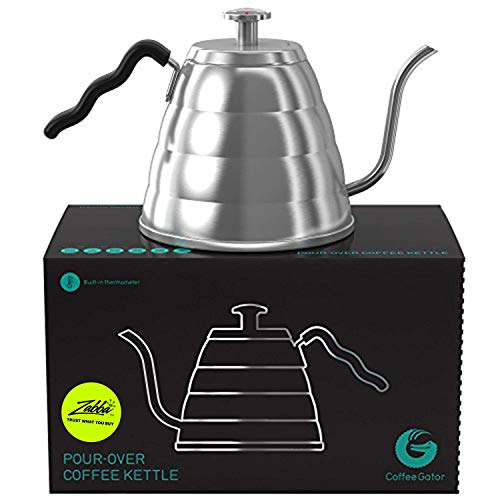
Coffee Gator Gooseneck Kettle
Strengths
- Stainless steel build
- Built-in thermometer
- Works on all stoves
Trade-offs
- No temperature presets
- Heavier than electric models
This stovetop gooseneck kettle stands out for buyers who want precision without stepping into electric territory. The built-in thermometer is a rare and useful feature for manual brewers who don’t want to juggle a separate temp reader. On paper, the 34oz capacity and triple-layer base make it a solid all-stovetop performer, and owners consistently report it heats evenly and resists warping over time. The gooseneck spout delivers the kind of slow, steady pour that pour-over purists want, especially when saturating a medium-fine grind bed.
What really sets it apart is its balance of function and durability. The 304 stainless steel construction holds up well, and the 2.5mm/s flow rate is right in the sweet spot for controlled blooming. Compared to smaller travel kettles, this one feels like a kitchen workhorse. It’s not flashy, but it’s dependable, and that matters when you’re dialing in your daily V60 or Chemex routine.
Video review
PARACITY Portable Pour Over Kettle

Strengths
- Ultra-portable
- Precise spout tip
- Durable stainless build
Trade-offs
- Too small for multiple cups
- No temperature control
At just 12oz, this is one of the most compact gooseneck kettles in the lineup, and that’s its entire purpose. It’s clearly designed for campers, backpackers, or anyone brewing solo on the go. The 0.4cm spout tip gives surprisingly good control for such a small unit, and reviewers note it pours cleanly even on uneven surfaces. The 304 stainless steel body resists rust well, and the hanging handle is a thoughtful touch for outdoor use.
Still, its size is both its strength and limitation. It’s not practical for more than one cup, and you’ll need an external heat source, which narrows its convenience compared to electric models. But for ultralight travelers or weekend hikers who won’t compromise on pour quality, this little kettle punches above its weight. It’s the kind of tool that turns a campfire brew into something close to a ritual.
Video review
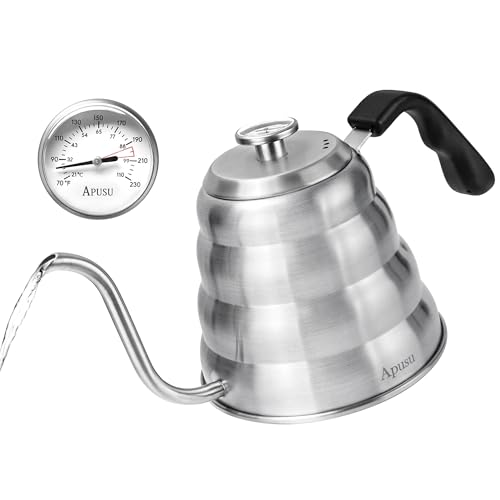
Gooseneck Kettle with Built-in Thermometer
Strengths
- Clear built-in thermometer
- Large 1.2L capacity
- Induction compatible
Trade-offs
- No auto-shutoff
- Manual temp monitoring
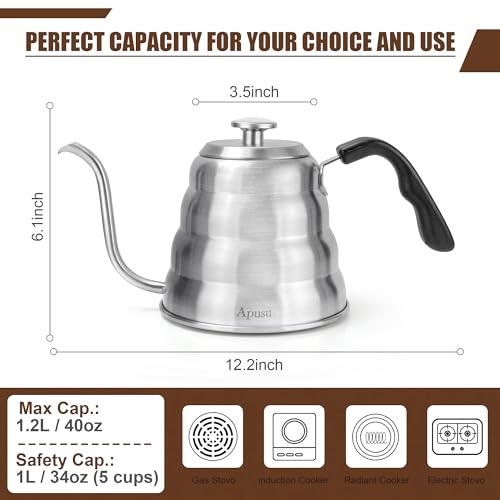
This stovetop kettle makes a strong case for traditionalists who want a thermometer without going electric. The 1.2L capacity is generous, and the cloud-line design adds a subtle aesthetic upgrade over plain cylinders. The built-in thermometer is large and easy to read, which reviewers consistently praise, no squinting at tiny dials. Paired with the gooseneck spout, it gives solid control for hand-pour methods.
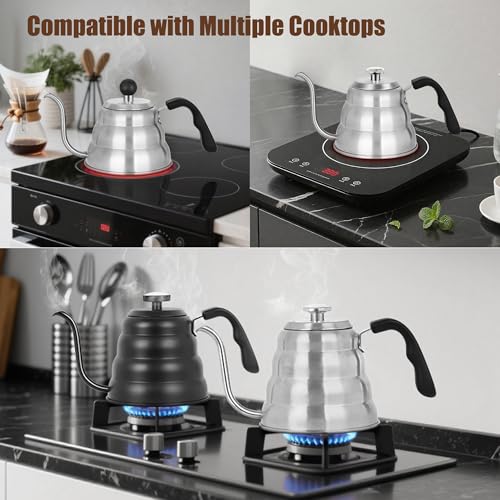
The triple-layer base ensures even heating across gas, electric, and induction stoves, and the phenolic resin handle stays cool. But unlike electric models, you’re still estimating your target temp by watching the dial climb. It’s a step up from guessing, but not as precise as digital control. Still, for stovetop loyalists, this is one of the best-equipped options under $50.
Product photos



Cosori Electric Gooseneck Kettle

Strengths
- Simple preset buttons
- Affordable entry point
- Stainless steel interior
Trade-offs
- Basic temp accuracy
- No brew timer
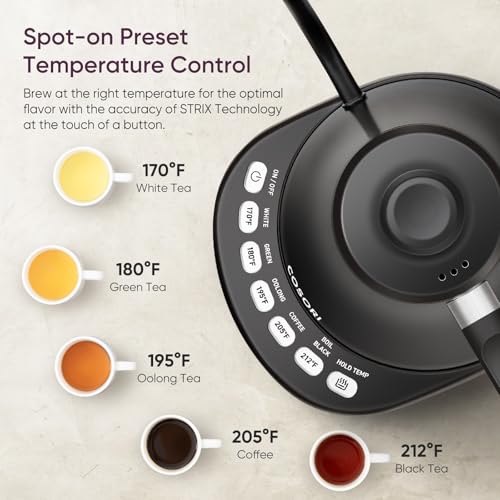
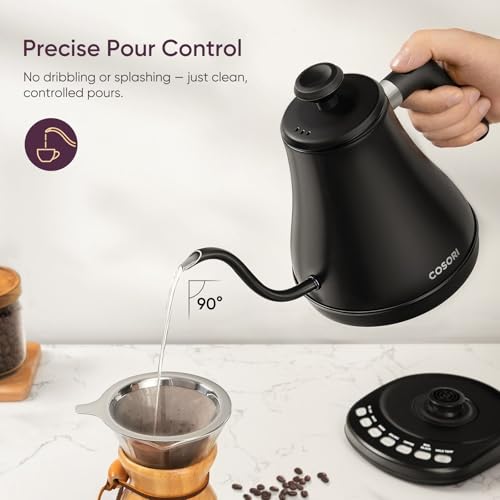
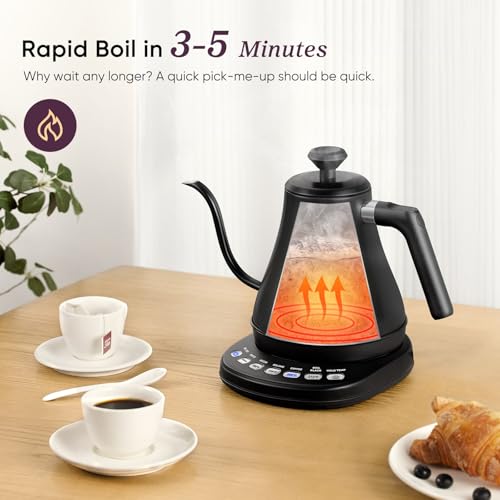
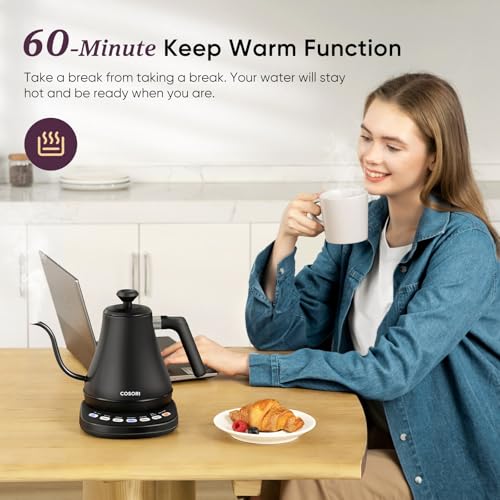
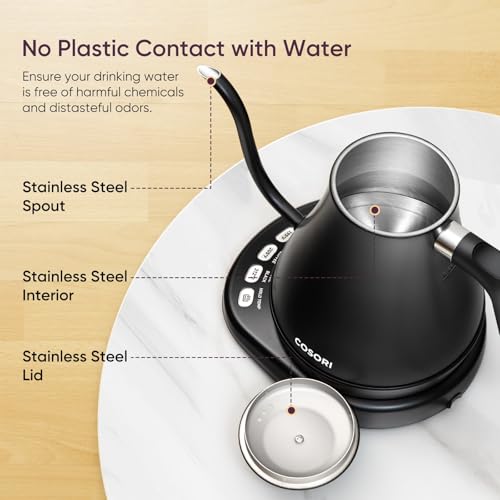
This is the most accessible electric gooseneck kettle here, and it shows. It hits the basics well: 5 one-touch presets, a keep-warm function, and a fully stainless interior that avoids plastic taste. The 0.8L capacity is standard, and the counter-balanced handle gives decent pour control. For beginners or casual drinkers, it removes the guesswork from water temps without overwhelming them.
But when compared to the Fellow or INTASTING models, it falls short on precision. The temperature accuracy is within 5°F, which is acceptable but not excellent. Owners note the screen is basic and the spout, while functional, isn’t as refined. Still, for those dipping into pour-over for the first time, this kettle delivers a lot of value. It’s the kind of product that makes specialty brewing feel approachable.
Product photos
INTASTING Electric Kettle with Precise Control

Strengths
- ±1°F temperature accuracy
- Plastic-free sensor seal
- Brew stopwatch on screen
Trade-offs
- Interface feels utilitarian
- No WiFi or scheduling
When temperature accuracy is essential, this kettle deserves your attention. The ±1°F control is backed by a smart heating algorithm and a real-time temp probe, specs that rival lab equipment, not just coffee gear. Owners confirm the readings are consistent, and the 2-hour keep-warm mode is longer than most. The 0.65mm gooseneck spout is among the finest here, giving a drip-like flow that’s ideal for delicate bloom phases.
It also stands out for its commitment to purity: 100% stainless interior and a plastic-free sensor seal. That’s a detail I appreciate, knowing how often lower-end kettles leach off-flavors over time. While it lacks the polished interface of the Fellow, it outperforms it in raw precision. For anyone who treats brewing like a repeatable science, this is the tool to reach for.
Product photos


Fellow Stagg EKG Pro Electric Kettle
Strengths
- Exact temperature control
- Brew timer included
- Premium, durable build
Trade-offs
- Not dishwasher safe
- Higher price point
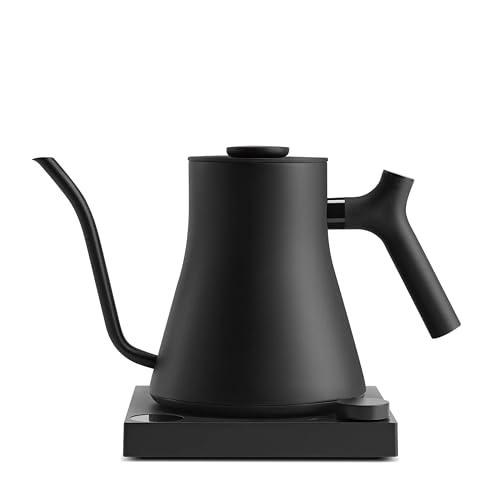
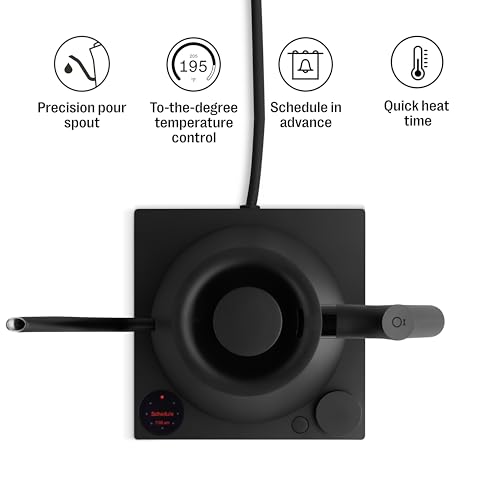
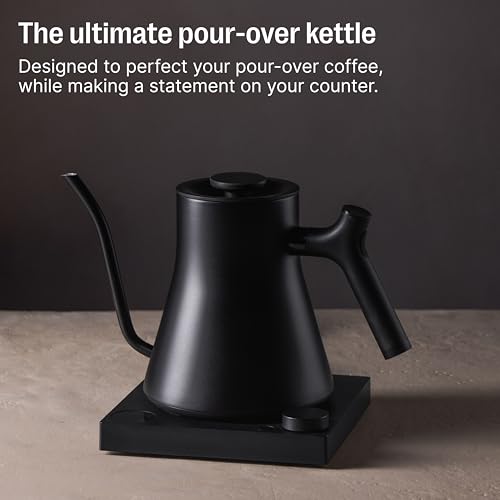
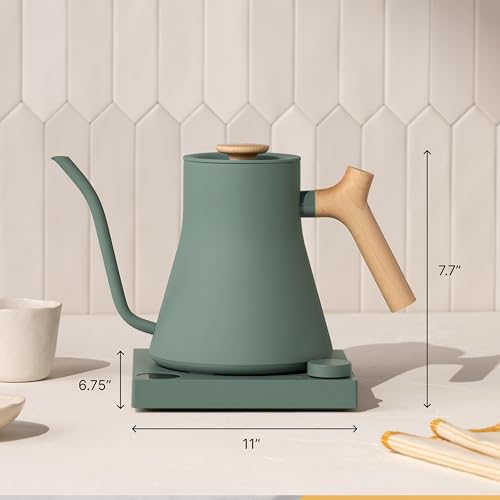
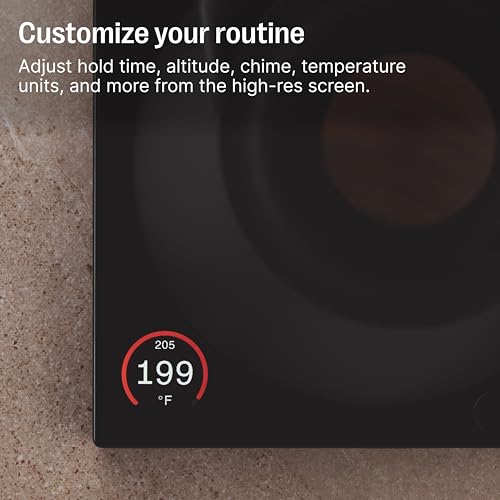
If I had to pick one kettle that represents the high end of electric pour-over gear, it’s this. The build quality is exceptional, 304 stainless steel body, a high-res color screen, and an ergonomic handle that feels balanced even when full. Owners rave about the temperature precision and the Brew Stopwatch, which helps fine-tune pour timing. The WiFi updates are a nice touch, letting Fellow push real improvements over time, which is rare in this category.
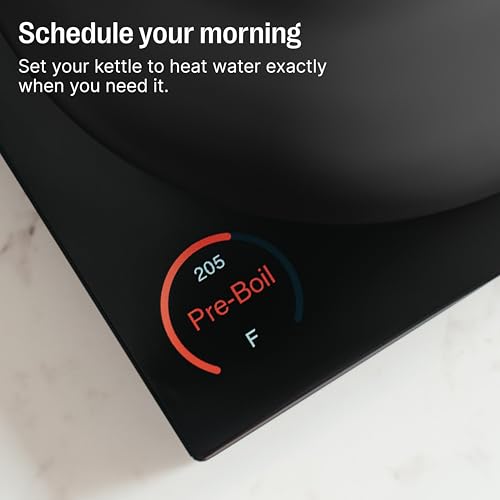
Compared to other electric kettles, the Stagg EKG Pro doesn’t just heat water, it guides your brewing. The scheduling feature is underused but brilliant for morning routines. While pricier than most, its durability and feature depth make it the smarter buy for serious home baristas. It’s not just a kettle; it’s a long-term investment in consistency.
Product photos
Bodum Bistro Gooseneck Electric Kettle

Strengths
- Cork handle for grip
- Sleek matte finish
- Auto shut-off safety
Trade-offs
- No temp control
- No brew timer
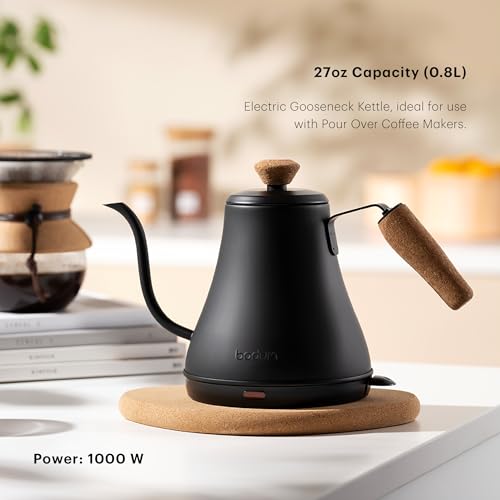
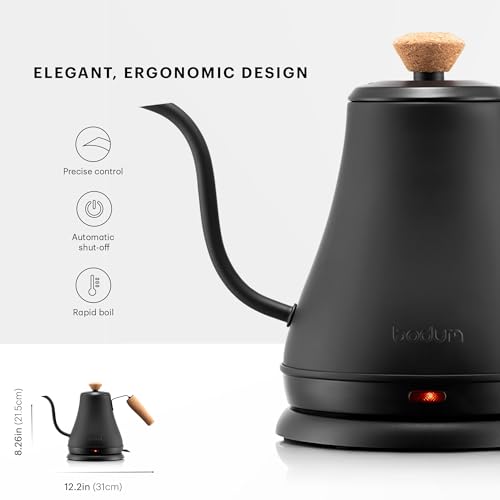
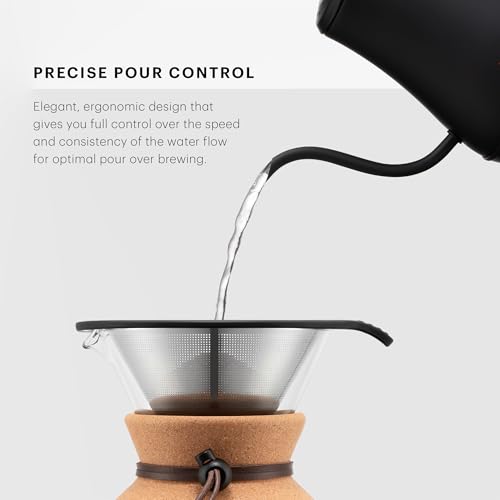
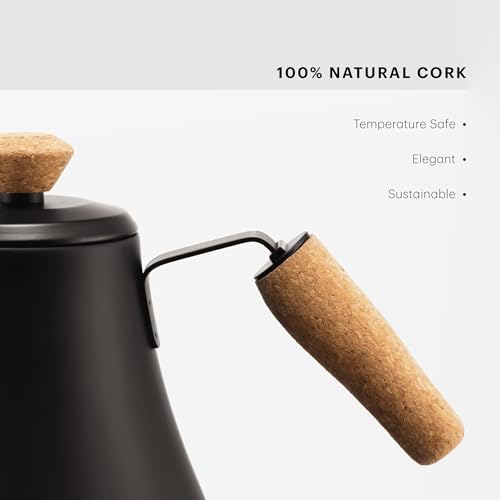
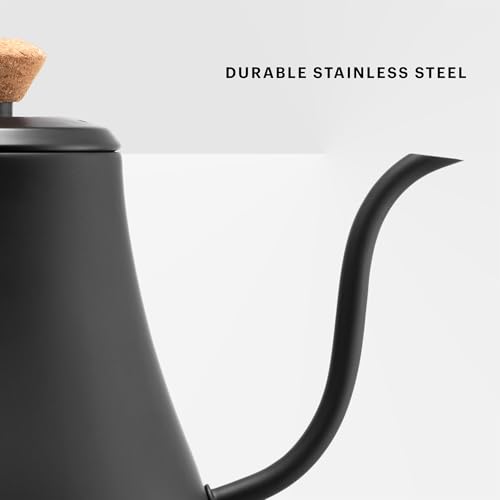
The Bodum Bistro stands out for one thing above all: comfort. The cork handle and knob are not just eco-friendly, they’re genuinely pleasant to hold, even when the kettle is full. The matte black stainless steel gives it a modern look, and the non-slip base adds stability. It’s cordless and has an auto shut-off, so safety is covered.
But beyond ergonomics, it’s fairly basic. No temperature presets, no timer, no screen. The gooseneck spout works, but it’s not as refined as Fellow or INTASTING models. Owners say it heats quickly, but that’s about it. It’s a decent pick if you value tactile design over tech, but you’re trading features for feel. For many, that balance will feel off.
Product photos
How We Picked These pour over coffee kettle
I approached this guide by first compiling a list of highly-rated pour over kettles, then comparing their published specifications – capacity, materials, temperature control (where applicable), and spout design. I then weighed those specs against owner reviews from major retailers and expert opinions found in coffee-focused publications. My goal was to identify the models consistently praised for performance, durability, and ease of use, ultimately ranking them based on how well they meet the needs of different coffee enthusiasts.
For pour over kettles, consistent water flow and temperature stability are paramount. I gave the most weight to kettles with precise gooseneck spouts designed for controlled pouring, and those offering accurate temperature settings (especially electric models). Build material was also key; stainless steel construction is ideal for longevity and avoiding unwanted flavors. Understanding the nuances between different brewing methods – as detailed in our drip vs pour over comparison – helped me assess which features truly matter.
Specifications reliably indicate a kettle’s capacity and construction materials. However, I relied on owner feedback to gauge real-world performance aspects like spout control, heating speed, and long-term durability. Reputational factors, like a brand’s history of quality and customer service, also played a role, particularly when judging higher-end models. This research-led comparison, rather than a hands-on test, allowed me to present a well-informed overview of the current market.
How To Pick The Right pour over coffee kettle
I’ve spent years exploring the world of coffee, and one thing is clear: the kettle is just as important as the beans themselves. A good kettle unlocks the potential for a truly exceptional pour-over experience.
A quality pour over kettle prioritizes precise temperature control, a consistently smooth flow rate (around 2-3mm/s is ideal for most pour-over methods), and durable construction – typically 304 stainless steel – to avoid imparting unwanted flavors. Look for features like a gooseneck spout for accuracy and, if you’re serious about dialing in your brew, a built-in thermometer or programmable temperature settings.
Temperature Control is Key
Many people don’t realize how critical water temperature is to extraction. Different coffee beans, and even different roasts of the same bean, perform best at different temperatures. Generally, you’re aiming for between 195-205°F (90-96°C) for most pour-over methods, but experimenting outside this range can reveal surprising results. Electric kettles with precise temperature settings, like the top pour-over kettles available today, eliminate guesswork. Stovetop kettles require a separate thermometer, which adds a step, but can still deliver excellent results if you’re attentive.
Spout Design & Flow Rate
The gooseneck spout isn’t just about looks; it’s about control. A well-designed gooseneck allows for a slow, steady, and precise pour, which is vital for even saturation of the coffee grounds. Cheaper kettles sometimes have poorly designed spouts that lead to inconsistent flow or splashing. Consider the material of the spout too – stainless steel is preferable as it won’t impart flavors.
Here’s how to think about spout features: * Material: Stainless steel is the standard. * Length & Angle: Longer spouts offer more control. The angle impacts how easily you can pour. * Flow Rate: Aim for 2-3mm/s. Some kettles offer adjustable flow rates, which is a nice feature.
Balancing Value and Features
You can spend anywhere from $30 to $300+ on a pour-over kettle. While the high-end models offer features like advanced temperature control and beautiful designs, a mid-range kettle can deliver excellent results without breaking the bank. For example, if you’re still deciding between a pour over vs french press as your primary brewing method, investing in a more economical kettle to start is a smart move.
Don’t chase the most expensive kettle immediately. Start with a solid, stainless steel gooseneck that gives you temperature control and a consistent pour. You can always upgrade later if you find yourself wanting more advanced features.
Pour Over Coffee Kettle Compared
Here’s a comparison of key specifications for several pour over coffee kettles to help you make an informed decision.
| Product Name | Capacity (L) | Material | Temperature Control | Spout Type | Power Source | Special Features |
|---|---|---|---|---|---|---|
| Coffee Gator Gooseneck Kettle | N/A | Stainless Steel | Stovetop | Gooseneck | Stovetop | Triple-Layer Base |
| PARACITY Portable Pour Over Kettle | 0.35 | Stainless Steel | N/A | Gooseneck | Stovetop | Portable, Compact |
| Gooseneck Kettle w/ Thermometer | 1.2 | Stainless Steel | Built-in | Gooseneck | Stovetop | Thermometer, Anti-Rust Base |
| Cosori Electric Gooseneck Kettle | N/A | Stainless Steel | Electric, 5 Presets | Gooseneck | Electric | Keep Warm, One-Touch Presets |
| INTASTING Electric Kettle | N/A | Stainless Steel | Electric, ±1°F | Gooseneck | Electric | Temp Hold, Brew Stopwatch |
| Fellow Stagg EKG Pro | 0.9 | Stainless Steel | Electric, Precise | Gooseneck | Electric | WiFi, Brew Stopwatch |
| Bodum Bistro Gooseneck Kettle | 0.8 | Stainless Steel | Electric | Gooseneck | Electric | Cork Handle, Auto Shut-off |
Frequently Asked Questions
What’s the biggest advantage of an electric pour over kettle?
Electric models offer precise temperature control, typically within a degree or two, which is crucial for optimizing extraction and repeatable results. This eliminates the need for a separate thermometer and the guesswork of stovetop heating.
Are glass pour over kettles a good option?
Generally, no. While visually appealing, glass kettles are more prone to thermal shock and breakage, and some coffee enthusiasts believe they can impart unwanted flavors over time. Stainless steel is the preferred material for durability and purity of taste.
How important is the capacity of the kettle?
Capacity depends on how many cups you typically brew at once. A 1-liter kettle is sufficient for most individual pour-over sessions, while larger households might prefer a 1.2-liter or even 1.5-liter option.
What flow rate should I look for in a gooseneck spout?
A flow rate of 2-3 mm/s is ideal for most pour-over techniques, allowing for controlled saturation of the coffee grounds. Some kettles, like the best electric pour-over kettle, even offer adjustable flow rate settings for added precision.
Do I really need a gooseneck spout, or is it just a marketing gimmick?
A gooseneck spout is essential for controlled pouring. It allows you to direct the water precisely where you want it, ensuring even saturation and a more consistent extraction, which is difficult to achieve with a standard kettle spout.
The Bottom Line
Ultimately, choosing a pour over kettle comes down to balancing control with convenience. While a stovetop kettle paired with a separate thermometer can deliver excellent results, the [Cosori Electric Gooseneck Kettle] strikes a fantastic balance of features and price, making it our overall recommendation for most coffee lovers. It offers preset temperatures and a gooseneck spout, removing much of the guesswork from brewing.
For those on a tighter budget, the [Coffee Gator Gooseneck Kettle] is a superb choice. If portability is a key concern, the [PARACITY Portable Pour Over Kettle] won’t weigh you down. And for the enthusiast who wants the most precision – someone really focused on dialing in their [coffee to water ratio pour over] – the [Fellow Stagg EKG Pro] remains the gold standard, offering WiFi connectivity and unparalleled temperature stability.
At the end of the day, the kettle is a tool. Consistent grind size, quality coffee beans, and a mindful pouring technique will have a far greater impact on your final cup than any specific feature. Focus on mastering those fundamentals, and you’ll be well on your way to consistently brewing exceptional pour-over coffee.
