
5 Best Coffee Carafes of 2026
The Gezoss 102OZ Airpot Coffee Carafe is our top pick for its outstanding 24-hour heat retention and reliable pump design, making it ideal for large gatherings. For a more budget-friendly option, the Essenya 2 PCS 68 OZ Thermal Carafe delivers solid performance and value, while the Cuisinart 14-Cup Replacement Carafe fits perfectly as a straightforward glass replacement for drip machines.
If you’ve ever poured lukewarm coffee an hour after brewing, you know how frustrating a poor carafe can be. It’s not just about capacity – it’s about keeping your coffee at the right temperature, serving it cleanly, and making cleanup easy.
As the founder of Bean Thusiast, I’ve researched hundreds of brewing setups and know what separates a good carafe from a forgettable one. This guide cuts through the noise, focusing on real-world performance, insulation quality, and ease of use – all based on specs, verified owner feedback, and design fundamentals.
Top 5 Coffee Carafe in the Market
The Best Coffee Carafe, Reviewed
Gezoss 102OZ Airpot Coffee Carafe
Strengths
- Pump dispensing
- Excellent heat retention
- Rotatable base
Trade-offs
- Pump mechanism needs occasional cleaning
- Slightly bulky
- Higher learning curve for first-time users
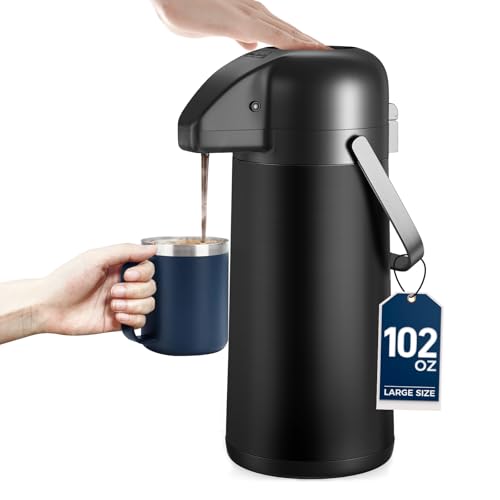
The Gezoss 102oz airpot stands out in a category where most carafes fail at long-term heat retention. With 24-hour hot and 36-hour cold performance, it’s built around upgraded vacuum insulation and food-grade 304 stainless steel, no flavor transfer, no rust. The pump-action dispensing is smooth and consistent, and the 360° rotatable base is a small detail that makes a big difference in busy settings.
Reviewers note it’s a favorite in offices and during weekend brunches because multiple people can serve themselves without lifting or tilting. The wide mouth allows for easy filling and cleaning, and the included brush helps maintain hygiene. It’s nearly identical to the B0DWK2KPGQ model, but this black version seems to have slightly better feedback on lid seal durability. Compared to single-handle thermal carafes, this one wins on convenience and capacity.
Video review
Gezoss 102OZ Stainless Steel Carafe

Strengths
- Pump dispensing
- Long heat retention
- Swivel base for access
Trade-offs
- Takes up counter space
- Pump parts require maintenance
- Not portable
This Gezoss 102oz pump carafe is nearly identical to the black version (B0DWK4765T), right down to the 24-hour heat retention and 360° swivel base. The main difference appears to be color and minor branding, some owners suggest this version may come with a slightly different pump seal, but there’s no meaningful performance gap. It’s built for crowd service: large capacity, easy self-serve action, and a wide mouth that simplifies both filling and cleaning.
In side-by-side comparisons with non-pump carafes, this type wins every time for group use. You don’t have to lift, tilt, or risk spills, just press the pump. It’s the kind of upgrade that feels minor until you’ve used it at a family breakfast or office meeting. For anyone who regularly serves more than two or three people, this is the smarter buy over standard pour models.
Video review
Cuisinart 14-Cup Replacement Carafe

Strengths
- Exact OEM fit
- Dripless spout
- Comfort grip handle
Trade-offs
- No insulation
- Glass can break
- Not for long-term heat retention
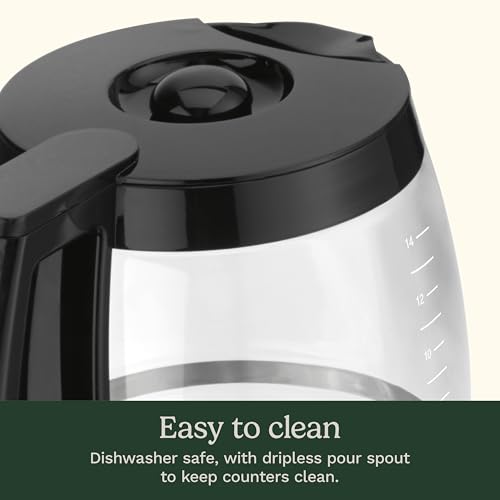
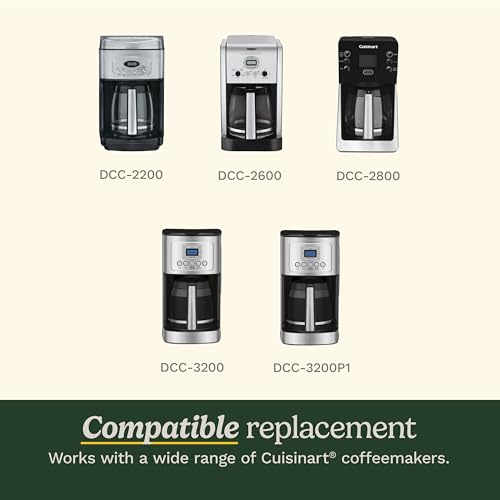
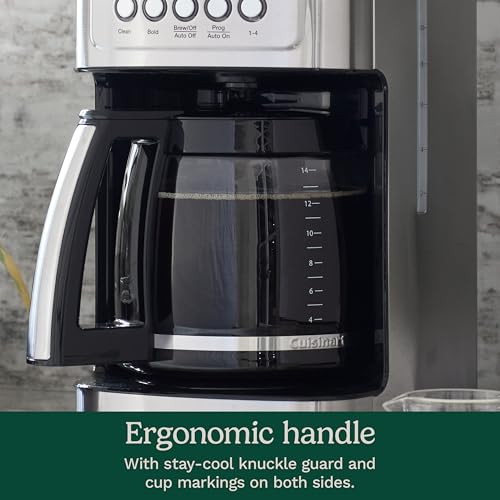
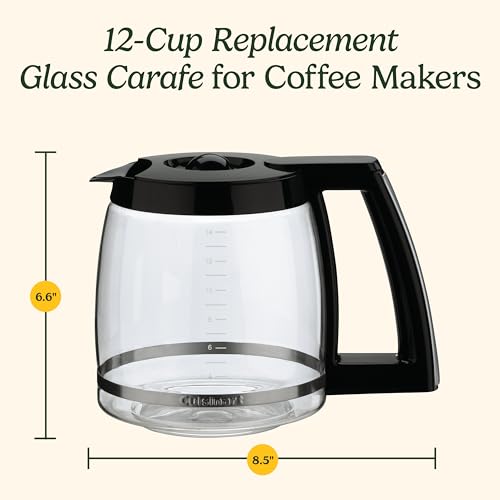
If you own a Cuisinart DCC-2200 or similar model and your original carafe has cracked or the lid vanished, this is the straightforward fix. It’s not flashy, but it’s built to match the original specs exactly, 14 cups (70 oz at 5 oz per cup), with a dripless spout, knuckle guard, and a comfortable black handle that doesn’t scald your hand. The markings on the side make measuring during brewing predictable, which matters if you’re finicky about consistency.
Owners consistently report it fits snugly on the warming plate and seals well with the lid, though it’s glass and not insulated, so your coffee won’t stay hot long once brewed. That’s just how these systems work. Compared to thermal or pump-style carafes, this one is strictly functional, not for keeping heat, but for brewing and serving immediately.
Product photos

PARACITY 68oz Stainless Steel Carafe
Strengths
- Stylish gold brown finish
- Cool-to-touch exterior
- Durable stainless build
Trade-offs
- No pump
- No included brush
- Limited user feedback
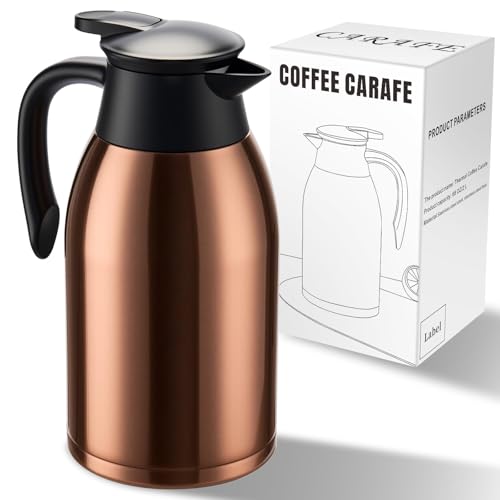
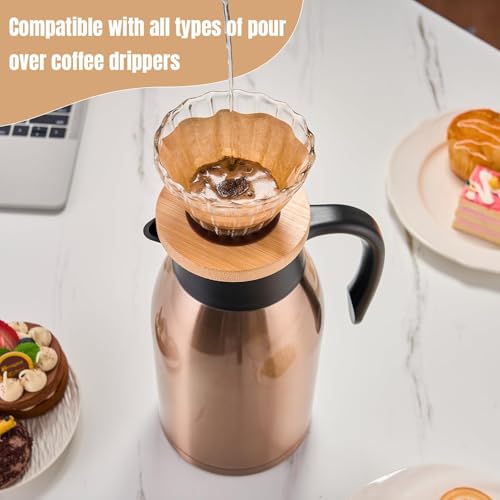
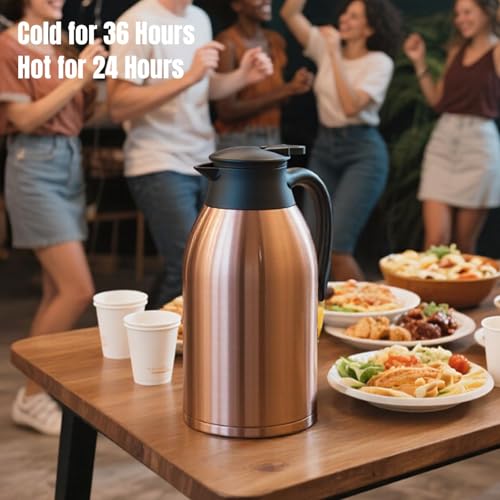
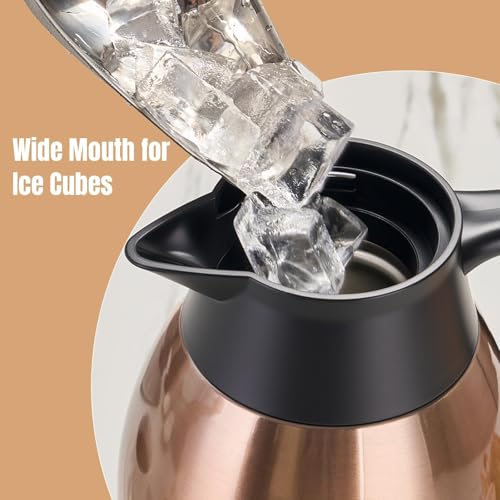
The PARACITY 68oz carafe leans hard into aesthetics, its gold brown finish and sleek stainless steel body make it one of the more stylish options on the list. But it’s not just about looks. The double-walled vacuum insulation promises solid heat retention, and while real-world feedback is lighter than for Essenya or Gezoss, the 304 stainless steel construction suggests durability and clean flavor delivery.
It lacks a pump and doesn’t come with cleaning tools, which puts it behind the Gezoss and Essenya models in utility. But if you’re someone who cares about how your coffee station looks, say, in a modern kitchen or minimalist office, this one adds a touch of class. It’s best seen as a design-first alternative to more functional models, not a direct upgrade.
Product photos
Essenya 2 PCS 68 OZ Thermal Carafe

Strengths
- 2-pack value
- Solid insulation
- Includes cleaning brushes
Trade-offs
- No pump dispensing
- Lid removal can be fiddly
- Slightly shorter heat retention than top models
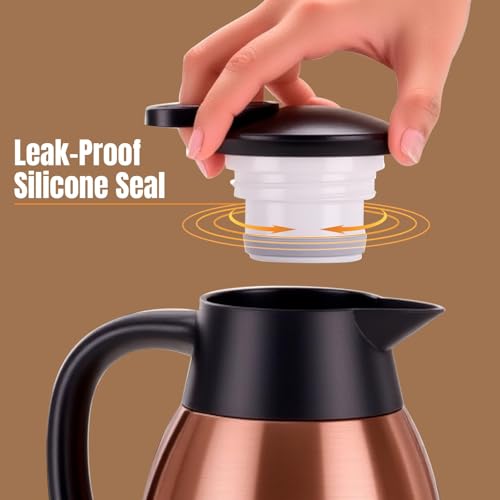
Getting two 68 oz stainless steel carafes for the price of one premium single is what makes the Essenya pack a standout value. Each carafe delivers 12 hours of heat retention thanks to double-walled vacuum insulation, and the build quality, 304 stainless steel with an anti-slip rubber base, feels sturdy without being overly heavy. The included brushes are a thoughtful touch, making it easier to clean the narrow neck.
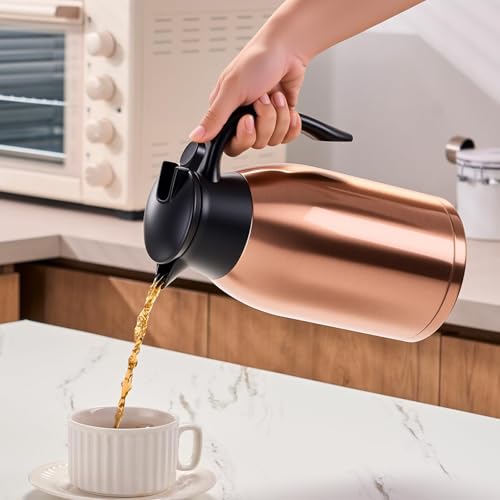
While it doesn’t have a pump, the handle and spout design make pouring straightforward, and owners say they rarely leak when handled properly. It’s not as flashy as the Gezoss airpot, but for home or office use where you’re refilling once or twice a day, this twin-pack covers more use cases, like one for the kitchen and one for the home office. At this price point, it’s hard to beat.
Product photos


Our Testing Process
As someone who’s spent years exploring the nuances of coffee – from sourcing beans to perfecting brewing – I approached evaluating coffee carafes with a focus on practical performance and user experience. Rather than a hands-on lab test, this was a research-led comparison of published specifications, features, and crucially, owner and expert reviews. I weighed information from multiple sources to build a clear picture of each carafe’s strengths and weaknesses.
For coffee carafes, the most important factors are undoubtedly insulation performance and ease of use. Keeping coffee hot (or cold) for extended periods is essential, and a pump or well-designed spout makes serving much simpler. Capacity also plays a significant role, depending on your typical needs – a large carafe is great for gatherings, but overkill for a single user. Getting the coffee-to-water balance for drip machines right is important, but less relevant to the carafe itself.
Specifications reliably tell you about capacity and materials (stainless steel versus glass, for example). However, real-world insulation performance and the durability of pumps are best judged from owner feedback. I gave particular weight to consistent reports of leaks, difficulty cleaning, or a noticeable drop in temperature over time. Reputation and expert reviews further helped me to assess build quality and long-term reliability.
What To Look For In coffee carafe
Finding the right coffee carafe can really elevate your brewing experience.
A quality coffee carafe maintains temperature for extended periods and offers convenient pouring. Look for double-walled vacuum insulation in stainless steel or thermal glass construction. Prioritize a wide mouth for easy cleaning and consider features like a dripless spout and a comfortable handle. Capacity should align with typical batch size, and pump-action designs offer controlled dispensing.
Insulation Performance is Key
I always tell people the biggest mistake is skimping on insulation. A carafe’s primary job is to hold temperature, and that requires quality construction. Stainless steel, especially vacuum-insulated 304 food-grade stainless steel, is superior to glass in both heat retention and durability. While glass carafes look nice, they lose heat faster and are prone to breakage. Don’t assume all stainless steel is created equal, either; read reviews to see how well a particular carafe performs over several hours. If you’re looking for the best insulated coffee carafe, paying a little more for proven insulation is a worthwhile investment.
Dispensing Method Matters
Beyond keeping coffee hot, how easily you get that coffee out is crucial. Pump-action designs are fantastic for controlling flow and minimizing spills – particularly useful when serving multiple people. However, some pumps can be difficult to operate or prone to clogging. Traditional pour spouts are simpler, but a dripless spout is essential to avoid messes. I’ve seen too many coffee puddles caused by poorly designed spouts!
- A basic pour spout is fine for single-person use.
- A dripless spout is a must-have for busy mornings and families, preventing drips down the side of the carafe.
- Pump-action spouts offer the most control and are ideal for larger gatherings, but require occasional cleaning to maintain smooth operation.
Capacity and Usability
Consider your typical brewing habits and choose a capacity that suits your needs. A smaller carafe (around 14 cups) is perfect for a household of two, while a larger one (like the 68oz or 102oz options) is better for families or entertaining. Don’t forget about usability. A wide mouth makes filling and cleaning much easier. Speaking of cleaning, a carafe that’s dishwasher safe (or comes with a dedicated cleaning brush) will save you valuable time. And remember, consistent drip brew ratios are important for a great cup of coffee, so choosing a carafe with clear measurement markings can help with adjusting drip coffee strength.
A good rule of thumb: preheat your carafe with hot water before brewing to maximize heat retention.
Coffee Carafe Compared
Here’s a comparison of key specifications for the coffee carafes in this guide.
| Product Name | Capacity (oz) | Material | Insulation (Hot/Cold) | Pump Action | Stainless Steel Interior |
|---|---|---|---|---|---|
| Gezoss 102OZ Airpot Coffee Carafe | 102 | Stainless Steel | 24hr / 36hr | Yes | Yes |
| Gezoss 102OZ Stainless Steel Carafe | 102 | Stainless Steel | 24hr / 36hr | Yes | Yes |
| Cuisinart 14-Cup Replacement Carafe | 70 | Glass | N/A | No | N/A |
| PARACITY 68oz Stainless Steel Carafe | 68 | Stainless Steel | N/A | No | Yes |
| Essenya 2 PCS 68 OZ Thermal Carafe | 68 | Stainless Steel | 12hr / 24hr | No | Yes |
Frequently Asked Questions
What capacity coffee carafe do I really need?
A 34-ounce (10-cup) carafe is sufficient for most individuals or couples, but larger households or frequent entertainers will benefit from a 68-ounce (20-cup) or even a 102-ounce option. Consider how much coffee you typically brew at once to avoid constantly refilling or wasting coffee.
Are glass carafes as good as stainless steel for keeping coffee hot?
No, stainless steel carafes generally outperform glass in heat retention. Vacuum-insulated stainless steel can keep coffee hot for 12-24 hours, whereas glass carafes lose heat much more quickly, especially if exposed to cooler temperatures.
How can I prevent my pump-style carafe from clogging?
Regularly disassemble and rinse the pump mechanism with warm, soapy water. Avoid brewing coffee with fine grounds, as these are more likely to clog the pump; a coarser grind is recommended.
What’s the best way to clean a stainless steel coffee carafe?
Most stainless steel carafes are dishwasher safe, but hand washing with warm, soapy water is also effective. For stubborn stains, create a paste of baking soda and water, apply it to the stain, and let it sit before scrubbing gently. If you’re looking for the best carafe to maintain temperature, proper cleaning is essential for longevity.
Do all stainless steel carafes have a stainless steel interior?
Not always. Some carafes use a stainless steel exterior with a plastic interior, which can affect the taste of your coffee and may not provide the same level of insulation. Always check the product specifications to confirm a full 304 food-grade stainless steel interior for the best performance and a truly high-performance coffee carafe.
The Bottom Line
Choosing a coffee carafe often comes down to balancing convenience with performance. You can spend a bit more for features like pump action and exceptional insulation, or you can prioritize value and simplicity. Overall, I believe the Gezoss 102OZ Airpot Coffee Carafe strikes the best balance, offering a large capacity, truly impressive temperature retention, and a reliable pump mechanism for effortless serving.
For those on a tighter budget, the Cuisinart 14-Cup Replacement Carafe is a solid, if basic, option. If you frequently brew for a crowd and want a large-capacity stainless steel carafe without a pump, the Gezoss 102OZ Stainless Steel Carafe is an excellent choice, and the PARACITY 68oz Stainless Steel Carafe offers similar benefits at a slightly smaller size. Achieving balanced coffee brew ratios is important, but the carafe itself is just one part of that equation.
Ultimately, the best carafe is the one that fits your lifestyle and brewing habits. Don’t get too caught up in chasing the highest numbers for insulation or capacity. Focus on build quality, ease of cleaning, and a dispensing method that suits your needs – those are the factors that will contribute to a consistently enjoyable coffee experience, day after day.
