Why Do People Drink Decaf Coffee? Beyond Cutting Caffeine
This post contains affiliate links. As an Amazon Associate, we earn from qualifying purchases.
People drink decaf coffee primarily to enjoy the sensory and social ritual of coffee while avoiding or reducing caffeine’s effects on sleep, anxiety, heart rhythm, or specific health conditions. It provides a comparable antioxidant profile with only 2–15mg of caffeine per cup.
The universal mistake is assuming all decaf is the same, a bland, bitter afterthought. That bad reputation comes from old beans and cheap processing. The reality is a split market. Good decaf is a deliberate choice for flavor. Bad decaf is what you get when no one cares.
This guide breaks down the medical, social, and practical reasons people reach for decaf. We’ll look at the science behind its health profile, why the industry often fails decaf drinkers, and how to find a cup that doesn’t taste like compromise.
Key Takeaways
- Decaf’s US market share jumped from 9% to 12% in a year (National Coffee Data Trends 2025), signaling a major shift in drinking habits.
- Choose water-processed decaf (Swiss Water, Mountain Water) to avoid trace chemical solvents like dichloromethane, classified as a likely human carcinogen.
- Decaffeinated beans stale faster, a dark roast decaf can lose significant quality within two weeks off-roast without airtight storage.
- The primary health benefits of coffee, from antioxidants like polyphenols to minerals like magnesium, remain intact after proper decaffeination.
- Decaf extracts faster during brewing due to a more open bean structure; use a slightly coarser grind to prevent over-extraction and bitterness.
The Caffeine Avoidance Spectrum
People don’t cut caffeine for one reason. They move along a spectrum from total elimination to managed reduction. On one end, you have medical mandates. Cardiologists often recommend it for patients with certain arrhythmias. Obstetricians suggest limiting intake during pregnancy.
Then there’s the management zone. This is for people who love coffee but hate how a 3 p.m. latte guarantees a midnight stare at the ceiling. Caffeine’s half-life is about five hours. A standard cup at noon leaves a quarter of its stimulant power in your system at 10 p.m.
Common mistake: Switching to decaf after 2 p.m. but using stale, pre-ground beans, the cup tastes flat and sour, which reinforces the belief that decaf is inherently bad.
The other major driver is anxiety. Caffeine stimulates the adrenal glands, mimicking a stress response. For someone with generalized anxiety, this can turn a mild worry into a pounding-heart episode. Removing 95% of the caffeine while keeping the comforting ritual is a functional compromise. It’s why understanding caffeine content comparisons matters, you’re managing a dose.
TL;DR: Decaf serves everyone from medically prohibited users to afternoon sippers, all seeking the ritual without caffeine’s specific physical effects.
The Science and Health Angle
Is decaf coffee healthy? The research is surprisingly consistent. A 2014 meta-analysis of 28 studies found a reduced risk of type 2 diabetes with decaf, similar to regular coffee. The key is the compounds that remain.
Decaffeination, particularly via water-based methods, preserves most of coffee’s polyphenols and flavonoids, the antioxidants linked to reduced inflammation and chronic disease risk. These compounds, not the caffeine, provide the majority of coffee’s long-term health benefits.
The nutritional profile stays, too. Each cup of decaf provides about 2.4% of your daily magnesium, 2.5% of vitamin B3, and nearly 5% of your potassium. You lose the buzz but keep the nutrients.
There are trade-offs, however. The decaffeination process doesn’t remove diterpenes, the oily compounds in coffee that can raise LDL cholesterol. The effect is moderate, an 8–18% increase, and is more pronounced in robusta beans and unfiltered methods like French press. If cholesterol is a concern, stick to paper-filtered decaf.
The acidity question is a big one. Decaf coffee retains an acidic pH of approximately 4.85–5.10, similar to regular coffee. For those with sensitive stomachs or GERD, this can still cause issues. Drinking it on an empty stomach amplifies the effect, irritating the lining directly. It’s a primary reason some people explore low-acid beverages as an alternative.
| Health Factor | Decaf Coffee | Consideration |
|---|---|---|
| Antioxidants | Retained (Polyphenols, Flavonoids) | Primary source of health benefits. |
| Caffeine | 2–15 mg per cup | 95% less diuretic effect. |
| Acidity | pH ~4.85–5.10 | Can still trigger reflux. |
| Diterpenes | Present | May raise LDL cholesterol with unfiltered brewing. |
| Minerals | Magnesium, Potassium, B3 | Nutritional value intact. |
TL;DR: Decaf keeps coffee’s antioxidants and minerals, which drive most health benefits, but retains acidity and cholesterol-affecting oils, requiring mindful consumption.
Not All Decaf Is Created Equal
The method used to strip caffeine from the bean defines your cup’s safety and flavor. This is where the commodity market and the specialty world violently diverge.
The oldest and cheapest method uses chemical solvents like dichloromethane (methylene chloride). Green beans are steamed, soaked in the solvent, which bonds with caffeine, then steamed again to evaporate it. European regulations limit residue to less than 2 parts per million. The French INRS classifies dichloromethane as a “likely human carcinogen.” That label makes many drinkers pause.
The Swiss Water Process and Mountain Water Process use only water, temperature, and time. They rely on solubility and osmosis to remove caffeine. No chemical solvents mean no residue concerns. They also tend to better preserve the bean’s original flavor precursors. This is the method you want for a clean health profile and a better-tasting cup.
The third common method is the Carbon Dioxide (CO2) or “Supercritical” process. It uses pressurized CO2 as a solvent, which is considered natural and leaves no residue. It’s efficient and good at targeting caffeine molecules specifically.
Here’s the catch for roasters and drinkers: decaffeinated beans are more fragile. The process opens up the bean’s cellular structure. This means they absorb heat faster during roasting and are prone to over-roasting if treated like regular beans. Moisture escapes more easily, and more oils rise to the surface post-roast.
A very dark roast of decaf can stale incredibly quickly. You might notice a significant drop in quality and flavor within two weeks off roast if the beans aren’t stored in an oxygen-free environment.
This fragility is why most supermarket decaf tastes like cardboard. It was roasted dark to mask defects, shipped slowly, and sat on a shelf for months. The brewing methods you use matter, but they can’t resurrect dead beans.
The Decaf Drinker’s Dilemma
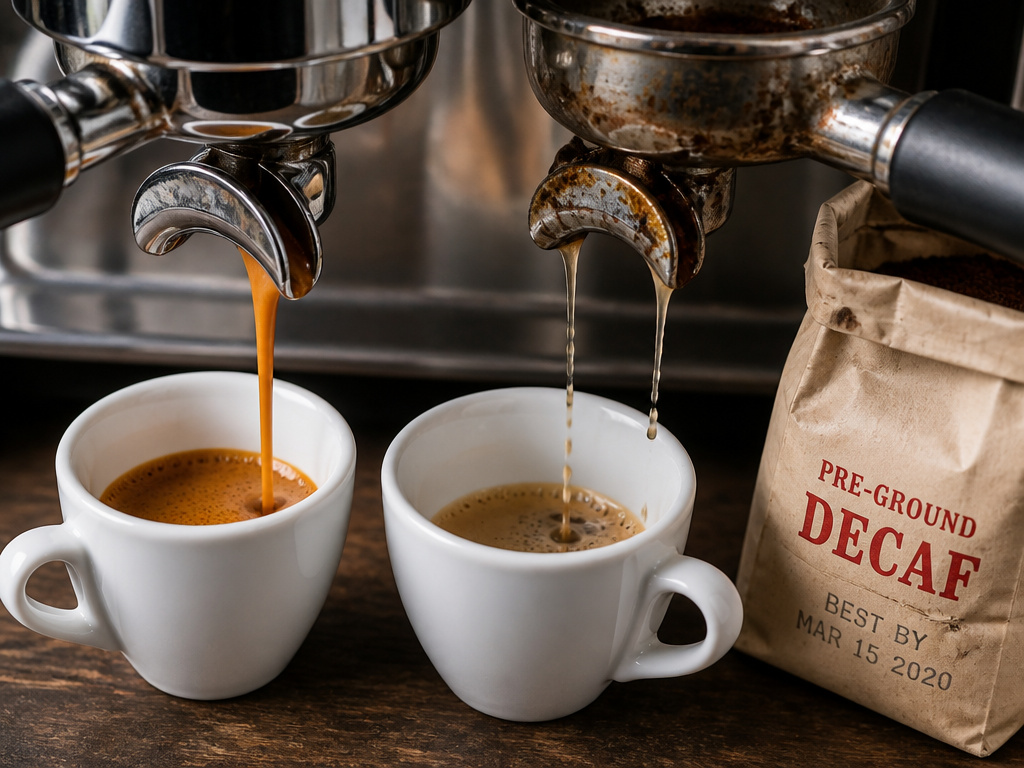
There’s a frustrating irony in the coffee industry. Decaf drinkers are often the purest consumers, they’re there solely for the flavor and ritual, not the caffeine kick. Yet, they are routinely underserved.
James Hoffmann nailed it in a video transcript: “The great frustration of decaf is that decaf drinkers are typically very poorly served by the coffee industry.” Cafe owners often view decaf as a low-volume nuisance. They might keep a single bag of pre-ground decaf for espresso, pulling from it maybe five times a day. That bag oxidizes with every grind, tasting worse by the hour. Roasters, until recently, saw it as a low-margin, low-priority product.
The data shows this is a missed opportunity. The National Coffee Data Trends Spring 2025 report shows decaf’s share of US coffee consumption rose from 9% in 2024 to 12% in 2025. Euromonitor International found 46% of consumers are interested in reducing or eliminating caffeine. The demand is growing, but the quality supply is lagging.
This creates a two-tier experience. If you find a cafe that rotates a fresh, single-origin, water-processed decaf and cleans its grinder regularly, the cup can be revelatory. It can have clarity, sweetness, and complexity. If you’re at a standard shop, you get the stale, bitter shot that cemented decaf’s bad name. Your mission is to find the former. Ask what process they use. Ask about the roast date. Your order tells the market what matters.
How to Brew a Better Cup of Decaf
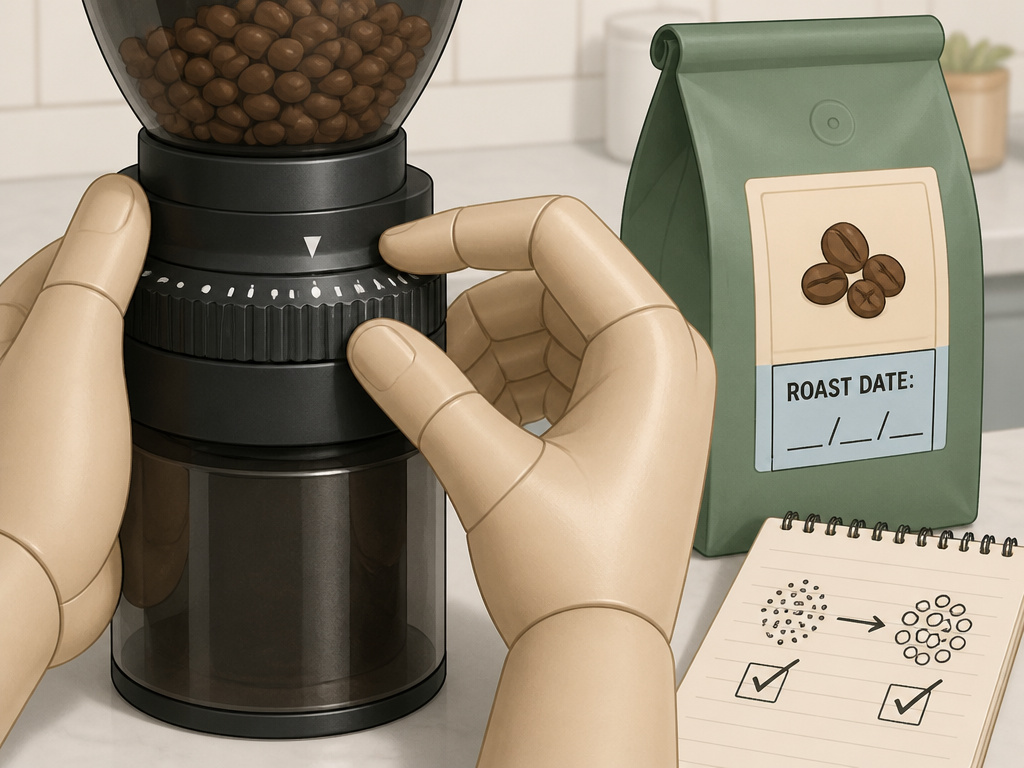
You can’t brew decaf exactly like regular coffee. Its altered bean structure demands slight adjustments. Ignore this, and you’ll blame the decaf instead of your method.
First, grind. Because the cells are more open, water extracts solids faster from decaf. Use a slightly coarser grind setting than you would for a caffeinated coffee of the same roast. This compensates for the faster extraction and prevents a bitter, over-extracted cup. Start with a setting two clicks coarser on your grinder and adjust from there.
Second, freshness is non-negotiable. Buy whole beans from a roaster who prints a roast date, and aim for beans no more than two weeks old. Grind immediately before brewing. Decaf’s staling curve is simply steeper.
Third, consider your brew method. Pour-over methods like the V60 or Chemex are excellent for highlighting decaf’s clarity. The paper filter also catches those diterpenes, addressing the cholesterol concern. For espresso, the faster extraction means your shot time will be shorter if you don’t adjust the grind. Target the same 25-30 second window, but know you’ll need a coarser grind to hit it.
Here are the non-negotiable tools for good decaf at home:
– A burr grinder (adjustable for coarseness)
– An airtight, opaque storage container
– A scale for consistent coffee-to-water ratios
– A gooseneck kettle for precision pouring (if using pour-over)
Skip any of these, and you’re fighting with one hand tied behind your back. The grinder is the most important. Blade grinders create uneven particles that lead to simultaneous under- and over-extraction. With decaf’s narrow margin for error, that guarantees a muddy, unpleasant cup.
Frequently Asked Questions
Is decaf coffee completely caffeine-free?
No. By regulation, it must have less than 0.1% caffeine by weight. In practice, a 240ml cup contains 2 to 15 milligrams of caffeine. A regular cup has 70-140mg. It’s a major reduction, not total elimination.
Does decaf coffee raise blood pressure like regular coffee?
Typically, no. The acute blood pressure spike from coffee is primarily driven by caffeine. Since decaf contains very little, it generally doesn’t have this effect. However, the diterpenes in unfiltered decaf can influence cholesterol, which is a longer-term cardiovascular effect.
Why does decaf sometimes upset my stomach?
Decaf retains coffee’s natural acidity, with a pH around 4.85–5.10. If you have a sensitive stomach or acid reflux, this acidity can still cause discomfort, especially on an empty stomach. It’s not the caffeine; it’s the acids.
Can I drink decaf while pregnant or breastfeeding?
Most health authorities consider moderate decaf consumption safe during pregnancy and breastfeeding because the caffeine content is minimal. However, it’s wise to discuss any caffeine consumption limits with your doctor, as individual tolerance varies.
Why does my decaf taste bitter or flat?
Bitterness usually means over-extraction, your grind is too fine, or your water is too hot. Flatness almost always means stale beans. Decaf goes stale faster than regular coffee. Always check the roast date and store beans in an airtight container.
Is chemical-process decaf safe to drink?
Regulatory bodies deem it safe within strict residue limits (under 2 ppm in the EU). However, solvents like dichloromethane are classified as potential carcinogens. For absolute avoidance of chemical residues, choose water-processed (Swiss Water, Mountain Water) or CO2-processed decaf.
The Bottom Line
People drink decaf for control, over their sleep, their anxiety, their heart rate, or their pregnancy. It’s a choice to keep the ritual while ditching the stimulant. The health landscape is largely positive; you keep the antioxidants and lose most of the caffeine-related side effects.
The challenge is quality. The industry’s historical neglect means you must be a proactive buyer. Seek out roasters who treat decaf as a flagship product, not an afterthought. Insist on water processing and recent roast dates. Adjust your grind coarser.
When you find a good one, it changes the conversation. It’s not a substitute. It’s just coffee.
{
“@context”: “https://schema.org”,
“@type”: “HowTo”,
“name”: “How to Choose and Enjoy Decaf Coffee”,
“totalTime”: “PT5M”,
“step”: [
{
“@type”: “HowToStep”,
“name”: “Identify your reason for choosing decaf”,
“text”: “Determine if you are avoiding caffeine for health, sleep, anxiety, or pregnancy reasons. This will guide your choice of decaffeination method.”
},
{
“@type”: “HowToStep”,
“name”: “Select a water-processed decaf”,
“text”: “Look for bags labeled ‘Swiss Water Process’ or ‘Mountain Water Process’ to avoid chemical solvent residues.”
},
{
“@type”: “HowToStep”,
“name”: “Check the roast date and grind fresh”,
“text”: “Buy decaf beans roasted within the past two weeks and grind them just before brewing to combat faster staling.”
},
{
“@type”: “HowToStep”,
“name”: “Adjust your brew method slightly”,
“text”: “Use a slightly coarser grind setting than for regular coffee to account for decaf’s faster extraction and avoid bitterness.”
},
{
“@type”: “HowToStep”,
“name”: “Store beans in an airtight container”,
“text”: “Keep decaf beans in a sealed, opaque container away from light and heat to preserve their shorter-lived flavors.”
}
]
}
{
“@context”: “https://schema.org”,
“@type”: “FAQPage”,
“mainEntity”: [
{
“@type”: “Question”,
“name”: “Is decaf coffee completely caffeine-free?”,
“acceptedAnswer”: {
“@type”: “Answer”,
“text”: “No. By regulation, it must have less than 0.1% caffeine by weight. In practice, a 240ml cup contains 2 to 15 milligrams of caffeine. A regular cup has 70-140mg. It’s a major reduction, not total elimination.”
}
},
{
“@type”: “Question”,
“name”: “Does decaf coffee raise blood pressure like regular coffee?”,
“acceptedAnswer”: {
“@type”: “Answer”,
“text”: “Typically, no. The acute blood pressure spike from coffee is primarily driven by caffeine. Since decaf contains very little, it generally doesn’t have this effect. However, the diterpenes in unfiltered decaf can influence cholesterol, which is a longer-term cardiovascular effect.”
}
},
{
“@type”: “Question”,
“name”: “Why does decaf sometimes upset my stomach?”,
“acceptedAnswer”: {
“@type”: “Answer”,
“text”: “Decaf retains coffee’s natural acidity, with a pH around 4.85–5.10. If you have a sensitive stomach or acid reflux, this acidity can still cause discomfort, especially on an empty stomach. It’s not the caffeine; it’s the acids.”
}
},
{
“@type”: “Question”,
“name”: “Can I drink decaf while pregnant or breastfeeding?”,
“acceptedAnswer”: {
“@type”: “Answer”,
“text”: “Most health authorities consider moderate decaf consumption safe during pregnancy and breastfeeding because the caffeine content is minimal. However, it’s wise to discuss any caffeine consumption limits with your doctor, as individual tolerance varies.”
}
},
{
“@type”: “Question”,
“name”: “Why does my decaf taste bitter or flat?”,
“acceptedAnswer”: {
“@type”: “Answer”,
“text”: “Bitterness usually means over-extraction, your grind is too fine, or your water is too hot. Flatness almost always means stale beans. Decaf goes stale faster than regular coffee. Always check the roast date and store beans in an airtight container.”
}
},
{
“@type”: “Question”,
“name”: “Is chemical-process decaf safe to drink?”,
“acceptedAnswer”: {
“@type”: “Answer”,
“text”: “Regulatory bodies deem it safe within strict residue limits (under 2 ppm in the EU). However, solvents like dichloromethane are classified as potential carcinogens. For absolute avoidance of chemical residues, choose water-processed (Swiss Water, Mountain Water) or CO2-processed decaf.”
}
}
]
}
