
Vietnamese Iced Coffee | The Dark Robusta Trick You Skip
This post contains affiliate links. As an Amazon Associate, we earn from qualifying purchases.
The dark Robusta trick you skip in Vietnamese iced coffee is using its harsh, bitter notes as a functional counterweight to sweetened condensed milk. Without this robust, high-caffeine bean, the drink loses its defining sharp edge and becomes a flat, overly sweet syrup instead of a balanced beverage.
Vietnamese iced coffee is a strong, sweet, cold drink made by brewing dark roast Robusta coffee through a metal phin filter directly onto sweetened condensed milk, then stirring and pouring it over ice. The defining ratio is about 18 grams of coffee to 120 milliliters of water, yielding a concentrated brew that stands up to the thick sweetness of the milk.
Most guides treat Robusta as a mandatory ingredient. They skip the reason. Robusta’s higher caffeine and bitter, earthy notes are not just tradition, they are a functional counterweight. Without that sharpness, the condensed milk turns the drink into a flat, sugary syrup. You need the bite.
This is the method, the history, and the adjustments that work when your pantry doesn’t match a Hanoi cafe.
Key Takeaways
- The phin filter is a gravity-powered, single-serve brewer invented in France around 1795. It brews slowly, producing a concentrated cup similar to a small espresso shot.
- Traditional Vietnamese coffee uses a dark roast, often pure Robusta, for its bold, bitter profile that balances the intense sweetness of condensed milk.
- Standard brewed coffee methods like a French press or pour-over can substitute for the phin, but the result lacks the specific slow-extraction texture.
- The typical ratio is 18g coffee to 120ml water (about 1:6–1:7). Use 30ml (2 tablespoons) of sweetened condensed milk per serving.
- Non-dairy versions exist using sweetened coconut or oat milk, but the texture and sweetness must mimic the original to work.
What Is Vietnamese Iced Coffee, Exactly?
Cà phê sữa đá is not just coffee with milk and ice. It’s a specific assembly: strong, hot coffee dripped onto cold, sweetened condensed milk, then diluted with ice. The sequence matters. Brewing directly onto the milk pre-mixes them while the coffee is still hot, which dissolves the milk fully. Stirring after creates a homogenous, creamy base before the ice hits.
The drink’s origin is practical. Coffee arrived in Vietnam in 1857 via French missionaries, and the colonial period from 1858 to 1954 made fresh dairy scarce in the tropical climate. Canned condensed milk, which doesn’t require refrigeration, became the default. Robusta coffee was introduced to the region in 1908 and thrived in Vietnam’s climate, shaping the local taste toward a stronger, more bitter bean.
The French drip coffee pot, or phin, was invented around 1795 by François-Antoine-Henri Descroizilles in Rouen. It was popularized after 1800 by Archbishop Jean-Baptiste de Belloy of Paris and patented in 1802. This simple metal filter migrated to Vietnam with colonialism and became the dedicated tool for the drink.
Skipping the historical context misses why the ingredients are locked. Substituting fresh milk or a light roast Arabica changes the drink’s balance fundamentally. It becomes a different beverage.
The Two Pillars: The Phin and Robusta
The phin filter and Robusta beans are non-negotiable in the traditional recipe. Changing one changes the outcome.
How a Phin Filter Works
A phin is a three-part metal filter: a cup-shaped chamber, a press plate with holes, and a lid. Gravity drives the brew, no pumps, no pressure. You add finely ground coffee to the chamber, tamp lightly with the press plate, add hot water, and wait.
The slow drip, typically 4 to 6 minutes for a full chamber, creates a concentrated cup. The extraction is similar to a small espresso shot in strength but different in texture. Because the water passes through the grounds gradually, it pulls more soluble oils and less acidic bite than a fast espresso brewing method.
TL;DR: The phin’s slow gravity drip produces a syrupy, intense coffee that stands up to sweetened condensed milk without turning watery.
Common mistake: Tamping the grounds too firmly in the phin, the water can’t permeate the bed, and the drip stops completely after the first few drops. You get half a cup.
The press plate is for leveling, not compacting. A gentle press that just settles the grounds is enough. If you hear a dense thud when you drop the plate, you’ve over-tamped. The fix is to loosen the grounds with a spoon and restart.
Why Robusta, Not Arabica
Most global coffee is Arabica coffee. It’s prized for its nuanced, sweeter, less bitter flavors. Vietnamese iced coffee traditionally uses Robusta.
Robusta has about double the caffeine of Arabica and a distinctly bitter, earthy, sometimes peanutty profile. In a brewed coffee method like the phin, that bitterness becomes a structural element. It cuts through the thick sweetness of condensed milk. Using a mild Arabica beans in the same recipe makes a cloying, one-dimensional drink, all sugar, no contrast.
Robusta also brews differently. It contains more soluble solids, so the phin’s slow extraction pulls a heavier, more viscous liquid. That viscosity helps the coffee integrate with the condensed milk instead of just floating on top.
| Bean Type | Caffeine Content | Flavor Profile | Best For Traditional Recipe |
|---|---|---|---|
| Robusta | High (~2.7%) | Bitter, earthy, strong | Yes – provides needed contrast |
| Arabica | Lower (~1.5%) | Sweet, nuanced, acidic | No – becomes too sweet |
TL;DR: Robusta’s high caffeine and bitter punch are functional. They balance the condensed milk’s extreme sweetness. Arabica loses that fight.
The Condensed Milk Layer
Sweetened condensed milk is not a simple dairy addition. It’s a preserved, shelf-stable product with about 40% sugar by weight. The standard measure is 30 milliliters, or two tablespoons, per serving.
That sugar level is the point. The milk’s thickness and intense sweetness transform the hot, bitter coffee into a rich, dessert-like drink. Reducing the amount to 15ml, or using plain evaporated milk, misses the target. The coffee will dominate and the drink tastes harsh.
Calorie content is significant. Two tablespoons of condensed milk add about 130 calories and 22 grams of sugar to the coffee. If you’re tracking intake, that’s the trade-off.
I tried cutting the condensed milk to one tablespoon for a month. Every cup tasted unfinished, like bitter coffee with a faint sweet afterthought. Going back to two tablespoons restored the creamy, balanced mouthfeel. The recipe is calibrated.
For a non-dairy version, the substitute must match both texture and sugar level. Sweetened coconut milk or oat milk can work, but they often have a thinner body. You might need to reduce the coffee ratio slightly to compensate.
The Step-by-Step Brew

This isn’t just assembly. The timing between steps changes the drink.
Before you start: The phin chamber and lid get hot. Use a stable surface and avoid touching the metal parts right after brewing. Spilled condensed milk is sticky and hard to clean, place the glass on a flat, dry spot.
-
Add the condensed milk to the glass. Measure 30ml (2 tablespoons) into the bottom of a tall glass or cup. This is the serving vessel. Skipping this step and adding milk later means the hot coffee won’t melt the milk properly, you get a layered, uneven drink.
-
Load the phin. Add 18 to 20 grams of finely ground dark roast Robusta coffee into the filter chamber. The grind should be similar to espresso fine, but not powdery. Use the press plate to tamp lightly, just enough to level the bed, not compress it. Over-tamping stops the drip.
-
Bloom and fill. Pour a small amount of hot water (just enough to wet the grounds) into the chamber. Wait for the first drip to appear through the press plate into the glass below. This bloom ensures even extraction. Once you see that first drop, fill the chamber to the top with near-boiling water. Close the lid.
-
Let it drip. Place the phin on top of the glass. The full brew takes 4 to 6 minutes. Walk away. If you rush it by lifting the phin to check, you break the seal and the drip can stall.
-
Stir and ice. Once the dripping stops and the chamber is empty, remove the phin. Stir the coffee and condensed milk together vigorously for about 10 seconds until fully combined and creamy. Then pour the mixture over a full glass of ice. Adding the ice last preserves the cold temperature without diluting the blend prematurely.
The stir is critical. It incorporates the milk into the coffee while both are still warm. If you add ice first and then stir, the drink cools too fast and the milk doesn’t integrate fully. You’ll see streaks.
Adjustments and Modern Twists
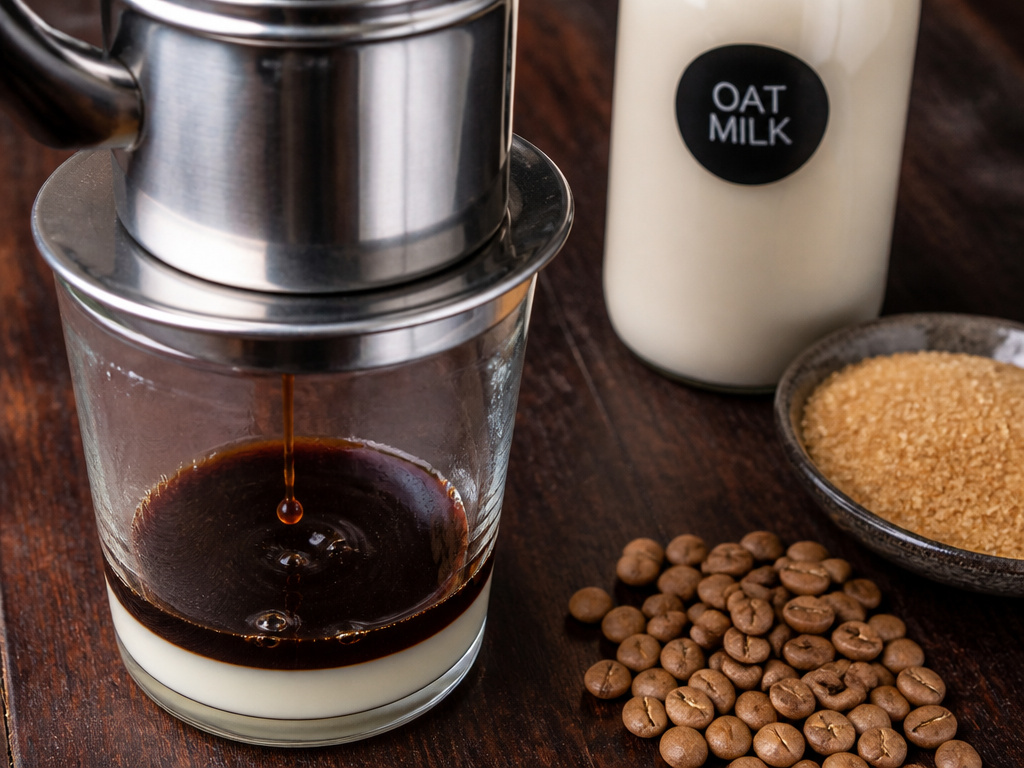
The traditional recipe is a specific formula. Changing any component creates a different drink, but some changes work.
Using Arabica or a Blend
A specialty coffee approach uses medium-roast Arabica coffee beans or a quality Robusta-Arabica blend. This results in a sweeter, more nuanced cup. You must then adjust the condensed milk ratio, often reducing it to 20ml, to avoid overpowering the coffee’s subtler notes.
This swap is for palates that find traditional Robusta too challenging. It’s a valid adaptation, but it’s not cà phê sữa đá. It’s a cousin.
Non-Dairy and Sugar Variations
For a non-dairy version, sweetened coconut milk or oat milk are the main substitutes. They provide similar thick texture and sweet flavor. Almond milk often lacks the viscosity. If you use a plain non-dairy milk, you’ll need to add a sweetener for coffee like brown sugar to match the sugar level.
Some modern recipes add a pinch of salt to the condensed milk to enhance sweetness and reduce perceived bitterness. This trick works, but it’s a personal preference layer on top of the original.
Common mistake: Adding chicory to the coffee grounds. Vietnamese coffee in Vietnam does not use chicory. If chicory is used, it creates a different drink, more earthy, less clean. It’s a Louisiana-style blend, not a Vietnamese one.
The Hot Version (Cà Phê Sữa Nóng)
The phin filter is not exclusively for iced coffee. It’s also used for hot Vietnamese coffee. The process is identical, except you serve the stirred coffee-milk blend in a warm cup without ice. The heat amplifies the aroma, but the sweetness can feel more intense.
Frequently Asked Questions
Can I make Vietnamese iced coffee without a phin filter?
Yes, but the result is different. Brew a strong, dark roast coffee using a brewed coffee methods like a French press or pour-over maker. Aim for a concentrated cup. Then mix it with condensed milk and ice. You’ll miss the slow-extraction texture and some of the oils, but it’s a workable substitute.
What’s the best coffee brand for Vietnamese iced coffee?
Traditional brands like Trung Nguyen Coffee or Highlands Coffee use dark roast Robusta blends. For a single-origin coffees approach, look for a high-quality, dark roast Vietnamese Robusta. Win Coffee Supply True Grit is a popular choice among modern cafes.
Why is condensed milk used instead of fresh milk?
Historical scarcity. During the French colonial period, fresh milk was hard to store in Vietnam’s tropical climate. Canned condensed milk, which is shelf-stable, became the standard. It also provides a unique, intense sweetness that fresh milk cannot match.
Can I reduce the sweetness?
Yes. Adjust the amount of sweetened condensed milk to your taste. Some prefer 15ml for a more balanced brew, while others keep the full 30ml for an indulgent drink. Reducing it shifts the balance toward the coffee’s bitterness.
Is Vietnamese iced coffee very high in caffeine?
Yes. Robusta beans contain roughly twice the caffeine of Arabica varieties. A typical phin brew uses 18-20g of grounds, yielding a high-caffeine concentrate. It’s stronger than most standard brewed coffee servings.
The Bottom Line
Vietnamese iced coffee is a drink built from historical necessity and ingredient synergy. The phin’s slow drip, Robusta’s bitter punch, and condensed milk’s thick sweetness are three parts of one system. Changing one part changes the drink.
You can substitute Arabica flavor for a milder cup, or use dairy alternatives like sweetened oat milk. You can even brew it without a phin. But the original combination exists because each element solves a problem the others create. The bitterness cuts the sugar. The slow extraction thickens the coffee. The shelf-stable milk survives the climate.
That’s why it works.
{
“@context”: “https://schema.org”,
“@type”: “HowTo”,
“name”: “How to Make Vietnamese Iced Coffee”,
“totalTime”: “PT10M”,
“tool”: [
{
“@type”: “HowToTool”,
“name”: “Vietnamese phin filter”
},
{
“@type”: “HowToTool”,
“name”: “Tall glass or cup”
},
{
“@type”: “HowToTool”,
“name”: “Ice”
},
{
“@type”: “HowToTool”,
“name”: “Sweetened condensed milk”
}
],
“supply”: [
{
“@type”: “HowToSupply”,
“name”: “Dark roast Robusta coffee (18-20g)”
},
{
“@type”: “HowToSupply”,
“name”: “Hot water (near boiling)”
}
],
“step”: [
{
“@type”: “HowToStep”,
“name”: “Add condensed milk to glass”,
“text”: “Place 2 tablespoons (about 30ml) of sweetened condensed milk into the bottom of a tall glass.”
},
{
“@type”: “HowToStep”,
“name”: “Load and tamp the phin”,
“text”: “Add 18-20g of finely ground dark roast Robusta coffee to the phin chamber. Use the press plate to tamp the grounds lightly, just enough to level the bed.”
},
{
“@type”: “HowToStep”,
“name”: “Bloom and fill”,
“text”: “Pour a small amount of hot water onto the grounds to start the bloom. Once the first drip appears, fill the phin chamber to the top with near-boiling water.”
},
{
“@type”: “HowToStep”,
“name”: “Wait for the drip”,
“text”: “Place the phin on top of the glass. Let the coffee drip slowly onto the condensed milk. The full brew takes 4-6 minutes.”
},
{
“@type”: “HowToStep”,
“name”: “Stir and ice”,
“text”: “Once brewing is complete, stir the coffee and condensed milk together vigorously until fully combined. Pour the mixture over a full glass of ice.”
}
]
}
{
“@context”: “https://schema.org”,
“@type”: “FAQPage”,
“mainEntity”: [
{
“@type”: “Question”,
“name”: “Can I make Vietnamese iced coffee without a phin filter?”,
“acceptedAnswer”: {
“@type”: “Answer”,
“text”: “Yes, but the result is different. Brew a strong, dark roast coffee using a brewed coffee methods like a French press or pour-over maker. Aim for a concentrated cup. Then mix it with condensed milk and ice. You’ll miss the slow-extraction texture and some of the oils, but it’s a workable substitute.”
}
},
{
“@type”: “Question”,
“name”: “What’s the best coffee brand for Vietnamese iced coffee?”,
“acceptedAnswer”: {
“@type”: “Answer”,
“text”: “Traditional brands like Trung Nguyen Coffee or Highlands Coffee use dark roast Robusta blends. For a single-origin coffees approach, look for a high-quality, dark roast Vietnamese Robusta. Win Coffee Supply True Grit is a popular choice among modern cafes.”
}
},
{
“@type”: “Question”,
“name”: “Why is condensed milk used instead of fresh milk?”,
“acceptedAnswer”: {
“@type”: “Answer”,
“text”: “Historical scarcity. During the French colonial period, fresh milk was hard to store in Vietnam’s tropical climate. Canned condensed milk, which is shelf-stable, became the standard. It also provides a unique, intense sweetness that fresh milk cannot match.”
}
},
{
“@type”: “Question”,
“name”: “Can I reduce the sweetness?”,
“acceptedAnswer”: {
“@type”: “Answer”,
“text”: “Yes. Adjust the amount of sweetened condensed milk to your taste. Some prefer 15ml for a more balanced brew, while others keep the full 30ml for an indulgent drink. Reducing it shifts the balance toward the coffee’s bitterness.”
}
},
{
“@type”: “Question”,
“name”: “Is Vietnamese iced coffee very high in caffeine?”,
“acceptedAnswer”: {
“@type”: “Answer”,
“text”: “Yes. Robusta beans contain roughly twice the caffeine of Arabica varieties. A typical phin brew uses 18-20g of grounds, yielding a high-caffeine concentrate. It’s stronger than most standard brewed coffee servings.”
}
}
]
}
