
Learn What Thai Iced Coffee Is & Why It’s So Irresistible
This post contains affiliate links. As an Amazon Associate, we earn from qualifying purchases.
Thai iced coffee is a specific street drink defined by three elements: a dark, potent Oliang blend brewed through a cloth filter, sweetened with condensed milk as a foundational syrup, and finished with a separate float of evaporated milk over ice. This creates its layered, nutty, and creamy signature.
Thai iced coffee is a specific street-style drink from Thailand, built on a strong, often blended coffee base brewed through a cloth filter, sweetened primarily with condensed milk, and finished with a float of evaporated milk over ice. It’s not just coffee with milk and sugar. The formula hinges on three non-negotiable elements: a dark, potent brew (traditionally from a Robusta-based Oliang blend), the viscous sweetness of condensed milk, and the separate, creamy layer of evaporated milk.
Most recipes that call it “Thai” miss at least one of those pillars. They use a standard Arabica bean blend, skip the evaporated milk float, or treat condensed milk as a mere sweetener instead of the foundational syrup. That gets you a sweet iced coffee, but not the layered, potent, and distinctly nutty gafae yen you’d find on a Bangkok sidewalk.
This guide breaks down what defines the drink, from its historical roots in northern Thai coffee cultivation to the exact ratios that balance its intense bitterness against its cloying sweetness. You’ll learn why the traditional blend includes grains, how to substitute if you can’t find Oliang powder, and the single step that prevents the whole thing from tasting like sugared water.
Key Takeaways
- Authentic Thai iced coffee uses a specific blended coffee powder called Oliang, which often contains roasted corn, soybeans, and sesame seeds alongside dark roast coffee.
- Robusta beans are the traditional choice, packing nearly twice the caffeine of Arabica and providing the bold, bitter base that stands up to the sweet milk.
- Sweetened condensed milk is the primary sweetener and texture agent; evaporated milk is poured on top as a separate, creamy layer and should not be stirred in.
- Brewing is typically done with a Thai cloth filter (a tung tom kah fae), and the coffee is tasted before adding ice to ensure it’s slightly too strong and sweet.
- A tiny pinch of salt is a common vendor trick to brighten the sweetness and cut the cloying edge of the sugar.
What Makes Thai Iced Coffee Different?
It’s the blend, the milk, and the method. Most iced coffee drinks start with a familiar brewed coffee methods. Thai iced coffee starts with Oliang.
Oliang isn’t pure coffee. Traditional blends, like the ones still sold in Thai markets, mix dark roast coffee with roasted corn, soybeans, and sometimes sesame seeds or rice. The corn adds a smoky, earthy note. The soybeans contribute a nutty, almost savory depth. This creates a flavor profile that’s more complex than pure coffee bitterness, it’s a foundation that can handle the heavy sweetness coming next.
The traditional Oliang blend for Thai iced coffee contains 50% coffee, 25% corn, 20% soybean, and 5% sesame seeds. This grain-and-bean mixture brews into a dark, strong concentrate with distinct smoky and nutty notes that define the drink’s character beyond mere coffee bitterness.
The milk protocol is just as specific. Sweetened condensed milk is the sweetener. It’s stirred into the hot coffee to form a syrupy base. Evaporated milk is the finisher. It’s poured over the top of the ice-filled glass to create a creamy, floating layer. Stirring it in ruins the visual gradient and muddies the separate texture experience.
The brewing method is usually a cloth filter, a simple cotton bag suspended over a glass. It’s a slow, gentle drip that doesn’t over-extract. You steep the Oliang powder in near-boiling water for three to five minutes. Some street vendors perform a show by pouring the brew back through the filter multiple times, but that’s for theater. Steeping works.
TL;DR: Thai iced coffee is defined by its Oliang coffee blend (coffee + grains), its two-stage milk use (condensed for sweetness, evaporated for cream), and its cloth-filter brew.
The Traditional Oliang Blend
You can’t talk about the drink without the powder. If you buy a bag labeled “Thai coffee powder” or “Oliang,” you’re getting a pre-mixed blend.
The exact ratios vary by brand, but the principle is constant: coffee plus other stuff. One common formula is 70-80% dark roasted coffee beans (often Robusta), 10-15% roasted corn, 5-10% roasted soybeans, and a touch of sesame seeds or rice. Another cited traditional mix is 50% coffee, 25% corn, 20% soybean, and 5% sesame.
Why grains? They stretch the coffee supply historically, but they also change the flavor. Corn introduces a toasty, almost cereal-like note. Soybeans bring a rounded, nutty quality that stands up to milk. Sesame seeds add a faint aromatic oiliness. This isn’t a gimmick, it’s the flavor backbone.
| Blend Component | Traditional Percentage | Flavor Contribution |
|---|---|---|
| Dark Roast Coffee (often Robusta) | 50–80% | Bold bitterness, high caffeine |
| Roasted Corn | 10–25% | Smoky, earthy depth |
| Roasted Soybeans | 5–20% | Nutty, savory roundness |
| Sesame Seeds or Rice | 0–5% | Light aromatic finish |
If you can’t find Oliang powder, you can approximate it. Use a very dark roast coffee bean blend, something with a chocolatey, low-acidity profile. Grind it fine, almost like an espresso grind. You won’t get the grain notes, but you’ll get the strength.
Common mistake: Using a light roast single-origin coffee as your base, the bright acidity gets completely flattened by the condensed milk, leaving a muddy, sweet cup without the bold backbone. Go dark, and go blended.
The choice between Robusta beans and Arabica beans matters. Robusta has nearly twice the caffeine as Arabica and a stronger, more bitter, sometimes rubbery taste. It’s the traditional choice because that aggressive bitterness balances the intense sweetness of condensed milk. Arabica can work, especially a dark roast Sumatra or French roast, but it will be less punchy. You’ll miss the traditional kick.
Why Robusta Beans Are the Traditional Choice
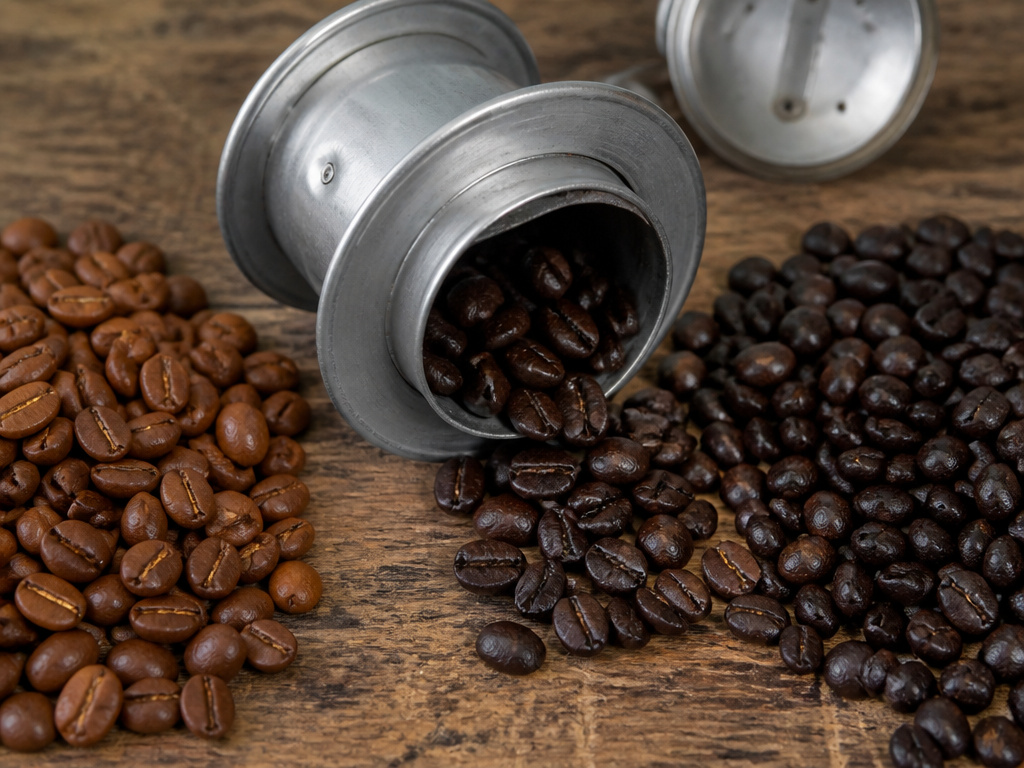
Caffeine and cost. Robusta plants are easier to grow and yield more beans per hectare than delicate Arabica beans. In Thailand, especially in the northern regions like Chiang Mai where coffee cultivation expanded in the early 20th century, Robusta was the accessible crop.
The caffeine content is the other half. Robusta beans contain roughly 2.2–2.7% caffeine, while Arabica sits around 1.2–1.5%. A typical glass of Thai iced coffee, brewed with Robusta, delivers about 150–200mg of caffeine. That’s a solid jolt.
The flavor profile is blunt: bitter, earthy, sometimes with a peanutty or rubbery note. It lacks the floral, fruity complexity of a high-quality single-origin Arabica. But in Thai iced coffee, that complexity would be wasted. The condensed milk and sugar dominate the mid-palate. You need a base that pushes through, a bitter wall that the sweetness scales. Robusta does that.
Arabica can substitute if Robusta’s intensity isn’t for you. Use a dark, dark roast, something that borders on burnt. A French roast or an Italian roast. The extended roasting kills acidity and develops bitter compounds that mimic Robusta’s punch. It’s a workable swap, but know you’re moving away from the street-standard version.
TL;DR: Robusta provides the high-caffeine, bitter backbone that stands up to the sweet milk. Arabica substitutes require a very dark roast to approximate the needed strength.
The Two-Milk System: Condensed and Evaporated
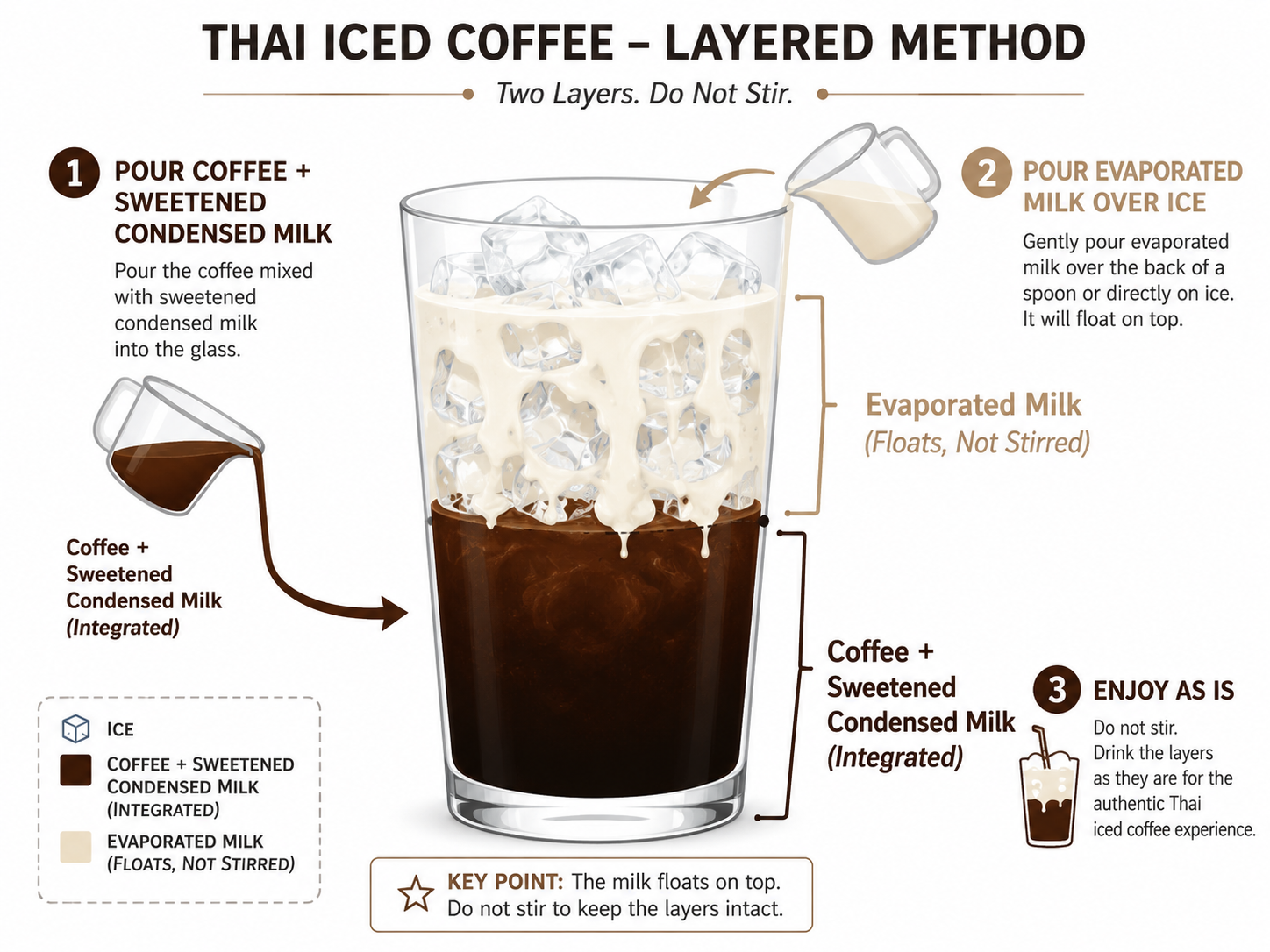
This is where most homemade versions fail. They use one milk, or they mix the two together. The street-style drink uses two, in two distinct roles.
Sweetened condensed milk is the sweetener and the body. It’s thick, sugary, and sticky. You add it to the hot coffee and stir. It integrates completely, creating a syrupy, sweet base. The viscosity is important, it helps the drink cling to the ice rather than instantly dilute.
Evaporated milk is the cream and the visual layer. It’s unsweetened, thinner, and poured over the top of the ice-filled glass after the sweetened coffee is added. It floats and cascades down, creating a white waterfall effect against the dark coffee. You don’t stir it in. The contrast, sweet, thick coffee below, plain creamy milk above, is part of the experience.
| Milk Type | Role in Thai Iced Coffee | What Happens If You Swap It |
|---|---|---|
| Sweetened Condensed Milk | Primary sweetener and syrup base; integrates fully with coffee | Using plain sugar or a brown sugar sweetener results in a thinner, less viscous drink that dilutes faster on ice. |
| Evaporated Milk | Creamy top layer; poured over ice and not stirred | Substituting with fresh milk or a plant-based milk in coffee like almond milk mixes into the coffee, losing the layered effect and texture contrast. |
Why not just use heavy cream or half-and-half? The calorie content of milk and fat profile are different. Evaporated milk has a cooked, slightly caramelized flavor from the reduction process. It’s also shelf-stable, which mattered for street vendors. Heavy cream would be too rich and would likely mix in, not float.
If you’re watching calories, note that full-fat condensed milk is the main sugar source. A single tablespoon has about 60 calories and 10g of sugar. The evaporated milk float adds another 40 calories or so. It’s a dessert drink.
How to Make Thai Iced Coffee

You need the right tools: a Thai cloth filter (tung tom kah fae) is ideal, but a standard coffee filter or even a French press works. A heat-resistant glass for mixing. A tall glass for serving.
The process is straightforward, but one step is non-negotiable.
-
Brew the coffee strong. Use 3 tablespoons of Oliang powder (or a very fine grind of dark roast coffee) per ¾ cup of near-boiling water. Steep for 3–5 minutes. If using a cloth filter, let it drip slowly. If using a standard filter, just let it sit. The goal is a concentrated, almost syrupy brew.
- Skip this strength, and the ice will turn your drink into weak, sweet water.
-
Mix the sweet base in the serving glass. Add 2 tablespoons of sweetened condensed milk, 2 teaspoons of sugar, and a pinch of salt to your tall glass. The salt is a vendor trick, it brightens the sweetness and cuts any cloying edge. Stir these together before adding the coffee.
-
Combine and taste before ice. Pour the hot coffee concentrate into the glass with the sweet base. Stir vigorously until everything is dissolved and integrated. Taste it now. It should be a little too strong and a little too sweet. That’s correct. The ice will dilute it to perfect balance.
- If you taste it after adding ice, you can’t adjust the sweetness effectively. The sugar won’t dissolve in the cold liquid.
-
Fill a new glass with ice. Pack it full. The coffee mixture is warm and will melt a lot of ice quickly, so you need a full glass to keep it cold.
-
Pour the sweetened coffee over the ice.
-
Top with evaporated milk. Slowly pour evaporated milk over the top. Let it cascade down the sides. Do not stir. The layered look is traditional.
-
Serve immediately. The drink is meant to be enjoyed as the evaporated milk slowly mixes with the melting ice and coffee.
I tried skipping the pre-ice taste step once, thinking I could just add more sugar to the cold drink. The granules just sat at the bottom of the glass. The first sip was fine, the last sip was a sugary sludge. Now I always taste the hot, sweet mixture and adjust the sugar or salt there.
That’s the core method. Variations exist, some vendors add a drop of orange blossom water, a very non-traditional twist. Some use a strong coffee base made from instant coffee for sheer speed. But the cloth filter, the two-milk system, and the Oliang blend are the pillars.
Common Variations and Modern Twists
The street-standard version is robust, but home baristas and cafes play with the formula.
Spices. Cardamom is often mentioned as an optional add-in. It’s not in the traditional Oliang blend spec, but a pinch ground into the coffee powder adds a fragrant, almost chai-like note. It works well with the nutty soybean background.
Instant coffee. Some quick versions, especially in Vietnamese-inspired recipes, use a tablespoon of instant coffee mixed directly with condensed milk and water. It’s fast, and it creates a strong espresso-like punch without brewing. It’s not traditional Thai, but it’s a valid shortcut for a similar strong-sweet-iced profile.
Dairy-free versions. Substituting the milks is tricky. Condensed milk has a unique texture. Some use a thick non-dairy creamer or a coconut cream condensed milk alternative. For the evaporated milk float, a thick almond milk or oat milk can mimic the layer, but it will mix in faster.
Sugar swaps. Some recipes use brown sugar syrup instead of granulated sugar for a deeper caramel note. It complements the roasted corn in the Oliang blend.
The baseline, though, is the Oliang, the two milks, and the cloth filter. Start there before branching out.
Frequently Asked Questions
Is Thai iced coffee the same as Vietnamese iced coffee?
No. Vietnamese iced coffee (cà phê sữa đá) uses a metal phin filter for a slow drip, typically with dark roast Robusta, and is sweetened solely with sweetened condensed milk, no evaporated milk float. It’s a stronger, more concentrated coffee shot. Thai iced coffee uses a blended coffee powder, often includes grains, and employs both condensed and evaporated milk.
Can I use regular coffee instead of Oliang powder?
You can approximate it with a very dark roast, finely ground coffee bean blend. A dark French roast or Italian roast will provide the needed bitter backbone. You’ll lose the smoky, nutty grain notes, but the drink will still be sweet and strong.
Why is there salt in Thai iced coffee?
tiny pinch of salt acts as a flavor enhancement trick. It counteracts bitterness and prevents the sweetness from becoming too cloying. It’s a common vendor practice, not always listed in recipes.
How much caffeine is in Thai iced coffee?
Using the traditional Robusta-based Oliang blend, a typical glass contains roughly 150–200mg of caffeine. That’s significantly higher than a standard cup of brewed coffee due to Robusta’s higher caffeine per volume and the concentrated brewing method.
Can I make Thai iced coffee without a cloth filter?
Yes. A standard coffee filter, a French press, or even a fine-mesh sieve works. The goal is a slow, gentle extraction without over-agitating the grounds. Avoid an espresso machine, the pressure will over-extract the blend and create harsh bitterness.
The Bottom Line
Thai iced coffee isn’t just coffee with milk and sugar. It’s a specific street drink built on a blended coffee powder containing grains, sweetened with condensed milk into a syrup, and finished with a float of evaporated milk. The traditional Oliang blend of coffee, corn, soybeans, and sesame seeds gives it a smoky, nutty depth that pure coffee doesn’t have. Robusta beans provide the caffeine kick and bitter base that stands up to the sweetness.
If you’re making it at home, focus on those three pillars: a dark, strong brew (Oliang or a dark roast substitute), the two-milk system (condensed for sweetness, evaporated for cream), and tasting the mixture before it hits the ice. Skip any one, and you get a sweet iced coffee, not gafae yen.
