
What Is a Mocha Coffee: The Perfect 1:1:4 Recipe Guide
A mocha coffee is a chocolate-flavored espresso drink made with a 1:1:4 ratio of espresso, chocolate, and steamed milk. This specific recipe balances the coffee’s bitterness with the chocolate’s sweetness, creating a velvety, integrated beverage rather than a simple, cloying dessert cup. The classic version uses a shot of espresso, chocolate syrup or powder, and textured milk.
A mocha coffee is an espresso-based drink that combines a shot of espresso, chocolate (in syrup, powder, or melted form), and steamed milk, often topped with whipped cream. It’s essentially a chocolate-flavored latte. The name has a double origin, referencing both the historic port of Mokha in Yemen and the chocolate component added to the coffee.
Most people think a mocha is just a sweet, simple dessert coffee. They miss the balance. A bad mocha is a cloying, one-note cup where the chocolate fights the espresso. A good one is a velvety, integrated beverage where the coffee’s bitterness and the chocolate’s sweetness complement each other.
This guide walks through what a mocha actually is, where the name came from, the precise ratio that works, and how to build one correctly so the chocolate doesn’t sink to the bottom.
Key Takeaways
- The name “mocha” originally referred to coffee beans from Yemen with natural chocolatey notes; the drink name evolved from combining those beans, and later, added chocolate, with coffee.
- For a balanced drink, use a 1:1:4 ratio: 1 part espresso, 1 part chocolate sauce, 4 parts steamed milk.
- Always mix your chocolate into the hot espresso before adding steamed milk. Adding it after the milk creates a separated, grainy layer at the bottom.
- A “white mocha” substitutes white chocolate for dark or milk chocolate, resulting in a creamier, less cocoa-forward flavor.
- The caffeine content matches your base: a standard mocha made with one espresso shot has roughly the same caffeine as a straight shot of espresso.
Where the Name “Mocha” Actually Comes From
The word has a journey. Before the 1900s, “Mocha” didn’t mean a drink. It named a specific coffee bean. These beans were shipped from the port city of Al-Makha (anglicized to Mokha) in Yemen. They were from the Coffea arabica species and were prized for their complex flavor, which often had natural chocolatey, earthy, or even wine-like notes.
The port was a dominant coffee trading hub from the 15th to the 17th centuries. Coffee from this region became so famous that “Mocha” became synonymous with high-quality coffee in general. This is the first layer of the name.
The second layer is chocolate. In the 17th century, chocolate arrived in Italy. By the 18th century, Turin cafes were serving bicerin, a layered drink of coffee, chocolate, and cream. This is a direct ancestor of the modern mocha. As chocolate became a common coffee additive in the West, the association between the chocolate-flavored bean and the chocolate-flavored drink blurred. By the early 20th century, the meaning had fully shifted. A 1920 recipe for “Chilled Mocha” explicitly combined milk, coffee, and cocoa.
So, a mocha is named for a Yemeni coffee port because of the bean’s flavor, and then the drink physically incorporated the flavor it was named after. It’s a semantic loop.
TL;DR: “Mocha” first meant Yemeni coffee beans with chocolatey notes; the drink name came later when people started physically adding chocolate to their coffee.
The Core Recipe: Espresso, Chocolate, Milk
A mocha has three non-negotiable components. Getting the ratio and quality of each right is what separates a cloying mess from a balanced drink.
For a balanced mocha, use a 1:1:4 ratio: 1 part espresso, 1 part high-quality chocolate sauce, and 4 parts steamed milk. This ensures the chocolate complements the coffee without overpowering its notes.
Espresso: This is the foundation. Use a freshly pulled single (1 oz) or double (2 oz) shot. The intense concentration and crema of espresso can stand up to the sweetness of chocolate. Strong brewed coffee can work in a pinch, but the drink will taste thinner and more like hot chocolate with coffee flavoring. The caffeine hit will also be different, matching a standard cup of drip coffee instead of a concentrated espresso shot.
Chocolate: This is where most home attempts fail. You have three main options, ranked by integration quality:
1. High-quality chocolate sauce or syrup: The best choice for consistency and ease. It mixes readily with hot espresso. Look for a sauce with cocoa solids listed high in the ingredients, not just sugar and water.
2. Melted baking chocolate: Offers the richest, purest chocolate flavor. The downside is it can seize or become grainy if not melted smoothly with a bit of hot milk or espresso first. It’s a finicky step.
3. Cocoa powder: The most challenging. It must be dissolved into a paste with a small amount of hot water or espresso first, or it will float on top in a dry, bitter layer. Some baristas add a dusting on top of the milk foam for aroma.
Steamed Milk: Aim for a texture identical to a latte, silky, velvety microfoam, not the thick, dry foam of a cappuccino. The milk’s creaminess is the glue that marries the espresso and chocolate. The temperature matters. Too cool, and the chocolate won’t stay integrated; too hot (above 160°F/71°C), and the milk scalds, adding a burnt taste that clashes with the chocolate.
| Ingredient | Role in the Drink | Common Pitfall |
|---|---|---|
| Espresso | Provides the coffee base, bitterness, and caffeine structure. | Using weak coffee turns the drink into a sweet, flat chocolate milk. |
| Chocolate | Adds sweetness, body, and the defining flavor note. | Using low-quality syrup creates a synthetic, overpowering sweetness. |
| Steamed Milk | Adds creaminess, dilutes strength to a drinkable level, and carries the flavors. | Steaming to a cappuccino foam creates a dry, separated layer on top. |
TL;DR: One shot of espresso, an equal amount of good chocolate sauce, and four times that amount of properly steamed milk. That’s the target.
How to Make a Mocha at Home (The Right Way)
This is the sequence that prevents a layered, broken drink. The biggest mistake is adding ingredients in the wrong order.
Before you start: Your espresso machine’s steam wand is dangerously hot. Keep your hands clear, purge it before and after use, and wipe it down immediately with a damp cloth. Scalded milk smells like failure and burnt skin hurts.
- Pull your espresso shot directly into your serving cup. This heat is critical for the next step. Letting the espresso sit and cool is the first misstep.
- Immediately add the chocolate to the hot espresso. Use about 1 ounce (30ml) of sauce for a single shot. Stir it aggressively with a small whisk or spoon until it’s completely dissolved and the mixture is homogenous. You should see no separate streaks of dark syrup. This step is non-negotiable. If you add chocolate after the milk, it sinks and forms a sludge layer at the bottom that no amount of stirring will fully fix.
- Steam your milk. Pour cold milk into your pitcher. Submerge the steam wand tip just below the surface, turn on the steam, and stretch the milk for a few seconds to incorporate air. Then sink the wand deeper to create a whirlpool and heat the milk to around 150°F (65°C). You’re aiming for a quiet, consistent hiss and roll, not loud slurps. The texture should be shiny and liquid, with tiny bubbles.
- Pour the steamed milk into the espresso-chocolate mixture. Pour steadily, holding back the foam with your spoon initially to integrate the liquids, then top with the remaining foam.
- Finish. Top with whipped cream, a drizzle of chocolate sauce, or a light dusting of cocoa powder. For a spiced coffee drink variation, a pinch of cinnamon on top works.
Common mistake: Adding chocolate syrup after the steamed milk, the syrup sinks and cools, forming a sticky, undissolved layer at the bottom of the cup. You’ll taste plain milk and espresso first, then a sickly-sweet chocolate punch at the end.
The whole process takes about five minutes once your machine is hot. The cleanup, wiping the steam wand and rinsing the pitcher, takes thirty seconds. Skip that, and you’ll spend ten minutes chipping dried milk off the wand later.
Mocha vs. Other Espresso Drinks
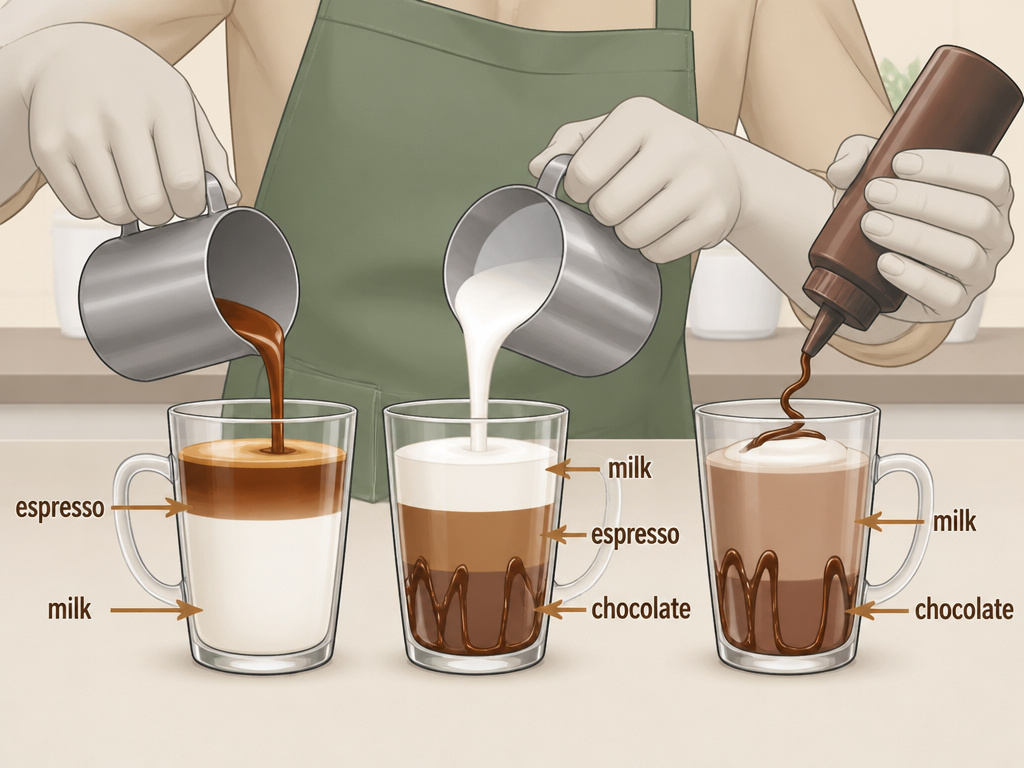
It’s easy to get lost in the espresso menu. A mocha sits in a specific spot between a latte and hot chocolate.
Mocha vs. Latte: A latte is espresso and steamed milk, often with a thin layer of foam. A mocha is, functionally, a latte with chocolate added. The chocolate changes everything: it adds sweetness, body, and a dominant flavor note that masks some of the espresso’s subtler characteristics. The caffeine content in cappuccinos and lattes is comparable to a mocha, since they all start with the same espresso base.
Mocha vs. Cappuccino: A cappuccino has equal parts espresso, steamed milk, and thick, dry milk foam. It’s a textural experience focused on the espresso. A mocha has more liquid milk and is defined by flavor (chocolate), not texture. You wouldn’t typically find chocolate in a traditional cappuccino, though some cafes dust cocoa on top.
Mocha vs. Hot Chocolate: Hot chocolate is made with melted chocolate or cocoa powder and steamed milk or water. It contains no coffee. A mocha is a coffee drink first, with chocolate as a modifier. The espresso provides a bitter backbone that cuts the sweetness.
Think of it this way: if a latte is coffee with milk, and hot chocolate is chocolate with milk, a mocha is the Venn diagram overlap. It’s why people who find straight coffee too bitter or black coffee too intense often gravitate to it.
Popular Variations and Twists
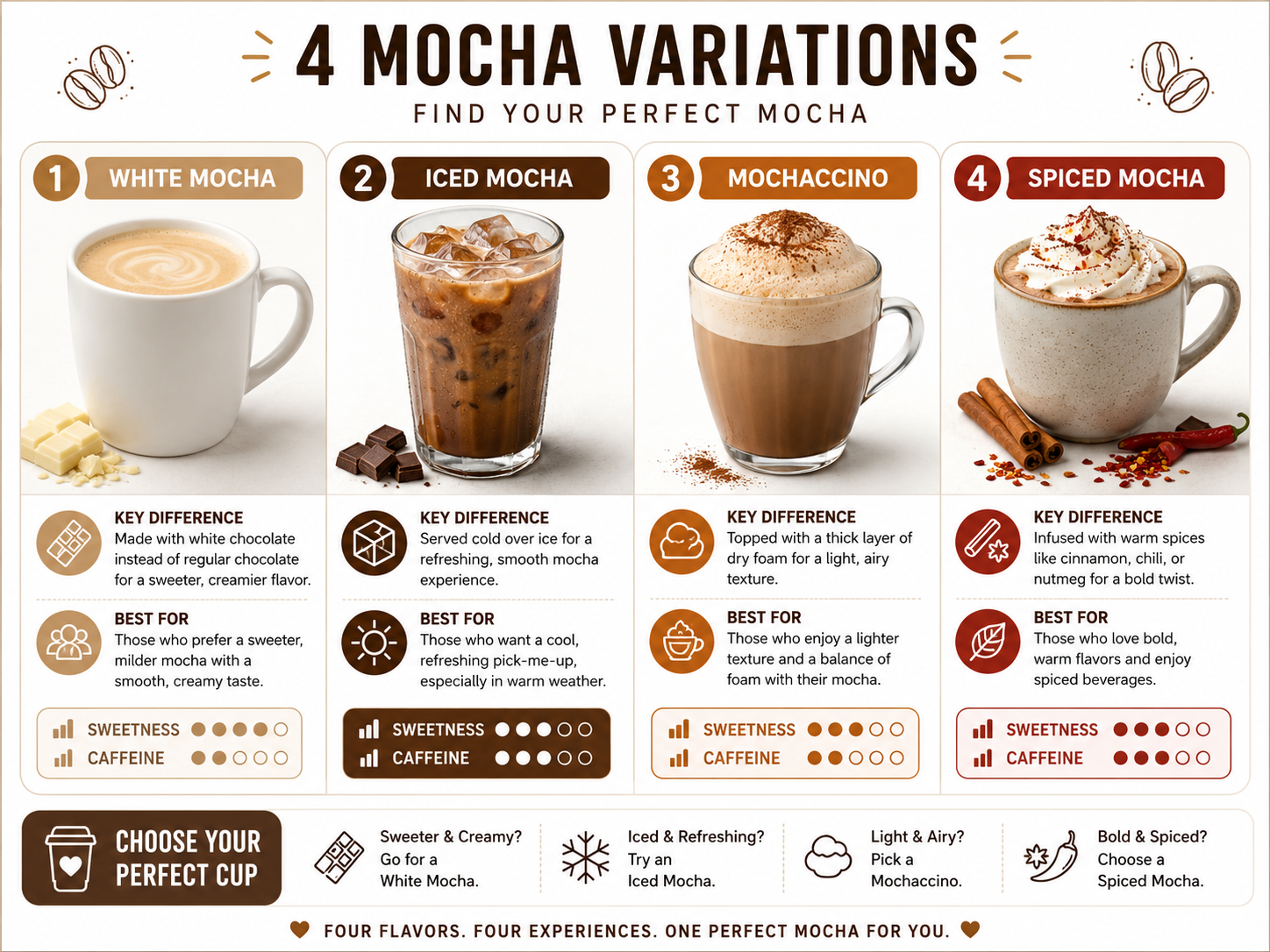
The basic formula invites experimentation. Once you know the rule, you can break it.
White Mocha: This swaps dark or milk chocolate for white chocolate. White chocolate contains cocoa butter but no cocoa solids, so the flavor is creamier, richer, and less cocoa-forward. It’s significantly sweeter. Use the same 1:1:4 ratio, but with a high-quality white chocolate sauce.
Mochaccino: This term is fuzzy. In some places, it’s synonymous with a mocha. In others, it denotes a cappuccino-style drink with chocolate, meaning less milk and more dry foam. Sometimes it specifically means a mocha topped with whipped cream and chocolate shavings. It’s safer to just order a “mocha” unless you know the cafe’s specific definition.
Iced Mocha: A game-changer in summer. Make your espresso-chocolate mixture as usual, then let it cool for a minute. Fill a glass with ice, pour over cold milk (or chill your steamed milk), and stir. The chocolate must still be mixed with the hot espresso first to dissolve, even though the final drink is cold. Pouring syrup over ice and cold milk guarantees a separated mess.
Spiced or Mexican Mocha: Add a pinch of cinnamon, cayenne, or nutmeg to the espresso-chocolate mix. It creates a warming, complex flavor profile. This is a great use for that cinnamon in coffee technique.
Skinny or Customized Mocha: Use a low-calorie coffee drink approach. Swap regular milk for a plant-based milk like almond or oat, and use a sugar-free chocolate syrup. The texture of the foam will differ, but the flavor can still hit the mark.
| Variation | Key Difference | Best For |
|---|---|---|
| White Mocha | White chocolate instead of dark/milk chocolate. | Those who prefer a creamier, less bitter chocolate flavor. |
| Iced Mocha | Cold milk served over ice instead of steamed milk. | Hot days; a refreshing, sweet caffeine fix. |
| Mochaccino | Often has a drier, cappuccino-like foam texture. | Drinkers who want more foam and slightly less milk. |
| Spiced Mocha | Includes cinnamon, nutmeg, or chili powder. | Anyone looking for a warming, complex twist on the classic. |
What Does a Good Mocha Taste Like?
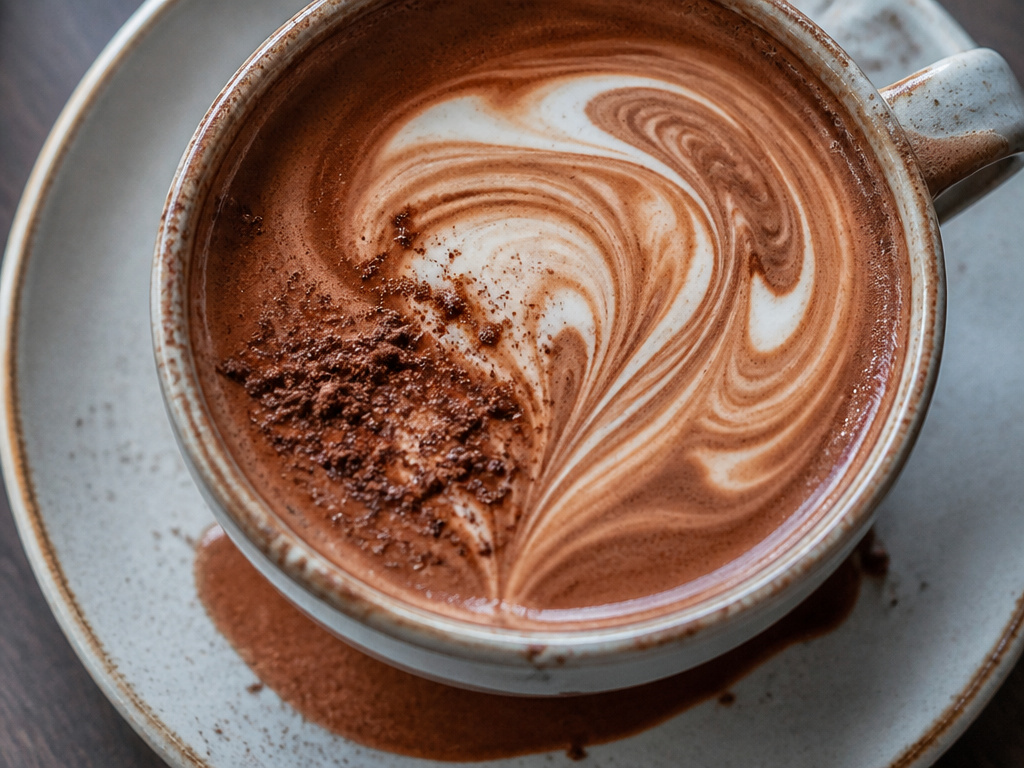
A great mocha isn’t just sweet. It’s a harmonized flavor profile. The initial sip should present a unified taste of coffee and chocolate, neither one shouting over the other. The espresso provides a roasted, slightly bitter depth that prevents the drink from being a mere dessert. The chocolate adds a rounded sweetness and a velvety mouthfeel. The steamed milk mellows the intensity and adds a creamy texture that carries both flavors.
The aftertaste should be clean, with a pleasant cocoa-coffee linger, not a cloying sugar film on your palate. If all you taste is sugar, the chocolate is too low-quality or the ratio is off. If the coffee tastes harsh and bitter, the espresso is either poor quality or there’s not enough chocolate or milk to balance it.
It’s a comforting, indulgent drink. It’s the one you order when you want a treat, when the weather turns, or when you need the caffeine but also want the psychological lift of chocolate. It’s more dessert-like than a standard brewed coffee vs americano, but it’s still fundamentally a coffee beverage.
Frequently Asked Questions
Is a mocha coffee strong?
It depends on your definition of “strong.” In terms of caffeine concentration, a standard mocha with one espresso shot is as strong as any other single-shot espresso drink. In terms of flavor, the chocolate and milk mellow the perceived bitterness of the espresso, making it taste smoother and less “strong” than a straight shot or a black drip coffee.
Can you make a mocha without an espresso machine?
Yes, but it’s an approximation. Make a very strong cup of coffee using an AeroPress or Moka pot. Heat your milk on the stove until steaming (but not boiling) and froth it with a French press plunger or a handheld frother. Mix your chocolate sauce into the hot, strong coffee first, then add the frothed milk. It won’t be identical, but it will scratch the itch.
What’s the difference between a mocha and a macchiato?
They are completely different drinks. A macchiato (specifically an espresso macchiato) is a shot of espresso “stained” with a tiny dollop of milk foam. It’s small, intense, and mostly espresso. A mocha is a larger, milk-heavy, sweet drink flavored with chocolate. Confusing them will get you a very surprising, and likely disappointing, beverage.
Is a mocha the same as hot chocolate?
No. Hot chocolate contains no coffee. It is made from melted chocolate or cocoa powder mixed with steamed milk or water. A mocha always contains coffee (espresso) as a primary ingredient. Think of a mocha as a coffee drink for chocolate lovers, and hot chocolate as a chocolate drink for everyone.
How do I order a less sweet mocha?
Ask for “half the usual amount of chocolate syrup” or “less sweet.” You can also request an extra espresso shot, which increases the coffee flavor to balance the sweetness. Another option is to ask for dark chocolate sauce, which tends to be less sweet than milk chocolate varieties.
The Bottom Line
A mocha is a legitimate, historic entry in the coffee canon, not just a sugary treat. Its name carries centuries of trade and flavor evolution. The secret to a good one isn’t mystery, it’s technique. Use the 1:1:4 ratio. Mix your chocolate into the blazing-hot espresso before anything else. Steam your milk to a silky latte texture.
Remember that the definition of a mocha coffee has evolved from a bean to a beverage. Whether you take it classic, iced, or spiced with cinnamon, it’s a versatile drink that satisfies both a coffee craving and a sweet tooth. Just don’t let the chocolate sink to the bottom.
{
“@context”: “https://schema.org”,
“@type”: “HowTo”,
“name”: “How to Make a Classic Mocha Coffee”,
“totalTime”: “PT8M”,
“tool”: [
{
“@type”: “HowToTool”,
“name”: “Espresso machine or strong coffee maker”
},
{
“@type”: “HowToTool”,
“name”: “Milk steaming pitcher”
},
{
“@type”: “HowToTool”,
“name”: “Small whisk or spoon”
}
],
“step”: [
{
“@type”: “HowToStep”,
“name”: “Pull the espresso shot”,
“text”: “Brew a single or double shot of espresso directly into your serving cup.”
},
{
“@type”: “HowToStep”,
“name”: “Mix chocolate and espresso”,
“text”: “Immediately add your chocolate sauce or syrup to the hot espresso and stir thoroughly until fully combined.”
},
{
“@type”: “HowToStep”,
“name”: “Steam the milk”,
“text”: “Steam your milk to a velvety, latte-like microfoam consistency, aiming for a temperature around 150°F (65°C).”
},
{
“@type”: “HowToStep”,
“name”: “Combine and serve”,
“text”: “Pour the steamed milk into the espresso-chocolate mixture. Top with whipped cream or a light dusting of cocoa powder if desired.”
}
]
}
{
“@context”: “https://schema.org”,
“@type”: “FAQPage”,
“mainEntity”: [
{
“@type”: “Question”,
“name”: “Is a mocha coffee strong?”,
“acceptedAnswer”: {
“@type”: “Answer”,
“text”: “It depends on your definition of \”strong.\” In terms of caffeine concentration, a standard mocha with one espresso shot is as strong as any other single-shot espresso drink. In terms of flavor, the chocolate and milk mellow the perceived bitterness of the espresso, making it taste smoother and less \”strong\” than a straight shot or a black drip coffee.”
}
},
{
“@type”: “Question”,
“name”: “Can you make a mocha without an espresso machine?”,
“acceptedAnswer”: {
“@type”: “Answer”,
“text”: “Yes, but it’s an approximation. Make a very strong cup of coffee using an AeroPress or Moka pot. Heat your milk on the stove until steaming (but not boiling) and froth it with a French press plunger or a handheld frother. Mix your chocolate sauce into the hot, strong coffee first, then add the frothed milk. It won’t be identical, but it will scratch the itch.”
}
},
{
“@type”: “Question”,
“name”: “What’s the difference between a mocha and a macchiato?”,
“acceptedAnswer”: {
“@type”: “Answer”,
“text”: “They are completely different drinks. A macchiato (specifically an espresso macchiato) is a shot of espresso \”stained\” with a tiny dollop of milk foam. It’s small, intense, and mostly espresso. A mocha is a larger, milk-heavy, sweet drink flavored with chocolate. Confusing them will get you a very surprising, and likely disappointing, beverage.”
}
},
{
“@type”: “Question”,
“name”: “Is a mocha the same as hot chocolate?”,
“acceptedAnswer”: {
“@type”: “Answer”,
“text”: “No. Hot chocolate contains no coffee. It is made from melted chocolate or cocoa powder mixed with steamed milk or water. A mocha always contains coffee (espresso) as a primary ingredient. Think of a mocha as a coffee drink for chocolate lovers, and hot chocolate as a chocolate drink for everyone.”
}
},
{
“@type”: “Question”,
“name”: “How do I order a less sweet mocha?”,
“acceptedAnswer”: {
“@type”: “Answer”,
“text”: “Ask for \”half the usual amount of chocolate syrup\” or \”less sweet.\” You can also request an extra espresso shot, which increases the coffee flavor to balance the sweetness. Another option is to ask for dark chocolate sauce, which tends to be less sweet than milk chocolate varieties.”
}
}
]
}
