
Is Mocha Chocolate or Coffee? | The Barista’s Simple Rule
A mocha is both chocolate and coffee. It is a specific category of espresso-based drink defined by the inclusion of chocolate, making it essentially a chocolate latte. The name also references the historic port of Mocha, Yemen, a major hub for coffee trade.
The confusion comes from the dual meaning of the word. One refers to a flavor combination, the other to a place. Most people ordering a drink are talking about the flavor.
This guide breaks down the barista’s rule, the simple recipe, and how this drink sits in the wider world of espresso beverages.
Key Takeaways
- The barista’s rule is absolute: if the drink contains chocolate as a primary flavor, it’s a mocha.
- A standard cafe mocha is built on a 1:2:8 ratio: one part espresso, two parts chocolate, eight parts steamed milk.
- The historic “Mocha” bean from Yemen had a natural chocolatey note, which inspired the modern drink’s name and flavor profile.
- Using cocoa powder instead of syrup requires mixing it into a paste first; skipping this step leaves gritty, undissolved cocoa at the bottom of your cup.
- For a less sweet version, ask for half the usual amount of chocolate syrup or use a dark chocolate sauce.
The Barista’s Simple Definition
Forget the vague descriptions. In any professional coffee shop, the definition is procedural and binary.
If the primary flavor ingredient is chocolate, whether dark, milk, or white chocolate, the drink is a mocha. A mocha is essentially a chocolate latte. Other than that, they are the same drink.
This rule comes straight from barista training. It eliminates ambiguity. A caramel latte is still a latte. A vanilla latte is still a latte. But the moment you add a chocolate sauce as a core component, the drink’s category changes. This is why some specialty drinks have “mocha” in their name even with other additions, like a Himalayan mocha with caramel and salt. The white chocolate base dictates the category.
The standard build ratio for a medium cafe mocha is foundational. You start with one to two shots of espresso (about 1-2 ounces). Add one to two tablespoons of chocolate syrup. Then, top it with eight ounces of steamed milk. The milk texture targets the smooth, velvety microfoam of a latte, not the dry foam of a cappuccino.
TL;DR: Chocolate present? It’s a mocha. No chocolate? It’s something else. The recipe is a 1:2:8 build of espresso, chocolate, and steamed milk.
Where the Name “Mocha” Actually Comes From
The drink’s name is a historical artifact. It points to the port city of Al-Makha (anglicized to Mocha) in Yemen. From the 15th to the 18th centuries, this was a premier marketplace for coffee. Beans exported from this port, often from Ethiopian origins, became known as “Mocha” beans.
These beans were prized for their distinctive flavor profile, which often included winey, fruity, and, crucially, a naturally chocolatey note. This inherent chocolate characteristic in the bean is the semantic bridge. Over time, as coffee cultivation spread and blends changed, the name “mocha” drifted from describing a bean’s origin to describing the chocolate-coffee combination that evoked that original bean’s taste.
This creates the modern duality. “Mocha” can refer to the historical coffee trade. It can also refer to the chocolate-espresso drink. In a cafe context today, it exclusively means the drink. This historical tidbit is more than trivia; it explains why the pairing of coffee and chocolate feels so innate. They are linked by centuries of sensory experience.
| Meaning of “Mocha” | Context | What It Refers To |
|---|---|---|
| The Drink | Modern Cafe Menu | An espresso beverage with added chocolate flavoring (syrup, powder, sauce). |
| The Flavor | Desserts, General Use | The combination of chocolate and coffee flavors (e.g., mocha ice cream). |
| The Origin | Historical / Specialty Coffee | Beans from the port of Mocha, Yemen, or beans with a chocolatey tasting note. |
Mocha vs. Latte: The One-Ingredient Difference
The comparison is straightforward but vital for ordering what you actually want.
A latte is espresso and steamed milk, often with a flavor syrup like vanilla or caramel. A mocha is espresso, steamed milk, and chocolate. The milk preparation is identical, both use textured, steamed milk with a thin layer of microfoam. The difference is entirely in the addition of chocolate.
This has practical effects on flavor, sweetness, and caffeine perception. The chocolate in a mocha adds sweetness and body, which can mask the bitterness of a darker roast espresso. It also makes the drink richer and more dessert-like. Because the chocolate is a dominant flavor, some people perceive a mocha as less “coffee-forward” than a latte, even though the espresso shots are identical.
Common mistake: Assuming a mocha is stronger because it’s “chocolate coffee.” The coffee strength is the same as a latte. The perceived intensity comes from the sugar and cocoa fat, not more caffeine.
For a visual comparison of how these drinks stack up, our guide on espresso-based beverages breaks down the ratios further.
TL;DR: A mocha is a latte plus chocolate. They share the same espresso and milk base. The chocolate changes the flavor profile and sweetness, not the caffeine content.
How to Make a Mocha at Home
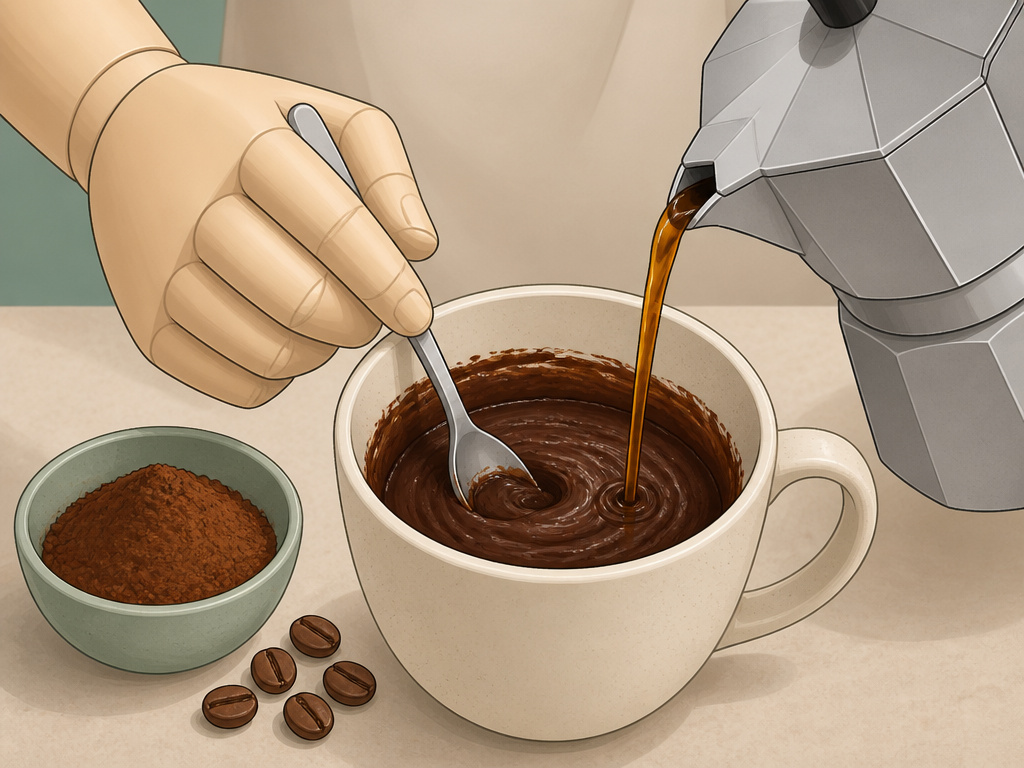
You don’t need a cafe setup. A mocha is one of the easiest espresso drinks to replicate with common kitchen tools.
What You’ll Need
- Espresso: Two shots from a machine is ideal. As a strong alternative, brew 4 ounces of very potent coffee using an AeroPress or Moka pot.
- Chocolate: Chocolate syrup is standard and blends easily. For a richer, less sweet version, use high-quality cocoa powder or chopped dark chocolate.
- Milk: About 8 ounces. Whole milk steams best, but any plant-based milk like oat or almond works.
- Sweetener (optional): Simple syrup, brown sugar, or honey if you’re using unsweetened cocoa.
The Step-by-Step Process
- Prepare the chocolate base. Add 1-2 tablespoons of syrup to your mug. If using cocoa powder, mix 1 tablespoon with a splash of hot espresso or water to form a smooth paste first. This prevents clumping.
- Add the espresso. Brew your shots directly into the mug over the chocolate. Swirl gently to combine.
- Steam the milk. Heat 8 oz of milk to 150-155°F, creating small bubbles (microfoam). No steamer? Heat milk in a saucepan until simmering, then whisk vigorously or use a handheld frother.
- Combine and garnish. Pour the steamed milk into the mug, using a spoon to hold back the foam, then top with the remaining foam. Finish with whipped cream and a dusting of cocoa powder.
The most common home failure is gritty cocoa powder. The powder doesn’t dissolve in cool liquid. You must make a paste with a hot liquid first. Skip this, and you’ll be left with a sludge at the bottom of your cup. The second mistake is over-sweetening. Taste your chocolate base before adding the milk. Syrups vary widely in sweetness.
For those exploring functional coffee additions, the principles behind drinks like bulletproof coffee show how fats can change texture and mouthfeel, similar to how cocoa butter works in a mocha.
Nutritional Profile and Customizations

A standard 12-ounce cafe mocha can be a significant calorie and sugar vehicle. The chocolate syrup is the main contributor. A typical pump contains about 5 grams of sugar. Two pumps in a medium drink means 10 grams of added sugar before any whipped cream.
You can easily tailor it to dietary preferences.
* Less Sweet: Request half the chocolate syrup or use a sugar-free syrup. Opt for a dark chocolate sauce, which tends to be less sweet.
* Dairy-Free: Use oat, almond, or soy milk. Ensure your chocolate sauce is also dairy-free (some contain milk solids).
* Extra Indulgent: Add a flavor swirl like peppermint or caramel. Top with chocolate shavings or a drizzle of caramel sauce.
* Reduced Caffeine: Ask for a single shot instead of a double. For a more detailed look at managing intake, see how reducing caffeine intake works across different drinks.
It’s also worth considering the caffeine per volume. A mocha has the same caffeine as a latte because the espresso is the only source. The chocolate adds no stimulant. If you’re comparing it to a pure coffee, the caffeine content is much lower per ounce.
Frequently Asked Questions
Is there coffee in a mocha?
Yes, absolutely. A mocha is an espresso-based drink. The foundation is one or two shots of espresso, which is a highly concentrated form of coffee. The chocolate is an added flavoring.
Can you get a mocha without coffee?
Technically, no. Without coffee, it becomes a hot chocolate. Some cafes might offer a “steamer” version with chocolate and steamed milk, but by definition, a mocha requires the coffee component.
Is a mocha stronger than a latte?
In terms of caffeine, no. They contain the same amount of espresso. The “strength” people taste is the richness and sweetness from the chocolate, which can make the coffee flavor seem more intense or balanced.
What’s the difference between a mocha and a cappuccino?
This is a common point of confusion. A cappuccino has equal parts espresso, steamed milk, and thick, dry milk foam. A mocha has espresso, chocolate, and steamed milk with only a light layer of wet microfoam. The chocolate addition and milk texture are the key differentiators. For more on this, see our comparison of cappuccino vs coffee.
Before You Go
A mocha is a hybrid, and that’s its appeal. It answers the question “is mocha chocolate or coffee?” with a definitive “both.” The barista’s rule is your compass: chocolate in the recipe makes it a mocha. The name carries the weight of coffee history, linking back to the chocolate-tinged beans of Yemen.
At home, the drink is forgiving. Master the chocolate paste step if you use powder, and don’t be afraid to adjust the sweetness to your taste. Whether you see it as a coffee drink for chocolate lovers or a chocolate drink for coffee lovers, its place on the menu is secure. It bridges the gap between a caffeine fix and a dessert treat, one steamed mug at a time.
