
Is Cold Brew Coffee Healthier? The Science-Backed Answer
Cold brew coffee is not inherently healthier than hot coffee. Both offer core benefits like reduced disease risk. Its specific caffeine, antioxidant, and acid levels depend on your grind size, brew time, and method, with a 2023 study showing it can have higher caffeine than hot French press at similar strength.
Cold brew coffee is just as healthy as hot coffee, offering the same core benefits like reduced risk of type 2 diabetes and heart disease, but its specific health profile, caffeine content, antioxidant levels, and acidity, varies significantly based on grind size, brew time, and method. A 2023 study found that at similar strength, cold brew can have significantly higher caffeine and organic acids than hot French press coffee, with no significant difference in total antioxidants.
Most people get this wrong because they believe the marketing. They think cold brew is inherently lower in acid or packed with more antioxidants. The reality is messier. The health difference isn’t in the temperature alone; it’s in the extraction chemistry you control.
This guide breaks down the science, from Harvard’s public health stance to the latest lab studies on percolated cold brew. You’ll see exactly where the health claims hold up and where they crumble under a microscope.
Key Takeaways
- Cold and hot coffee share the same major long-term health benefits, according to public health experts.
- Caffeine content in cold brew is often higher than in a comparable hot brew, especially with coarse grounds and long steep times.
- The “lower acidity” claim is about sensory smoothness, not a major pH difference; key acids like chlorogenic acid extract at similar levels.
- Hot brewing typically extracts more antioxidants (phenolics) faster, but optimized cold brew methods can match it.
- Your personal health win with cold brew likely comes from drinking it black, avoiding the sugar and cream you might add to bitter hot coffee.
The Short Answer, Backed by Science
Public health guidance cuts through the marketing noise. Dr. Frank Hu, a nutrition chair at the Harvard T.H. Chan School of Public Health, stated cold brew is “just as healthy as regular coffee.” The big-picture benefits, linked to lower risks of type 2 diabetes, heart disease, and some neurodegenerative conditions, come from the coffee itself, not the brew method.
He also suggested cold brew might be “even healthier” for a practical reason: its smoother taste could reduce the need for calorie-laden sugar and cream. This is the real, everyday health advantage for most people. You can read his analysis in this Harvard School of Public Health article.
A 2017 study in Scientific Reports found caffeine and 3-chlorogenic acid concentrations reached equilibrium in cold brew within 6 to 7 hours, not the typical 10-24 hours. The pH and 3-CGA levels were comparable between cold and hot brews, challenging the “less acidic” claim.
TL;DR: For long-term disease risk, cold brew equals hot coffee. The potential “healthier” edge is behavioral, you’re more likely to drink it black.
The Caffeine and Antioxidant Breakdown
This is where the details matter. You can’t just say one has “more” or “less.” It depends on how you measure and brew.
Caffeine: Cold Brew Often Wins
If you compare a standard cup of drip coffee to a standard cup of cold brew, the caffeine content is frequently higher in the cold brew. A 2017 study reported that commercial cold brew averaged about 207 mg of caffeine per 12 oz serving. More importantly, the same study found that when brewed with a coarse grind, cold brew samples had “substantially higher” caffeine concentrations than their hot brew counterparts.
The why-layer is time and temperature. Caffeine is highly soluble even in cold water. A long, 18-24 hour steep gives caffeine molecules ample time to diffuse out of the grounds, often leading to a more efficient extraction than a 5-minute hot brew. This is a key point for managing your caffeine intake management.
Antioxidants: The Hot Brew Advantage (Usually)
Antioxidants, like polyphenols and flavonoids, are where hot water shows its strength. These compounds extract more readily with heat. A 2021 study comparing methods found hot brew (V60) consistently had higher total phenolic content (TPC) and total flavonoid content (TFC) than traditional 24-hour cold brew.
However, this isn’t a closed case. The same study found that an innovative percolated cold brew method (using a device called a Hardtank) produced TPC and antioxidant capacity very close to, and sometimes slightly better than, hot coffee. The method matters more than the temperature label.
| Brew Method | Typical Caffeine (per 12oz) | Antioxidant Extraction | Best For |
|---|---|---|---|
| Traditional Drip Hot | ~140 mg | High | Maximizing antioxidants quickly |
| Traditional 24-hr Cold Brew | ~200 mg | Moderate | High caffeine, smooth flavor |
| Percolated Cold Brew (Hardtank) | Variable, often high | High | Matching hot brew’s complexity & antioxidants |
| French Press Hot | ~180 mg | Very High | Full-bodied flavor & high phenolics |
TL;DR: Want a bigger caffeine kick? Traditional cold brew often delivers. Chasing antioxidants? Hot brew is generally better, unless you use an advanced cold method.
Debunking the “Lower Acidity” Claim
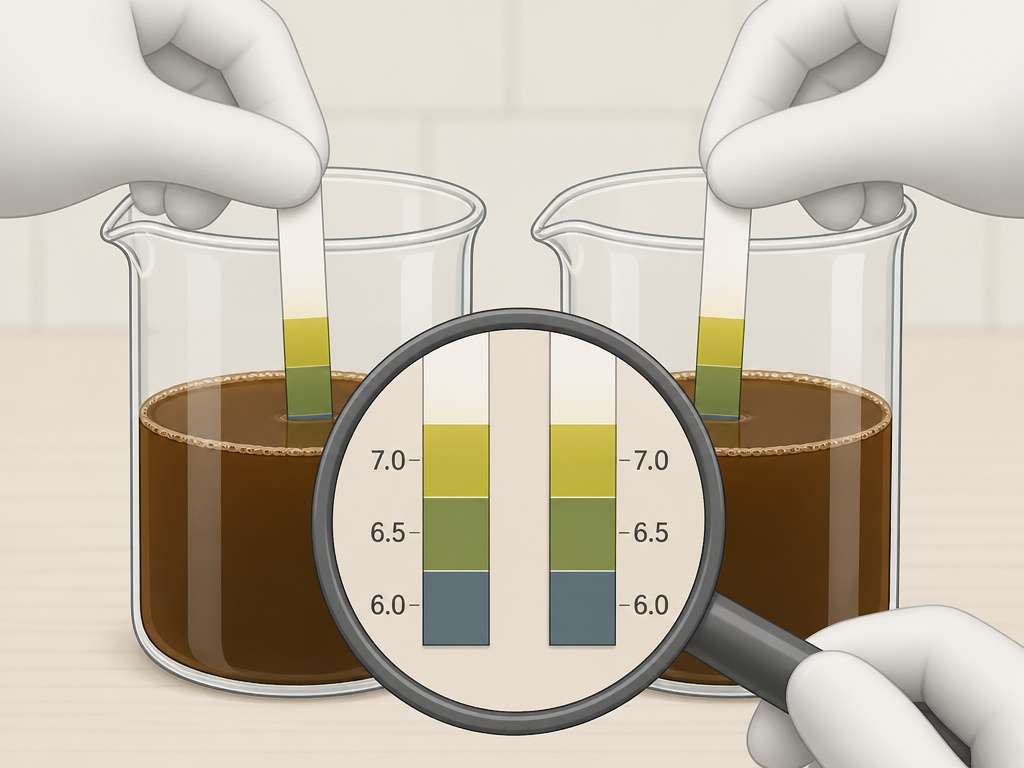
Walk into any cafe and you’ll hear it: cold brew is less acidic, easier on your stomach. This is the most persistent health claim. The science, however, paints a more nuanced picture.
Research indicates the perceived “smoothness” isn’t primarily due to a major reduction in overall acid content. A pivotal 2017 study measured pH and 3-chlorogenic acid (3-CGA), a key coffee acid, in both brew types. It found them to be “comparable.” The sensory difference likely comes from which specific acids and compounds extract in cold versus hot water. Hot brewing pulls out more of certain acidic compounds that contribute to brighter, sharper notes.
Common mistake: Choosing cold brew solely to cure acid reflux, the pH difference is minimal, and the relief may be from avoiding certain hot-extracted compounds, not overall acidity.
For those truly sensitive to acidity, the brewing factors matter more than the temperature. Using a medium roast over a light roast, or a coarser grind, can reduce perceived acidity in any brew. This is a deeper exploration of pH levels of coffee and how to manage them.
How You Brew Changes Everything
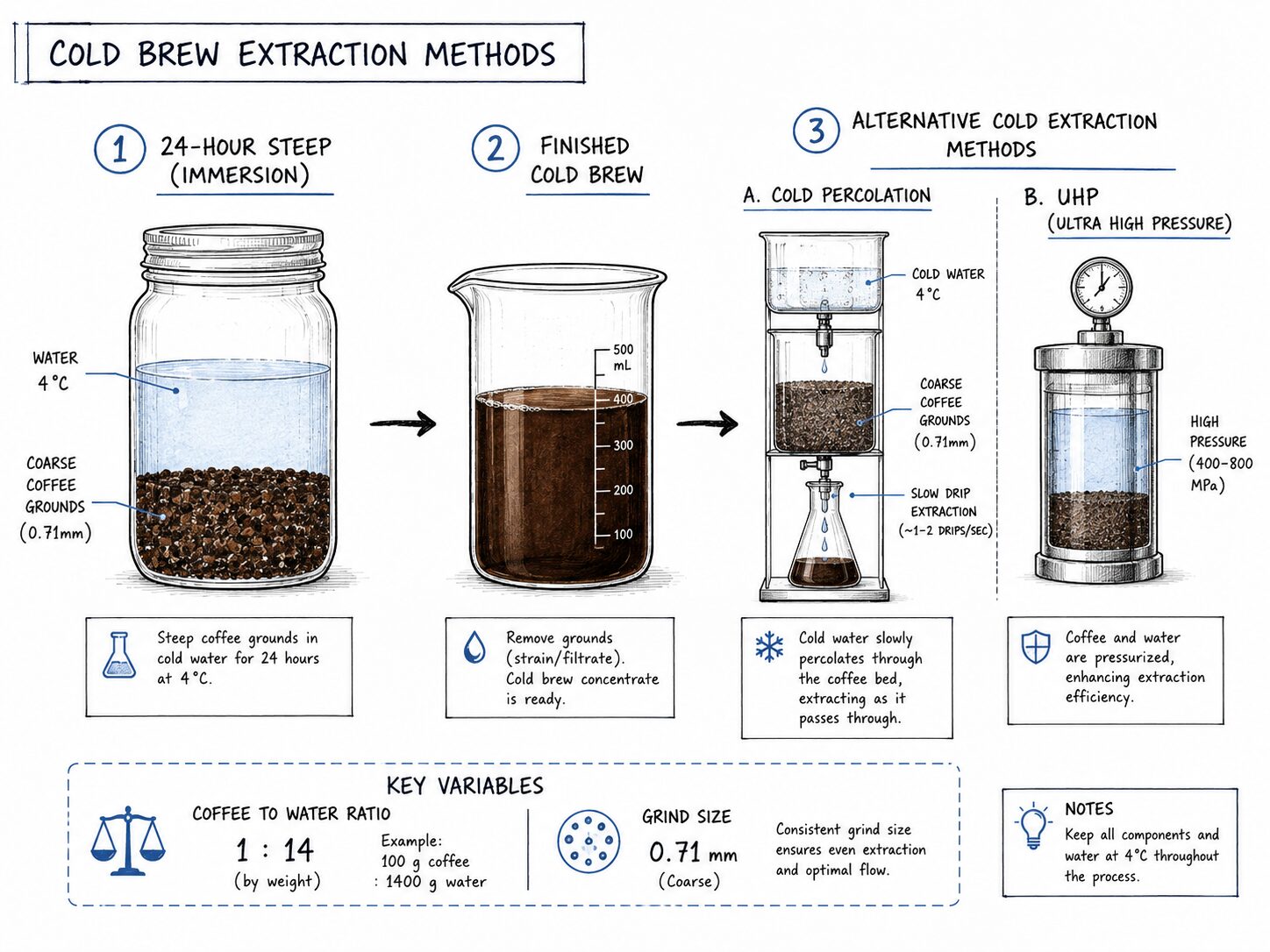
Calling it “cold brew” is like calling it “soup”, the category is too broad. The specific variables you choose determine the health profile of your final cup. A scientific comparison of brew methods from 2023 outlined the optimized conditions for cold brew that can change its chemical makeup.
The Gold Standard Variables
The study pinpointed the ideal specs for balanced cold brew extraction: a 1:14 coffee-to-water ratio, a 0.71 mm grind size (coarse), 4°C water (straight from the fridge), and a 24-hour steep. Deviating from these changes what ends up in your cup.
* Grind Size: Too fine with a long steep leads to over-extraction of bitter compounds and can increase certain acids.
* Time: The 2017 study found most extraction happens in the first 6-7 hours. After 24 hours, you’re mostly pulling out deeper, woody compounds that can add bitterness without health benefit.
* Ratio: A stronger concentrate (1:10) will, of course, have more of everything, caffeine, antioxidants, acids, per ounce than a weaker one (1:18).
Advanced Methods: Percolation and Pressure
This is where the frontier lies. The 2021 study on the Hardtank device showed that cold percolation, where water trickles through the grounds rather than sitting in them, can create a cold brew with a chemical and sensory profile strikingly similar to hot coffee. It even extracted 4 times more lipids than traditional cold brew.
Another 2024 study examined Ultra-High-Pressure (UHP) cold brew, where pressure is applied during the cold steep. It found the roasting degree became even more critical. Medium roasts under UHP retained better antioxidant capacity and more desirable flavors compared to light or dark roasts.
These methods bridge the gap, offering the smoothness of cold brew with the antioxidant punch and complex flavor traditionally associated with hot methods. They represent the next evolution in brewing method differences.
TL;DR: Your recipe is your health profile. A coarse grind, 1:14 ratio, and 18-hour steep in the fridge is the sweet spot. For maximal health compounds, explore pressurized or percolated cold brew systems.
The Real-World Health Impact
Forget the lab beakers for a moment. In your kitchen, the health impact of choosing cold brew boils down to two tangible factors: what you don’t add to it, and how it affects your daily habits.
The Sugar Trap (And How to Avoid It)
This is the Harvard expert’s point in practice. Many people need sugar or sweet cream to balance the bitterness of hot coffee. Because cold brew is inherently less bitter, you’re more likely to enjoy it black or with just a splash of milk. Skipping two tablespoons of sugar saves about 100 empty calories per cup. Over a year, that’s a real metabolic difference.
A personal observation: when I switched my morning pot to cold brew during the summer, my sugar usage dropped to zero. The first week, I missed the ritual of stirring in sweetness. By the third week, the clean, sweet notes of a good Ethiopian bean were all I wanted. My afternoon crash disappeared.
Blood Sugar and Satiety
An interesting real-world test came from a YouTube creator monitoring glucose levels. They found a homemade iced coffee with milk and sugar caused a smaller blood sugar spike than hot coffee with the same sugar. The theory was that the larger volume of milk’s fat and protein in the cold drink slowed the sugar absorption.
While not a rigorous study, it highlights a practical interaction. The caffeine release rates and the macros you pair with your coffee influence its acute health effects. Cold brew’s format often encourages a larger, milkier serving, which can modulate your body’s response.
Common mistake: Assuming “healthier” means you can drink unlimited amounts, the caffeine content in a potent cold brew concentrate can easily double that of a standard traditional drip coffee, leading to jitters or sleep disruption if you’re not careful.
Frequently Asked Questions
Does cold brew have more caffeine than hot coffee?
Often, yes. When prepared as a concentrate or with a long steep time, cold brew can have significantly more caffeine per ounce than a standard cup of drip coffee. A typical 12-oz serving of ready-to-drink cold brew can contain over 200 mg of caffeine.
Is cold brew better for your teeth?
Marginally, but not because of acidity. Both brews have similar pH levels. However, hot coffee can contribute to surface staining more quickly. The larger potential benefit is if you drink cold brew without sugar, reducing the fuel for cavity-causing bacteria.
Does cold brew lose antioxidants because it’s not hot?
Traditional immersion cold brew often extracts fewer antioxidants than hot methods. However, this isn’t a loss of nutrients from the bean; it’s a difference in extraction efficiency. Methods like cold percolation or pressurized cold brew can match hot coffee’s antioxidant levels, as shown in a National Institutes of Health study.
Can I get the same health benefits from decaf cold brew?
For benefits unrelated to caffeine, like the antioxidant and polyphenol content, yes, decaf is a great option. Just ensure you’re using a decaffeination process that preserves these compounds, like the Swiss Water Process.
Does the type of bean matter for cold brew health benefits?
Absolutely. A light roast bean will have higher levels of chlorogenic acids (antioxidants) than a dark roast, regardless of brew method. A Nature journal coffee chemistry paper shows that roast level and origin impact the final concentration of key compounds in your cup. For a balanced cold brew, a medium roast is often the most versatile.
The Bottom Line
Is cold brew coffee healthier? On a macroscopic, public-health scale, it’s a tie, both deliver the same profound benefits associated with coffee consumption. The real advantages are tactical and personal.
Cold brew wins if you need a higher caffeine lift or if its smoother taste helps you ditch added sugar. Hot brew generally wins for maximum antioxidant extraction in the simplest way. The most exciting finding is that new brewing techniques are blurring these lines, offering the best of both worlds.
Your healthiest cup is the one you’ll drink consistently, without loading it with sweeteners. Whether you choose cold or hot, focus on quality beans, a clean brew method, and listening to your body. That’s the habit that pays dividends.
{
“@context”: “https://schema.org”,
“@type”: “HowTo”,
“name”: “How to Brew Healthier Cold Brew Coffee”,
“totalTime”: “PT1440M”,
“tool”: [
{
“@type”: “HowToTool”,
“name”: “Coarse-ground coffee (0.71 mm mesh size)”
},
{
“@type”: “HowToTool”,
“name”: “Large pitcher or French press”
},
{
“@type”: “HowToTool”,
“name”: “Fine mesh sieve or cheesecloth”
},
{
“@type”: “HowToTool”,
“name”: “Scale for measuring coffee-to-water ratio”
}
],
“step”: [
{
“@type”: “HowToStep”,
“name”: “Measure your coffee and water”,
“text”: “Use a 1:14 coffee-to-water ratio by weight. For one liter of water, use about 71 grams of coarsely ground coffee.”
},
{
“@type”: “HowToStep”,
“name”: “Combine and stir”,
“text”: “Add the grounds and cold, filtered water to your pitcher. Stir gently to ensure all grounds are saturated.”
},
{
“@type”: “HowToStep”,
“name”: “Steep in the refrigerator”,
“text”: “Cover the pitcher and place it in the refrigerator. Steep for 18 to 24 hours for full extraction.”
},
{
“@type”: “HowToStep”,
“name”: “Strain the concentrate”,
“text”: “Pour the mixture through a fine mesh sieve lined with cheesecloth into a clean container. Discard the used grounds.”
},
{
“@type”: “HowToStep”,
“name”: “Dilute and serve”,
“text”: “Dilute the cold brew concentrate with water or milk to your taste. Serve over ice.”
}
]
}
{
“@context”: “https://schema.org”,
“@type”: “FAQPage”,
“mainEntity”: [
{
“@type”: “Question”,
“name”: “Does cold brew have more caffeine than hot coffee?”,
“acceptedAnswer”: {
“@type”: “Answer”,
“text”: “Often, yes. When prepared as a concentrate or with a long steep time, cold brew can have significantly more caffeine per ounce than a standard cup of drip coffee. A typical 12-oz serving of ready-to-drink cold brew can contain over 200 mg of caffeine.”
}
},
{
“@type”: “Question”,
“name”: “Is cold brew better for your teeth?”,
“acceptedAnswer”: {
“@type”: “Answer”,
“text”: “Marginally, but not because of acidity. Both brews have similar pH levels. However, hot coffee can contribute to surface staining more quickly. The larger potential benefit is if you drink cold brew without sugar, reducing the fuel for cavity-causing bacteria.”
}
},
{
“@type”: “Question”,
“name”: “Does cold brew lose antioxidants because it’s not hot?”,
“acceptedAnswer”: {
“@type”: “Answer”,
“text”: “Traditional immersion cold brew often extracts fewer antioxidants than hot methods. However, this isn’t a loss of nutrients from the bean; it’s a difference in extraction efficiency. Methods like cold percolation or pressurized cold brew can match hot coffee’s antioxidant levels, as shown in a National Institutes of Health study.”
}
},
{
“@type”: “Question”,
“name”: “Can I get the same health benefits from decaf cold brew?”,
“acceptedAnswer”: {
“@type”: “Answer”,
“text”: “For benefits unrelated to caffeine, like the antioxidant and polyphenol content, yes, decaf is a great option. Just ensure you’re using a decaffeination process that preserves these compounds, like the Swiss Water Process.”
}
},
{
“@type”: “Question”,
“name”: “Does the type of bean matter for cold brew health benefits?”,
“acceptedAnswer”: {
“@type”: “Answer”,
“text”: “Absolutely. A light roast bean will have higher levels of chlorogenic acids (antioxidants) than a dark roast, regardless of brew method. A Nature journal coffee chemistry paper shows that roast level and origin impact the final concentration of key compounds in your cup. For a balanced cold brew, a medium roast is often the most versatile.”
}
}
]
}
