
Is Coffee Gluten Free? Learn the Risks With Instant Coffee
This post contains affiliate links. As an Amazon Associate, we earn from qualifying purchases.
Plain, unroasted coffee beans are inherently gluten-free. The risk of gluten exposure comes from cross-contact during processing or from added ingredients in flavored coffees, instant mixes, and coffee substitutes.
Most people get this wrong because they assume “coffee” means one thing. They hear it’s gluten-free and grab the first bag off the shelf, not realizing that flavored hazelnut grounds or a chai latte mix are completely different products with their own ingredient lists. The confusion is real, and for someone with celiac disease or a serious sensitivity, that confusion has consequences.
This guide walks through the legal definitions, the specific products that are safe, and the ones that are landmines. We’ll look at the study that found gluten in instant coffee, decode the FDA’s 20 ppm rule, and show you exactly what to look for on a label.
Key Takeaways
- Pure coffee, whole bean, ground, or plain instant, contains no gluten proteins from wheat, barley, or rye.
- The FDA’s gluten-free labeling rule (21 CFR 101.91) mandates any product with that claim must contain less than 20 parts per million (ppm) of gluten.
- Instant coffee is the highest risk for cross-contamination, with at least one study identifying it as the source of a gluten-like immune reaction in sensitive individuals.
- Coffee substitutes like Pero, Postum, and Cafix are made primarily from barley and are not gluten-free.
- Always read the ingredients list on flavored coffees and instant mixes (3-in-1, cappuccino); wheat-derived ingredients or “natural flavors” can be hiding there.
The FDA’s Gluten-Free Rule in 60 Seconds
For a food to be labeled “gluten-free” in the United States, it must comply with a specific federal regulation. This isn’t a suggestion, it’s law.
21 CFR 101.91 states that a food bearing a “gluten-free,” “free of gluten,” “without gluten,” or “no gluten” claim must contain less than 20 parts per million (ppm) of gluten. This applies to inherently gluten-free foods and those processed to remove gluten. The rule also specifies that the food cannot contain any ingredient that is a gluten-containing grain (wheat, barley, rye, spelt) unless it has been processed to remove gluten and results in less than 20 ppm in the final product.
This threshold of 20 ppm is considered safe for the vast majority of people with celiac disease. It’s a measurable, enforceable standard. If a bag of whole bean coffee has that “gluten-free” claim, the manufacturer is staking their compliance on it. You can find the full details in the FDA’s gluten-free labeling Q&A.
There’s also a stricter private standard. The Gluten Intolerance Group’s GFCO certification requires 10 ppm or less. You might see this logo on packaged foods, including some coffee creamers or ready-to-drink beverages. The GFCO standard, revised in 2024, also has specific rules for whole ingredients like beans and seeds, allowing less than 0.25 gluten-containing grains per kilogram.
TL;DR: “Gluten-free” on a label is a regulated term meaning <20 ppm gluten. No claim? You’re relying on the ingredient list and hoping for the best.
Pure Coffee is Naturally Gluten-Free
Let’s start with the foundation. Coffee beans, the seeds of the Coffea plant, are a fruit seed. They contain zero gluten proteins. Gluten comes from specific grains: wheat, barley, rye, and their hybrids like triticale. A coffee plant is not a grain.
This means that in their pure, unadulterated form, all of the following are gluten-free:
– Whole coffee beans (any roast level)
– Pre-ground coffee
– Plain instant coffee (100% coffee)
Major national brands like Folgers, Maxwell House, and Café Bustelo state their pure ground and instant coffees are 100% coffee with no gluten-containing ingredients. Starbucks states its VIA Ready Brew instant coffee (the standard variants) is gluten-free. These products are processed in dedicated facilities, minimizing cross-contact risk.
The risk with pure coffee isn’t the bean. It’s everything that happens after harvest.
Where Gluten Can Creep In: Processing and Additives
Cross-contact is the primary concern for pure coffee. If coffee is processed, roasted, or packaged in a facility that also handles gluten-containing grains, there’s a potential for trace contamination. This is where the “gluten-free” label provides concrete value, it signals the manufacturer has controls in place to keep gluten below 20 ppm.
For flavored coffees, the game changes entirely. The coffee base may be pure, but the flavoring agents are the wild card.
| Coffee Product Type | Gluten Status | Primary Risk Factor |
|---|---|---|
| Whole Bean / Ground (Unflavored) | Inherently GF | Cross-contact during processing |
| Plain Instant Coffee | Inherently GF | Cross-contact; higher risk than whole bean |
| Flavored Coffee (beans/ground) | Verify | Flavorings, natural flavors, barley malt |
| Instant Coffee Mixes (3-in-1) | High Risk | Non-dairy creamers, thickeners, flavorings |
| Coffee Substitutes (Pero, Postum) | NOT Gluten-Free | Primary ingredient is barley |
Natural and artificial flavors can use grain alcohols or other gluten-derived carriers. “Barley malt” is sometimes used as a flavoring in certain roasts, like some chocolate-flavored coffees. You must read the ingredients list every time.
Common mistake: Assuming “natural flavors” in coffee are always safe, some are derived from barley or wheat and used as flavor carriers, and they may not be called out separately on the label.
TL;DR: Unflavored coffee is safe. For anything else, the ingredient list is your first and most important stop.
The Instant Coffee Contamination Study
This is where the research gets specific, and where most generic articles stop. A key study often cited in discussions about coffee and gluten reactivity pinpointed the problem to one product: instant coffee.
The research indicated that pure, non-instant coffee did not trigger a gluten-like immune response in sensitive individuals. However, some samples of instant coffee powder did. The conclusion wasn’t that coffee cross-reacts with gluten. The conclusion was that those instant coffee samples were contaminated with trace amounts of gluten during manufacturing.
This makes mechanical sense. Instant coffee production is a multi-step industrial process involving extraction, concentration, and drying. These facilities often handle a wide variety of powdered products, increasing the risk of cross-contact compared to a dedicated coffee roastery. The powdered form is also more susceptible to airborne contamination.
I switched to a major national brand of instant coffee during a camping trip a few years ago, relying on its simple “100% coffee” ingredient list. Two days in, I had the familiar bloating and fog I get from cross-contact. I wrote to the company. Their polite response confirmed the product was gluten-free by ingredient but processed in a facility that also handles wheat-based ingredients. They could not guarantee against cross-contact. I now only pack single-serve pour-overs from a dedicated gluten-free roaster for trips.
This experience mirrors the study’s findings. The risk isn’t zero. If you are highly sensitive, your safest bet with instant is to choose a brand that explicitly labels its product “gluten-free,” which legally binds them to the <20 ppm standard.
Coffee Substitutes Are Not Coffee
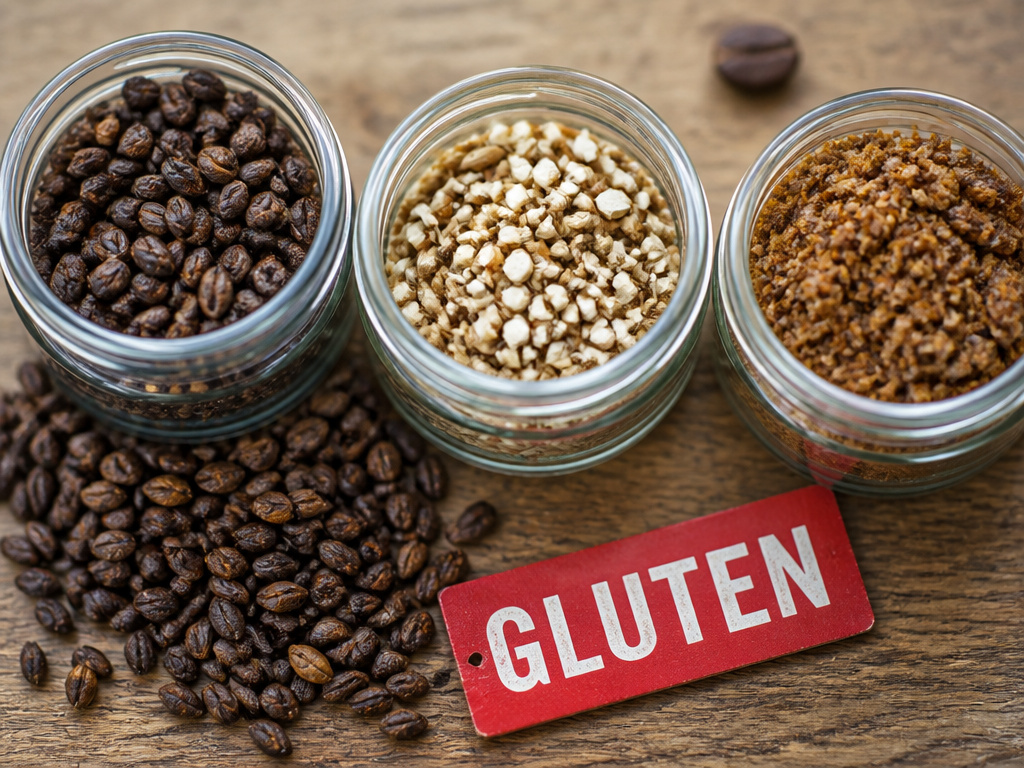
This is a critical category that causes immense confusion. Products like Pero, Postum, and Cafix are marketed as coffee alternatives. They are often found on the same shelf as instant coffee. They are not coffee.
These substitutes are primarily made from roasted barley, rye, chicory, or molasses. Barley contains gluten. Therefore, these products are not gluten-free and should be strictly avoided by anyone on a gluten-free diet.
- Pero: Ingredients: barley, rye, chicory, sugar beet.
- Postum: Ingredients: wheat bran, wheat, molasses, maltodextrin.
- Cafix: Ingredients: barley, chicory, rye, sugar beet.
There is no ambiguity here. The first ingredient is a gluten-containing grain. Consuming these will cause a reaction in someone with celiac disease. Always double-check the product name and the ingredient list if you’re looking for a caffeine-free alternative, carob or roasted dandelion root teas are safer starting points.
Navigating Mixed and Flavored Products
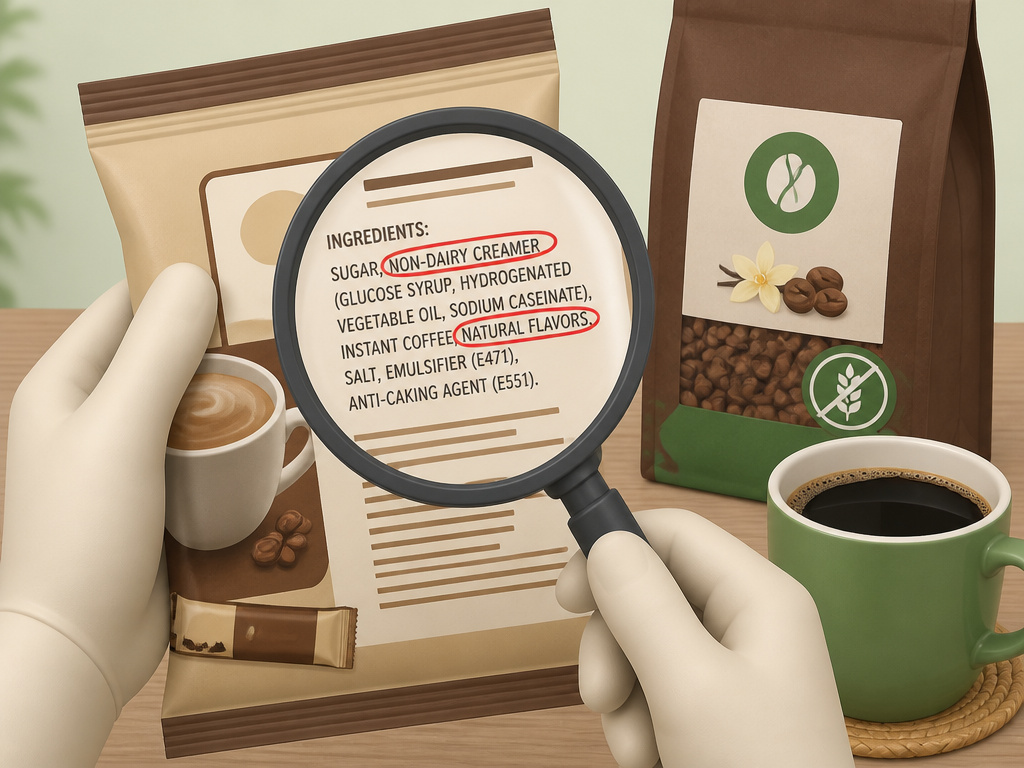
This is where your label-reading diligence pays off. Flavored coffees and instant mixes are the most complex category.
Instant 3-in-1 Mixes, Cappuccinos, Lattes
These products combine instant coffee with creamer, sugar, and flavorings. The non-dairy creamer is the biggest red flag. Many creamers use wheat-derived ingredients as anti-caking agents or stabilizers. For example, some Nescafé 3-in-1 mixes are not considered gluten-free for this reason.
What to do: Check the ingredients for wheat, barley, rye, malt, or “natural flavors.” If it’s not clearly labeled gluten-free and you see ambiguous terms, assume it’s not safe. Contact the manufacturer if you must have that specific product.
Flavored Ground Coffees
The flavoring can be added via oils or powders. The risk is lower than with mixes but still present. “Natural flavors” is the term to be wary of.
What to do: Look for brands that specialize in gluten-free flavored coffees or those that certify their products. Many smaller roasters are happy to answer direct questions about their flavor sources and facility protocols.
Here’s a quick-reference table for common additives and their status:
| Additive / Ingredient | Typically Gluten-Free? | Notes & Exceptions |
|---|---|---|
| Pure Cane Sugar | Yes | Unlikely source of contamination. |
| Non-Dairy Creamer | No (Often) | Frequently contains wheat-derived ingredients. |
| Cocoa Powder | Yes | Check for added flavors or processing aids. |
| Natural Flavors | Verify | Can be derived from barley malt or use grain alcohol. |
| Barley Malt | No | Contains gluten. Used in some “malted” flavors. |
| Spices (Cinnamon, Nutmeg) | Yes | Pure spices are safe; blended mixes may have additives. |
Adding a splash of almond milk or a teaspoon of brown sugar is generally safe, as these are inherently gluten-free. For more adventurous additions, like a pinch of salt in coffee for bitterness reduction or cinnamon coffee for flavor, you’re still in the clear if the additives themselves are pure.
TL;DR: Mixed products require the most work. The ingredient list is your map, and “gluten-free” labeling is your guarantee.
A Practical Guide for Coffee Drinkers with Celiac Disease or Sensitivity
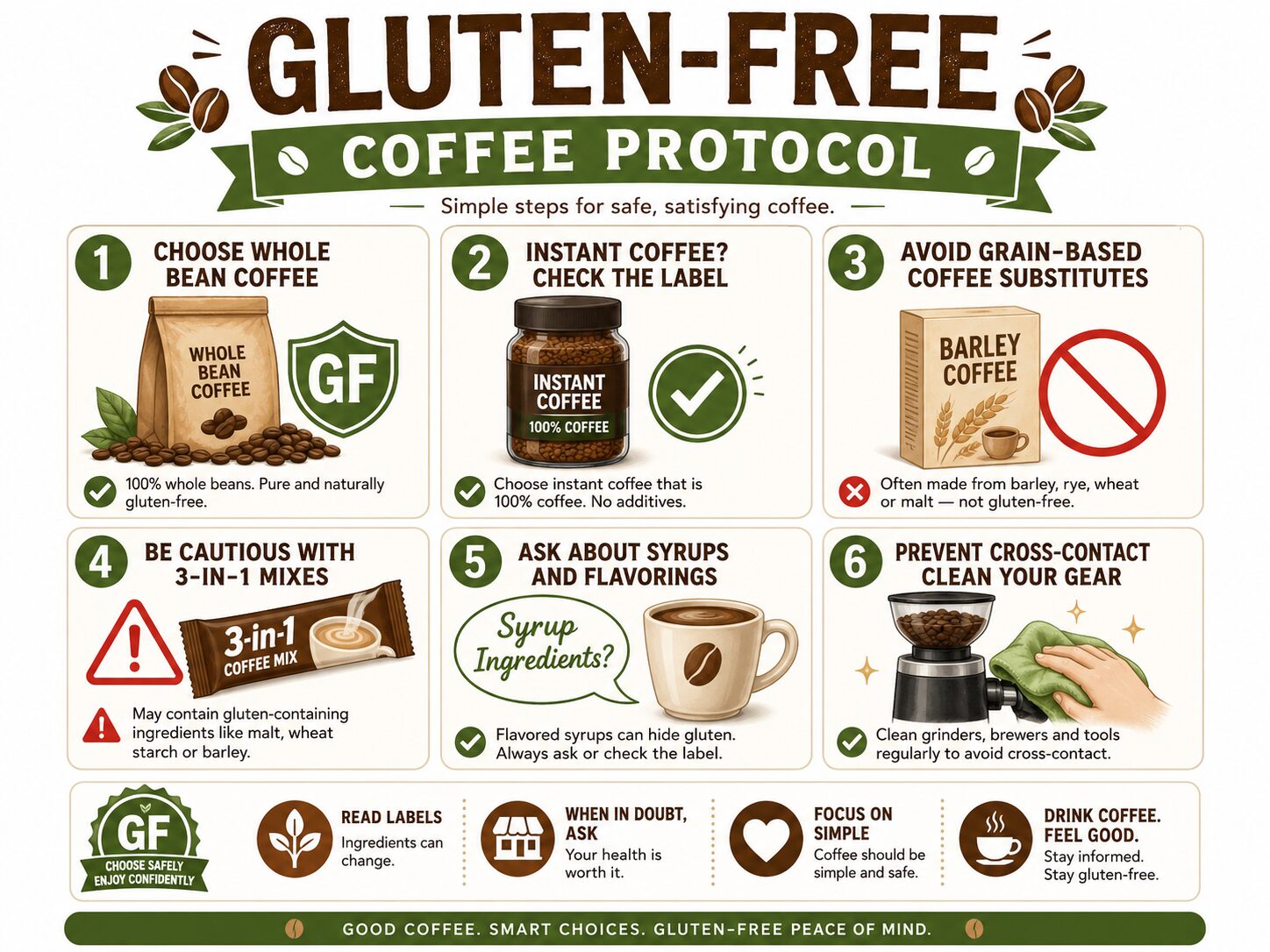
If you need to avoid gluten, your coffee routine needs a protocol. Here’s a step-by-step approach.
- Start with the Bean. Choose whole bean or ground coffee from a roaster that labels it gluten-free. This is your lowest-risk option. Grinding at home eliminates another potential point of cross-contact.
- Audit Your Instant. If you use instant, switch to a brand that makes a “gluten-free” claim on the package. Do not assume single-origin or organic means gluten-free, it doesn’t.
- Eliminate Substitutes. Remove Pero, Postum, Cafix, and any other grain-based coffee alternative from your pantry.
- Scrutinize Every Mix. Avoid all instant cappuccino, latte, and 3-in-1 mixes unless they are certified gluten-free. The convenience isn’t worth the risk.
- Call Before You Sip (At Cafés). When out, ask the barista about the ingredients in flavored syrups. Some use barley malt as a sweetener or contain undisclosed “natural flavors.” Stick to plain espresso, americano, or drip coffee with plain milk.
- Clean Your Equipment. If your household isn’t entirely gluten-free, dedicate a grinder and French press for your use, or clean shared equipment thoroughly. Coffee grinders are notorious for harboring old particles.
Remember, your personal sensitivity level dictates your protocol. Someone with non-celiac gluten sensitivity might tolerate trace cross-contact that would trigger a full immune response in someone with celiac disease. Know your body.
It’s also worth considering that some reactions blamed on gluten might be due to coffee’s other properties. The acidity and caffeine can cause digestive effects or influence heart health in some individuals, independent of gluten.
Frequently Asked Questions
Is Starbucks coffee gluten-free?
Starbucks plain brewed coffee, espresso, and Teavana hot teas are considered gluten-free. Starbucks states that their VIA Ready Brew instant coffee (plain) is gluten-free. However, flavored syrups, sauces (like mocha), and baked goods are significant risks. Always ask for ingredient information, as recipes can change.
Is decaf coffee gluten-free?
The decaffeination process does not introduce gluten. Decaffeinated coffee beans are inherently gluten-free, subject to the same cross-contact risks as regular coffee. The chemicals or water processes used (Swiss Water, CO2) are gluten-free.
Can I drink coffee with celiac disease?
Yes, the vast majority of people with celiac disease can safely drink pure, gluten-free coffee. The issue is ensuring the coffee itself is not contaminated and that any additives are safe. If symptoms persist after switching to verified gluten-free coffee, discuss other sensitivities (e.g., to caffeine or coffee acidity) with your doctor.
Is Folgers or Maxwell House gluten-free?
Folgers (The J.M. Smucker Company) states that their regular ground and instant coffees are 100% pure coffee and contain no gluten ingredients. Maxwell House (Kraft Heinz) has similar statements for their pure coffee products. Neither brand makes a “gluten-free” claim, so they are not testing to the <20 ppm standard, but they are considered low-risk by the community.
What about organic coffee?
Organic certification relates to farming practices, not gluten content. An organic coffee can still be cross-contaminated with gluten during processing, roasting, or packaging. Do not rely on “organic” as a proxy for “gluten-free.”
The Bottom Line
Pure coffee is a safe, gluten-free beverage. The complexity comes from manufacturing and additives. Instant coffee carries a documented cross-contamination risk. Coffee substitutes are made from barley and are off-limits. Flavored and mixed products require vigilant label reading.
Your best defense is knowledge. Understand the FDA’s 20 ppm rule. Recognize that a “gluten-free” label is a stronger guarantee than an ingredients list alone. When in doubt, contact the manufacturer or choose a certified product. You don’t have to give up your morning ritual, you just have to be smart about how you build it.
{
“@context”: “https://schema.org”,
“@type”: “HowTo”,
“name”: “How to Ensure Your Coffee is Gluten-Free”,
“totalTime”: “PT10M”,
“tool”: [
{
“@type”: “HowToTool”,
“name”: “Coffee product labels”
},
{
“@type”: “HowToTool”,
“name”: “Smartphone or computer for manufacturer verification”
}
],
“step”: [
{
“@type”: “HowToStep”,
“name”: “Identify the coffee type”,
“text”: “Determine if you have pure coffee (beans, ground, instant), a flavored variety, an instant mix, or a coffee substitute.”
},
{
“@type”: “HowToStep”,
“name”: “Check for a ‘gluten-free’ claim”,
“text”: “Look for a ‘gluten-free’, ‘without gluten’, or ‘no gluten’ label, which legally means the product tests below 20 ppm of gluten.”
},
{
“@type”: “HowToStep”,
“name”: “Read the ingredients list thoroughly”,
“text”: “Scan for wheat, barley, rye, malt, or natural flavors that could be grain-derived, especially in flavored coffees and instant mixes.”
},
{
“@type”: “HowToStep”,
“name”: “Verify the manufacturer’s statement”,
“text”: “Visit the brand’s website or contact them directly if the label is ambiguous, particularly for products like 3-in-1 mixes.”
},
{
“@type”: “HowToStep”,
“name”: “Avoid known problematic products”,
“text”: “Steer clear of coffee substitutes like Pero or Postum, which are made from barley, and be cautious with unlabeled instant coffees.”
}
]
}
{
“@context”: “https://schema.org”,
“@type”: “FAQPage”,
“mainEntity”: [
{
“@type”: “Question”,
“name”: “Is Starbucks coffee gluten-free?”,
“acceptedAnswer”: {
“@type”: “Answer”,
“text”: “Starbucks plain brewed coffee, espresso, and Teavana hot teas are considered gluten-free. Starbucks states that their VIA Ready Brew instant coffee (plain) is gluten-free. However, flavored syrups, sauces (like mocha), and baked goods are significant risks. Always ask for ingredient information, as recipes can change.”
}
},
{
“@type”: “Question”,
“name”: “Is decaf coffee gluten-free?”,
“acceptedAnswer”: {
“@type”: “Answer”,
“text”: “The decaffeination process does not introduce gluten. Decaffeinated coffee beans are inherently gluten-free, subject to the same cross-contact risks as regular coffee. The chemicals or water processes used (Swiss Water, CO2) are gluten-free.”
}
},
{
“@type”: “Question”,
“name”: “Can I drink coffee with celiac disease?”,
“acceptedAnswer”: {
“@type”: “Answer”,
“text”: “Yes, the vast majority of people with celiac disease can safely drink pure, gluten-free coffee. The issue is ensuring the coffee itself is not contaminated and that any additives are safe. If symptoms persist after switching to verified gluten-free coffee, discuss other sensitivities (e.g., to caffeine or coffee acidity) with your doctor.”
}
},
{
“@type”: “Question”,
“name”: “Is Folgers or Maxwell House gluten-free?”,
“acceptedAnswer”: {
“@type”: “Answer”,
“text”: “Folgers (The J.M. Smucker Company) states that their regular ground and instant coffees are 100% pure coffee and contain no gluten ingredients. Maxwell House (Kraft Heinz) has similar statements for their pure coffee products. Neither brand makes a \”gluten-free\” claim, so they are not testing to the <20 ppm standard, but they are considered low-risk by the community."
}
},
{
"@type": "Question",
"name": "What about organic coffee?",
"acceptedAnswer": {
"@type": "Answer",
"text": "Organic certification relates to farming practices, not gluten content. An organic coffee can still be cross-contaminated with gluten during processing, roasting, or packaging. Do not rely on \"organic\" as a proxy for \"gluten-free.\""
}
}
]
}
