
How to Use Your Cuisinart Coffee Maker | Setup & Brew Guide
To use a Cuisinart coffee maker, install the charcoal water filter, add fresh water to the marked reservoir, place ground coffee in a #4 filter (one tablespoon per cup), select your brew strength and keep-warm settings, then press Brew. The critical step most owners skip is replacing that water filter every 60 days, the manual’s timing, not a guess, or mineral scale builds up inside the heating element in three months.
People assume all drip machines are the same. They fill the tank, dump in grounds, and hit a button. The coffee tastes fine for a while. Then it turns weak or sour, the machine starts groaning, and they blame the beans. The problem is almost always in the setup they never read, the filter, the measurements, the clean cycle they ignore.
This guide walks through the specifics your Cuisinart’s manual assumes you’ll follow. We’ll cover the differences between the common DCC-3200 and DCC-1200 series, how to actually use the Bold setting, and the cleaning routine that keeps the heating element from clogging.
Key Takeaways
- Replace the charcoal water filter every 60 days, not when you remember. Stale filters let minerals into the heating tank.
- Pre-heat a thermal carafe with hot water for 30 seconds before brewing. The double-wall insulation works better when it starts warm.
- Use the self-clean cycle with a 1:3 vinegar solution the moment the Clean light glows. Waiting lets limescale harden on the internal tubes.
- For the Bold brew setting, pair it with a slightly finer grind. The setting just extends water contact time; finer grounds extract more flavor to match.
- Check your carafe’s handle if the model was sold between 2007 and 2015. A 2016 recall covered millions of units with rivets that could fail.
Understanding Your Model’s Core Features
Your first step is identifying which Cuisinart you own. The two most common lines are the DCC-3200 Perfectemp series and the DCC-1200 Brew Central series. Their controls look similar, but their capabilities are not.
The DCC-3200 gives you an adjustable keep-warm timer from 0 to 4 hours and a Brew Strength selector. The DCC-1200 has a fixed keep-warm function and often lacks the strength option. Both use a nonstick warming plate, which is easier to wipe clean but scratches if you scrub it with abrasive pads. The real difference is in the thermal carafe option available on some 3200 models. That carafe has no warming plate, coffee stays hot inside its double-wall insulation.
Before you start: The machine’s internal heating element operates near boiling point. Never open the lid during a brew cycle or add water to the reservoir while the machine is on. Steam and hot water can backflow. Always ensure the carafe is seated correctly before brewing; a missing carafe lets boiling water spill onto the counter and the heating plate will crack from thermal shock within seconds.
TL;DR: Identify your model by its keep-warm control and carafe type. Thermal carafes need pre-heating; glass carafes sit on a hot plate.
The DCC-3200 Perfectemp vs. The DCC-1200 Brew Central
The choice between these models dictates your morning routine. The 3200’s programmable keep-warm timer is the standout feature. You can set it to hold coffee for a specific time, then shut off automatically. The 1200 just keeps it warm until you turn the machine off.
| Feature | Cuisinart DCC-3200 Perfectemp | Cuisinart DCC-1200 Brew Central |
|---|---|---|
| Keep-Warm Control | Adjustable (0–4 hours) | Fixed (stays on until power off) |
| Brew Strength | Regular / Bold selector | Usually single strength |
| Carafe Options | Glass or thermal (model dependent) | Glass only |
| Water Filter | Charcoal, replace every 60 days | Charcoal, replace every 60 days |
| Descaling Cycle | Self-clean mode with vinegar solution | Self-clean mode with vinegar solution |
The thermal carafe on a 3200 changes the game. It brews directly into an insulated stainless steel vessel. No hot plate means no burnt coffee taste after 30 minutes. The trade-off is you must pre-heat it. Pour hot tap water into the empty carafe, swirl it for 30 seconds, and dump it out right before you brew. The metal walls are a heat sink; a cold carafe will drop your coffee’s temperature by 10–15 degrees immediately.
The First Brew: Setup and Operation
Now for the actual process. Follow this sequence every time, even for a single cup. Skipping steps leads to inconsistent strength and a dirty machine.
- Install or Refresh the Water Filter. Locate the filter holder in the water reservoir. If it’s a new filter, soak it in a cup of water for five minutes first. Snap it into place. This charcoal filter strips chlorine and minerals from your water. Ignoring it is the top cause of slow brewing and scaled-up internals. The official manual says 60 days. In hard water areas, make it 30.
- Fill the Reservoir. Use the carafe to measure fresh, cold water. The lines on the carafe match the lines inside the reservoir. Never use hot water from the tap, it can carry more dissolved minerals that accelerate scale buildup.
- Prepare the Filter Basket. Open the lid and lift the filter basket. Insert a standard #4 paper filter or the included permanent gold-tone filter. If you use a permanent filter, rinse it first to remove any metallic dust. The choice between paper coffee filters affects clarity; paper traps more oils for a cleaner cup.
- Add Coffee. This is where people guess. The correct ratio is one level tablespoon of ground coffee per six-ounce cup. For a full 12-cup pot, that’s 12 tablespoons. If you’re using a burr coffee grinder, set it to a medium grind, the texture of coarse sand. Too fine and the water pools; too coarse and the brew is weak.
- Select Your Settings. Choose Regular or Bold on the control panel. The Bold setting simply slows the water drip rate, increasing contact time. It works best with a slightly finer grind or a darker roast. Then, set your keep-warm timer if you have the option.
- Start Brewing. Ensure the carafe is correctly seated on the warming plate. Close the lid. Press the Brew button. You’ll hear the water begin to heat. The entire cycle takes about 10 minutes for a full pot.
The Cuisinart DCC-3200’s Brew Strength control adjusts the pump’s flow rate, extending total brew time by approximately 90 seconds when set to Bold. This extracts more solubles from the same grounds, mimicking a stronger dose without increasing coffee quantity.
Common mistake: Scooping coffee directly from the bag with the carafe’s tablespoon, that tablespoon is for water, not coffee. Using it for grounds gives you a 25% smaller dose because of the meniscus. A real measuring tablespoon is flat.
A good blonde roast coffee shines with the Regular setting and a precise medium grind. Its delicate, tea-like notes get muddy if over-extracted by the Bold cycle.
Mastering the Bold Setting and Thermal Carafe
The Bold button isn’t a magic switch. It’s a tool that requires the right input. Think of it as a “brew slower” command. If your coffee tastes sour or weak on Bold, your grind is probably too coarse.
- For Bold to work: Use a grind one click finer than your usual setting. The longer water contact needs more surface area to pull flavor from. A coarse grind just gets washed.
- If coffee turns bitter on Bold: Your grind is now too fine, or your beans are a dark roast already high in bitter compounds. Switch back to Regular or use a lighter roast.
The thermal carafe has its own rules. That double-wall vacuum insulation is excellent, but it assumes the interior starts at room temperature, not cold. A carafe straight from the cupboard is a heat sink.
Here’s the fix: while the machine is heating its water, fill the empty thermal carafe with the hottest water your tap produces. Let it sit for the 2–3 minutes it takes the brewer to get ready. Dump it out immediately before placing the carafe under the brew head. The pre-heated walls won’t steal thermal energy from your fresh coffee. Your first cup will be 160°F instead of 145°F.
TL;DR: Treat Bold as a grind-size modifier, not a strength button. Always pre-heat a thermal carafe with tap water.
The Essential Cleaning & Maintenance Cycle
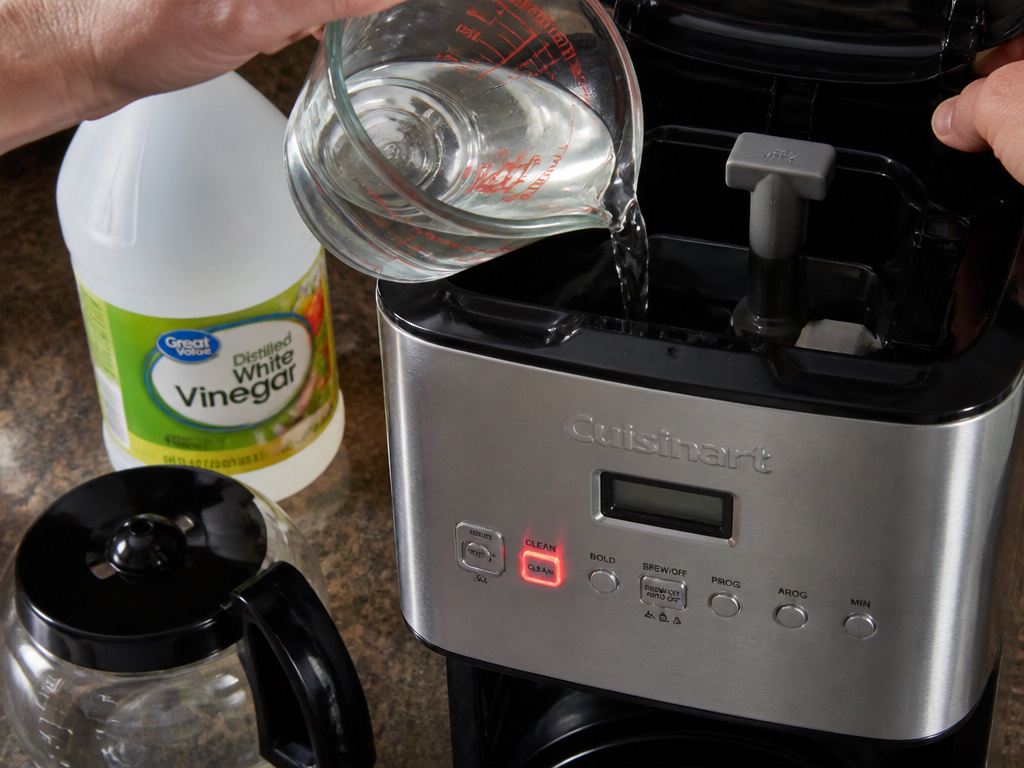
Coffee makers are not self-cleaning. Oils from coffee, called cafetol, coat every surface the water touches. Minerals from water build up as hard, cement-like scale. Your machine has two maintenance tracks: daily wipe-downs and a monthly deep clean.
Daily, after the carafe is empty:
– Discard the used filter and grounds.
– Rinse the filter basket and carafe with warm water. Don’t use soap on the carafe unless it’s stained, it can leave a film.
– Wipe the warming plate with a damp cloth. Let it cool first. Burnt-on drips become permanent if you let them bake on.
Monthly, or when the Clean light illuminates:
1. Ensure the machine is off and cool.
2. Fill the water reservoir to the 10-cup line with fresh water.
3. Add white vinegar to the 12-cup line. This creates the 1:3 vinegar-to-water solution specified in the manual.
4. Place a clean filter in the empty basket. Do not add coffee.
5. Put the carafe in place.
6. Press and hold the Clean button (or the specific button combination for your model) for 3 seconds to start the descaling cycle.
7. The machine will run the vinegar solution through its system, pausing halfway. A full cycle takes about 30 minutes.
8. When it finishes, run two cycles with fresh water only to flush any vinegar taste.
Common mistake: Using lemon juice or citric acid packets instead of vinegar. The acetic acid in vinegar is specifically calibrated for Cuisinart’s internal tubing and heating element composition. Citric acid can leave a different residue that actually attracts more minerals over time.
This cleaning cycle is non-negotiable. In areas with very hard water, you might need to do it every three weeks. You’ll know it’s time if the brew time gets longer or the coffee tastes flat. Scale acts as an insulator, forcing the heater to work harder and brew slower.
Choosing biodegradable coffee filters simplifies cleanup, but they don’t change the need for internal descaling. The oils and minerals come from the coffee and water, not the filter.
Troubleshooting Common Issues
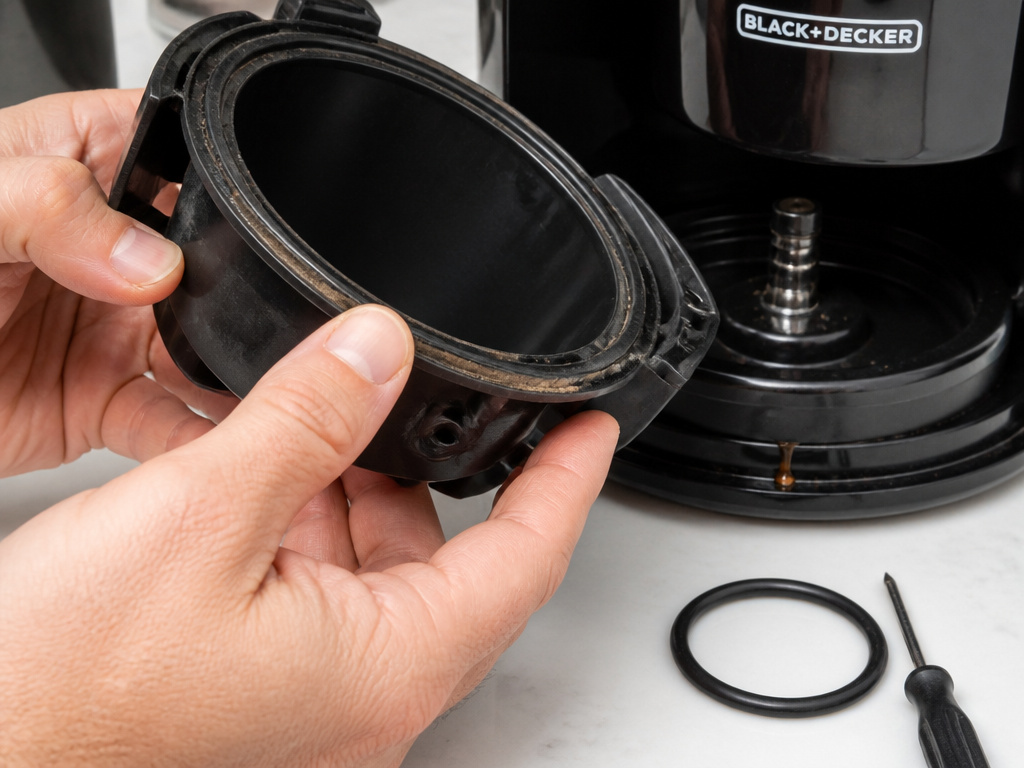
Even with perfect care, things can go wrong. Here’s a diagnostic table for the most frequent problems.
| Symptom | Likely Cause | Immediate Fix |
|---|---|---|
| Coffee tastes weak or sour | Incorrect coffee-to-water ratio; stale beans | Measure grounds with a true tablespoon (1 per cup). Use beans roasted within 3 weeks. |
| Machine beeps, won’t start | Lid not closed; carafe not seated; empty reservoir | Check that the brew lid is fully latched. Remove and replace the carafe firmly. |
| Brew cycle is very slow | Clogged water filter; severe mineral scale | Replace water filter. Run a descaling cycle immediately. |
| Coffee leaks onto hot plate | Cracked carafe; wrong filter size; overfilled basket | Inspect carafe for hairline cracks. Use #4 filters, not #2. Don’t overstuff grounds. |
| Clean light won’t turn off | Descaling cycle was interrupted or incomplete | Run a full, uninterrupted descaling cycle with fresh vinegar solution. |
If your coffee is consistently bitter, examine your bean source and grind. A dark coffee bean blend might be too oily for your machine, coating the filter and causing over-extraction. Try a medium roast.
For a quick flavor tweak without changing beans, a pinch of adding salt to coffee can counteract perceived bitterness by blocking certain taste receptors. It’s a trick, not a solution for bad coffee.
Grind-and-Brew Models: The Extra Steps
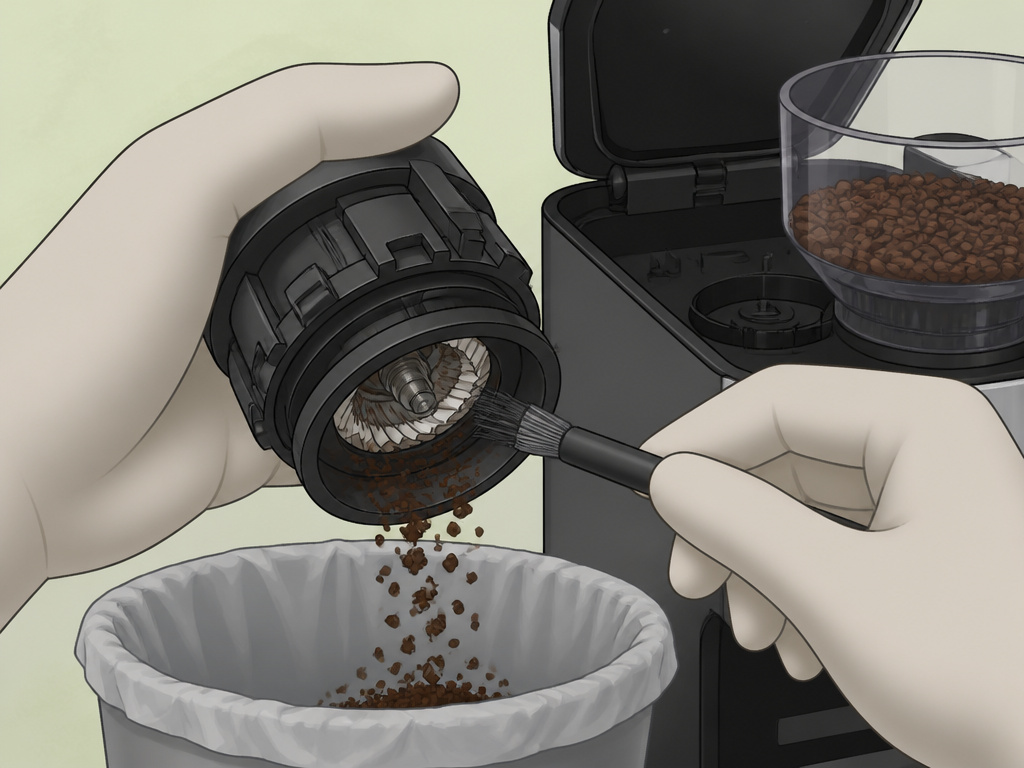
Models like the DGB-450 combine a bean hopper and grinder. They’re fantastic for freshness but add complexity. The key is the grinder chamber, it must be cleaned after every use.
- After brewing, unplug the machine and let it cool.
- Open the top lid and remove the entire plastic grinder assembly.
- Tap it over the trash to dislodge grounds. Use a small brush to clean the burrs and the chute that leads to the filter basket.
- Reinsert the assembly, ensuring it clicks and locks. The machine won’t start if the safety interlock isn’t engaged.
You can bypass the grinder. If you have pre-ground coffee, press the “Grind Off” button before brewing. The machine will only heat and pour water. This is perfect for using a specific single-origin coffee you ground elsewhere.
TL;DR: Grind-and-brew models demand daily grinder cleanup. Lock the lid completely or the brew won’t start.
Frequently Asked Questions
Why does my Cuisinart coffee maker beep three times?
Three beeps usually mean an error state: the brew lid is open, the carafe is missing, or the water reservoir is empty. Check those three things. On grind-and-brew models, it can also mean the bean hopper lid isn’t locked.
Can I use pre-ground coffee in my Cuisinart?
Absolutely. Just skip the bean hopper. Place a filter in the basket, add your pre-ground coffee (one tablespoon per cup), and proceed with brewing. For the best flavor from pre-ground, store it in an airtight container and use it within a week.
What’s the difference between the Regular and Bold setting?
The Bold setting slows the flow of water through the coffee grounds, increasing the contact time by about 90 seconds. This extracts more flavor and caffeine. For it to work well, use a slightly finer grind than usual.
How do I know when to descale?
The machine will illuminate a “Clean” or “Descale” light on the control panel. You should also descale if brewing becomes noticeably slower, or if you live in a hard water area and it’s been 30 days. Don’t wait for the light.
Can I make less than a full pot?
Yes. You can brew as little as one cup. Simply add the corresponding amount of water to the reservoir and the correct amount of coffee to the filter (one tablespoon for that one cup). The machine will adjust the cycle time.
What can I add to my coffee from a Cuisinart?
Your Cuisinart makes a clean, consistent base. Popular additions include a spoonful of brown sugar sweetener, a splash of almond milk creamer, or a dash of cinnamon in coffee right in the filter with the grounds. For a stronger kick, use the brew as a base for a cafe americano by adding hot water.
The Bottom Line
Using a Cuisinart coffee maker correctly boils down to three disciplines: filter hygiene, measured dosing, and scheduled cleaning. Replace that charcoal water filter on a calendar reminder, 60 days is the rule. Measure your coffee with a proper tablespoon, not the carafe’s marking. And run the vinegar descale cycle the moment the machine asks for it.
The machine is built to deliver a great cup for years. The 2016 recall is a reminder that even good hardware needs a glance now and then, check your carafe handle. Beyond that, it’s about the details. Pre-heat the thermal carafe. Match your grind to the Bold setting. Your morning ritual shouldn’t be a mystery. It should be a perfect, repeatable brew.
{
“@context”: “https://schema.org”,
“@type”: “HowTo”,
“name”: “How to Use a Cuisinart Coffee Maker”,
“totalTime”: “PT10M”,
“tool”: [
{
“@type”: “HowToTool”,
“name”: “Cuisinart coffee maker (e.g., DCC-3200 or DCC-1200 series)”
},
{
“@type”: “HowToTool”,
“name”: “Charcoal water filter (model-specific)”
},
{
“@type”: “HowToTool”,
“name”: “Standard #4 paper coffee filter or permanent filter”
},
{
“@type”: “HowToTool”,
“name”: “Fresh coffee grounds or whole beans”
}
],
“step”: [
{
“@type”: “HowToStep”,
“name”: “Install the water filter”,
“text”: “Soak the new charcoal water filter for 5 minutes, then insert it into the holder in the water reservoir. Replace this filter every 60 days to prevent off-tastes.”
},
{
“@type”: “HowToStep”,
“name”: “Add water and coffee”,
“text”: “Fill the reservoir to your desired cup line. Place a filter in the basket and add one tablespoon of ground coffee per cup, or fill the bean hopper if you have a grind-and-brew model.”
},
{
“@type”: “HowToStep”,
“name”: “Select your settings”,
“text”: “Choose your brew strength (Regular or Bold) and set the keep-warm timer if your model has it. For thermal carafe models, pre-heat the carafe with hot water.”
},
{
“@type”: “HowToStep”,
“name”: “Start the brew”,
“text”: “Secure the carafe and press the Brew button. The machine will beep when complete. For grind-and-brew models, ensure the grinder lid is locked.”
},
{
“@type”: “HowToStep”,
“name”: “Clean immediately after use”,
“text”: “Discard the used grounds and filter. Rinse the carafe and filter basket. Wipe the warming plate or heating area to prevent baked-on stains.”
}
]
}
{
“@context”: “https://schema.org”,
“@type”: “FAQPage”,
“mainEntity”: [
{
“@type”: “Question”,
“name”: “Why does my Cuisinart coffee maker beep three times?”,
“acceptedAnswer”: {
“@type”: “Answer”,
“text”: “Three beeps usually mean an error state: the brew lid is open, the carafe is missing, or the water reservoir is empty. Check those three things. On grind-and-brew models, it can also mean the bean hopper lid isn’t locked.”
}
},
{
“@type”: “Question”,
“name”: “Can I use pre-ground coffee in my Cuisinart?”,
“acceptedAnswer”: {
“@type”: “Answer”,
“text”: “Absolutely. Just skip the bean hopper. Place a filter in the basket, add your pre-ground coffee (one tablespoon per cup), and proceed with brewing. For the best flavor from pre-ground, store it in an airtight container and use it within a week.”
}
},
{
“@type”: “Question”,
“name”: “What’s the difference between the Regular and Bold setting?”,
“acceptedAnswer”: {
“@type”: “Answer”,
“text”: “The Bold setting slows the flow of water through the coffee grounds, increasing the contact time by about 90 seconds. This extracts more flavor and caffeine. For it to work well, use a slightly finer grind than usual.”
}
},
{
“@type”: “Question”,
“name”: “How do I know when to descale?”,
“acceptedAnswer”: {
“@type”: “Answer”,
“text”: “The machine will illuminate a “Clean” or “Descale” light on the control panel. You should also descale if brewing becomes noticeably slower, or if you live in a hard water area and it’s been 30 days. Don’t wait for the light.”
}
},
{
“@type”: “Question”,
“name”: “Can I make less than a full pot?”,
“acceptedAnswer”: {
“@type”: “Answer”,
“text”: “Yes. You can brew as little as one cup. Simply add the corresponding amount of water to the reservoir and the correct amount of coffee to the filter (one tablespoon for that one cup). The machine will adjust the cycle time.”
}
},
{
“@type”: “Question”,
“name”: “What can I add to my coffee from a Cuisinart?”,
“acceptedAnswer”: {
“@type”: “Answer”,
“text”: “Your Cuisinart makes a clean, consistent base. Popular additions include a spoonful of brown sugar sweetener, a splash of almond milk creamer, or a dash of cinnamon in coffee right in the filter with the grounds. For a stronger kick, use the brew as a base for a cafe americano by adding hot water.”
}
}
]
}
