
The Ultimate Guide on How to Make Strong Coffee at Home
To make strong coffee, you need to control three specific variables: the coffee-to-water ratio, the grind size, and the extraction temperature. The Specialty Coffee Association’s Golden Ratio of 55 grams of coffee per liter of water (a 1:17 ratio) is the baseline for balanced strength. Tightening that ratio to 1:15 or 1:14, using a medium-fine grind, and brewing at 200°F (93°C) produces a cup with higher Total Dissolved Solids (TDS) without tipping into bitterness.
Most people think strong coffee just means using more scoops of pre-ground beans. That approach overloads the filter, stalls the water flow, and extracts harsh, bitter compounds from the grounds that were never meant to dissolve. You get a thick, unpleasant cup that tastes like burnt rubber.
This guide breaks down the science of coffee strength versus extraction. You will learn how to adjust each variable independently, which brewing methods are built for power, and how to rescue a weak batch without starting over.
Key Takeaways
- Coffee “strength” is scientifically measured as Total Dissolved Solids (TDS), while “boldness” is a flavor perception; you can have a strong, smooth cup or a weak, harsh one.
- The SCA Golden Ratio (1:17) is your starting point; for stronger coffee, tighten the ratio to 1:15 or 1:14, but never go below 1:13 or you will extract bitter alkaloids.
- A medium-fine grind from a burr grinder increases surface area for extraction more effectively than just adding more coarsely ground coffee.
- Methods like the French press and moka pot produce inherently stronger coffee due to full immersion and pressure, respectively, while pour-over offers more control.
- If your coffee tastes weak, adjust the grind finer before you add more coffee; if it tastes bitter, adjust the grind coarser before you dilute it.
The Coffee-to-Water Ratio That Actually Works
Forget the scoop. A scoop of dark roast is lighter and less dense than a scoop of light roast. Volume is a liar. Strength starts with weight.
The Specialty Coffee Association’s Golden Ratio is 55 grams of coffee per liter of water. That is a 1:17 ratio by weight. This ratio targets the “ideal” strength zone of 1.15% to 1.35% TDS defined by the Coffee Brewing Institute’s original control chart. It is the consensus starting point for balanced extraction.
The SCA Golden Ratio of 1:17 (55g/L) targets a Total Dissolved Solids (TDS) range of 1.15–1.35%, which the Coffee Brewing Institute’s 1957 control chart defined as the ideal strength for brewed coffee. This ratio optimizes the extraction of favorable compounds while limiting harshness.
To make your coffee stronger, you tighten the ratio. Move to 1:16, then 1:15. I stop at 1:14 for most brews. Going to 1:13 or tighter is where the trouble starts. The water cannot efficiently saturate that much coffee. Channeling happens, and you begin over-extracting the bitter, astringent compounds from the grounds you do manage to wet. The cup tastes strong, but also punishing.
Common mistake: Doubling the coffee while keeping the water volume the same, this often creates a 1:8 ratio that brews a sludge-like concentrate. The result is simultaneously weak (underextracted from the center of the dense coffee bed) and bitter (overextracted from the outer edges). The fix is a tighter, but sane, ratio like 1:15.
Here is a reference for translating ratio to your morning cup:
| Target Strength | Coffee-to-Water Ratio | For 300g (10 oz) Water | TDS Range Target |
|---|---|---|---|
| Light & Tea-like | 1:18 | 16.5g coffee | 1.0% – 1.15% |
| SCA Golden Standard | 1:17 | 17.5g coffee | 1.15% – 1.35% |
| Bold & Strong | 1:15 | 20g coffee | 1.35% – 1.5% |
| Concentrate (for milk drinks) | 1:13 | 23g coffee | 1.5% – 1.8% |
Use a digital scale with 0.1-gram precision. It is the single most important tool for making strong coffee consistently. Eyeballing it will fail you every third brew.
TL;DR: Weigh your coffee and water. Start at a 1:17 ratio (55g per liter). For stronger coffee, move to 1:15 (67g per liter). Never go below 1:13 or you will brew bitterness.
Grind Size: The Most Overlooked Variable
Grind size controls the surface area of the coffee exposed to water. More surface area means faster, more complete extraction. If your coffee tastes weak at the correct ratio, your grind is almost certainly too coarse.
A blade grinder smashes beans into random chunks and powder. It is impossible to get a consistent extraction. A burr grinder, like the Comandante C40 MK4, crushes beans between two surfaces to a uniform particle size. The Comandante has 35 clicks per full rotation; a pour-over grind sits around 20-30 clicks, while an espresso grind is 7-15. That consistency is what allows you to tweak strength predictably.
For a stronger cup, you go finer. But there is a limit. Too fine, and the water cannot flow through the coffee bed. It takes longer, over-extracts, and becomes bitter. The goal is a medium-fine grind, finer than table salt but not as fine as powdered sugar. In a burr grinder, this is often just one or two clicks finer than your standard setting.
I learned this grinding for a French press. The manufacturer says “coarse.” My first ten batches were weak and sour. On a Home-Barista forum thread, a professional argued for a medium-coarse grind with a shorter steep time. I tried it, grinding my Comandante to 24 clicks instead of 30. The brew time dropped from 4 minutes to 3:15. The strength jumped. The cup was fuller, with none of the silty bitterness I expected. The rule was wrong for my setup.
Common mistake: Using a blade grinder for “strong” coffee, the inconsistent particle size means the powder over-extracts and turns bitter immediately, while the large chunks under-extract and taste sour. The combined cup tastes both harsh and weak, a confusing mess that no ratio can fix.
Your grinder dictates your ceiling. A premium burr grinder unlocks strength through precision, not force.
TL;DR: For stronger coffee, use a burr grinder and set it one or two clicks finer than your usual setting. A consistent, medium-fine grind extracts more flavor without requiring more coffee.
Brewing Method Matters
Not all brewers are created equal. The method determines how water interacts with coffee, which directly impacts maximum achievable strength. A method that uses immersion or pressure will always produce a stronger, more full-bodied cup than a standard drip machine if all other variables are equal.
The Bonavita BV1900TS drip machine is SCA-certified because it maintains water between 195°F and 205°F and has a showerhead for even saturation. It makes excellent, consistent coffee. But its strength ceiling is lower than a French press. The press soaks all grounds fully for minutes, extracting more oils and solids. A moka pot uses steam pressure to force water through fine grounds, creating a concentrated, espresso-like brew.
| Brewing Method | Mechanism | Inherent Strength | Best For | Risk If Misused |
|---|---|---|---|---|
| Drip Machine (SCA-certified) | Percolation | Medium | Consistency, volume | Weak coffee if grind is too coarse or ratio too loose. |
| French Press | Full Immersion | High | Full body, oily mouthfeel | Bitter, over-extracted coffee if steep time exceeds 4 minutes with a fine grind. |
| Pour-Over (V60, Chemex) | Controlled Percolation | Medium-High | Clarity, sweetness | Channeling and weak spots if pour technique is uneven. |
| Moka Pot | Pressure-driven | Very High | Strong, concentrated base | Metallic, burnt taste if heat is too high and the pot boils dry. |
| Cold Brew | Long Steep (Cold) | Extreme (as concentrate) | Low-acidity, smooth strength | Must be diluted; drinking concentrate straight is intensely bitter. |
Cold brew is the outlier. It uses a very tight ratio (1:4 to 1:8) and 12-24 hour steep times at cold temperatures. This extracts caffeine and sugars slowly, leaving behind many of the acidic compounds. The result is a super-strong concentrate that is smooth and low in acid. You dilute it with water or milk. It is a completely different path to strength.
Then there is Turkish coffee. It ignores every rule. You boil ultra-fine powder directly in water. The “strength” comes from the high concentration and the suspended solids you drink. It is a cultural institution with its own ritual.
Your choice of brewing methods sets the playing field. Want maximum strength with control? Use a French press. Want strong and clean? Use a pour-over with a tight ratio. Want a bulletproof concentrate? Make cold brew.
Temperature and Time: The Extraction Engine
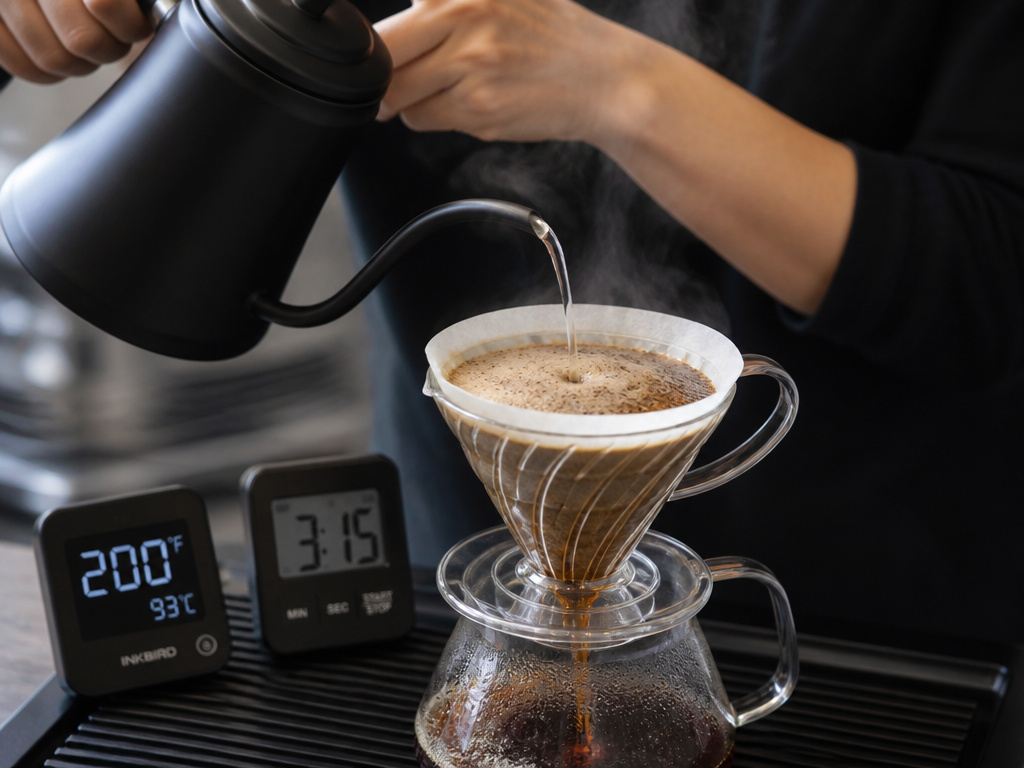
Water temperature activates extraction. Hotter water extracts faster and more completely. The SCA standard is 200°F ± 5° (93°C ± 3°). At 200°F, you efficiently pull out the sugars, acids, and oils that create flavor and strength. At 210°F (boiling), you risk extracting more bitter compounds. At 185°F, extraction is sluggish, and the cup tastes sour and weak.
If your coffee is weak, check your water temperature. Most home drip machines do not get hot enough. An SCA-certified brewer like the Bonavita or a gooseneck kettle you bring to a boil and let rest for 30 seconds solves this.
Time is the partner to temperature. Brew time is the contact period between water and grounds. In a pour-over, a 3-4 minute total brew time is standard. If your grind is too fine, the water stalls, and time stretches to 5 minutes. That over-extracts bitterness. If your grind is too coarse, the water rushes through in 2 minutes, leaving strength on the table.
The interaction is simple: hotter water or longer time increases extraction. You use them to dial in strength after you have set your ratio and grind. A bitter cup means too much extraction, use slightly cooler water or a slightly coarser grind to shorten time. A weak, sour cup means too little extraction, use hotter water or a finer grind to lengthen time.
I won’t recommend starting with boiling water for light roasts. The higher density of a light roast needs that extra heat to crack open the cell structure. A dark roast is more porous and can extract at 200°F without issue. Start at 200°F, then go up to 205°F only if the cup lacks clarity.
This is where the grinder impact on flavor becomes undeniable. A consistent grind from a burr grinder gives you even extraction across the entire bed. You can then use time and temperature as precise levers. An inconsistent grind forces you to compromise, some parts are bitter, some sour, and adjusting time helps one while hurting the other.
The Instant Coffee Strength Fix
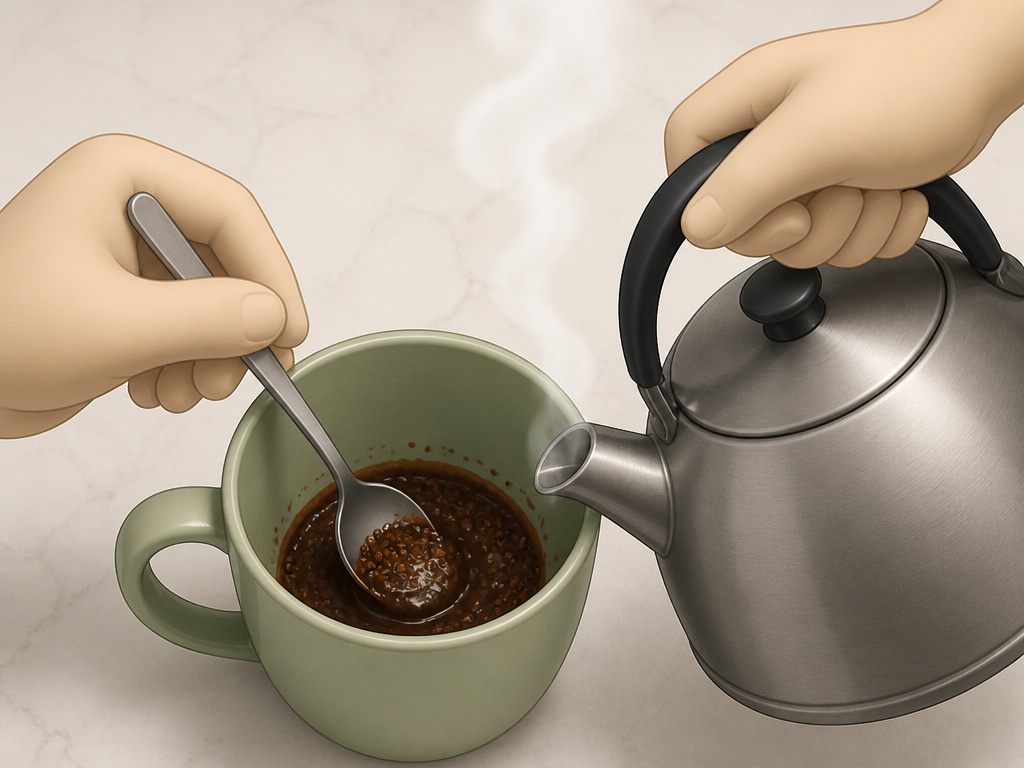
Instant coffee has a bad reputation. The weakness often comes from two errors: using too little powder and using scalding water.
The standard ratio is one teaspoon per 6 ounces of water, not 8 ounces. A “cup” in coffee terms is 6 oz. If you use an 8-oz mug and one teaspoon, you are under-dosing by 25%. That is a weak cup.
The bigger fix is water sequence. Instant coffee granules are delicate. Pouring boiling water directly onto them scorches them, creating a harsh, bitter taste. The YouTube method is correct: start with a tablespoon of cold water. Stir the instant granules into the cold water until they fully dissolve. This creates a paste. Then top up with hot water. The cold-water dissolution protects the flavor compounds from thermal shock. The difference is not subtle.
For maximum strength, use two teaspoons in your 6-oz cup. Dissolve in cold water first. Then add hot water. You will get a robust, full-flavored cup without the ashy aftertaste. If that still does not work for you, the issue might be the brand, not the technique.
Choosing Beans for a Perceptively Stronger Cup
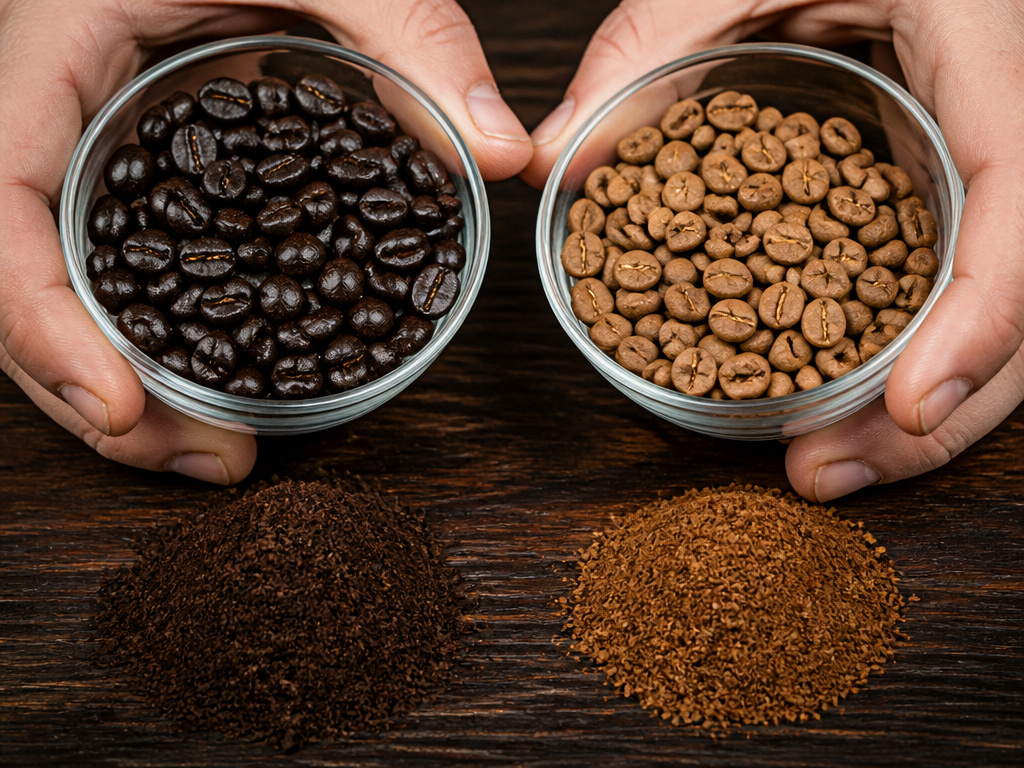
Strength (TDS) and bold flavor are related but separate. You can influence the perception of strength with your bean selection.
Dark roasts are often described as “stronger” because they have bold, roasty, sometimes bitter notes. However, the roasting process burns off caffeine and some mass, so gram-for-gram, a dark roast can have slightly less caffeine than a light roast. The perceived strength comes from flavor.
Light roasts, like many single-origin beans, retain more caffeine and brighter acids. They can produce a coffee with high TDS (actual strength) that tastes tea-like and fruity, not “bold.” To make a light roast taste strong in the traditional sense, you need to extract it fully, use a fine grind, hot water, and a tight ratio.
Blonde roast beans are a light roast that can be very high in caffeine. They are a good choice if your goal is a potent, alertness-focused cup with a smoother flavor profile than a dark roast.
The bean matters, but it is the least important variable. A perfectly brewed dark roast will taste stronger than a poorly brewed light roast, even if the light roast has higher caffeine. Dial in your ratio, grind, and method first. Then explore beans.
Troubleshooting Your Strong Coffee
Your coffee is brewed. It is in the cup. Now what?
- It tastes weak and sour. This is underextraction. The water did not pull enough good stuff out. Fix: Grind finer on your next brew. This increases surface area. If already fine, increase water temperature or lengthen brew time slightly.
- It tastes strong but bitter, ashy, or dry. This is overextraction. The water pulled out the bitter compounds. Fix: Grind coarser on your next brew. This allows water to flow faster, reducing contact time. If already coarse, lower water temperature by a few degrees.
- It tastes both sour and bitter. This is the worst. It means uneven extraction, usually from a bad grind or poor water distribution. The fines over-extract (bitter) while the boulders under-extract (sour). Fix: Check your grinder. A blade grinder is the most likely culprit. Upgrade to a burr grinder. For pour-over, improve your pouring technique to saturate all grounds evenly.
- It is not strong enough, but I do not want more caffeine. Remember, strength (TDS) and caffeine content are different. You can increase strength by tightening the ratio or grinding finer, which will not significantly increase caffeine if you keep the coffee weight the same. Caffeine is mostly extracted in the first minute of brewing.
A final rescue for a pot of weak coffee: do not add more grounds to the brewed coffee and reheat it. That will make it muddy and bitter. Instead, brew a small, ultra-strong batch (using a 1:10 ratio) and blend it into your weak batch. It is a salvage operation, not a first choice.
Frequently Asked Questions
Can I make strong coffee just by brewing it longer?
Not reliably. Extended brew time with hot water leads to over-extraction and bitterness. For immersion methods like French press, a longer steep (up to 4-5 minutes) can increase strength, but you must use a coarser grind to compensate. For pour-over or drip, longer brew time usually means a clogged filter and a bad cup.
Is strong coffee the same as high-caffeine coffee?
No. Strength refers to the concentration of coffee solids in the water (TDS). Caffeine is one of those solids, but it extracts early. A light roast can have higher caffeine content but taste “weaker” if underextracted. A dark roast can taste “strong” but have marginally less caffeine. For high caffeine, use more coffee by weight (tight ratio) and choose a light roast or blonde roast beans.
Why does my coffee taste bitter when I try to make it strong?
Bitterness is a sign of over-extraction. You are likely using too fine a grind for your method, water that is too hot, or a brew time that is too long. The most common culprit is the “just add more coffee” approach, which creates a dense bed that water cannot flow through evenly, causing localized over-extraction. Tighten your ratio modestly and focus on grind size first.
Does the type of filter affect strength?
Yes. Paper filters, especially thick ones like Chemex bonds, trap oils and fine sediment, yielding a cleaner, lighter-bodied cup. Metal filters (French press, some pour-over cones) allow oils and micro-fines through, creating a heavier, stronger mouthfeel. Cloth filters are in between. The filter is a final variable that affects perceived strength and texture.
What is the fastest way to make a single strong cup?
Use an AeroPress. It is an immersion brewer that uses slight pressure. Use a 1:12 ratio (e.g., 18g coffee to 216g water), a fine grind, water at 200°F, and a steep time of 1:30-2:00 minutes before pressing. It produces a concentrated, smooth, and strong cup in under three minutes total.
Before You Go
Making strong coffee is not about brute force. It is about precision. Lock in your ratio with a scale. Dial in your grind with a burr grinder. Choose a method suited to the kind of strength you want, full-bodied from a French press, clean and potent from a pour-over, or super-concentrated from cold brew.
Start with the SCA’s 1:17 ratio and adjust inward. Taste every change. A pinch of salt in coffee can counteract residual bitterness if you overshoot. A touch of brown sugar can enhance the roasted notes without masking flavor. Your goal is a cup that stands up on its own, whether you take it black or use it as the base for a cafe americano or latte. Now go brew something that kicks.
{
“@context”: “https://schema.org”,
“@type”: “HowTo”,
“name”: “How to Make Strong Coffee That’s Bold, Not Bitter”,
“totalTime”: “PT10M”,
“tool”: [
{
“@type”: “HowToTool”,
“name”: “Digital kitchen scale (0.1g precision)”
},
{
“@type”: “HowToTool”,
“name”: “Burr coffee grinder (e.g., Comandante C40 MK4)”
},
{
“@type”: “HowToTool”,
“name”: “SCA-certified brewer or pour-over setup”
},
{
“@type”: “HowToTool”,
“name”: “Gooseneck kettle for temperature control”
}
],
“step”: [
{
“@type”: “HowToStep”,
“name”: “Weigh your coffee and water”,
“text”: “Measure coffee beans or grounds by weight. For a standard strong brew, use a 1:15 coffee-to-water ratio (e.g., 20g coffee to 300g water).”
},
{
“@type”: “HowToStep”,
“name”: “Grind to the correct size”,
“text”: “Set your burr grinder to a medium-fine setting. For a Comandante C40, this is around 20-25 clicks. Grind immediately before brewing.”
},
{
“@type”: “HowToStep”,
“name”: “Heat water to the right temperature”,
“text”: “Heat filtered water to 200°F (93°C). An SCA-certified brewer like the Bonavita BV1900TS does this automatically.”
},
{
“@type”: “HowToStep”,
“name”: “Brew with even saturation”,
“text”: “Pre-wet your filter, then add grounds. Pour water in a slow, steady spiral to saturate all grounds evenly. Aim for a total brew time of 3-4 minutes.”
},
{
“@type”: “HowToStep”,
“name”: “Taste and adjust”,
“text”: “Let the coffee cool slightly, then taste. If weak, use a finer grind or a tighter ratio (1:14) next time. If bitter, use a coarser grind.”
}
]
}
{
“@context”: “https://schema.org”,
“@type”: “FAQPage”,
“mainEntity”: [
{
“@type”: “Question”,
“name”: “Can I make strong coffee just by brewing it longer?”,
“acceptedAnswer”: {
“@type”: “Answer”,
“text”: “Not reliably. Extended brew time with hot water leads to over-extraction and bitterness. For immersion methods like French press, a longer steep (up to 4-5 minutes) can increase strength, but you must use a coarser grind to compensate. For pour-over or drip, longer brew time usually means a clogged filter and a bad cup.”
}
},
{
“@type”: “Question”,
“name”: “Is strong coffee the same as high-caffeine coffee?”,
“acceptedAnswer”: {
“@type”: “Answer”,
“text”: “No. Strength refers to the concentration of coffee solids in the water (TDS). Caffeine is one of those solids, but it extracts early. A light roast can have higher caffeine content but taste \”weaker\” if underextracted. A dark roast can taste \”strong\” but have marginally less caffeine. For high caffeine, use more coffee by weight (tight ratio) and choose a light roast or blonde roast beans.”
}
},
{
“@type”: “Question”,
“name”: “Why does my coffee taste bitter when I try to make it strong?”,
“acceptedAnswer”: {
“@type”: “Answer”,
“text”: “Bitterness is a sign of over-extraction. You are likely using too fine a grind for your method, water that is too hot, or a brew time that is too long. The most common culprit is the \”just add more coffee\” approach, which creates a dense bed that water cannot flow through evenly, causing localized over-extraction. Tighten your ratio modestly and focus on grind size first.”
}
},
{
“@type”: “Question”,
“name”: “Does the type of filter affect strength?”,
“acceptedAnswer”: {
“@type”: “Answer”,
“text”: “Yes. Paper filters, especially thick ones like Chemex bonds, trap oils and fine sediment, yielding a cleaner, lighter-bodied cup. Metal filters (French press, some pour-over cones) allow oils and micro-fines through, creating a heavier, stronger mouthfeel. Cloth filters are in between. The filter is a final variable that affects perceived strength and texture.”
}
},
{
“@type”: “Question”,
“name”: “What is the fastest way to make a single strong cup?”,
“acceptedAnswer”: {
“@type”: “Answer”,
“text”: “Use an AeroPress. It is an immersion brewer that uses slight pressure. Use a 1:12 ratio (e.g., 18g coffee to 216g water), a fine grind, water at 200°F, and a steep time of 1:30-2:00 minutes before pressing. It produces a concentrated, smooth, and strong cup in under three minutes total.”
}
}
]
}
